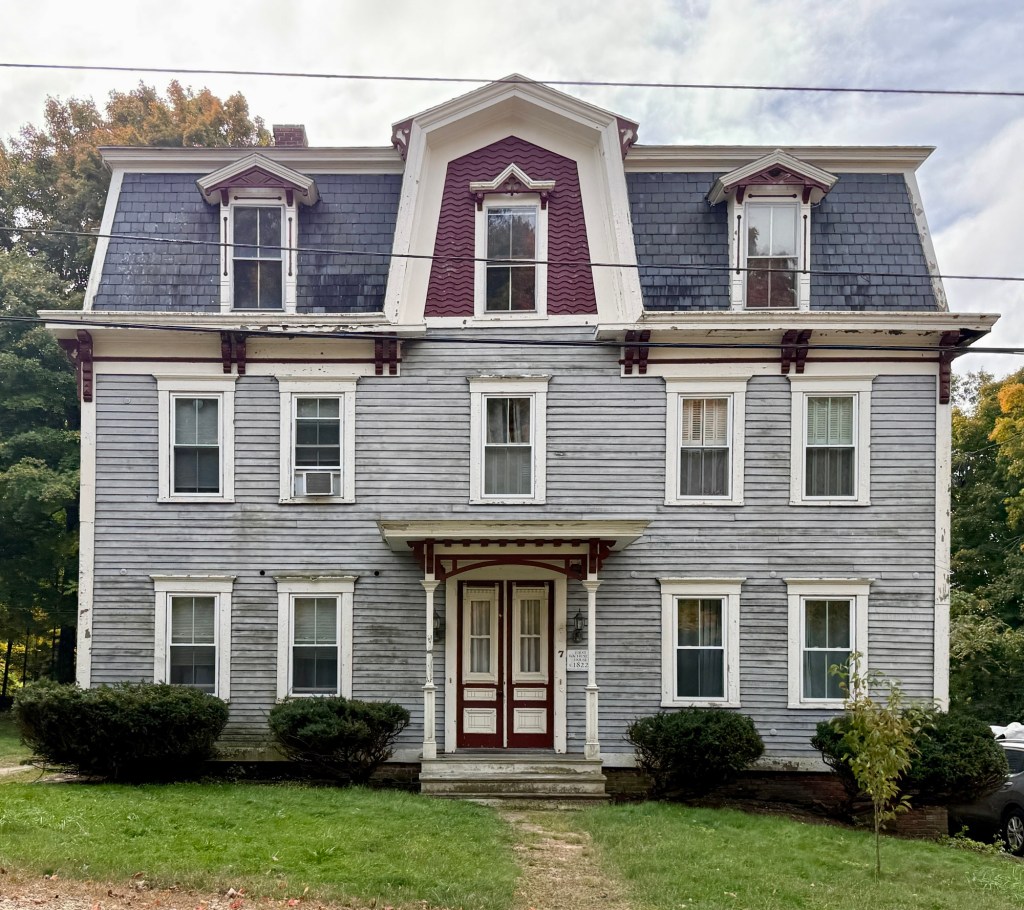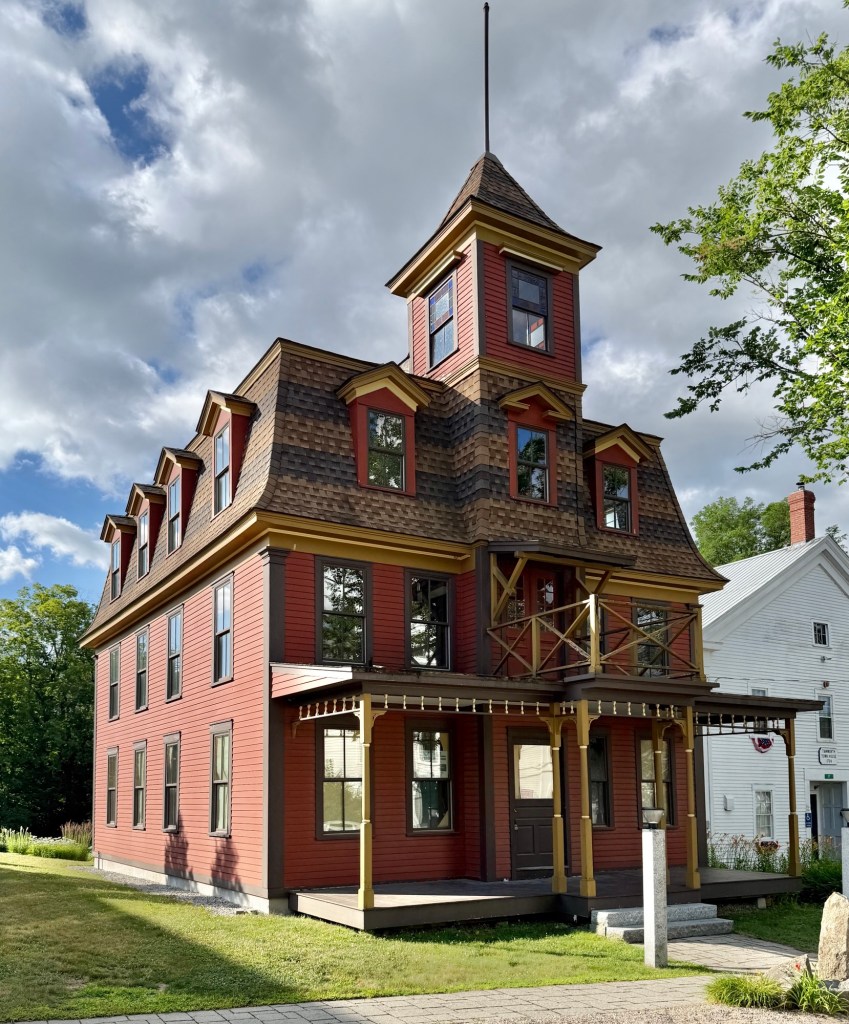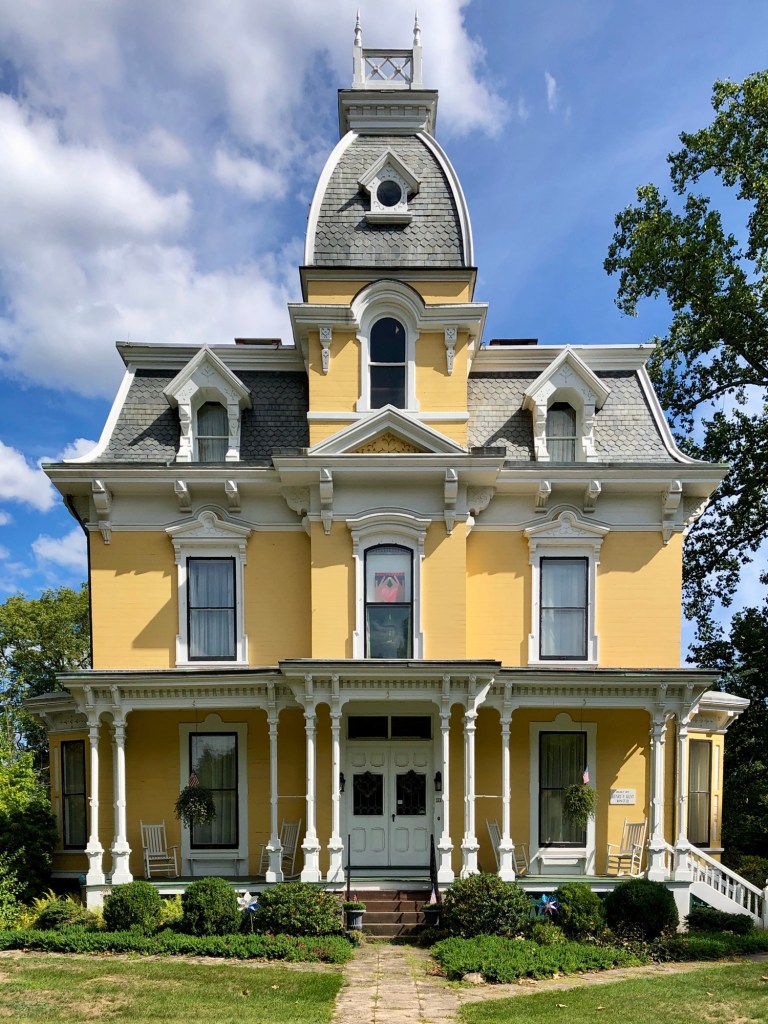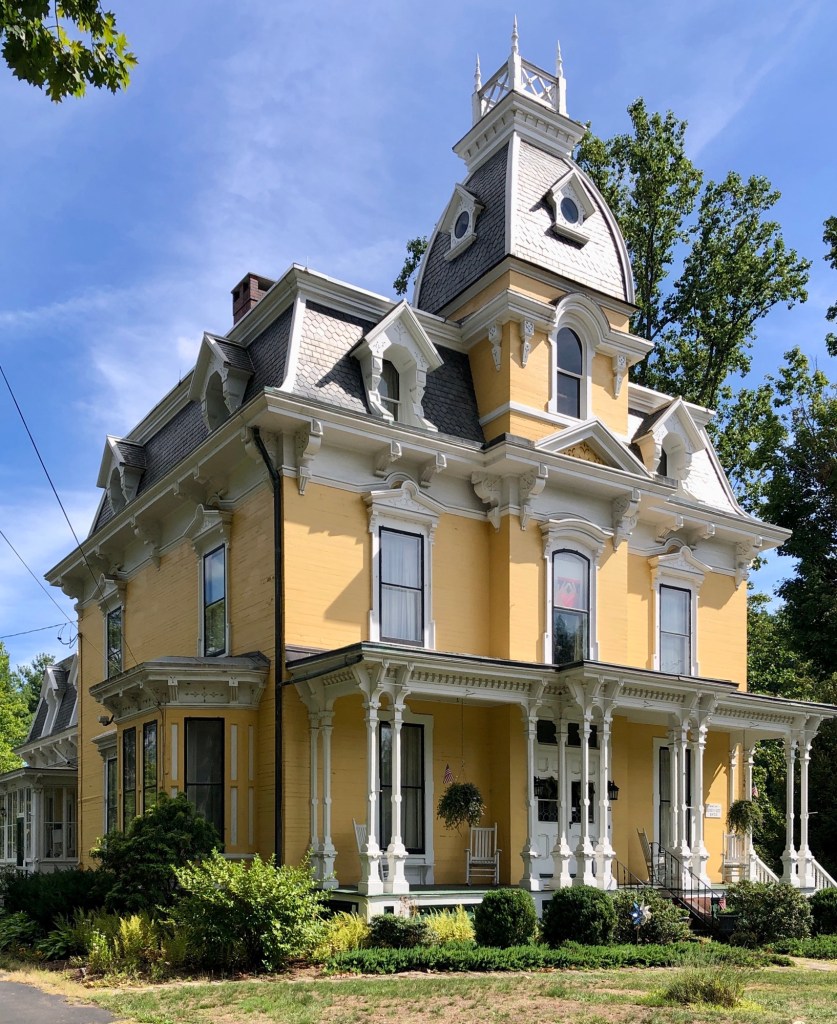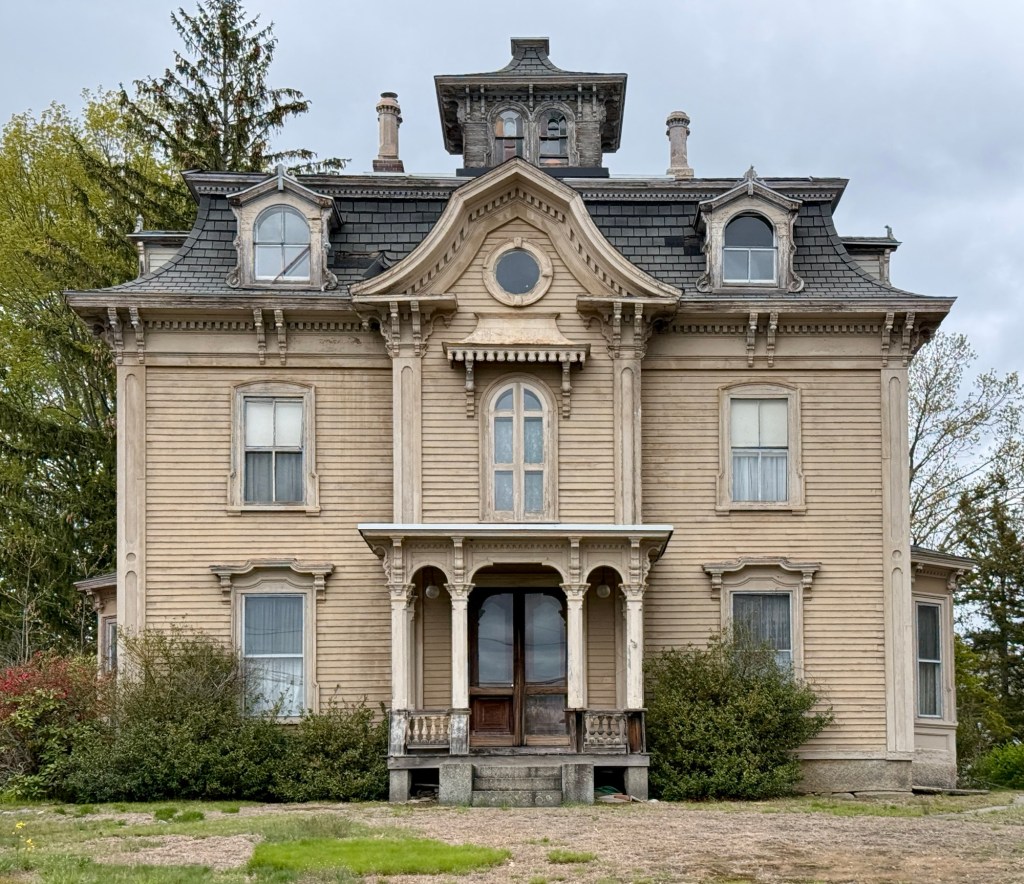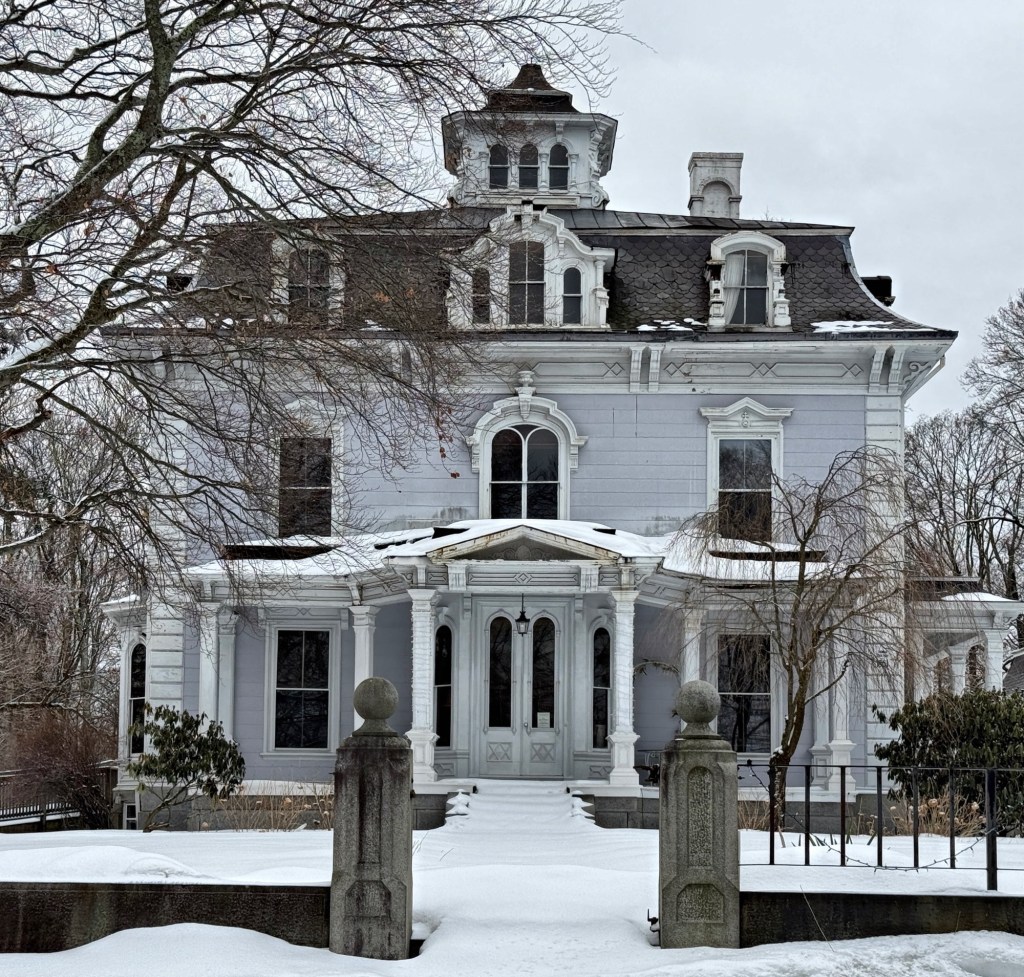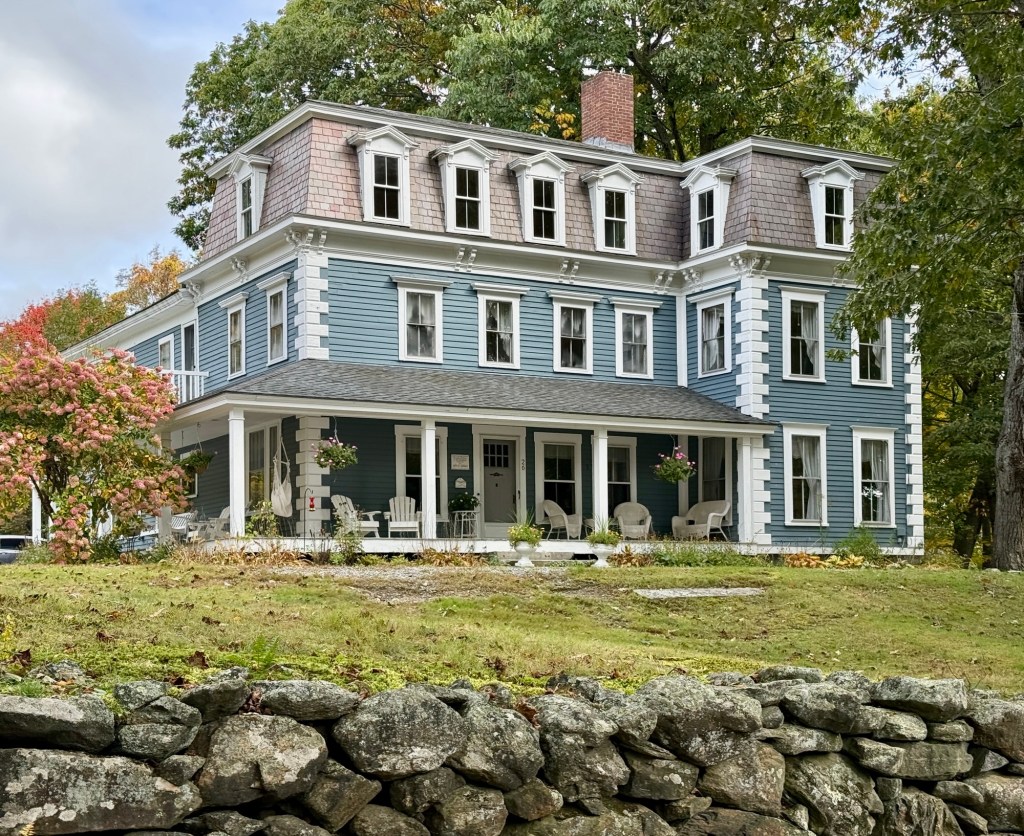
The Henry E. Fales Mansion sits prominently on Walnut Street in Milford, Massachusetts, as an intact Second Empire style residence with symmetrical facade and form. The house was built in 1866 and owned by Henry E. Fales (1837-1897) an attorney and state legislator who was heavily engaged in town affairs. Before the home was completed, Henry’s wife, Violet, died unexpectedly and he remained here until his second marriage to Clara Hayward. The Fales Mansion has a notable mansard roof with belvedere, front gambrel gable with ocular window, and window hoods. The property is in need of some work, but retains nearly all of its original detailing.
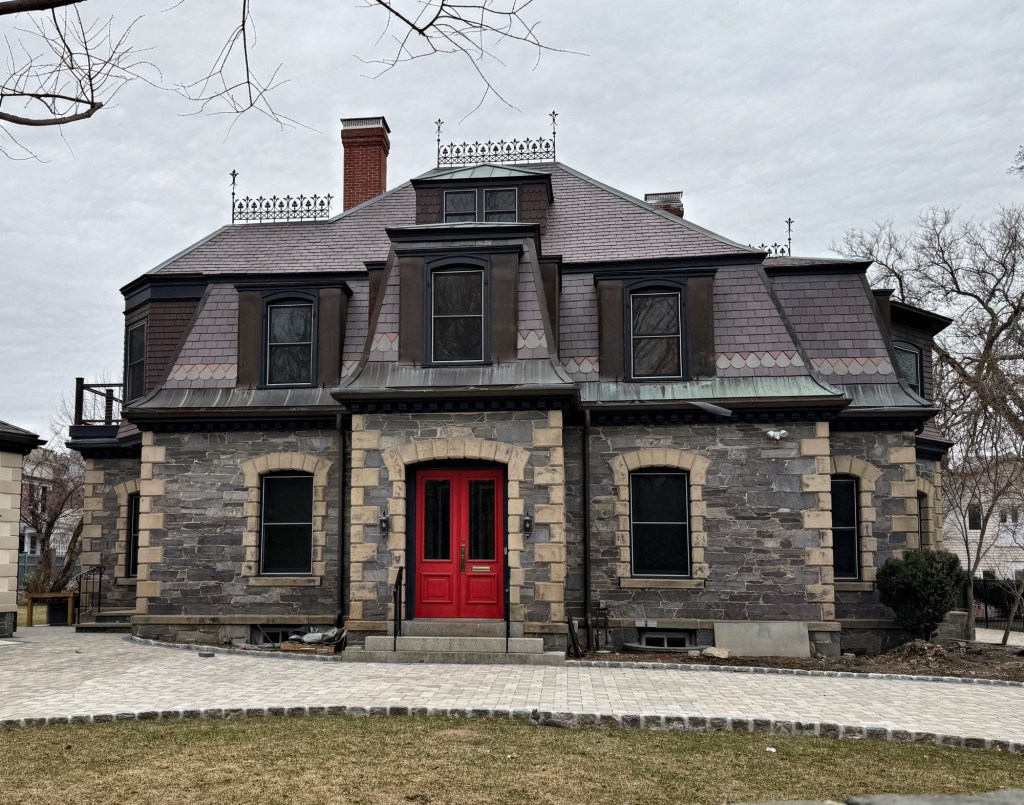
Built in 1865, the Amory-Boit House on Colchester Street in Brookline‘s exclusive Longwood neighborhood, is a stunning Second Empire style home with connections to prominent local families. The residence has a one-story stone base which meets the slate mansard roof providing two-and-a-half stories above which are crowned by iron cresting at the peak of the roof. The property was one of the early homes built in the area, developed by David Sears, one of the wealthiest property owners in Boston, who recognized the potential for development of this marshy area of Brookline due to its close proximity to the city. A large lot on Colchester Street was purchased by Dr. Robert Amory (1842-1910), who in 1864, married Marianne Appleton Lawrence (1843–1882), daughter of Amos Adams Lawrence, a major developer of the nearby Cottage Farm neighborhood of Brookline. This stone cottage, one of two neighboring homes built at the same time for Dr. Amory, was likely rented to friends and family with the other as his primary country house. This home was later sold to real estate and insurance businessman and author Robert Apthorp Boit (1846-1919). Robert Boit published the novel, Eustis in 1884 and his family history, Chronicles of the Boit Family and Their Descendants, in 1915. The home and its neighbor had been undergoing renovations for a while and are located within a local historic district.
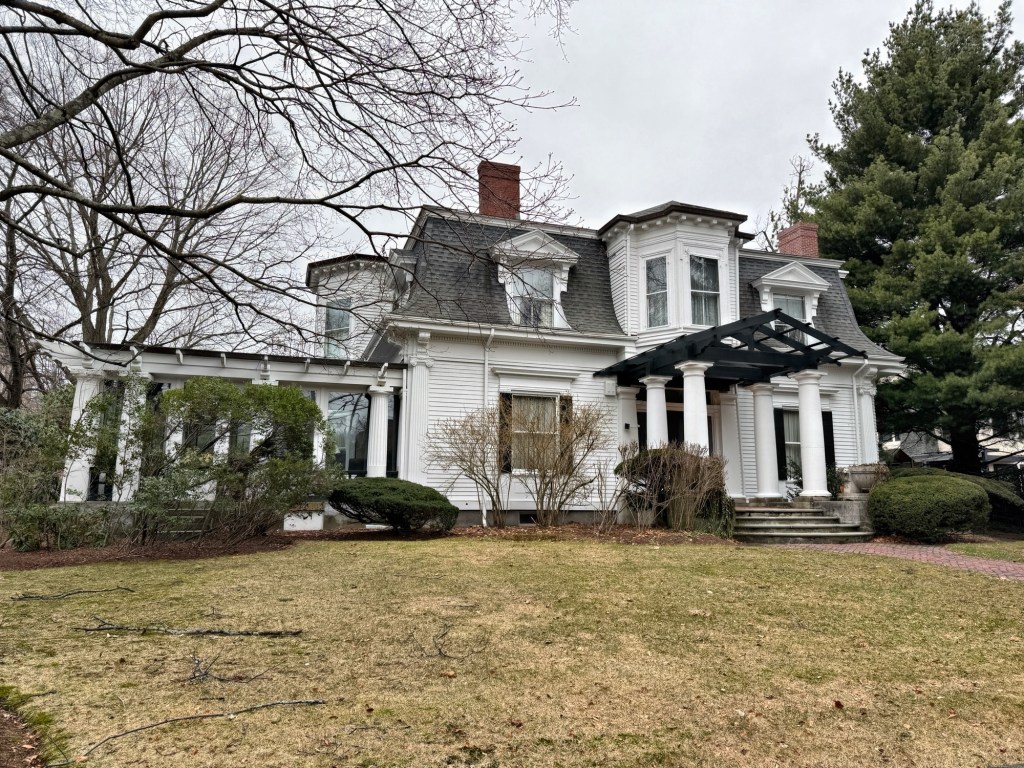
Prior to 1850, the area today known as the Longwood neighborhood of Brookline remained largely farmland on the banks of the Muddy River. In the first half of the 19th century David Sears (1787-1871) and Amos Lawrence (1814-1886), both prominent Boston businessmen, bought up large tracts of what had been Judge Sewall’s estate. The arrival of the Brookline Branch Railroad (now the MBTA Green Line D branch) served as an impetus to develop the area more fully. David Sears and Amos Lawrence developed houses in present-day Longwood and Cottage Farm and rented the homes to friends and family. One of the rented houses built and rented by David Sears is this Second Empire cottage which dates to the 1860s. The house was long-rented to wealthy families until the Sears heirs sold the house to Nathan Leo Amster and his wife, Estelle Dreyfus. Nathan L. Amster was a railroad executive who eventually became president of the Manhattan Railway Company. When the purchased the cottage, the Amster’s hired Boston architect Clarence Blackall to renovate and “modernize” the home, which added the Classically inspired elements. The couple did not appear to live in the house long, as they spent most of their years in their Fifth Avenue NYC residence. The Sears-Amster Cottage remains an important early house in the Longwood development of Brookline.
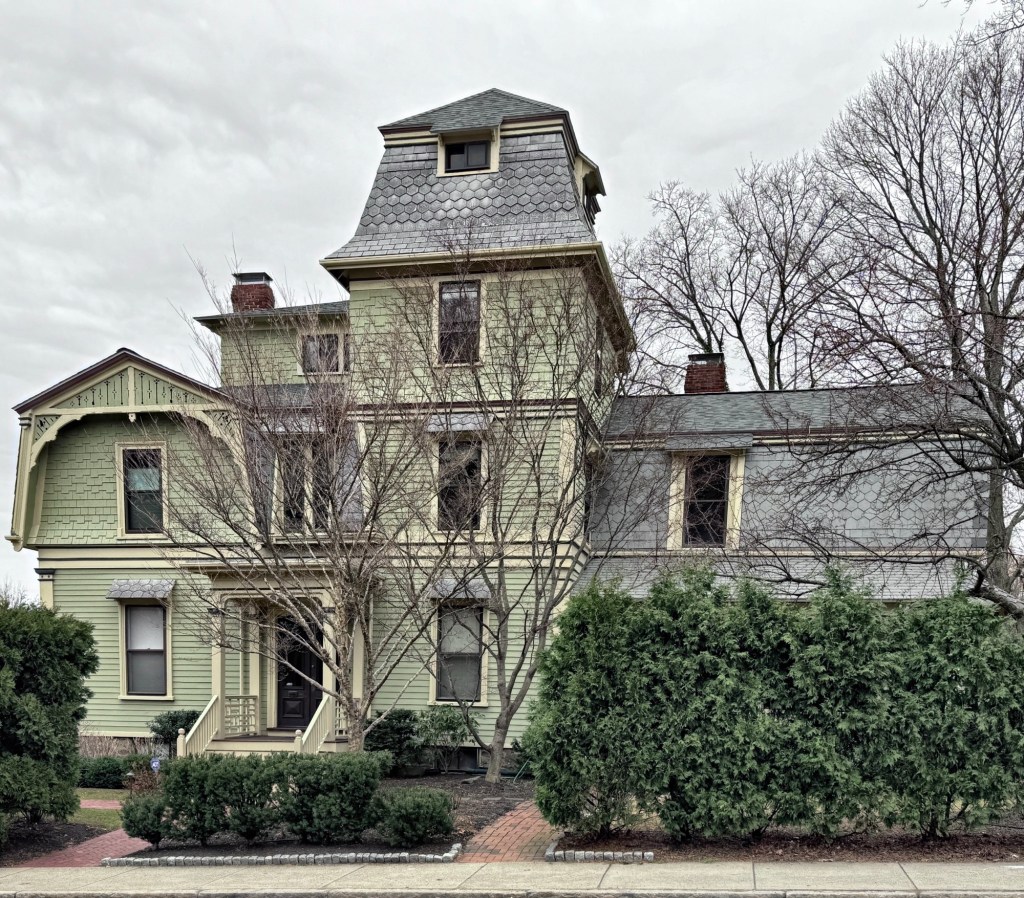
In 1868, James Wilkinson Clapp (1847-1931) married Eliza Tuckerman and they soon after moved into this large Victorian-era house on St. Paul Street in Brookline. James was the second son of Otis Clapp, a politician, publisher, and promoter of homeopathy. Otis Clapp operated a large homeopathic pharmacy, Otis Clapp & Son, which continued as a business after his death, evolving to encompass different areas of medical technology. It was one of the oldest-operating pharmaceutical manufacturers in the United States by the time it was acquired by Medique in 2008. James Clapp was also a medical doctor and at the young age of 22, acquired a house lot here on St. Paul Street and had this large Second Empire style residence built for his family. Dr. James W. Clapp worked as a pharmacist and taught courses at the Boston University School of Medicine. He spent summers at his gentleman’s farm in Bolton, Massachusetts, until his death in 1931. The Clapp House was later used as a doctor’s residence and office and a nursing home, suffering from neglect, but was ultimately restored in the early 21st century.
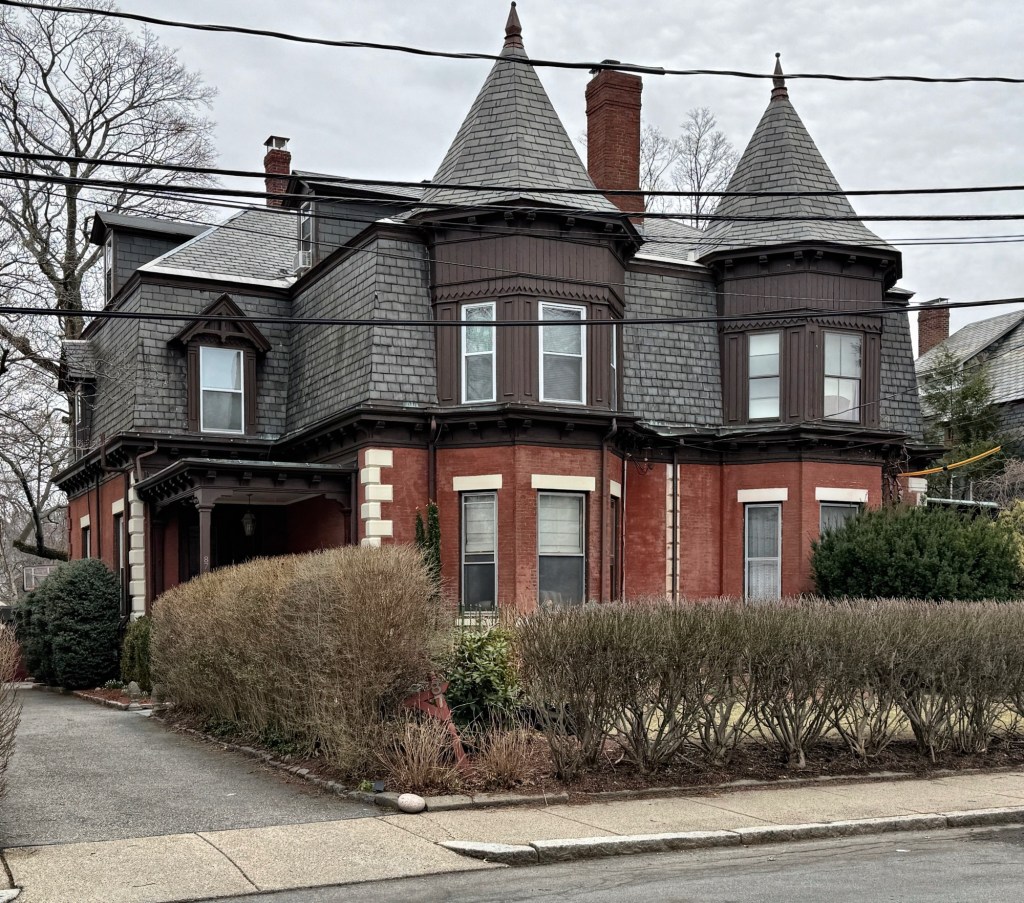
Built in 1881 as an eclectic example of a Second Empire and Queen Anne style Victorian double-house, this charming residence on quiet Perry Street in Brookline, Massachusetts, shows that gentle density like double-houses and three-deckers provides needed housing without disrupting neighborhood character. The property was built for George Gibson and subsequently rented to two families as an investment. In the mid-20th century, half of the double-house was purchased by Michael Dukakis and his wife, Katharine “Kitty” (Dickson) Dukakis. Michael Dukakis would become a prominent politician, first being elected as a Member of the Massachusetts House of Representatives in 1963 later serving two terms as Massachusetts Governor. He was later nominated by the Democratic Party for president in the 1988 election, but ultimately lost to the Republican nominee, George H. W. Bush.
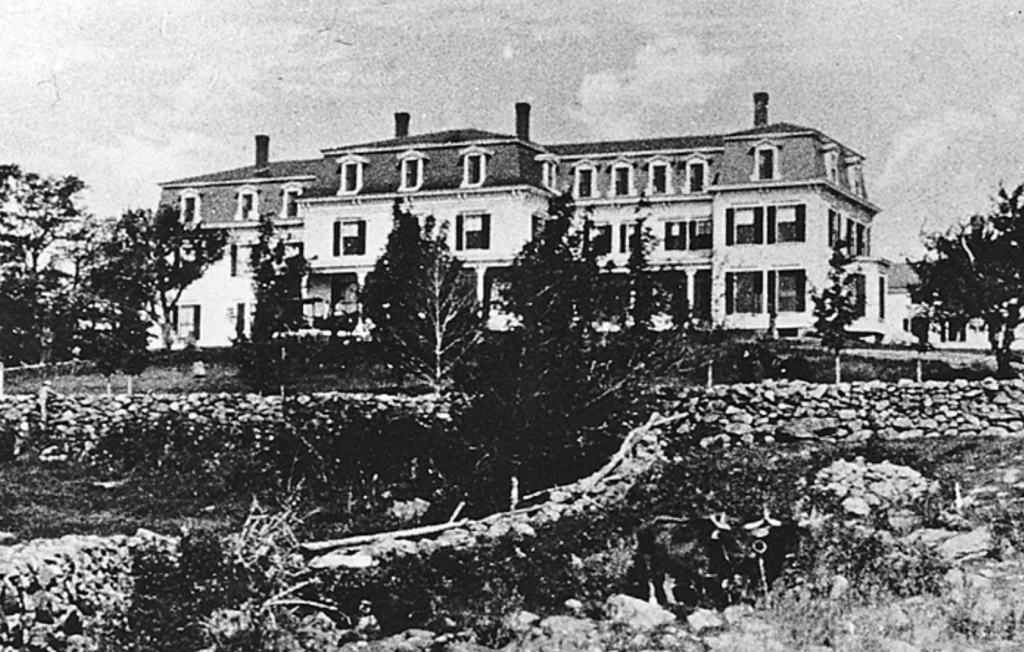
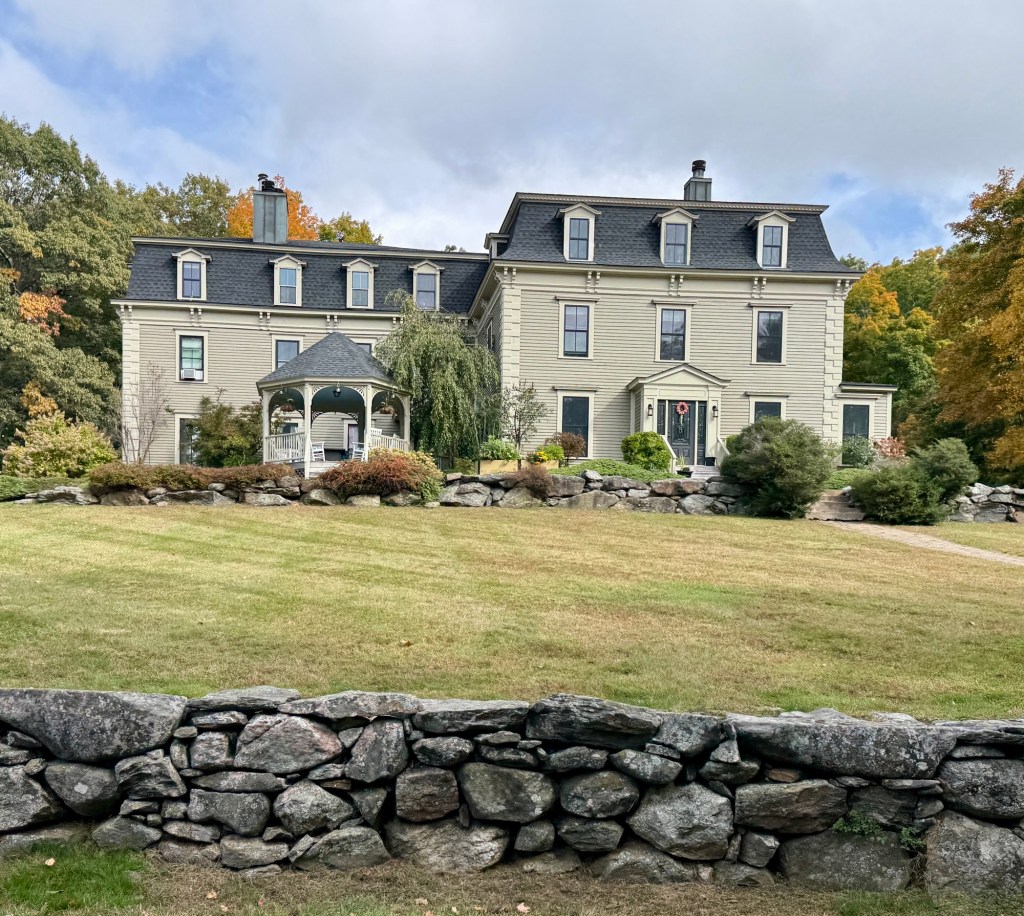
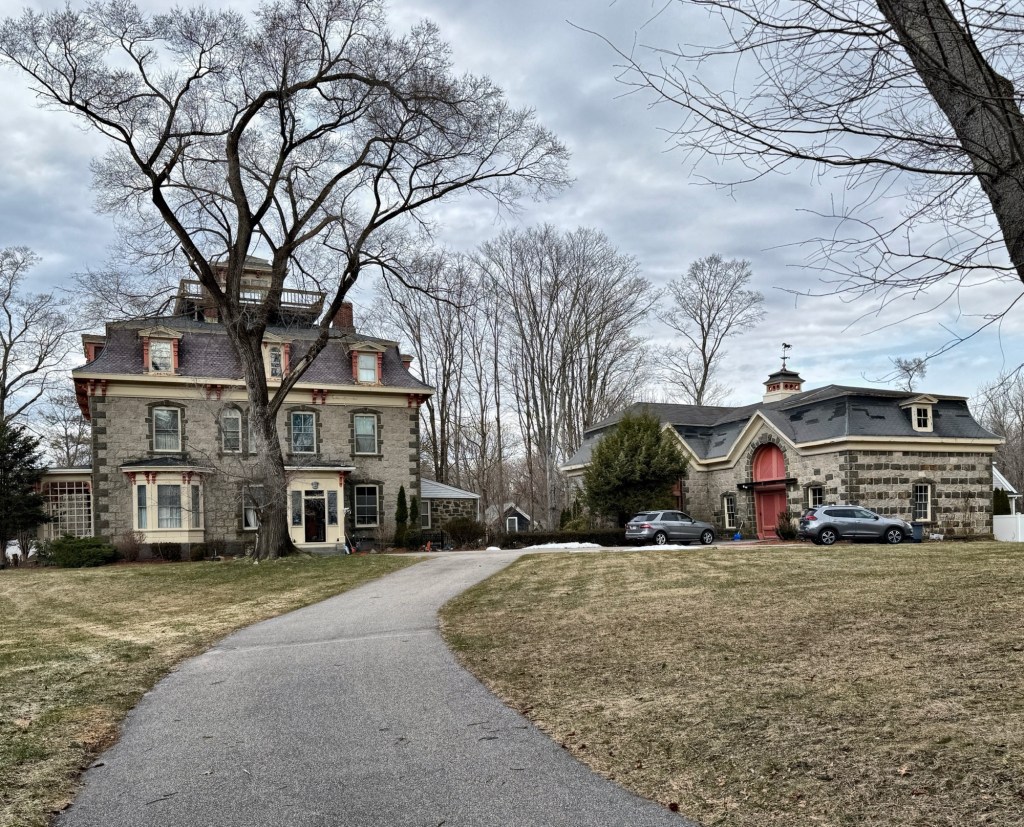
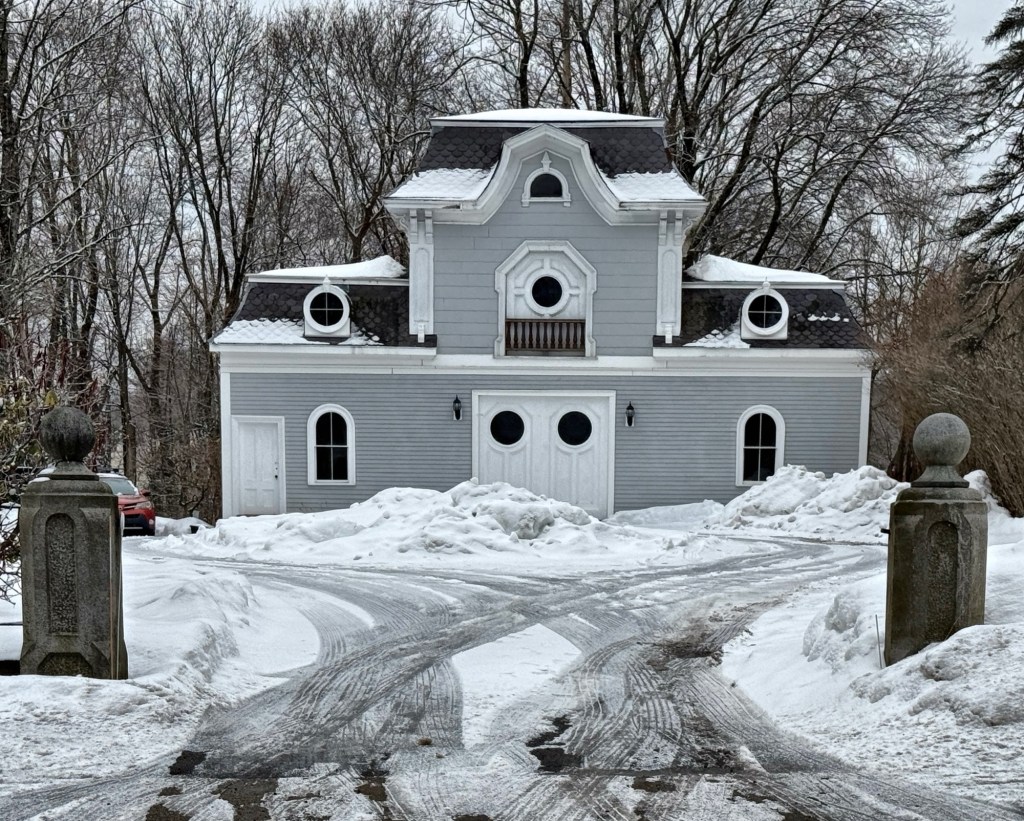
Stoneholm Manor is a historic estate tucked away in Sharon, Massachusetts, that remains one of the finest examples of a Second Empire style mansion and carriage house built of stone in New England. Stoneholm was built in 1865 for Horace Augustus Lothrop (1828-1898) within a year of his marriage to second wife, Sarah Gorham Swain. Horace A. Lothrop was a manufacturer and businessman with factories in Sharon and nearby towns and he invented innovative tools like hoes and wooden shanks for foot support in shoes and boots. He was also engaged in politics, serving in the state legislature and on the local school board. His country estate in Sharon is unique for its construction of locally quarried rock-face granite walls, fine mansard roof with cupola, and matching L-shaped carriage house, all in great condition. Stoneholm was listed on the National Register of Historic Places and remains a private residence.
This handsome Second Empire style residence on Wooster Place in New Haven was built in 1833, but in the Greek Revival style and later renovated to its current appearance. The house was one of the earliest properties built fronting Wooster Square and constructed for merchant Theron Towner, who then sold it to Rev. Stephen Jewett (1783-1861), an Episcopal minister of a nearby church. The house was designed and constructed by James English, who later became a successful manufacturer and politician. It is unclear what the original house looked like, but after the Civil War, the house was renovated with the addition of the slate mansard roof with iron cresting and side porch.
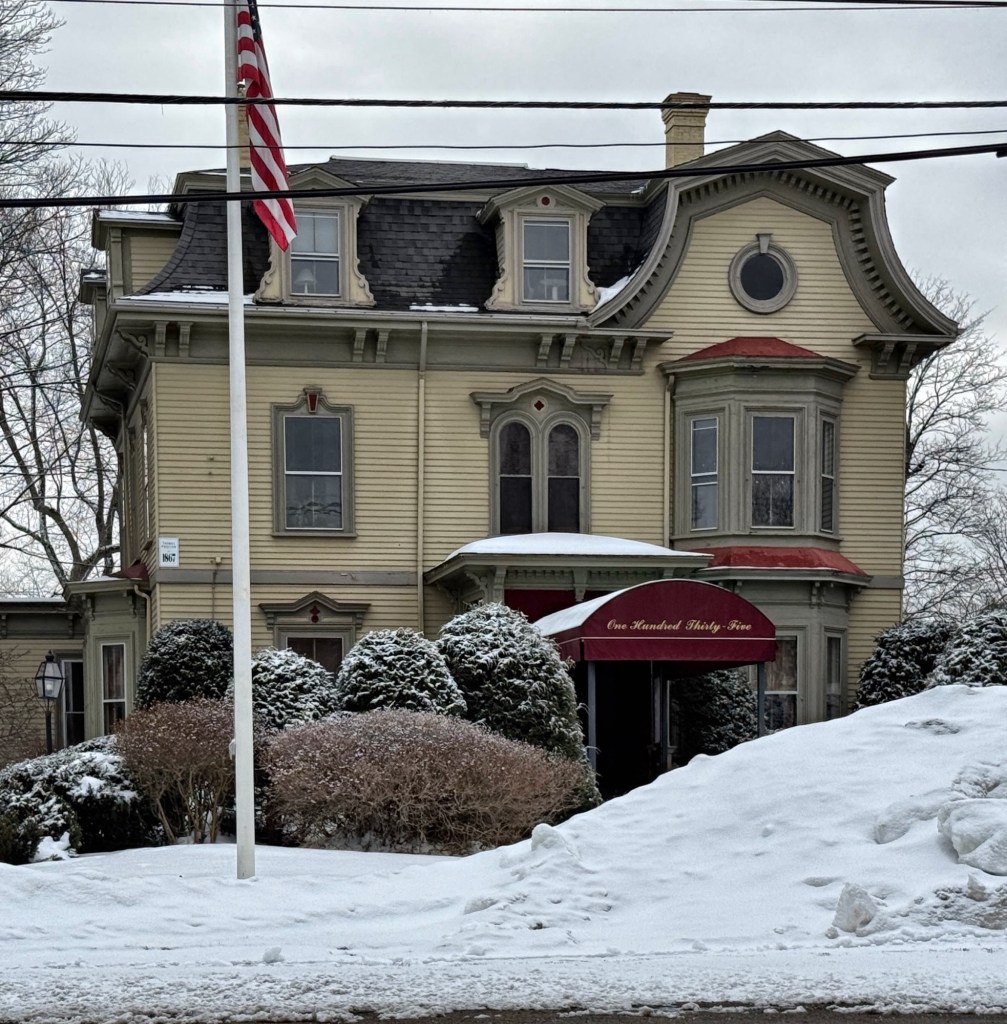
The Fisher-Mason Mansion on South Street in Wrentham, Massachusetts, is among the town’s finest and well-preserved Victorian-era homes. The house is said to have been funded and built in 1868 by Thomas Proctor (who lived in a large Mansard house overlooking the town common) for his daughter, Emma Proctor as a wedding gift upon her marriage to husband, Henry Kollock Fisher, a shoe manufacturer. The couple lived in the home, raising four children here until 1910, when the Proctors sold the property to Otis N. Mason of Providence. Today, the Fisher-Mason Mansion is known as the R. J. Ross Funeral Home, who have operated a funeral home from the residence since before WWII. The mansion features a mansard roof with unique mansard gable at the side sheltering an ocular window.
The Proctor-Brown Mansion in Wrentham, Massachusetts, is a striking example of Second Empire style of architecture and even retains its historic carriage house of the same period and style. The mansion was built in 1861 by Thomas Proctor, a wealthy businessman and industrialist from Providence who earned his fortune by inventing a gimbel point for screws with his company, The American Screw Company. He and his wife, Wrentham native Zeolyde Antoynette Hawes Braman, lived in the home until their deaths in the 1880s. The Proctor Mansion was later owned by Daniel Brown, owner of Wrentham Straw Works, and passed down through his descendants until 1991, when the building became the Proctor Mansion Inn, named after its first owners.
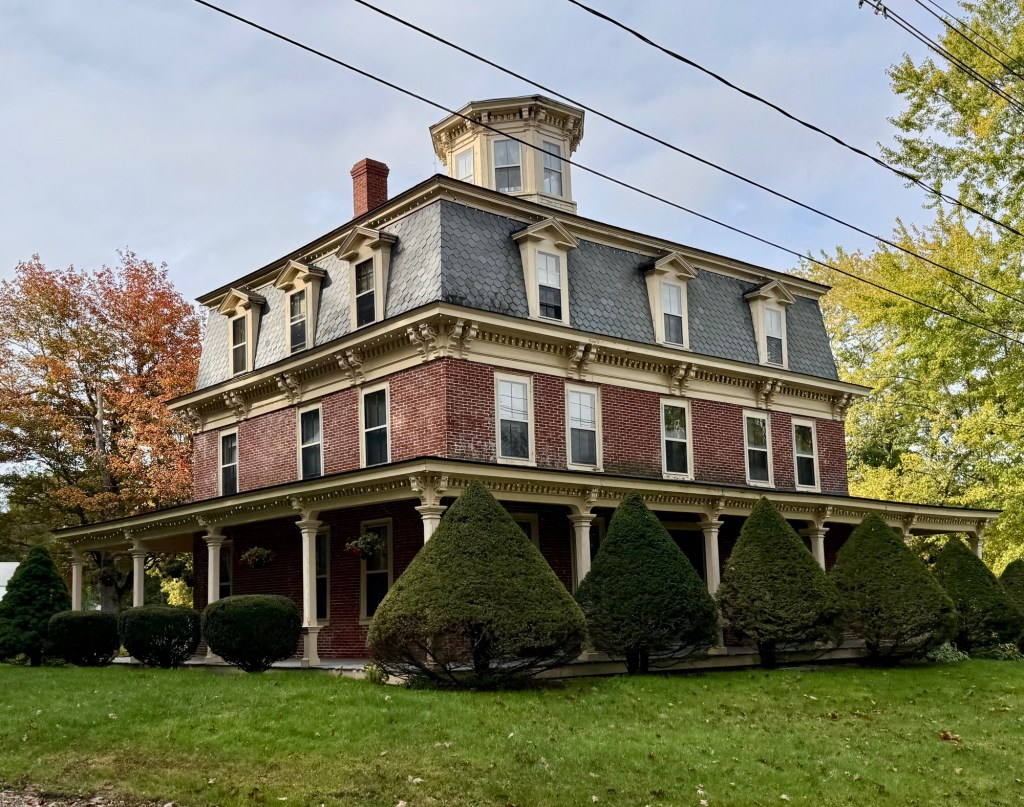
The finest example of the Second Empire style in the industrial village town of Hopedale, Massachusetts, is this stately residence at the beginning of Adin Street, which has been colloquially known as ‘Millionaire’s Row’ as it is lined with many large mansions owned by factory owners and managers. This is the Warren W. Dutcher House, built around 1860 for its namesake, a wealthy and well-connected manufacturer. Square in form, the house is capped by a concave mansard roof in slate, and features a cornice with paired brackets, round-headed dormer windows, and a central entry with door hood supported by oversized brackets all under the full-length porch. Warren Whitney Dutcher (1812-1880) was originally from North Bennington, Vermont, and in the 1850s, he invented a temple that worked better than one used by the Draper Corporation. are adjustable stretchers used on a loom to maintain the width and improve the edges of the woven fabric. George Draper bought an interest in it, and encouraged Mr. Dutcher to move to Hopedale to expand his operations. He moved to Hopedale in 1856, and built this home after a few years of managing the Dutcher Temple Company. After Warren Dutcher died in 1880, the home was inherited by his son, Frank Dutcher, until he built his own house on a lot behind his childhood home.
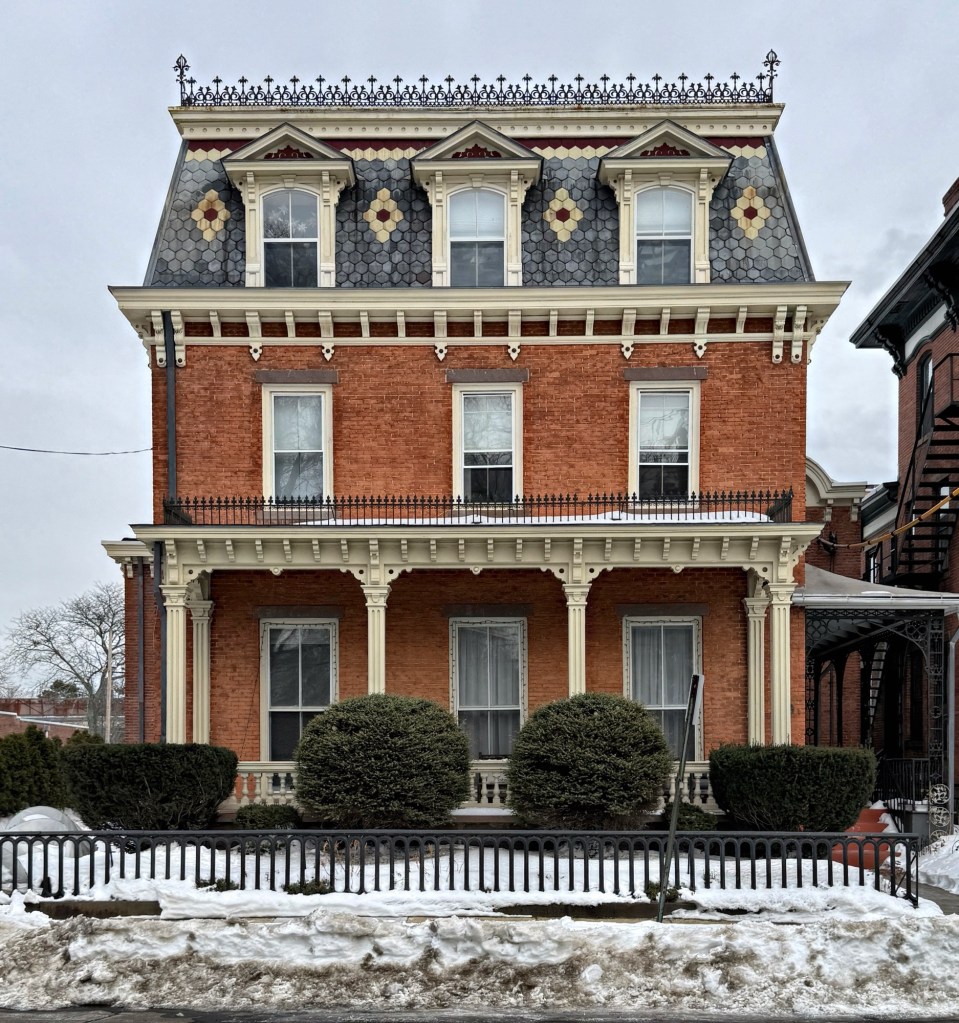
These three identical three-story houses at 156, 158 & 160 Mt. Vernon Street in Beacon Hill Flat were built in 1871 as income producing properties for Samuel and Emily Otis Eliot who lived next door on the corner of Brimmer Street. The architect is not evident from my research, but they were likely designed by Abel C. Martin, who furnished speculative housing for the Eliot’s elsewhere in the neighborhood. All three residences feature brick facades with off-center recessed entries on raised stoops. The use of brownstone lintels and sills, decorative brick cornice, and second-story hexagonal oriel windows add intrigue to the design, along with the slate mansard roofs. The three houses were sold or rented and all were owned by various families, but notable owners of the central house include the architect George Russell Shaw (1848-1937) of the firm Shaw and Hunnewell through the early 1900s. Later in the 20th century, the house was owned by Kevin White (1929-2012), who served as the mayor of Boston for four terms from 1968 to 1984. All three residences are well-preserved and look much as they did when constructed over 150 years ago.
Together with its two neighbors to the south, this townhouse at 6 Walnut Street represents the development of the South Slope of Beacon Hill in the second half of the 19th century, when larger estates continued to be carved up for housing, typically in the Italianate/Second Empire styles. Built in 1856, this residence was constructed on one of the last undeveloped lots in the area and was originally owned by George W. Simmons. Simmons was the owner of a well-known clothing emporium at Oak Hall, North Street, where he sold all kinds of ready-made clothing for men, including that needed by sailors, as well as sets of clothing for those headed for the California gold fields. His business was renowned also for its ambitious and creative advertising campaigns. Simmons died in late 1882, leaving this property to his heirs who sold the property. After successive ownership, the residence was converted to a boarding house during the Great Depression and rented out to families who could no longer afford the large single-family dwellings in the city. After WWII, in 1945, the boarding house was converted into the first Relocation Hostel for Japanese Americans in New England. The mission of the Relocation Hostels was to provide temporary lodging and career guidance to Japanese Americans who had been uprooted from their homes because of unfounded accusations of sabotage during World War II. Massachusetts joined New York, Pennsylvania, Illinois, and other states in establishing these hostels. Today, the residence is a four-unit condominium.
The townhouse at 4 Walnut Street in Beacon Hill is among the most architecturally unique buildings in the neighborhood. The main facade consists solely of a bowed front, which contains a deeply recessed entry to the side. To the right of the entrance, a later tripartite window exhibiting Queen Anne/Colonial Revival multi-pane sash pierces the southern half of the bow front. At the third story, a massive wooden oriel window projects over the street below and contains a window set within a recessed panel. Above, the mansard roof ties in with its neighbor. The residence was built in 1856 and purchased by William C. Tebbetts, a dry goods merchant who was partner in a Downtown firm. By 1890, the residence was owned for a short period by Ernest W. Bowditch (1850-1918), a celebrated landscape architect and engineer. By the 1930s, the property became a boarding house, primarily for single women and widows. Today, the former single-family home contains eight apartments and from the exterior, presents some Victorian flair and quirkiness not commonly seen on the South Slope of Beacon Hill.
Built in 1856, the townhouse at 2 Walnut Street is a unique Second Empire style townhouse erected on one of the last undeveloped lots on the South Slope of Boston’s exclusive Beacon Hill neighborhood. The three-story, brick residence is capped by a mansard roof and its facade is dominated by a full-height octagonal bay, which at the center on each floor, is a recessed brick panel in lieu of windows. The property was originally owned by Henry Sturgis Grew (1834-1910) a real estate developer and politician who split his time between this residence and a large estate called Grew’s Hill, that grew to several hundred acres and contained an active farm, part of which was later incorporated into Stony Brook Reservation. Henry Grew’s daughter, Jane Norton Grew, would go on to marry John Pierpont Morgan Jr. (J. P. Morgan) in 1890. The Grew House was modernized in the 20th century with a Classical door surround, but otherwise, it maintains the appearance of when it was built in 1856.
The Lindens neighborhood, located just east of the civic and commercial core of Brookline Village, was long an apple and cherry orchard known as Holden Farm. Beginning in 1843, the area became the earliest planned development in the town and was laid out as a “garden suburb” for those wishing to escape the growing congestion of Boston. As originally conceived in 1843, it reflected the latest ideals of planned residential development for a semi-rural setting on land owned by Thomas Aspinwall Davis. The streets, parks, and house lots here were laid out by civil engineer, Alexander Wadsworth, who two years earlier, laid out plans for Mount Auburn Cemetery in Cambridge, the first “Rural Cemetery” in America. Early homes were built on speculation by John F. Edwards, an architect-builder, for Davis, who was strict about high-quality designs in the Greek and Gothic revival styles in his newly laid out neighborhood. This house on Linden Street was built in 1846 in the Greek Revival style and was purchased upon completion by Isaac Rich. Isaac Rich (1801-1872) was a prominent merchant and philanthropist and founder of Boston University. The house was modernized in the 1860s with the addition of a mansard roof and paired windows.