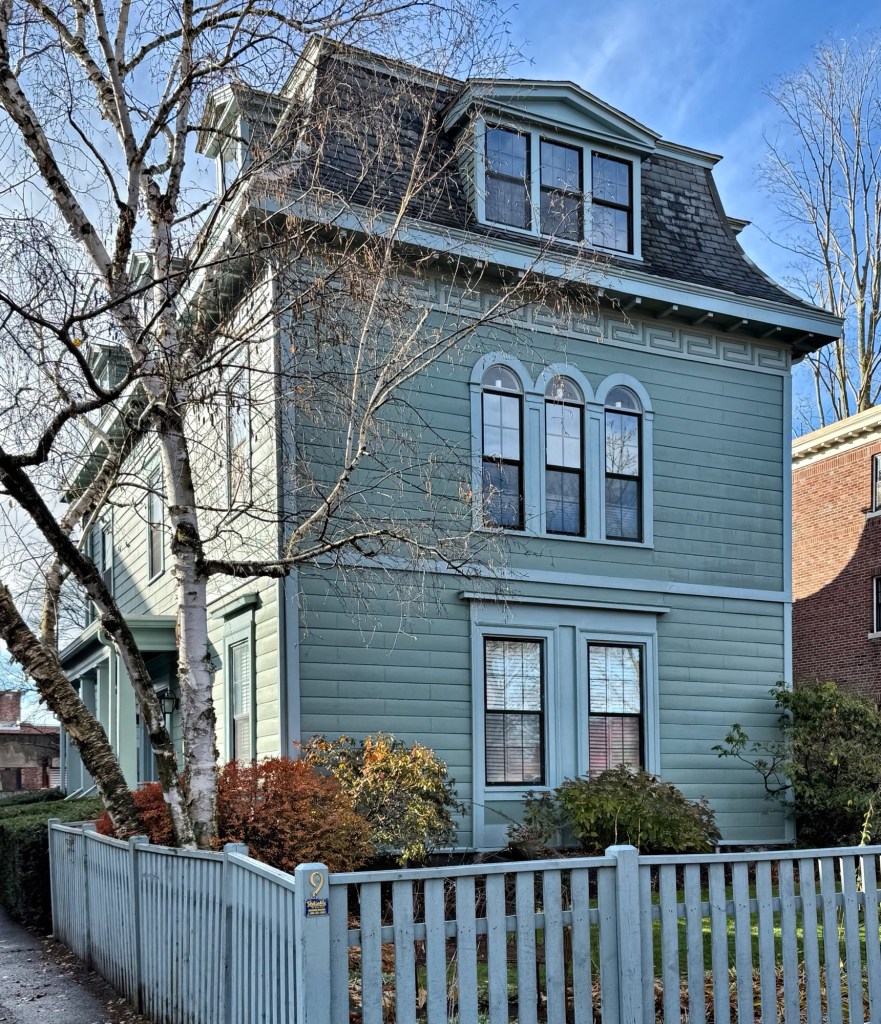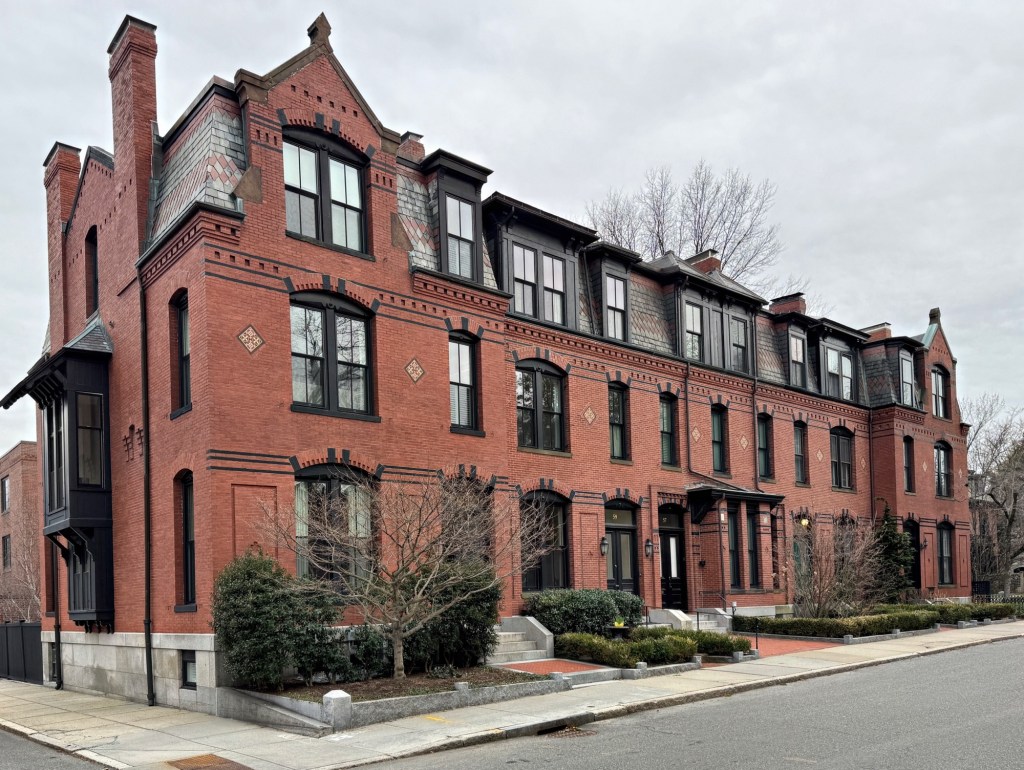
Amos Lawrence Rowhouses // c.1877

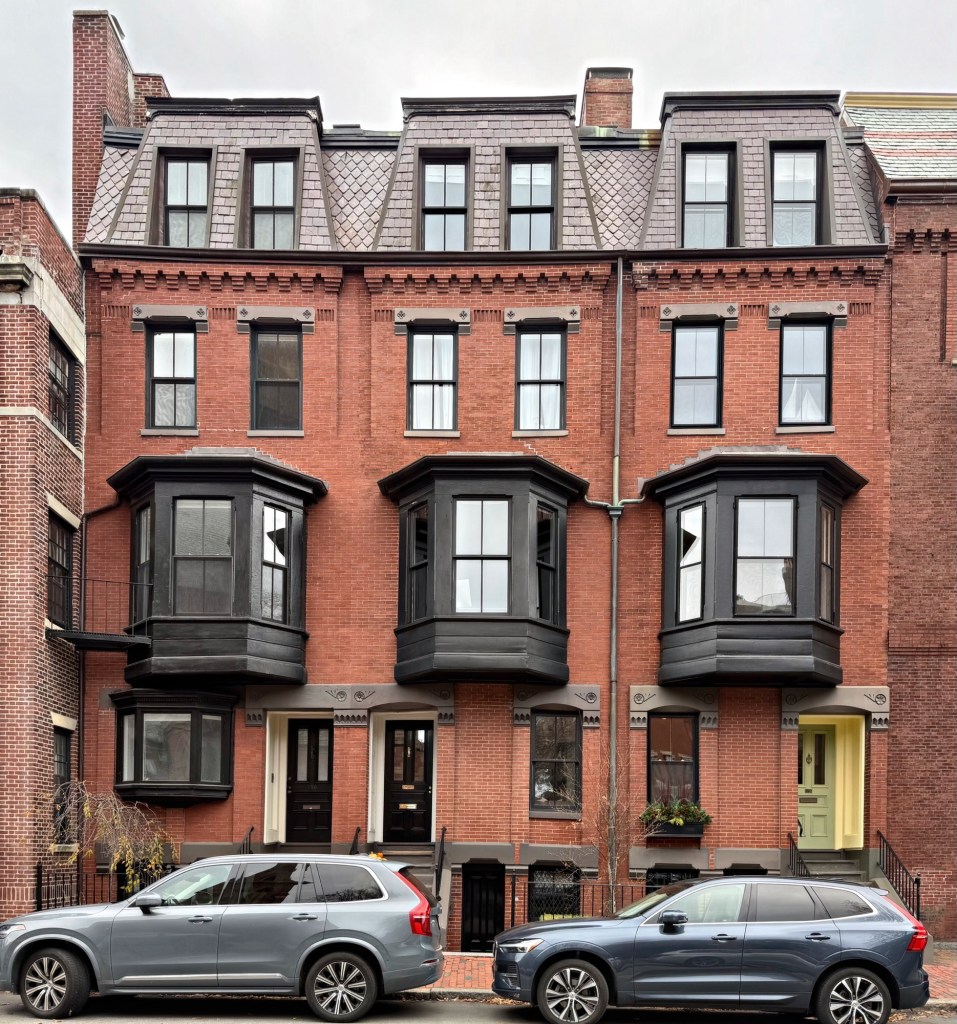
53-61 Monmouth Street

Amos A. Lawrence (1814-1886), a wealthy Boston merchant, owned land holdings in the present-day Longwood neighborhood of Brookline, just over the Muddy River from Boston, and developed the area into a wealthy and high-quality suburb. Lots were laid and Lawrence hired civil engineer, Ernest Bowditch, to plat for multiple sets of distinctive rowhouses surrounding a small green mall, which was later named Monmouth Court. Once the property was laid out, Amos Lawrence hired the Boston architects, J. Pickering Putnam and George T. Tilden, to design rowhouses for rental income. George Tilden was previously employed at the firm of Ware & Van Brunt, a firm that mastered and popularized the panel brick style in the Boston area in the 1870s and 1880s, and he clearly built upon this expertise for the rows for Amos Lawrence in Brookline. All four rows of houses are distinctive, yet compliment eachother stylistically with projecting bays. intricate brickwork, complex rooflines with dormers, and applied ornament. These two rows on the western side of Monmouth Court at 53-61 Monmouth Street and 19-27 Monmouth Court, were also likely the work of Putnam and Tilden, who practiced jointly for a couple years but published their work separately. Stylistically, the two Monmouth Street rows appear to be of the same architect, George Tilden with identical tilework and elements, and the two Monmouth Court rows as the work of Putnam with polychromatic segmental arches over the windows.
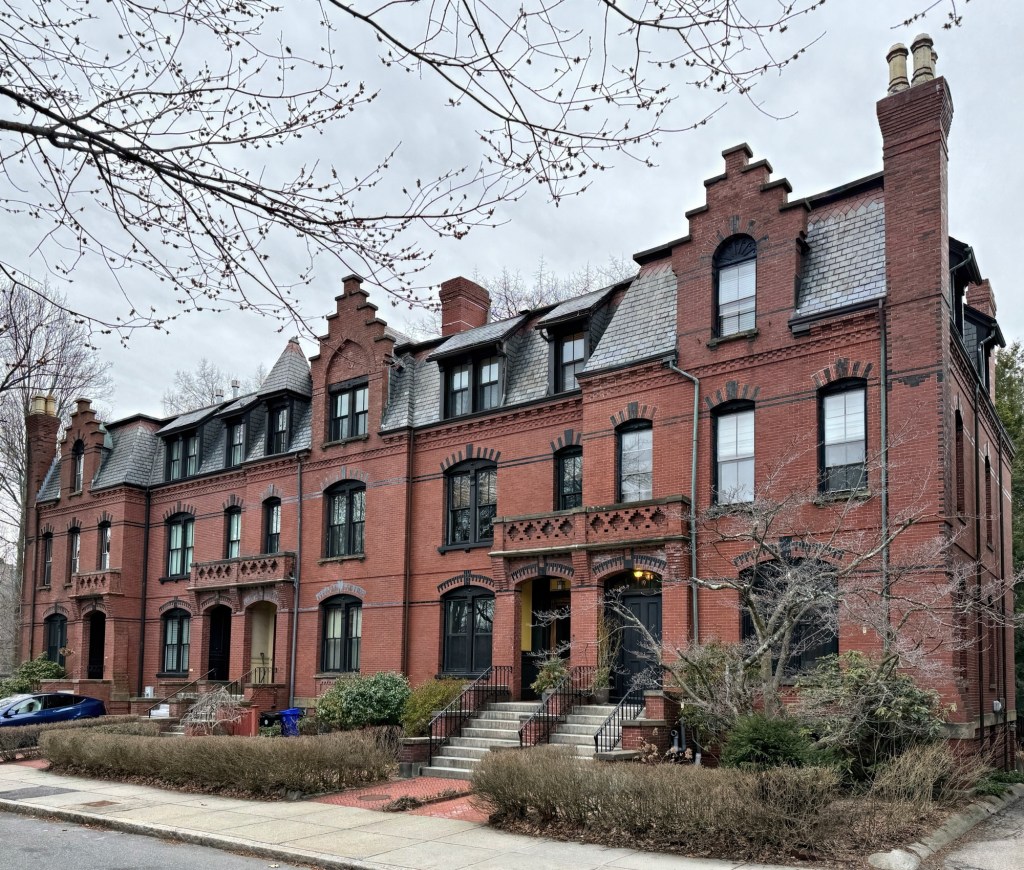
19-27 Monmouth Court

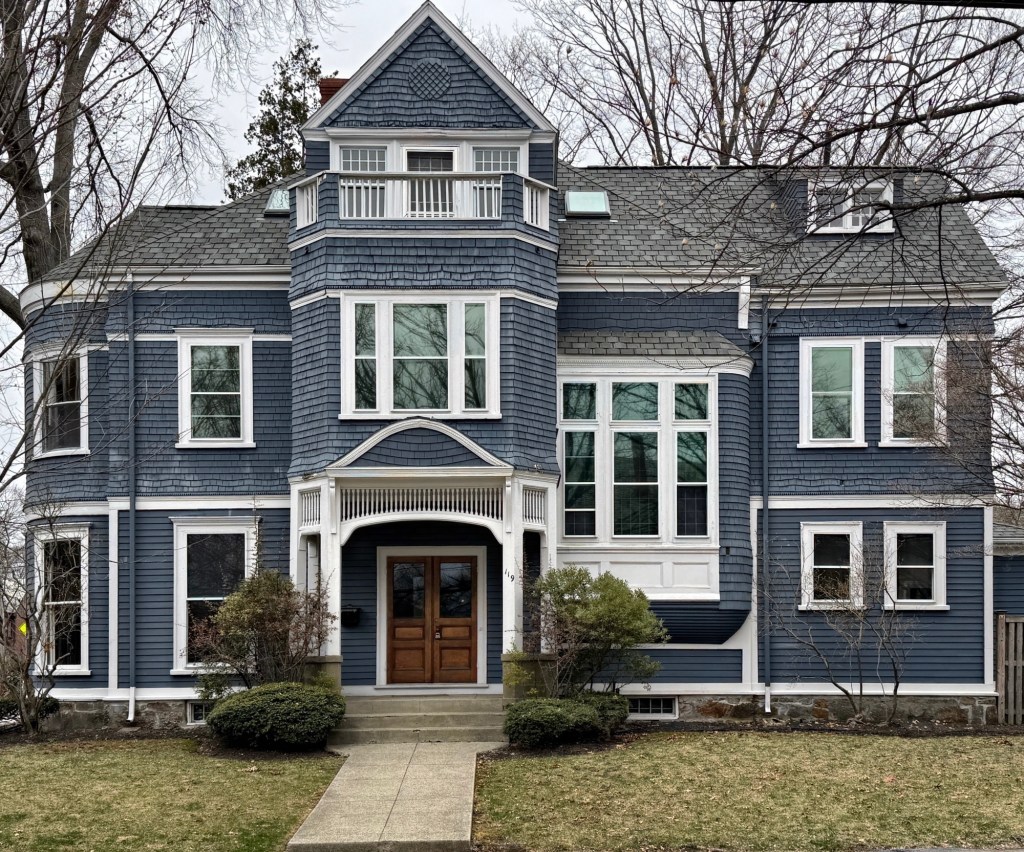
Harrison Gardner House // c.1873

The Harrison Gardner House on Colchester Street in the Longwood section of Brookline is a stunning late Victorian residence that was “modernized” in 1887 to its current configuration. Harrison Gardner (1841-1899) was a Civil War veteran who arrived back in Boston becoming a wealthy dry goods wholesaler, later investing in Massachusetts mills. On January 20, 1871, Harrison was a founder and treasurer of the Boston Red Stockings of the new National Association of Professional Base Ball Players (NABBP). The team’s name  changed multiple times, eventually landing on the Boston Braves, which would later move to Atlanta to become the Atlanta Braves in the MLB. With increased wealth and status, Harrison Gardner in 1887, hired the prestigious architectural firm of Hartwell and Richardson, to update his Brookline residence with additions and renovations in the Queen Anne and Shingle styles. Years after his death in 1899, Harrison’s widow, Laura Perkins Harrison, moved out of the large Longwood home and into a new, Arts and Crafts style stucco residence on Amory Street, designed by William Gibbons Rantoul.

Webber-Bouve Mansion // 1885

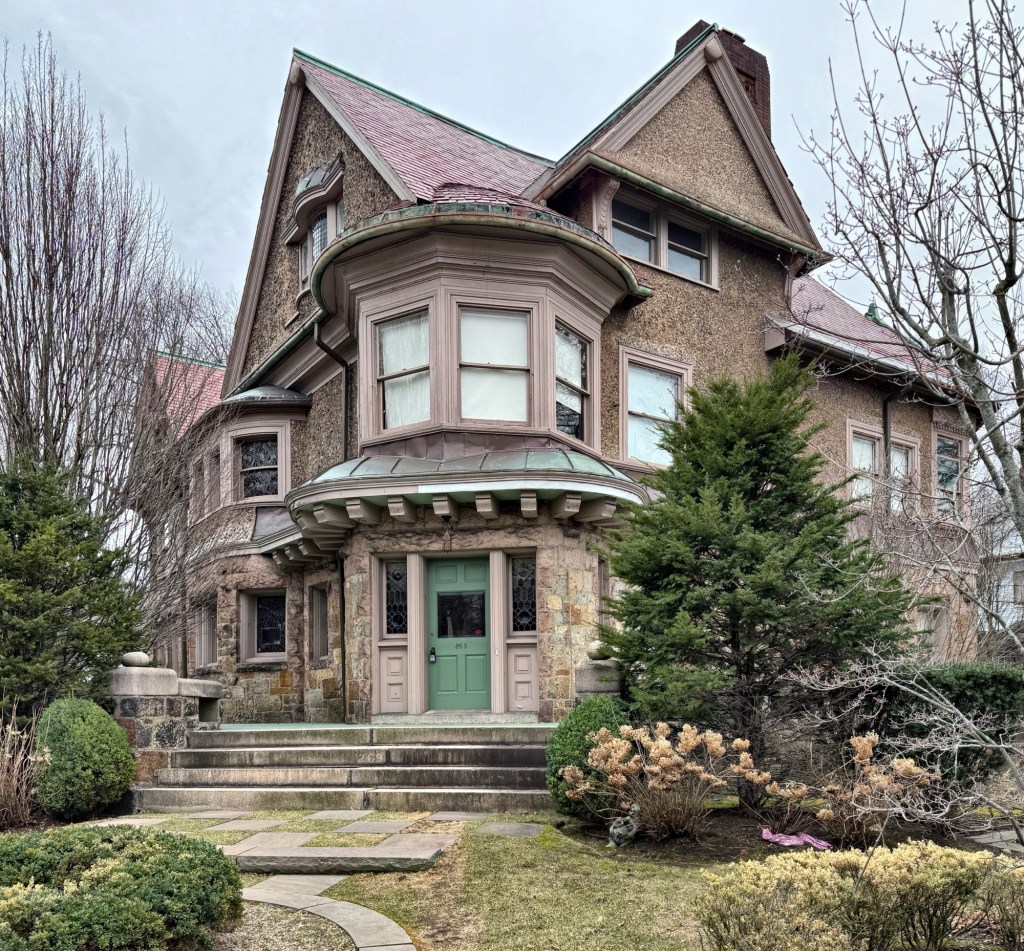
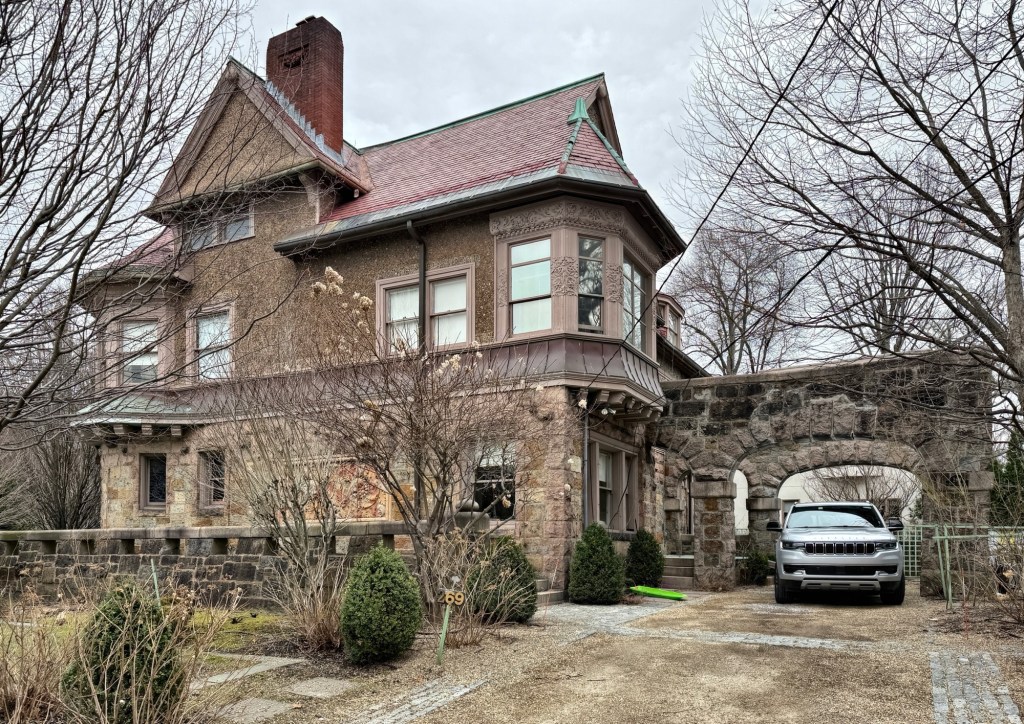
One of the most unique and truly great Victorian-era residences in Brookline, Massachusetts, can be found on Kent Street, an eclectic and fairly hidden mansion built of stucco, stone and terracotta. Built in 1885 by John Prescott Webber, a Maine lumber baron who moved to the Boston area and became a real estate magnate, the handsome residence was designed by architect, S. Edwin Tobey. The most important element of the structure is its surfacing material, with random and quarry-faced ashlar used on the first floor with roughcast stucco on the second level. Additional detailing includes the large brackets, irregular form and fenestration, massive bays, gables, stone porte-cochere, and carved terracotta details. The house was likely sold to George F. Bouve shortly after it was completed, and he remained the owner until his death in 1898. Mr. Bouve was a shoe and leather dealer and shoe manufacturer. The Webber-Bouve Mansion is one of those houses that the more you look at it, the more detail and unique features you notice. The historic stable was demolished in 1995 in exchange for a preservation restriction on the main house by the owners.

Amory-Boit House // 1865

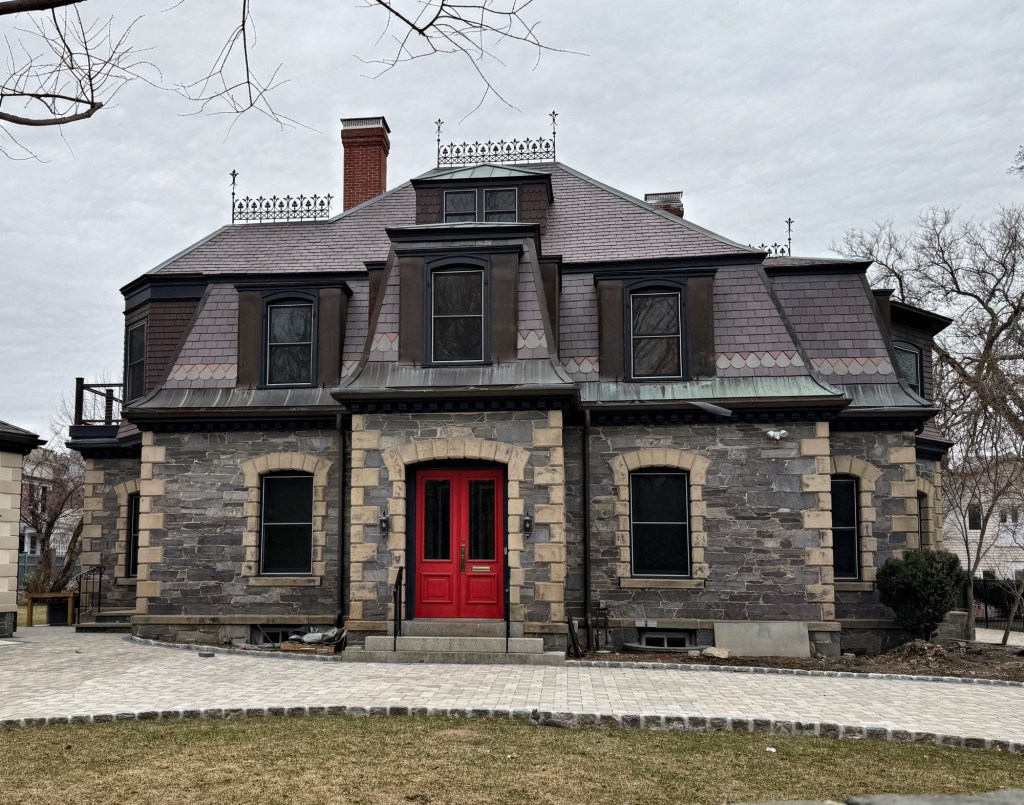
Built in 1865, the Amory-Boit House on Colchester Street in Brookline‘s exclusive Longwood neighborhood, is a stunning Second Empire style home with connections to prominent local families. The residence has a one-story stone base which meets the slate mansard roof providing two-and-a-half stories above which are crowned by iron cresting at the peak of the roof. The property was one of the early homes built in the area, developed by David Sears, one of the wealthiest property owners in Boston, who recognized the potential for development of this marshy area of Brookline due to its close proximity to the city. A large lot on Colchester Street was purchased by Dr. Robert Amory (1842-1910), who in 1864, married Marianne Appleton Lawrence (1843–1882), daughter of Amos Adams Lawrence, a major developer of the nearby Cottage Farm neighborhood of Brookline. This stone cottage, one of two neighboring homes built at the same time for Dr. Amory, was likely rented to friends and family with the other as his primary country house. This home was later sold to real estate and insurance businessman and author Robert Apthorp Boit (1846-1919). Robert Boit published the novel, Eustis in 1884 and his family history, Chronicles of the Boit Family and Their Descendants, in 1915. The home and its neighbor had been undergoing renovations for a while and are located within a local historic district.

George B. Dexter House // 1885

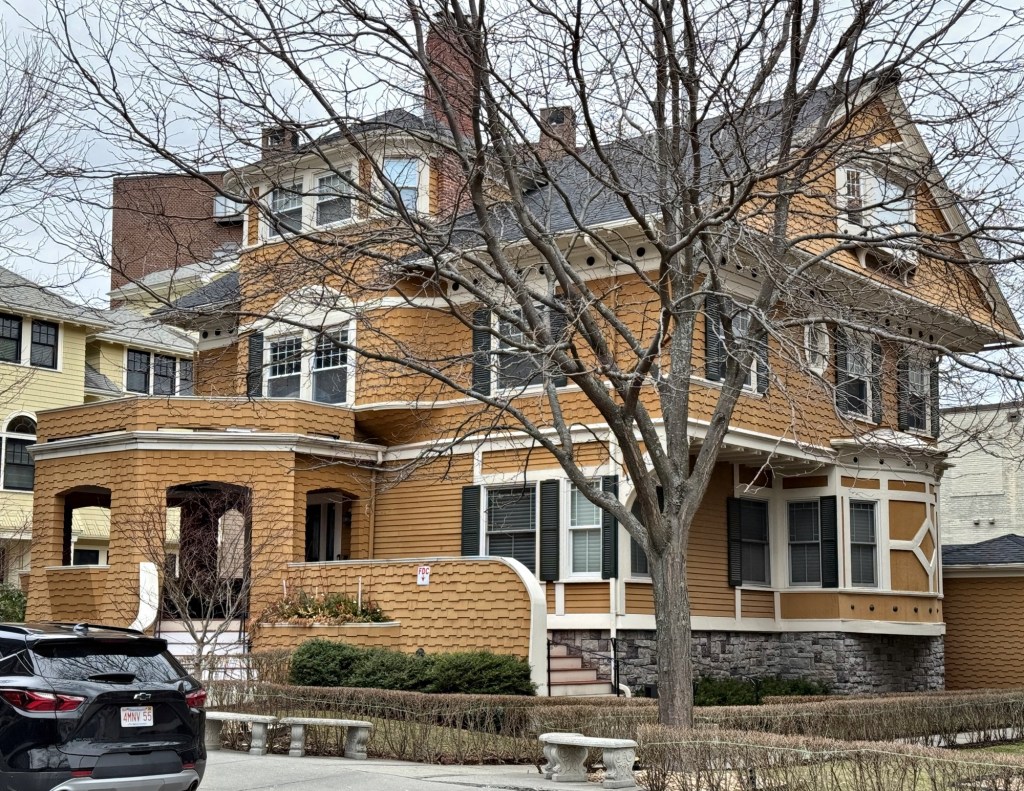
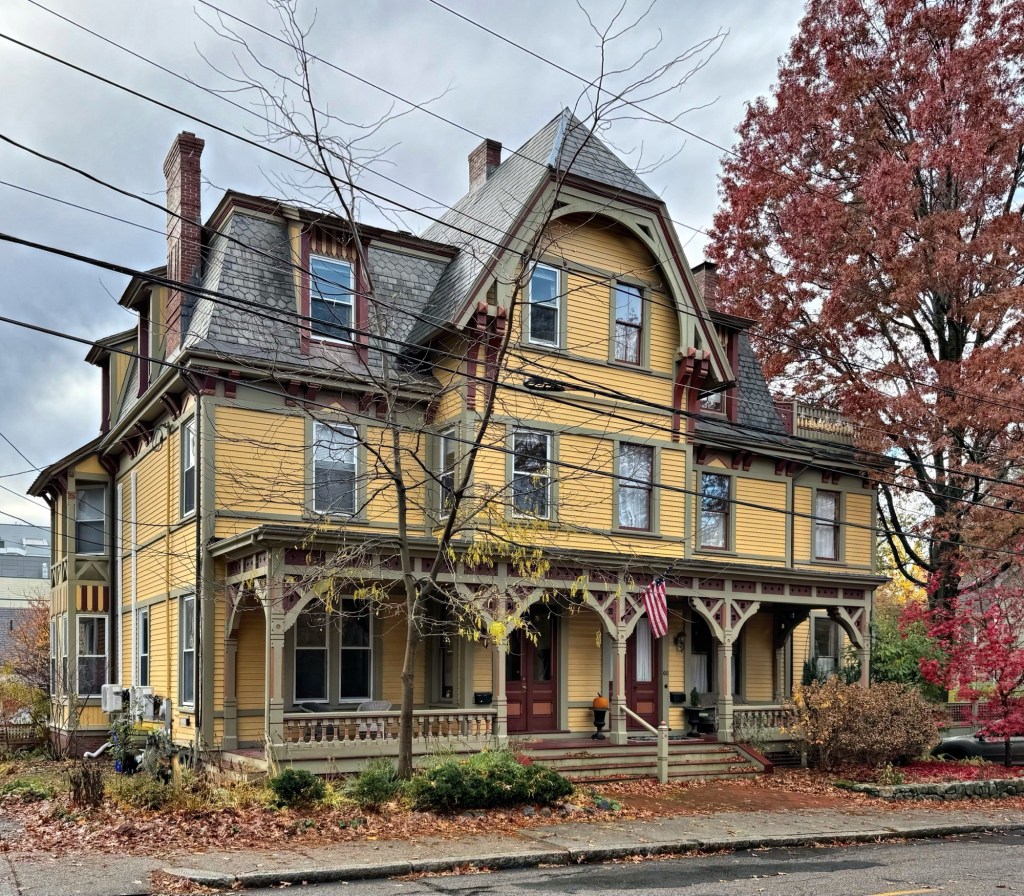
An expression of the Shingle style in all her beauty, the George B. Dexter House on Sewall Avenue in Brookline was built in 1885 both as a residence and a billboard advertising the owner’s business, really. The residence was built for George B. Dexter (1854-1935) a partner in the Dexter Brothers Company a paint and stain manufacturer that was a favorite of architects in the late 19th and early 20th centuries. For his Brookline residence, George Dexter hired architect S. Edwin Tobey to design this Shingled masterpiece with continuous shingle siding with rounded bays and a shingled piazza to showcase the stain products of his company. According to articles, Dexter also stained and painted the interior a variety of colors to showcase the wide range of options his company had. George Dexter would move to Pill Hill neighborhood in a new home just a decade after having this residence built, likely caused by the development of apartments and commercialization in the Coolidge Corner area by the turn of the century. The Dexter House was converted to a two-family in the 1920s and today has three condominium units, with owners clearly taking great pride in this significant residence.

Proctor-Brown Mansion // 1861

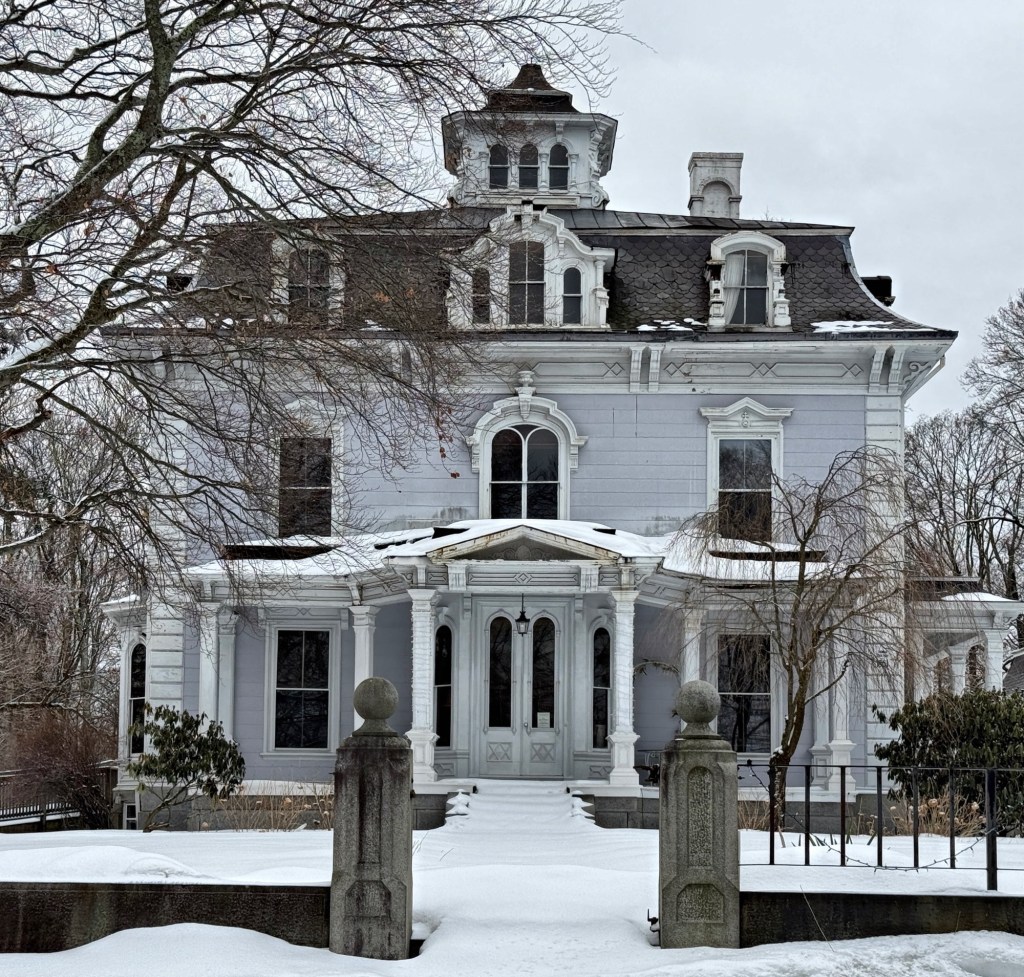
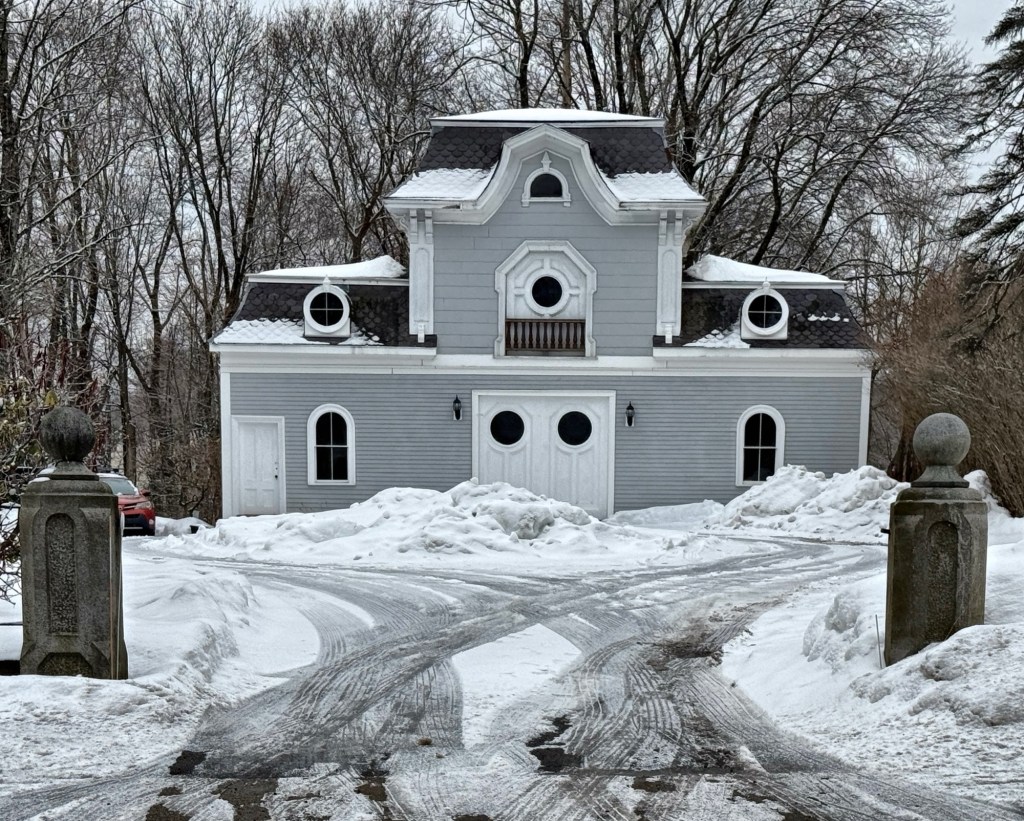
The Proctor-Brown Mansion in Wrentham, Massachusetts, is a striking example of Second Empire style of architecture and even retains its historic carriage house of the same period and style. The mansion was built in 1861 by Thomas Proctor, a wealthy businessman and industrialist from Providence who earned his fortune by inventing a gimbel point for screws with his company, The American Screw Company. He and his wife, Wrentham native Zeolyde Antoynette Hawes Braman, lived in the home until their deaths in the 1880s. The Proctor Mansion was later owned by Daniel Brown, owner of Wrentham Straw Works, and passed down through his descendants until 1991, when the building became the Proctor Mansion Inn, named after its first owners.

Elizabeth G. Evans – Edward A. Filene House // 1883

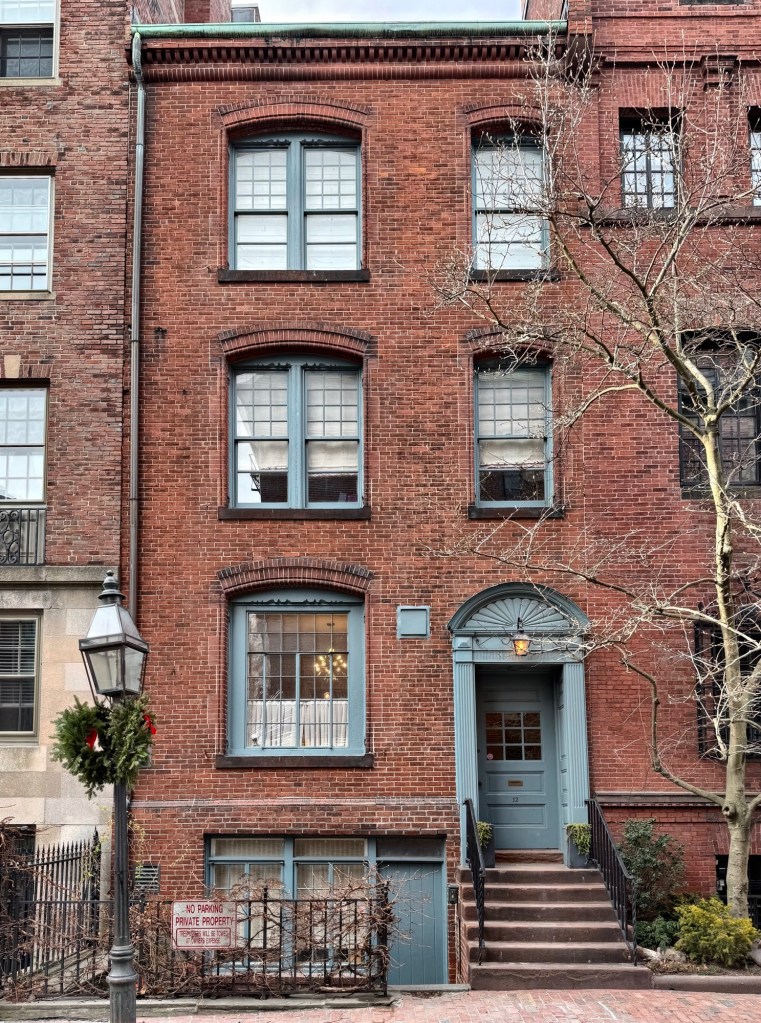
This unique brick house at 12 Otis Place in Beacon Hill was built in 1883 by the architect, Carl Fehmer for attorney Glendower Evans and his wife, Elizabeth Gardiner. Mr. Evans died in 1886 of Hodgkin’s Disease at just 30 years of age. His widow, Elizabeth Glendower Evans (1856-1937) was greatly influenced by her husband during their brief marriage, even taking her husband’s first name as her middle name after his death. Elizabeth Glendower Evans became a prominent social activist, studying child labor conditions in the South and took up the cause of women’s suffrage and the associated problems of tenements and factory work arising from disenfranchisement in the late 19th and early 20th centuries. In 1915 Evans served as a delegate to the International Congress of Women at the Hague. She was the first National Organizer of the Woman’s Peace Party. From 1920 until 1937 she served as a national director of the American Civil Liberties Union. In the 1910s, Elizabeth sold the home to Edward Albert Filene (1860-1937), who, together with his younger brother Abraham Lincoln Filene, reorganized his father’s department store into “William Filene’s Sons Company”, which would later become Filene’s. He was a supporter of credit unions to help ordinary American workers to access loans at reasonable rates and allow workers to save their money so that when hard times hit, they were prepared.

Martin-Ware House // 1872

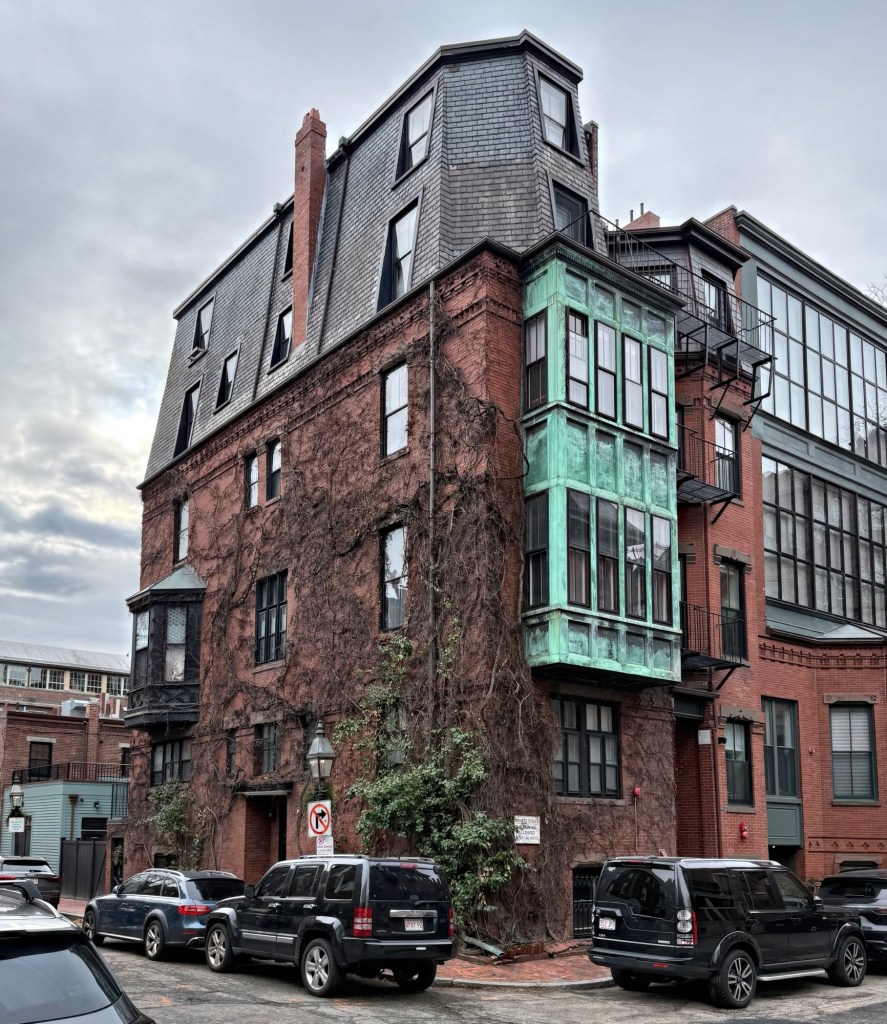
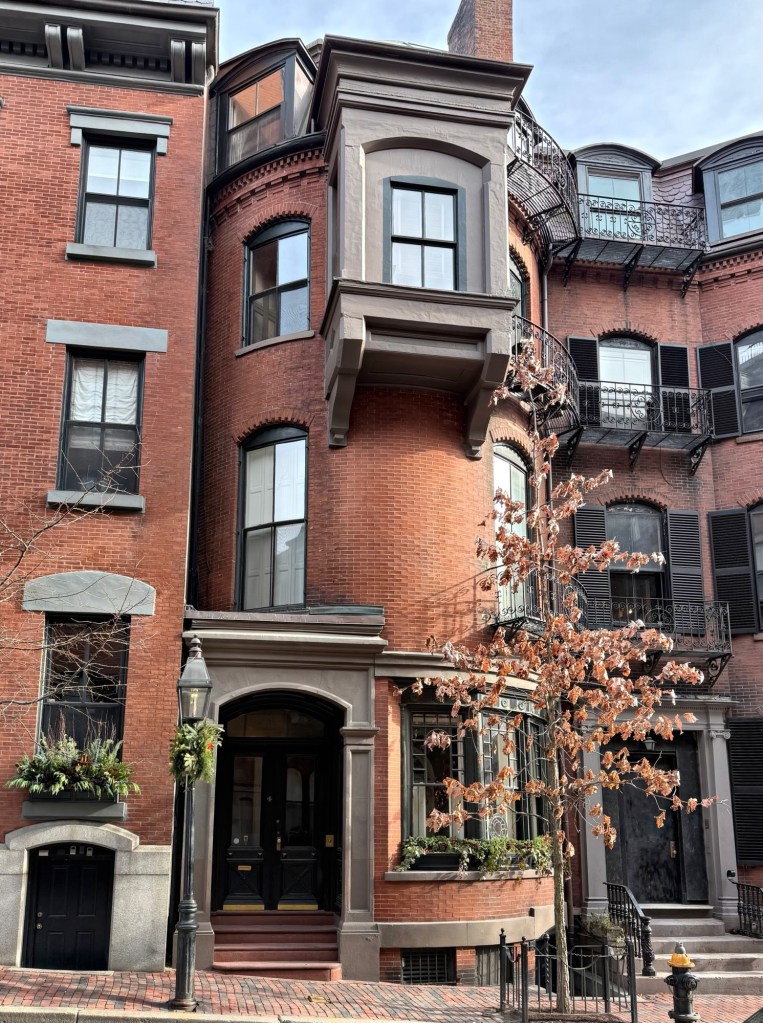
One of the most interesting houses in Beacon Hill is this unique Second Empire style townhouse with towering two-story mansard roof at 3 Otis Place/49 Brimmer Street. When walking around Boston and exploring other cities, it is always fun to delve into research and learn about the built environment and the stories that brought these places to be! This residence was constructed in 1872 on land that was filled here between 1867 and 1869 formerly occupied by the Charles River. Creating the land at and around Otis Place was one of a series of responses to the need for more physical space in Boston and to cover the pollution of the Charles River along the West End and what would become the Back Bay. The houses at 3-4 Otis Place were originally owned and designed by architect, Abel C. Martin, who resided next door to the topic of this post until his death. In the early 20th century, this house was owned by Charles Eliot Ware Jr. a publisher, who in 1929, hired architect, Charles Greely Loring to add the copper-clad oriel window on the north elevation and elevate the mansard roof to create the unique two-story mansard. The old Martin-Ware house has been apartments since at least the 1960s.

Samuel and Emily Eliot Rowhouses // 1871

These three identical three-story houses at 156, 158 & 160 Mt. Vernon Street in Beacon Hill Flat were built in 1871 as income producing properties for Samuel and Emily Otis Eliot who lived next door on the corner of Brimmer Street. The architect is not evident from my research, but they were likely designed by Abel C. Martin, who furnished speculative housing for the Eliot’s elsewhere in the neighborhood. All three residences feature brick facades with off-center recessed entries on raised stoops. The use of brownstone lintels and sills, decorative brick cornice, and second-story hexagonal oriel windows add intrigue to the design, along with the slate mansard roofs. The three houses were sold or rented and all were owned by various families, but notable owners of the central house include the architect George Russell Shaw (1848-1937) of the firm Shaw and Hunnewell through the early 1900s. Later in the 20th century, the house was owned by Kevin White (1929-2012), who served as the mayor of Boston for four terms from 1968 to 1984.
All three residences are well-preserved and look much as they did when constructed over 150 years ago.

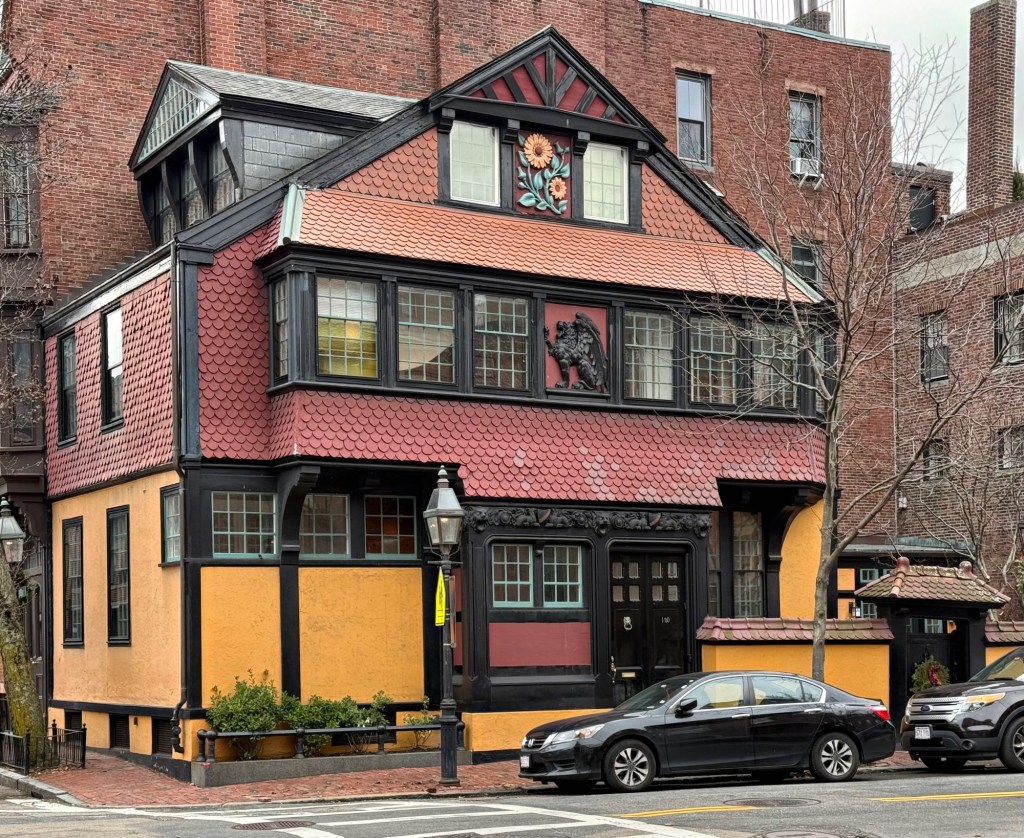
Sunflower Castle // 1878

This absolutely unusual and enchanting cottage on Mount Vernon Street in Beacon Hill, Boston, was originally was constructed in the 1840s but completely altered decades later in its distinctive English Queen Anne style. In 1878, Frank Hill Smith, an artist and interior designer, worked with architect, Clarence Luce to renovate what was originally a two-story Greek Revival house into one of the most eclectic and unique residences in New England. The Sunflower Castle, a name reputedly coined by Oliver Wendell Holmes, features a yellow stucco first floor with the upper floors covered with red fish-scale shingles. Further detail includes the half-timbering, decorative panels depicting a gryffin and a sunflower in the gable, and carved wood frieze over the doorway. Clarence Luce was likely so inspired by this project, that he built an even more extravagant example of this house for Edward Stanwood in Brookline soon after. By 1903, the property was sold to the painter, Gertrude Beals Bourne and her husband, architect, Frank A. Bourne, who were both key players in the revival and gentrification of the Beacon Hill Flat neighborhood west of Charles Street in the early 20th century. The Sunflower Castle was used as their home and as an artist’s studio for the couple, with Frank adding the side garden wall with tile-roofed gateway to enclose a private open space. The property remains as a private residence.