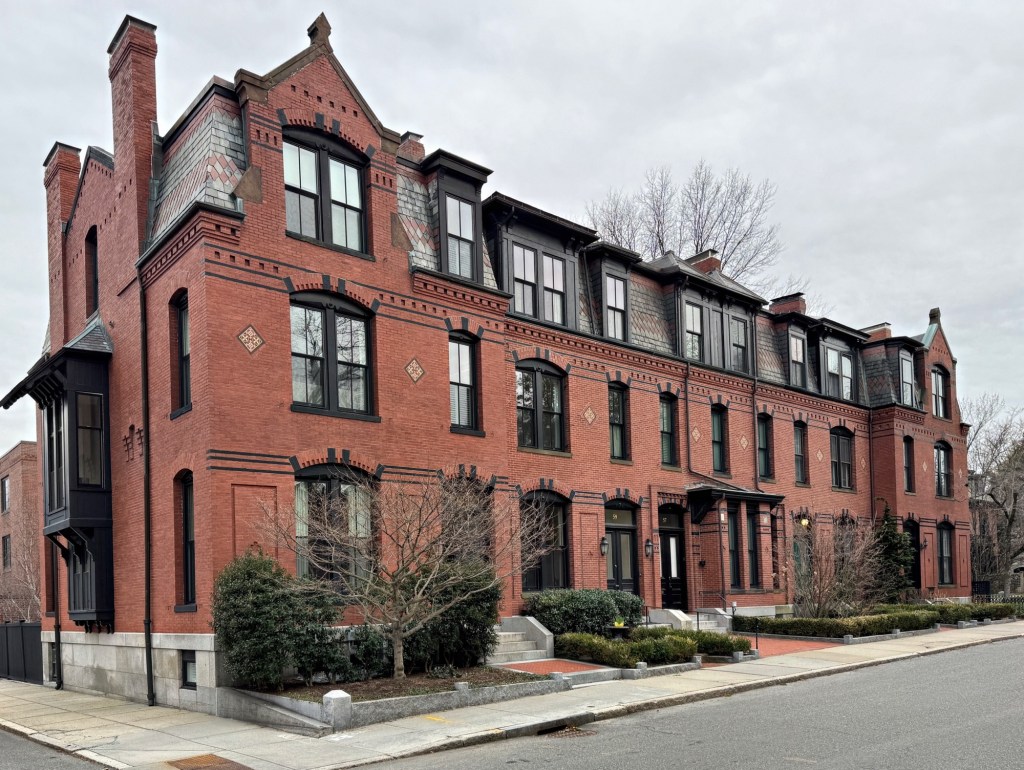
Amos Lawrence Rowhouses // c.1877

53-61 Monmouth Street

Amos A. Lawrence (1814-1886), a wealthy Boston merchant, owned land holdings in the present-day Longwood neighborhood of Brookline, just over the Muddy River from Boston, and developed the area into a wealthy and high-quality suburb. Lots were laid and Lawrence hired civil engineer, Ernest Bowditch, to plat for multiple sets of distinctive rowhouses surrounding a small green mall, which was later named Monmouth Court. Once the property was laid out, Amos Lawrence hired the Boston architects, J. Pickering Putnam and George T. Tilden, to design rowhouses for rental income. George Tilden was previously employed at the firm of Ware & Van Brunt, a firm that mastered and popularized the panel brick style in the Boston area in the 1870s and 1880s, and he clearly built upon this expertise for the rows for Amos Lawrence in Brookline. All four rows of houses are distinctive, yet compliment eachother stylistically with projecting bays. intricate brickwork, complex rooflines with dormers, and applied ornament. These two rows on the western side of Monmouth Court at 53-61 Monmouth Street and 19-27 Monmouth Court, were also likely the work of Putnam and Tilden, who practiced jointly for a couple years but published their work separately. Stylistically, the two Monmouth Street rows appear to be of the same architect, George Tilden with identical tilework and elements, and the two Monmouth Court rows as the work of Putnam with polychromatic segmental arches over the windows.
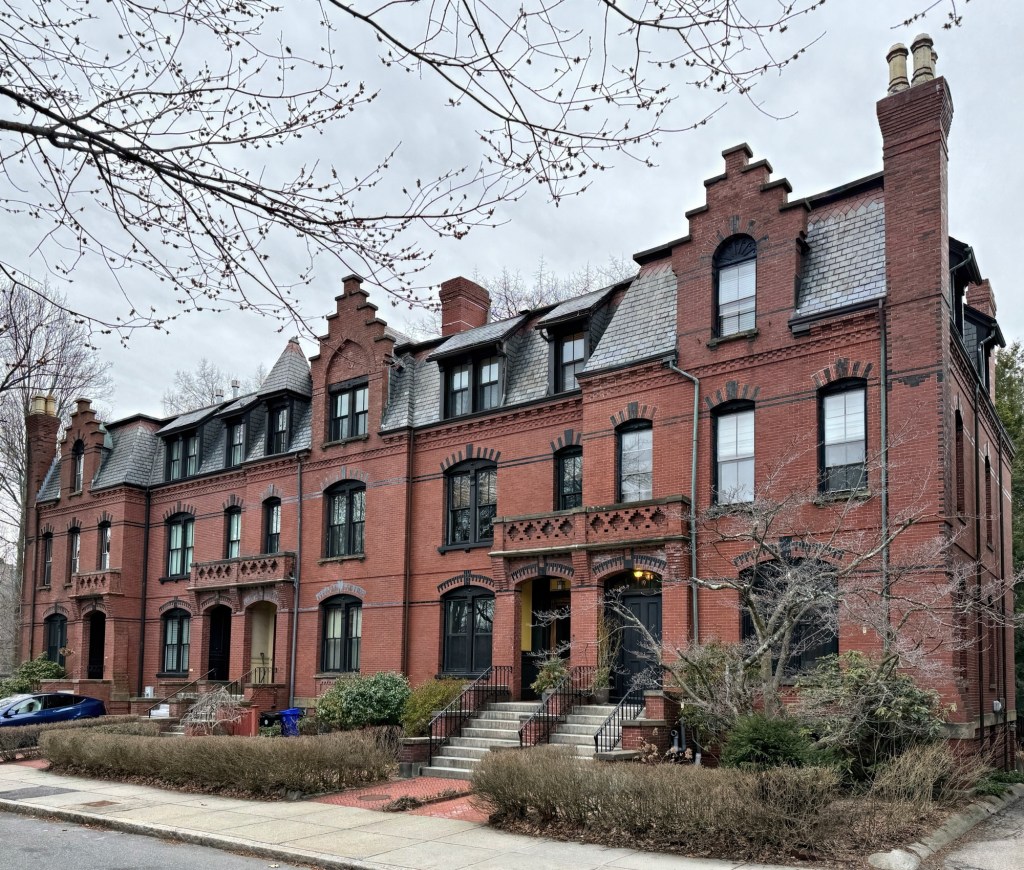
19-27 Monmouth Court

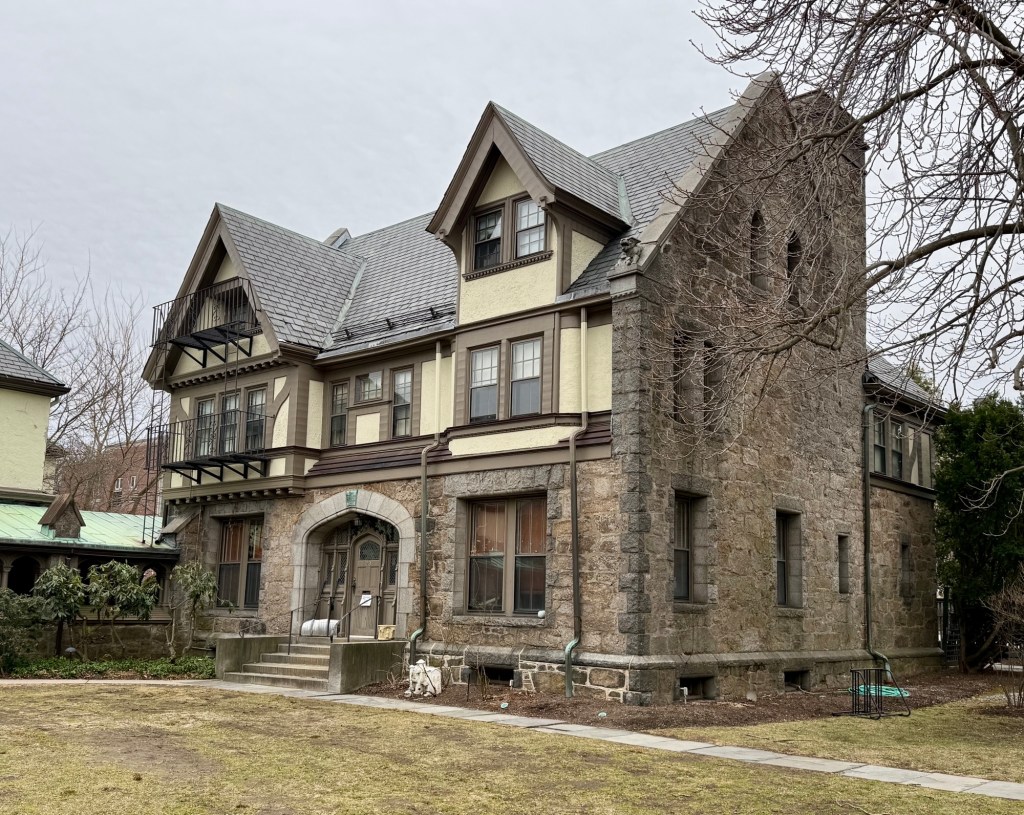
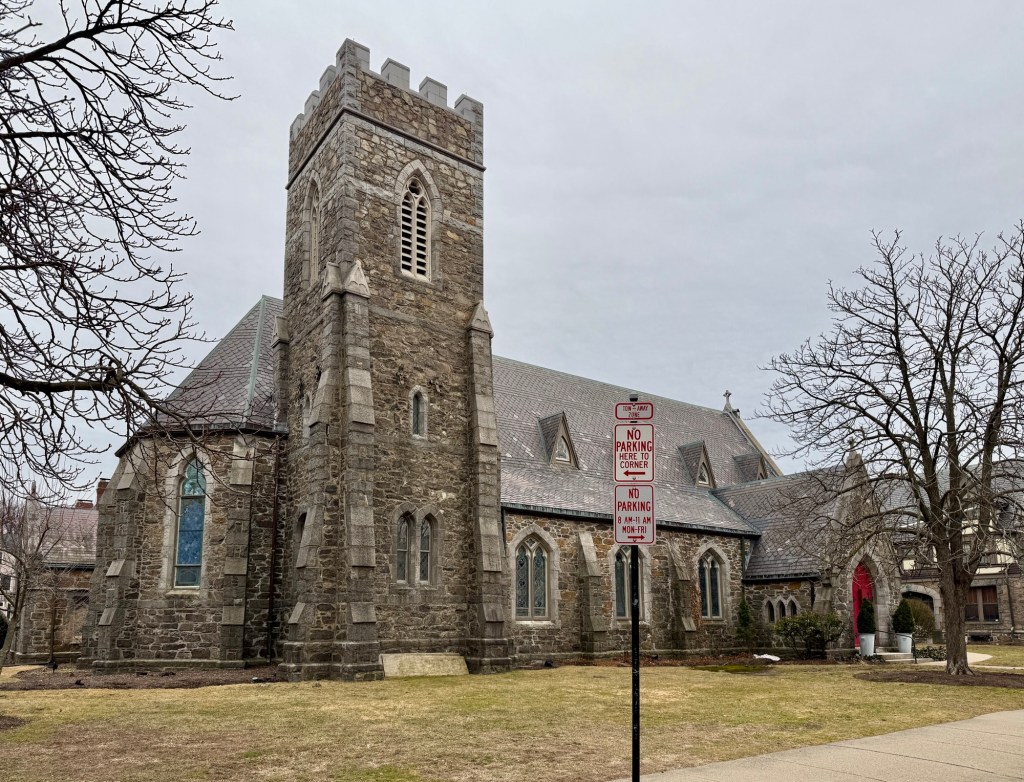
Church of Our Saviour, Brookline // 1868

The Church of Our Saviour of Brookline, Massachusetts, is an architecturally and historically significant church complex in the Longwood neighborhood that has ties to those who established this neighborhood into what it is today. The church was built in 1868 by the brothers Amos and William Lawrence, in honour of their father, Amos Lawrence. The church was established by twelve established Boston-area families who wanted to grow the Episcopal diocese in the area. They hired architect, Alexander Rice Esty, who designed the building in the Gothic style, and it was completed in February 1868. The church was expanded numerous times with a transept chapel designed by the firm Sturgis and Cabot (1893) to the memory of Sarah Appleton Lawrence (wife of Amos A. Lawrence); a parish hall designed by the firm of Cabot and Chandler (1880); and a rectory, designed by architect Arthur Rotch (1886). The church remains an active congregation and is lovingly preserved by the congregants.

Rectory

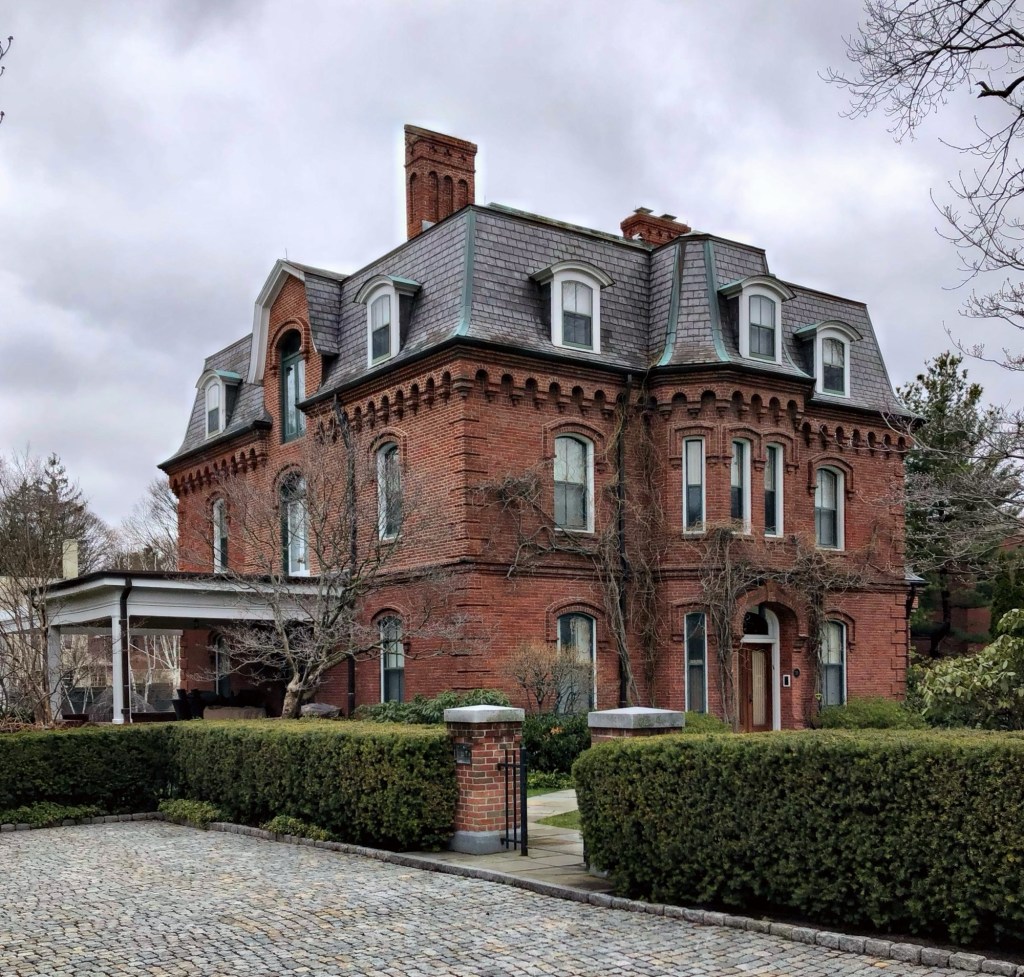
Wells-Bullard House // c.1868

One of the finest Second Empire style houses in Brookline can be found on Prescott Street in the fashionable Cottage Farm neighborhood of the city. Built around 1868 by Amos A. Lawrence, who lived in a house nearby, this “cottage” was rented out to John Wells (1819-1875), a Judge on the Massachusetts State Supreme Court until his death. The property remained in the Lawrence family into the 20th century and was later rented to George E. Bullard, a banker. The brick house is notable for its siting at the center of the lot, corner quoins, brick corbelled cornice, arched door and windows, and slate mansard roof.

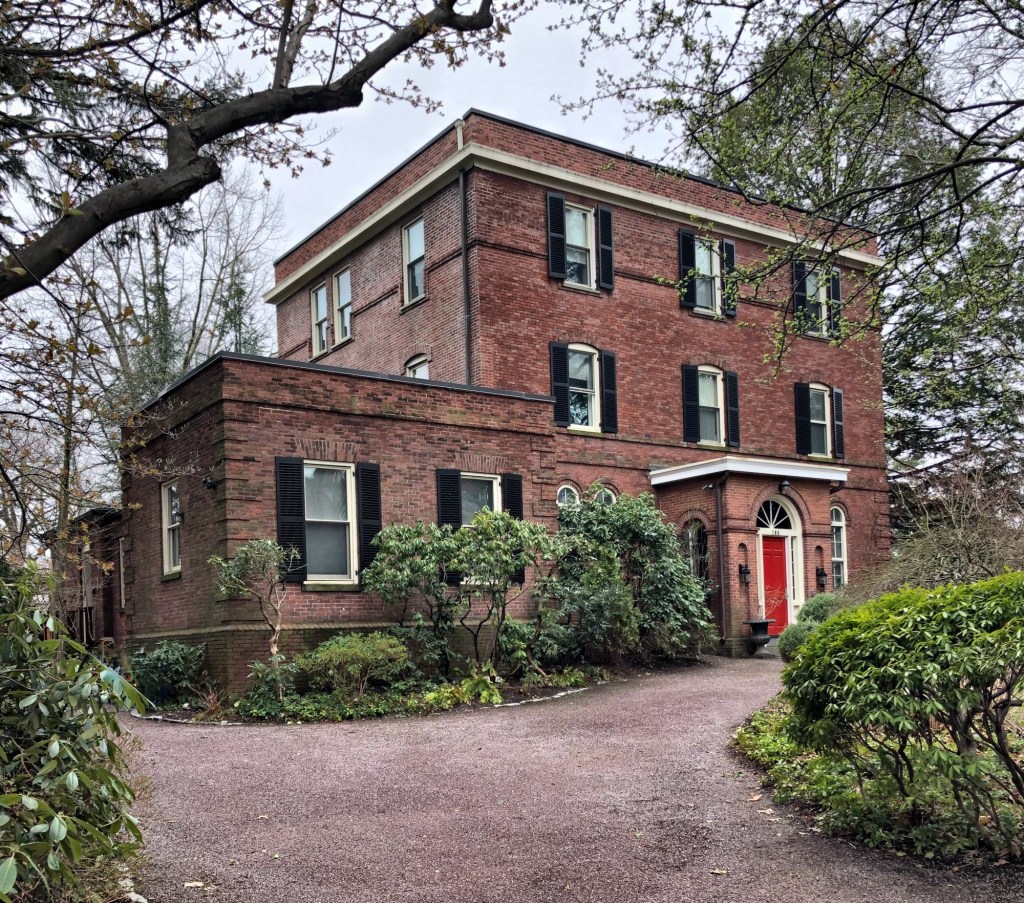
Almy-Palfrey House // c.1858

The area was developed thanks to Amos A. Lawrence (1814-1886), a wealthy second-generation Bostonian, who provided much of the capital and enthusiasm for the growth of the cotton industry in New England prior to the Civil War. Lawrence’s involvement in the industry aided the development of the Massachusetts mill towns of Lowell and Lawrence, whom the city was named after. In 1851, Amos Lawrence purchased 200 acres of land from David Sears, who himself developed the equally beautiful Longwood neighborhood of Brookline on the other side of Beacon Street. Amos began to subdivide the land, working with the architect George Minot Dexter and landscape architect and surveyor, Alexander Wadsworth, who designed Mount Auburn Cemetery in Cambridge, to create an early picturesque residential suburb. With houses designed in the newly popular Gothic Revival and Mansard styles and several small parks, the area became known as Cottage Farm. This house was built for Amos Lawrence as an early, brick Mansard home, and rented out to Frederick Almy, a wealthy Boston attorney. The property was sold out of the Lawrence Family and later purchased by John Gorham Palfrey (1875-1945) a lawyer, who modified the house by removing the mansard roof and replacing it with a full third story with a brick veneer to match the walls below to give it a more Colonial Revival design.

Bates Cottage // 1853

This Gothic Revival brick cottage is of several houses built by Amos A. Lawrence for his Cottage Farm neighborhood in Brookline, Massachusetts. After he built his own stone residence at the center of the estate, Lawrence erected a series of cottages in the vicinity which were rented or sold to family and friends. This house was listed as the “Bates House” in Amos Lawrence’s papers, likely referring to the renter of the property soon after the cottage was completed by 1853. After Amos Lawrence died in 1886, the estate was inherited by his daughter, Hetty S. Cunningham. The “Bates Cottage” was later acquired by Boston University, who in 1964, received town approval to convert the residence into offices for the Center for the Study of Liberal Arts Education. The cottage was expanded at the rear and is today home to the Boston University African American & Black Diaspora Studies Program.

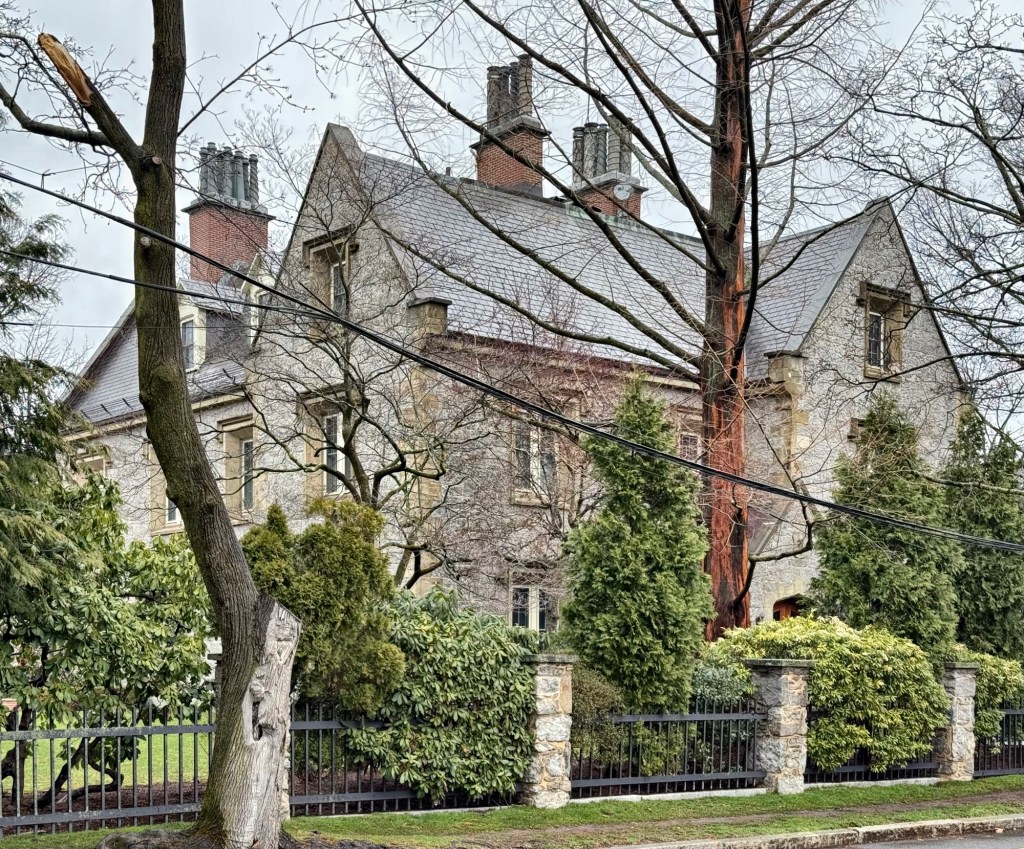
Amos A. Lawrence House // 1851

Cottage Farm area of Brookline is one of the finest neighborhoods in all of New England. The area was developed thanks to Amos A. Lawrence (1814-1886), a wealthy second-generation Bostonian, who provided much of the capital and enthusiasm for the growth of the cotton industry in New England prior to the Civil War. Lawrence’s involvement in the industry aided the development of the Massachusetts mill towns of Lowell and Lawrence, whom the city was named after. In 1851, Amos Lawrence purchased 200 acres of land from David Sears, who himself developed the equally beautiful Longwood neighborhood of Brookline on the other side of Beacon Street. Amos began to subdivide the land, working with the architect George Minot Dexter and landscape architect and surveyor, Alexander Wadsworth, who designed Mount Auburn Cemetery in Cambridge, to create an early picturesque residential suburb. With houses designed in the newly popular Gothic Revival and Mansard styles and several small parks, the area became known as Cottage Farm. This stone house was designed by George M. Dexter and was the country residence of Amos Lawrence, who had other homes built nearby and rented out to wealthy friends and family. By 1888, the property was owned by Amos’ daughter, Hettie S. Cunningham, who later, subdivided the estate into five house lots, and moved this stone house to the corner of Ivy and Carleton streets. Expressive of English architectural traditions over the more ornate Gothic Revival popularized by Andrew Jackson Downing, the Lawrence House is one of the finest residences in the Boston area. Built of granite with limestone trim and set behind landscaping and a perimeter fence, the mansion is surprisingly hard to get decent photos of, but it is a stunner. Today, the house is owned by Boston University and is known as Sloane House.

Lawrence-Christian House // c.1855

Another of the early homes of the affluent Longwood subdivision of Brookline, Massachusetts is this painted brick house which dates to the 1850s. The house was developed by Amos A. Lawrence, who developed much of the neighborhood, renting out suburban houses to wealthy Boston-area residents. In 1866, Lawrence sold the property to Samuel S. Allen of Roxbury and it would change ownership a half-dozen times in the next century. The property was added onto and modernized a few times, notably during the ownership of Henry A. Christian, MD, the first Chief-of-Medicine at Peter Bent Brigham Hospital over the Muddy River in Boston. The streamlined late-Colonial Revival look with vestibule side entry, windows, and shallow hipped roof are all likely later alterations from the 1850s house.