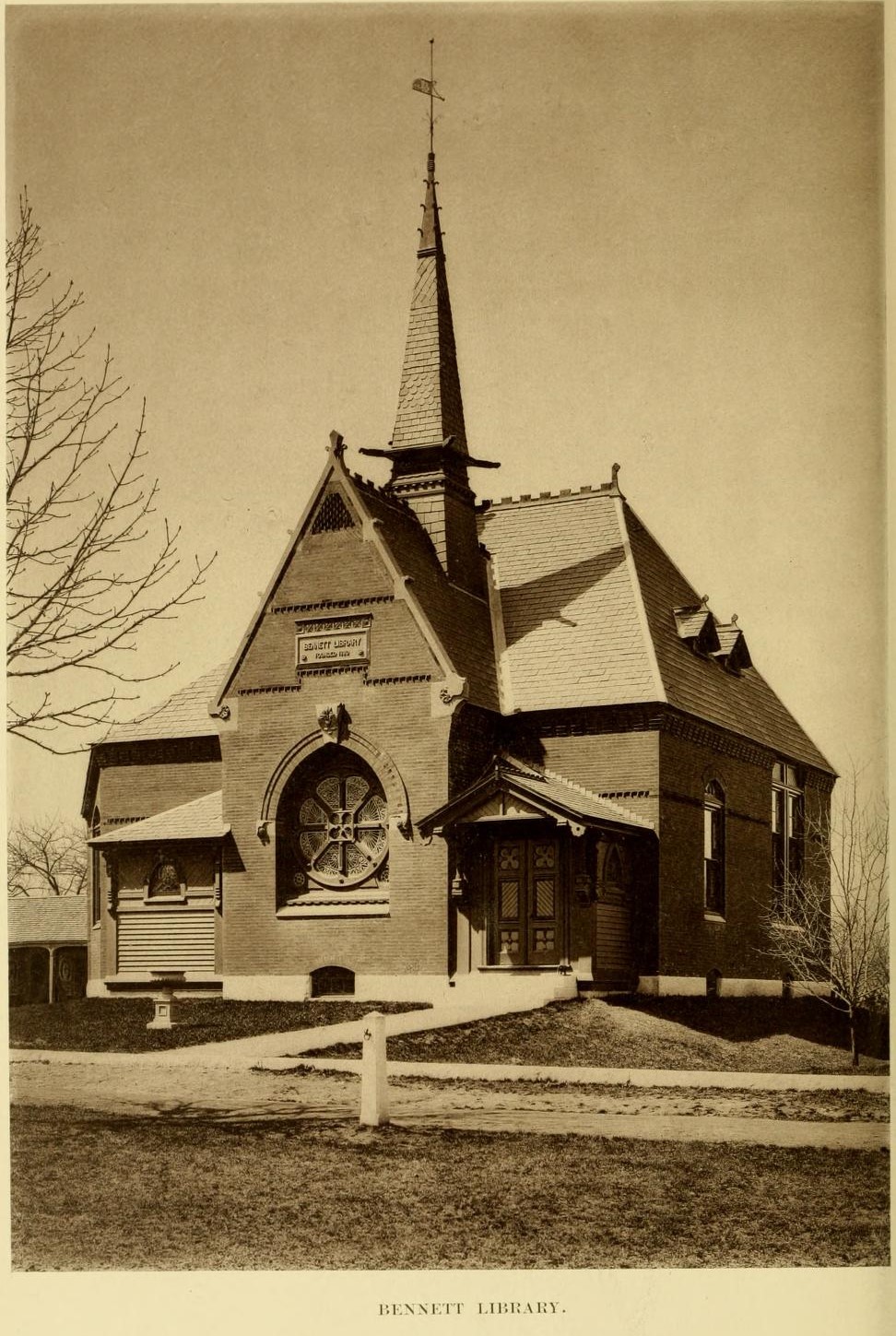
In the late 19th century, Eleanor Richardson Bennett (1794-1891), the widow of Joshua Bennett (1793-1865), bequeathed funds to erect the first purpose-built public library building in her hometown of Billerica, Massachusetts. A private members library known as the Social Library, was formed in Billerica in 1772, but Ms. Bennett wished to gift the town a public facility of learning in memory of her late husband, a prominent landowner in the West End of Boston and one of the richest men in Middlesex County. Eleanor Bennett hired the Boston firm of Rotch & Tilden, to design the new library building overlooking the Town Common. Completed in 1881, the Victorian Gothic library is built of brick with limestone trim, and features a large rose stained glass window, intricate terracotta and wooden detailing, and a slate hipped roof with a pointed spire. The library was eventually outgrown and the facility relocated to a new building, and again to the former Town Hall building in 2000. The former Bennett Library is still owned and maintained by the town as an event space available for rent. The building has been restored through Community Preservation Act funding.