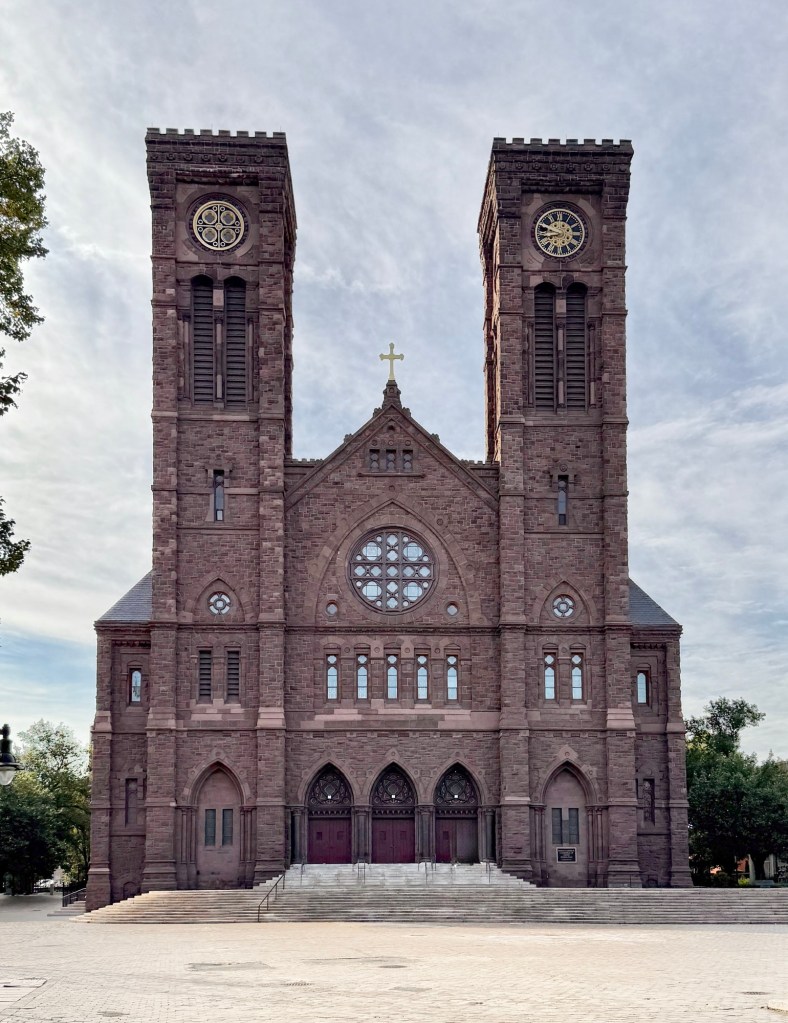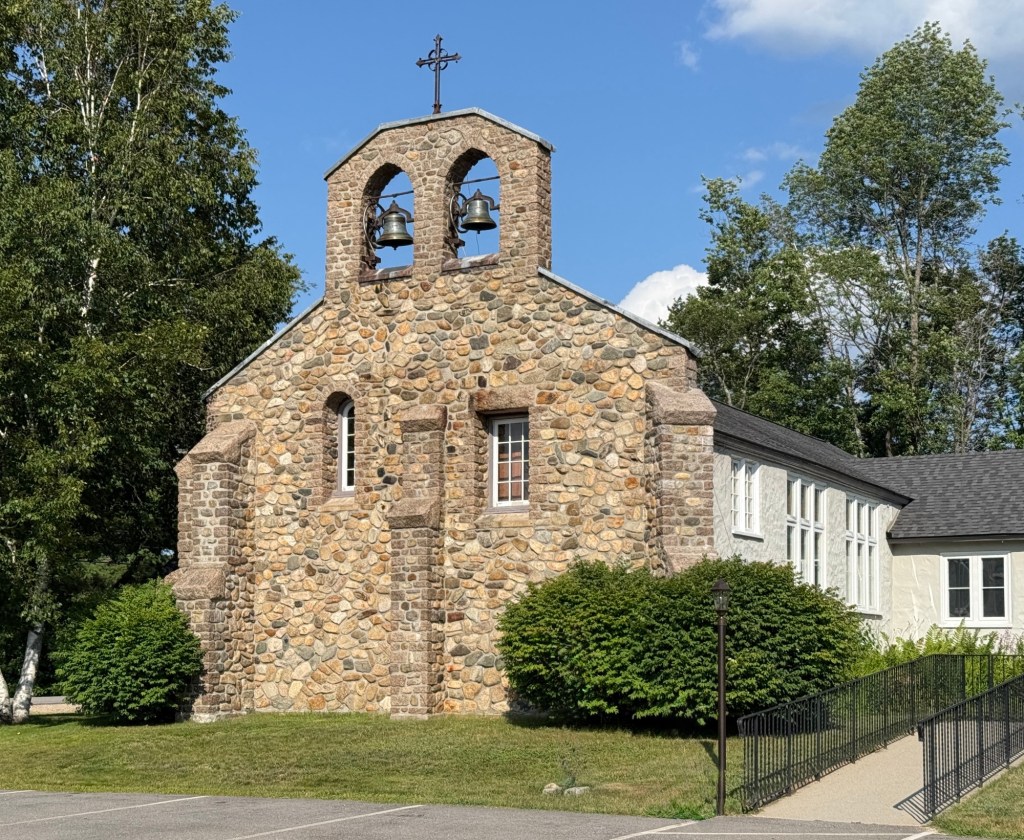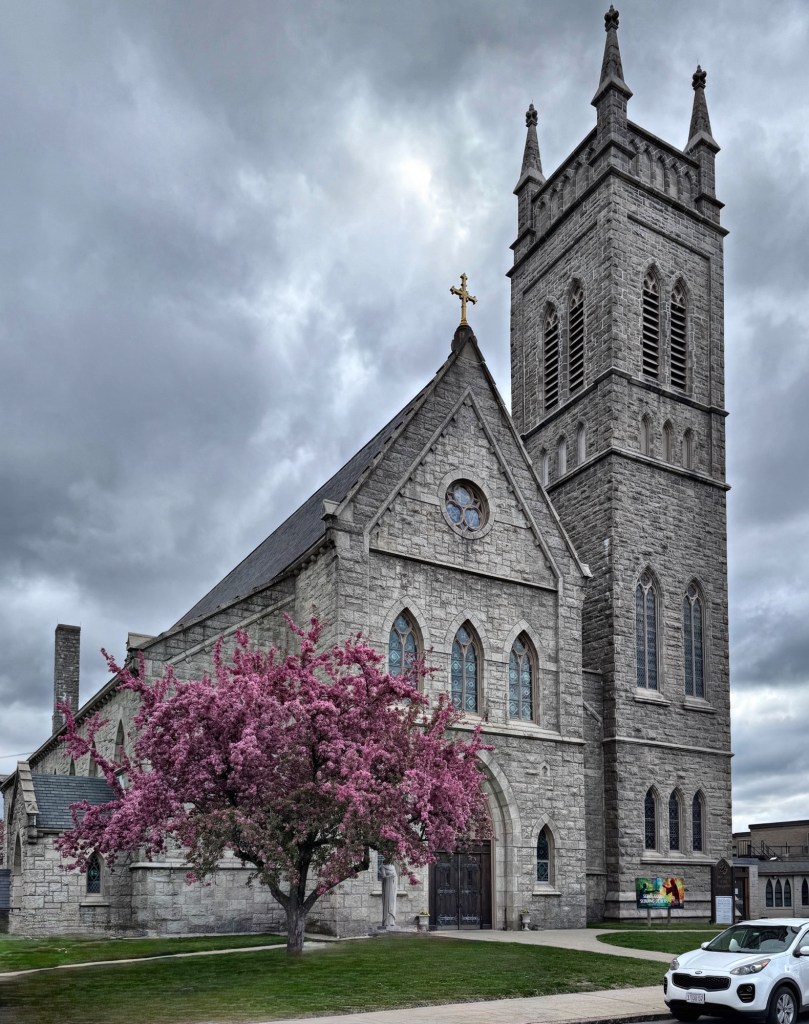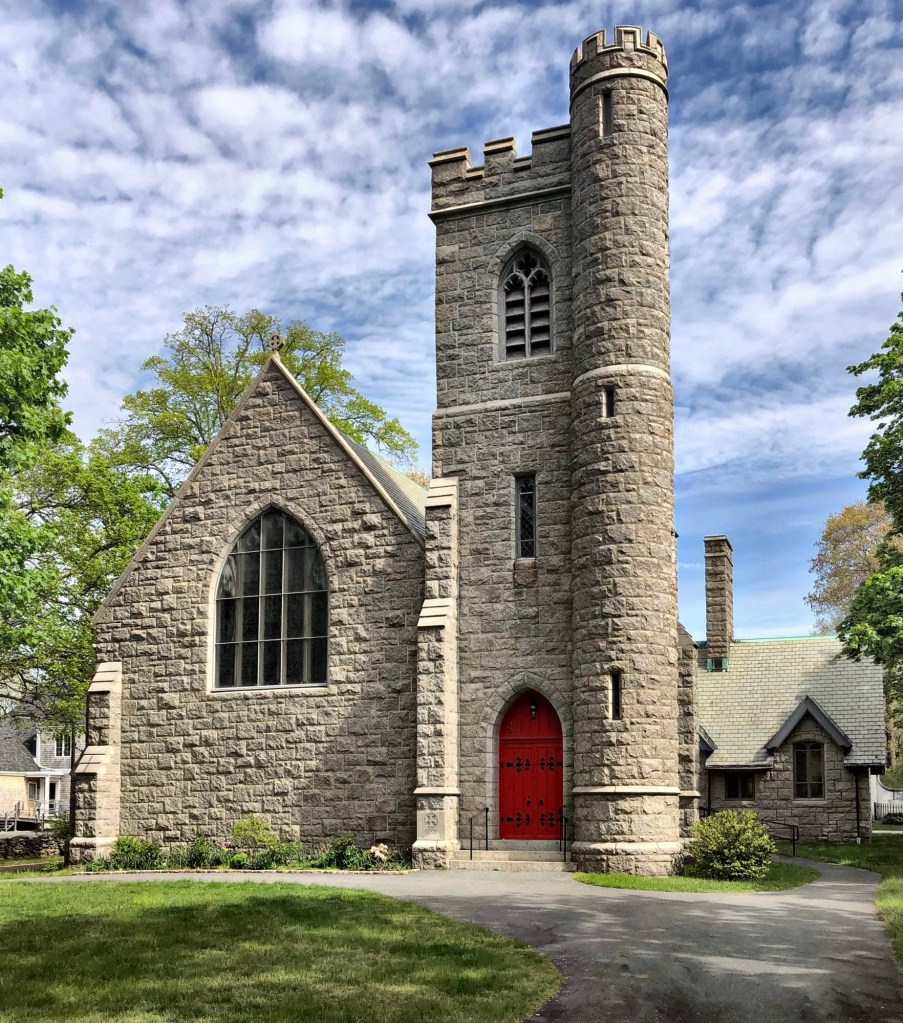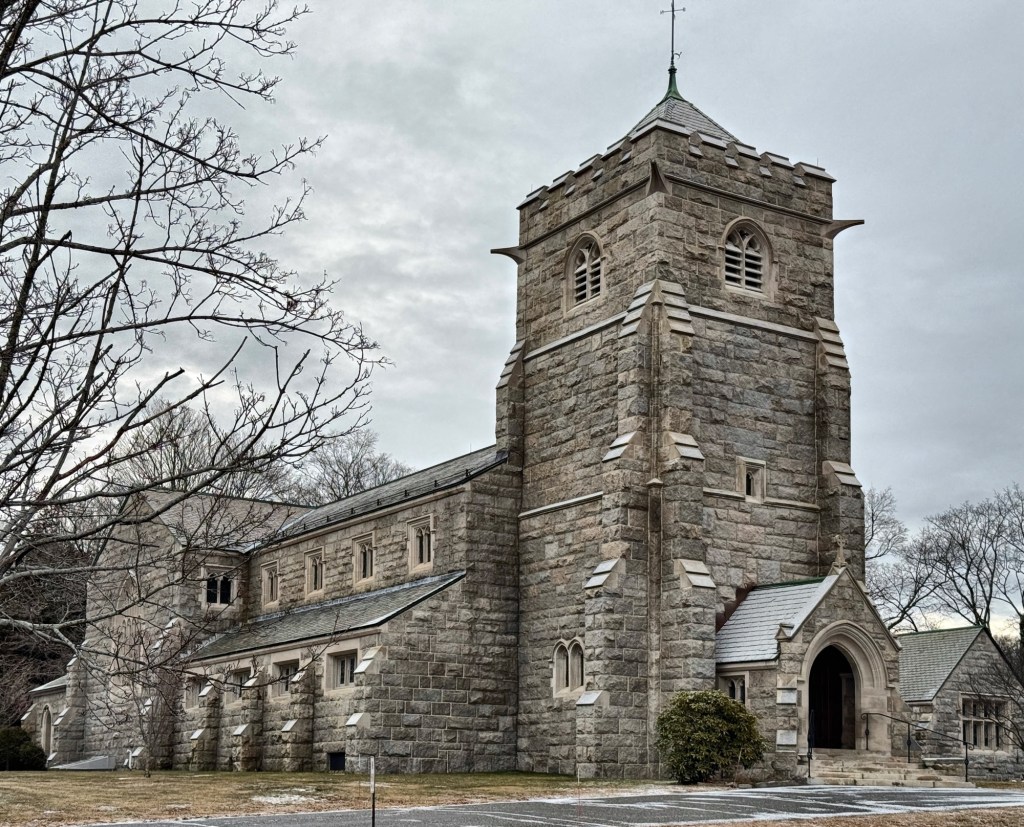
Christ Church, Swansea // 1900

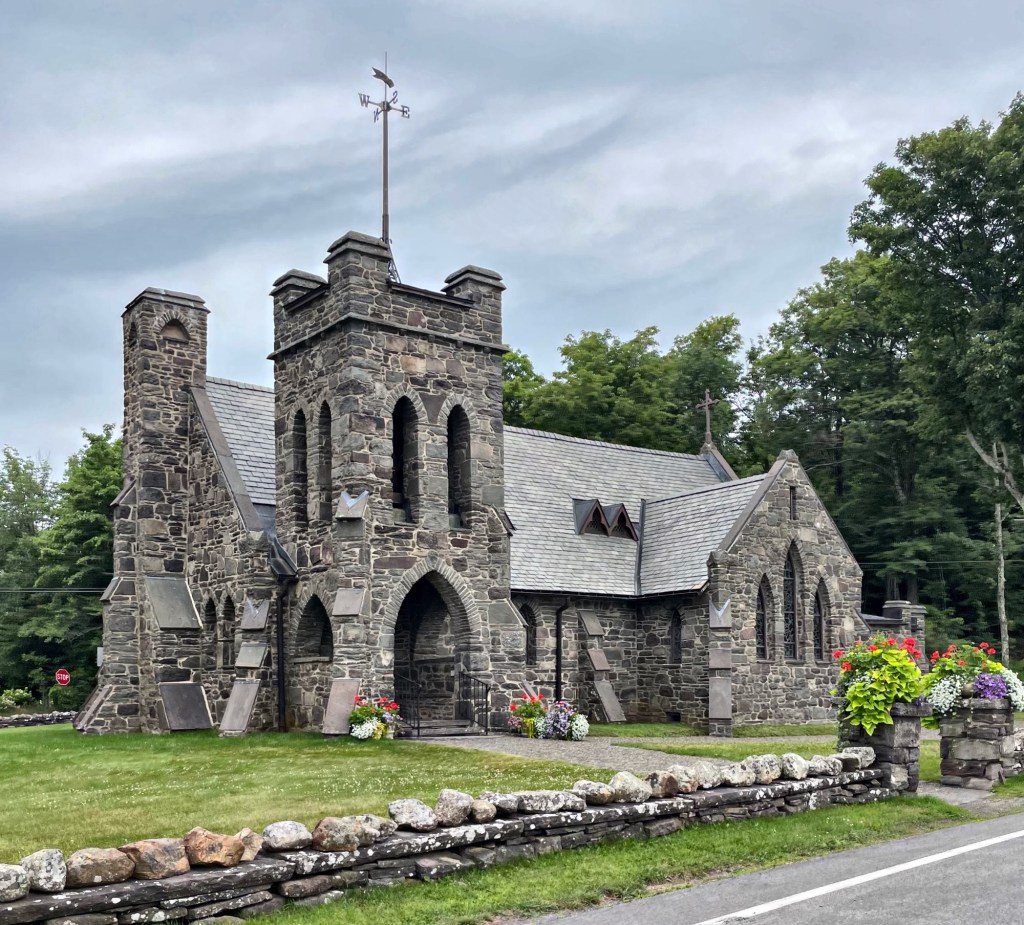
Designed in the mode of a traditional English country church, the Christ Church of Swansea is among the finest Neo-Gothic Revival edifices in New England and evokes a sense of history and tradition despite only being built in 1900. The church was funded by benefactors, Frank Shaw Stevens and Elizabeth Case Stevens, who lived down the street in the town’s largest mansion. After the death of her husband Frank, Elizabeth began a large gifting campaign to the Town of Swansea, and funded the construction of the town’s library, school, and this church (they had already funded the 1891 Town Hall). For the village church, Elizabeth hired their friend, and renowned English-born architect, Henry Vaughan, who designed the building with heavy granite walls, lancet windows and a facade dominated by an entry tower with rounded corner all capped by battlements. The Christ Church of Swansea resembles an old Medieval English church but in a New England village, amazing work as always Mr. Vaughan!

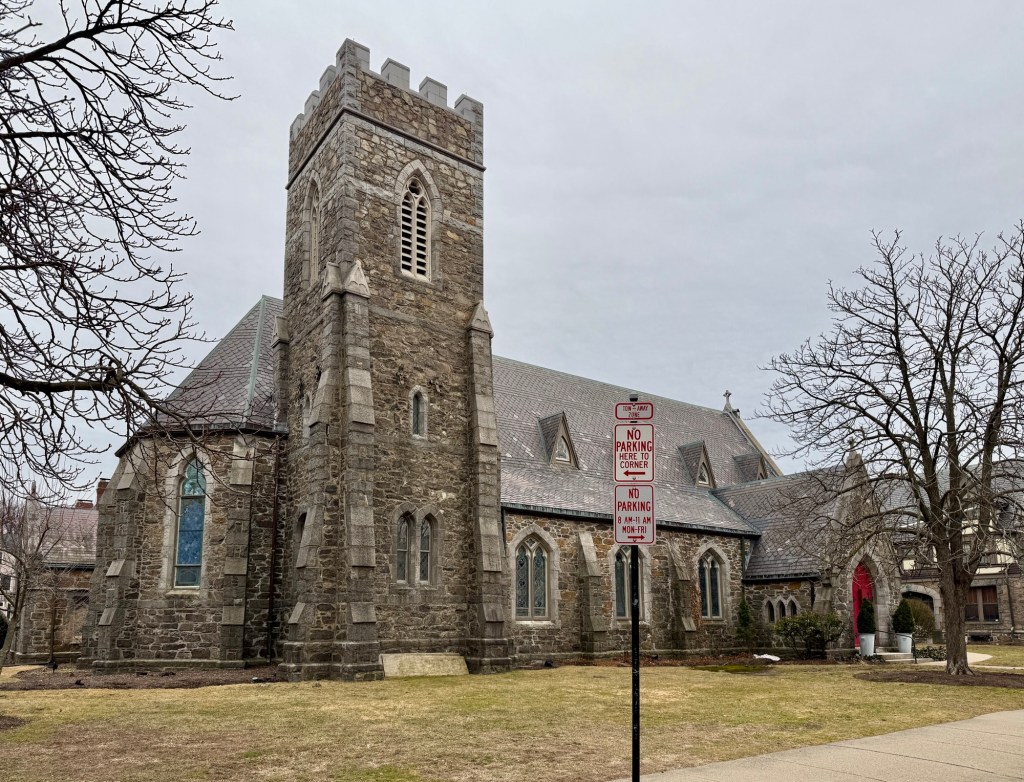
Church of Our Saviour, Brookline // 1868

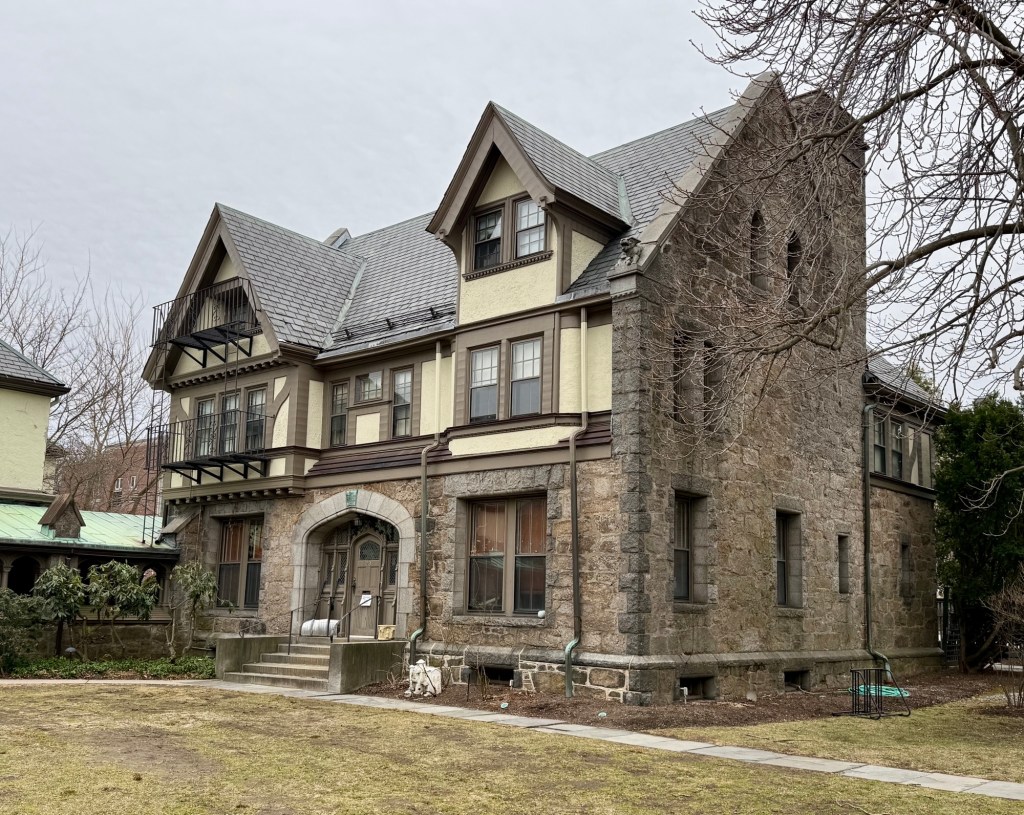
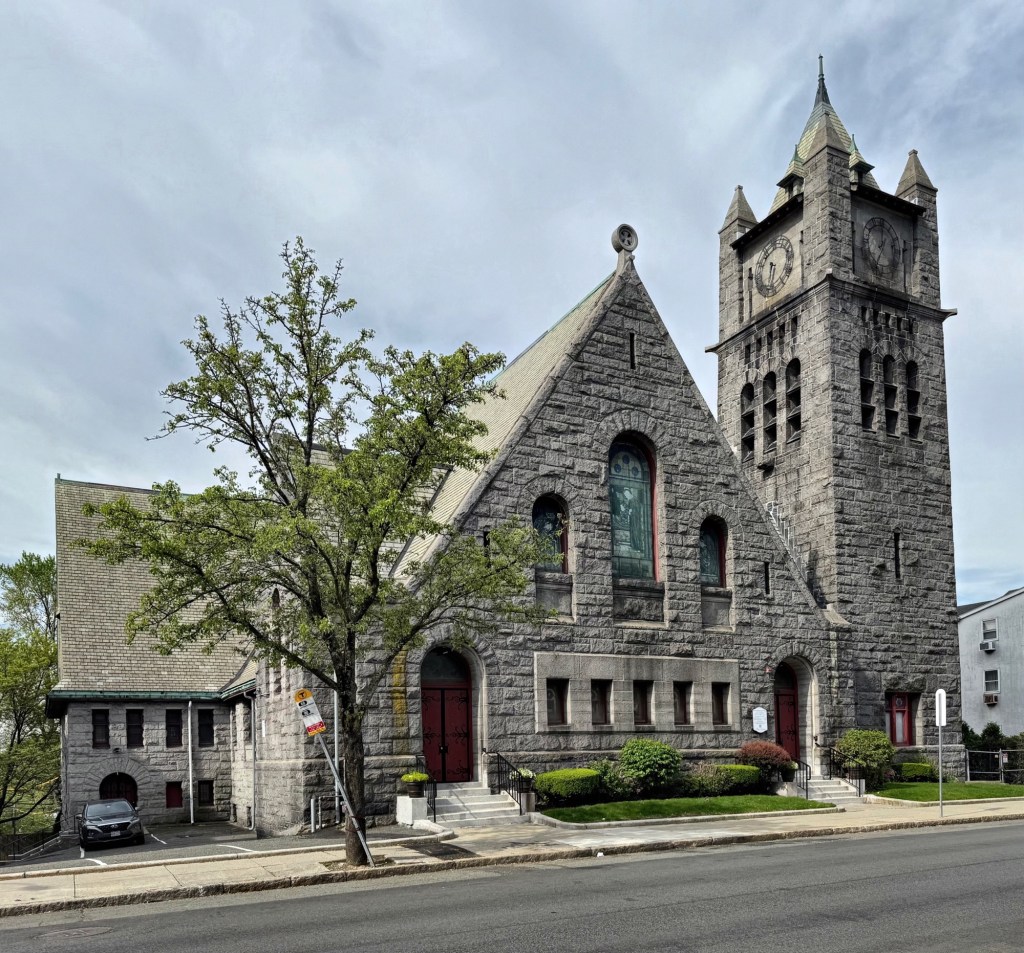
The Church of Our Saviour of Brookline, Massachusetts, is an architecturally and historically significant church complex in the Longwood neighborhood that has ties to those who established this neighborhood into what it is today. The church was built in 1868 by the brothers Amos and William Lawrence, in honour of their father, Amos Lawrence. The church was established by twelve established Boston-area families who wanted to grow the Episcopal diocese in the area. They hired architect, Alexander Rice Esty, who designed the building in the Gothic style, and it was completed in February 1868. The church was expanded numerous times with a transept chapel designed by the firm Sturgis and Cabot (1893) to the memory of Sarah Appleton Lawrence (wife of Amos A. Lawrence); a parish hall designed by the firm of Cabot and Chandler (1880); and a rectory, designed by architect Arthur Rotch (1886). The church remains an active congregation and is lovingly preserved by the congregants.

Rectory

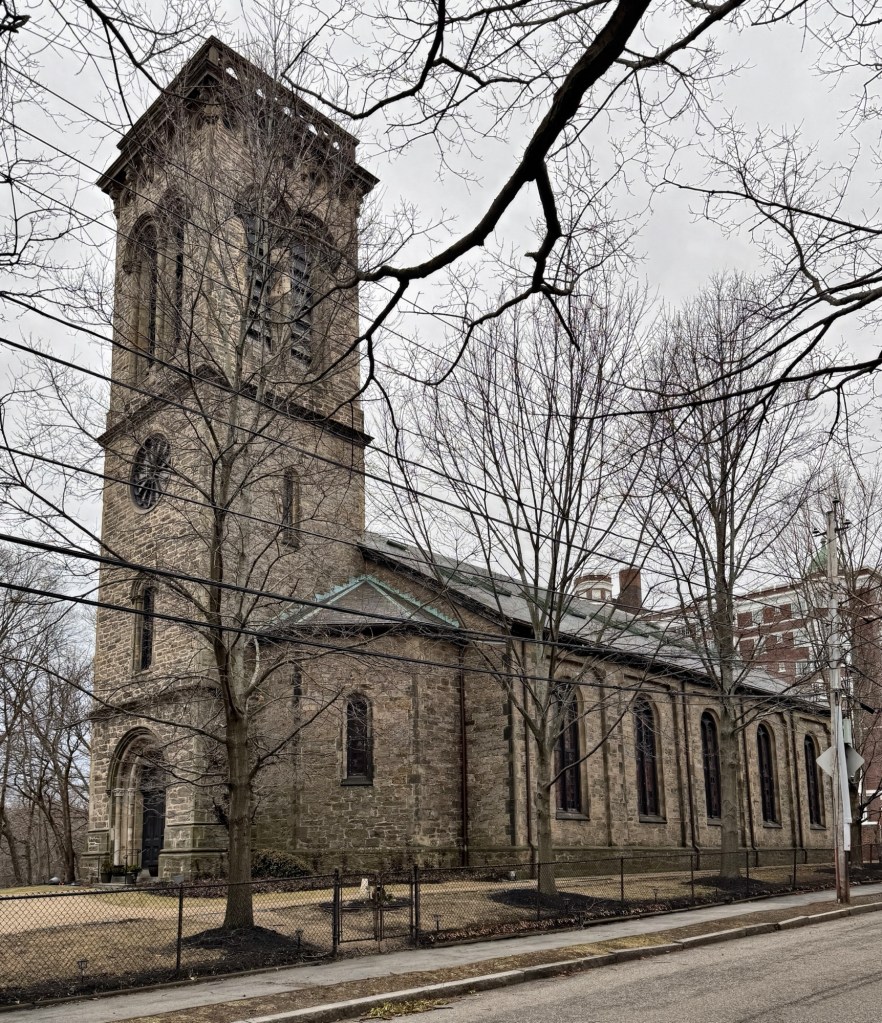
Sears Chapel, Longwood // 1860

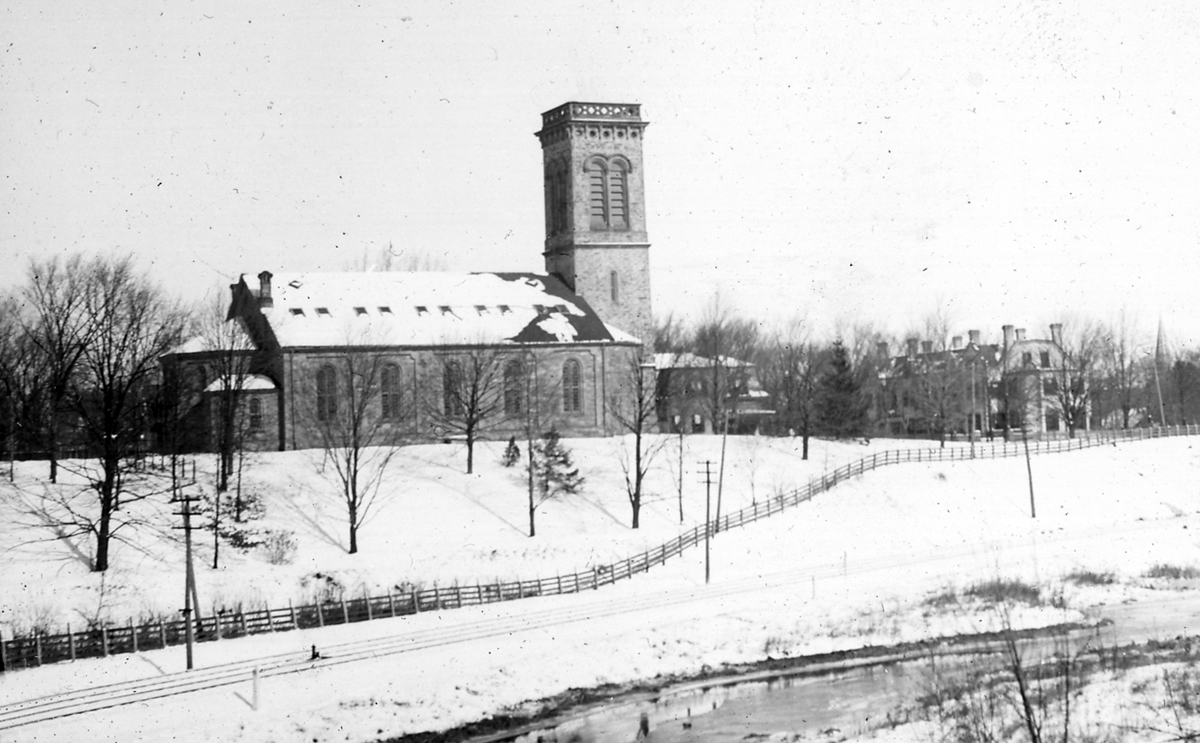
Christ’s Church in Longwood, better known as Sears Chapel, is among the finest ecclesiastical buildings in Brookline and commands its site on a rise overlooking the Muddy River, now the Riverway in the Emerald Necklace park system. The area presently known as Longwood was originally marshland with a few farms until the building of the Mill Dam road out of Boston in 1821 that improved access to Brookline, which opened up its connectivity and development potential. Wealthy Boston businessman, David Sears (1787-1871) recognized this, and began buying the low-lying pasturelands in Brookline near the Boston border. By 1830, some squares were laid out and development began in the Cottage Farm and Longwood sections. He, with associates, began building country estates for friends and family to escape the crowded conditions of Boston. He is said to have named his neighborhood “Longwood”, after Napoleon’s estate on St. Helena where he spent his days in exile. An avid amateur horticulturist, Sears planted some 14,000 trees, many of them imported from Europe, in the course of developing his land. In keeping with his faith, Sears built this house of worship, Christ’s Church, which is said to have been modeled after St. Peter’s in Colchester England, likely giving Colchester Street, where Sears Chapel is located, its name. The Romanesque style church was designed by Boston architect, Arthur Gilman, who designed the building suitable for the Sears Family crypt which is underneath the structure and the burial site of many of the family. The congregation remains active to this day who maintain the significant structure and its many historic stained glass windows.

Hopedale Unitarian Church // 1898

The Hopedale Unitarian Church, also known as the Draper Memorial Church, is located in the former industrial village of Hopedale, Massachusetts, and is one of the finest examples of the Neo-Gothic style in the state. The church was funded by brothers George Albert and Eben S. Draper of the Draper Corporation, the largest employer in town, offering to build the new edifice as a memorial to their parents, George and Hannah Draper. The church replaced an earlier, wood-frame church, built on the site in 1860 by supporters of Adin Ballou, a founder of the Hopedale Community, a utopian community that eventually failed. The Drapers hired Boston architect, Edwin J. Lewis, an active Unitarian who had designed several churches around New England by this time. His plan was “English Gothic of the Perpendicular period” made of Milford granite with Indiana limestone trimmings and a roof of green slate. At the interior, roof trusses were left exposed “as in the old English Parish churches” with oak finishes and flooring and memorial stained glass windows by prominent artists. The church remains a visual and historical landmark for the community with an active congregation who preserve the significant building.

Warren Baptist Church // 1844

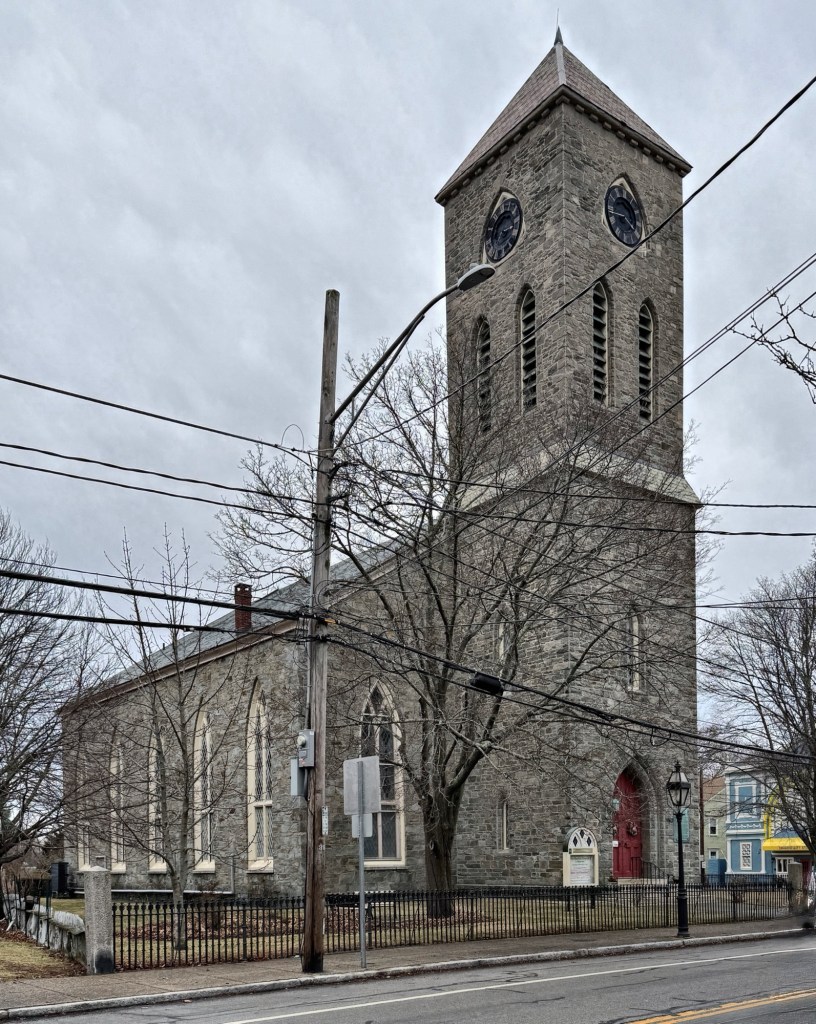
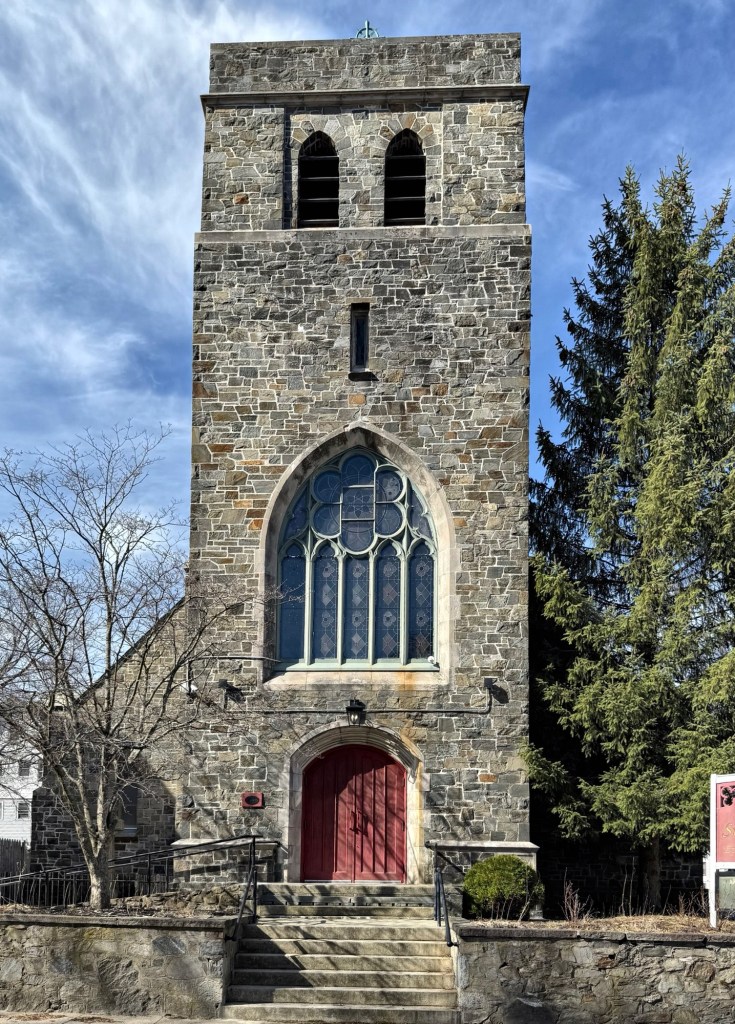
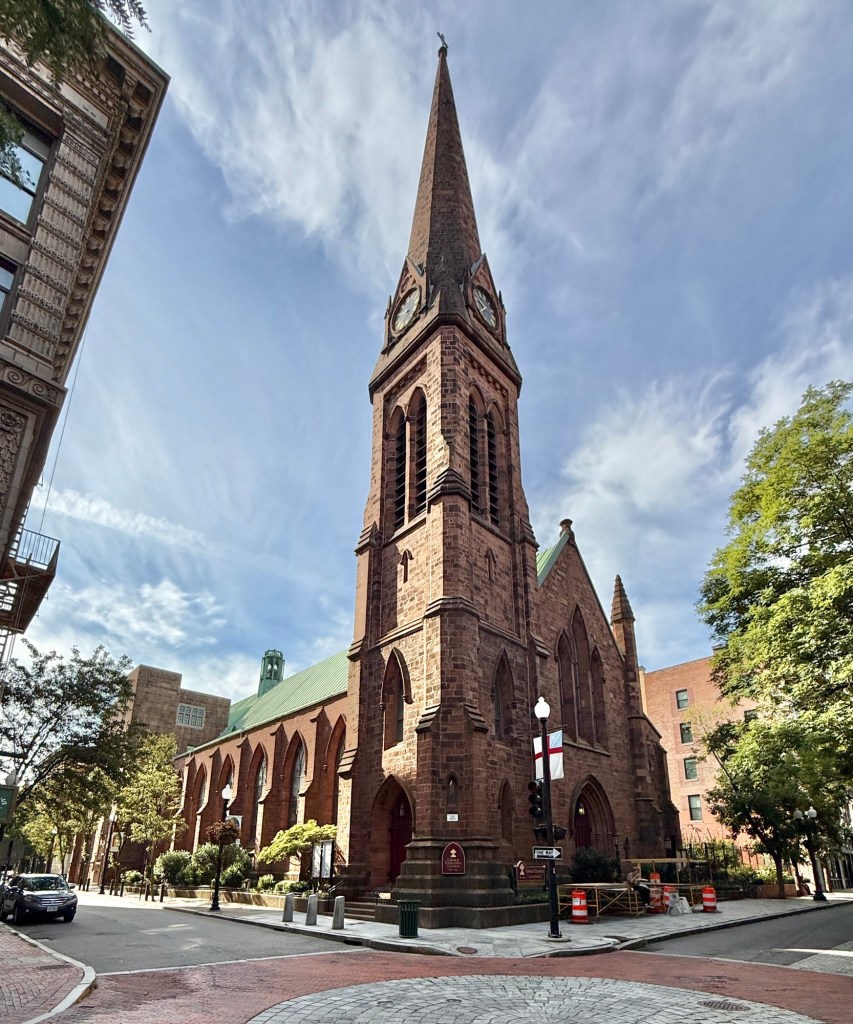
The Warren Baptist Church on Main Street in Warren, Rhode Island, is a landmark example of an ecclesiastical building in the Gothic Revival style completed in stone. Like many communities in Rhode Island, Baptists in Warren, were the first and largest denomination in the community, dating back to the 18th century. The congregation’s first purpose-built church was constructed in 1764 and was burned by the British in 1778 as they left Warren. Its replacement (1784) was demolished for the present building sixty years later. Interestingly, this site is significant additionally as the site of the founding of Brown University. as when Reverend James Manning was called in 1764 to take over the congregation and its new church building, he did so with the proviso that he could open a school for the training of Baptist ministers because all existing colonial colleges at the time provided for training only in the Congregational and Episcopal ministries. The school was located behind the present location of the church and it spent its first four years here in Warren, holding its first commencement in that church until the new school (and Reverend Manning as president) were lured to Providence, where Brown University has remained ever since. The present Warren Baptist Church was built in 1844 and was designed by famed Rhode Island architect, Russell Warren, who is best-known for his work in the Federal and Greek Revival styles, but here shows his expertise and skill in the Gothic mode. The building is notable for its lancet-arched windows and belfry with narrow lancet arched louvered windows set below the clock faces set in triangular trefoil tracery. The congregation also maintains Tiffany windows donated by members of the church.

Clara Hall Elliott Memorial Church // 1909

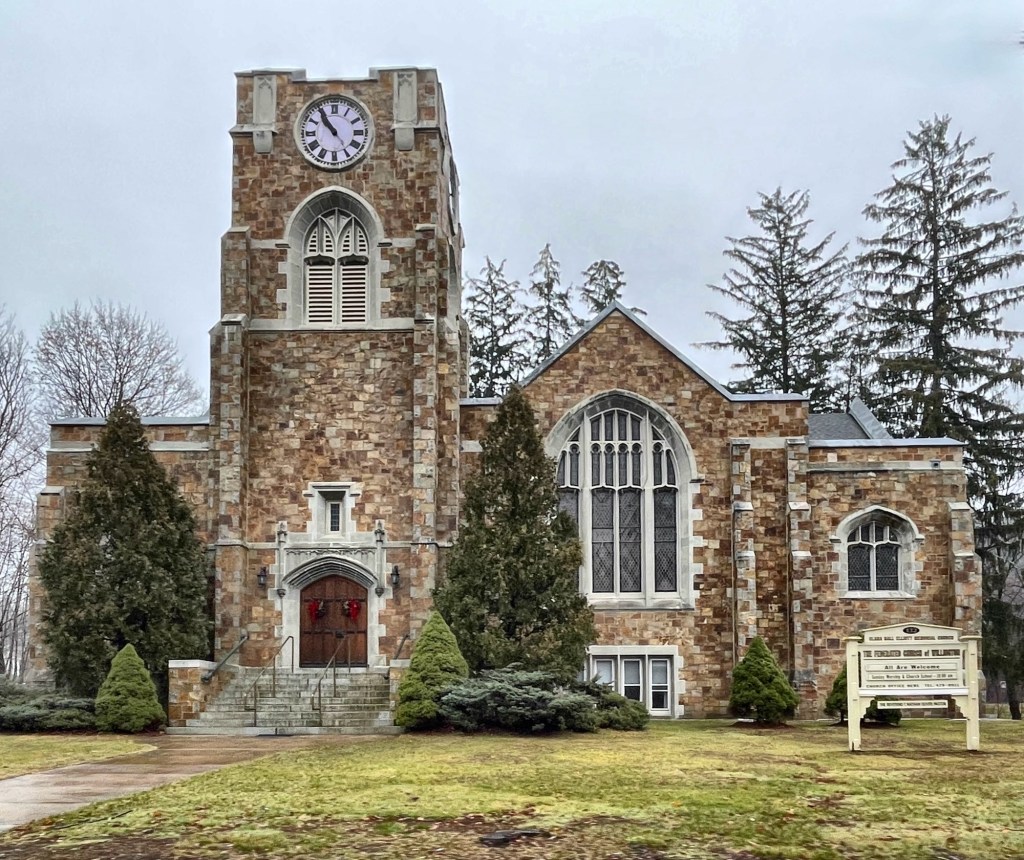
This handsome stone church in South Willington, Connecticut, was commissioned in 1909 by Gardiner Hall Jr., a terminally ill industrialist, in memory of his late daughter Clara, who tragically died in 1899 at the age of 30. The church was used by area residents, many of which included mill workers hired to work at Mr. Hall’s factory nearby and lived in mill housing just behind this church. Following the construction of this Memorial Church in South Willington, Baptist and Congregational Churches of Willington merged to form the Federated Church of Willington, which has worshiped at this location ever since. Neo-Gothic Revival in style, the church is constructed of multicolored random ashlar sandstone with limestone trim and features a corner clock tower with belfry, buttresses, stained glass windows, and limestone tracery. The church was designed by Boston architect, Thomas Marriott James and was completed by 1911.

Immanuel St. James Episcopal Church // 1843

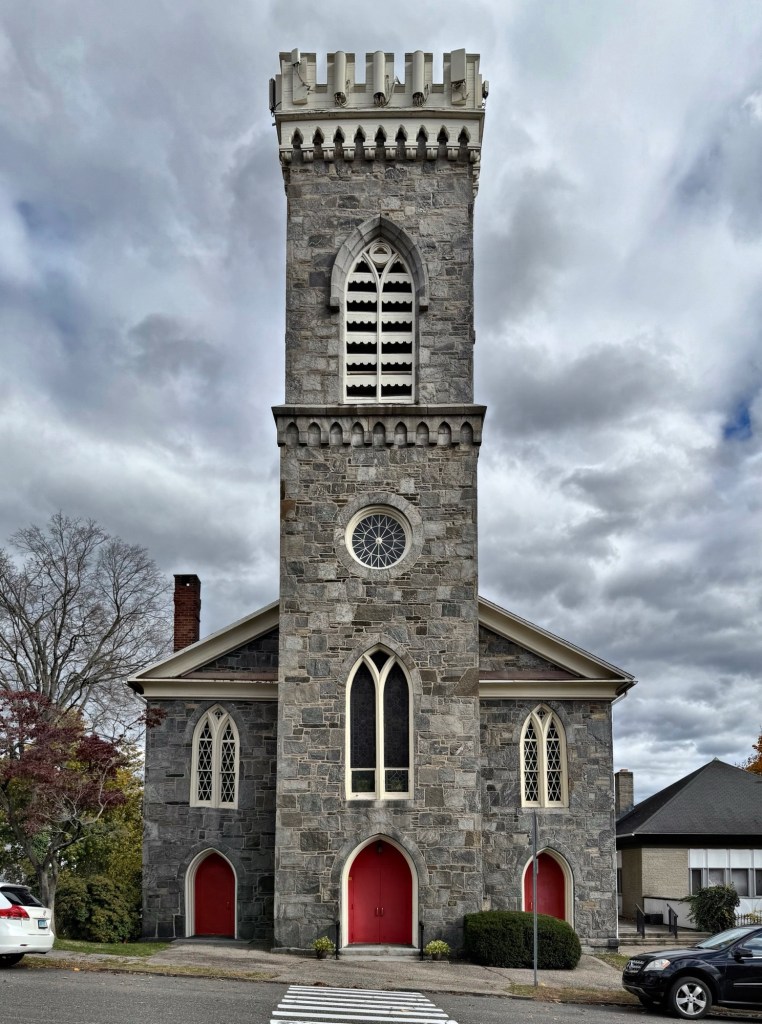
The Gothic Revival style Immanuel St. James Episcopal Church of Derby is a landmark example of the style in this part of Connecticut and serves as the eastern anchor to the Birmingham Green in town. The church dates to 1843 and was built by The stone church was was built by stonemason, Harvey Johnson and Nelson Hinman, a carpenter. The land for the church was donated by Sheldon Smith and Anson G. Phelps, wealthy industrialists in town. The building originally had a wooden steeple, which was replaced by the present stone belfry in 1853. The church merged with another area congregation, which together, have preserved this significant structure, though the communications antennae on the battlements on the belfry is unfortunate.

Stone Village Unitarian Church // 1845

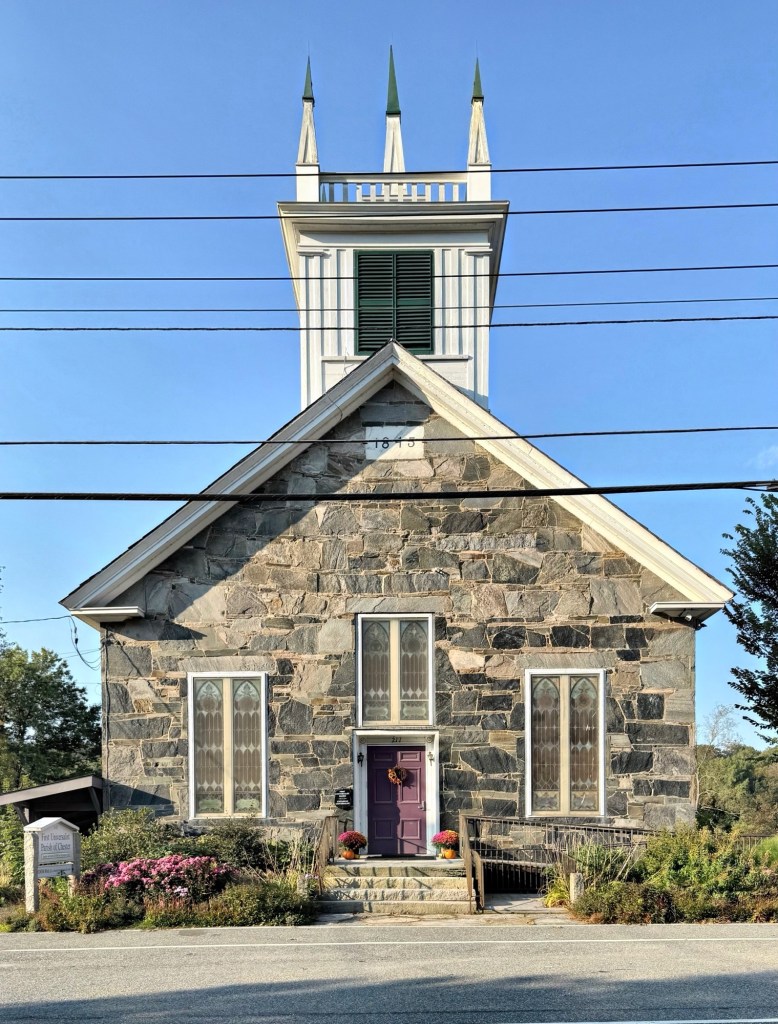
The Stone Village of Chester, Vermont, is said to be the largest collection of stone buildings in the state, and is anchored by its largest building, the Unitarian Church. Built in 1845, the Unitarian Universalist Church is one of a few dozen “snecked ashlar” buildings in the region, where rubblestone is laid up with mortar using small long stones called “snecks” to tie an outer and an inner wall together. The construction method is said to have been brought to the area by masons from Scotland and Ireland which is known there as ‘Celtic Bond’. Oral tradition state that Scottish masons from Canada introduced the technique to local masons while erecting a mill in nearby Cavendish in 1832. Local Chester resident, Dr. Ptolemy Edson became such a fan of the building that in 1834, he had his home, the first stone building in Chester, built in this method. Dr. Edson served on the building committee for the new village church, and likely pushed for a cohesive material and construction method for this church and other buildings soon after. The Stone Village Unitarian Church blends Greek Revival and Gothic Revival styles in a more vernacular way, typical in many rural Vermont communities. The building exhibits stained glass windows that were added sometime in the late 19th or early 20th century.

All Souls Church, Onteora Park // 1894

Onteora Park is one of many notable summer colonies in the Catskill Mountains that were developed in the late 19th and early 20th century. Onteora Park is located in Hunter, New York, and is comprised of a development of over 100 residential properties along with club buildings and the All Souls Church. The development of Onteora Park is largely credited to Ms. Candace (Thurber) Wheeler, one of America’s first woman interior and textile designers and co-founder of the Society of Decorative Art in New York City. In 1883, she and her wealthy brother, Francis Beattie Thurber, purchased land here with sweeping views of the Catskill Mountains, and built two summer houses for their respective families. By 1887, Candace Wheeler and her sister-in-law, Jeannette (Mrs. Francis B.) Thurber, decided to expand and develop their property as a vacation community of like-minded people dedicated to the arts. Years after the first cottages were built, Candace asked her son, Dunham Walker, an architect, to furnish designs for a community summer chapel. After the site had been secured, Canadian architect (and summer resident of Onteora) George Agnew Reid, was asked to put Mr. Wheeler’s plan into acceptable form and to supervise construction. The original wooden church was changed over to stone, all in a Victorian Gothic style. By 1910, the building was enlarged with the addition of the chancel and addition of transepts and possibly the square bell tower. At this time, the church was also electrified. Today, the church is lovingly maintained and open for the summer season and special ceremonies.

First Unitarian Church of Somerville // 1895

Located on Highland Avenue in the Central Hill section of Somerville, Massachusetts, the First Unitarian Church of Somerville is a landmark example of a church in the Romanesque Revival style. The church was built in 1895 from plans by the esteemed architectural firm of Hartwell & Richardson, and was the fourth and final building of the congregation, which was originally established in 1844. The congregation’s first church was a Gothic Revival style building designed by Richard Bond, but was destroyed by fire in 1852. A year later, the second edifice was designed and built by architect Thomas W. Silloway, which also burned in 1867. The church was replaced again by a Romanesque style structure in 1869. In the 1890s, when the City of Somerville purchased the building as part of the site for the new Somerville High School, a lot down Highland Avenue was secured and planning began for this building. The church is built of granite block with a steeply pitched gable roof, and a square tower at its right front corner. The prominent gable contains two arched entrances with a bank of five rectangular stained-glass windows below three tall round-arch stained glass windows. The congregation was dissolved in 1975 and a year later, the building was purchased by the Mission Church of Our Lord Jesus Christ, an Apostolic Pentacostalist church, who continue to use the building today.