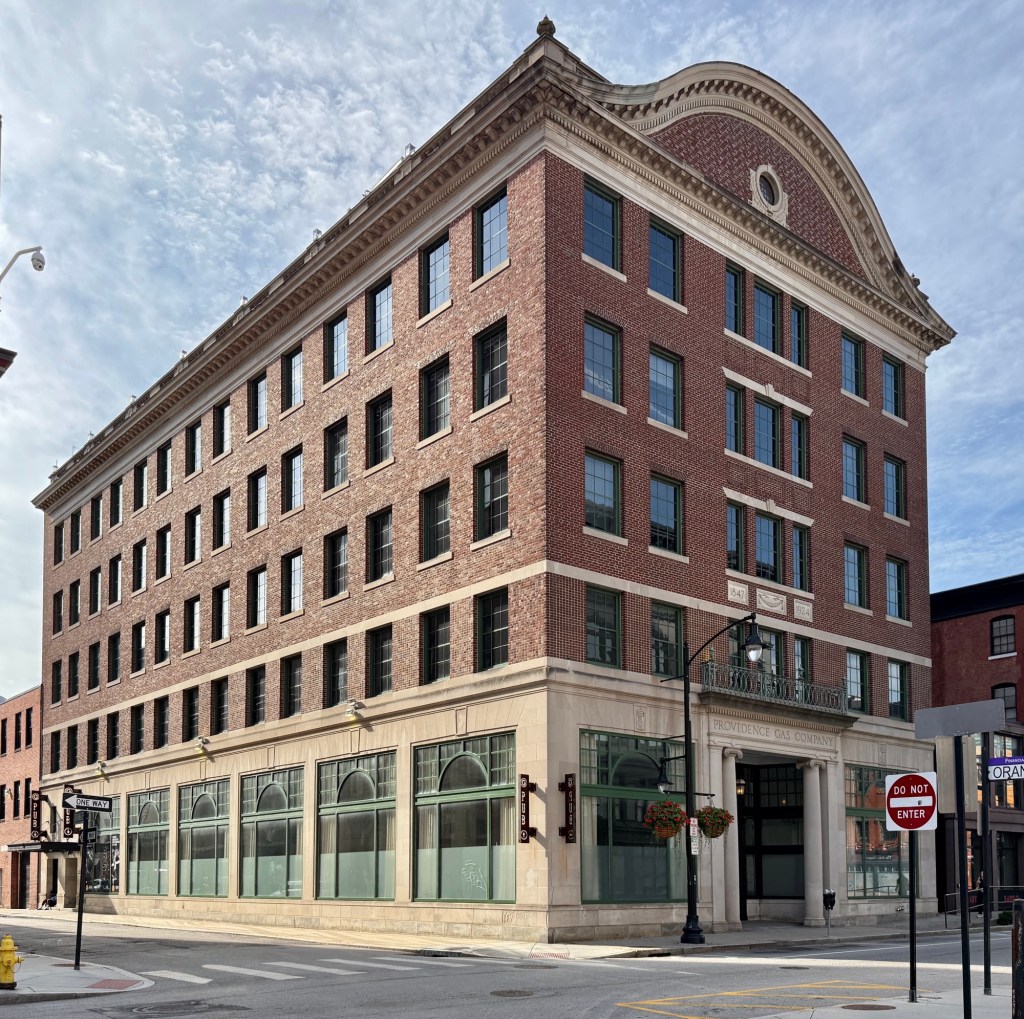
Providence Gas Company Building // 1924

One of the unsung architectural landmarks in Downtown Providence, Rhode Island, can be found on Weybosset Street. The Providence Gas Company Building at 100 Weybosset Street was built in 1924 as the headquarters and offices for the Providence Gas Company, which provided services to a rapidly growing New England city. The architects, Clarke & Howe, used local precedence in their design, modeling the building as a commercial version of the 1774 Joseph Brown House on South Main Street, with its iconic ogee gable at the roof. Beyond its own ogee gable, the Gas Company building retains its columned entry and symmetrical facades. The building was converted into housing with a pub and rooftop restaurant.
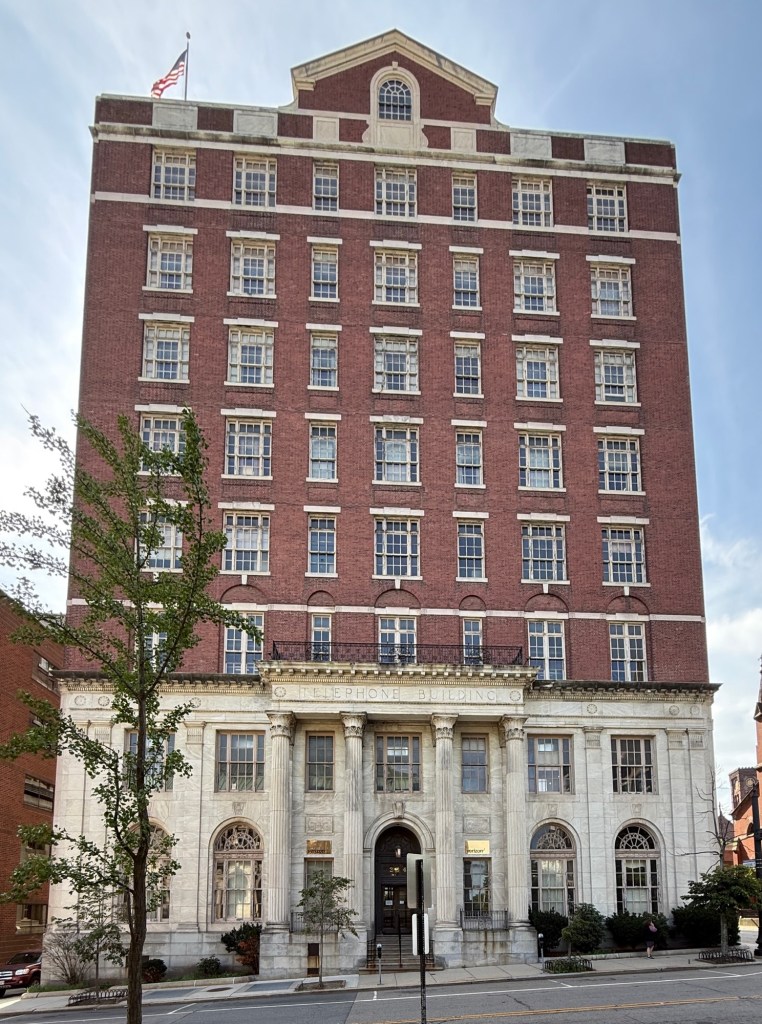
Providence Telephone & Telegraph Building // 1916

Despite the expansion of its Union Street building ten years earlier, by WWI, the growth of the Providence Telephone Company had made its original building inadequate. In 1916, the company began construction on its new Telephone Building at the corner of Washington and Greene streets. The 8-story, Colonial Revival style structure was designed by the Providence architectural firm of Clarke & Howe. The building is steel-frame and largely clad with red brick besides the arcaded first two stories in marble. At the roofline, a center gable projects above the cornice, likely in the 1950s renovation when the elevator headhouse was built on the roof. The building was again expanded in 1971 by a utilitarian addition that does not relate to its original design beyond the use of brick. The building is now home to the regional office of Verizon New England.

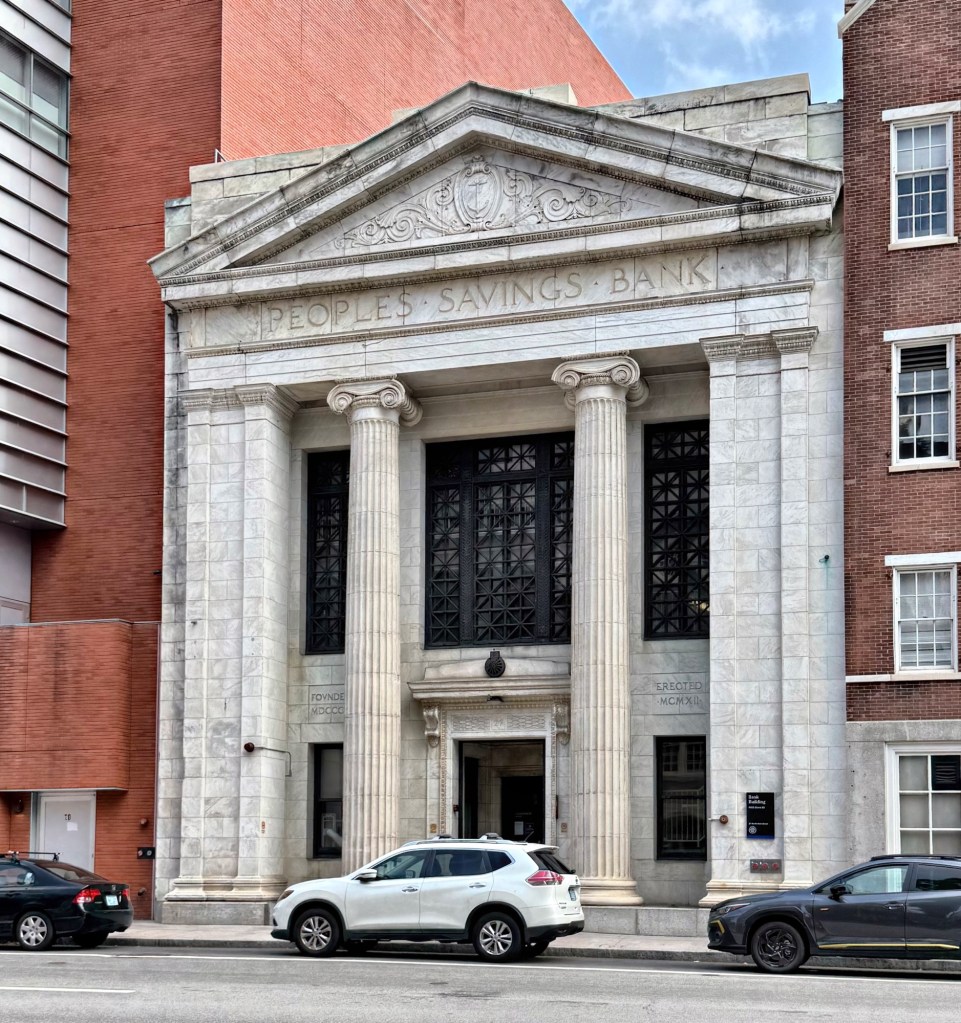
People’s Savings Bank // 1913

Built in the mode of a Greek temple, the former People’s Savings Bank was built in 1913 on a prominent site overlooking Market Square in the East Side neighborhood of Providence. Designed by the Providence-based architectural firm of Clarke & Howe, the handsome marble-faced two-story bank showcases the bold, yet clean proportions found in many Classical Revival style institutional buildings of the early 20th century. The People’s Savings Bank was established in 1851 and after decades of growth, built this structure to show customers the prosperity and stability of their institution. After a series of bank acquisitions and mergers in the 20th century, the building was eventually acquired by the Rhode Island School of Design, who had the building converted into studio space and later into the college’s hardware store. Yes, you heard that right… Talk about adaptive reuse!

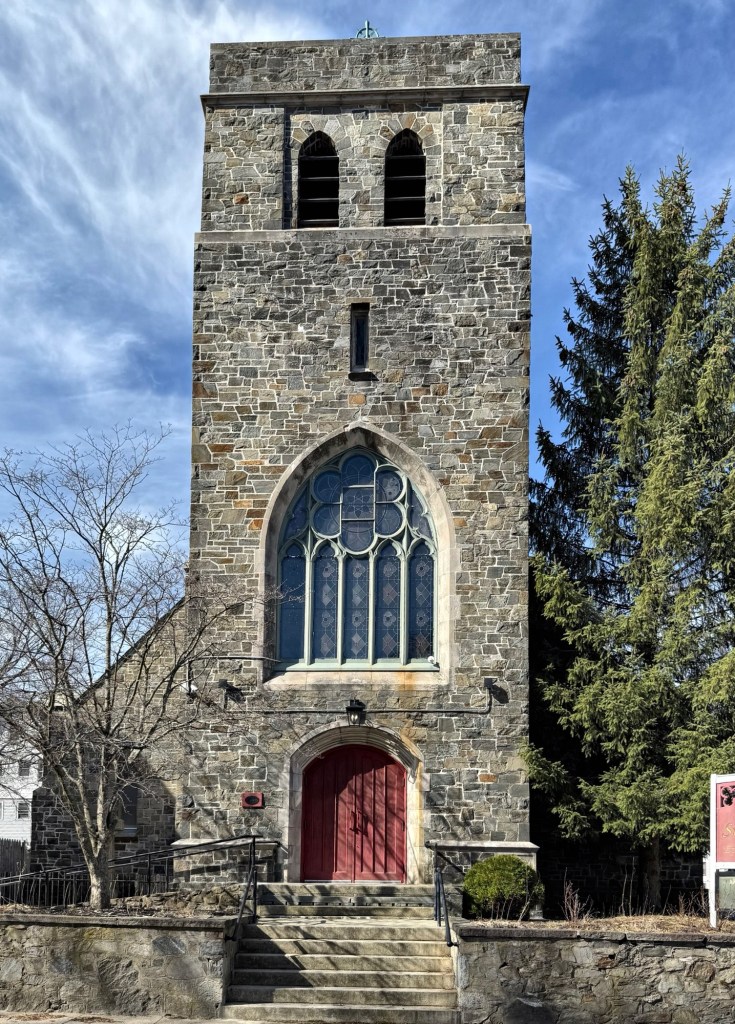
St. George’s Episcopal Church, Central Falls // 1922

Tucked away in the middle of a residential neighborhood in the dense city of Central Falls, Rhode Island, this Neo-Gothic style church more closely resembles an English country church than one typically found in a dense, industrial city. This is the St. George’s Episcopal Church, located at the corner of Central and Clinton streets, and built for the local Episcopal congregation there in 1922. The church was designed by the Rhode Island architectural firm of Clarke & Howe and is built of rough-faced stone with limestone trim. The highlight of the design is the large central tower with lancet, stained glass window, and belfry. 

Walter and Kate Hidden House // 1901

I love a good high-style Colonial Revival home with big proportions and warm red brick! This example on College Hill in Providence is a great example. The 2 1/2-story dwelling is five bays at the facade with a center entrance under a hollow pediment hood with an enframement which reads much in the Palladian-realm. Owners Walter and Kate Hidden hired local architect Wallis Eastburn Howe to design their elaborate Colonial-inspired home in 1901, they moved in within a year. Mr. Hidden worked at his father’s business, and in 1875 became a member of the firm of H. A. Hidden & Sons. He did well for himself and became a member in many social and outdoors groups including the Audubon Society, the Squantum Association, the Hope Club, and for five years was president of the Agawam Hunt Club.