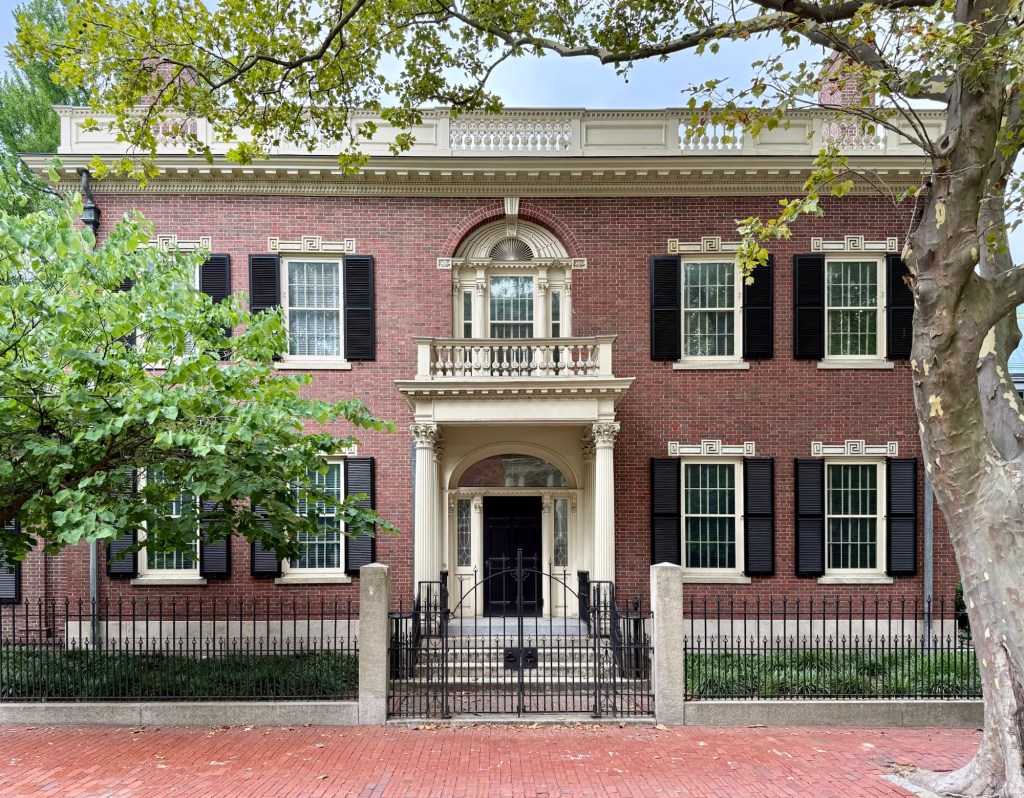
Pendleton House – RISD Museum // 1904

Although the Pendleton House on Benefit Street in Providence, gives the appearance of a domestic residence, it was actually built for the purpose of displaying the once private collections of Charles L. Pendleton (1846-1904), which were given to the RISD Museum in 1904. Pendleton’s bequest, which included American and European furniture, silver, glass, ceramics, textiles, and paintings, came with the stipulation that the collection remain intact and on display in a suitable building for the benefit of the public. The stipulation occurred just before Mr. Pendleton’s death in 1904 and the Rhode Island School of Design immediately hired the local architect, Edmund Willson of the local firm of Stone, Carpenter and Willson, to furnish plans for a wing to the museum. Willson was an expert in the Colonial Revival style and sought to make the private collection of the Pendleton House befitting of a grand Providence mansion. It was Willson’s last major commission before his death. The building is crafted in a refined Colonial Revival style with symmetrical facade, traditional fenestration and Palladian motif, but is beefed up internally for is museum use with brick walls over a fireproof, reinforced concrete frame. The RISD museum has continually grown over the subsequent decades with wings connecting the Pendleton House with more contemporary buildings, all-the-while retaining the residential scale of Benefit Street in this iconic structure.
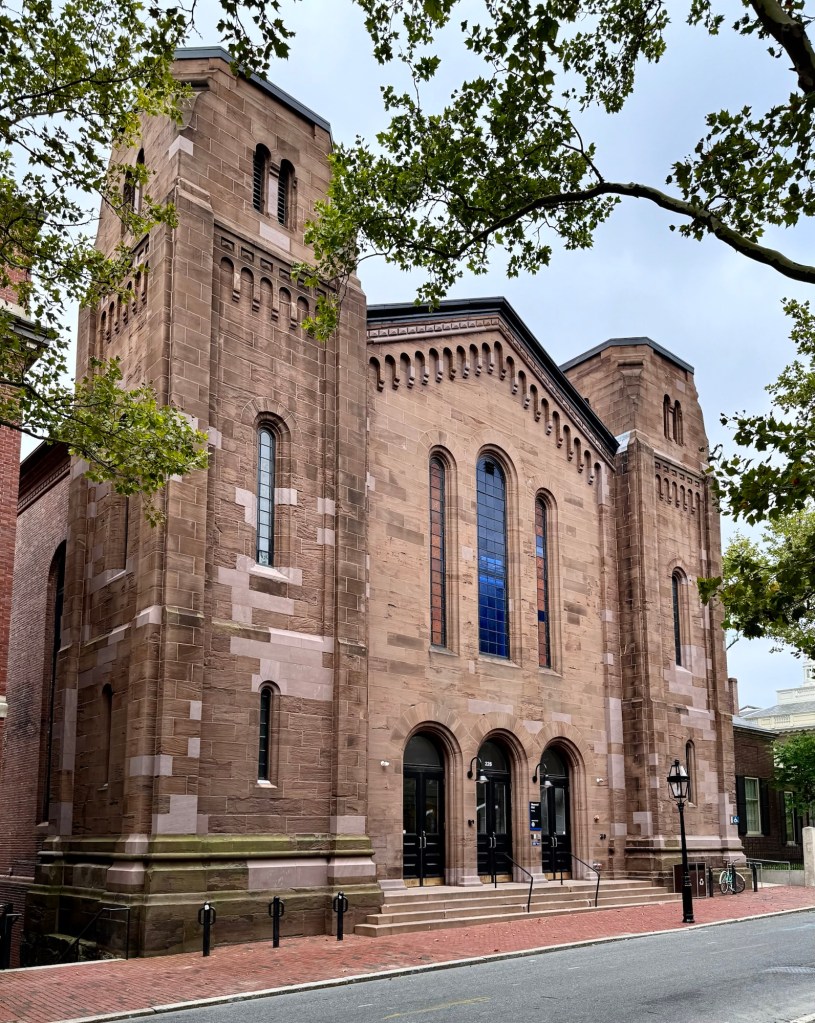
Former Central Congregational Church – Memorial Hall, RISD // 1853

An early example of the Romanesque Revival style, the former Central Congregational Church on Benefit Street in Providence’s East Side is architecturally significant as one of the remaining designs by architect, Thomas Tefft and built from 1853-1856. Thomas A. Tefft (1826-1859) was one of the nation’s first professionally trained architects and was a master of Rundbogenstil, a German-branch of the Romanesque style until his untimely death in Italy when he was just 33. When this church was completed in 1856, Tefft was just thirty years old. The brownstone facade is adorned by triple-arched entrances and corbelling. The congregation grew and decades later, acquired a site in the neighborhood for a larger, Carrere and Hastings-designed church, vacating this building in 1893. The Rhode Island School of Design (RISD) purchased this former church in 1902 following a donation by Eliza Radeke and her brothers who named the building Memorial Hall. The firm of Hoppin and Ely was hired to update the former church for use by the college, which primarily took place on the interior. The original pair of tall bell towers were damaged during the 1938 hurricane and later were removed in 1950, truncating the verticality of this great Tefft-designed building, but she still shines! Memorial Hall has been incorporated into the RISD campus and houses studio spaces.

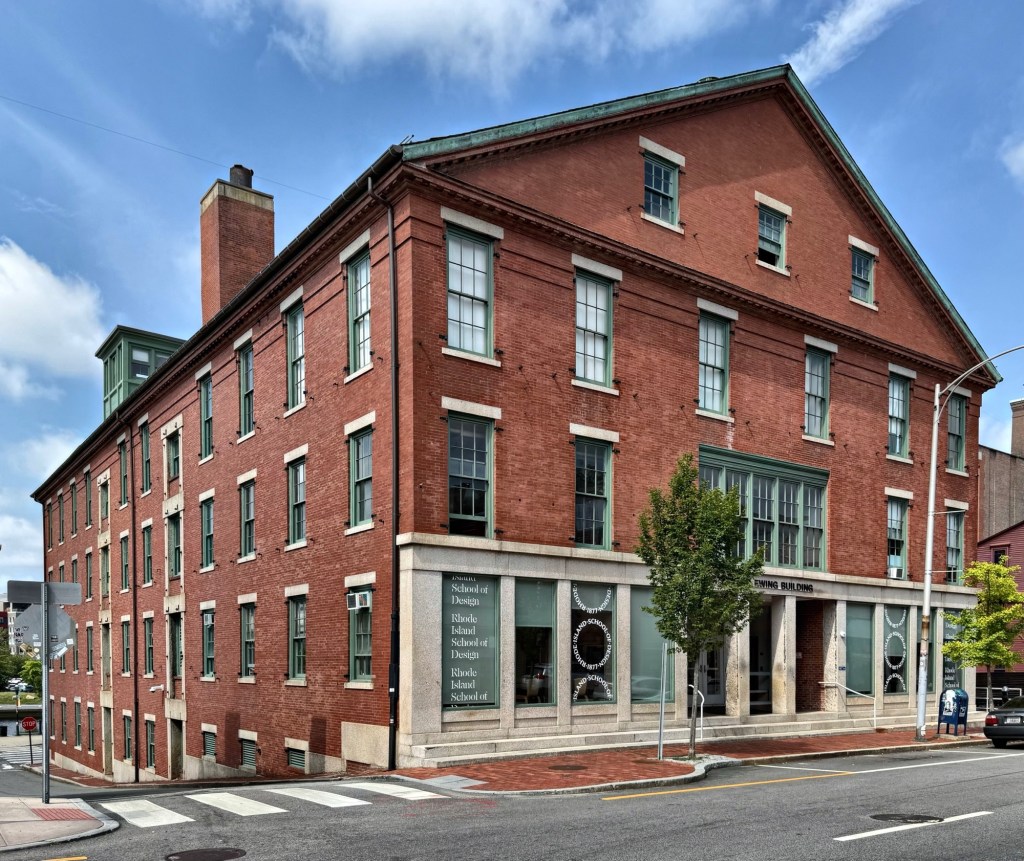
Bayard Ewing Building // 1848

Located on South Main Street in Providence, this large Greek Revival style commercial building, with its gable pediment facing the street was built in 1848 by the Fall River Ironworks Company.The company was founded in Fall River, Massachusetts (then partly located within Rhode Island) in 1822 to manufacture nails. The company owned and occupied this building from its construction until 1881, when it was occupied by the Rumford Chemical Works, founded by Eben Horsford as a manufacturer of baking powder, with this building serving as its main office. In 1927, the Phillips Lead Company, a plumbing supply house, purchased the property and continued to use it until 1973, when it was acquired via taking as part of an Urban Renewal plan for the area. Luckily, the building was deemed significant, and preserved following its purchase by the Rhode Island School of Design (RISD) and converted to classroom and studio spaces in 1978 for several of the school’s departments. The restoration and adaptive reuse was overseen by local architect Irving B. Haynes. The building, now known as the Bayard Ewing Building, is one of the earliest such examples of adaptive reuse in Providence and showcases that old buildings can be repurposed for new ideas and uses. 

Cheapside Block // 1880

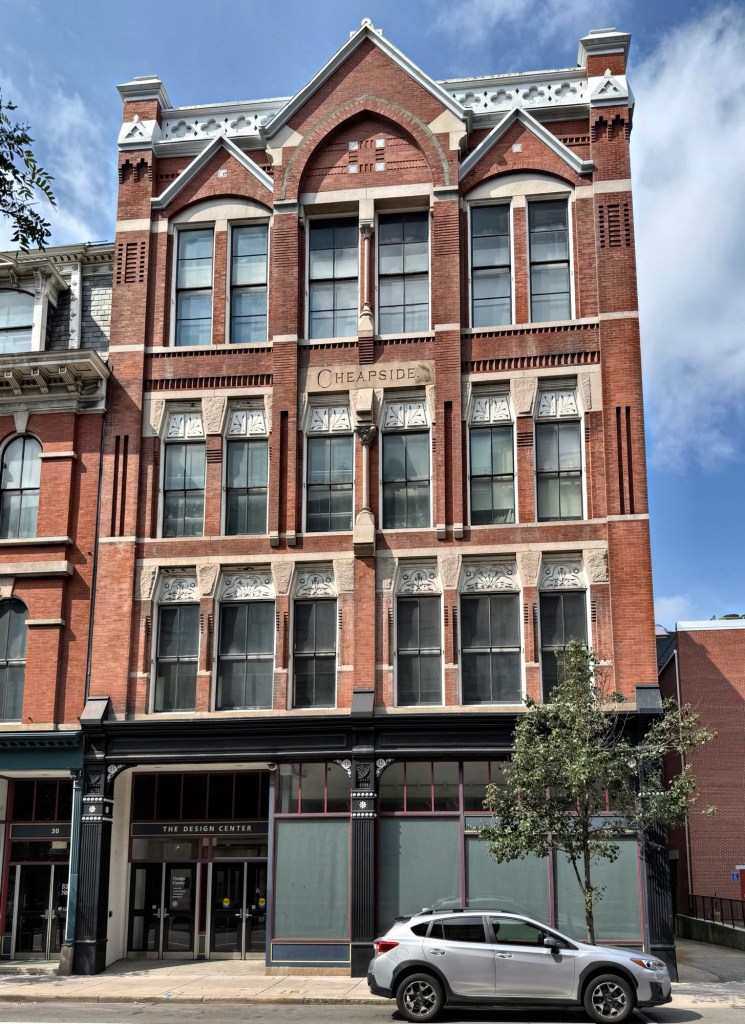
The Cheapside Block on N. Main Street in the East Side district of Providence, Rhode Island, is significant as a remaining Victorian-era commercial block that retains much of its original architectural detailing. Built in 1880 and designed by local architects Stone & Carpenter, the Cheapside Block was named after the early nineteenth century name given to the commercial district running along the west side of Main Street, north from the eighteenth century Market House, after the London commercial district of the same name. The word “cheapside” is derived from the Anglo-Saxon word “to barter.” The block here is an excellent example of the High Victorian Gothic architecture style, with intricate brick and stonework, pointed gables with inlaid tile, quatrefoil motif in the parapet, and the original cast iron storefronts. The building was acquired by the Rhode Island School of Design and renovated in the 1980s. Today, the Cheapside Block is home to the RISD Design Center

People’s Savings Bank // 1913

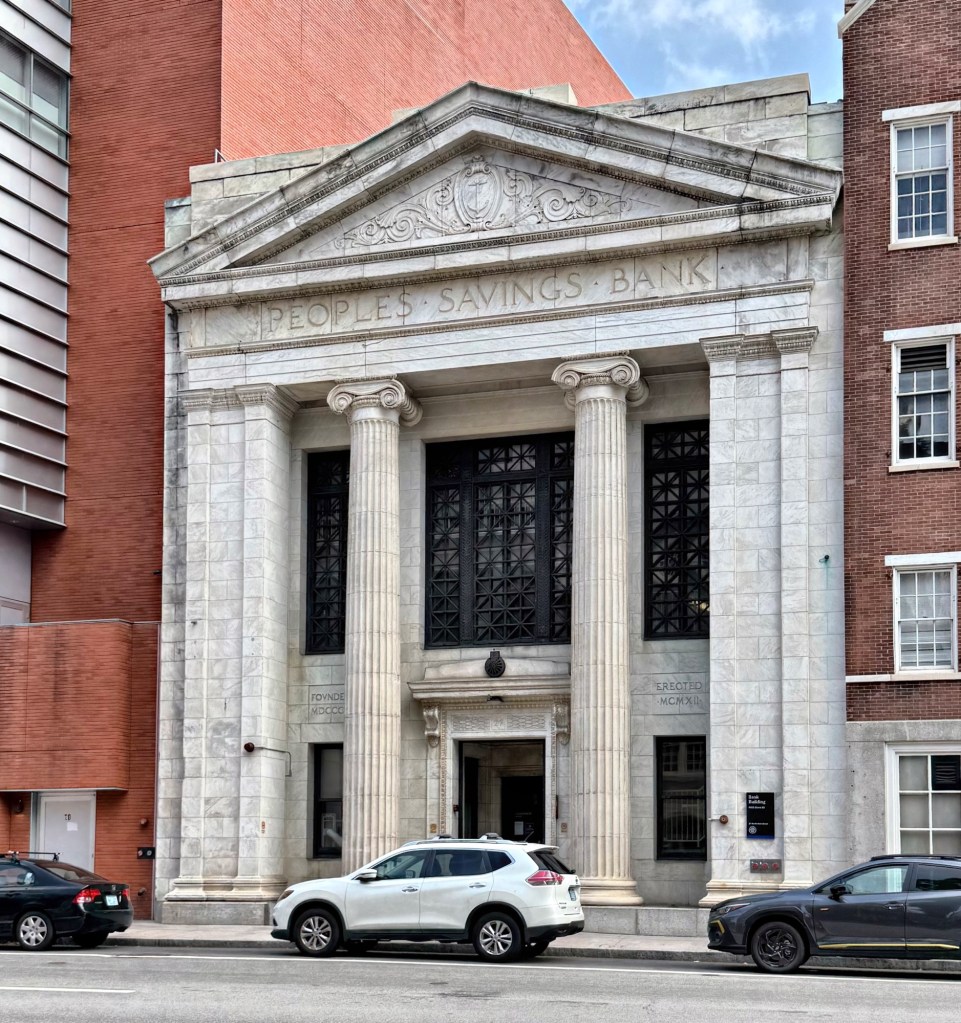
Built in the mode of a Greek temple, the former People’s Savings Bank was built in 1913 on a prominent site overlooking Market Square in the East Side neighborhood of Providence. Designed by the Providence-based architectural firm of Clarke & Howe, the handsome marble-faced two-story bank showcases the bold, yet clean proportions found in many Classical Revival style institutional buildings of the early 20th century. The People’s Savings Bank was established in 1851 and after decades of growth, built this structure to show customers the prosperity and stability of their institution. After a series of bank acquisitions and mergers in the 20th century, the building was eventually acquired by the Rhode Island School of Design, who had the building converted into studio space and later into the college’s hardware store. Yes, you heard that right… Talk about adaptive reuse!

Providence Market Hall // 1773

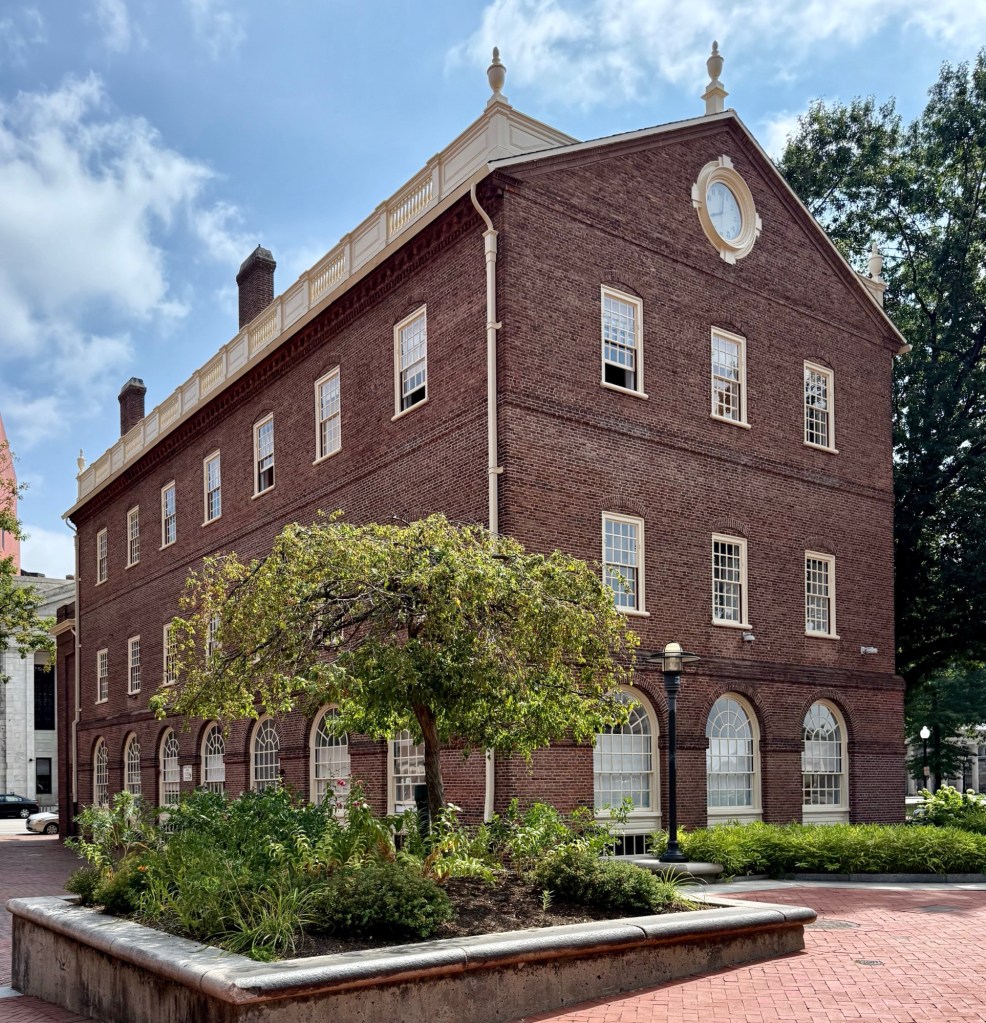
Located in Market Square between Downtown and College Hill in Providence, Rhode Island, the old Colonial Market House stands as one of the city’s oldest and most architecturally significant buildings. Constructed between 1773-1775, this Georgian-style structure originally served as a public market and meeting space. The building was originally two stories in height with an open arcade on the first story, it was used by vendors below and town officials above. The building was expanded in 1797 with a third floor, which housed the first Masonic Lodge in Rhode Island. The Market Hall was designed by local businessman, astronomer, and architect, Joseph Brown, who was also a brother of the founders and namesake of Brown University. Over the centuries, the Market House has played many civic roles. During the Revolutionary War, it was used for military purposes, and later became a hub of commercial and political activity in the growing city. It housed Providence’s first post office, and housed the Providence City Council in the decades before the completion of City Hall. In 1948, Mayor Dennis J. Roberts signed a deed to give the building to the Rhode Island School of Design, with the provision that the exterior of the building be maintained, an early preservation win! Architect John Hutchins Cady was hired to remodel the interior with classrooms and studios, and the Market House remains as a significant piece of the RISD campus. Its enduring presence on Market Square connects modern Providence to its colonial roots, embodying a rich legacy of adaptive reuse and historic preservation.

Rhode Island Hospital Trust Building // 1917

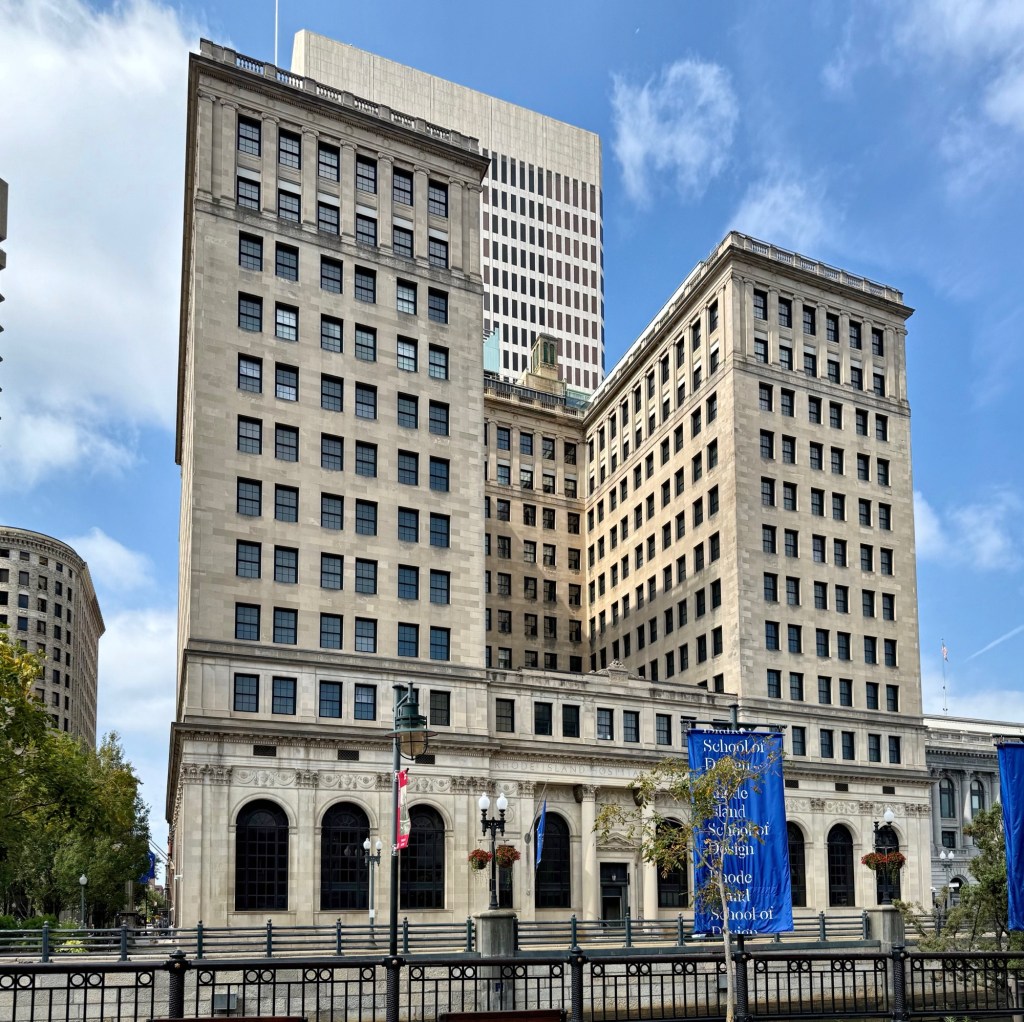
Located at the eastern edge of Downtown Providence, the Rhode Island Hospital Trust Building is significant as one of the city’s finest examples of the Beaux Arts style of architecture and as the headquarters of what was once the largest banking institution in the state of Rhode Island. The Rhode Island Hospital Trust incorporated in 1867 as the first trust company in New England. It owes its unique name to the fact that it was chartered by the board of trustees of Rhode Island Hospital, founded four years earlier, with the trust company established to help finance operations of the hospital. The original, purpose-built bank was constructed in 1891, and quickly outgrown as the institution grew exponentially into the early 20th century. In 1916, the trust hired the New York architectural firm of York & Sawyer to furnish plans for the present structure. Construction began in 1917, and after delays caused by WWI, the building finally opened in 1919. The 11-story U-shaped building was designed in an exaggerated form of Renaissance palazzo, with steel-framed construction that is faced with marble on the two lower levels and limestone elsewhere. After a series of mergers throughout the 20th century, the building was owned by FleetBoston, who donated this pristine building to the Rhode Island School of Design (RISD), which was renovated into a dormitory by RISD-alumni and architect Nader Tehrani of NADAAA Architects. It is today known as the Mandle Building.

Stephen O. Metcalf House // 1892

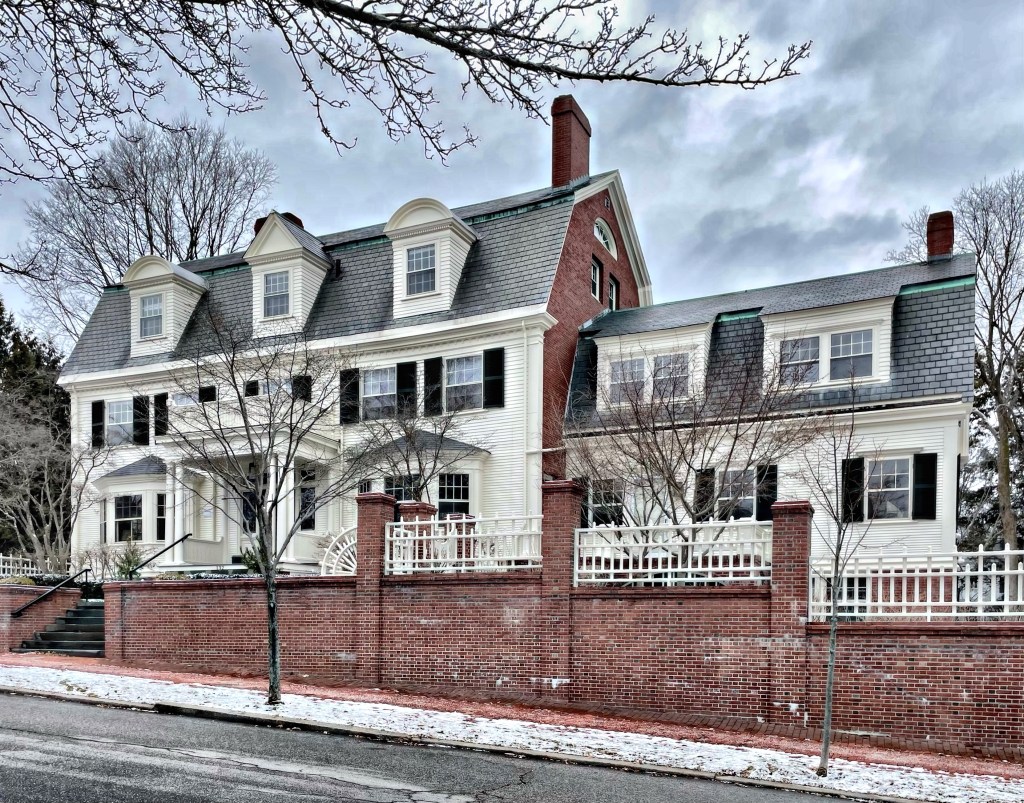
I am on a Colonial Revival style kick lately, so bear with me on this recent span of posts on houses in the style! This estate house is an earlier example in Providence, built in 1892 for Stephen Olney Metcalf (1857-1950) a multi-millionaire who was in business in woolen textiles and insurance before diversifying his portfolio further serving as President of the Providence Journal and Evening Bulletin. To make an architectural statement, Mr. Metcalf called the renowned Boston firm of Andrews, Jacques and Rantoul to design his new residence. The oversized Colonial Revival house is an excellent example of how Revival architecture tend to be a more free interpretation of their prototypes, being larger and having exaggerated features and proportions. In his will, Stephen O. Metcalf bequeathed this residence to the Rhode Island School of Design (RISD), an institution his mother helped found, and his daughter served as President. The mansion remains the RISD President’s House to this day.

Jonathan Congdon House // 1818

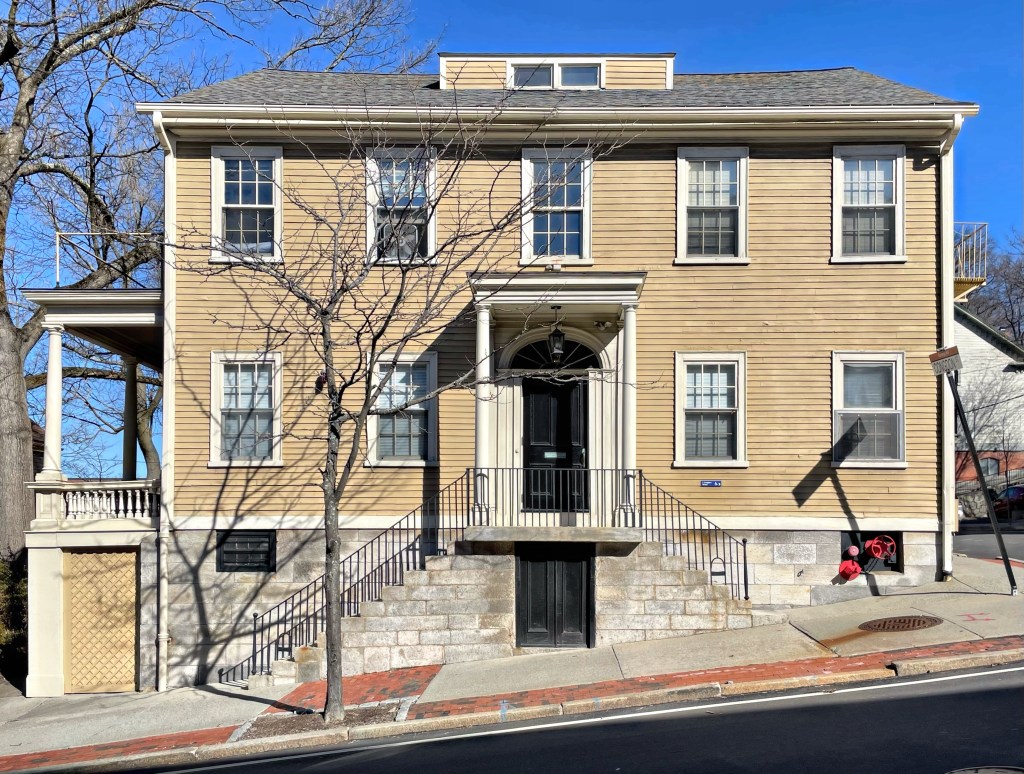
Jonathan Congdon (1763-1862) worked in the hardware and iron business, following his father’s footsteps, eventually taking over the family business. Jonathan married Elizabeth Arnold and had at least nine children together. Two of their sons, Arnold and Welcome, too followed in the family business, as ironworkers and salesmen, with the new firm name, Jonathan Congdon & Sons. The company did well, and Jonathan replaced his c.1787 home on the lot (built at the time of his marriage) with the present structure. He also laid out a street on the side of the property, which was named Congdon Street. The home remained in the Congdon Family until 1937, when it was acquired by the Rhode Island School of Design (RISD).