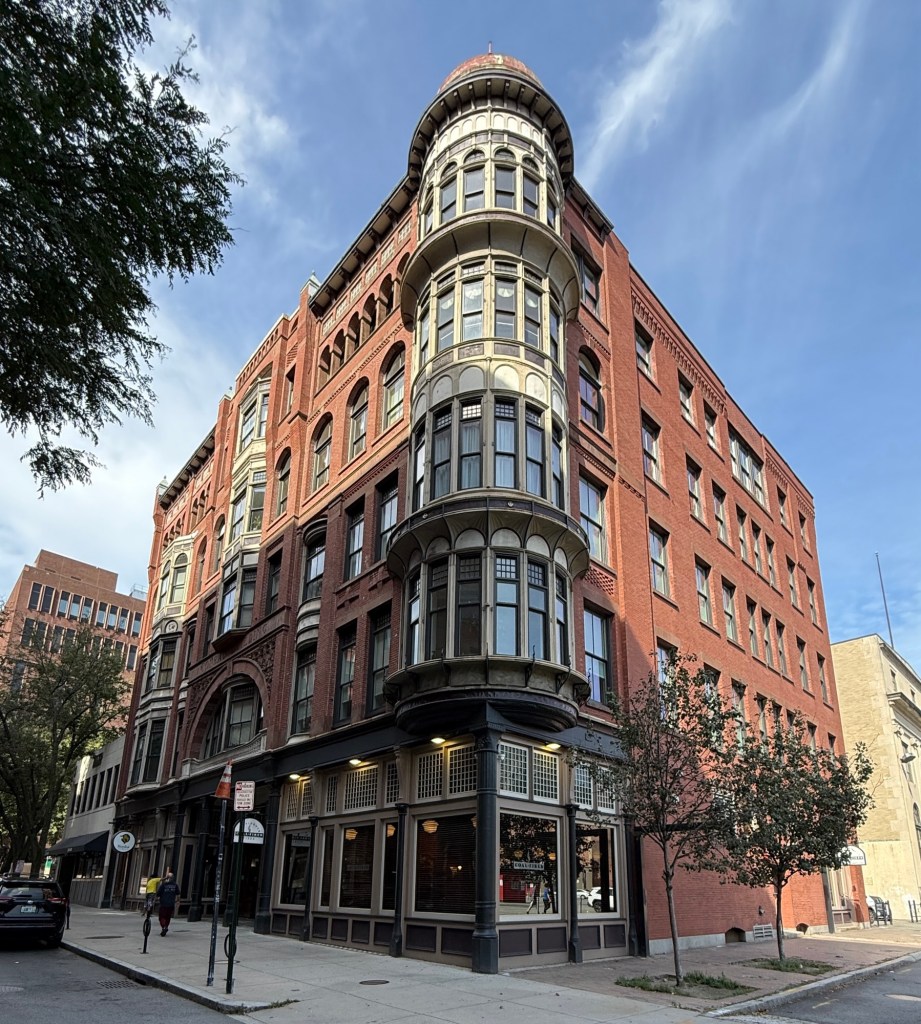
Conrad Building // 1885

The Conrad Building on Westminster Street in Downtown Providence is an ornate and over-the-top masterpiece designed by one of the city’s premier architectural firms for an eccentric owner. Erected by Jerothmul Bowers Barnaby (1830-1889), a self made millionaire, commonly known as “Rhode Island’s Clothing Prince” who owned manufacturing plants for clothing throughout the city, the building was named after his son-in-law, John H. Conrad. Owner, J. B. Barnaby, lived in an eclectic mansion on Broadway, known as Barnaby’s Castle, which was designed by the firm of Stone, Carpenter & Willson, like this commercial block built as an investment in 1885. Originally used for professional offices, the structure had long been occupied as artist and photography studios on the upper floors. Eclectic in style, the Conrad Building blends Queen Anne, Romanesque Revival, and Moorish Revival styles into a single composition, with a four-story cast-iron tower at the corner capped by a Moorish ogival dome, panel brickwork, round arched windows and recessed openings, projecting bays, cast-iron storefronts, and an oversized arch with its name, “Conrad Building”, ornamental carvings, and the initials “J. B.” for its owner, all completed in brownstone.
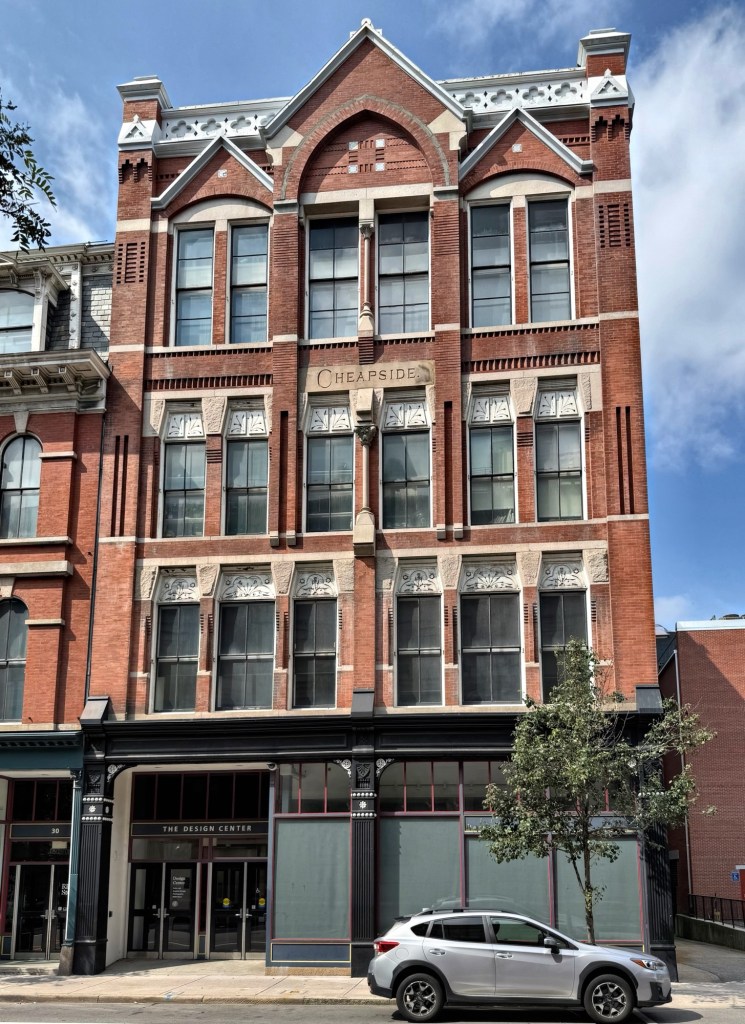
Cheapside Block // 1880

The Cheapside Block on N. Main Street in the East Side district of Providence, Rhode Island, is significant as a remaining Victorian-era commercial block that retains much of its original architectural detailing. Built in 1880 and designed by local architects Stone & Carpenter, the Cheapside Block was named after the early nineteenth century name given to the commercial district running along the west side of Main Street, north from the eighteenth century Market House, after the London commercial district of the same name. The word “cheapside” is derived from the Anglo-Saxon word “to barter.” The block here is an excellent example of the High Victorian Gothic architecture style, with intricate brick and stonework, pointed gables with inlaid tile, quatrefoil motif in the parapet, and the original cast iron storefronts. The building was acquired by the Rhode Island School of Design and renovated in the 1980s. Today, the Cheapside Block is home to the RISD Design Center. 

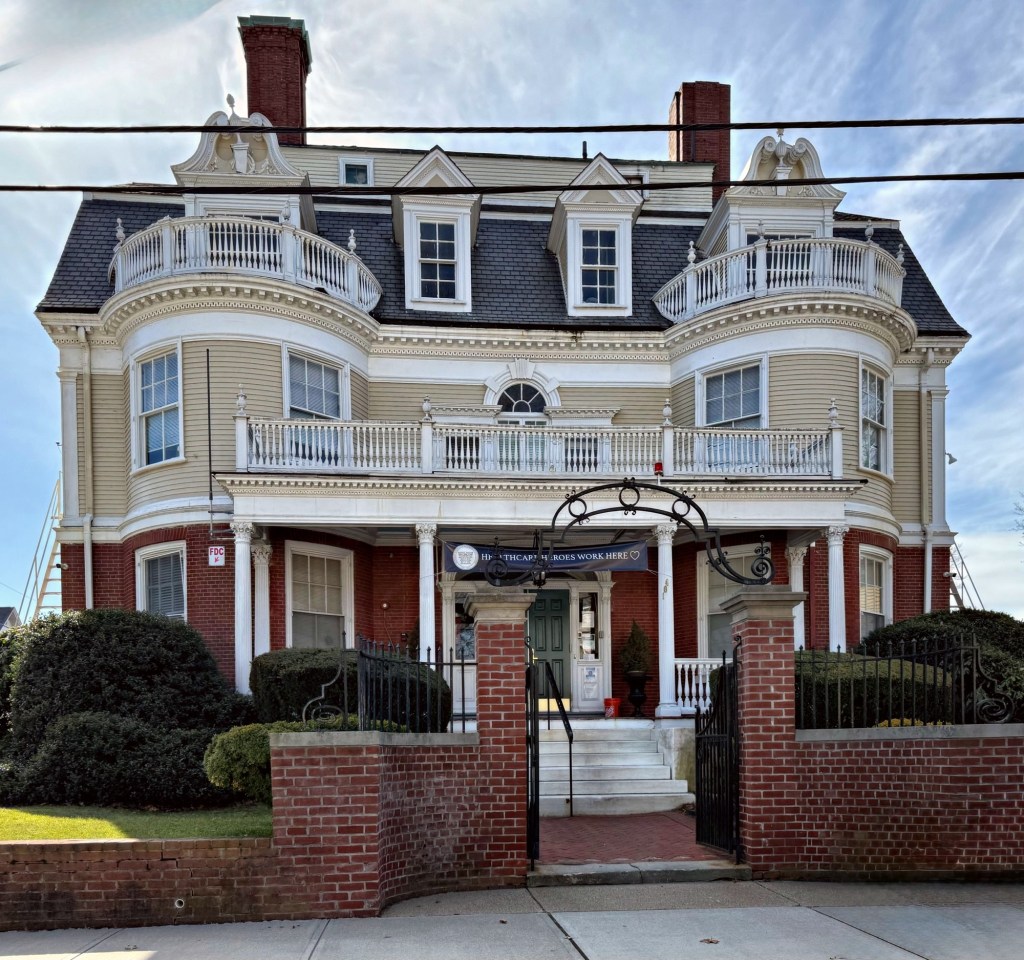
Samuel B. Conant House // 1895

Built in 1895 for Samuel Conant, president of a Pawtucket printing firm, this stately residence is one of the finest Colonial Revival houses in Central Falls, Rhode Island. Designed by the Providence architectural firm of Stone, Carpenter & Willson, the house is brick on the first floor with clapboard siding above. The Contant house has a gambrel roof punctuated by several gable dormers. The main facade has two symmetrical round bays, which rise to the roof and are topped by low balustrades. A single-story porch extends between the center points of these bays, and is also topped by a low balustrade. Recognized for its architectural grandeur (inside and out), the house was individually listed on the National Register of Historic Places. The Conant House is now used as a nursing home and while the transition to this new use has required a number of interior alterations, these changes have been made with sympathy for the character of the house and many of them are reversible.