Merrill Rowhouses // c.1896

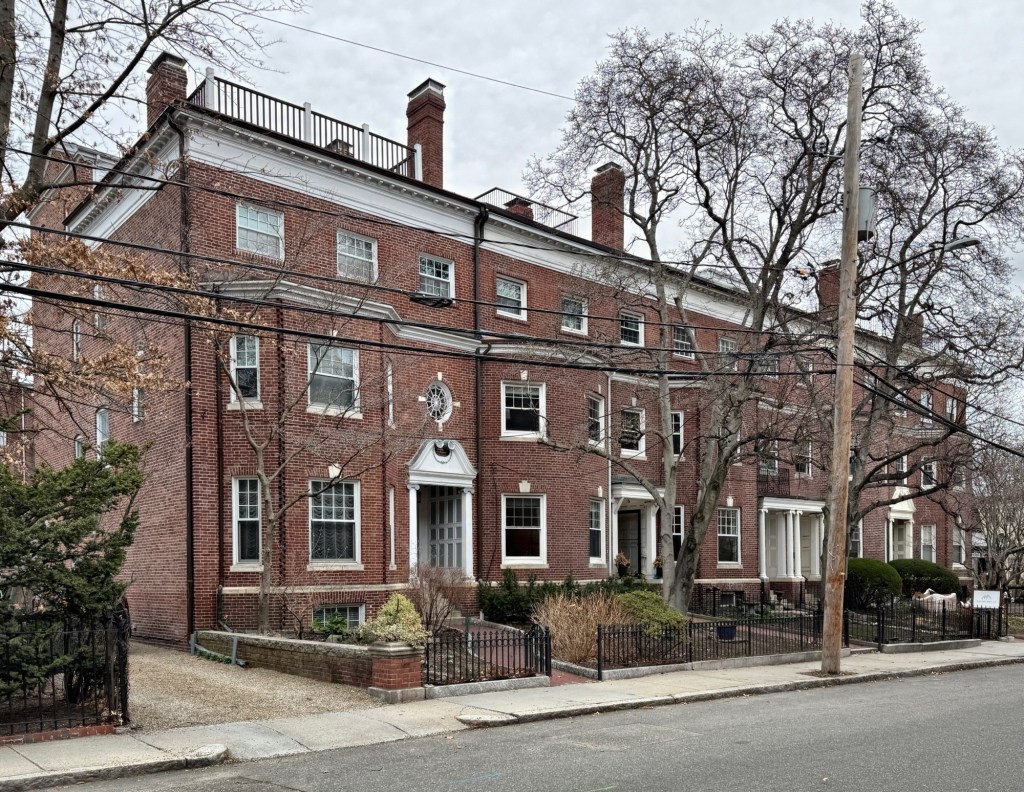
Around the turn of the 20th century, much of Brookline, Massachusetts, saw rapid development and suburbanization as the area streetcars and subway made Boston better-connected to adjacent communities. Developers eyed un- and under-developed lots near major corridors and stations to develop denser housing at varied success. In the Longwood neighborhood, Luther Merrill owned property along Beacon Street and in the more established wealthy neighborhood, where he sought to build. Taking cues from the surrounding context and precedence for rowhouse development, Merrill hired the local architectural firm of Ball and Dabney to furnish plans for a five-unit row. The firm designed the four-story building in the Colonial Revival style with its upper floor set back off the facade to give it the appearance of a three-story structure, to better fit with the surrounding character. The five privately owned rowhouses feature rounded bays and recessed paneled entrances, some surmounted by large swans neck pediments.
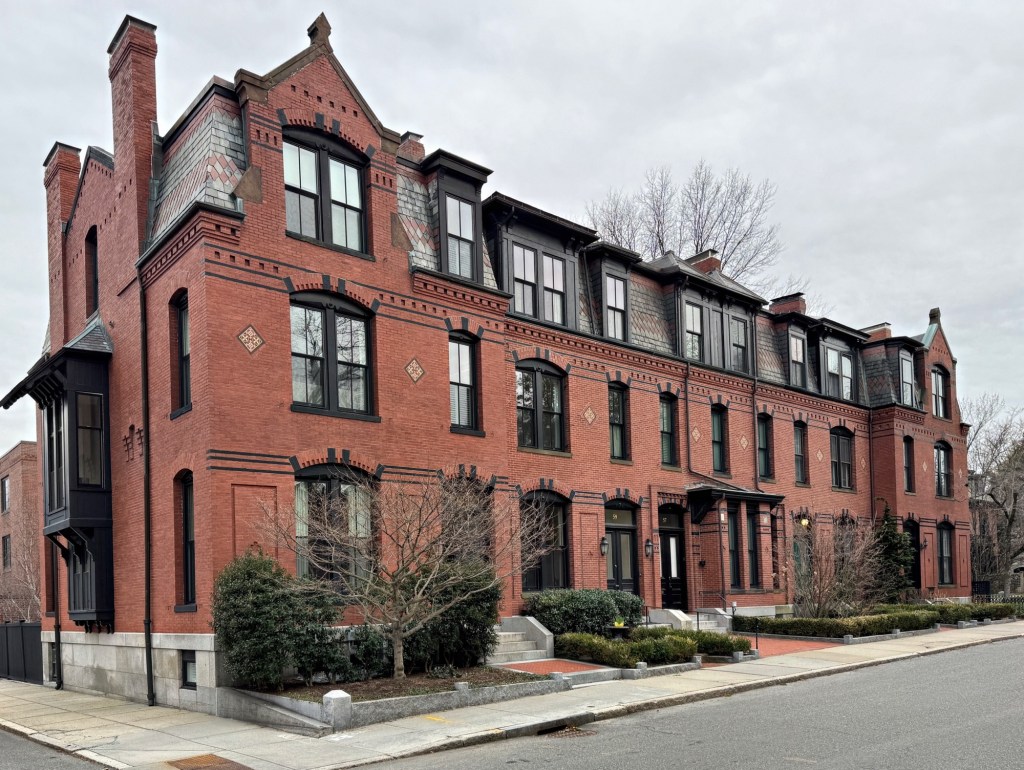
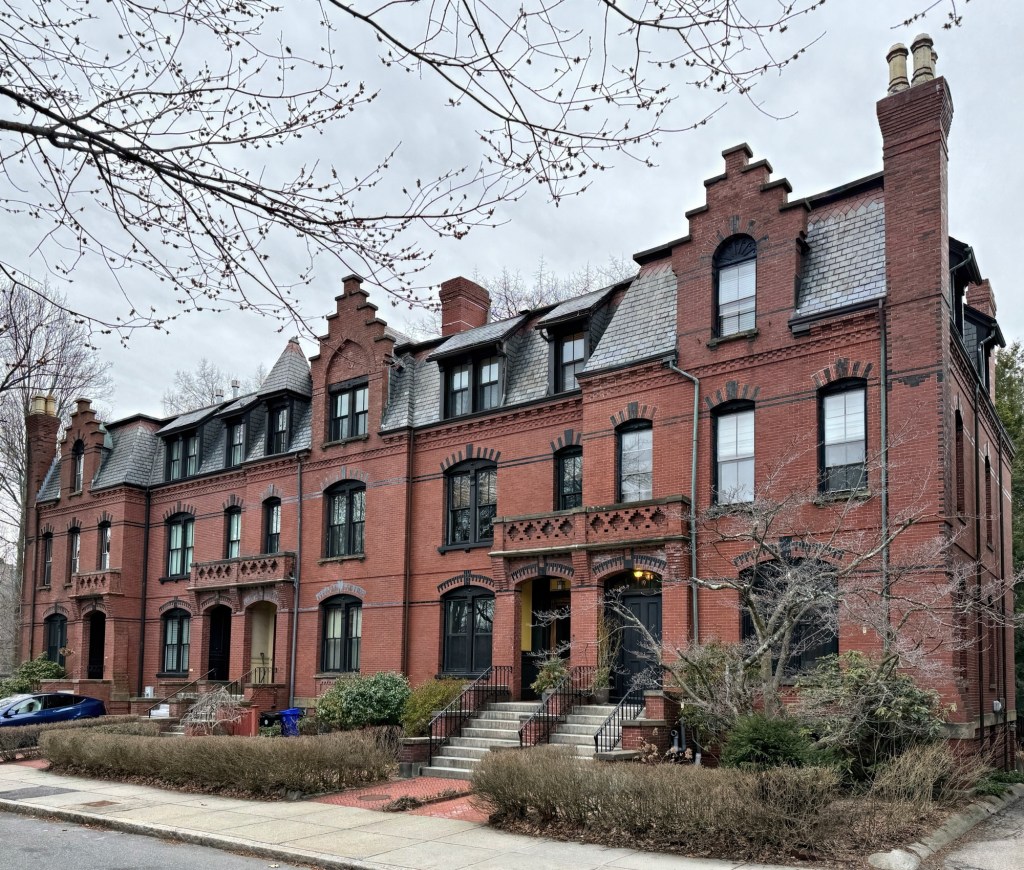
Amos Lawrence Rowhouses // c.1877

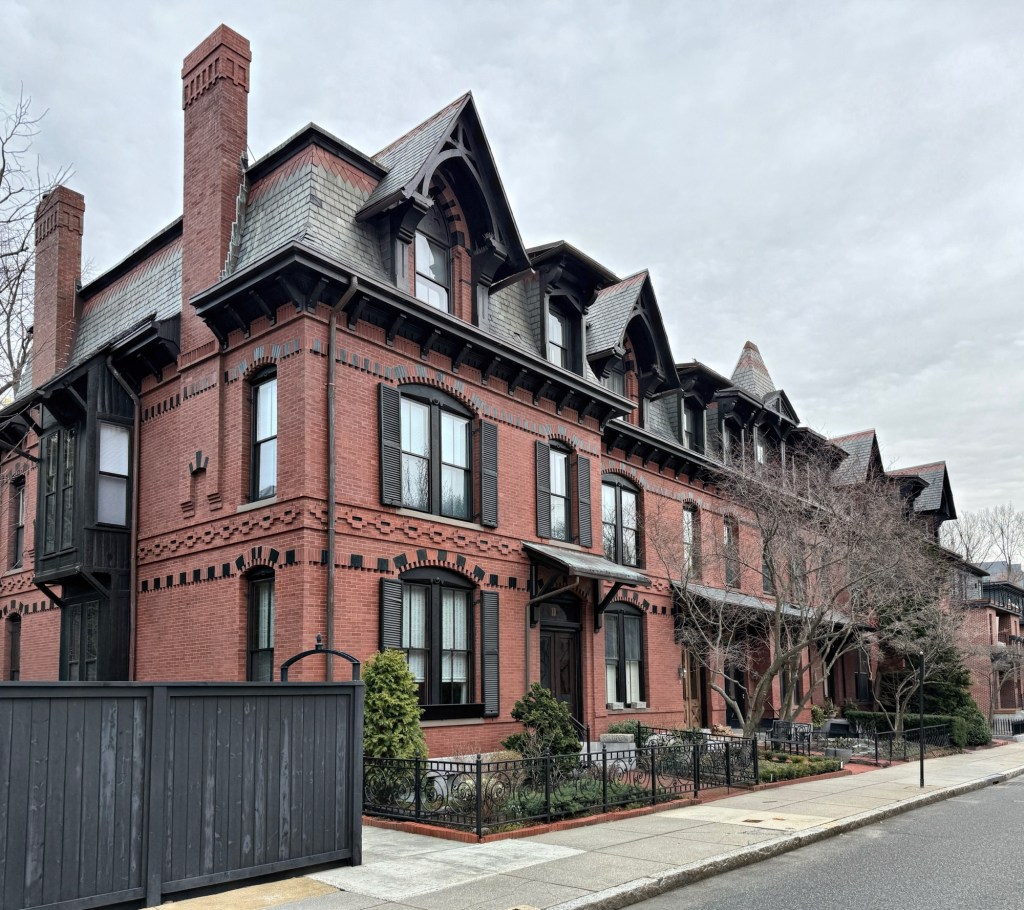
53-61 Monmouth Street

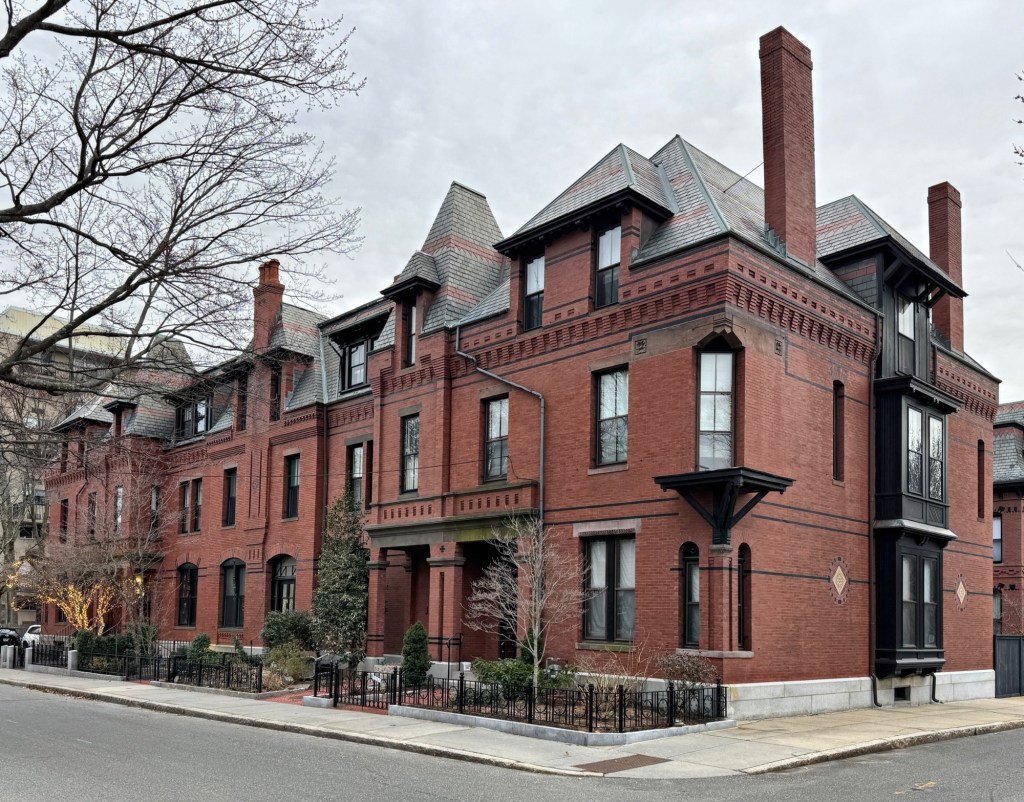
Amos A. Lawrence (1814-1886), a wealthy Boston merchant, owned land holdings in the present-day Longwood neighborhood of Brookline, just over the Muddy River from Boston, and developed the area into a wealthy and high-quality suburb. Lots were laid and Lawrence hired civil engineer, Ernest Bowditch, to plat for multiple sets of distinctive rowhouses surrounding a small green mall, which was later named Monmouth Court. Once the property was laid out, Amos Lawrence hired the Boston architects, J. Pickering Putnam and George T. Tilden, to design rowhouses for rental income. George Tilden was previously employed at the firm of Ware & Van Brunt, a firm that mastered and popularized the panel brick style in the Boston area in the 1870s and 1880s, and he clearly built upon this expertise for the rows for Amos Lawrence in Brookline. All four rows of houses are distinctive, yet compliment eachother stylistically with projecting bays. intricate brickwork, complex rooflines with dormers, and applied ornament. These two rows on the western side of Monmouth Court at 53-61 Monmouth Street and 19-27 Monmouth Court, were also likely the work of Putnam and Tilden, who practiced jointly for a couple years but published their work separately. Stylistically, the two Monmouth Street rows appear to be of the same architect, George Tilden with identical tilework and elements, and the two Monmouth Court rows as the work of Putnam with polychromatic segmental arches over the windows.

19-27 Monmouth Court

Amos Lawrence Rowhouses // 1876

Amos A. Lawrence (1814-1886), a wealthy Boston merchant, owned land holdings in the present-day Longwood neighborhood of Brookline, just over the Muddy River from Boston, and developed the area into a wealthy and high-quality suburb. Lots were laid and Lawrence hired civil engineer, Ernest Bowditch, to plat for multiple sets of distinctive rowhouses surrounding a small green mall, which was later named Monmouth Court. Once the property was laid out, Amos Lawrence hired the Boston architects, J. Pickering Putnam and George T. Tilden, to design rowhouses for rental income. George Tilden was previously employed at the firm of Ware & Van Brunt, a firm that mastered and popularized the panel brick style in the Boston area in the 1870s and 1880s, and he clearly built upon this expertise for the rows for Amos Lawrence in Brookline. All four rows of houses are distinctive, yet compliment each other stylistically with projecting bays. intricate brickwork, complex rooflines with dormers, and applied ornament. This row at 10-18 Monmouth Court was from the designs of partner, J. Pickering Putnam and was highlighted in an architectural publication soon after completion. The row exhibits a slate mansard roof disrupted by dormers with trusses, lancet arch and trefoil motifs, polychromatic brick and pent roof entrances all stepping out to the private courtyard.

Amos Lawrence Rowhouses // 1876

Amos A. Lawrence (1814-1886), a wealthy Boston merchant, owned land holdings in the present-day Longwood neighborhood of Brookline, just over the Muddy River from Boston, and developed the area into a wealthy and high-quality suburb. Lots were laid and Lawrence hired civil engineer, Ernest Bowditch, to plat for multiple sets of distinctive rowhouses surrounding a small green mall, which was later named Monmouth Court. Once the property was laid out, Amos Lawrence hired the Boston architects, J. Pickering Putnam and George T. Tilden, to design rowhouses for rental income. George Tilden was previously employed at the firm of Ware & Van Brunt, a firm that mastered and popularized the panel brick style in the Boston area in the 1870s and 1880s, and he clearly built upon this expertise for the rows for Amos Lawrence in Brookline. All four rows of houses are distinctive, yet compliment eachother stylistically with projecting bays. intricate brickwork, complex rooflines with dormers, and applied ornament. This row at 69-77 Monmouth Street exhibits inlaid tile medallions and small balconets on the chamfered corners that are missing their railings.

Church of Our Saviour, Brookline // 1868

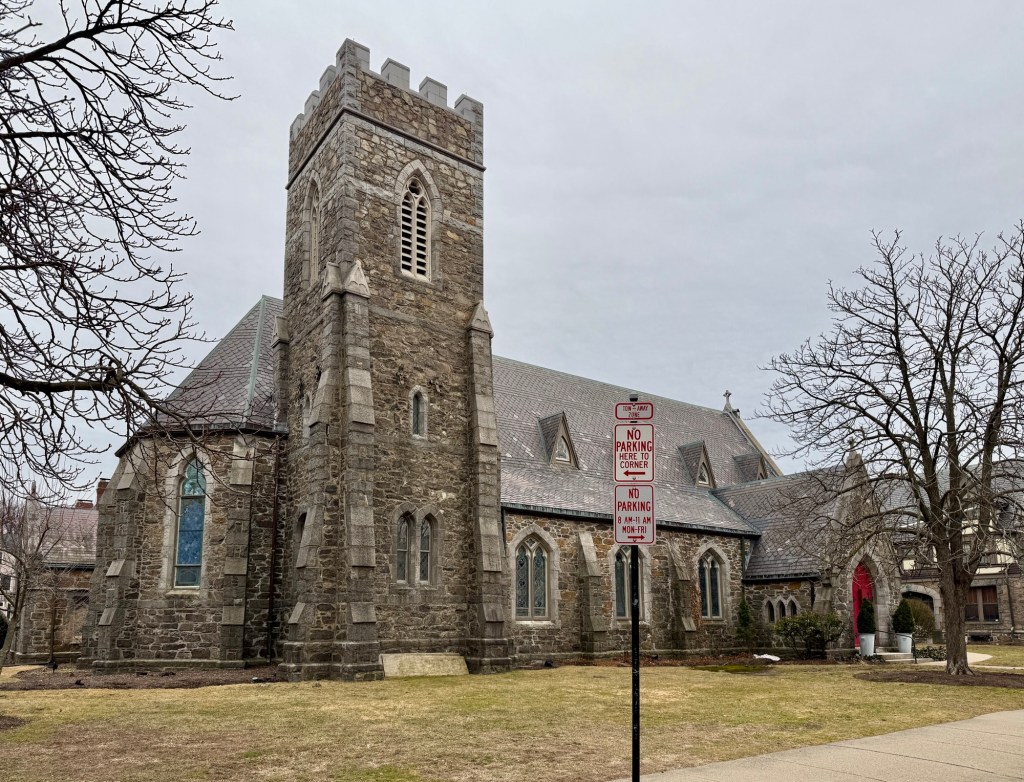
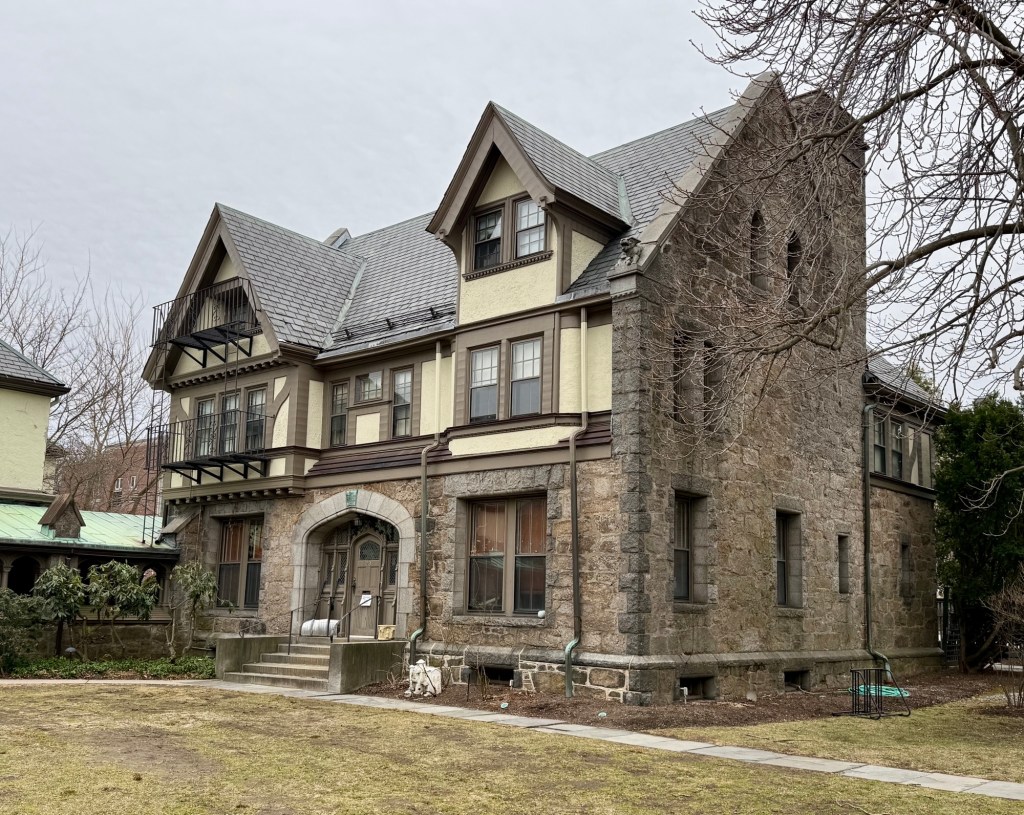
The Church of Our Saviour of Brookline, Massachusetts, is an architecturally and historically significant church complex in the Longwood neighborhood that has ties to those who established this neighborhood into what it is today. The church was built in 1868 by the brothers Amos and William Lawrence, in honour of their father, Amos Lawrence. The church was established by twelve established Boston-area families who wanted to grow the Episcopal diocese in the area. They hired architect, Alexander Rice Esty, who designed the building in the Gothic style, and it was completed in February 1868. The church was expanded numerous times with a transept chapel designed by the firm Sturgis and Cabot (1893) to the memory of Sarah Appleton Lawrence (wife of Amos A. Lawrence); a parish hall designed by the firm of Cabot and Chandler (1880); and a rectory, designed by architect Arthur Rotch (1886). The church remains an active congregation and is lovingly preserved by the congregants.

Rectory

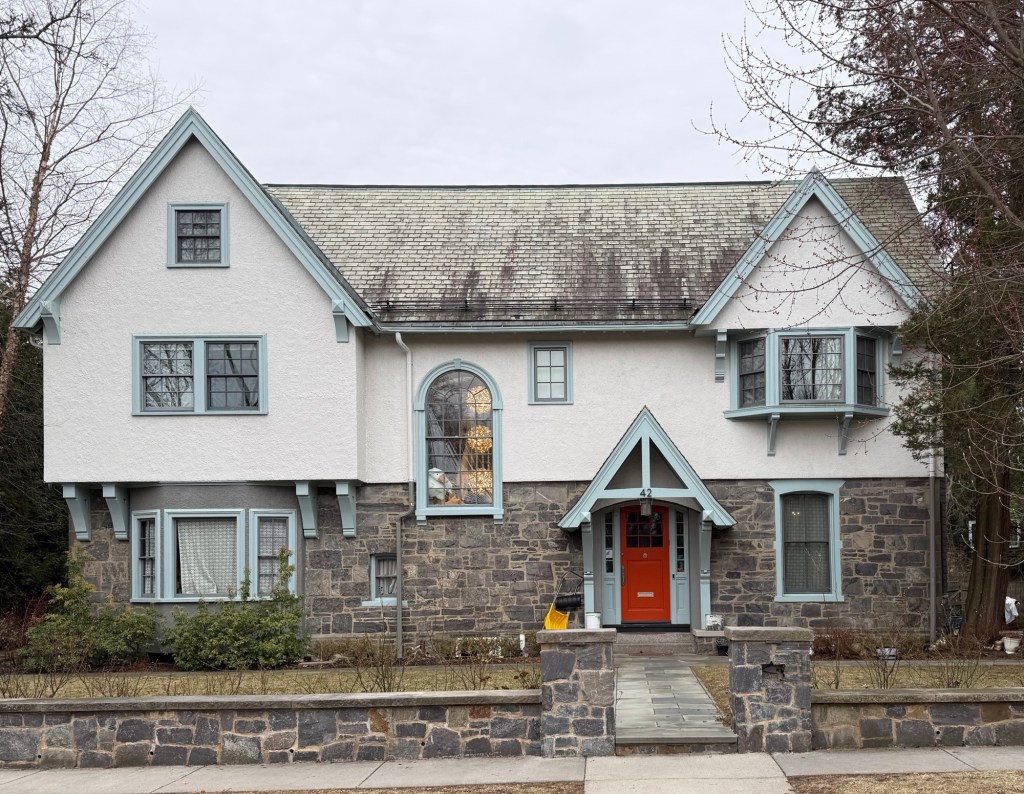
Adolph and Marion Ehrlich House // 1906

The Adolph and Marion Ehrlich House on Beech Road in Brookline’s Longwood neighborhood is a stunning blend of Arts and Crafts and Tudor Revival styles, popular in early 20th century Boston suburbs. The house was designed by the firm of Andrews, Jaques and Rantoul, for Adolph Ehrlich (1868-1952) and Marion Ratchesky Ehrlich (1877-1966). Adolph was born in Boston and at the age of 11, began work in the textile business. He climbed the ranks and became a partner in a clothing company before becoming a director of the Jordan Marsh Department Store Company from 1925 until his death in 1952. His wife Marion was heavily involved in social causes until her death, including the Louisa May Alcott Club, a settlement house in Boston for young, predominantly immigrant girls.

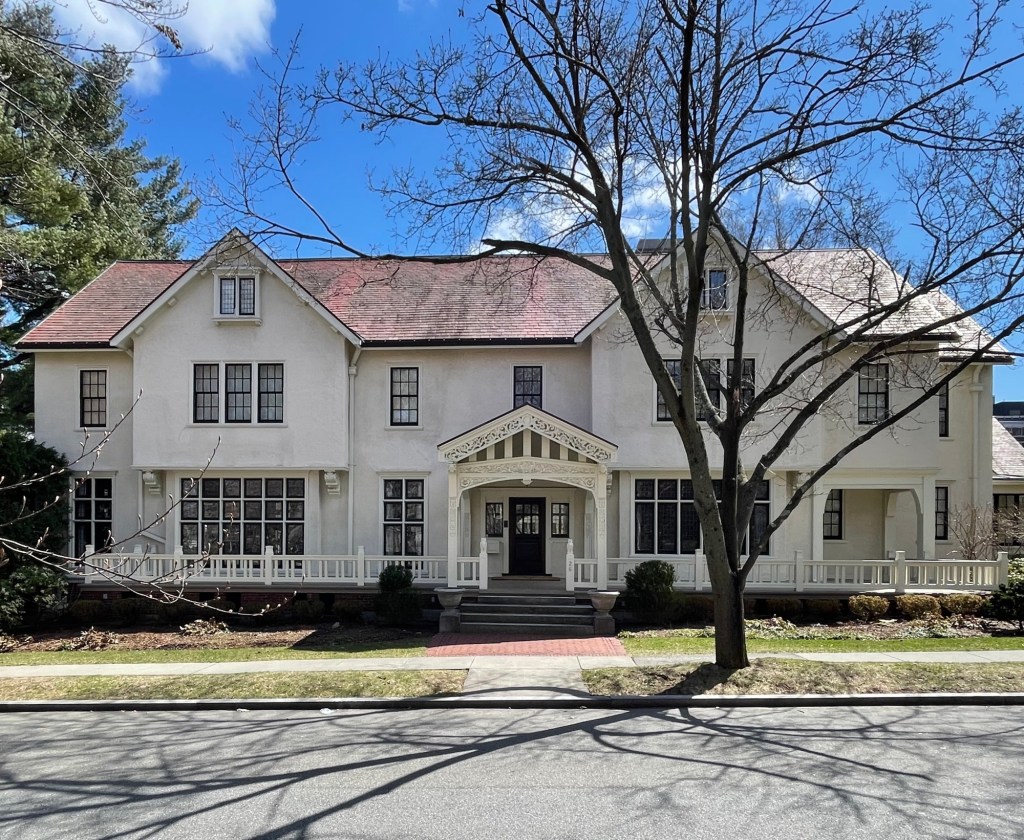
Gahm House // 1907

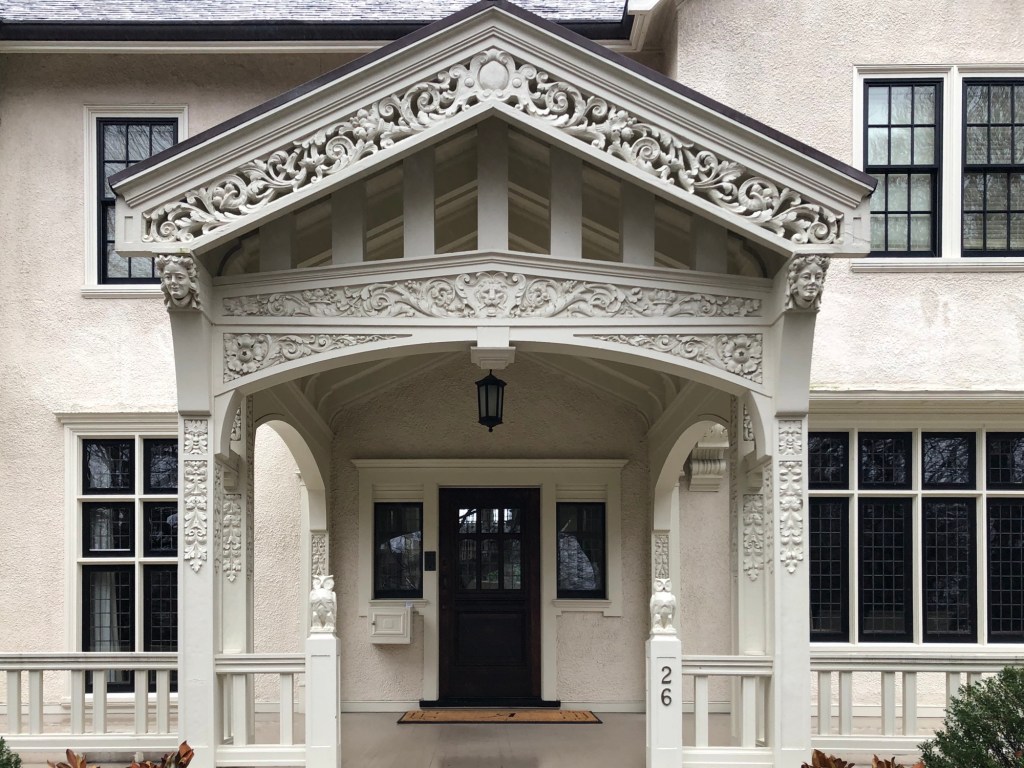
Located in the Longwood neighborhood of Brookline, Massachusetts, the Gahm House stands out not only for its size, but stunning details and architectural design. This house was designed in 1907 by the architectural firm of Hartwell, Richardson & Driver, one of the premier firms of the region at the time, who blended Arts and Crafts with Tudor Revival styles with a notable front entry. Joseph and Mary Gahm hired the firm to design their new home the same year the firm designed a bottling plant (no longer extant) in South Boston for Mr. Gahm’s business. Joseph Gahm was a native of Wurtemberg, Germany, who emigrated to Boston in 1854 and initially worked as a tailor. In the early 1860s, Gahm opened a restaurant in Charlestown, by the late 1860s he added a small bottling operation to this business. The bottling business soon expanded to such an extent that he was able to give up the restaurant business and open a large bottling plant in 1888. He eventually moved operations to South Boston where there was more room for transportation and shipping capabilities. Their stuccoed house in Brookline is especially notable for the well preserved carvings at the entrance, which include: faces, floral details, lions, and owls perched atop the newel posts. What do you think of this beauty?

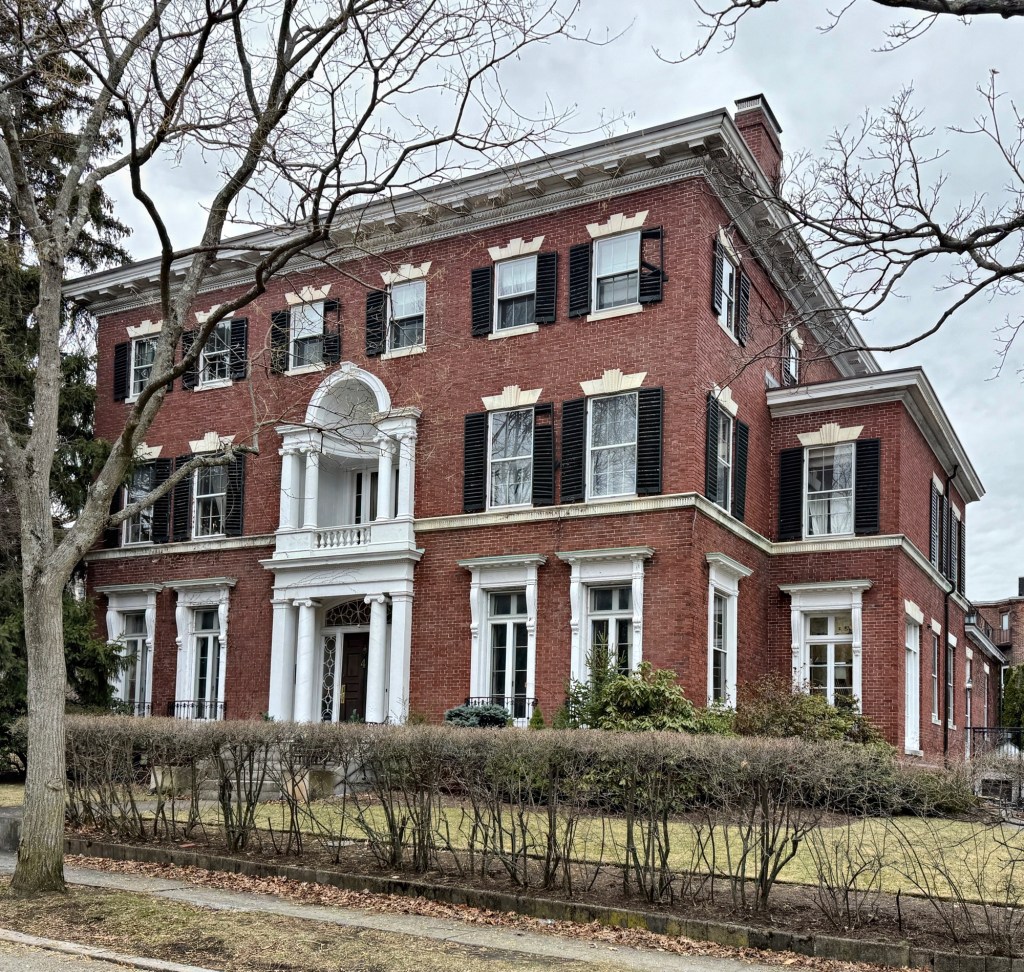
Eisemann Mansion // 1905

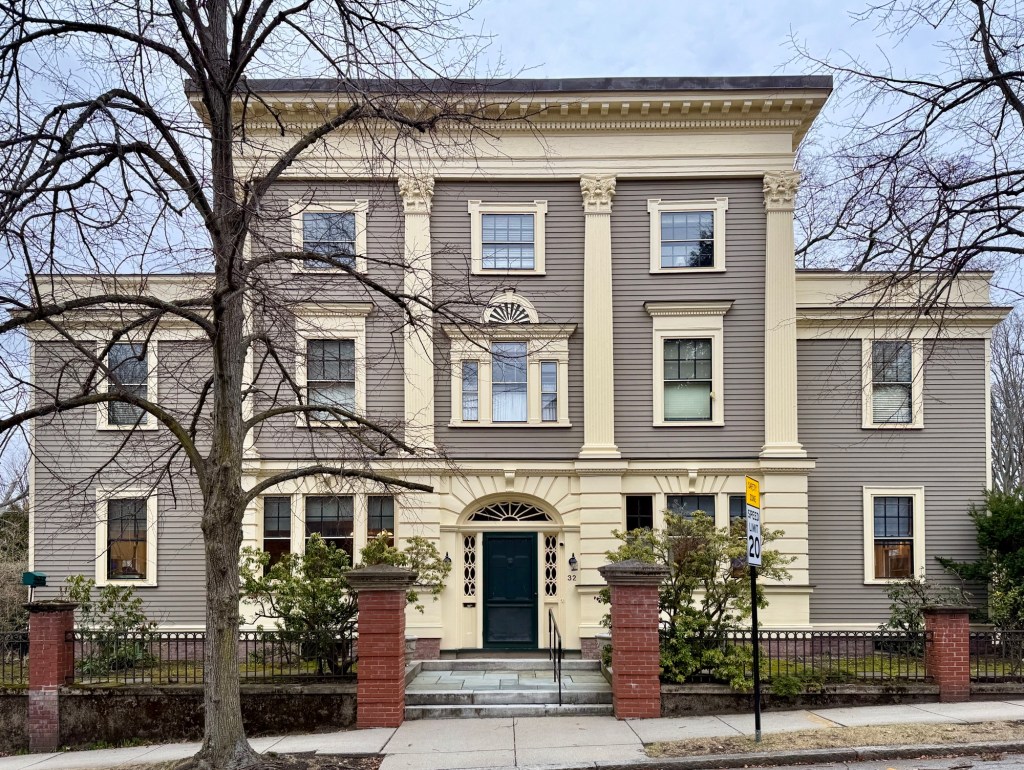
Among the area’s best examples of a high-style Colonial Revival residence of the early 20th century, the Eisemann Mansion on Monmouth Street in Brookline’s Longwood neighborhood stands out not only for its scale and massing, but unique architectural details. The dwelling was built in 1905 for Selly and Albert Eisemann, both German-born Jews who immigrated to the United States and originally lived in New Mexico before moving to Brookline in their retirement. Albert was a retired wool merchant, and clearly made a name for himself out west, hiring local architect, James Templeton Kelley, to furnish plans for his large mansion in Longwood. With a boxy form and five bay facade (with six smaller windows at the third floor), the center-hall mansion is notable for its elaborate first-floor windows with individual cornices, recessed entry set between Ionic columns, and recessed niche balcony over the entry as a unique interpretation of a Palladian motif. 

Harrison Gardner House // c.1873

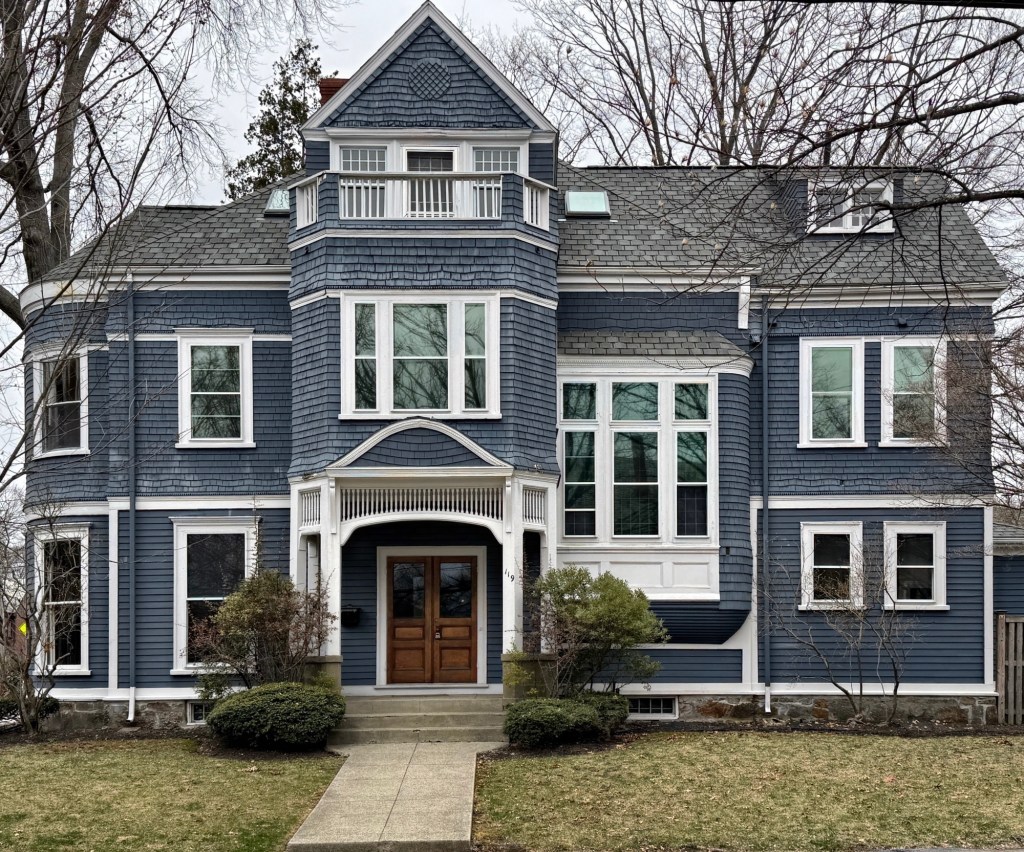
The Harrison Gardner House on Colchester Street in the Longwood section of Brookline is a stunning late Victorian residence that was “modernized” in 1887 to its current configuration. Harrison Gardner (1841-1899) was a Civil War veteran who arrived back in Boston becoming a wealthy dry goods wholesaler, later investing in Massachusetts mills. On January 20, 1871, Harrison was a founder and treasurer of the Boston Red Stockings of the new National Association of Professional Base Ball Players (NABBP). The team’s name  changed multiple times, eventually landing on the Boston Braves, which would later move to Atlanta to become the Atlanta Braves in the MLB. With increased wealth and status, Harrison Gardner in 1887, hired the prestigious architectural firm of Hartwell and Richardson, to update his Brookline residence with additions and renovations in the Queen Anne and Shingle styles. Years after his death in 1899, Harrison’s widow, Laura Perkins Harrison, moved out of the large Longwood home and into a new, Arts and Crafts style stucco residence on Amory Street, designed by William Gibbons Rantoul.

McInnes-Morse House // 1901

Located at the corner of Borland and Chatham streets in Brookline’s historic Longwood neighborhood, the McInnes-Morse House stands as one of the area’s finest and stately Colonial Revival style homes. The three-story residence contains a three-bay main block with two-story side wings and central entrance. A rusticated first floor is surmounted by clapboarded walls above with two-story fluted pilasters dividing the bays and a central Palladian window. The facade is further embellished with dentilled cornice and egg-and-dart mouldings. The residence was completed in 1901 for Edwin G. McInnes, a lawyer, and his wife, Mabel, who split their time between this home and a residence in Manchester-by-the-Sea. The second owners were Theresa J. Morse and her husband, Alan. Theresa worked full-time at the regional office of the War Labor Board in wage control, processing cases involving the metal trades and wartime industries. After the war, she became active in the League of Women Voters and was appointed to the Brookline Housing Authority, where she advocated for smaller-scale public housing integrated with social services. The residence remains well-preserved and commands this prominent corner across from the Longwood Mall. I could not locate the architect for the home, but would love to find out!

Max Katz House // 1947

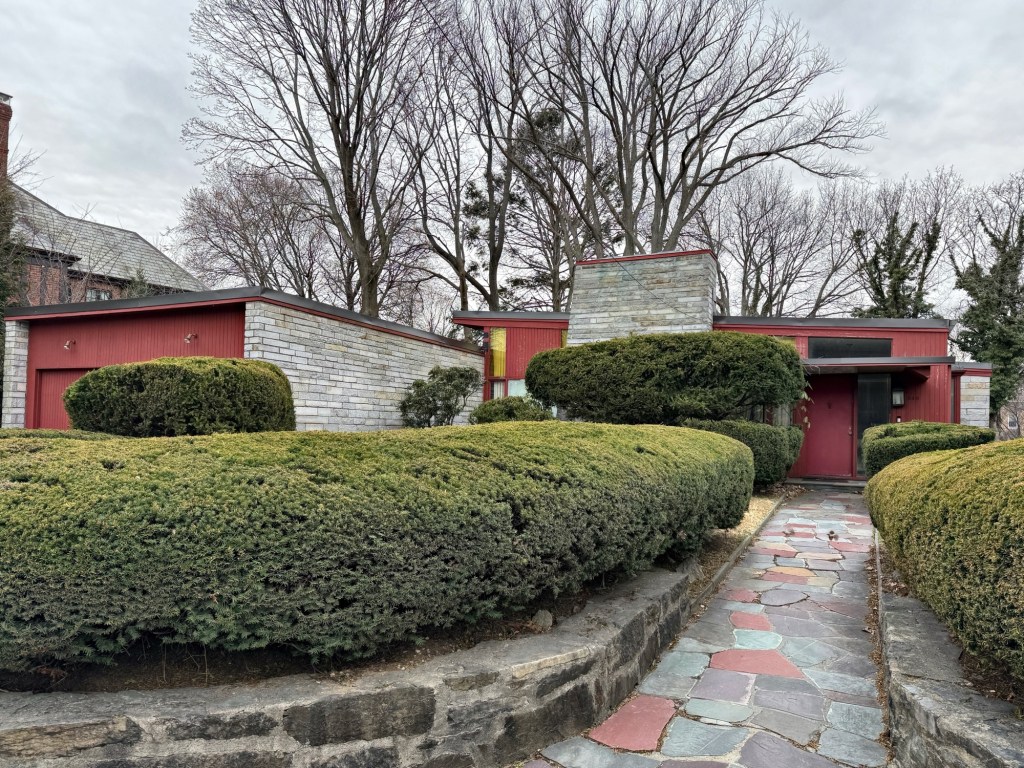
Built in 1947, the Max Katz House on Kent Street in Brookline, Massachusetts, is one of the area’s best examples of Mid-Century Modern residential architecture. The main block of the house has an angle roof line with its facade dominated by a massive stone chimney. The residence was designed by architect Samuel Glaser, one of the earliest practitioners of Modern architecture in the Boston area, for Max Katz (1895-1996). Katz was born in Lithuania and came to Boston with his mother when he was nine years old. He founded the Merchant Tire Company in 1922 and was also one of the original organizers of Brandeis University. He and his wife, Augusta, lived in this Modern home for much of their lives. The Katz residence retains much of its architectural integrity and is an excellent and well-preserved example of 1940s Modernism.


Sears-Amster Cottage // c.1865

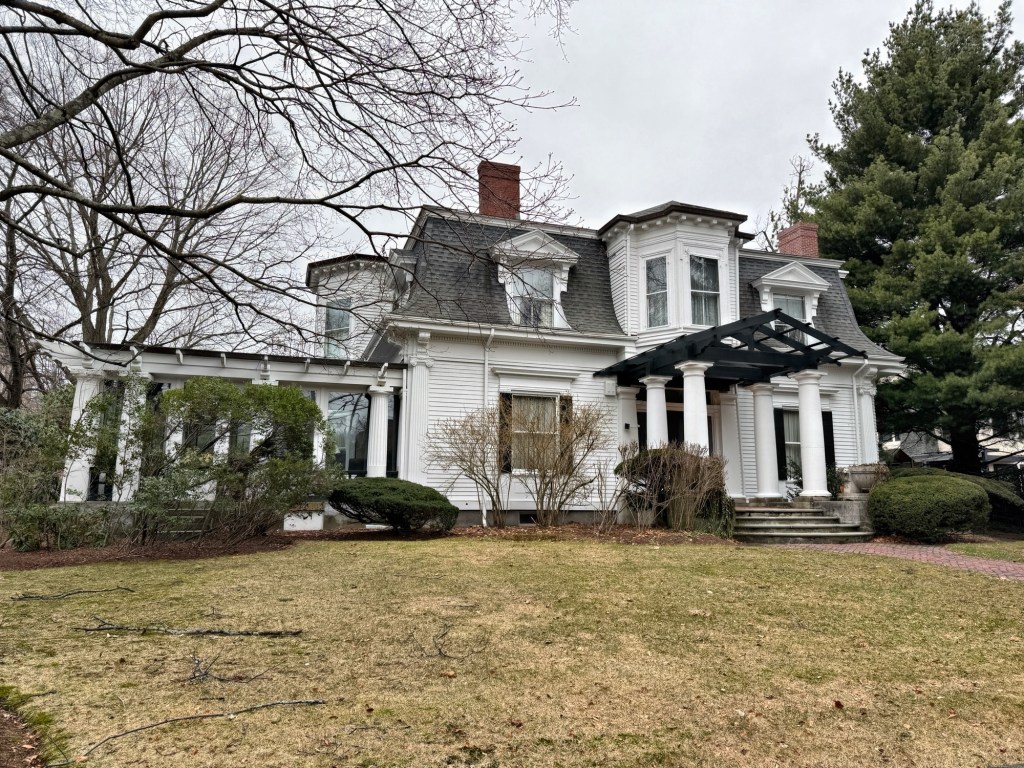
Prior to 1850, the area today known as the Longwood neighborhood of Brookline remained largely farmland on the banks of the Muddy River. In the first half of the 19th century David Sears (1787-1871) and Amos Lawrence (1814-1886), both prominent Boston businessmen, bought up large tracts of what had been Judge Sewall’s estate. The arrival of the Brookline Branch Railroad (now the MBTA Green Line D branch) served as an impetus to develop the area more fully. David Sears and Amos Lawrence developed houses in present-day Longwood and Cottage Farm and rented the homes to friends and family. One of the rented houses built and rented by David Sears is this Second Empire cottage which dates to the 1860s. The house was long-rented to wealthy families until the Sears heirs sold the house to Nathan Leo Amster and his wife, Estelle Dreyfus. Nathan L. Amster was a railroad executive who eventually became president of the Manhattan Railway Company. When the purchased the cottage, the Amster’s hired Boston architect Clarence Blackall to renovate and “modernize” the home, which added the Classically inspired elements. The couple did not appear to live in the house long, as they spent most of their years in their Fifth Avenue NYC residence. The Sears-Amster Cottage remains an important early house in the Longwood development of Brookline.

George and Alice May House // 1883

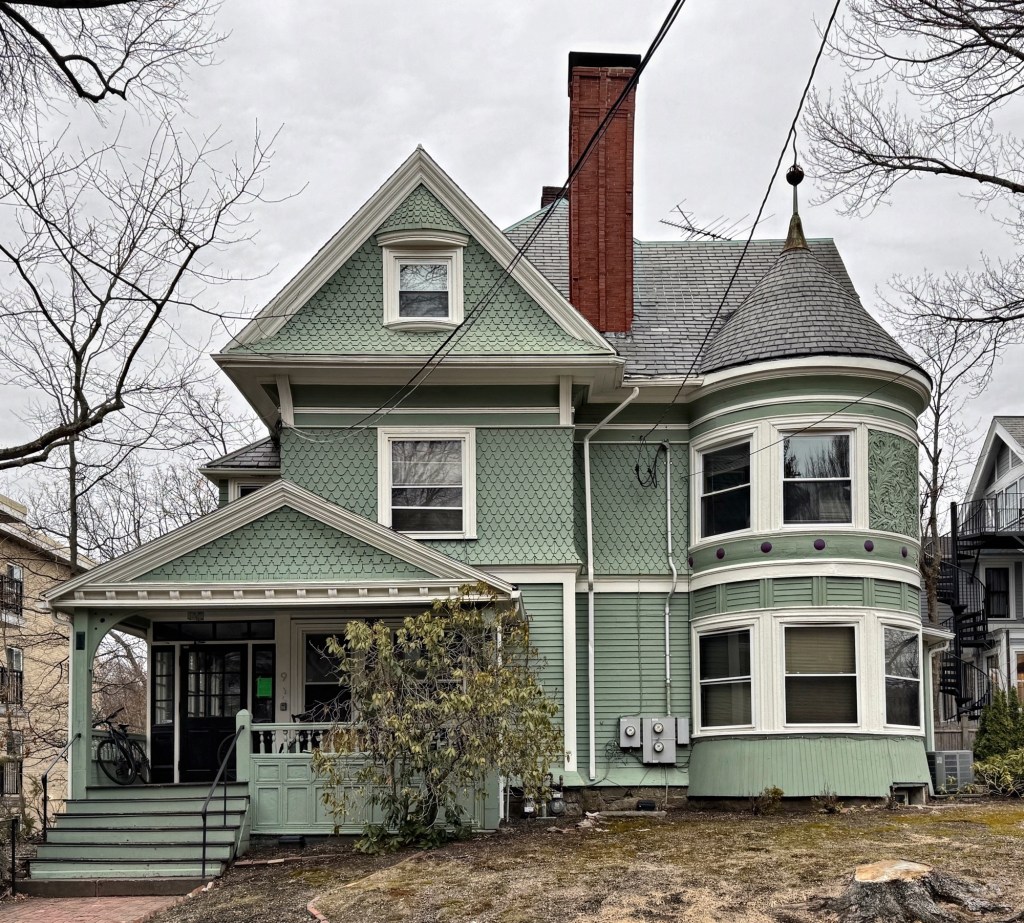
Built in 1883 for George Putnam May and his wife, Alice (Walworth) May, this Queen Anne style residence on Francis Street in Brookline, Massachusetts, contains all of the traits of the architectural style. George P. May was employed at the Walworth Manufacturing Company a plumbing pipes and equipment manufacturer founded by James J. Walworth, who was Alice May’s uncle. The property was subdivided on Alice’s fathers estate which fronts Kent Street nextdoor. I wonder if George wanted to live in the rear yard of his father-in-law! For their Brookline residence, the couple hired architect, S. Edwin Tobey, who paid great attention to detail. The May House features an asymmetrical plan, varied siding types, complex rooflines, and a corner tower with conical roof.

Lawrence School // 1929

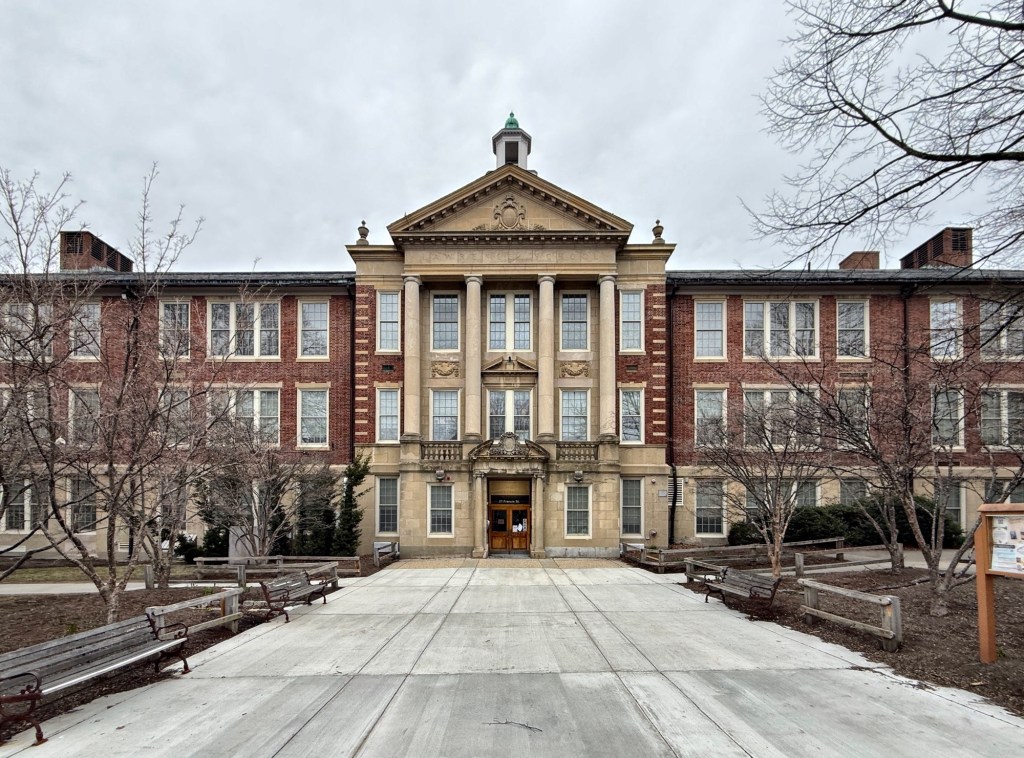
The Lawrence School in Brookline, Massachusetts, is a stunning example of a public school building built in the interwar period in the Colonial Revival architectural style. Constructed in 1929, the building replaced an earlier, Stick/Queen Anne style school designed by the firm of Peabody & Stearns. The school is named after Amos A. Lawrence (1814-1886) a prominent local landowner in Brookline. When the earlier school building was outgrown and deemed obsolete, planning began for a new, modern school building for the community. The new Lawrence School was designed by R. Clipston Sturgis a notable local architect who specialized in the Colonial Revival style, and opened in September 1930. The handsome brick building is in the form of a long rectangular block with two perpendicular wings at each end. At the center of the main block is the principal entrance with its columned portico on a projecting pavilion all in cast stone, a cheaper alternative that resembles limestone.

Blenheim Apartments // 1898

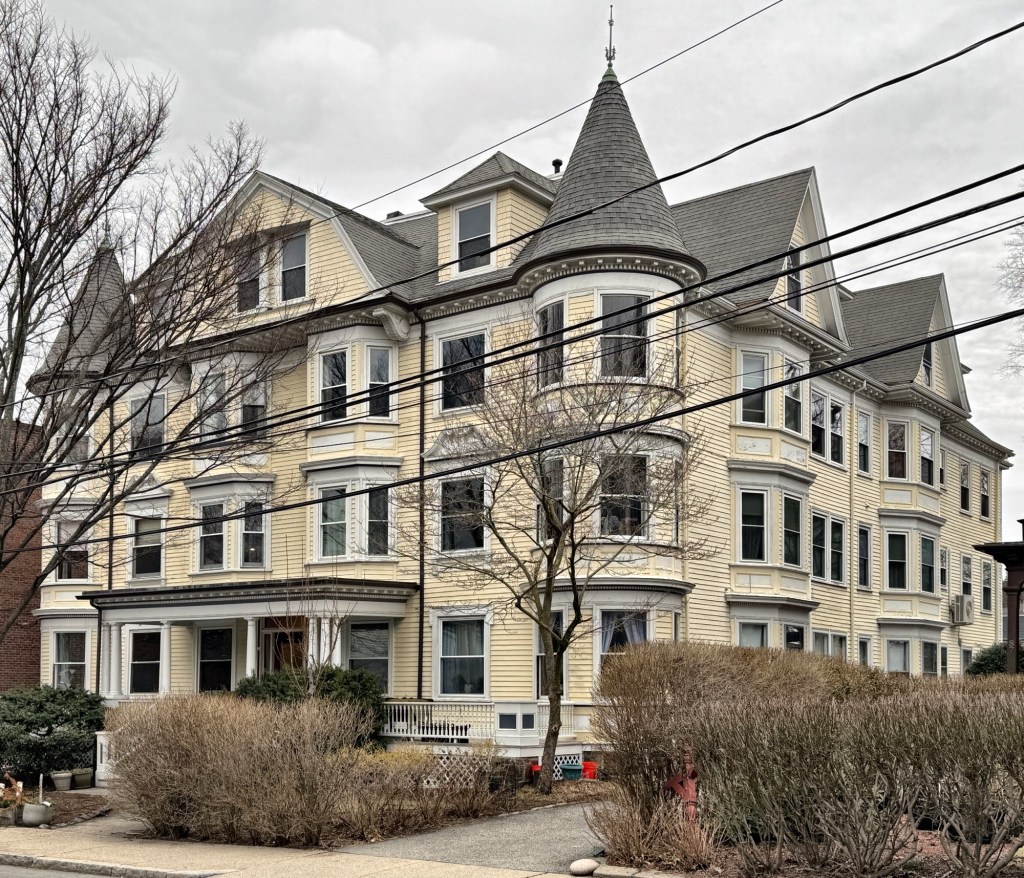
As Brookline, Massachusetts, saw rapid development in the late 19th and early 20th centuries, developers redeveloped lots formerly occupied by single-family residences and built large, multi-family triple-deckers and apartments, specifically in neighborhoods in close proximity to train stations into Boston. This building, constructed in 1898 by local builder, John H. Pineo, for owner, Walter H. Whittemore as an investment property. The building contained six apartments as a double triple-decker with two units on each floors accessed by a central entry and stairwell. The building has been known as the Blenheim Apartments and blends Queen Anne and Colonial Revival styles into a single, eclectic composition. The large massing is broken up by both the undulating facades and roof with projecting bays, dormers and corner towers, along with the applied ornament of panels, dentils, corbels and broken pediment motifs. If all multi-family housing looked like this, people would not complain about density as much!