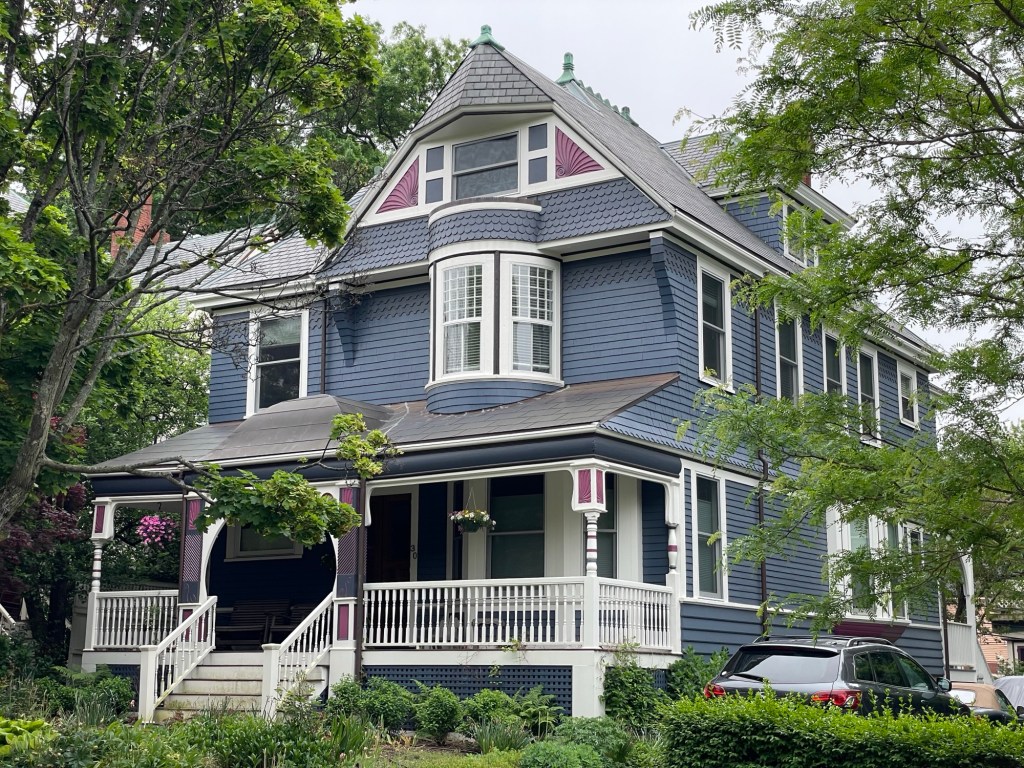
Francis Street in Brookline, Massachusetts, has some of the finest Queen Anne Victorian residences in the Boston area. This is the Potter-Leland House, built by 1888 by William Potter, a wealthy shoe manufacturer and businessman who developed rental housing in the neighborhood not far from his house on Kent Street. Various exterior wall textures, irregular massing, and turned posts on the front porch contribute to the Queen Anne character of this house, but the real showstopper is the rounded bay projection with three, 25-over-2 (yes you heard that right) curved sash windows! The property was later purchased by Herbert M. Leland, a broker.
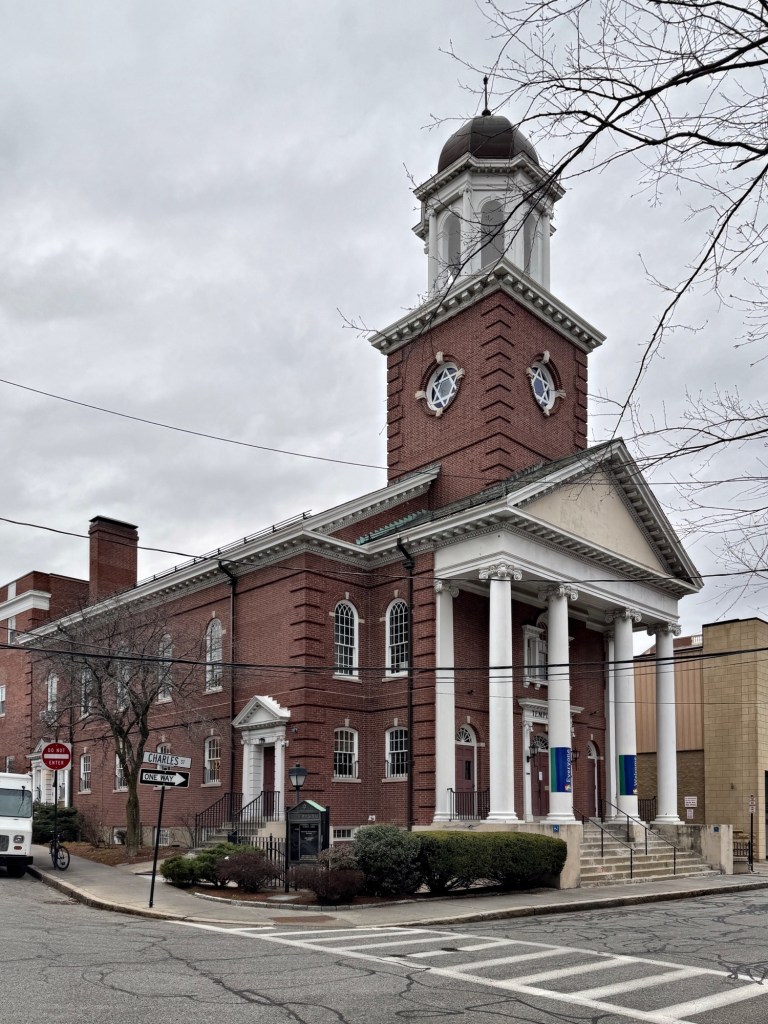
An excellent example of an early 20th century church designed in the Colonial Revival style, the former Second Unitarian Church of Brookline (now Temple Sinai), was built when much of the surrounding neighborhood was developed and as a result, is tucked away off main streets, creating a unique viewshed for passersby. Brookline’s second Unitarian Church was formed in 1896, with the congregation holding its first meetings at Sears Chapel in the Longwood neighborhood nearby. Decades later, the Second Unitarian Society was urged to find another place for its congregation as the Longwood church wanted full access of their building. The Unitarians purchased a lot of land adjacent to their Parish House in Coolidge Corner (no longer standing) and gathered funds to hire architect, Edwin J. Lewis Jr., who is said to have designed the new edifice as a contemporary take on Christ Church in Alexandria, Virginia. The church features a monumental portico supported by four Ionic columns, round arched windows, and a center tower that (at the time) was surmounted by a golden dome, visible for miles. Since 1944, the former church has been home to Temple Sinai, a reform synagogue that was established in 1939. The Jewish congregation here has maintained the building making slight changes to meet its needs.
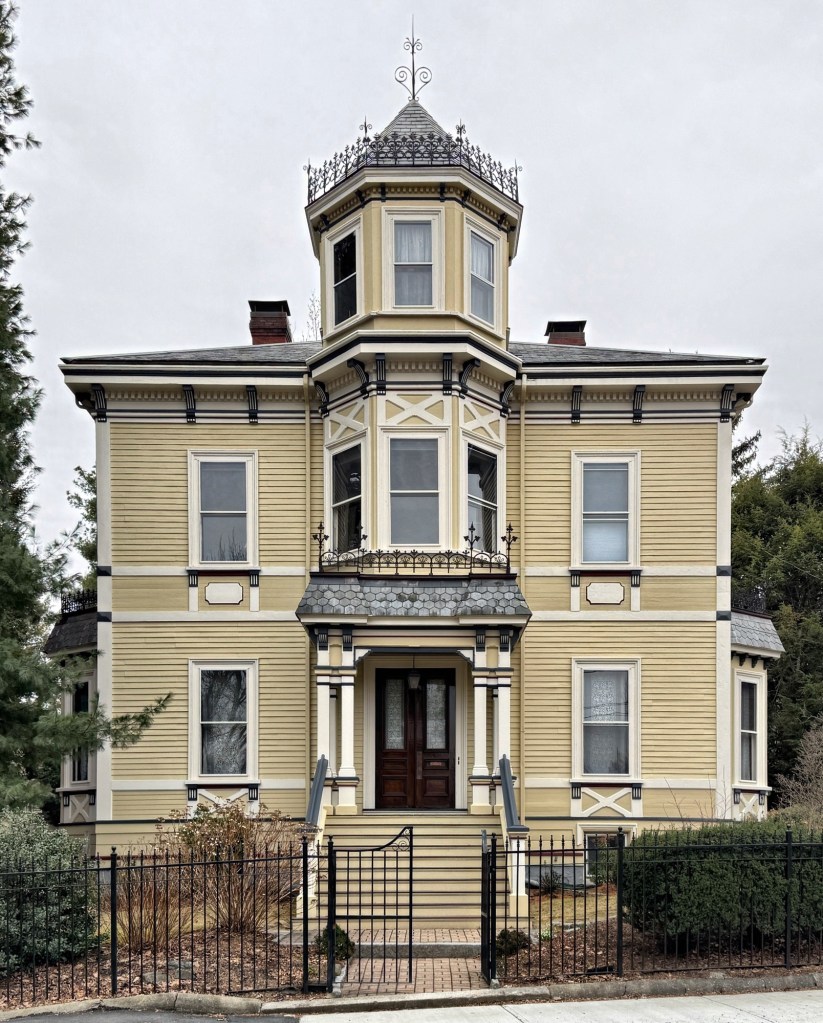
In 1873, James H. F. Standish (1811-1887) purchased a house lot on the corner of Francis and Toxteth streets in Brookline and set out building his forever home for his wife, Sarah. James and Sarah originally lived in Bath, Maine, where he worked as a builder and mason, constructing many large homes there before relocating to Brookline where he likely remained busy as Boston and its surrounding communities experienced a period of rapid development and suburbanization. James surely built this house and rear stable himself in the interpretation of the Stick and Italianate styles for his family, who moved in by 1874. Sadly, Sarah died unexpectedly in 1876 of heart disease, and James would sell their Brookline home. The Standish Home has been preserved by subsequent owners, including the central cupola, bracketed and dentilled cornice, stickwork and iron cresting. The Standish House was individually listed in the National Register of Historic Places in 1985 as a well-preserved, evocative example of Victorian period styles in a residence.
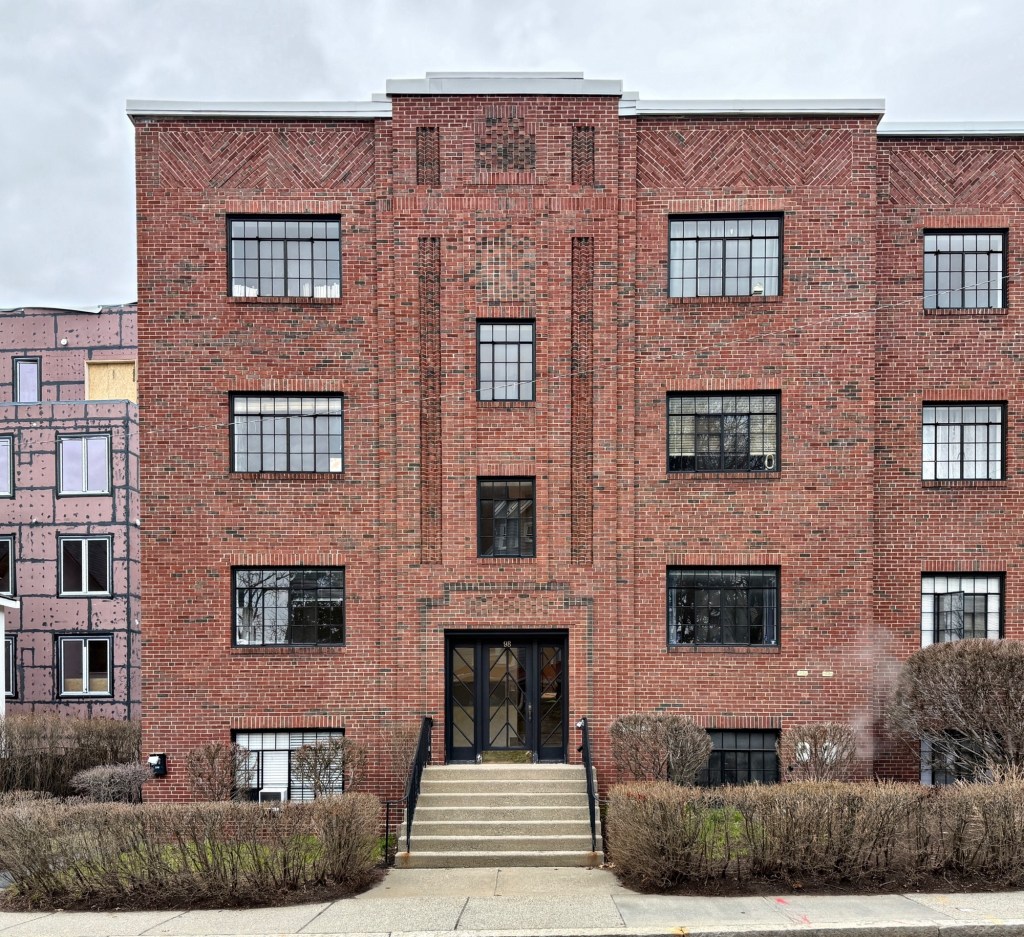
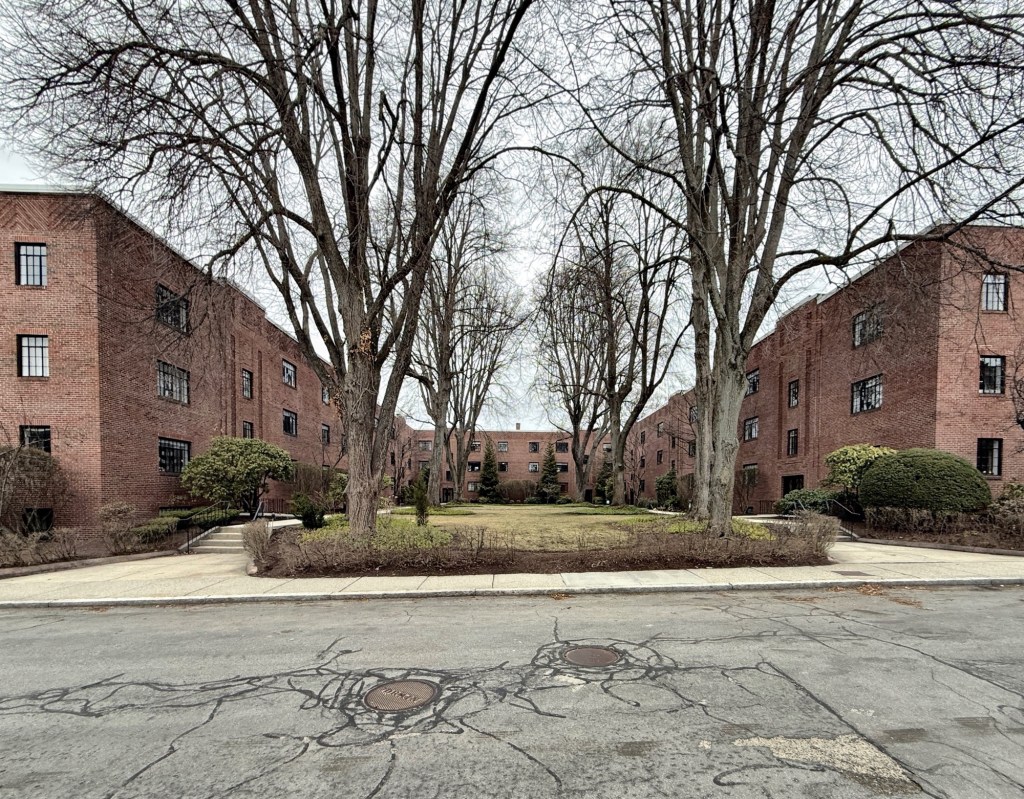
This garden apartment complex at 98-116 Sewall Avenue in Brookline is an excellent example of the Art Deco style which reached its height in popularity in the midst of the Great Depression, so fewer examples of the style are typically found. Here in Brookline, the city was seeing rapid development in the early decades of the 20th century, where large estates were subdivided and commercial areas expanded into once residential neighborhoods. U-shaped in plan and standing three-stories, this complex replaced a large property owned by the Stearns Family, a prominent local family with many properties around present-day Coolidge Corner. The apartments were developed by the G & S Investment Company, a real estate development firm, who hired architect, Saul Moffie, to design the building. Completed in 1938, the complex has richly articulated facades with a variety of geometric brick patterns, including chevrons, diapering, header courses and soldier courses with each entryway identified by a projecting pavilion with a stepped stone parapet above. The doors and sidelights are wood with glass panels in a chevron motif similar to the brickwork and all residential units have steel multi-pane windows. What a gem!
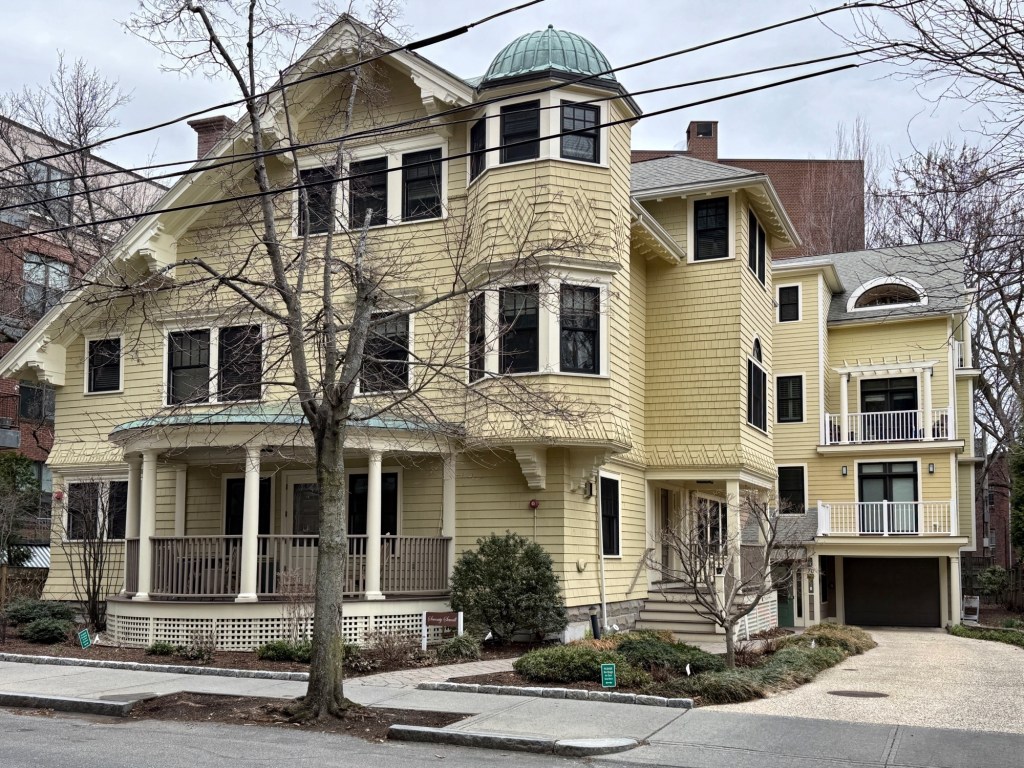
Located on Sewall Avenue in Brookline, Massachusetts, the Charles P. Flagg House exemplifies upper-class single-family housing built in the late 19th century that has been added onto and converted into multi-family housing to serve a growing city. Charles Partridge Flagg (1851-1911) was a real estate developer and head of the D. F. Flagg & Co., a wholesale liquor company his father started in Boston. He purchased the former Dexter property, subdivided the estate, and hired architect Julius A. Schweinfurth to design a home for his family. “Jule” Schweinfurth was long-associated with the firm of Peabody & Stearns of Boston, which in the late 19th century, was one of the premier architectural offices in the United States, but when he was not offered a partnership offer by his bosses, he established a new firm under his name. For the Flagg House, Schweinfurth blended the Shingle, Queen Anne, and Arts and Crafts architectural styles with a unique asymmetrical roofline, wide overhanging eaves with cross brackets and exposed rafter tails, consistent shingle siding, and a two-story polygonal oriel with domed roof at the corner. The Flagg House was moved forward on the lot to facilitate a rear addition and completely renovated in 2011, transforming it into a seven-unit condominium building with garage and elevator. This example of “gentle density” is exactly what communities should allow for, to preserve the character at the streetscape but provide additional housing.
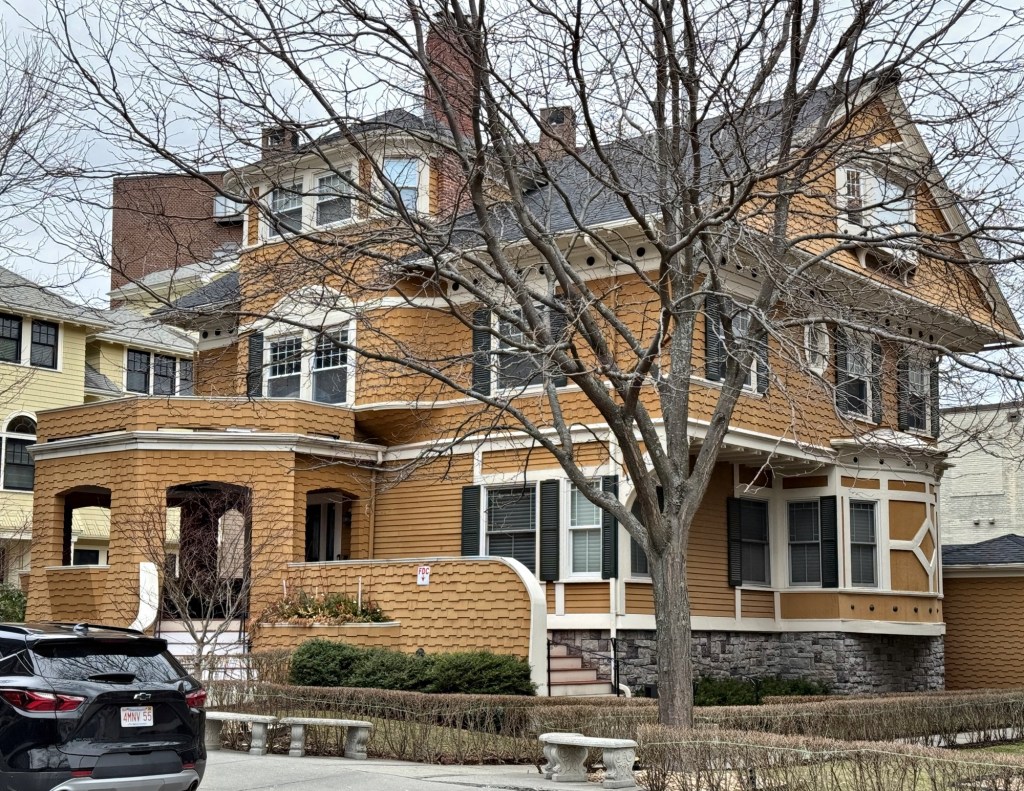
An expression of the Shingle style in all her beauty, the George B. Dexter House on Sewall Avenue in Brookline was built in 1885 both as a residence and a billboard advertising the owner’s business, really. The residence was built for George B. Dexter (1854-1935) a partner in the Dexter Brothers Company a paint and stain manufacturer that was a favorite of architects in the late 19th and early 20th centuries. For his Brookline residence, George Dexter hired architect S. Edwin Tobey to design this Shingled masterpiece with continuous shingle siding with rounded bays and a shingled piazza to showcase the stain products of his company. According to articles, Dexter also stained and painted the interior a variety of colors to showcase the wide range of options his company had. George Dexter would move to Pill Hill neighborhood in a new home just a decade after having this residence built, likely caused by the development of apartments and commercialization in the Coolidge Corner area by the turn of the century. The Dexter House was converted to a two-family in the 1920s and today has three condominium units, with owners clearly taking great pride in this significant residence.
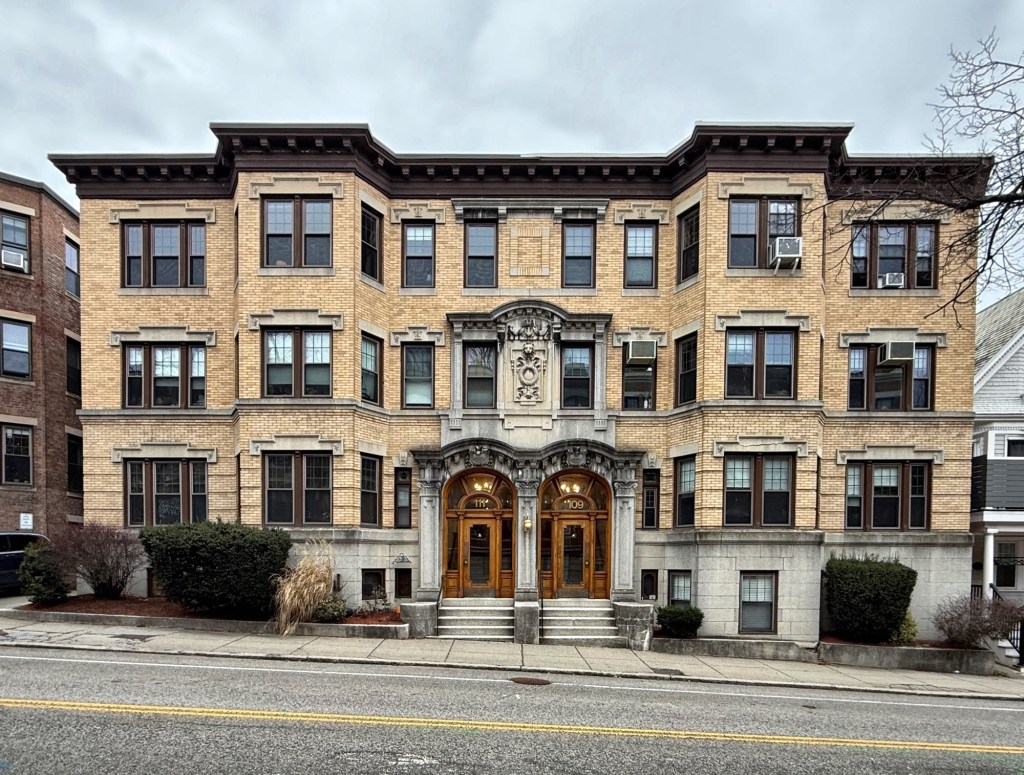
In the early 20th century Brookline, Massachusetts, saw an immense increase to its population, spurred by the streetcar system and a suburbanization of greater Boston. As land is finite, developers eyed the large estates near commuter lines and built apartment buildings to supply housing to middle-income residents. Not all residents welcomed the change as density and the destruction of old estates caused concerns for many wealthy and older residents in Brookline who enjoyed the bucolic suburbs to dense city life. As a result, many Brookline developers hired known architects to design apartment buildings with high-quality materials and finishes to contribute to the rich architectural streetscapes and established neighborhoods. This apartment building, one of two at the corner of Longwood Avenue and St. Paul Street, was built in 1913 from plans by Gay & Proctor, an established local architectural firm. The developer, Bernard Steuer (1859-1921), was an Austrian-Jew that emigrated to the United States and worked in real estate and building in Brookline and Boston. The building features a heavy cornice with modillons, three-story polygonal bays that break up the massing, and cast stone detailing with Beaux Arts style entries.
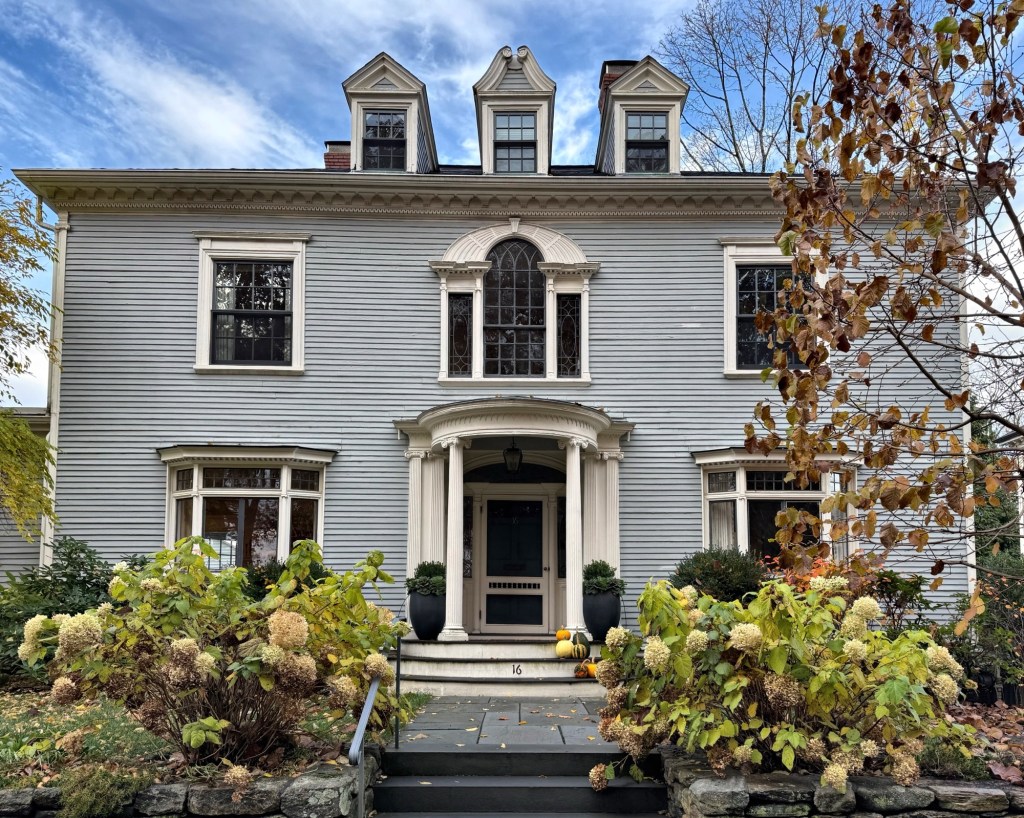
This Colonial Revival style single-family house on Emerson Street in Brookline Village, was built in 1893 on the former Emerson Estate, that was subdivided by the heirs of Elijah Emerson as Brookline Village filled in during the late 19th century. This house was seemingly built for Elijah’s daughter, Sarah C. Emerson Davis, and her husband, George Peabody Davis from plans by Boston architect, Olin Wesley Cutter. Of particular note, the Davis House features a symmetrical facade with round entry portico, Palladian stairhall window with leaded glass, and pedimented dormers, with the center dormer in a swan’s neck pediment. The oddly proportioned pilasters with tiny Ionic capital on the corners of the house were great to see as well!
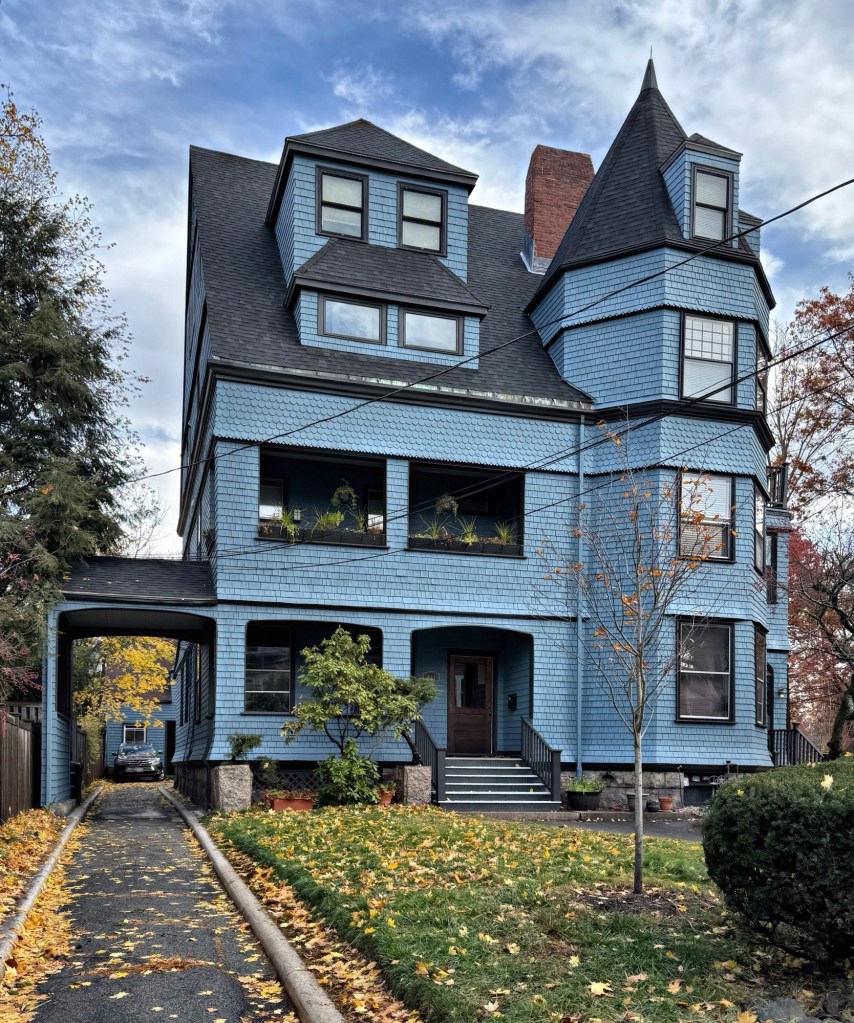
In 1889, prestigious architect Charles H. Rutan, purchased a house lot from the heirs of Elijah Emerson on the family estate and oversaw construction of his own residence in Brookline Village. Charles Hercules Rutan (1851-1914) was born in New Jersey and moved to Brookline in 1874, where he worked in the office of famed American architect, Henry Hobson Richardson. After Richardson’s death in April 1886, at the height of his career, Rutan and two other senior employees, George Foster Shepley and Charles Allerton Coolidge, took charge of the studio and its uncompleted work. Soon after, the three formed a formal partnership, Shepley, Rutan & Coolidge, to succeed to Richardson’s practice, and in 1887 moved the office to Boston. From his new position as head of a prominent firm, Rutan designed this handsome Queen Anne/Shingle style mansion for his family, where he lived until he suffered from two debilitating strokes in 1912, when he and his wife moved to an apartment on a nearby street. Besides the blue color, the house retains so much of its original architectural integrity and is one of the most significant residences in the Brookline Village neighborhood.
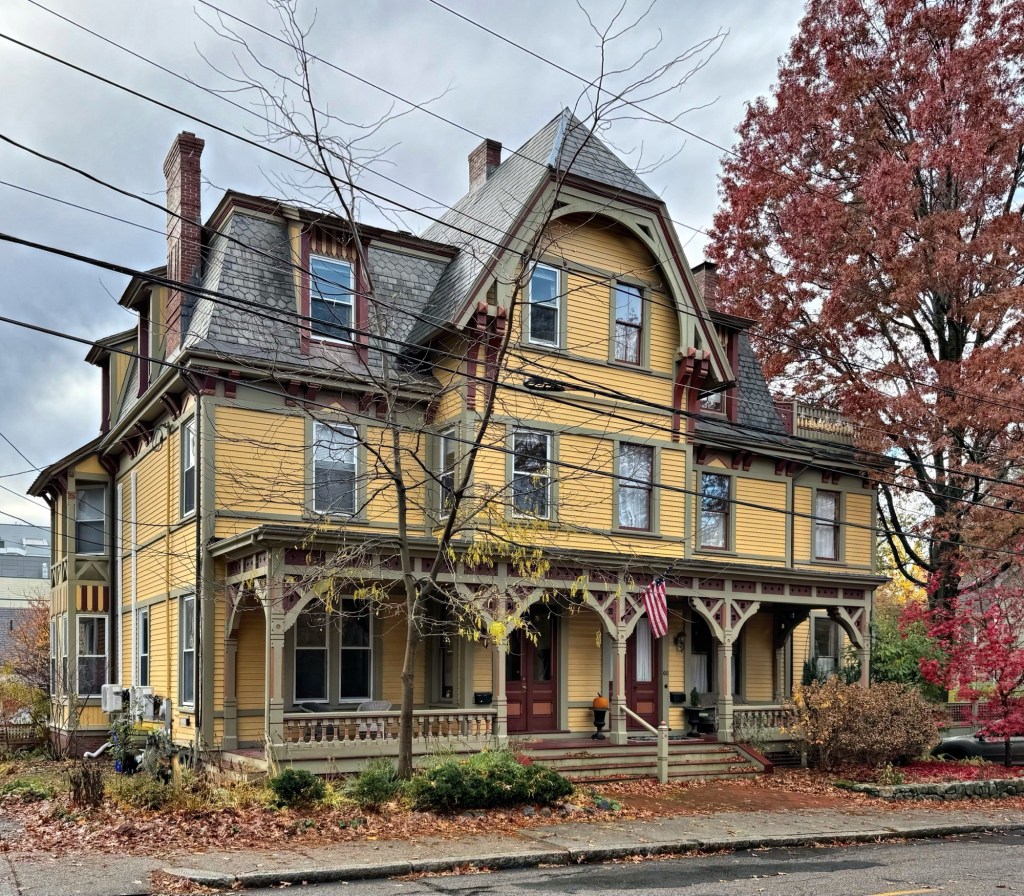
Elijah Carleton Emerson (1807-1888) was a wealthy Boston merchant, making his fortune as Director of the Second National Bank and President of the Middlesex Horse Railroad. In his late 30s, he purchased land in Brookline Village and established his estate on the land that is now Emerson Park in 1846. The bucolic setting of his estate included a pond, boathouse and adjacent cottage, but as the surrounding area continued to develop with easy access to Downtown Boston, Elijah Emerson began to develop his estate. Emerson began to build residences on his land for supplemental income. This handsome Stick style double-house was built around 1880 and rented by Mr. Emerson and was eventually occupied by his granddaughter, Tirzah and her husband, George Francis Arnold. The residence features a mansard roof, decorative brackets and applied stickwork, and a handsome porch with turned posts.
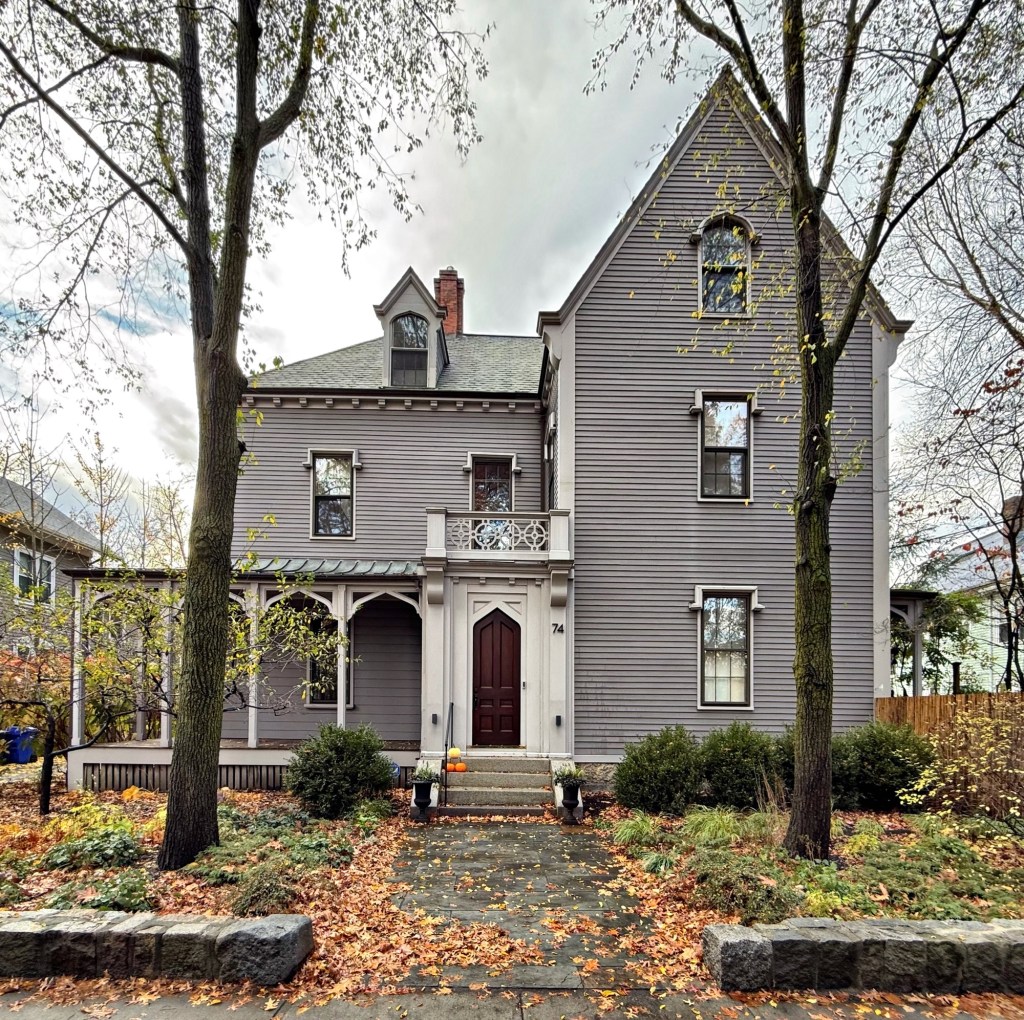
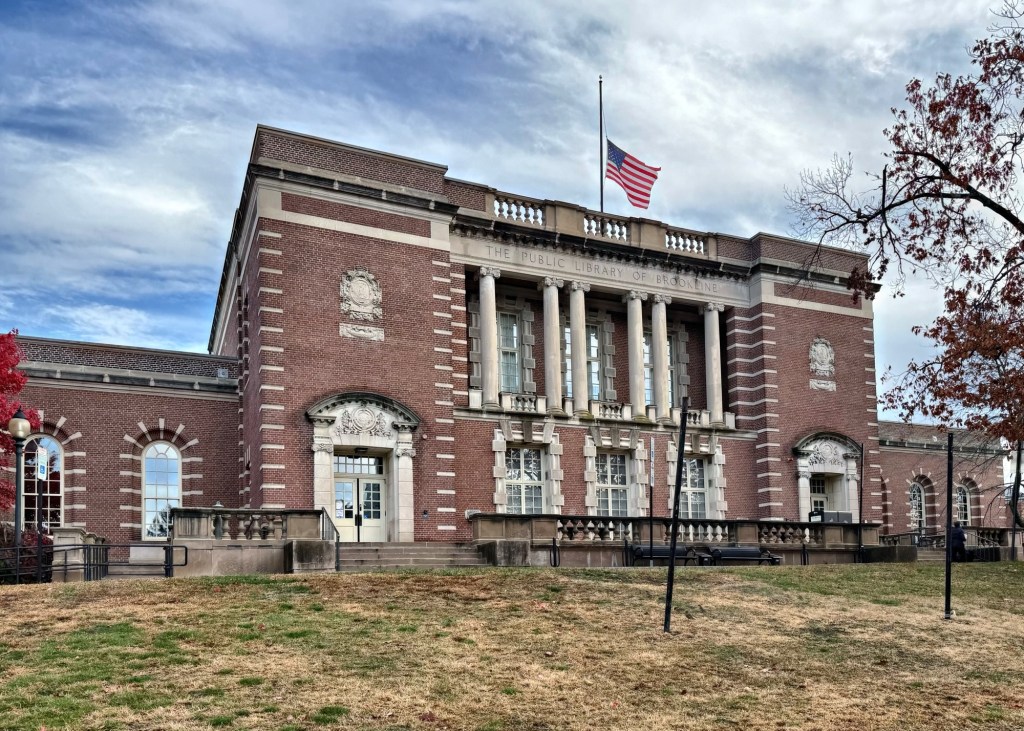
Elijah Carleton Emerson (1807-1888) was a wealthy Boston merchant, making his fortune as Director of the Second National Bank and President of the Middlesex Horse Railroad. In his late 30s, he purchased land in Brookline Village and established his estate on the land that is now Emerson Park in 1846. The bucolic setting of his estate included a pond, boathouse and adjacent cottage, but as the surrounding area continued to develop with easy access to Downtown Boston, Elijah Emerson began to develop his estate. Emerson began to build residences on his land for supplemental income. After his death in 1888, Emerson’s two daughters, Sarah Davis and Tirzah Snell Arnold, maintained the property but sold it to the Town of Brookline in 1907. Brookline officials originally sought to build a new library on the site, but ultimately built it on Washington Street in 1910. The Emerson house and carriage barn were moved across Davis Street from their original site and Emerson Park was established. Emerson’s granddaughter, Mrs.Katharine Snell and her husband, inventor, Cullen B. Snell moved into the relocated house. The Elijah Emerson House (and carriage house at the rear) is a great, well-preserved example of a suburban Boston residence designed in the Gothic Revival style.
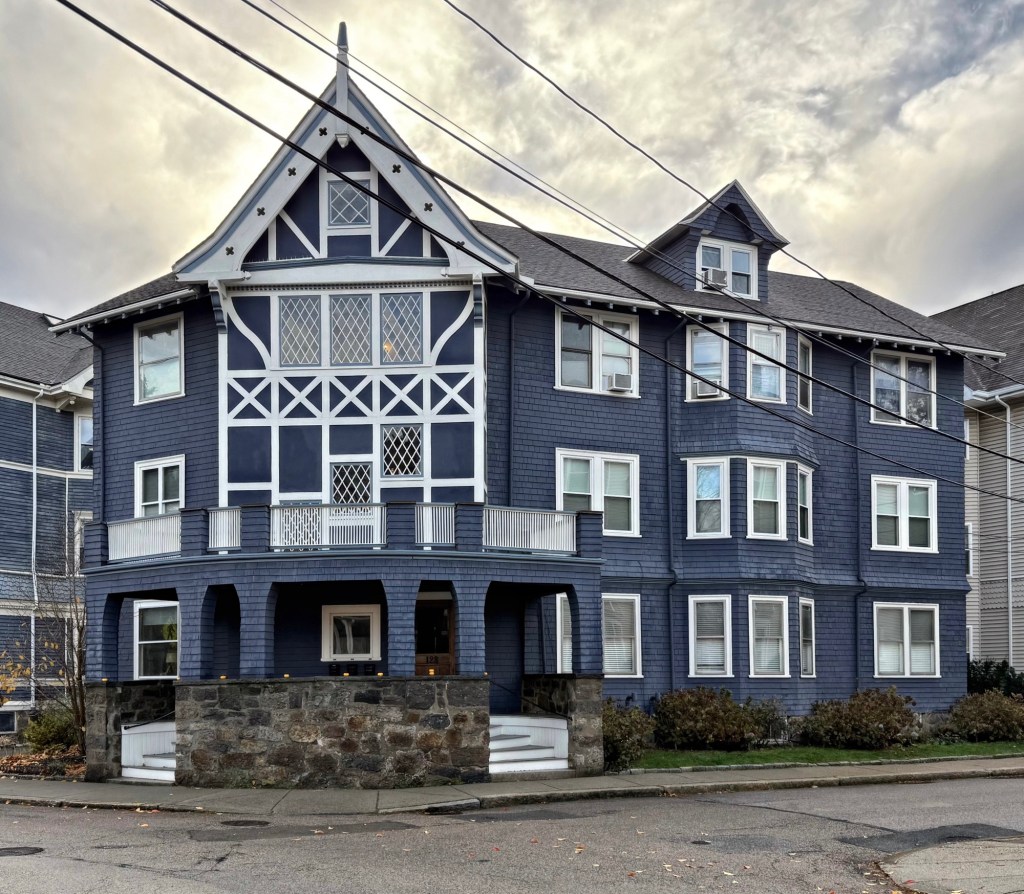
This handsome, and unique example of a three-decker in the English Revival style is located on a corner lot at 128 Davis Avenue in the Emerson/Brookline Village neighborhood of Brookline, Massachusetts. Built in 1904 from plans by architect and genealogist, J. Gardner Bartlett, whose work focused on colonial New England and the English origins of colonial families. Trained as an architect at MIT, he gave up architecture for genealogy, but still occasionally designed buildings in the Boston area. The building here was developed for Richard Graham, an Irish immigrant, who along with his wife, operated a laundry business in the village. The use of a shingle and stone entrance porch and entrance bay with stucco half-timbering and diamond-pane casement windows stand out architecturally as one of the few examples of a three-decker built in this style in New England.
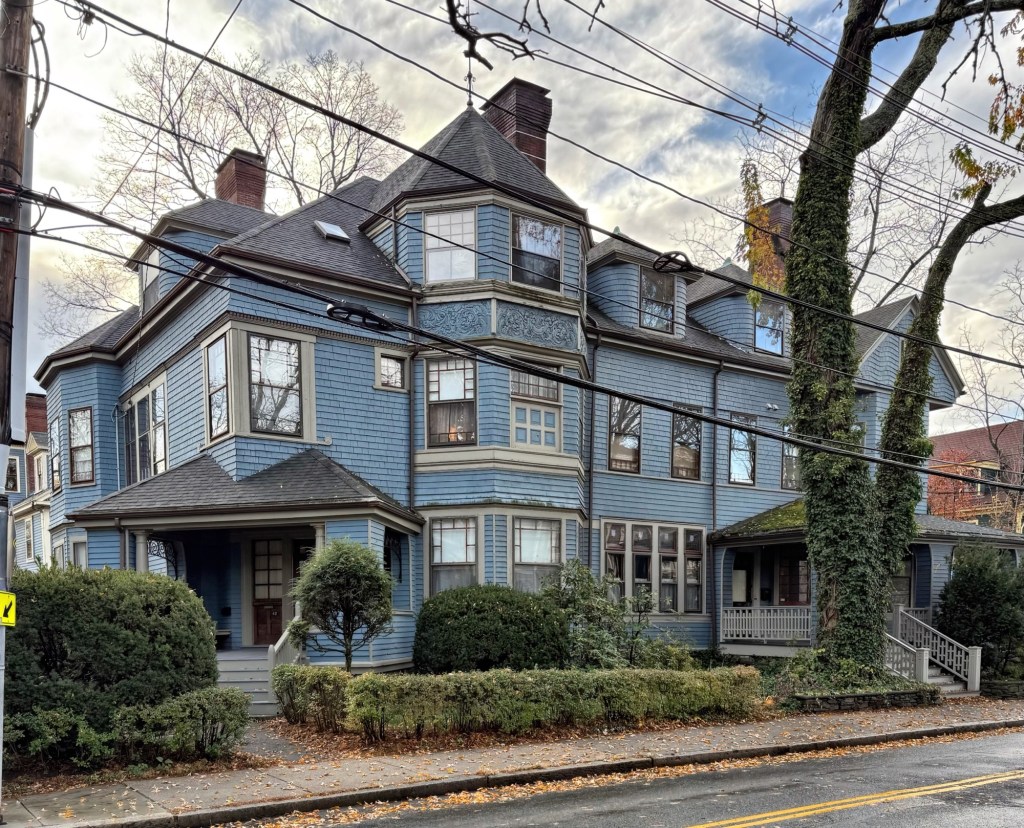
John Dean Sturtevant (1816-1889) was born in New Hampshire and became engaged there in local woolen mills, quickly growing into advanced management positions. He operated woolen mills in New Hampshire, Maine, Connecticut, and Massachusetts, and settled in Brookline where he had access to other states via excellent rail service. When he died in 1889, John’s heirs inherited their late-father’s properties, and began to develop them as Brookline filled out in the last decades of the 19th century. This handsome double-house at the corner of Cypress and Waverly streets was built in 1892 by the Sturtevant Estate, who rented the property to two families of wealthy residents. The Sturtevant Double-House is a landmark and exceptionally preserved example of the Queen Anne style, with varied siding, asymmetrical forms, complex roofline with dormers, and applied ornament in the form of carved panels.