South Swansea Union Church // 1916

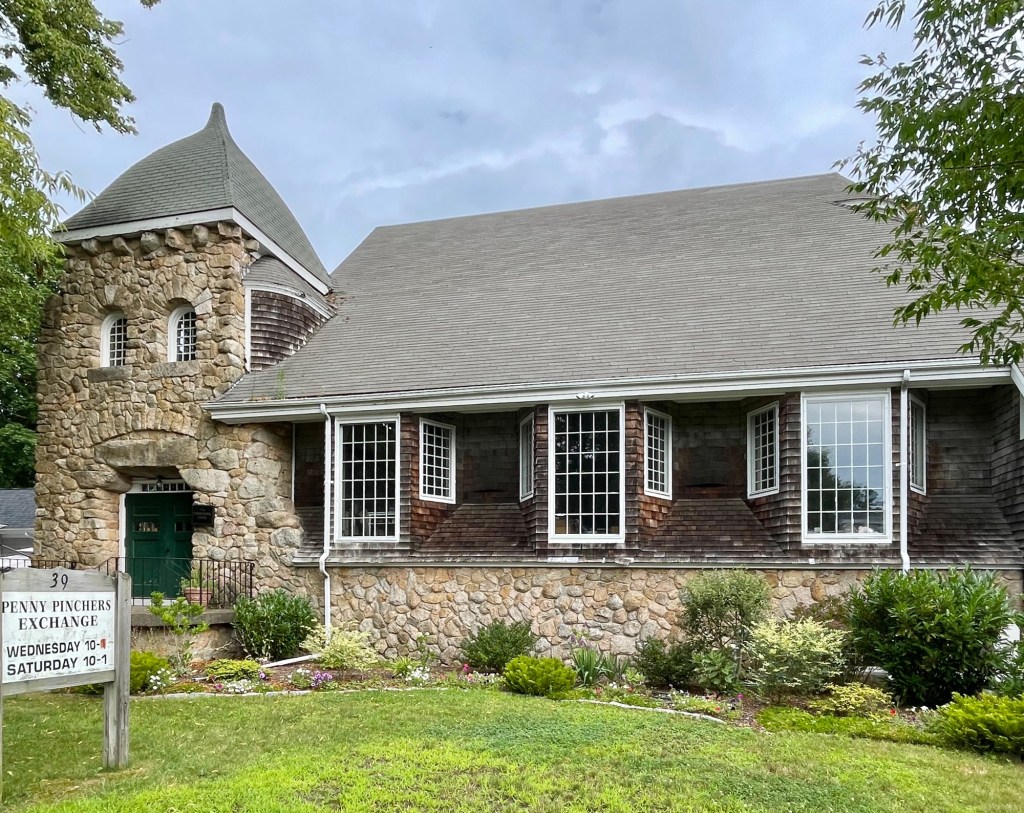
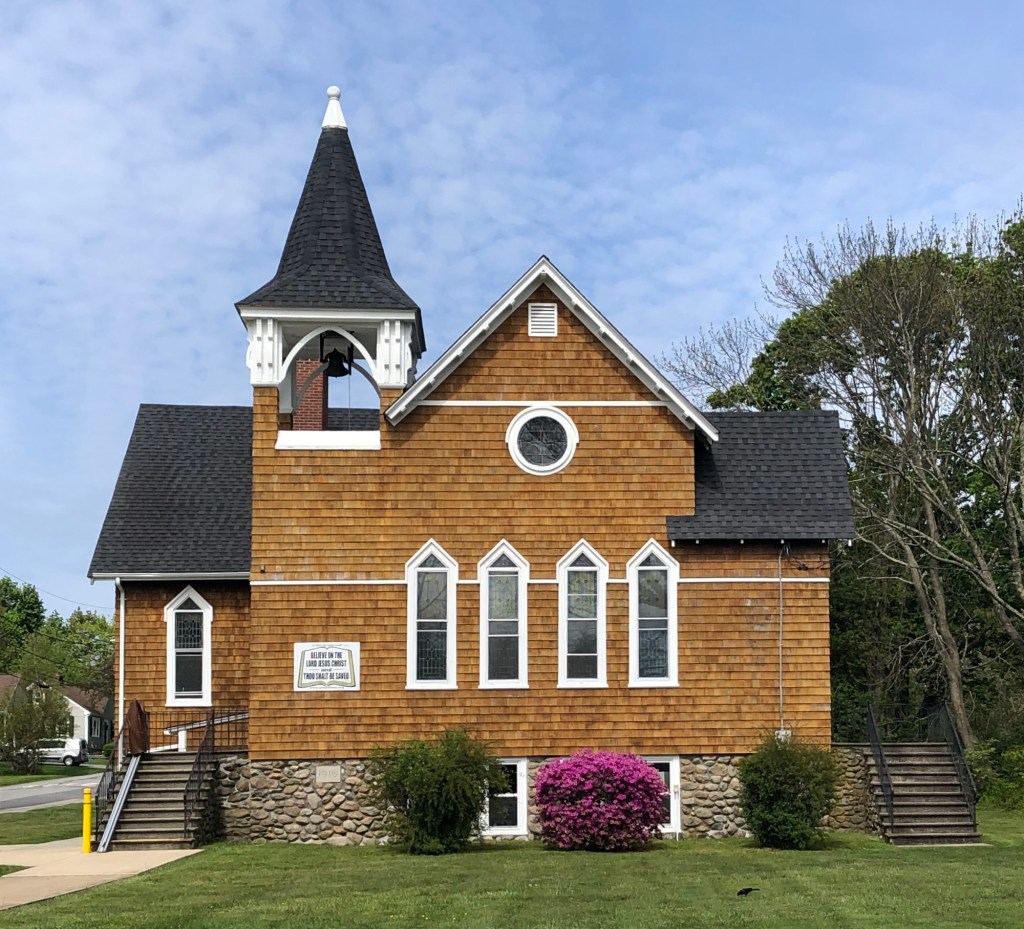
The South Swansea Union Church on Gardner’s Neck in Swansea, Massachusetts, is an excellent example of a seaside New England church that blends architectural styles in a unique composition. The church was built in 1916 years after development of the Neck began in earnest as a partnership between local congregations and the South Swansea Sunday School. The new church became a union church for multiple congregations to have a shared house of worship as well as a space for sunday school for area pupils. The building that features elements of Shingle and Neo-Gothic Revival styles, was built by William L. Hunt & Son and now houses the South Swansea Baptist Church.

Mary E. Paul Triple Decker // 1898

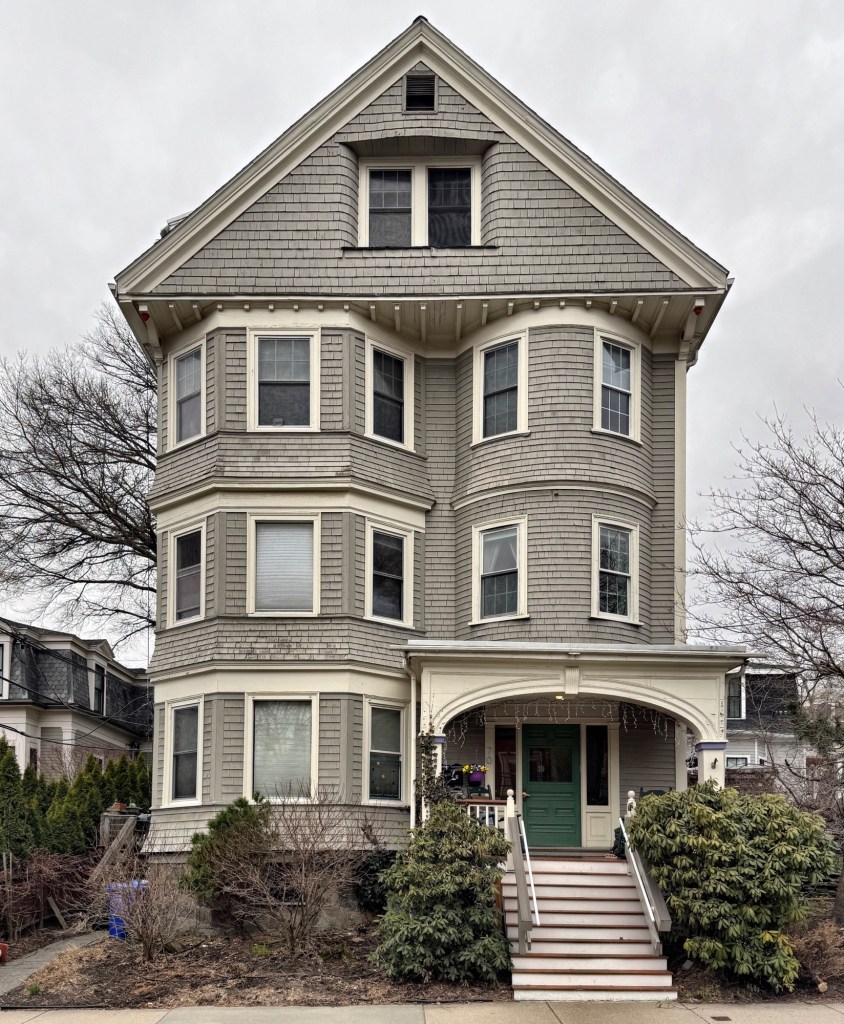
The Triple Decker is a popular housing form that between 1880 and 1930, saw an estimated 15,000 examples built in Boston and surrounding cities. The unique construction of three flats stacked on top of eachother provided density and lowered housing costs for three families and supplying the housing needs of huge numbers of new immigrants and working class families, providing an important path to homeownership. Often, a family could purchase a property, building a triple decker and could live in one unit while renting the others to pay for the mortgage and taxes, providing upward mobility for those who so long were priced out of owning their own home. By the late 19th century however, strong and organized pushback against the housing type occurred, led by groups like the Immigration Restriction League, who were “convinced that Anglo-Saxon traditions, peoples, and culture were being drowned in a flood of racially inferior foreigners from Southern and Eastern Europe,” sound familiar? Led by Prescott Farnsworth Hall, a Brookline resident, the group advocated to limit immigration from areas they deemed “lesser” and locally, fought to ban the construction of triple deckers in Massachusetts, ultimately succeeding in part when in 1912, Massachusetts passed a law allowing cities and towns to ban triple deckers by preventing construction of any ‘wooden tenement’ in which ‘cooking shall be done above the second floor. While major catastrophic fires like the Great Chelsea Fire of 1908 were fresh in people’s minds, a leading cause for the legislation was likely to limit upward mobility of groups of people from owning real estate. The Mary E. Paul Triple Decker, pictured here, was built in 1898 in the Shingle style, contributing to the rich architectural and social character of the surrounding neighborhood.

George B. Dexter House // 1885

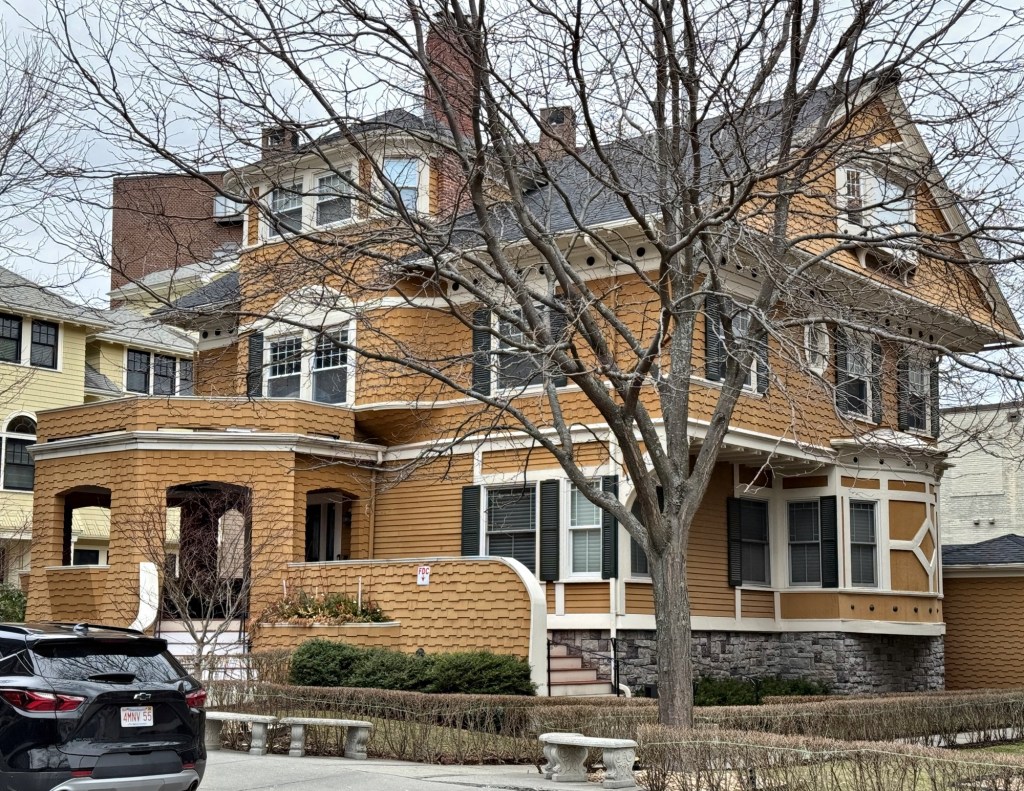
An expression of the Shingle style in all her beauty, the George B. Dexter House on Sewall Avenue in Brookline was built in 1885 both as a residence and a billboard advertising the owner’s business, really. The residence was built for George B. Dexter (1854-1935) a partner in the Dexter Brothers Company a paint and stain manufacturer that was a favorite of architects in the late 19th and early 20th centuries. For his Brookline residence, George Dexter hired architect S. Edwin Tobey to design this Shingled masterpiece with continuous shingle siding with rounded bays and a shingled piazza to showcase the stain products of his company. According to articles, Dexter also stained and painted the interior a variety of colors to showcase the wide range of options his company had. George Dexter would move to Pill Hill neighborhood in a new home just a decade after having this residence built, likely caused by the development of apartments and commercialization in the Coolidge Corner area by the turn of the century. The Dexter House was converted to a two-family in the 1920s and today has three condominium units, with owners clearly taking great pride in this significant residence.

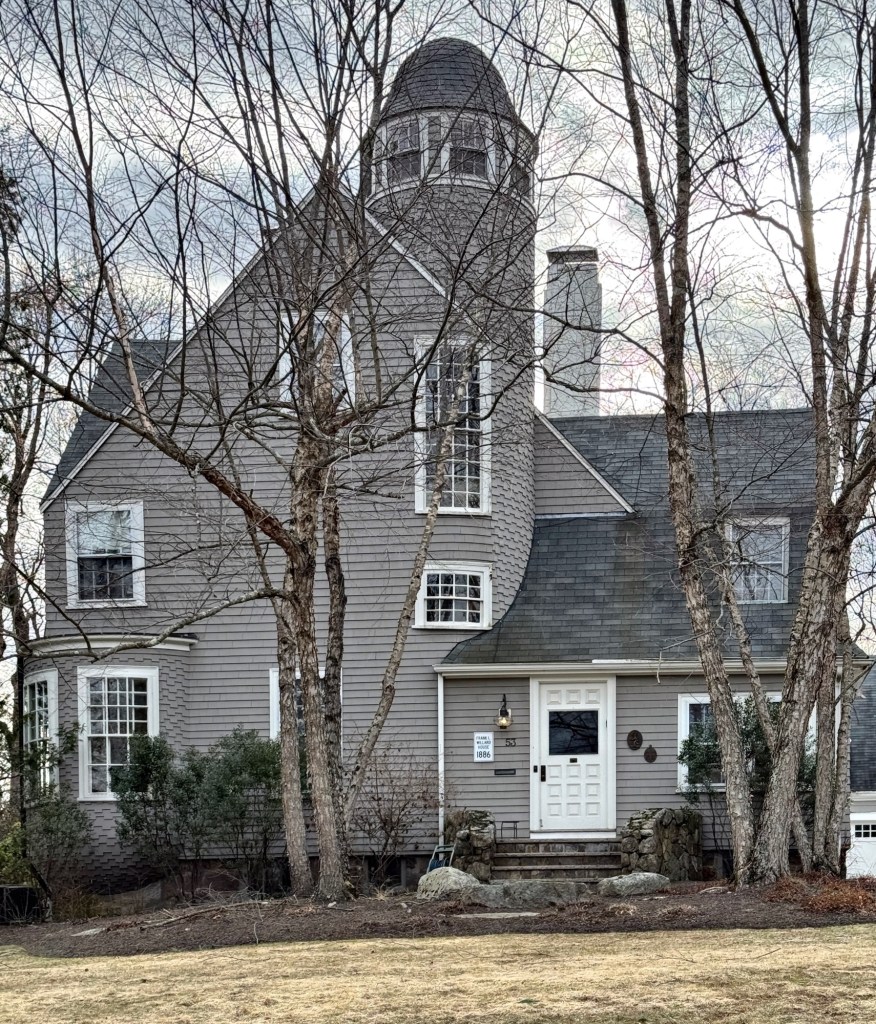
Francis L. Willard Summer House // 1886

Built in 1886 as a summer house, this handsome Shingle style residence on Pleasant Street in Sharon, Massachusetts, is one of the finest examples of the Shingle style in the area. The house was built as a summer residence for Francis Lyman Willard (1845-1913), who was President and Treasurer of the Riverside Boiler Works in Cambridge, and maintained a primary residence in Jamaica Plain. He and his wife, Mary Smith Willard, had this home built as their country retreat, spending summers here to escape the hustle-and-bustle of city life. The architect could not be discovered at this time, but it appears to have been a Boston-area architect that specialized in the Shingle style due to its unique and high-quality detailing. The feature that stands out is the four-story wood shingled tower on the facade capped by a bell roof that includes a large 20-over-20 double-hung curved wood sash stair window. 

George P. Lawrence Summer House // 1897

On the eastern shore of Lake Massapoag in Sharon, Massachusetts, the George P. Lawrence Summer House is an excellent and rare preserved example of a late 19th century Victorian summer house in the suburban town. The residence was built in 1897 for George Pelton Lawrence (1859-1917) and his wife, Belle, as a summer retreat from their primary residence in North Adams in Western Massachusetts. George P. Lawrence was an attorney who was appointed as a district court judge before entering the political arena where he became a state senator. The couple spent summers at this beautiful Shingle/Colonial Revival style residence until Congressman Lawrence’s death in 1917. On November 21, 1917, Lawrence jumped out of his eighth-floor New York City window at the Hotel Belmont , committing suicide. In his room, he left a note saying that he “could not stand the pressure anymore”. The Sharon property remained in the family until the 1940s and has been modernized, while maintaining its character. 

Goodwin House // 1902

This handsome house in the small town of Richmond, Vermont, was built in 1902 for F. H. Goodwin, a partner of the Richmond Underwear Company, which started in 1900. Goodwin’s brother and his partner were brought from Peekskill, New York to the small town of Richmond to create and manage a new industry to revitalize the town, a program funded by the citizens. F. H. Goodwin was hired as a manager of the company, and built this home in a blending of Shingle and Arts and Crafts styles, common in the early 20th century. The house was unique in that it was the first in town to be electrified as it was directly connected on the grid with the factory next door.

Charles F. Roper House // c.1890

Charles Frederick Roper (1847-1916) was a machinist and inventor who moved to Hopedale, Massachusetts, where he found employment from the Draper Corporation. His inventions were important for the company, and included loom machinery, air supply for motors to prevent overheating, and grinding machines. Before his death, Charles Roper had over 100 patents and from his success, he afforded one of the finest Victorian homes in Hopedale. In around 1890, Charles Roper had this Shingle style residence built on Freedom Street from plans by Robert Allen Cook, a Milford-based architect who was a favorite of the Drapers. The residence sits on a rubblestone first floor with cedar shingles above.

Charles H. Rutan House // 1889

In 1889, prestigious architect Charles H. Rutan, purchased a house lot from the heirs of Elijah Emerson on the family estate and oversaw construction of his own residence in Brookline Village. Charles Hercules Rutan (1851-1914) was born in New Jersey and moved to Brookline in 1874, where he worked in the office of famed American architect, Henry Hobson Richardson. After Richardson’s death in April 1886, at the height of his career, Rutan and two other senior employees, George Foster Shepley and Charles Allerton Coolidge, took charge of the studio and its uncompleted work. Soon after, the three formed a formal partnership, Shepley, Rutan & Coolidge, to succeed to Richardson’s practice, and in 1887 moved the office to Boston. From his new position as head of a prominent firm, Rutan designed this handsome Queen Anne/Shingle style mansion for his family, where he lived until he suffered from two debilitating strokes in 1912, when he and his wife moved to an apartment on a nearby street. Besides the blue color, the house retains so much of its original architectural integrity and is one of the most significant residences in the Brookline Village neighborhood.

Loring-Sherburne House // 1883

One of the many great Queen Anne/Shingle style homes in Brookline is this residence at 92 High Street built for Thacher Loring (1844-1928), president and treasurer of the National Dock and Warehouse Company, of Boston, founded by his father, Elisha Thacher Loring. For their Brookline home, Mr. Loring hired architect, William Ralph Emerson, one of the great architects who mastered the Shingle style of architecture. The Loring Family lived here until the early 1900s, when they sold the property and moved to the Back Bay in Boston. The property was purchased by John Henry Sherburne (1877-1959), who lived here with his family for over sixty years. John Sherburne was an attorney, politician, and military officer who served during the Pancho Villa ExpeditionWorld War I, and World War II and attained the rank of brigadier general receiving numerous military awards, including the Silver Star and Purple Heart. During WWI, he commanded the U.S. Army’s first “negro” artillery battalion in France. After the war he testified before Congress about orders that pointlessly sent hundreds of U.S. soldiers from other units “over the top” to their deaths on the morning of November 11, 1918, when the armistice hour was already known. Following his World War I service, Sherburne advocated for civil rights for African Americans, including support for anti-lynching laws and from 1926 to 1931, he served on the board of trustees for Howard University. The Loring-Sherburne House is significant for its residents and for its architecture, including the use of brick and shingle siding, and the show-stopping recessed panel-wood entry with bulging shingles above.

Frank and Laura Carter House // 1889

Effortlessly blending the Shingle and Queen Anne architectural styles, the Frank and Laura Carter House at 107 Ocean Street in Ashmont, Dorchester, Massachusetts, is one of the finest Victorian residences in the neighborhood. The house was designed by famed local architect Arthur Vinal, who also furnished plans for the Dorchester Temple Baptist Church nearby that same year. The house was built for Frank Carter (1859-1950), treasurer of the Bay State Belting Company, and his new wife, Laura. Special details on the house include the polygonal bay capped by pyramidal roof, belt-course of shingles breaking up the facades, and stunning two-bay eyebrow dormer facing the street with shingled returns.

Reed-Fitzgerald House // 1891

The Reed-Fitzgerald House at 75 Ocean Street in Ashmont Hill, Dorchester, stands out as a simple, yet beautiful example of the Shingle style of architecture for residential purposes. The house here was built in 1891 from plans by Edwin J. Lewis, Jr., a Boston-born architect who worked at the office of Peabody and Stearns before he opened his own firm in 1887, specializing in suburban houses and churches. The first owner of this residence was George Reed, a Boston insurance executive. Years later, the house was owned by Henry Fitzgerald, possibly Henry S. Fitzgerald, the brother of John “Honey Fitz” Fitzgerald (1863-1950), the Mayor of Boston who resided in a since demolished house in the neighborhood. Mayor John Fitzgerald was the father of Rose Fitzgerald and maternal grandfather of her sons President John F. Kennedy, Attorney General Robert F. Kennedy, and Senator Ted Kennedy. Recently, the owners of the Reed-Fitzgerald House have restored the exterior, and stained the shingles the lovely rust color.

Dillaway House // 1889

One of the finest and refined examples of the Shingle style in Boston can be found on Alban Street in the Ashmont Hill section of Dorchester, a lovely, walkable neighborhood where you can find timeless examples of just about any Victorian-era architectural style. Built for Charles F. Dillaway, a banker in Boston, this home was designed by local architect, Edwin J. Lewisarchitect for many houses in the Ashmont area.  Lewis’s designs are distinguished by their crisp geometry, often with horizontal lines emphasized and small-paned windows. The house has been slightly modernized by later owners who added new siding within the inset porch and a more moody color scheme. 

Mary S. Hartford House // 1890

This charming Shingle style bungalow at the corner of Harley and Walton streets in Dorchester’s Ashmont Hill neighborhood, was built around 1890 for Ms. Mary S. Hartford. Mary Hartford (1840-1910) was the mother of famed American painter, Edmund Charles Tarbell, and the wife of Edmund Whitney Tarbell, who died in 1863 after contracting typhoid fever while serving in the Civil War. After the death of her husband, Mary sent her son to live in Groton, Massachusetts with his grandparents to raise them as she remarried to David Francis Hartford, a shoe manufacturer. David and Mary lived nearby on Alban Street, and rented this and other houses to tenants for supplemental income. Local architect Edwin J. Lewis furnished plans for the house as a prototypical example of the Shingle style. Mary died in 1910 and in 1917, David Hartford, as his wife’s executor, deeded this property at 17 Harley Street to Emma C. Rich, the wife of George M. Rich, a Boston banker. The house is excellently preserved, even down to the appropriate brown stained shingles.

Dorchester Temple Baptist Church // 1889

Located at the corner of Washington Street and Welles Avenue, the Dorchester Temple Baptist Church was designed in 1889 by architect Arthur H. Vinal, as one of the best examples of a church designed in the Shingle Style in New England. The church began in 1886 as a mission church of the Tremont Temple Baptist Church in Boston. At this time, Dorchester was a semi-rural area and would surge in development when the streetcars were electrified in the 1880s. With a rapidly developing neighborhood, the congregation here, purchased lots and hired Vinal to furnish plans for a house of worship. The church’s cornerstone was laid October 3, 1889, with the church membership numbering ninety-nine at that time. Membership would decline in the decades following WWII, and shifting racial and ethnic demographics in the neighborhood brought new members to worship here. The building was renamed as the Global Ministries Christian Church by the current congregation, who with the assistance of preservation grants, worked with Mills Whitaker architects to restore the iconic landmark. Specific details of the building stand out, including the stained glass windows, the belfry with bulbous form, and the arched openings with continuous shingled walls.

Gallup Farm Carriage House // 1906

This handsome Shingle style building was constructed in 1906 as a carriage house of a larger farm property in Scotland, Connecticut. The barn is said to have been built for Archie Gallup, who purchased the old Manning farm just west of the town green in Scotland. The 1 1/2-story carriage-house with a gambrel-roof stands out for its principal entry of paneled wooden doors and above, a large, flared hood featuring two pedimented gable-dormers. The entire building is clad with varied shingles to add complexity to the design, catching the attention of all who drive by.