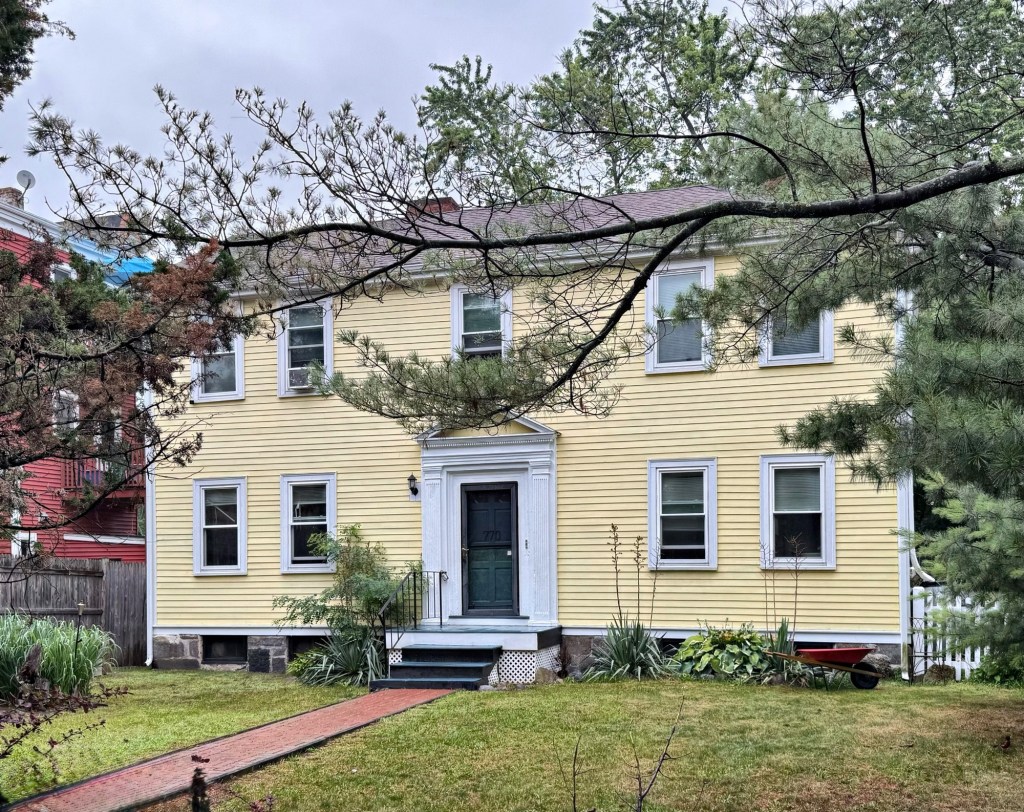
Joseph Royall House // c.1770

This is one of the oldest buildings in Boston! The Joseph Royall House is located at 770 Washington Street in the Ashmont section of Dorchester, set back from the street and passed by thousands who likely do not know its history and significance. The house dates to around 1770 and was built by Joseph Royall, of the infamous Royall Family of Cambridge, Medford, and Antigua, who made much of their money through sugar plantations in the Caribbean and enslaved Africans. Joseph was a nephew of Isaac Royal Jr., the patriarch of the family who resided at what is now the Royall House and Slave Quarters in Medford. Upon the outbreak of the American Revolution, the Tory Royalls were forced to flee for protection, Joseph would move to England. Isaac’s daughter (and Joseph’s cousin), Penelope Royall Vassall had her Cambridge home confiscated as a Tory property during the Revolution, causing her to flee to Antigua. When she returned to Boston after the war she was a widow and lived in poverty. Her cousin, Joseph, would sell her this Dorchester estate in 1782 nearly for free, allowing her to sell the property for money to survive in Boston. The house would remain here for another two-and-a-quarter centuries, as Ashmont grew around it. One-story stores were built in the front yard, completely obscuring the Georgian residence until later owners, Bob and Vicki Rugo, restored the house and demolished the stores in front, preserving this house for centuries to come. While the house is one of the oldest in Boston, it is not a landmark or listed on the National Register of Historic Places.
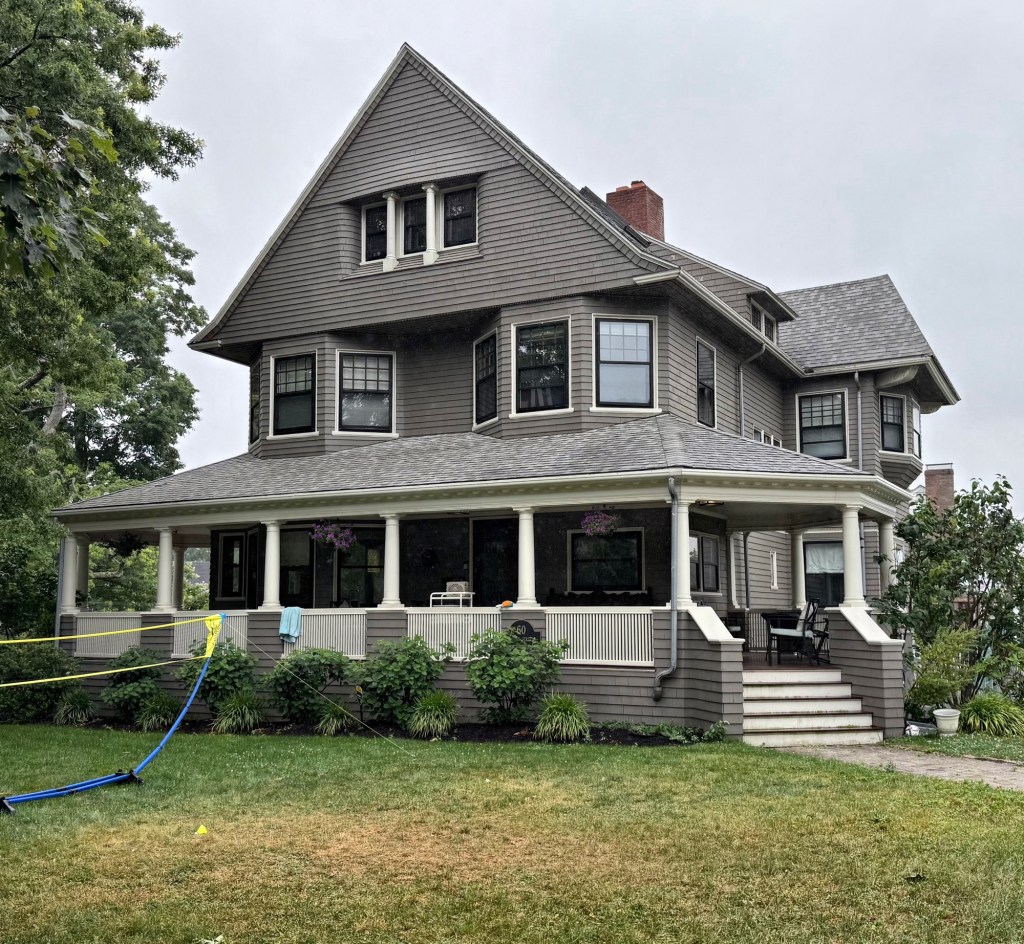
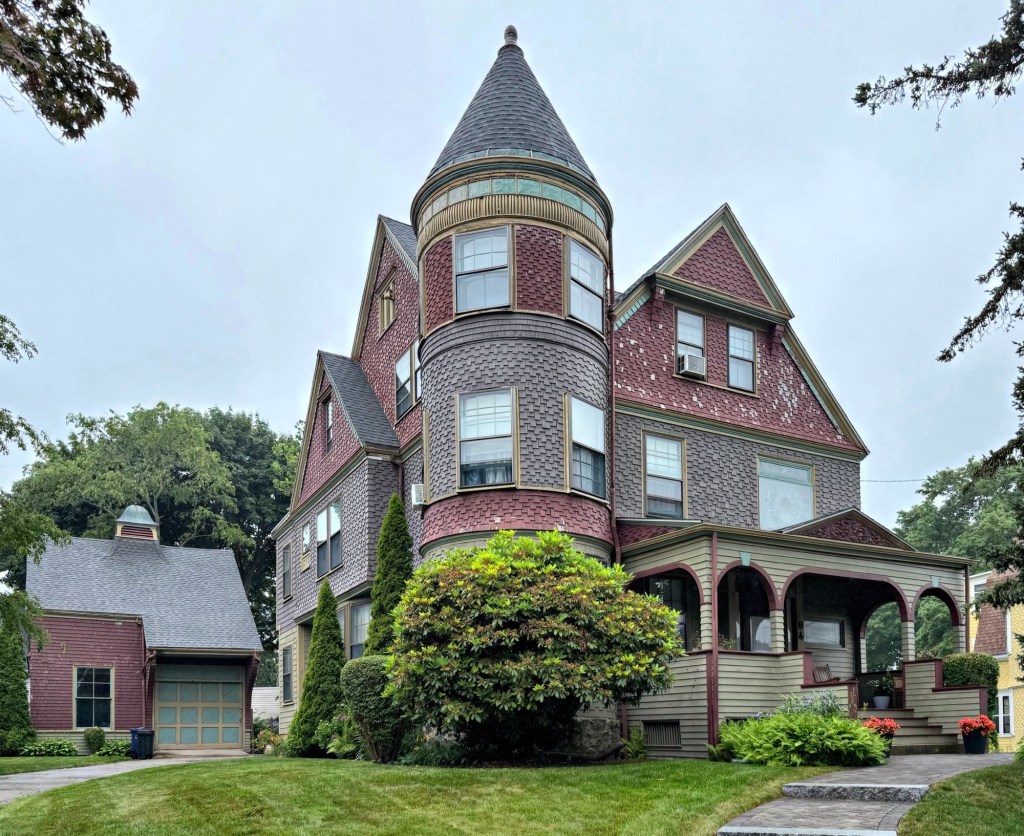
George A. Eastman House and Stable // 1889

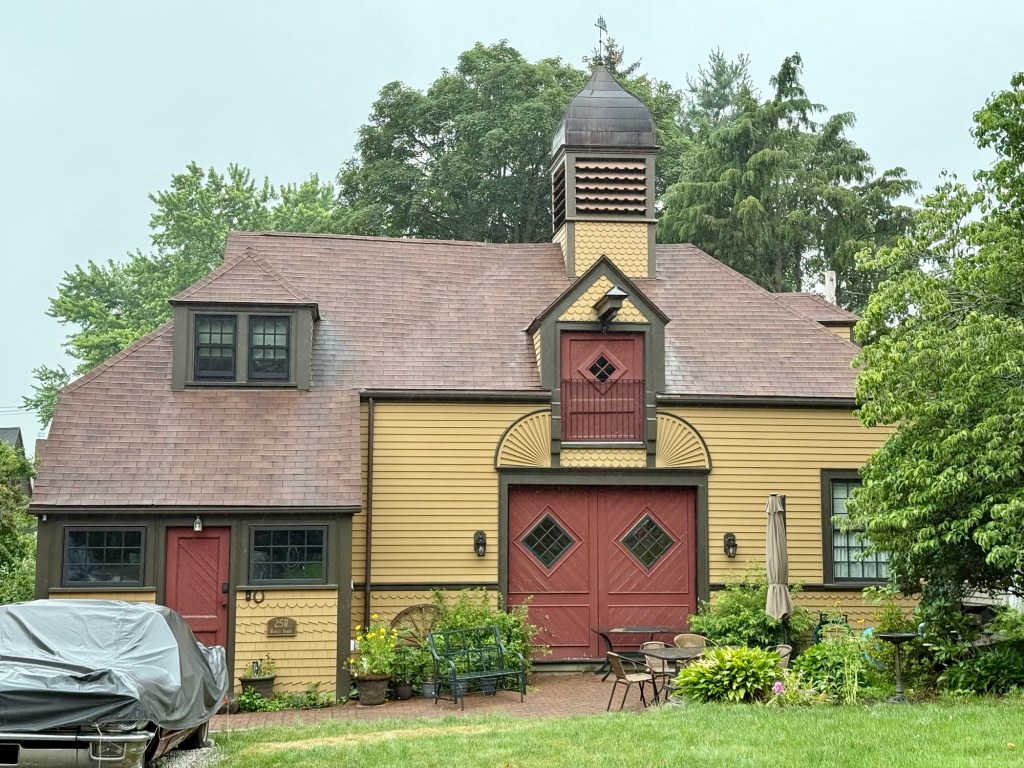
Built between 1889-1891, the house and stable at 60 Ocean Street in the Ashmont Hill neighborhood of Dorchester was commissioned by George A. Eastman, a Harvard graduate and insurance executive. George Augustine Eastman married Anna C. Winsor in 1870, and the family would remain in this house for nearly 100 years. George Eastman worked as an insurance executive at the Boston office of the Liverpool & London & Globe Insurance Company of England for over 50 years, and built his home next-door to his brother’s at 42 Ocean Street. It is believed that the Eastman House and Stable were designed by local architect Edwin J. Lewis, who designed about a dozen other residences in the surrounding area at the same time. The old stable has been converted to residential use, a great way to adaptively reuse these old, well-built structures.

Clark-Cottle House // 1890

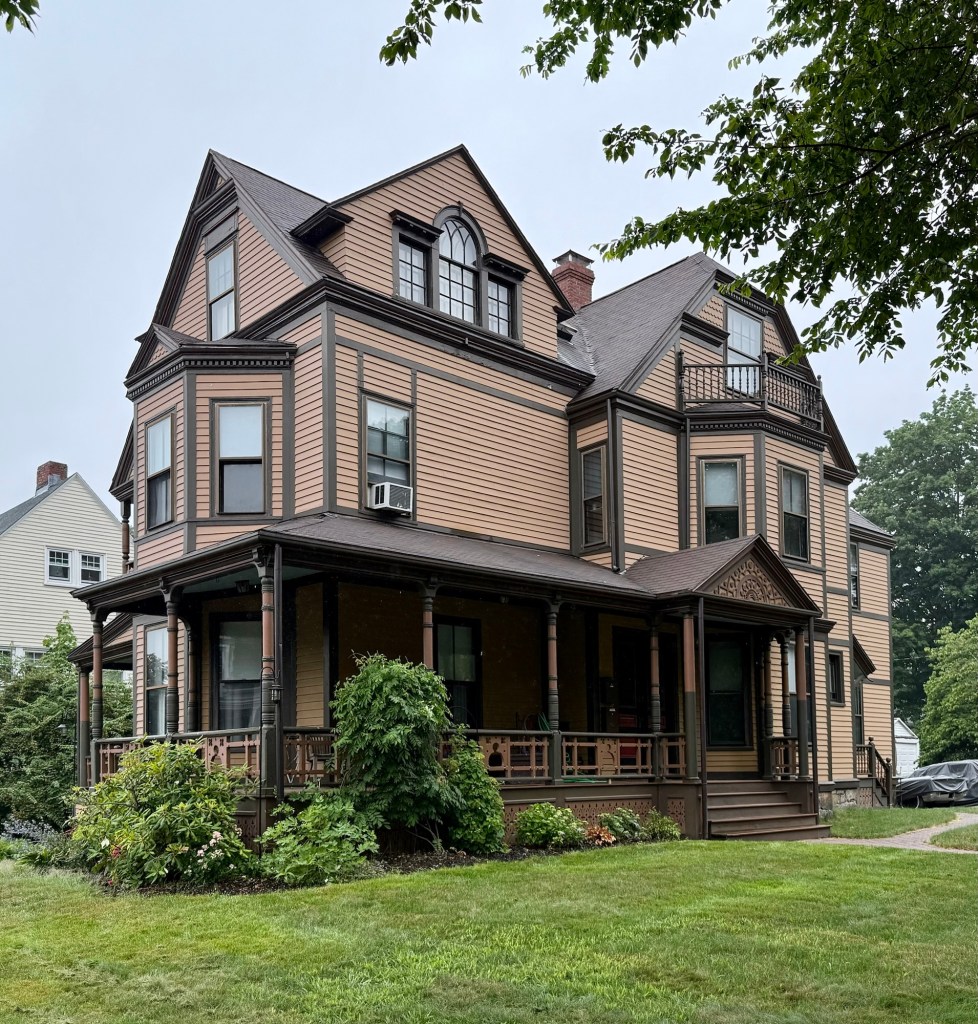
One of the most sumptuous Victorian-era homes in Dorchester can be found at 94 Ocean Street, this is the Clark-Cottie House. The residence (and rear stable) was built in 1890 from plans by famed architect Arthur H. Vinal, who designed many other Shingle style and Queen Anne homes in the surrounding neighborhood. The first owners of the mansion were Evelyn and Edward Clark, who after a few years, sold the property to Edgar Cottle, president of the Curtis & Pope Lumber Company. The three-story Queen Anne style mansion features a rounded corner tower, varied shingle siding, shingled porch, and the intact, charming stable at the rear.

Hotel Mellen // 1894

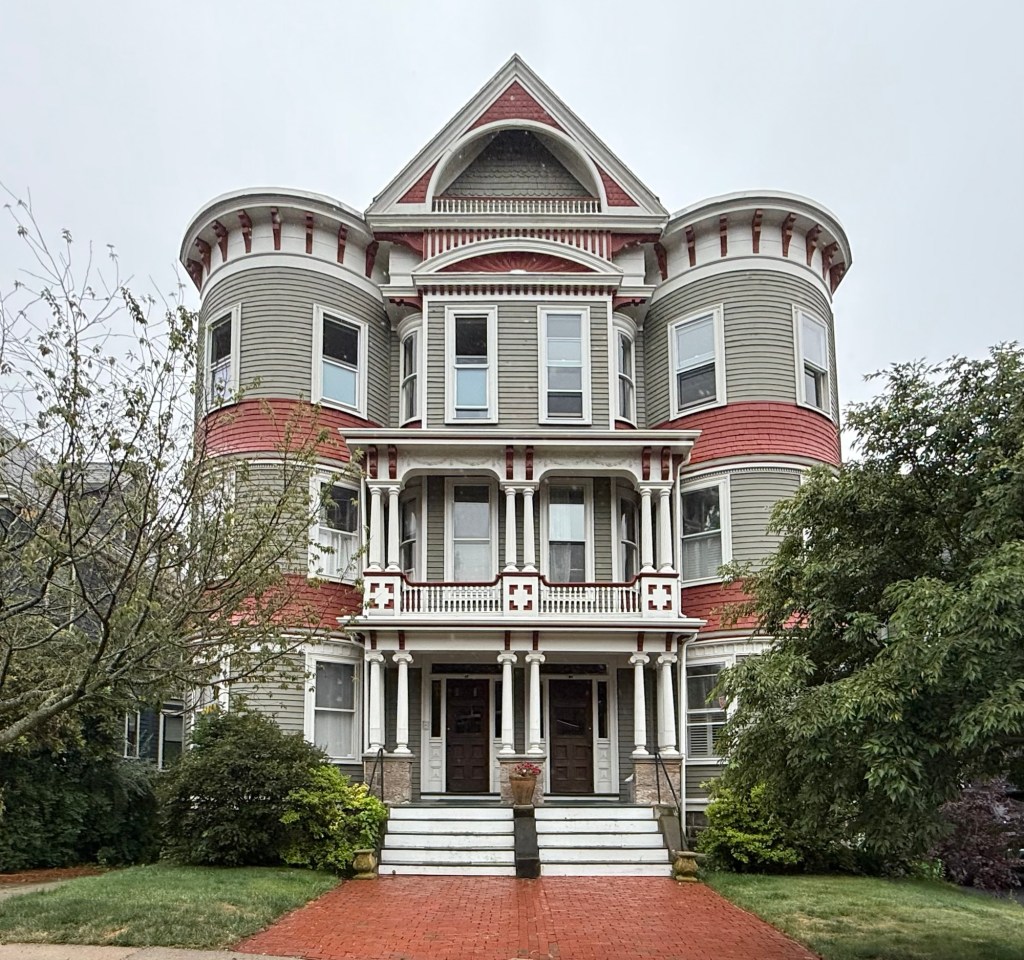
While Ashmont Hill in Dorchester is known for large, single-family Victorian houses, there are a number of grand apartment houses and three-deckers dispersed throughout the area, showing the evolution of housing in desirable neighborhoods in the late 19th and early 20th centuries. This is the Hotel Mellen, located at 18-20 Mellen Street, a multi-family building that architecturally blends in with its surroundings, not like many uninspiring boxes being built all over the region today. The property was developed by Louis Pfingst, a German streetcar designer and mechanic who was also active in the local Dorchester Gentlemen’s Driving Club. The building was designed by local architect Alexander B. Pinkham, who specialized in multi-family housing designs around Boston. The rounded bays, recessed porch in the gable, varied siding, and applied ornament, make the building stand out, while fitting well within its context of surrounding homes.

Reed-Fitzgerald House // 1891

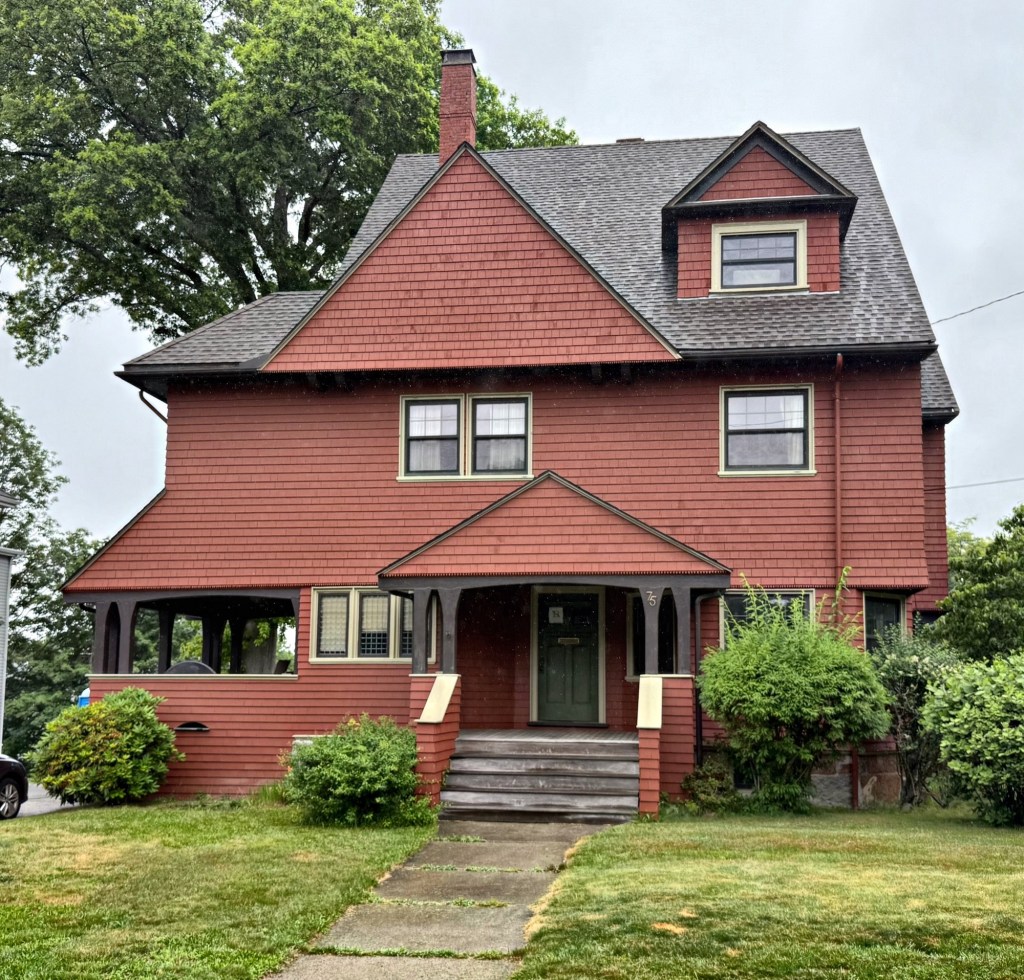
The Reed-Fitzgerald House at 75 Ocean Street in Ashmont Hill, Dorchester, stands out as a simple, yet beautiful example of the Shingle style of architecture for residential purposes. The house here was built in 1891 from plans by Edwin J. Lewis, Jr., a Boston-born architect who worked at the office of Peabody and Stearns before he opened his own firm in 1887, specializing in suburban houses and churches. The first owner of this residence was George Reed, a Boston insurance executive. Years later, the house was owned by Henry Fitzgerald, possibly Henry S. Fitzgerald, the brother of John “Honey Fitz” Fitzgerald (1863-1950), the Mayor of Boston who resided in a since demolished house in the neighborhood. Mayor John Fitzgerald was the father of Rose Fitzgerald and maternal grandfather of her sons President John F. Kennedy, Attorney General Robert F. Kennedy, and Senator Ted Kennedy. Recently, the owners of the Reed-Fitzgerald House have restored the exterior, and stained the shingles the lovely rust color.

Mary E. C. Bates House // c.1894

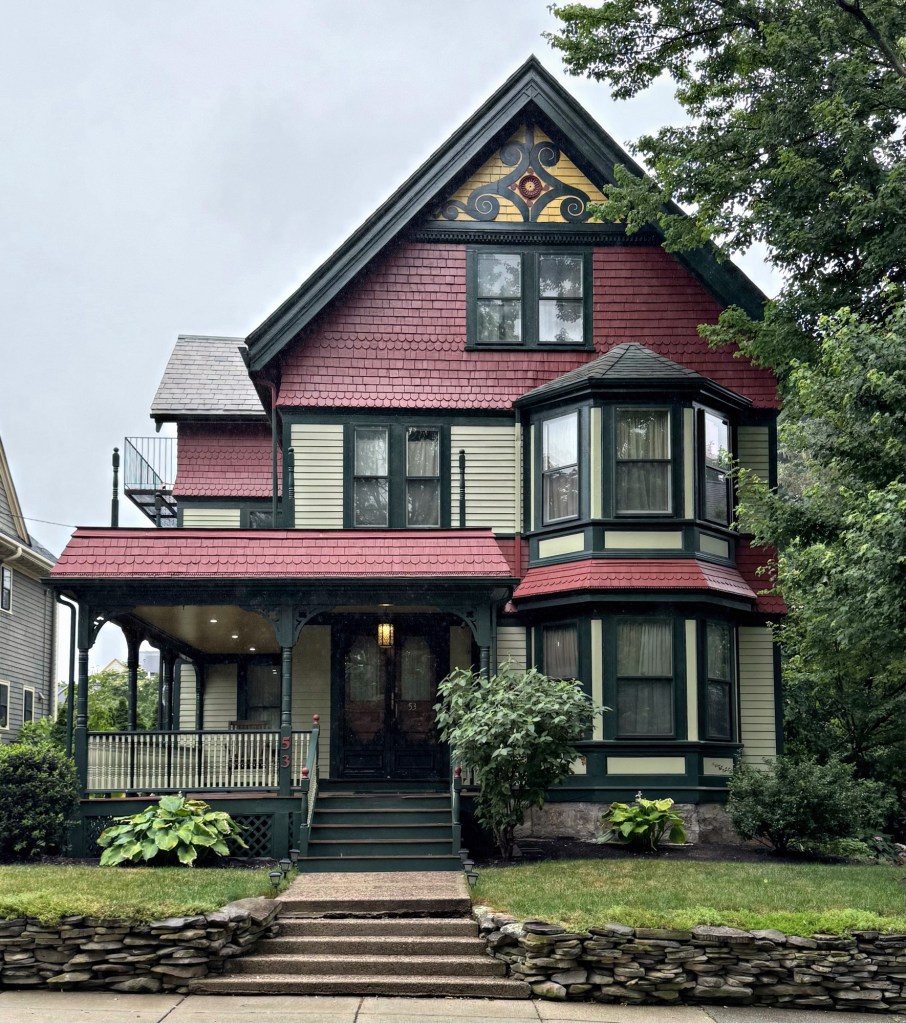
One of the many spectacular Queen Anne style houses in the Ashmont Hill neighborhood of Dorchester (Boston) is this c.1894 residence at 53 Ocean Street. The house was built for Mary Elizabeth (Cushing) Bates and her husband, Henry L. Bates. Henry worked as a bookkeeper and the couple was able to afford a house lot in the fashionable Ashmont area of Dorchester, and had this home built. In the early 20th century, the couple purchased a then-vacant lot next-door at 57 Ocean Street, and had the current house there built, renting it out for years for supplemental income. Hallmarks of the Queen Anne style seen in the Bates house include: varied siding types, large porch supported by turned posts, asymmetry, projecting bay window, and applied ornament seen here in the gable.

Tatro-Tyng House // 1873

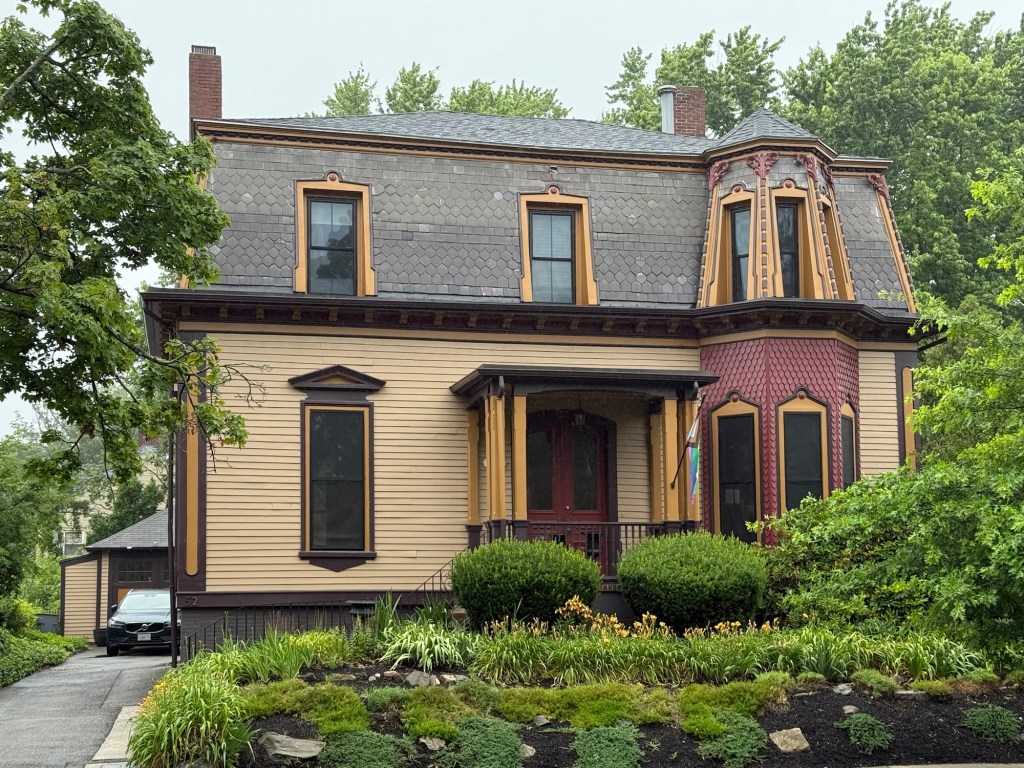
The neighborhood now known as Ashmont Hill had its origins in 1870, when George Derby Welles, who was 26 years old and living in Paris, inherited extensive landholdings in this area from his grandfather’s estate in Dorchester. Welles engaged representatives to subdivide the land. Some parcels were developed with high-style rental properties, managed by his representatives while living abroad, and others were sold and developed by builders, designing homes in the prominent styles at the time. In the early 1870s, the Second Empire style was most popular, though began waning in popularity for Stick and Queen Anne styles. Lots on Welles Street were purchased by Mr. George Tatro, a builder and developer who seemingly designed and built two near identical houses at 48 and 52 Welles street. The houses were completed by 1873 at the time of The Panic, an economic downturn triggered by industrial and railroad over-expansion and consequent bank and business failures. The property was sold, but remained vacant until it was taken over by a bank and then purchased by Catherine Stevens Tyng, the widow of Reverend Dudley Atkins Tyng, who died at just 33-years-old from a freak accident at home. Catherine moved to the area, first settling in Cambridge, to follow her two sons who attended Harvard College, before selling the house and moving to New York. The Tatro-Tyng House is a stunning, and well-preserved example of the Second Empire style, with a shingled bay window and bay dormer in the mansard with applied ornament.

Harrison H. Atwood House // 1888

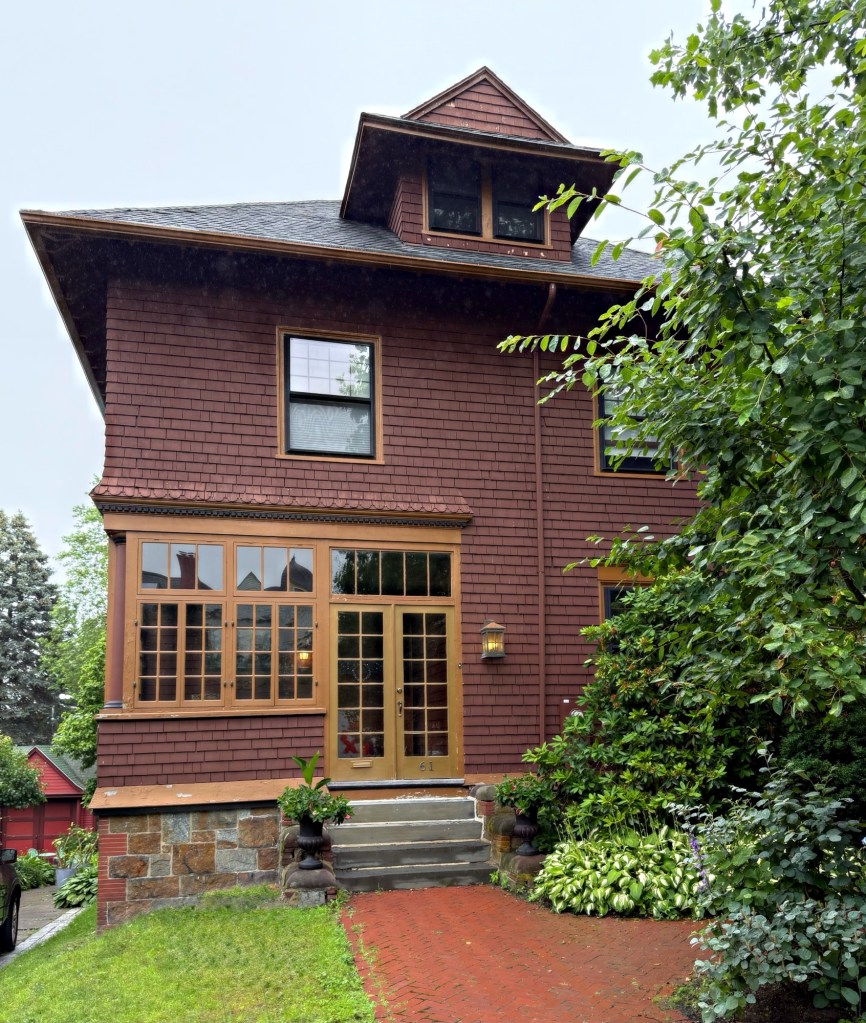
When an architect designs their own home, you know it will be something special. This house on Alban Street in Ashmont Hill, Dorchester, was built in 1888 and designed by owner-architect, Harrison H. Atwood (1863-1954). The unique Shingle style residence features a plain, boxy form and is capped by a pyramidal hipped roof with a center dormer. The recessed side entry porch is enclosed by large windows with multi pane sash which is surmounted by flared shingles. Besides being a residential architect, Harrison Henry Atwood also was appointed as the 5th City Architect of Boston, designing schools and firehouses, and served as a member of the Massachusetts House of Representatives. While the Atwood House may appear modest from the street, the house stretches back toward the rear of the lot and is larger than meets the eye, also the interior was lavishly decorated with much of the original millwork and mantels intact. 

Mumford House // 1877

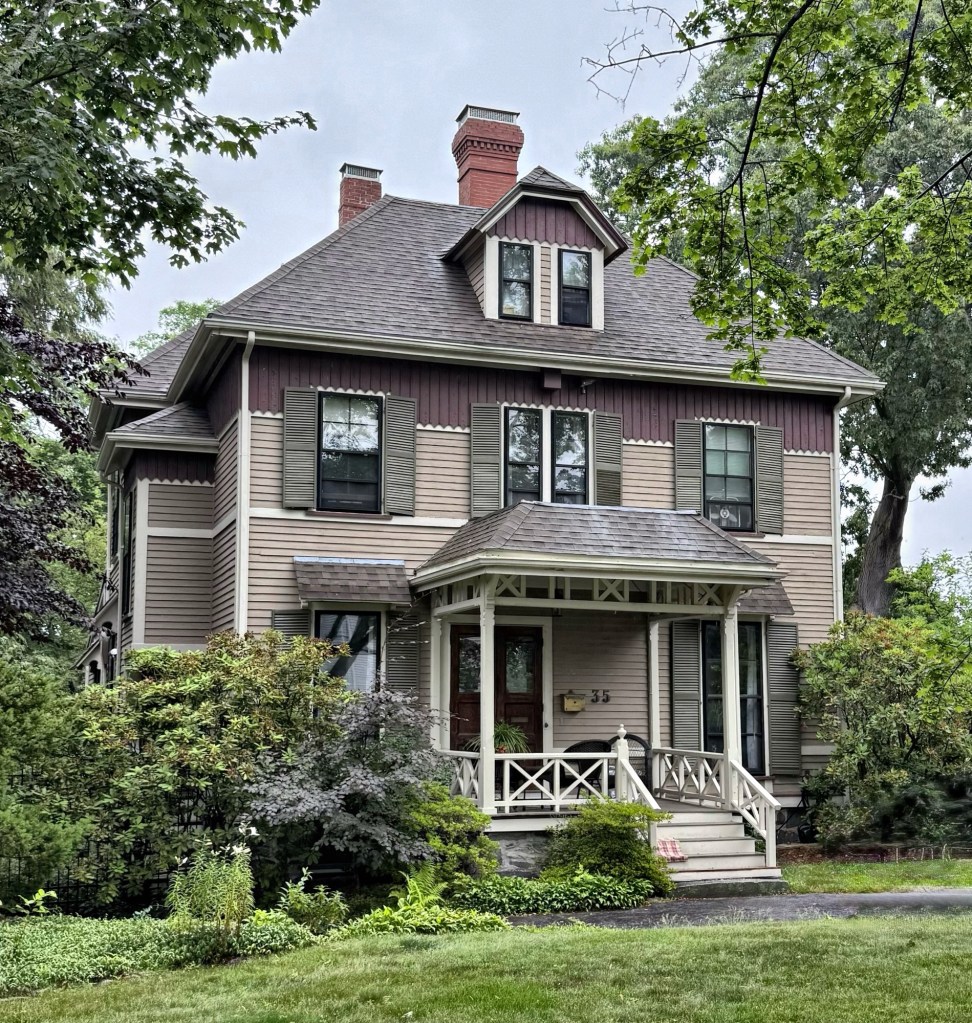
Set back behind a manicured lawn on the charming Alban Street in the Ashmont Hill neighborhood of Dorchester, this Victorian era residence was both a family home as well as a finishing school for young ladies. The house at 35 Alban Street was completed in 1877 for the Reverend Thomas James Mumford, pastor of the Third Church of Dorchester and anti-slavery advocate, who died the year his home was completed. His widow, Elizabeth Goodrich Warren Mumford (1834-1897) would inherit the home from her husband and for supplemental income to maintain the home, she opened the Mrs. Mumford’s Finishing School for Young Ladies, a school to educate and teach young girls manners and religion. Elizabeth Mumford would also publish books on how to conduct classes for Sunday School, Kindergarten, and the home. The Mumford House is a great example of a Stick style residence with less exuberance than some other examples. The picket frieze, applied stickwork on the siding, and more ornate porch are all typical of the style. 

Thomas T. Hartford House and Stable // 1884

Situated at the corner of Harley and Roslin streets in the Ashmont Hill neighborhood of Dorchester, this property showcases the flair and ornate features of the eclectic Victorian styles, along with an original stable. The property was developed in 1884 by Thomas T. Hartford. Thomas Thurston Hartford (1845-1916), was a shoe machinery manufacturer with offices in the Leather District near downtown Boston, continuing in his father’s company, Hartford Brothers Co. The house and stable are said to have been designed by architect Edwin J. Lewis, Jr., or John A. Fox, who blended Stick and Queen Anne styles. Interestingly, the house features Palladian windows in the gables and was restored by owners, who even went the extra mile to repaint the house in its historic colors.

King-Murdock House // c.1894

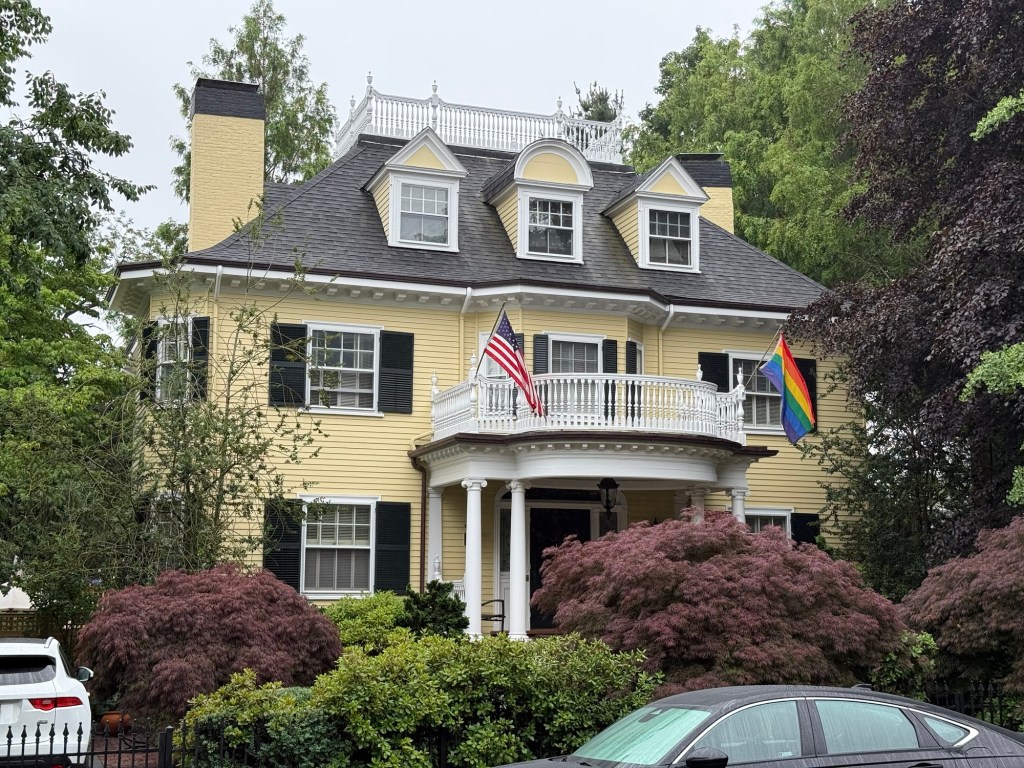
Located on Ashmont Street in the Ashmont Hill neighborhood of Dorchester in Boston, this handsome Colonial Revival style residence was one of many large homes constructed here at the end of the 19th century. This house was built by 1894 for owner Franklin King and rented to tenants for supplemental income. Franklin King was part owner of the E & F King Company, a major paint and stain manufacturer in Boston. Franklin died in 1898 and the property was inherited by his son, Samuel Gelston King, who continued to rent the home. A notable renter of the house was Harold Murdock, a cashier and amateur historian and author who wrote various books of everything from the American Revolution to the Reconstruction of Europe. The architect is said to be Clarence Blackall of Cambridge, which makes sense as this house is clearly the work of a trained architect. Symmetrical in plan, the center-hall residence features a preserved entry portico, hipped roof, and detailed dormers.

Reed-Loring House // c.1872

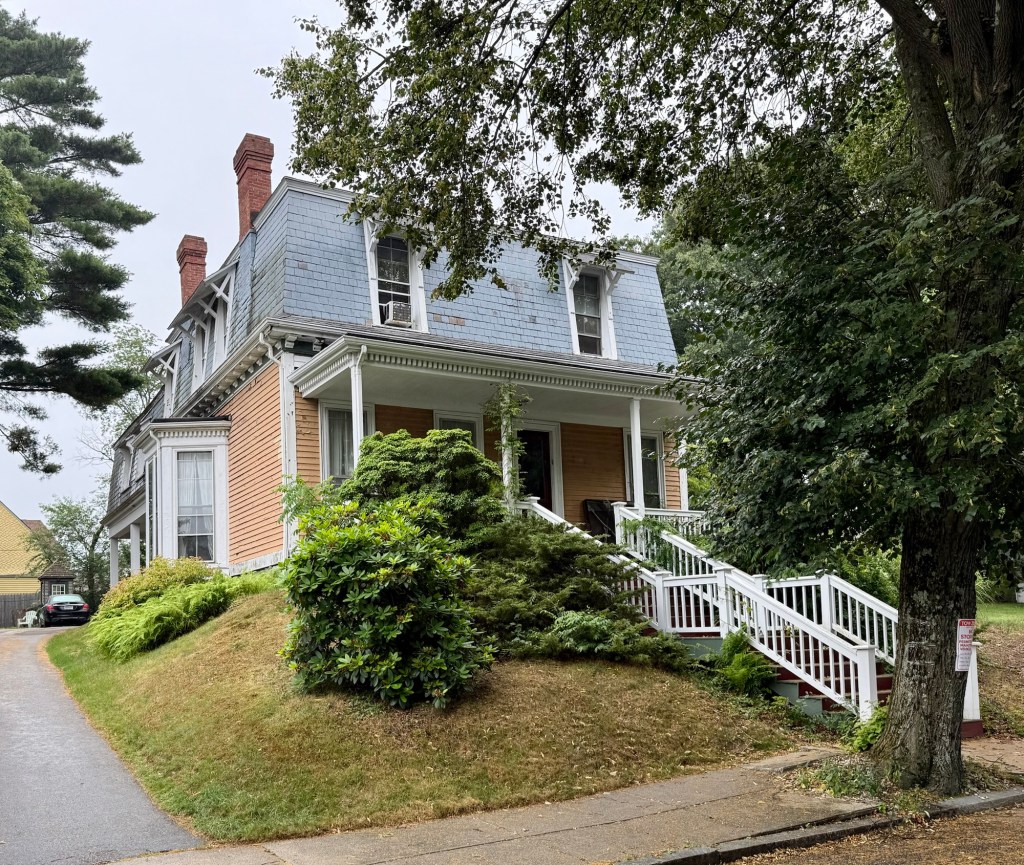
Another of the early houses built in the Ashmont Hill neighborhood by George D. Welles, a young man who inherited and subdivided his family estate in Dorchester, is this mini-Mansard on Harley Street. Like a few others in the neighborhood, this house was built for Welles, likely as a rental property. The house was rented by Charles and Nellie Reed, who had painter, Frank Henry Shapleigh over as a guest. Shapleigh would paint the house in the 1870s, shortly after a stint in Paris. The property would be purchased by Stephen L. Emery, a coal and wood merchant in Boston, and later by Clara Reed, the daughter of Charles and Nellie Reed, who took up permanent residence in this house with her husband Royden Loring, the vice president of the Arnold Roberts Company on Congress Street. Clara Reed Loring lived here until the early 1970s. The Second Empire style house and large, preserved barn at the rear of the lot, provides a glimpse into the early development of Ashmont Hill.

George Derby Welles Rental House // c.1872

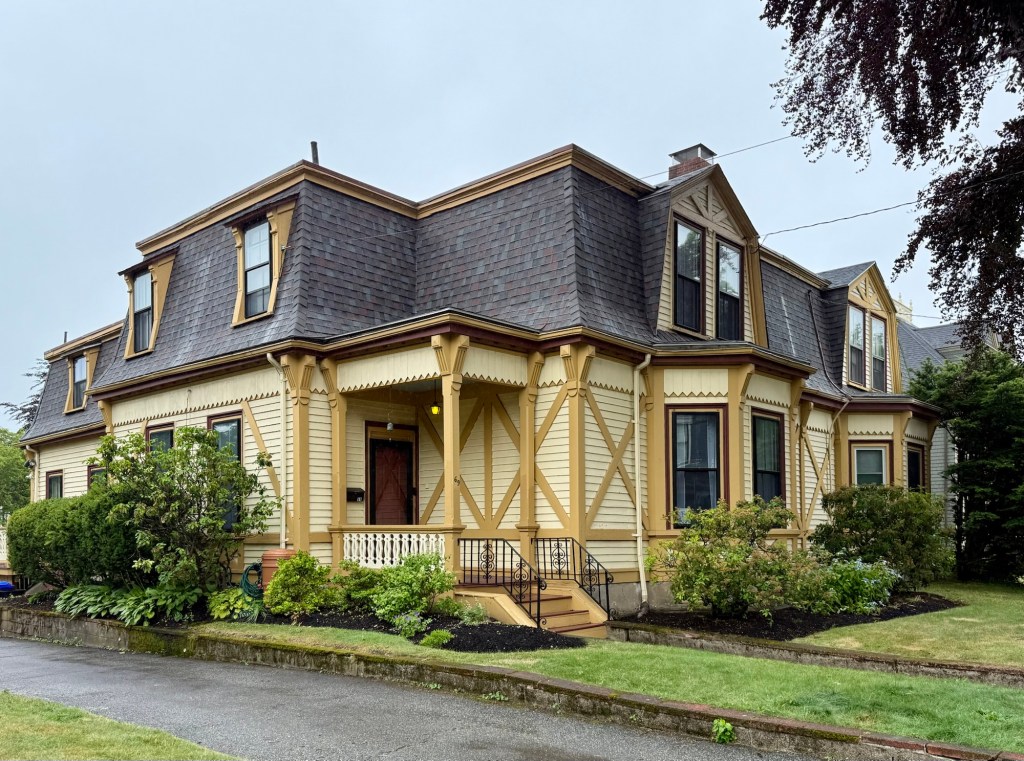
From the 1780s until 1870, almost all of Ashmont Hill (west of the present train station) was a farm, with the large farmhouse dating to about 1720, located at the corner of Washington and Welles streets, now the home to the Codman Square Branch of the Boston Public Library system. The farm was owned for a time by General Henry Knox. Sometime before 1850, the estate and mansion came into the possession of the Honorable John Welles, who died in 1855. The property would eventually be deeded to John Welles’ grandson, George Derby Welles, who was then just 26 years old and living in Paris with his wife, Armandine V. Derby. Welles wasted no time in developing the property through his agent, Boston Attorney Edward Ingersoll Browne. Streets were laid out and house lots were platted and sold, with some early properties built with much of the neighborhood developing by the turn of the century. The old Knox-Welles farmhouse would be razed by 1889, but the remainder of the neighborhood has since become a landmark neighborhood of Victorian-era homes. This mansard double-house at 67-69 Ocean Street dates to around 1872 and is one of the earliest properties in the area. Blending the Second Empire and Stick architectural styles, the handsome double house is said to have been designed by architect Luther Briggs for George D. Welles and rented to tenants.

Dorchester Temple Baptist Church // 1889

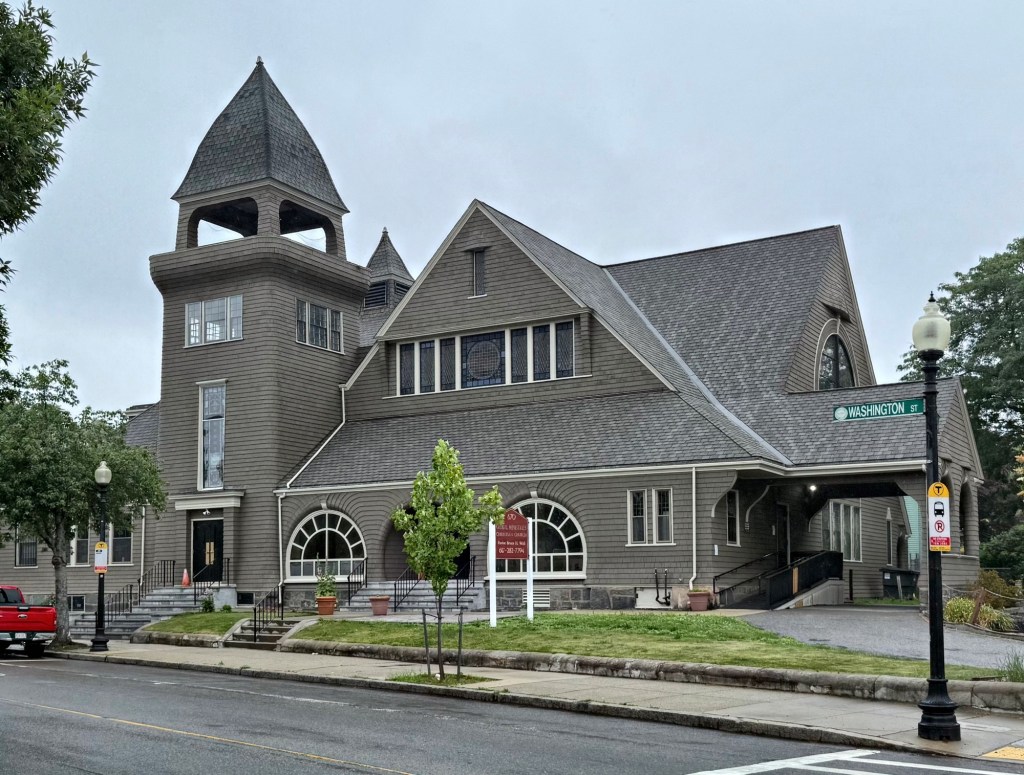
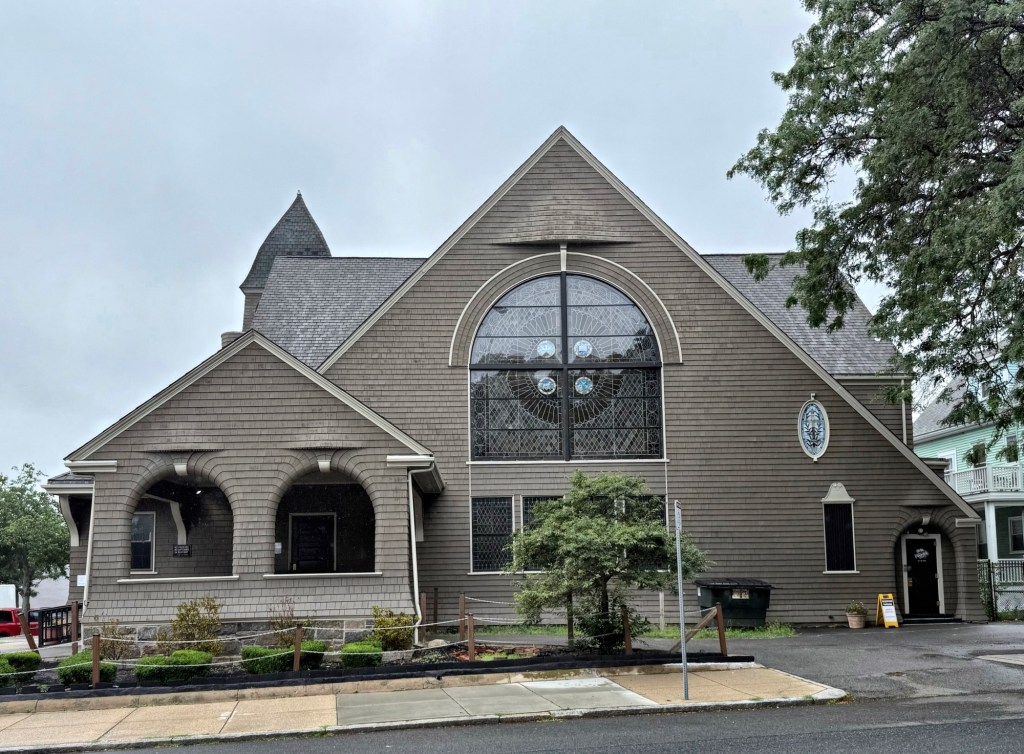
Located at the corner of Washington Street and Welles Avenue, the Dorchester Temple Baptist Church was designed in 1889 by architect Arthur H. Vinal, as one of the best examples of a church designed in the Shingle Style in New England. The church began in 1886 as a mission church of the Tremont Temple Baptist Church in Boston. At this time, Dorchester was a semi-rural area and would surge in development when the streetcars were electrified in the 1880s. With a rapidly developing neighborhood, the congregation here, purchased lots and hired Vinal to furnish plans for a house of worship. The church’s cornerstone was laid October 3, 1889, with the church membership numbering ninety-nine at that time. Membership would decline in the decades following WWII, and shifting racial and ethnic demographics in the neighborhood brought new members to worship here. The building was renamed as the Global Ministries Christian Church by the current congregation, who with the assistance of preservation grants, worked with Mills Whitaker architects to restore the iconic landmark. Specific details of the building stand out, including the stained glass windows, the belfry with bulbous form, and the arched openings with continuous shingled walls.

Dorchester Pottery Works // 1896

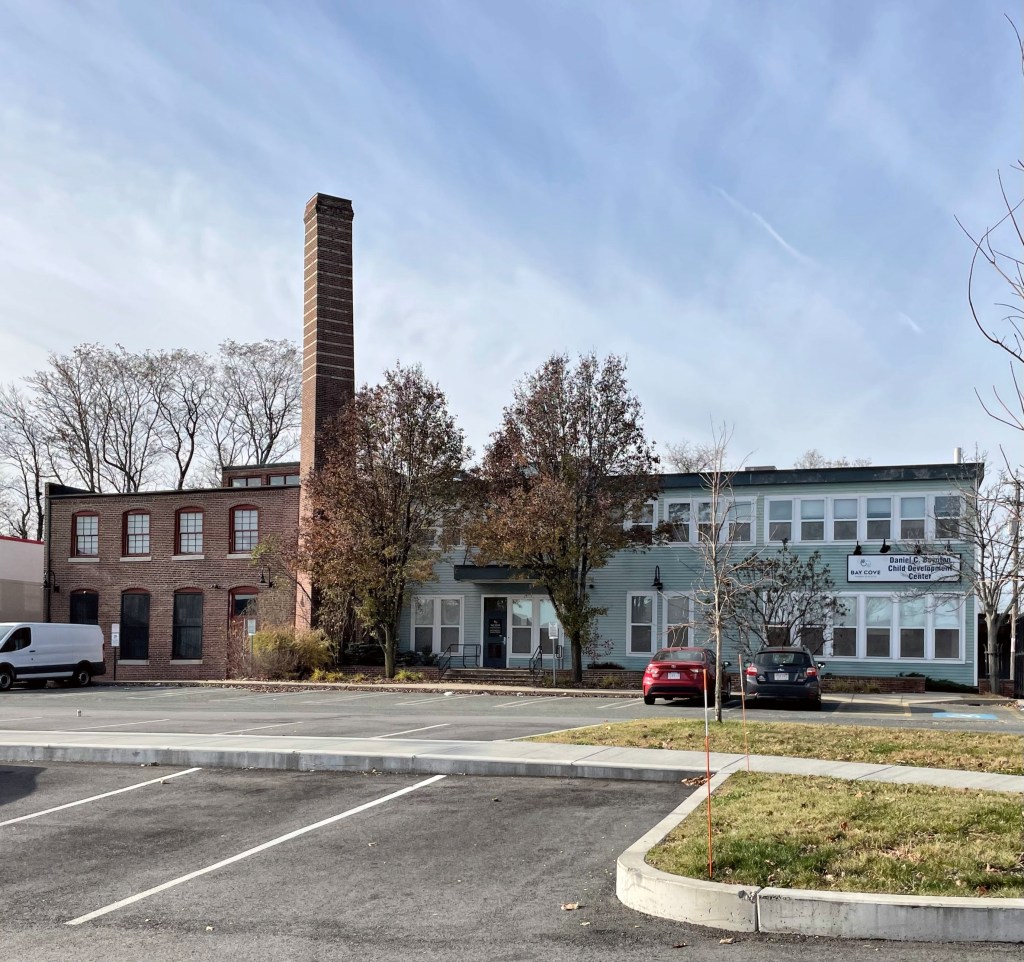
Founded in 1895 by George Henderson, the Dorchester Pottery Works successfully produced commercial and industrial stoneware for many years and its building is a significant piece of Dorchester’s industrial heritage. Located in the Harrison Square/Clam Point area of Dorchester, the building began as a two-story wood-frame industrial structure for the young company. It saw immediate success and Henderson oversaw the construction of a large, brick addition which housed an enormous beehive kiln 28-feet in diameter of his own design made of bricks. Here he could fire pottery and other clay goods from his modern facility. Besides clay pots, tableware, and jugs, the company became known for the production of foot warmers, which became known as the ‘Porcelain Pig’ or ‘Piggy’. Foot warmers were widely used in the days before central heating. These clay vessels would be filled with hot water and placed under bedding for overnight warmth. The company made foot warmers until 1939. The company saw dwindling sales after WWII, and eventually closed in 1979. The structures began to decay and the towering smokestack and brick structure was open to the elements. The local neighborhood advocated for its preservation, listing it on the National Register of Historic Places and protecting it as a City of Boston Landmark. After decades of neglect, Bay Cove Human Services acquired the property in 2001 and renovated the building for its own use, keeping the kiln room and the kiln itself intact for community exhibitions. Today, it provides an important historic survivor of Dorchester’s industrial past.