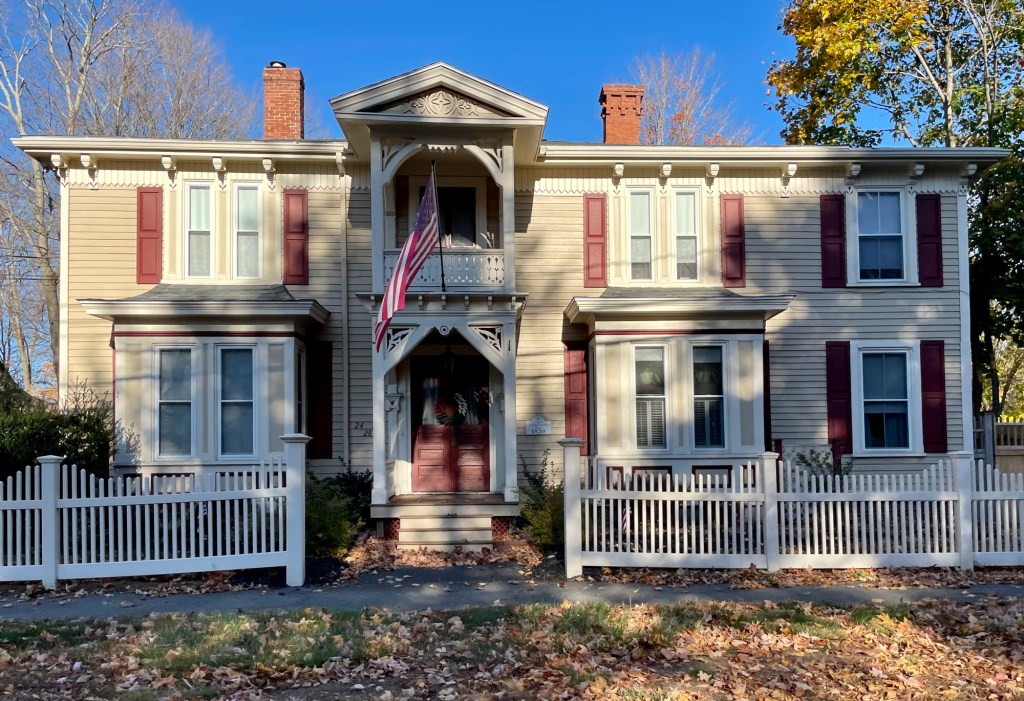
Wrentham Village Hall – Daniel Cook Store // 1853

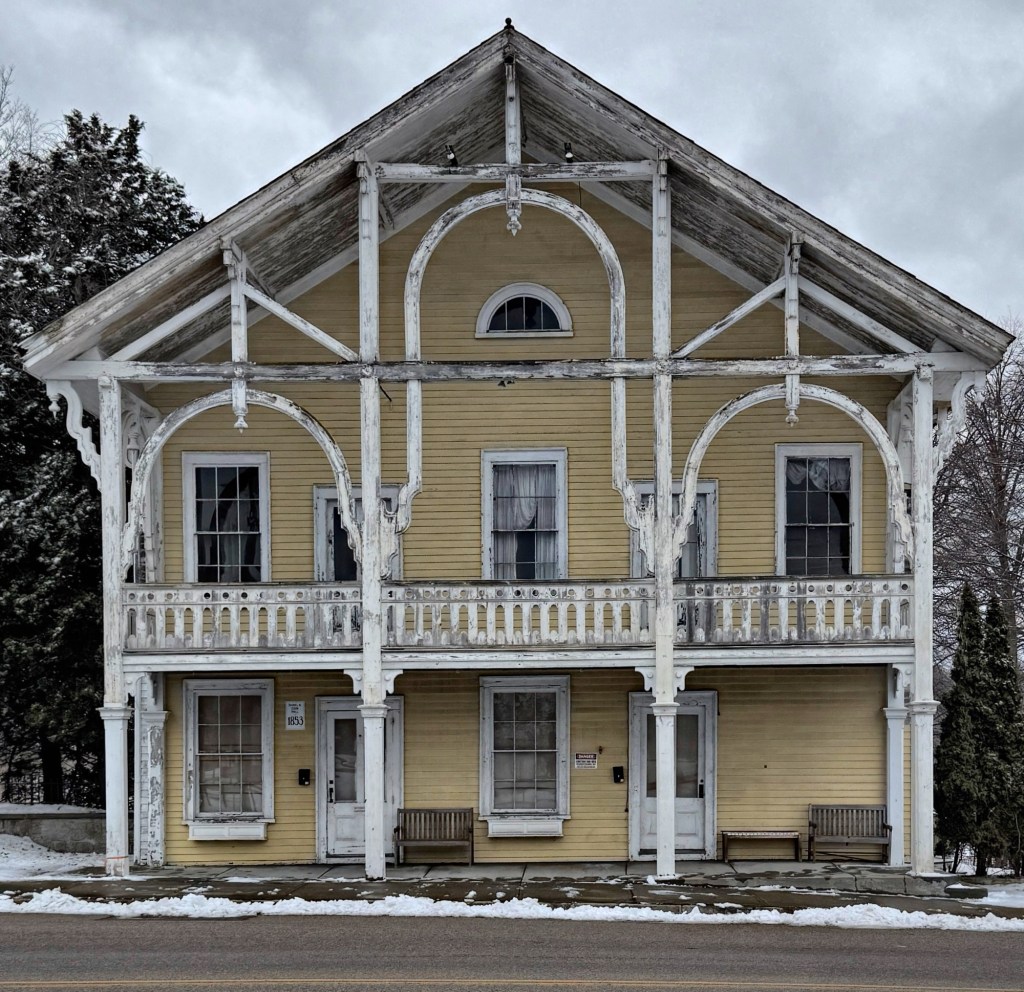
Arguably the most recognizable and beloved building in Wrentham, Massachusetts, is this eclectic mid-19th century commercial building, known as the Wrentham Village Hall. The structure was originally constructed for Daniel A. Cook where he operated a store in the ground floor retail space and rented a meeting hall to local organizations above. The building was constructed around 1853 as a more vernacular building, but given its current appearance decades later when the ornate Stick style porches were added to the facade. While the building has served many uses over its history, the structure is suffering from some deterioration, which hopefully will not impact the rare surviving exposed porch framing and trusses, which give the building so much character.

Wayland Railroad Depot // 1881

The Wayland Railroad depot in Wayland, Massachusetts, was built in 1881 by the Massachusetts Central Railroad, which was later absorbed as part of the Boston and Maine Railroad. The line operated both passenger and freight service, with this structure serving as the passenger station and freight at the nearby structure, also built in 1881. Regular train service helped develop Wayland Center into a more prosperous Boston suburb, but industry and larger developments did not occur like in other communities. In its heyday, the Wayland station was manned by an agent with a small office in the building. The station agent was responsible for nearly all aspects of the operations from selling tickets; handling mail, baggage, and freight; keeping financial and operating records; and even maintaining the grounds. After WWII, car ownership and highway expansion harmed the rail industry and trains ceased to run in Wayland. To save the building from eventual demolition, the Town of Wayland purchased the old depots, which since the 1980s, has been leased to “The Wayland Depot“, a charitable women’s consignment craft shop with retail space in the station. The former rail line has largely been converted to a rail trail for pedestrians and bicyclists to traverse the old railroad right-of-way.

Solon Wilder House // 1883

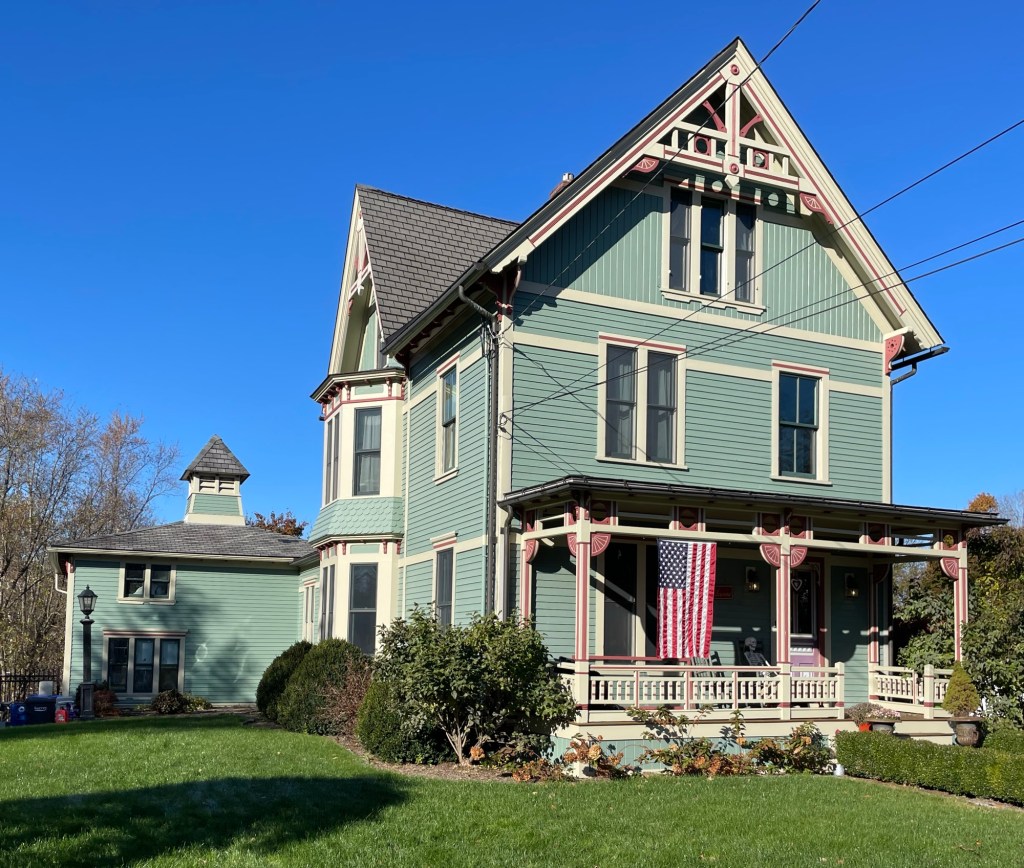
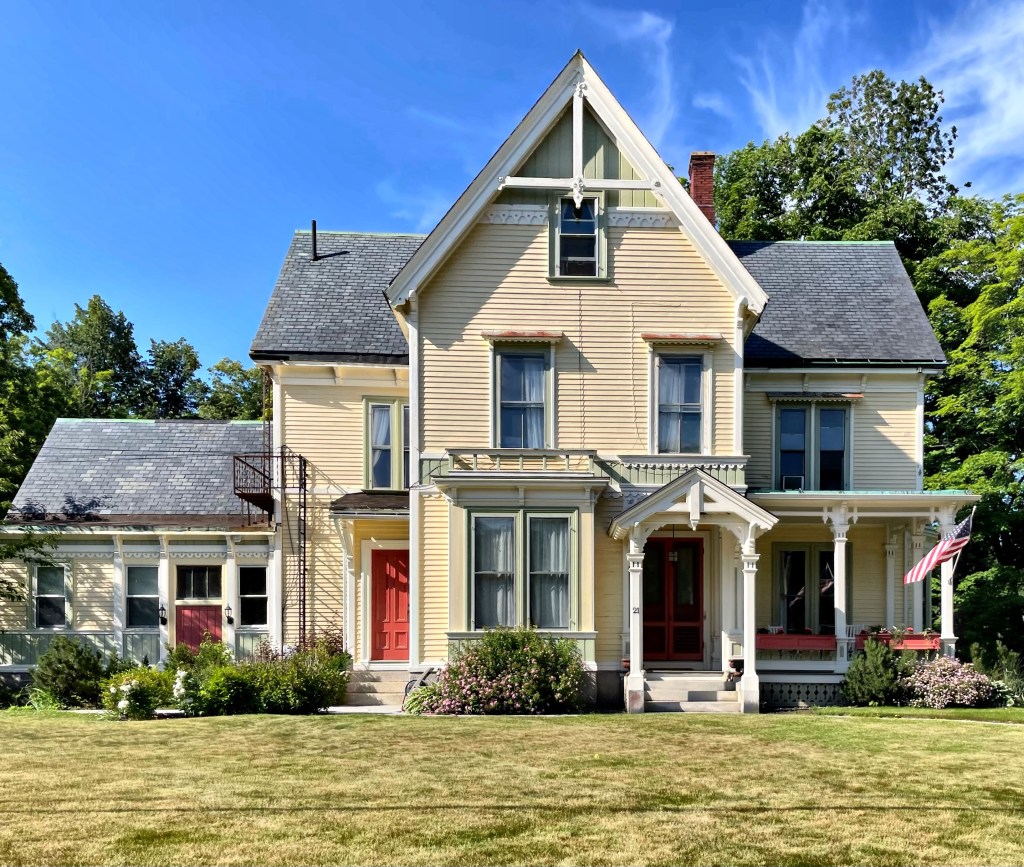
On Main Street in the central village of Lancaster, Massachusetts, the Solon Wilder House stands as one of the town’s finest Victorian-era residences. The house dates to 1883 and was built for Solon Wilder (1828-1889) and his wife, Olive. Mr. Wilder ran a store and served as town treasurer, doing well enough financially to build this handsome, and modern house and rear stable for the time. The Stick style house features a porch with cut woodwork, decorative trusses in gables, and wooden wall cladding interrupted by “stickwork” patterns raised from the wall surface that is meant to symbolize the structural skeleton of the home.

John D. Runkle House // 1875

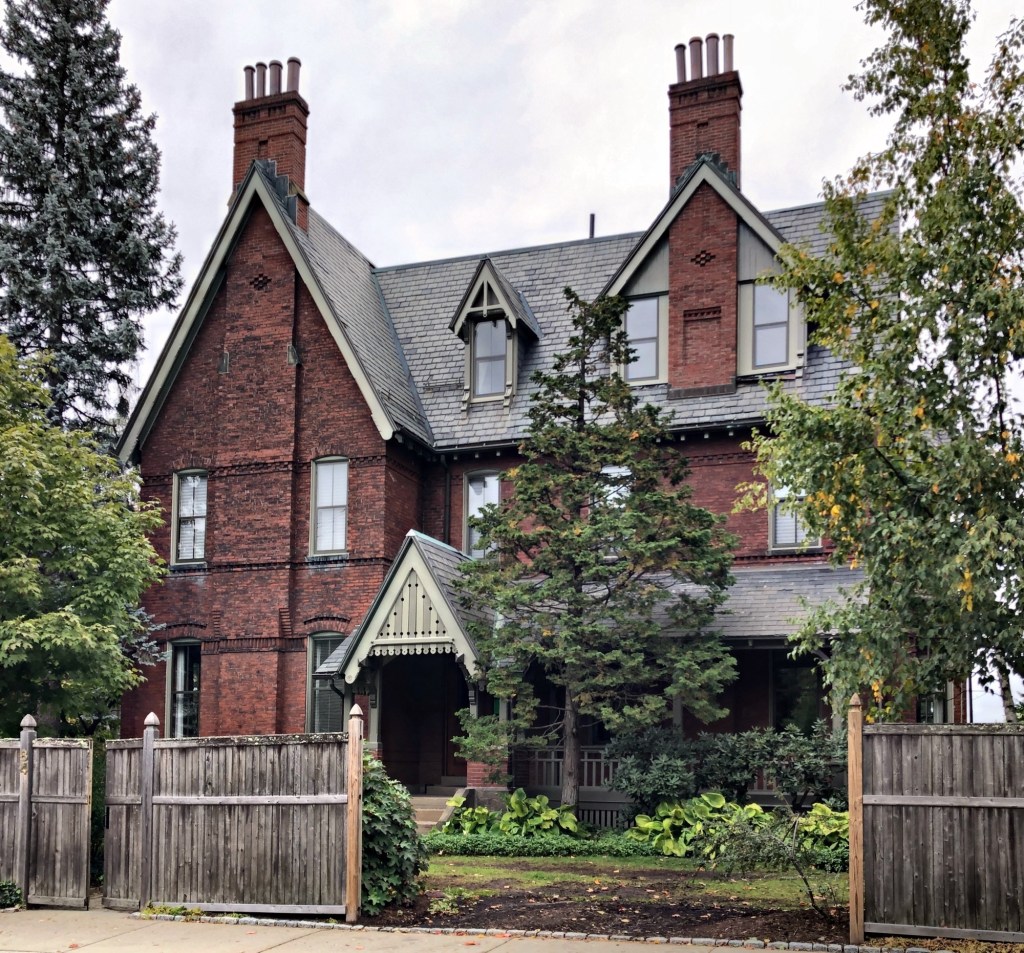
The John Runkle House on High Street, is one of the most interesting houses in Brookline. Built in 1875 for educator John Daniel Runkle (1822-1902), the brick residence excellently blends early Queen Anne form and flourish with Victorian Gothic design elements all with Stick style entry porches and dormers. John D. Runkle was a noted mathematician who later became the second President of the Massachusetts Institute of Technology from 1868 until 1878. This occurred before MIT moved over the Charles to Cambridge, so President Runkle would not have traveled far to the Institute when located in the Back Bay. The Runkle House was designed by the architectural firm of Weston & Rand with an irregular plan of elaborate belt courses in the brickwork that is set against the extremely steep slate roof with tall prominent chimneys and corner turret. Sadly, the residence is largely obscured by a tall wooden fence, but I caught it on a good day that a panel was down.

Mumford House // 1877

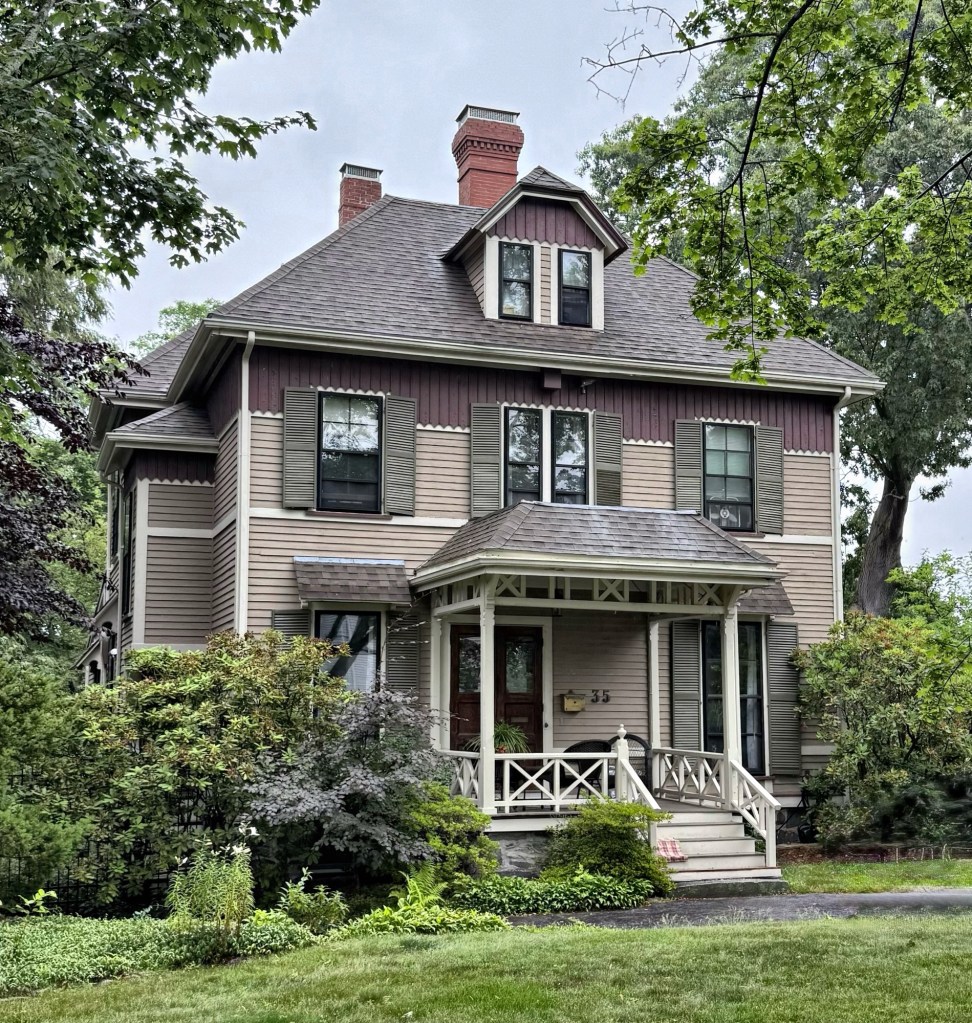
Set back behind a manicured lawn on the charming Alban Street in the Ashmont Hill neighborhood of Dorchester, this Victorian era residence was both a family home as well as a finishing school for young ladies. The house at 35 Alban Street was completed in 1877 for the Reverend Thomas James Mumford, pastor of the Third Church of Dorchester and anti-slavery advocate, who died the year his home was completed. His widow, Elizabeth Goodrich Warren Mumford (1834-1897) would inherit the home from her husband and for supplemental income to maintain the home, she opened the Mrs. Mumford’s Finishing School for Young Ladies, a school to educate and teach young girls manners and religion. Elizabeth Mumford would also publish books on how to conduct classes for Sunday School, Kindergarten, and the home. The Mumford House is a great example of a Stick style residence with less exuberance than some other examples. The picket frieze, applied stickwork on the siding, and more ornate porch are all typical of the style. 

Spofford-Root House // c.1830

The Spofford Family was one of the earliest to settle in present-day Georgetown, with the earliest enclave of homes built along Andover Road in the western part of town. A few generations later, subsequent family members would built in the town center, taking advantage of the growing commercial and business community. This Federal period home (with later alterations) was built around 1830 for Greenleaf Spofford (1801-1887) the same year as his marriage to Emily Willmarth. The couple would move out of town and sold the home to Dr. Richmond Barbour Root (1846-1930),  the second of a highly respected, three generation family to practice medicine in Georgetown. The overlay of machine-sawn Stick Style decorative porch, bracketed cornice and bay windows were likely added by Root sometime after the Civil War. Unlike most owners of Federal and Greek Revival-style dwellings, Dr. Root may have held a valid professional interest in appearing as up-to-date as possible with a “modernized” home that also served as the site of his office and consulting rooms.

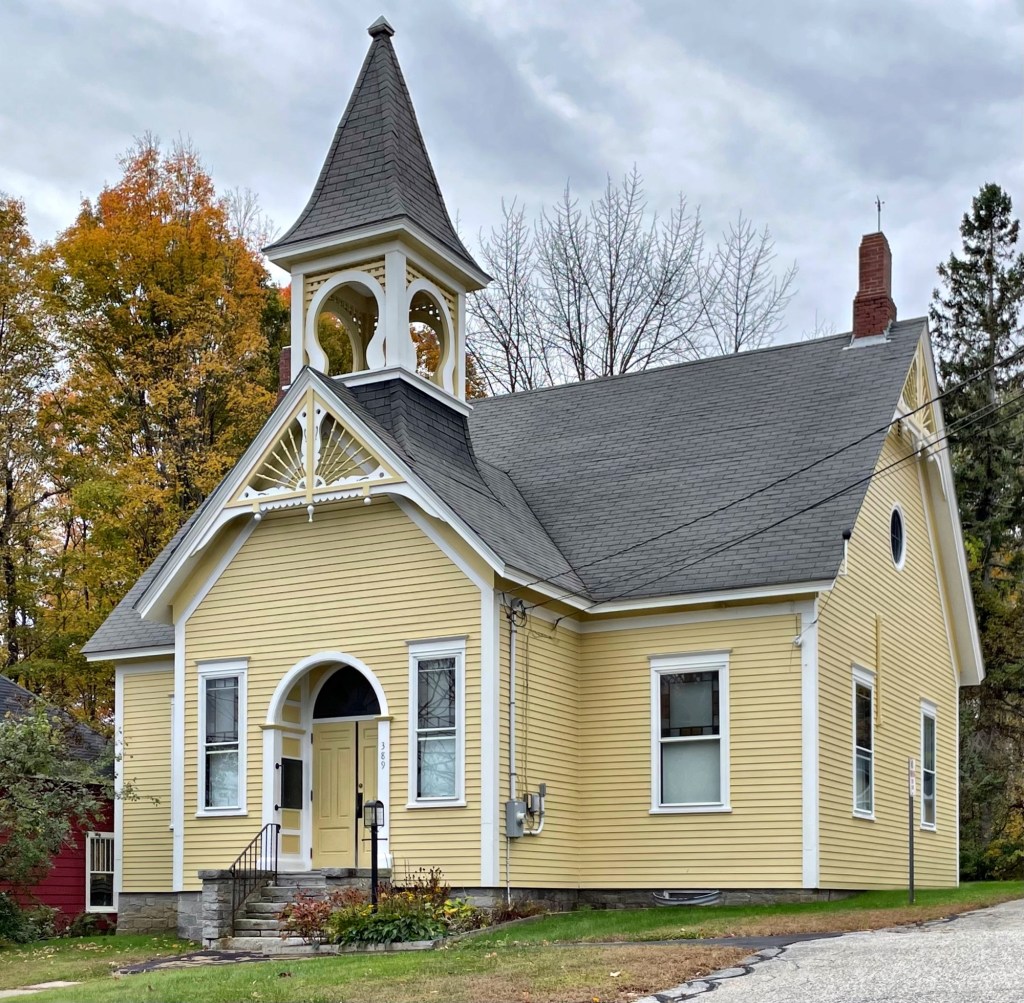
Old New Gloucester Public Library – New Gloucester Meetinghouse // 1895

The original New Gloucester Public Library is located in the central village of New Gloucester, Maine, and is one of the finest architectural buildings in the town. The library was established in 1888 when voters passed a resolution to establish a public town library as before this, a private, social library existed here. A committee was chosen to purchase books and make decisions for expenditures and staff. The library was originally located in the town hall building, and was supported by an annual poll tax of 50 cents. The first librarian was Helen A. Moseley, with a salary of $50 a year, she remained the town’s librarian until 1920. By 1895, the library had grown to more than 2,100 volumes and it was decided a new, purpose-built library was needed. That next year, a lot was purchased and this Victorian style building was constructed adjacent to the Town Hall. The wood-frame building has a decorative central section with recessed, arched entry and gable with decorative Stick style ornament. Additionally, a tower protrudes from the roof, giving the building additional whimsy. The library was eventually outgrown and relocated in the former High School, two buildings down the street. The old library has ever-since been the town’s meetinghouse.

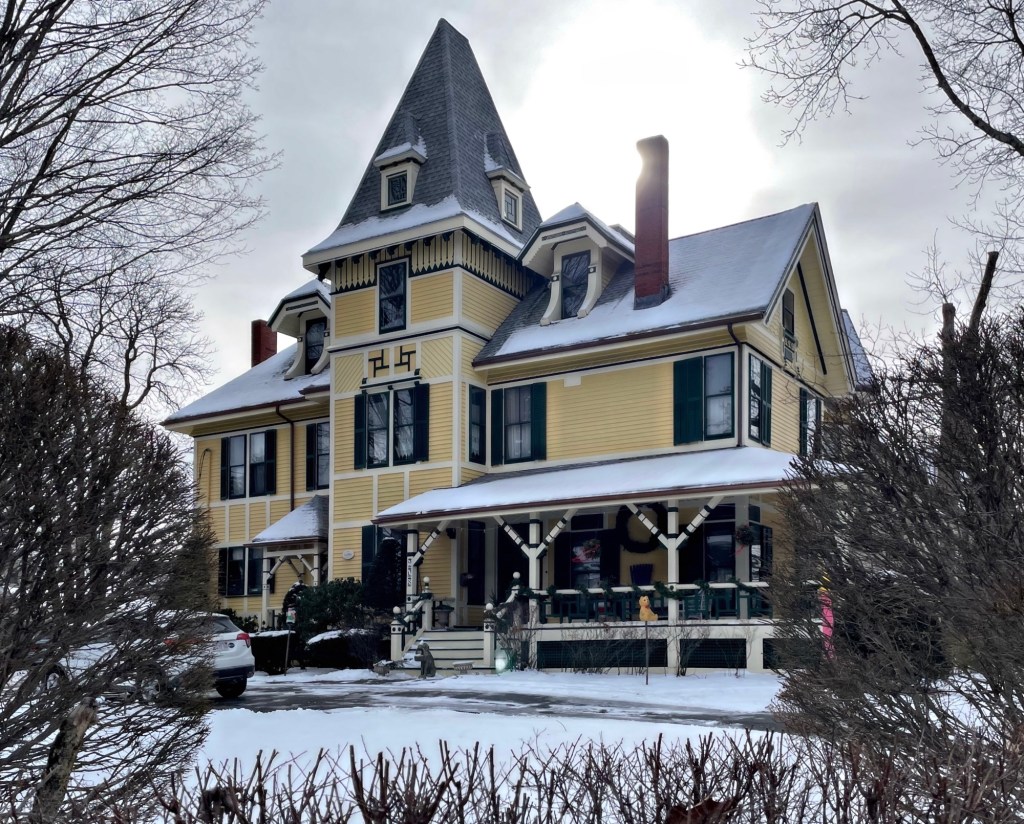
Leatherbee House // c.1870

Andrew F. Leatherbee (1842-1920), a wealthy lumber dealer in Boston, built this large Stick style victorian house in Newton Center around 1870, likely using his own lumber products! The large frame house is prominently sited on a corner lot on Beacon Street, a short walk to Crystal Lake, a natural pond in the center of town. I could not find information as to who the architect was, but it was likely a notable local firm. As Andrew got older, he downsized and relocated to a smaller apartment in Cambridge. Upon his death in 1920, the property was sold by his heirs to Mae Van Dusen. The house is a high-style example of the Stick style of architecture, with large half-timbers, heavy porch bracing, and a central tower with pyramidal roof. Swoon!!!

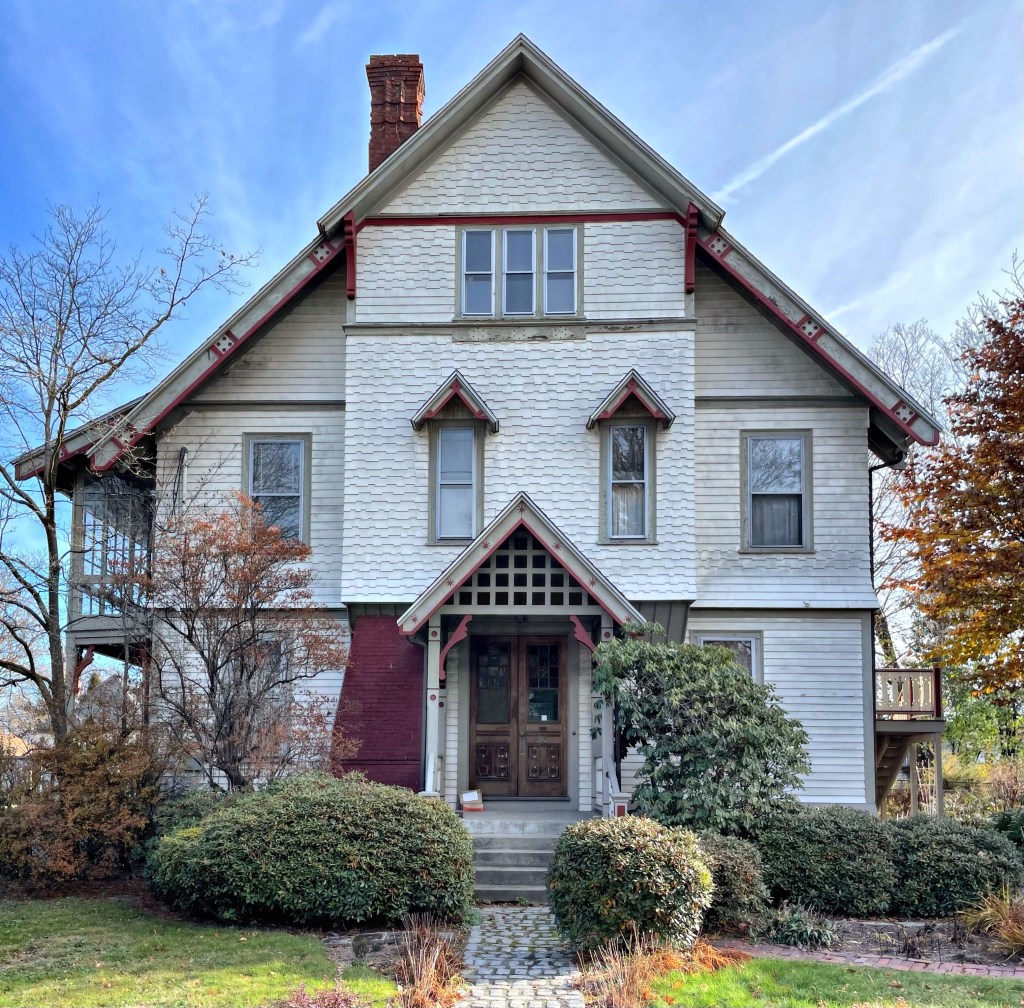
Wales House // 1883

Built in 1883 for a member of the Thomas Wales family, this house in Clam Point, Dorchester, possesses a compact essentially rectangular clapboard and wood shingle-clad form. The architect, John A. Fox, designed the main façade elegantly with an open Stick style porch projecting from the center of the first floor which is enclosed by a steeply-pitched roof. The pitch of the porch roof is echoed in the small and shallow gable-like lintels which are really unique to the area. The treatment makes the facade read somewhat like a face.

Deacon Robert Palmer House // 1884

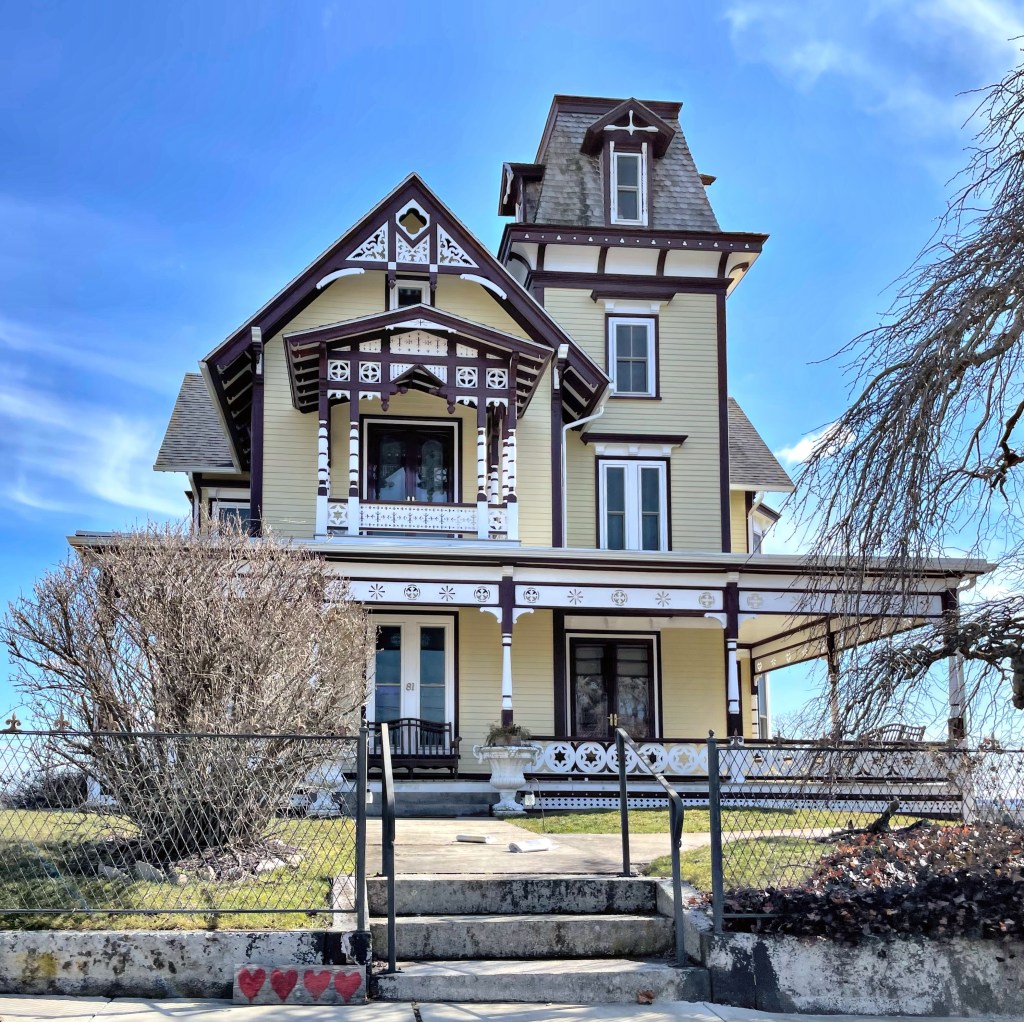
Perched on the highest hill in the coastal village of Noank, Connecticut, you will find this absolutely enchanting gingerbread Victorian mansion. The house was built in 1884 for Deacon Robert Palmer (1825-1913), a wealthy man who wasn’t only deacon of the village’s Baptist church, he was the owner of a flourishing shipyard, and it was his shipyard workers who built him, with loving care, a house he could be proud of! Robert ran the shipyard in town first with his brother, and then with his son. During the late nineteenth and early twentieth centuries the shipyard was the largest facility for building and repair of wooden vessels in southern New England, employing over 300 men. The yard specialized in building railroad car floats, schooner barges, and dump scows as well as fishing smacks. Robert Palmer and Son went out of business in 1914 with the passing of the Robert. The Stick style mansion with mansard roofed tower remained in the Palmer family until the early 2000s when it sold and was restored to her former glory. The residence features exposed rafters, a pagoda-like second story balcony, a frieze with geometric cut-outs, and a wrap-around porch which provides sweeping views of the ocean. I can only imagine how beautiful this old Victorian is on the inside!

Dimock Center – Cary Cottage // 1872

The New England Hospital for Women and Children (known today as the Dimock Community Health Center), is comprised of eight major buildings on a nine acre site located on a small hill in the Roxbury neighborhood of Boston, close to the border with Jamaica Plain. The complex is significant for its role in the history of women in medicine as both a teaching and a practicing hospital, as well as for its architecture. The facility was incorporated as the New England Hospital for Women and Children in 1863, almost five years before Roxbury was annexed to Boston. The Hospital was founded by Dr. Marie E. Zakrzewska together with Lucy Goddard and Edna Dow Cheney in order to provide women with medical care by competent physicians of their own sex and to educate women in the study and practice of medicine. As such, it was one of the first hospitals of its kind in America. The oldest building in the complex is the Cary Cottage, pictured here. The charming building was constructed in 1872 by the architecture firm of Cummings & Sears. The Cary Cottage served as the hospital’s original maternity cottage, and is also important as an almost intact example of Stick Style architecture. The building was intentionally detached from the general surgical facilities to minimize the dangers of infection during childbirth.

“Morningside” // 1872

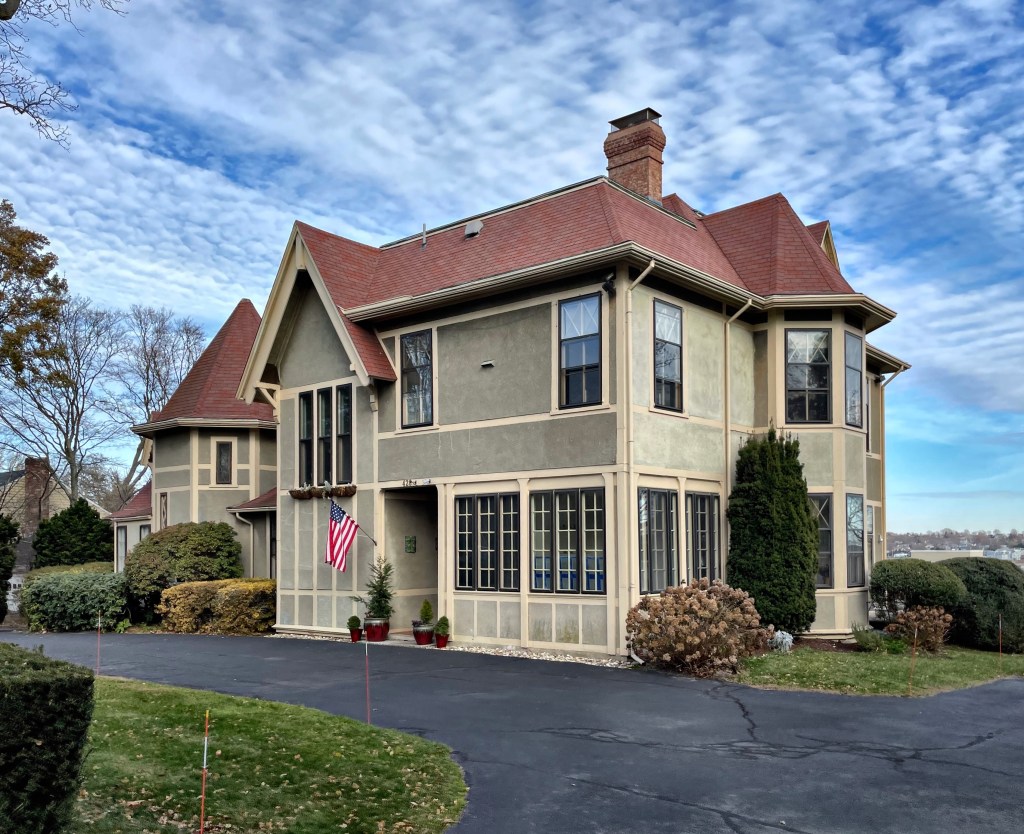
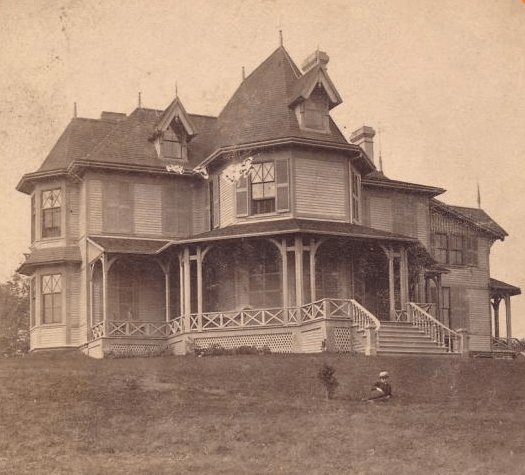
While many of the summer cottages in Newport retain much of their architectural and historical integrity, it is not always the case. This cottage, named “Morningside” barely resembles its original 1873 design. The summer home was built for William Barton Rogers (1804-1882), a scientist, educator, and best-known as founder of the Massachusetts Institute of Technology. He sought a place of rest and leisure, away from the stresses of Boston and running a new college, so he hired the Boston firm of Cabot & Chandler to design a Stick style cottage for him to spend the summer months at. In his diary for October 11, 1872, Mr. Rogers wrote, “Removed [from Cliff House Cottage] to our new home on Gibbs Avenue, at 4.30 o’clock. I have decided to name the place ‘Morningside.'” The house was his respite from stresses and he loved to spend time here with his family. President Rogers died after collapsing during a speech at MIT’s 1882 commencement exercises. His last words were “bituminous coal.” After the property sold out of the Rogers estate, the house was remodeled with stucco siding and much of the original Stick detailing was removed or covered. Morningside is now divided into condominiums.

Morningside c.1880s

The Anchorage Cottage // 1878

This charming Victorian cottage in Newport was built in 1878 for Henrietta and Dr. Stephen Cambreleng Powell as their summer cottage. The well-connected couple hired New Haven architect David R. Brown to design the residence, which is an excellent example of the Queen Anne and Stick/Eastlake architecture styles. David Brown, the architect, apprenticed under the famed Henry Austin for years in New Haven, Connecticut before becoming a partner of the firm. As any good summer cottage needs a fun name, the couple named their cottage “The Anchorage”. The cottage is now known as the Old Beach Inn, and is among Newports many charming old inns.

David Whiting House // c.1875

David Whiting (1810-1892) was one of the most prominent men in Wilton, NH in the 19th century. He was involved in local business and politics, eventually using his prominent land at a convergence on Main Street to erect the Whiting House, a large hotel. The building burned down in 1874, along with his other buildings nearby. He donated some of the land to the town, who built the present Town Hall, and he built a new home on another part of the site. This house was likely built for David Whiting as his own residence, shortly after the fire. The house was designed in the fashionable Stick style and represents the best in Victorian-era architecture.

“Rest Haven” – “Le Chalet” // 1870

Bellevue Avenue in Newport is best-known for its massive summer cottages, many of which are built of stone and look more like art museums than a house. “Rest Haven” is one of the most stunning summer cottages in Newport and can stand toe-to-toe with the later mansions which neighbor it. The Stick style cottage was built in 1870 as a spec. house for merchant and financier John N.A. Griswold, who had his own cottage farther up the street (last post). Similar to his own house, he hired world-renowned architect Richard Morris Hunt to design the house, which was to be sold soon after completion for a profit to Anna Gilbert of New York, a wealthy widow who wanted to keep up with high-society in Newport. Anna Gilbert’s son, Charles Pierrepont Gilbert, was a New York architect who trained at the Ecole des Beaux Arts in Paris. He and his wife, Clara, summered at Resthaven until 1916. The home was likely renamed “Le Chalet” by a subsequent owner. The cottage was altered over the years, but restored a number of years ago by Newport Collaborative Architects and Behan Bros, and looks stunning!