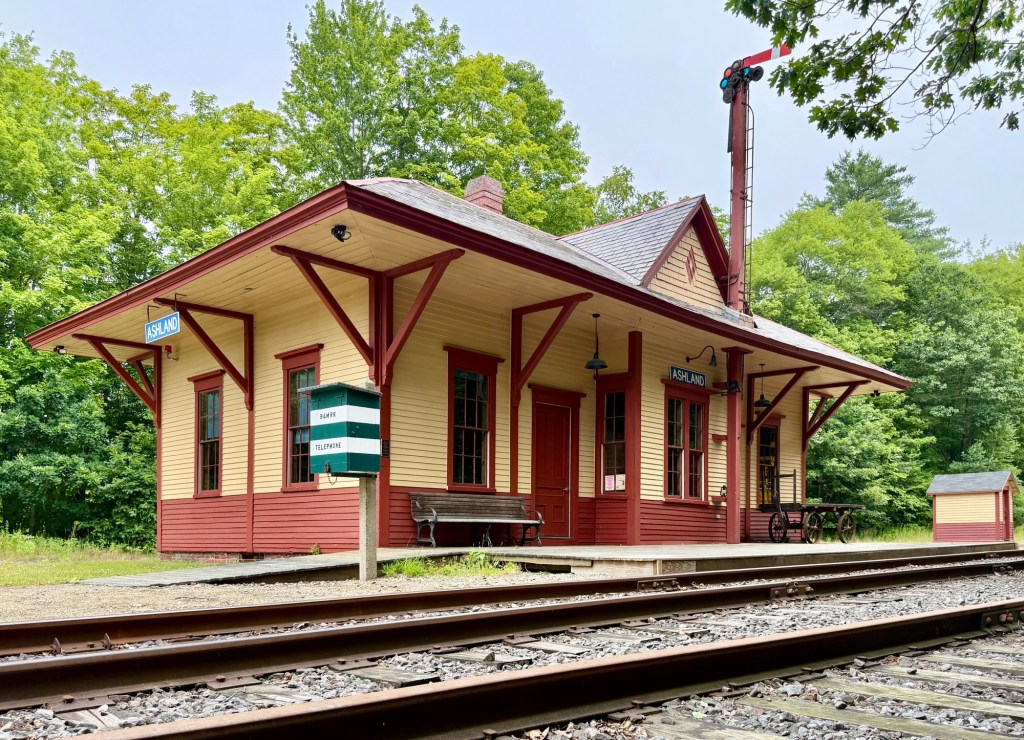
Ashland Railroad Station // 1869

The railroad arrived to Ashland, New Hampshire (then a part of Holderness) in 1849, which connected the industrial village to Concord for both freight and passenger service. The first Ashland Station opened as a combined passenger and freight station of the Boston, Concord & Montreal Railroad, which was chartered by the State of New Hampshire in 1844.  Construction of its initial 93-mile track through largely agricultural, rural, and mountainous territory began in 1846 and concluded in 1853, when the railroad reached its terminus in Wells River, Vermont. Over time, the railroad expanded and acquired branch railroads, connecting it to routes all over the northeast. As manufacturing flourished in Ashland, the town grew, which necessitated the demand for a larger passenger station for the railroad. Additionally, in 1869, the original freight and passenger station (built c.1850), was remodeled to handle increased freight. This passenger station was built in 1869 and resembles many other rural New England railroad stations of its period with its rectangular form and low hipped roof with extended eaves supported by brackets to shelter those waiting for the next train to arrive. In 1895, the Concord & Montreal came under the control of the Boston & Maine Railroad and it continued to serve many travelers as the gateway to the town and the popular Squam Lakes Region in summers. Regular passenger service at the Station ended in 1959, and the Boston & Maine Railroad sold the Station to Joseph Curley.  In 1980, his widow Vera Curley generously donated the station and site to the Ashland Historical Society, who oversaw a restoration of the building. Today, the building serves as a local history museum and serves as a stop along the Winnipesaukee Scenic Railroad on its popular Fall Foliage Tours.

Wayland Railroad Depot // 1881

The Wayland Railroad depot in Wayland, Massachusetts, was built in 1881 by the Massachusetts Central Railroad, which was later absorbed as part of the Boston and Maine Railroad. The line operated both passenger and freight service, with this structure serving as the passenger station and freight at the nearby structure, also built in 1881. Regular train service helped develop Wayland Center into a more prosperous Boston suburb, but industry and larger developments did not occur like in other communities. In its heyday, the Wayland station was manned by an agent with a small office in the building. The station agent was responsible for nearly all aspects of the operations from selling tickets; handling mail, baggage, and freight; keeping financial and operating records; and even maintaining the grounds. After WWII, car ownership and highway expansion harmed the rail industry and trains ceased to run in Wayland. To save the building from eventual demolition, the Town of Wayland purchased the old depots, which since the 1980s, has been leased to “The Wayland Depot“, a charitable women’s consignment craft shop with retail space in the station. The former rail line has largely been converted to a rail trail for pedestrians and bicyclists to traverse the old railroad right-of-way.

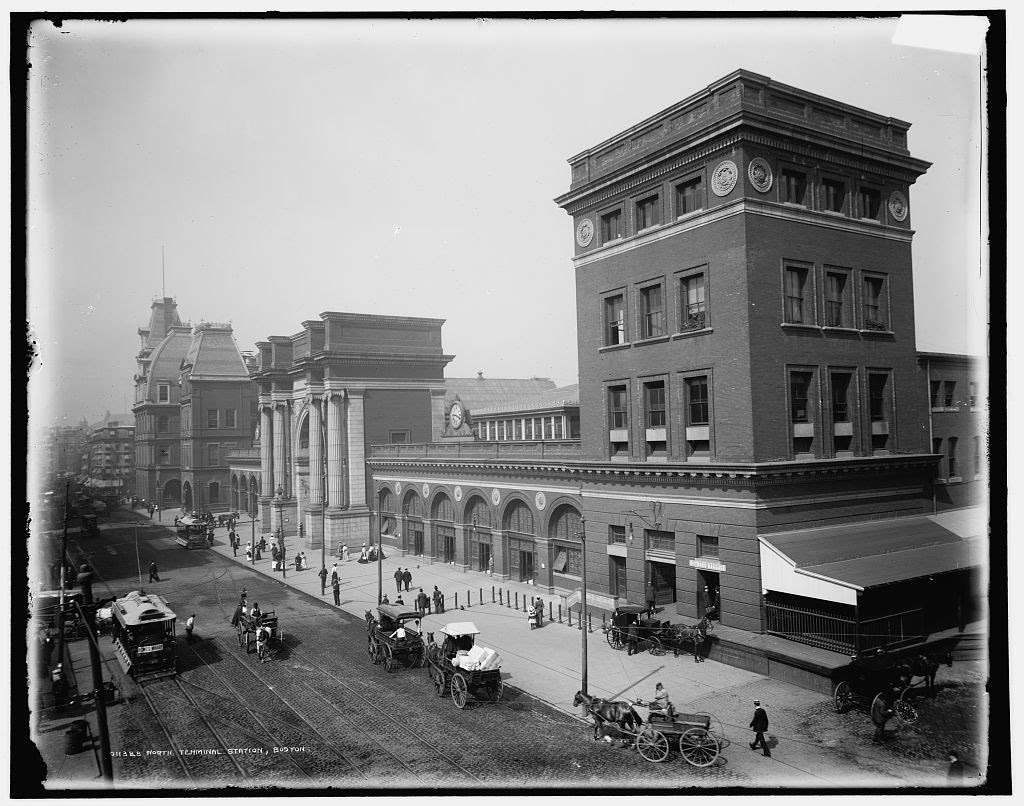
Old Boston North Union Station // 1893-1927

Photo courtesy of Library of Congress.

By the 1890s, many of the regional train lines in New England consolidated and as a result, union stations were built. All north-bound train lines including the Boston & Lowell and Boston & Maine railroads would consolidate into North Union Station with southbound trains consolidated into South Station. North Union Station, actually three adjoined buildings, was completed in 1893 and included the former Boston & Lowell Station, a Second Empire masterpiece which dated from 1873. The other sections of Union Station were designed by the firm, Shepley, Rutan & Coolidge, and comprised of an office tower at the rightmost section and a central building serving as the main entrance and concourse with waiting rooms and baggage holding. The central entrance exhibited an elaborate columned block of brick with stone trimmings. The station lasted until 1927 when the entire complex was razed for the new North Station (The Boston Garden), which itself was replaced. The demolition of the Old North Union Station was one of the biggest architectural losses in Boston’s history, a stain on its historical legacy only compounded by the sterile development we see there today.

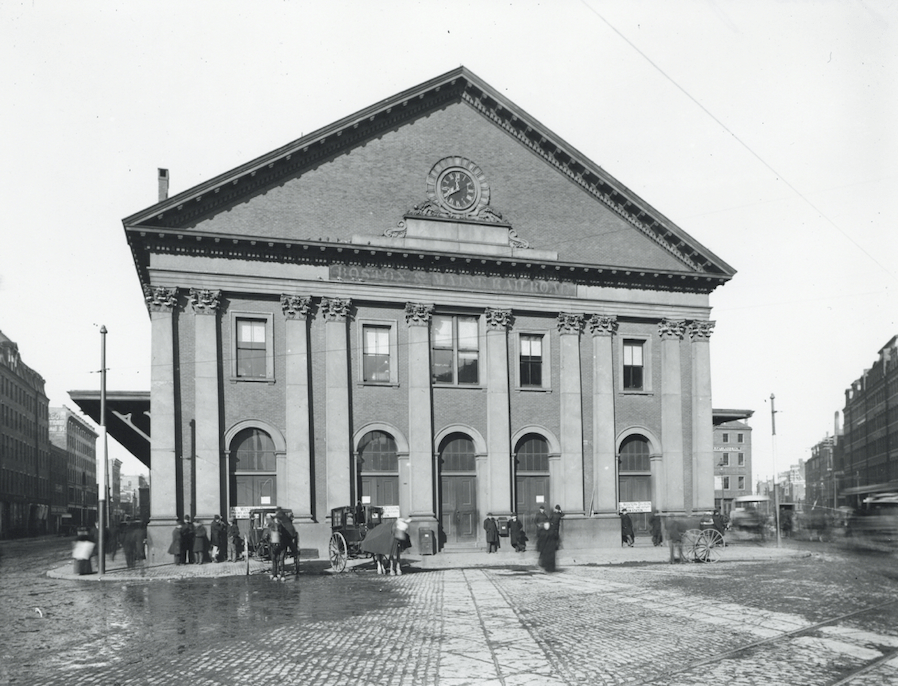
Former Boston & Maine Railroad Station // c.1845-1893

Photo courtesy of City of Boston Archives

The Boston & Maine Railroad opened in 1845, and over the years, became the dominant railroad in northern New England with many of its lines terminating at this station for a half-century until the original Union/North Station was built in 1893 consolidating many of these northbound lines under one roof. The Boston & Maine Station was located in Haymarket Square, southeast of the present North Station and the building was a landmark in the Greek Revival style. The brick building with monumental pilasters and pediment at the facade commanded the heavily trafficked site until it was demolished in 1893 when the lines relocated to the newly built Union Station on Causeway Street. The architect for the station was Richard Bond.