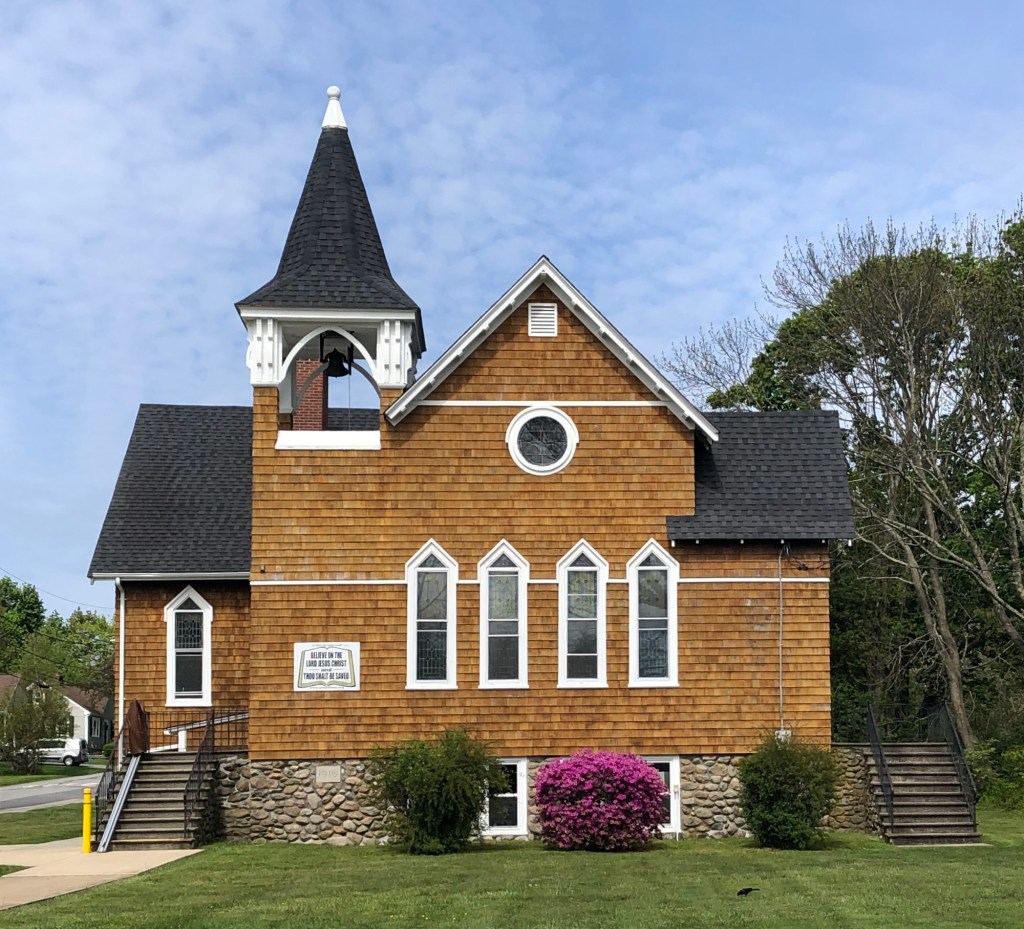
The South Swansea Union Church on Gardner’s Neck in Swansea, Massachusetts, is an excellent example of a seaside New England church that blends architectural styles in a unique composition. The church was built in 1916 years after development of the Neck began in earnest as a partnership between local congregations and the South Swansea Sunday School. The new church became a union church for multiple congregations to have a shared house of worship as well as a space for sunday school for area pupils. The building that features elements of Shingle and Neo-Gothic Revival styles, was built by William L. Hunt & Son and now houses the South Swansea Baptist Church.
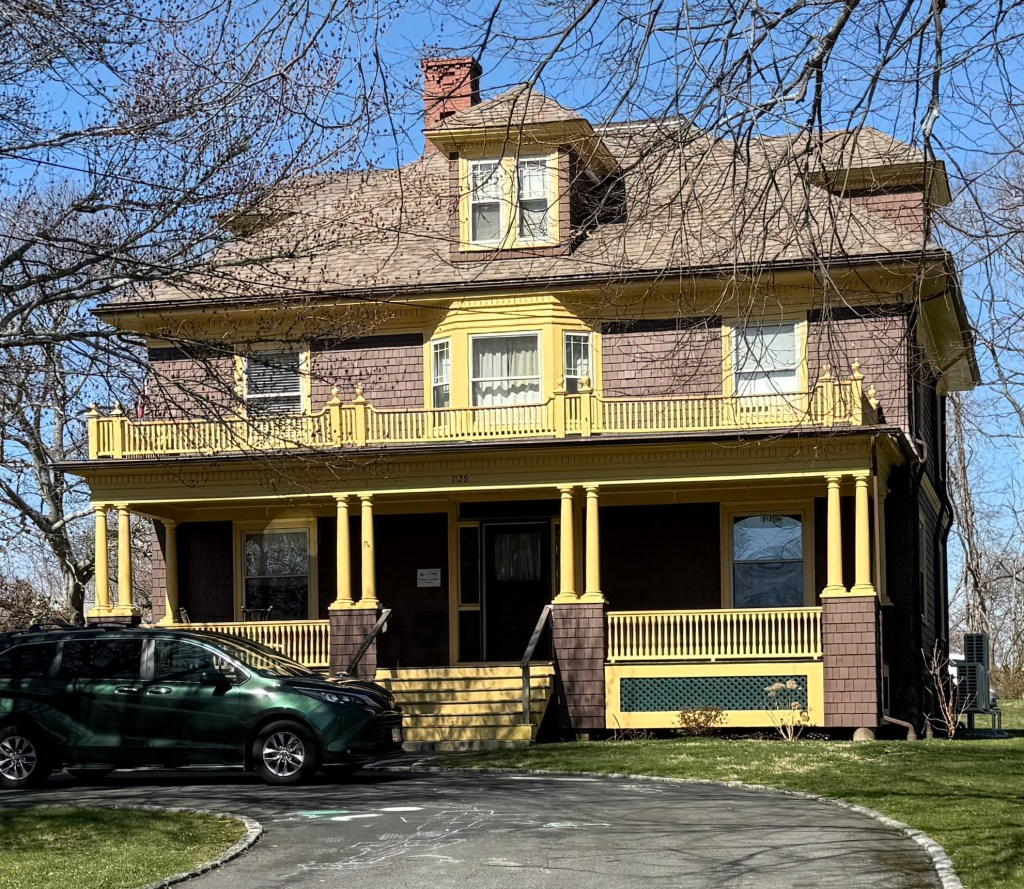
This house on Gardner’s Neck Road in Swansea, Massachusetts, was designed in 1903 by Fall River-based architect, Edward I. Marvell, for Francis L. Gardner, a descendant of the Gardners for whom Gardner’s Neck is named. Francis Gardner’s father, Leland, was a successful market gardner who farmed locally with the use of greenhouses, shipping fresh produce and other goods to Fall River and transportation to other nearby cities. This business continued under his sons, Francis and Chester until about 1925, when they began selling land on Gardner’s Neck for development. Francis’ house is an excellent early 20th century residence that blends multiple styles popular at the turn of the 20th century in a square form.
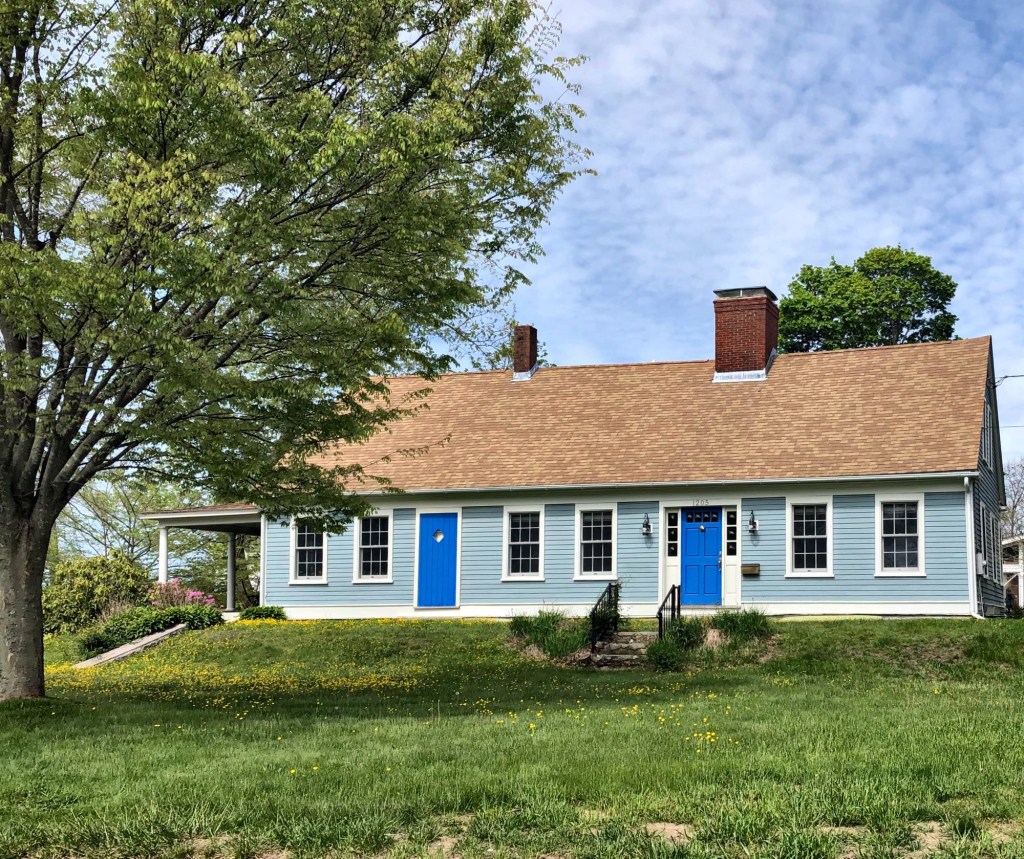
This elongated farmhouse on Gardner’s Neck in Swansea, Massachusetts, was built at the end of the 18th century for Hanna and Joseph Gardner, who had purchased his brother’s half of the land they inherited by their late father, Peleg. The house was one of a few farmhouses on the peninsula which became known as Gardner’s Neck as much of the land was owned and farmed by members of the Gardner Family. This c.1795 farmhouse began as a five-bay, center-entrance Federal cape house and was expanded in the 1870s by Fall River businessmen, William Almy and Andrew Jackson Borden. Yes, THAT Andrew J. Borden. The farmhouse was expanded to the south (left) with the addition of a second entrance and two bays by the business partners as a summer retreat. The Borden Family with daughter, Lizzie Borden, would spend summers here to escape the hot and polluted industrial city for cool coastal breezes until Andrew and his wife, Abby Borden, were brutally murdered by an ax in their Fall River home.
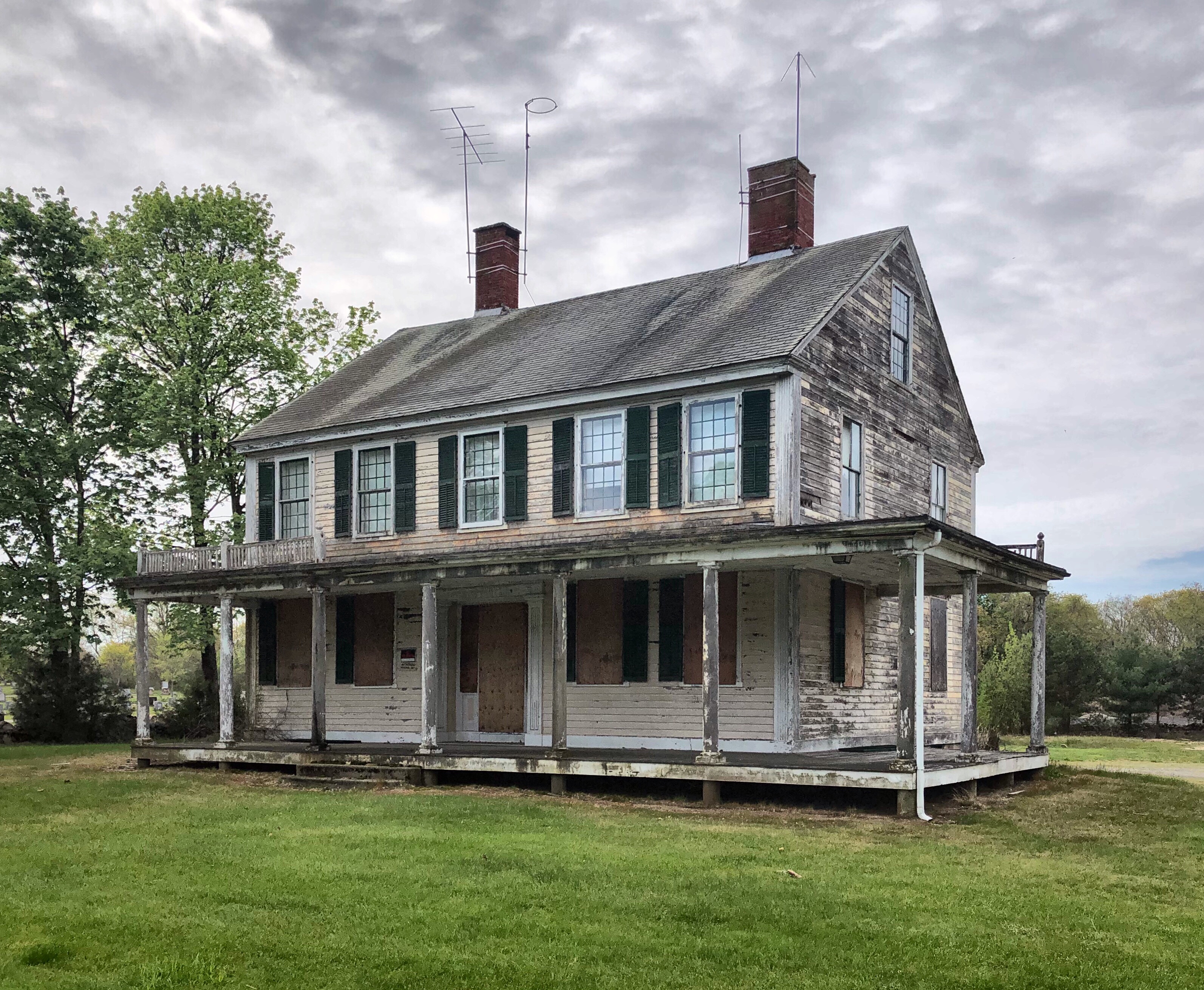
This old farmhouse in Swansea, MA, was built by 1820 for Preserved Gardner (1795-1873), one of five sons of Peleg Gardner, who owned much of Gardners Point. Preserved lived in the home until his death in 1873, and the home and acres of farmland were willed to his only son to live past childhood, Ira Gardner (1836-1901). Ira donated a large tract of land adjacent to the farmhouse to the town in 1882 for a cemetery, in which his father was buried. Later, the farm was purchased by Thomas D. Covel a bank president of Fall River who operated it as a gentleman’s farm and made the house his summer home. A ‘gentleman farmer‘ utilized their farms for pleasure rather than for sustenance or profit. After WWII, the land was purchased by the town to be used as a park and the property is still owned by the town. The Federal home with its veranda that wraps around the side has been neglected by the town for decades while the parks adjacent are maintained adequately.
The town has weighed various options for the home ranging from demolishing it, to preserving the front facade and converting it to a garage and storage shed (with a small museum on the second floor). I hate that idea personally. This seems like an ideal candidate for the town to allow a private individual or developer to move the home and restore it back to its original grandeur. Thoughts?