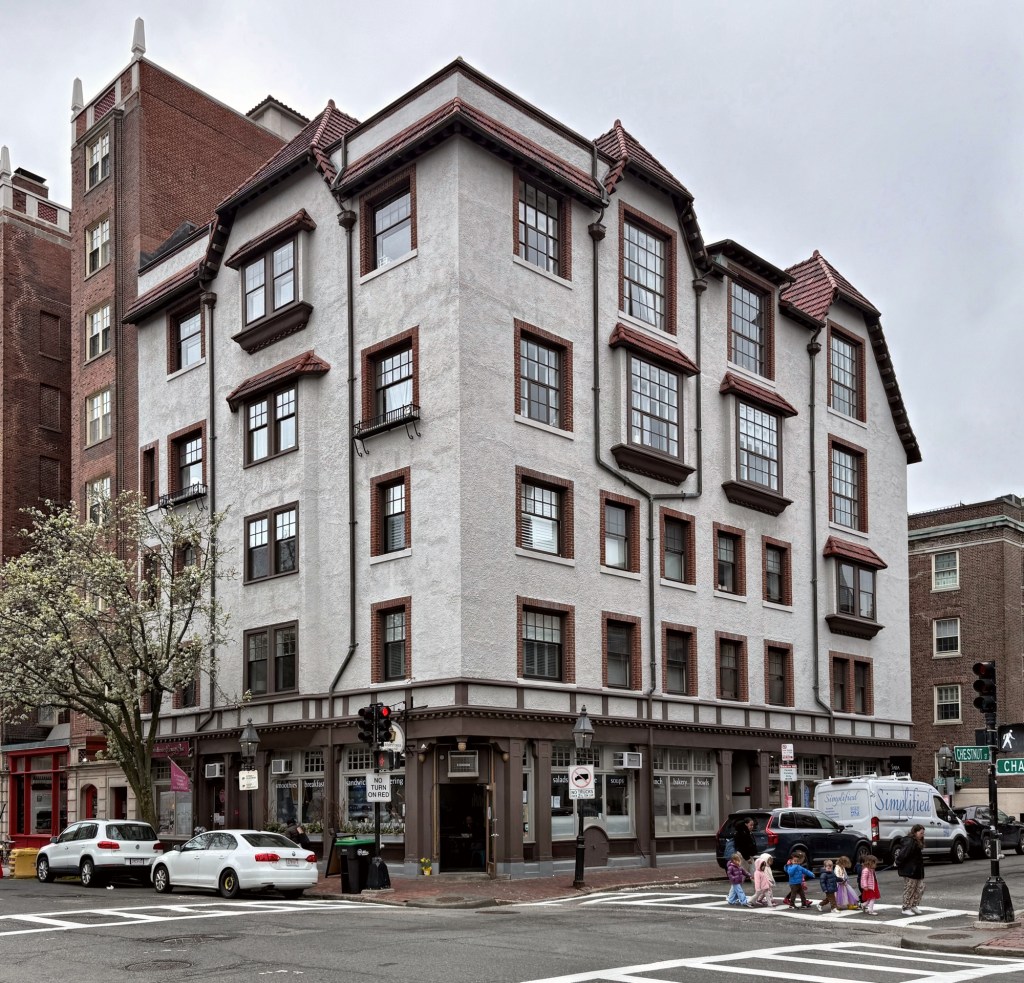
The Studio Building on Charles Street in Boston’s historic Beacon Hill, is a unique, Arts and Crafts style building constructed of brick with stucco walls and a red tile roof. Built in 1914 by William Coombs Codman, a real estate developer and member of the Beacon Hill Associates, a group of preservationists who bought and resold properties in the neighborhood with the aim to limit unsympathetic development. The group helped the Beacon Hill Flat area, which was a higher concentration of former stables west of Charles Street, a gentrified artist and residential enclave. Codman hired the young architectural firm of Loring & Leland, to design the Studio Building, which in its original configuration, contained three stores at the ground-level, two dwellings, offices and artist studios with oversized windows. Just years after the building was completed, Charles Street was widened in 1920, chopping ten feet off the facades of all buildings on the west side of Charles Street, including this building. Charles G. Loring was retained by Codman to oversee the renovations to the new facade and storefront, likely replicating what was once there. After 1920, the building was largely occupied by apartments for single women of means and remains one of the neighborhood’s most iconic and enchanting buildings.