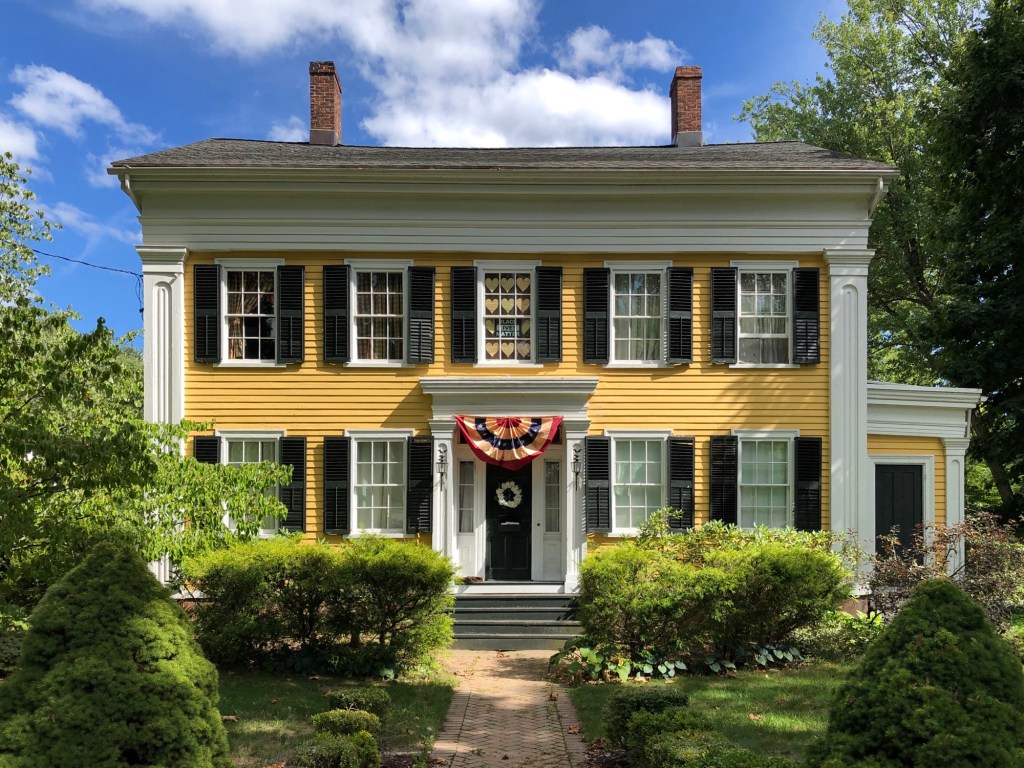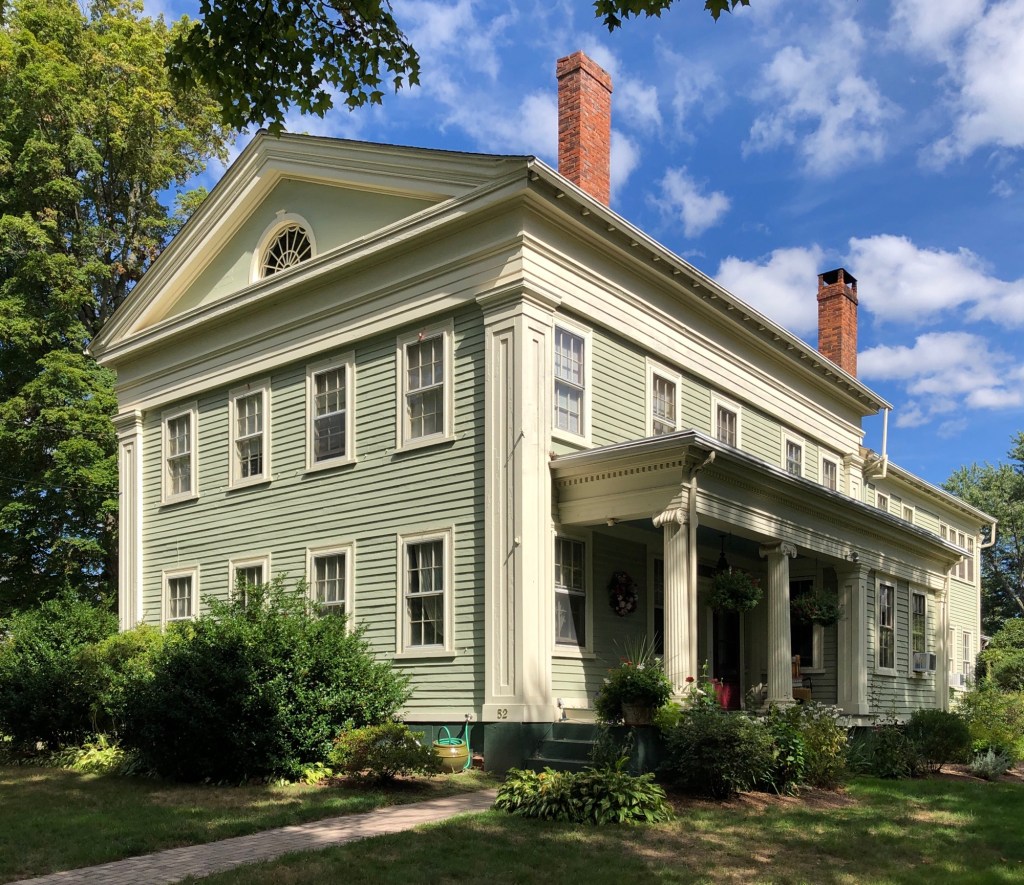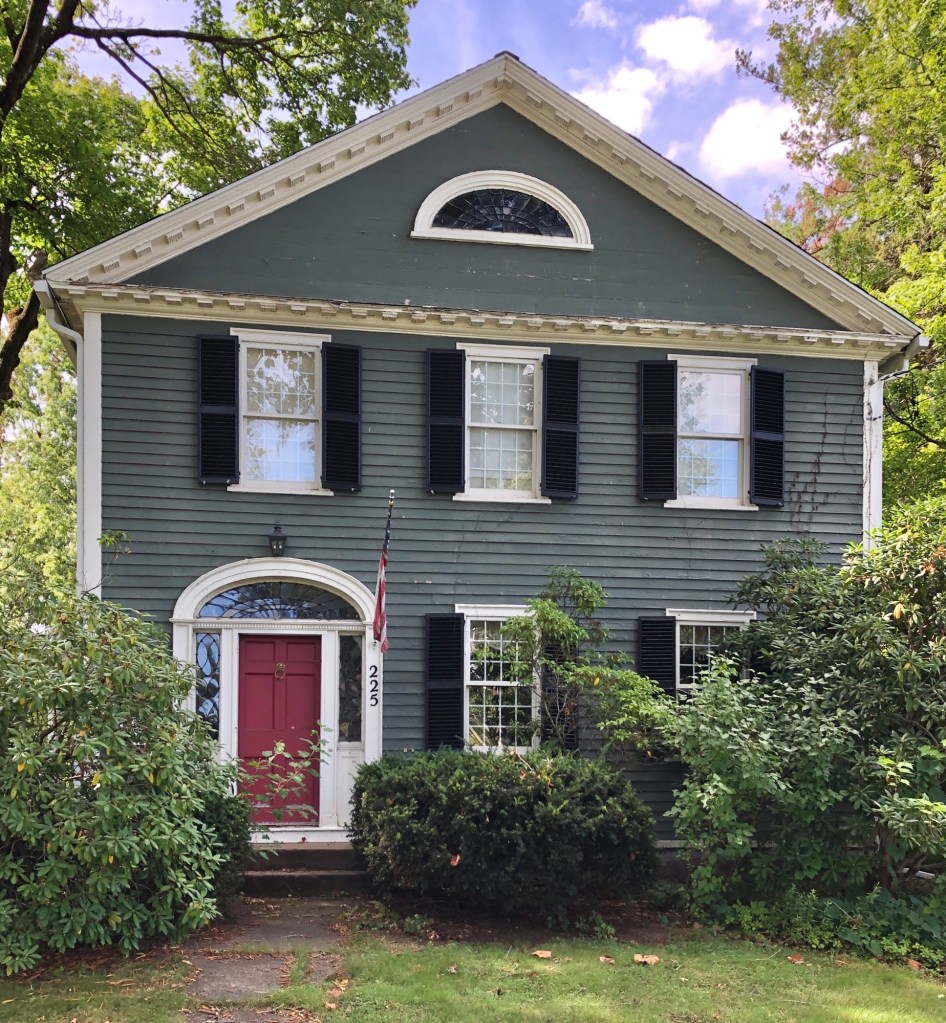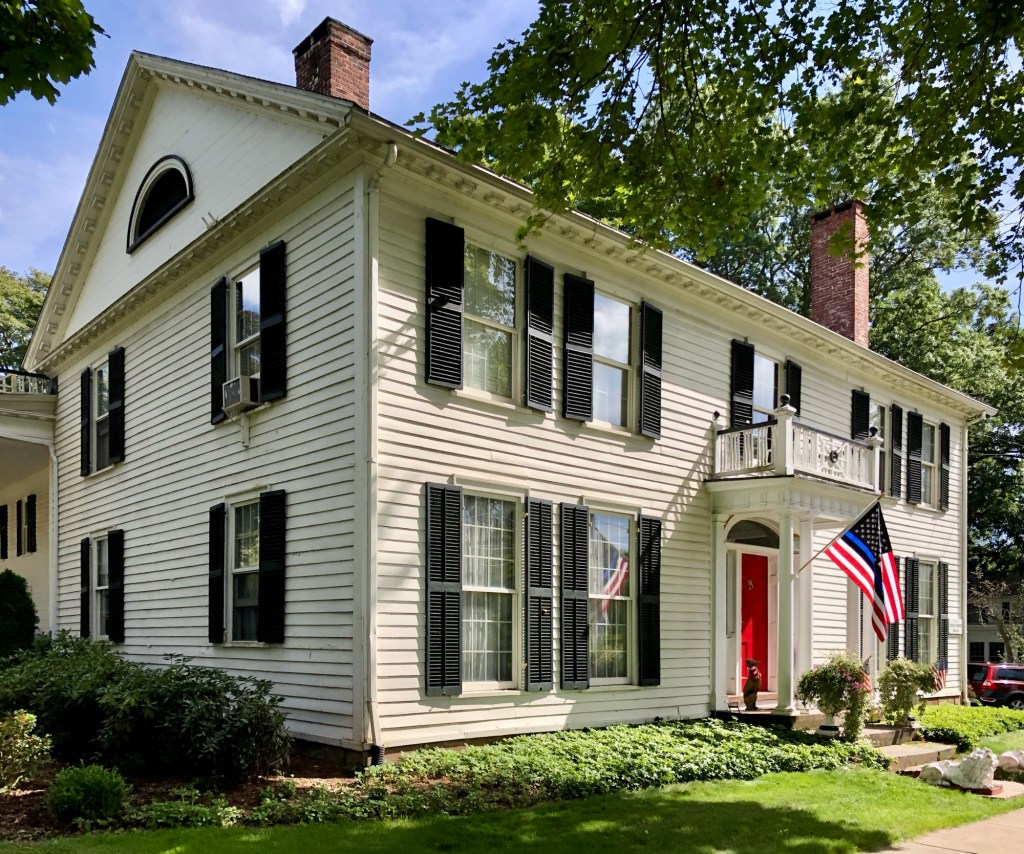
Former Lupoli Brothers Funeral Home – H. L. Hotchkiss House and Stable // 1841 & 1935

A rare example of the Art Deco architectural style in New Haven, the former Lupoli Brothers Funeral Home on Chapel Street in Wooster Square is more than meets the eye! This Art Deco jewel box was originally constructed in 1841 as a large, single family home and modernized nearly 100 years later in its current design. In 1841, Henry Lucas Hotchkiss (1810-1861), a businessman and president of the L. Candee Rubber Company, had a two-story Greek Revival style home built on this lot for his wife, Lucy. The home was originally two stories, but a third floor was added in the 1860s, around the time the rear stable (still extant) was constructed, for another owner. In the early 20th century, as the Wooster Square neighborhood became a center of Italian-American life and business in New Haven, the property was purchased by Liberato Lipoli (1862-1934) who moved to Connecticut from the Piedmont region of Italy. A year after their father’s death, sons Mario, Gennaro, Antonio and Louis Lupoli, established a funeral parlor catering to the local Italian American community. In 1935, the Lupoli Brothers hired local architect, Lester Julianelle to reimagine the former Hotchkiss House in a modern style. The result is the refaced building with Classical Revival and Art Deco elements including the iconic entry reading, “Lupoli Bros” in the iconic lettering. The Lupoli’s closed the parlor here in 2008 and the building was converted to eight condominium units.

Willis Bristol House // 1845

The Willis Bristol House on Chapel Street in the Wooster Square neighborhood of New Haven, Connecticut, is one of the finest and most architecturally distinctive residences in New England. Built in 1845 for Willis Bristol (1804-1875), a partner in the shoe manufacturer of Bristol & Hall, the home was designed by Connecticut architect, Henry Austin, who designed many of the other great mansions in Wooster Square around this period. The Bristol House is Italianate in style with Exotic Revival detailing which has often been described as Moorish Revival, but it is actually more Indian Revival, an extreme rarity in 19th century New England. It is believed that Henry Austin was influenced by an illustration of columns and capitals at the Ellora Caves in India published by Henry Repton in Designs for the Pavilion at Brighton (1808) and through this worked picked up a fascination with Indian architecture that was to influence his designs in the mid-19th century. Many of Austin’s designs in Wooster Square feature these Indianesque columns on their porches. The Willis Bristol House remained in the family until 1876 and was subsequently used as a congregation house, school, beauty parlor, and presently as apartments. The owners should be commended for preserving and protecting this ornate and unique residence for all to enjoy.

Henry Cowell House // c.1869

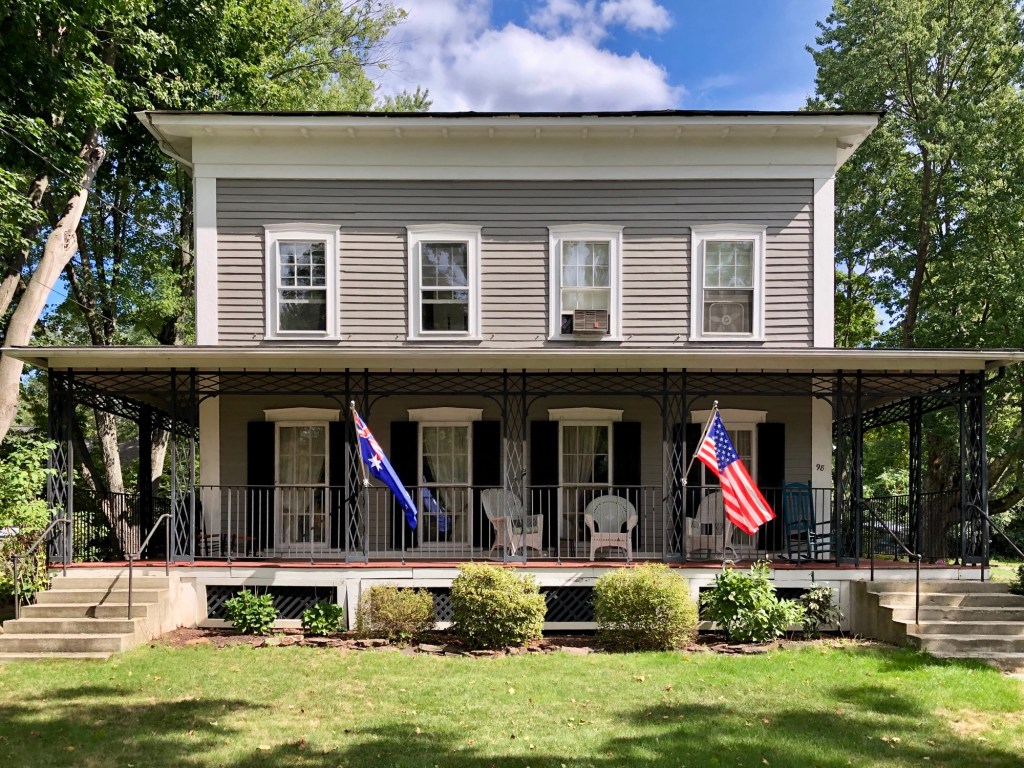
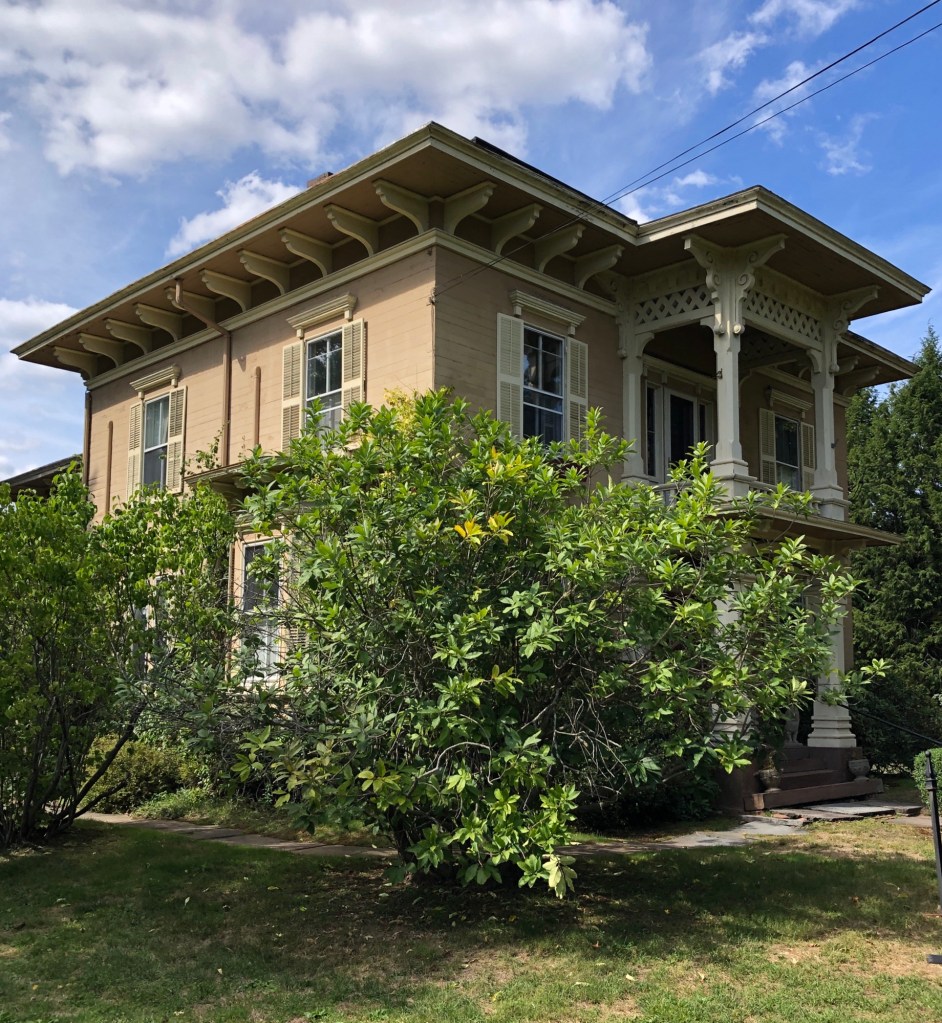
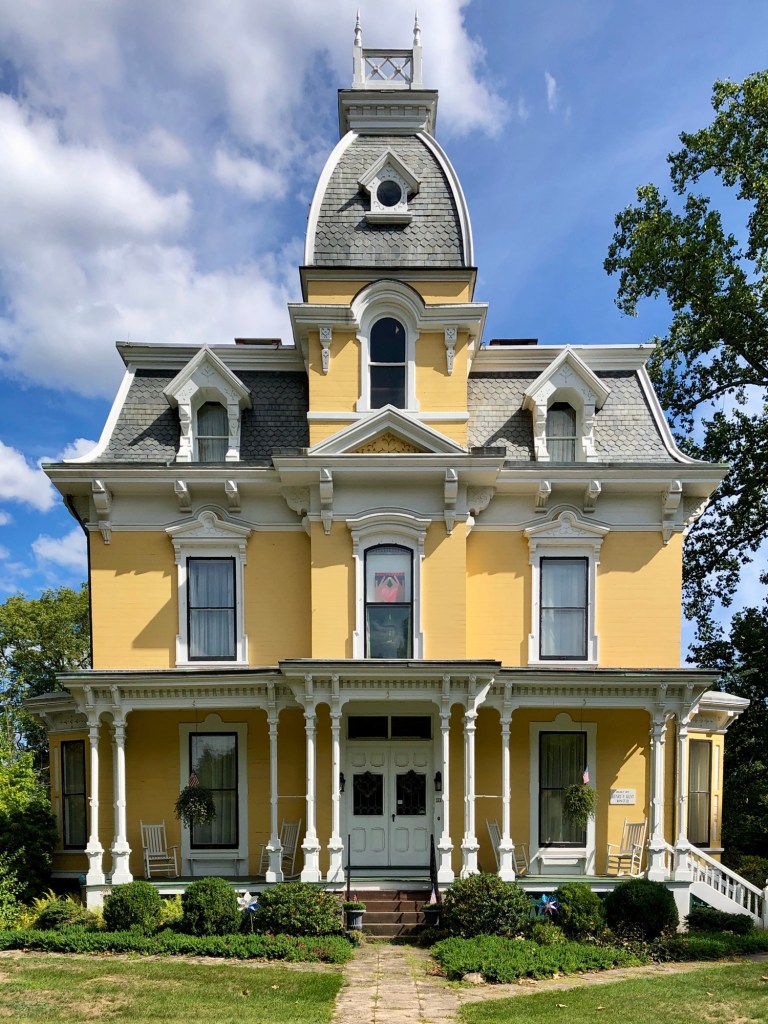
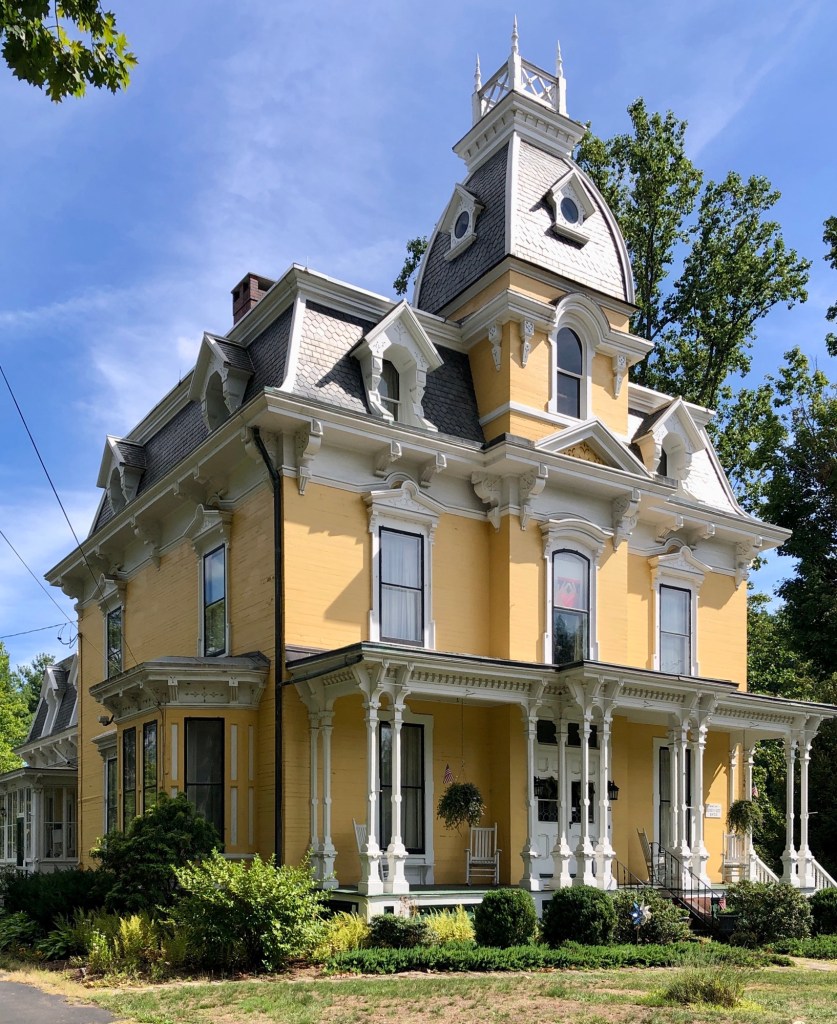
The Henry Cowell House, one of the great Italianate style residences in the Wooster Square neighborhood of New Haven, tells the story of the neighborhood from enclave of wealthy merchants and businessmen to vibrant immigrant area, to reborn middle-class neighborhood. The residence was built for Henry Cowell (1829-1904), a professional photographer and businessman who owned multiple properties in New Haven. The Cowell family, who lived in the house through the turn of the century, bequeathed it to a French order of nuns in 1912 who turned it into the St. Joseph’s Guest House, a residence affiliated with an area church. The Sisters of Holy Ghost managed the Cowell and neighboring Max Adler House, and constructed an addition between the structures to serve as a chapel and classrooms in 1929. The properties, which also served as housing for single women, were sold and converted into condos in the 1980s, with the current condo board taking great steps to preserve the significant buildings. The Henry Cowell House retains its boxy form with cupola at the roof, stucco walls scored to resemble ashlar masonry, and ornate entry porch.

Nelson Hotchkiss House // 1850

Nelson Hotchkiss was a New Haven lumber dealer and developer in the Wooster Square district and had this stately home on Chapel Street built for his family. While the architect is not confirmed, it is probable that the residence (along with neighboring homes also developed by Hotchkiss) was the work of Henry Austin, who partnered with Hotchkiss on developments in New Haven and Trenton, New Jersey. The Nelson Hotchkiss House was built in 1850 and is an excellent example of Italianate style with boxy form, broad overhanging eaves, brick walls covered with stucco and Austin’s signature Greek Doric columns with fluted shafts and foliate capitals. The house maintains a window hood over the upper floor window with delicate carved wood bargeboard.

Phebe Wallace House // 1854

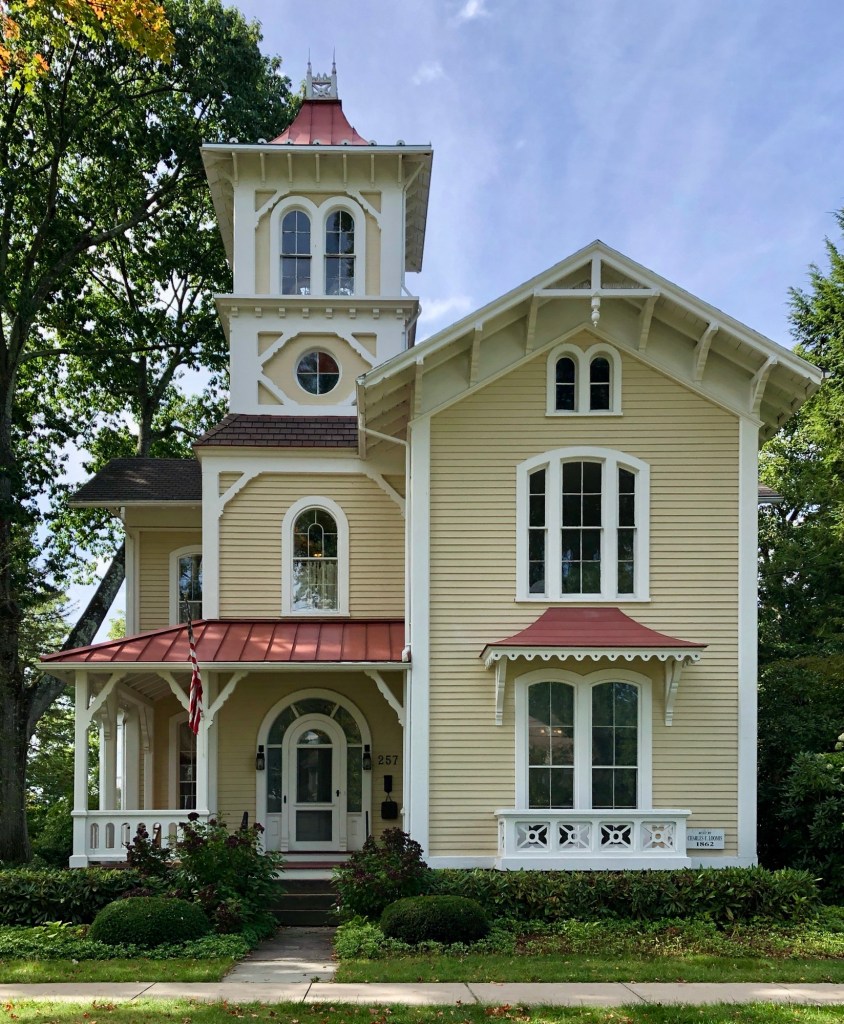
The Phebe Wallace House on Greene Street in New Haven, Connecticut, at first glance, may appear as a typical mid-19th century house, but some of the architectural features and details make it stand out! The residence was built in 1854 for Phebe Barney Wallace (1792-1872), a widow of William B. Wallace who died decades earlier. Phebe lived here with her daughter, also named Phebe, and a servant. The house exhibits a traditional Greek Revival form with gable roof oriented towards the street, with an off-center entry with Ionic portico, but the massive overhanging eaves without brackets with paired arched windows in the gable and balcony off the side of the house showcase the emerging Victorian influence in American residential architecture.

Elliott-Russo House // c.1835

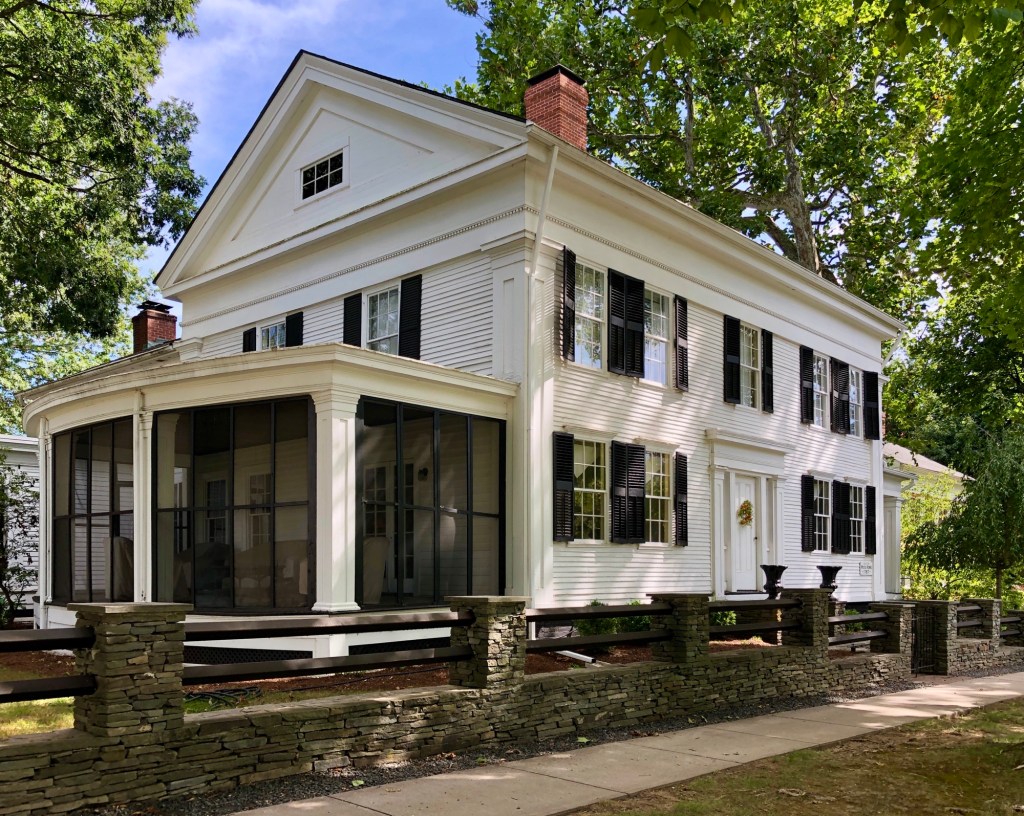
Located at the corner of Wooster Place and Chapel Street in the iconic Wooster Square neighborhood of New Haven, this early Greek Revival style house is a physical landmark showcasing the evolution of the neighborhood in the 19th and 20th centuries. The residence was built around 1835 either for or purchased early on by Matthew Griswold Elliott (1805-1892), a businessman who later engaged in politics and became Vice President of the New Haven Savings Bank and a director of the New York and Hartford Railroad. In 1890, the property was purchased by Paulo “Paul” Russo, an Italian immigrant who was born in 1859, in Viggiano, Italy. His family moved to New York in 1869 and then New Haven in 1872. Paulo opened a small market in New Haven which became the first Italian-owned business in the state of Connecticut. In 1893, Russo became the first Italian to graduate from Yale Law School and he helped foster and grow the local Italian-American community around Wooster Square. After Paul Russo, Michael D’Onofrio, also of Italian descent, purchased the home and along with his wife, brothers, and friends, D’Onofrio transformed the building into a funeral home for over a decade before the house was converted to condominiums. The Elliott-Russo House is a landmark example of a hipped-roof, Greek Revival style residence with smooth flushboard siding, pilasters dividing the bays, and unique Greek meander motifs in the window lintels.

Ye Olde Manse of Willington // c.1728

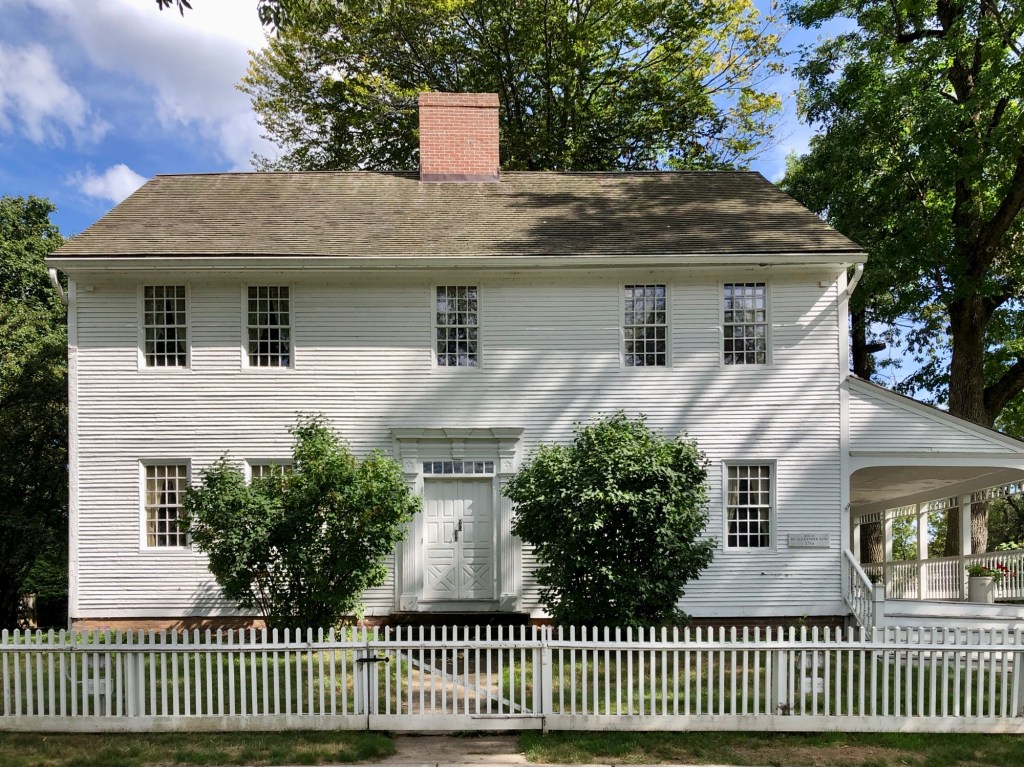
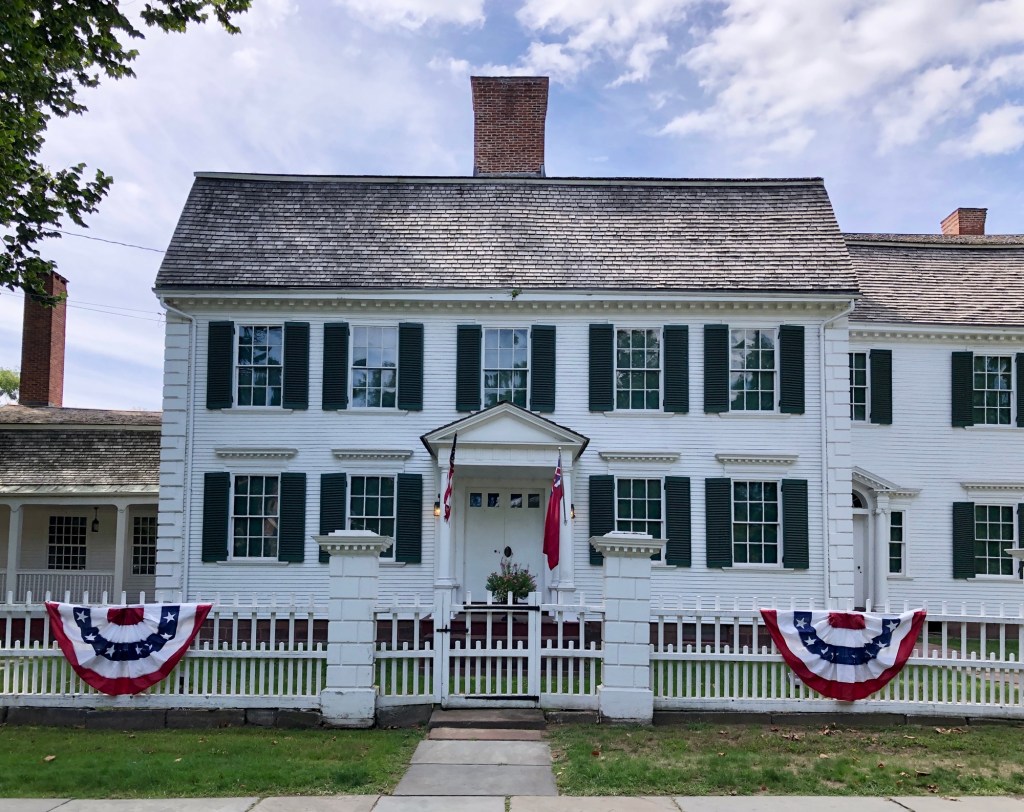
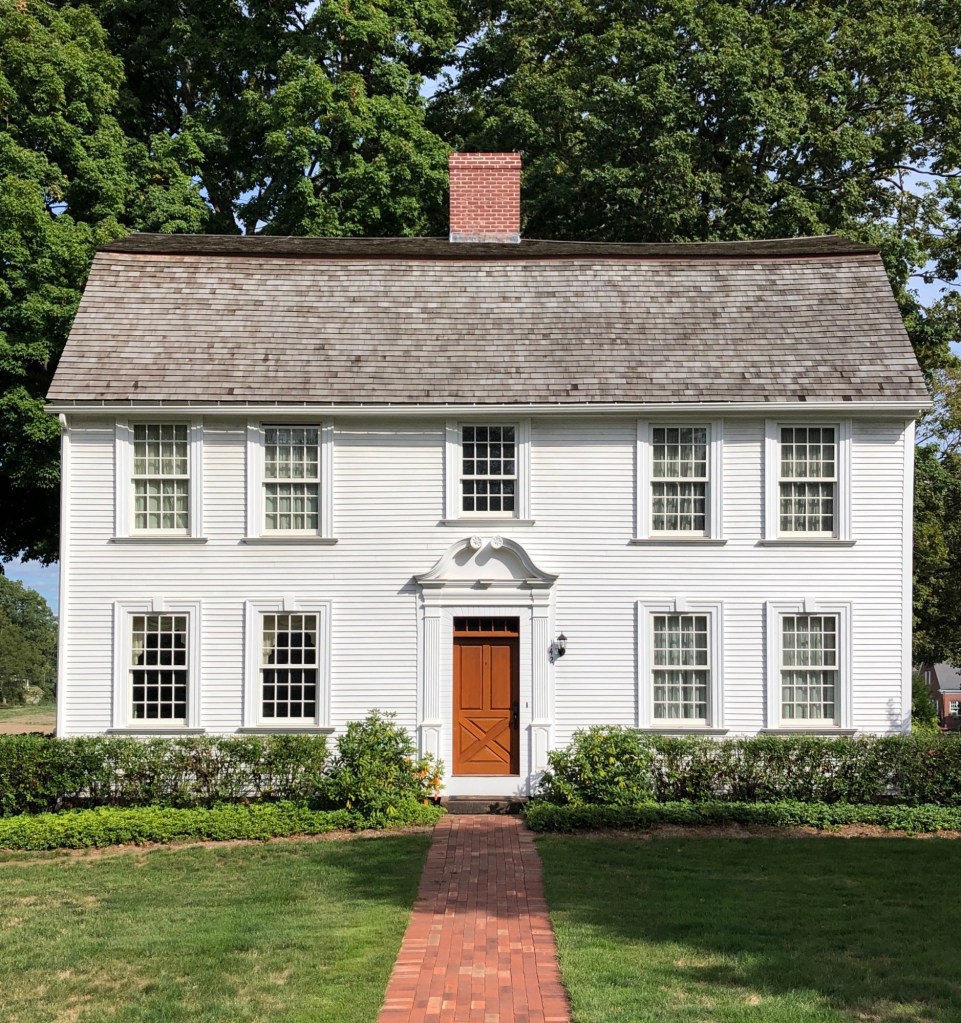
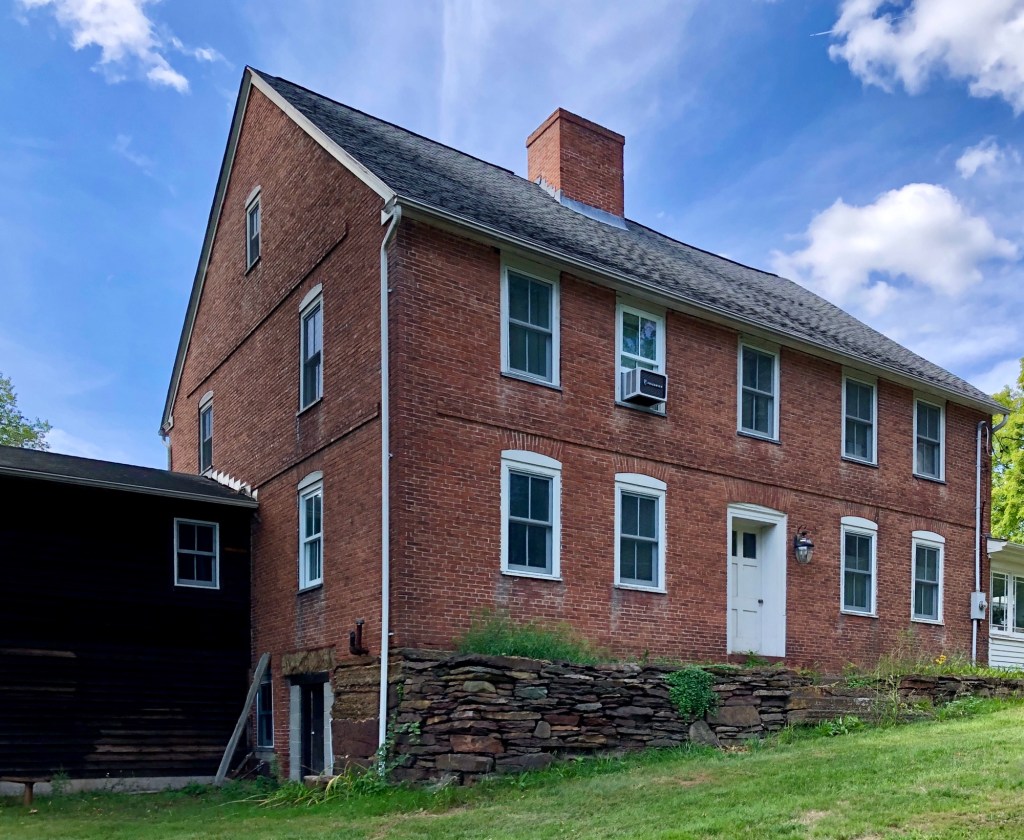
Known locally as the ‘Ye Olde Manse‘, this stunning Georgian cape house is located at the eastern edge of the town green in Willington, Connecticut. Thought to be the oldest extant house in the small, rural community, the gambrel-roofed homestead was possibly built by John Watson of Hartford, who was thought to have been an original proprietor of Willington, but was instead an assignee of George Clark who was. In the 19th century, the homestead operated as the congregational church parsonage. Today, the Georgian cape house with gambrel and saltbox roof is a single family home and has been lovingly preserved by centuries of stewards of this old manse.

William H. Hall House // 1896

Located between his family factory and the memorial church built for his late sister, the William H. Hall House in South Willington, Connecticut, is among the community’s finest Victorian residences built for a wealthy industrialist. William Henry Hall (1867-1922) was the son of industrialist Gardiner Hall Jr., who established the business under his name, which manufactured thread and spools, hiring hundreds of employees. After the death of his father, William Hall became the head of the company, but clearly was successful long before this as he had this stately Queen Anne style mansion built in 1896. Beyond his work at his family’s business, William H. Hall served in the Connecticut House of Representatives in 1893–1897 and again in 1905, 1909, and 1911, and he was generous with his money throughout his life and in his will. Hall served on the board of trustees of his alma mater, Wesleyan University, from 1912 until his death, with his estate donating $175,000 to Wesleyan to construct a chemical laboratory named in his honor. Closer to his home, his heirs partially funded the the Hall Memorial School in South Willington in his honor. The property remained in the family after his death, and in the 1980s, it became an assisted living facility, with large additions constructed, but the Hall House remains a great architectural landmark for the mill village.

Villa Bella Vista // 1908

Villa Bella Vista in Chester, Connecticut, stands as a striking and deeply personal interpretation of an Italian Villa, designed not by a professional architect, but by its remarkable owner, Eila Pierre. Known even among friends as Madame Pierre, she was a turn-of-the-century feminist of independent means who defied convention at nearly every turn. Drawing inspiration from the indigenous farmhouse architecture of northern Italy, Pierre personally designed the well-preserved stuccoed stone house, which was later constructed by local Italian immigrant masons who settled in Chester. Born Ila Rowland Stone (1870–1931), she was newly married to Reverend Dwight Stone, a Yale-educated minister of the town’s Congregational Church. Within just two years of marriage, it unraveled. Reverend Stone resigned his post, and by 1906, the couple’s uncontested divorce, scandalous for the time, was finalized. Casting off both marriage and social expectations, Ila reinvented herself as Eila Pierre. Despite the scandalous divorce and cheating rumors, she chose to remain in Chester and build a summer home that reflected her independence and worldview. Plans for Bella Vista were underway as early as 1904, when she purchased land on Old Depot Road. To prepare for the design, Pierre embarked on an extended tour of northern Italy, studying villas firsthand and bringing along a young local stone mason, Martin Lanzi, who later built his home across from Madame Pierre’s mansion. Villa Bella Vista, completed in 1908, includes common architectural details in the Italian Villa style with the campanile, or tower, the colonnaded piazza, and stone masonry that define the Latin prototype, all unique to Connecticut, which makes this home so special.

Mitchell-Pratt House // 1820

This architecturally unique and stunning Federal­ style house in Chester, Connecticut, was built in 1820 on the Middlesex Turnpike by Abram Mitchell for $10,000, double what he originally hoped to pay for the residence. The principal builder was Samuel Silliman, a locally well-known master carver, who clearly showcased his skill inside and out, much of which has been preserved by two centuries of owners. In 1845, the property was purchased by George Spencer, and presented as a wedding gift for his daughter, Julia, who married Dr. Ambrose Pratt (1814-1891). Dr. Pratt became well-known for his practice of hydropathology and temporarily used his house as a sanitarium known as the Chester Water Cure. The house was acquired by the local Roman Catholic Church and became the parish center until the residence was purchased and moved away from the busy street to its current location in 1966. In the 1980s, the house was purchased by famed artist, Sol Lewitt. The house has a large spider web window, still containing the original glass over the door and full-height pilasters dividing bays and inside, many stunning carved mantles and woodwork.

Jonathan Warner House // 1798

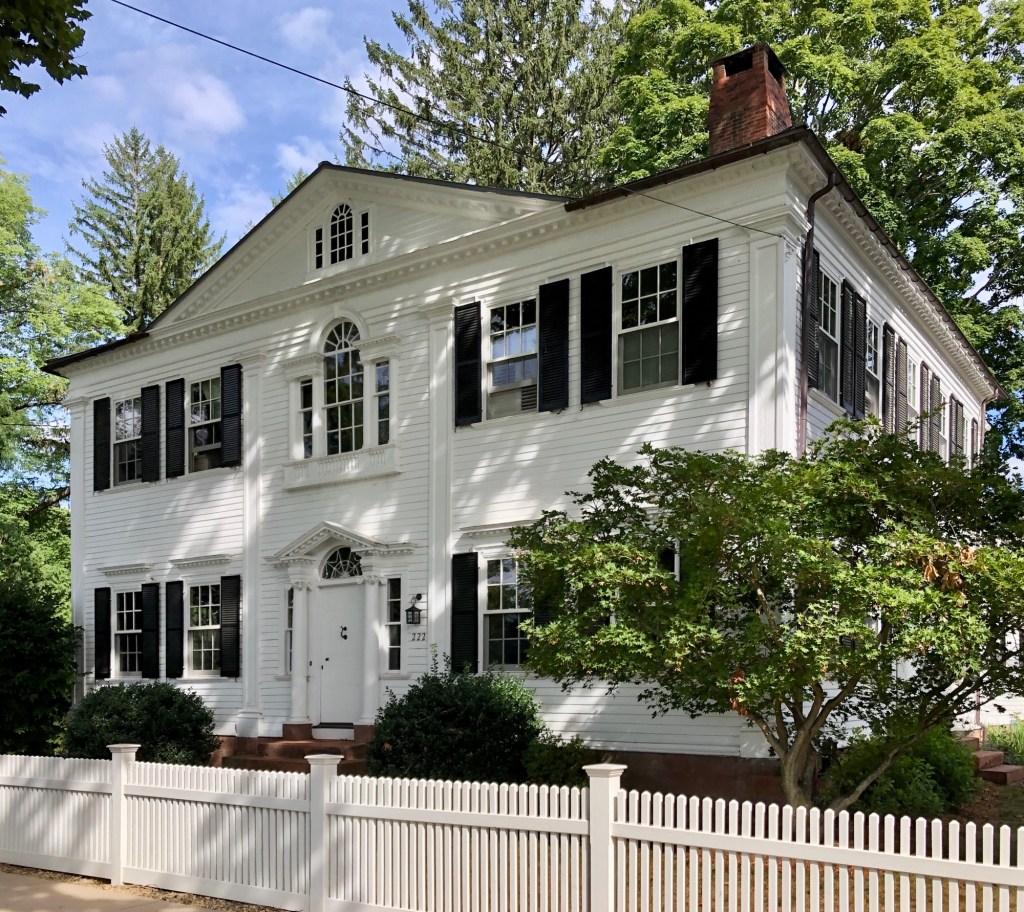
The Jonathan Warner House in Chester, Connecticut, is one of the finest Federal style houses in the state and has been meticulously preserved for over two centuries. The house was built in 1798 by Jonathan Warner (1756-1828), a wealthy farmer who invested in merchant shipping ventures and also operated the nearby Chester–Hadlyme ferry transporting people across the Connecticut River for a fee. When he built his house Jonathan Warner used local workmen and timber, importing glass and paint from New York, wallpaper from Hartford, and stone and hardware were brought from Connecticut and New York. The farmhouse remained in the Warner family until 1922 when it was purchased by Malcolm Brooks, who retained all of the receipts and correspondence on the house’s construction and maintenance. Architecturally, the house stands out for its proportions and detailing, specifically at the front door with fanlight and sidelights, which are framed by fluted pilasters, pediment and dentil molding. There is a Palladian-esque window above the entry which is framed by two free standing Ionic columns on brownstone pedestals. What is your favorite detail of this house?

Gilbert-Zanardi House // 1830

This unique Greek Revival style house is located on North Main Street in Chester, Connecticut, and was built around 1830 for John Gilbert. Johnʼs sister (Abby Gilbert Daniels) lived in a Greek Revival house on Liberty Street that had been built a few years earlier and was said to have been designed by Ithiel Town, a renowned Connecticut architect who specialized in Greek Revival style designs. It is thought that Town may also be the architect of John Gilbert’s residence seen here. The temple-front facade of the residence sits on a raised basement with the side-hall entrance and full-height hung windows on the facade sheltered under a portico supported by four square Doric columns. In the early 20th century, the property was purchased by Antonio Zanardi, who immigrated to Chester from Italy and worked as a watchman in a local factory. Antonio and his wife, Claudina, had a large family and expanded the house with a side wing in the early 1900s, also adding greenhouses and growing grapes on the terraced rear yard.


Dunk Homestead // c.1672

The oldest building in Chester, Connecticut, is believed to be this First Period residence on North Main Street, which was originally built sometime after 1672, when land here was deeded to Thomas Dunk (1648-1683). The property was inherited by various members of the Dunk family, including Deacon Jonathan Dunk (1711-1781), who added onto what was originally a one-room, gambrel-roofed house as their families and wealth grew. The old Dunk Homestead is one of the many great landmarks in Chester and has been lovingly preserved for over 350 years!

Chester House Hotel // c.1840

This altered building in the center of Chester Connecticut’s village Main Street, has historically been known as the Chester House, a hotel and tavern to provide lodging and drinks to travelers passing through the area in the mid-late 19th century. The structure, built atop a raised stone foundation, was constructed in the Greek Revival style around 1840, and long had a sheltered two-story portico supported by four monumental columns under a gabled roof which resembled a pediment. In 1903, a fire destroyed the upper floor and the roof was removed, creating a flat roof design. Later in the 20th century, a shallow side gable roof replaced the flat roof and the columns on the facade were also removed, giving the building the appearance we see today. The hotel closed, but the historic structure remains an anchor to the town’s vibrant commercial center, and houses a local business.

Charles Daniels House // c.1826

The Charles Daniels House in Chester, Connecticut, is a sophisticated and excellently proportioned and designed example of a single-family residence in the Greek Revival style. Features like the Doric portico, flushboarding and frieze windows are components of a skillful design that has been credited to architect Ithiel Town, but this is unsubstantiated. The home was built around 1826 for Charles Daniels (1799-1838), a gimlet manufacturer, who had his factory nearby. Charles died in 1838, and the property was inherited by his second wife, Abby Gilbert, who also remarried and lived here with her new husband, Clark N. Smith, and they resided here until the early 1900s. Later, the residence was owned by the adjacent mill company, and used temporarily as a storage facility. The location adjacent to the deteriorating factory threatened the significant Daniels House, so in 1978, architect Thomas A. Norton had the house moved a short distance away onto the present site. The house was listed in the National Register of Historic Places and has been preserved, inside and out, by later owners.