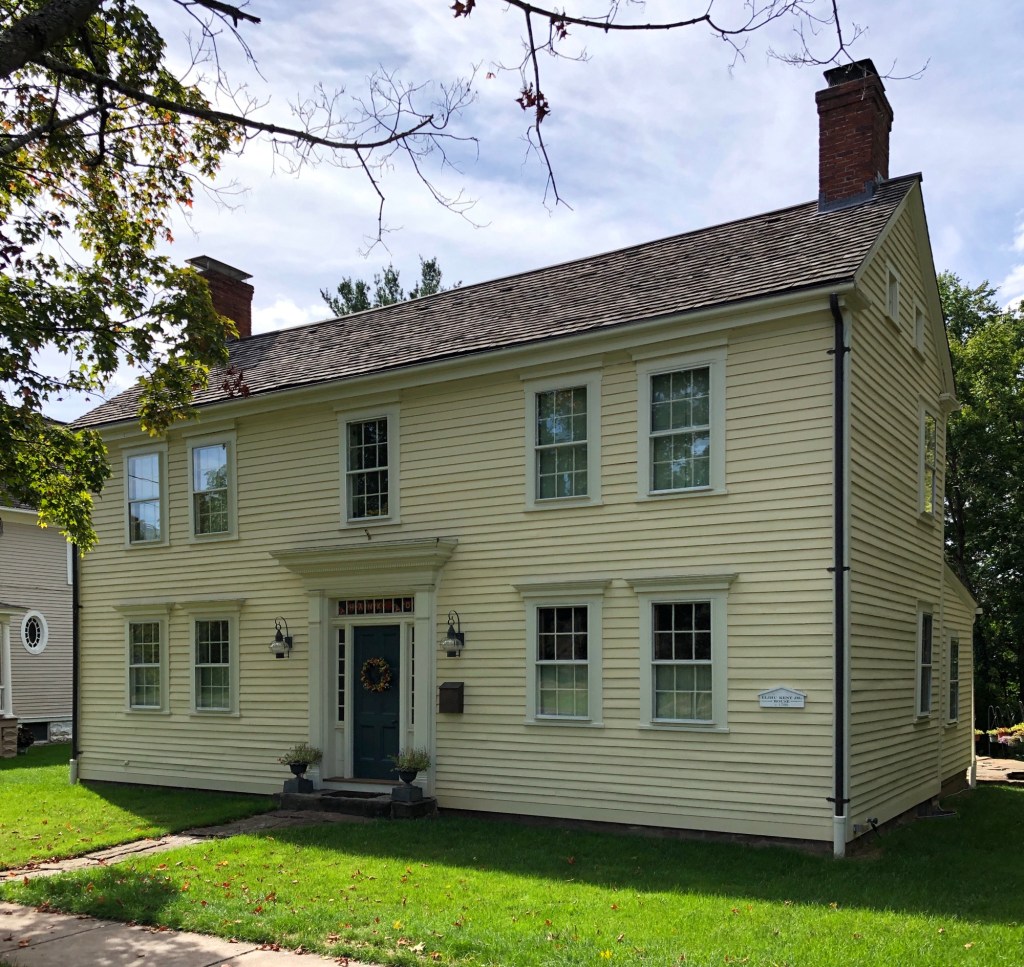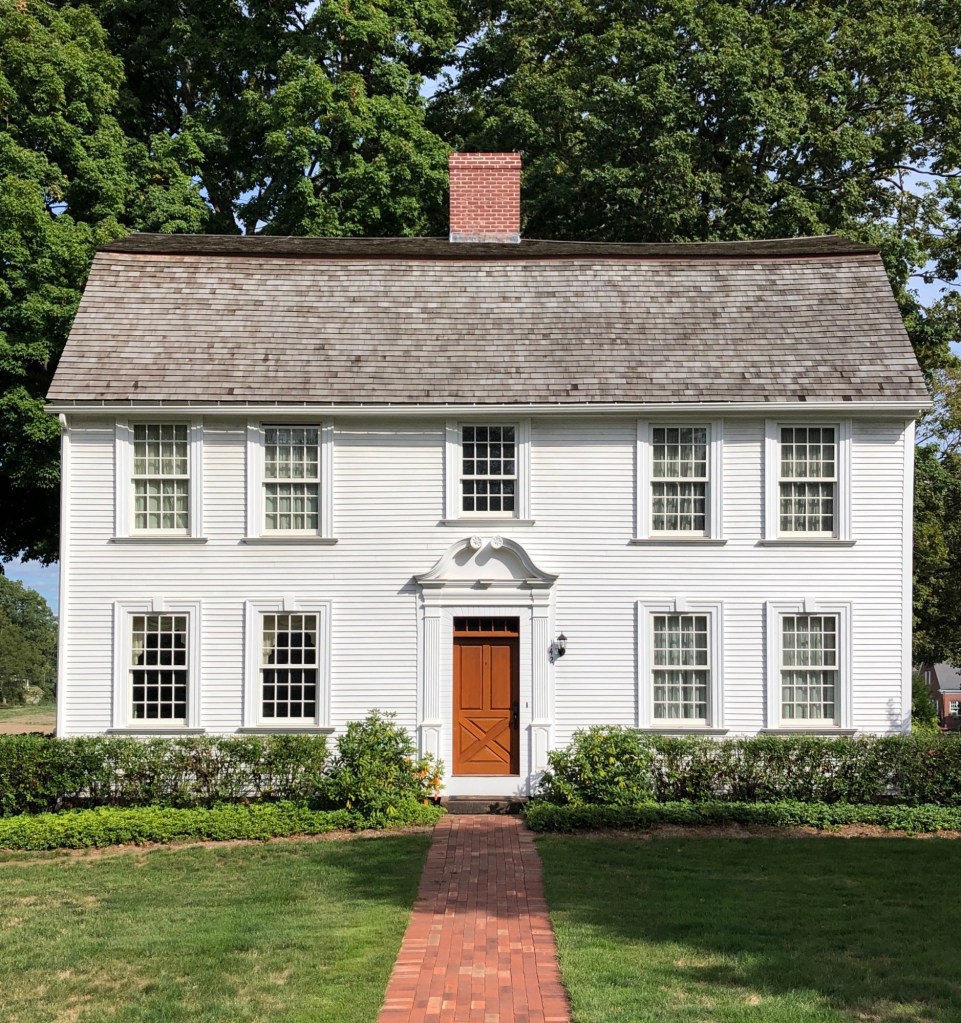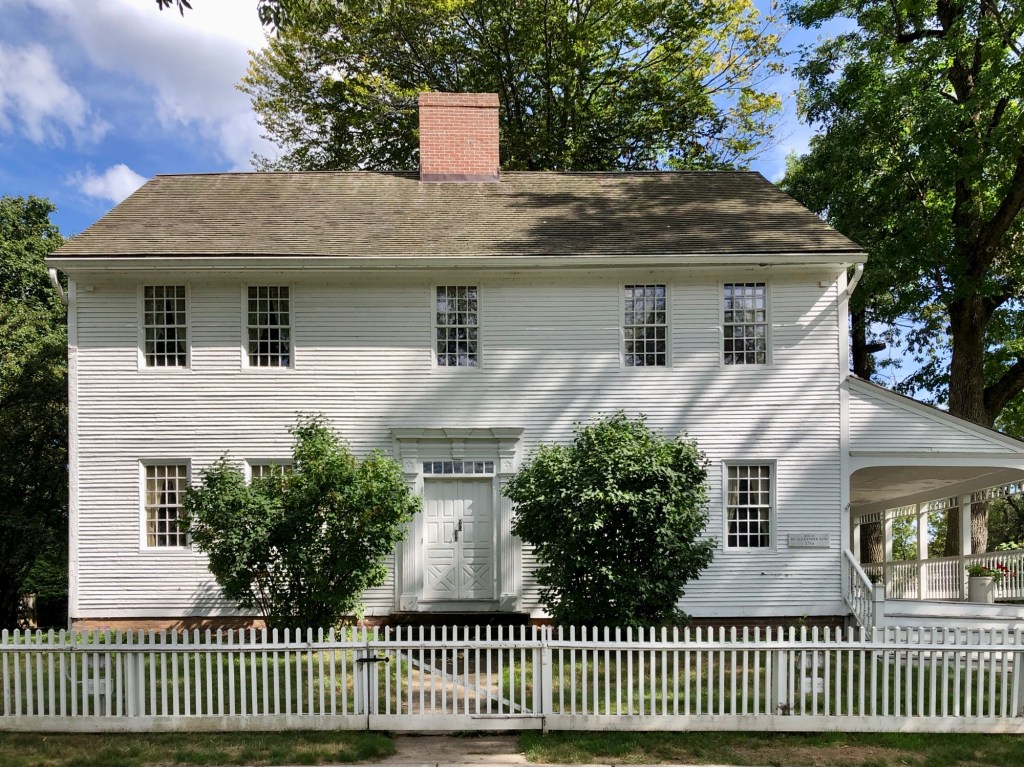
Ye Olde Manse of Willington // c.1728

Known locally as the ‘Ye Olde Manse‘, this stunning Georgian cape house is located at the eastern edge of the town green in Willington, Connecticut. Thought to be the oldest extant house in the small, rural community, the gambrel-roofed homestead was possibly built by John Watson of Hartford, who was thought to have been an original proprietor of Willington, but was instead an assignee of George Clark who was. In the 19th century, the homestead operated as the congregational church parsonage. Today, the Georgian cape house with gambrel and saltbox roof is a single family home and has been lovingly preserved by centuries of stewards of this old manse.

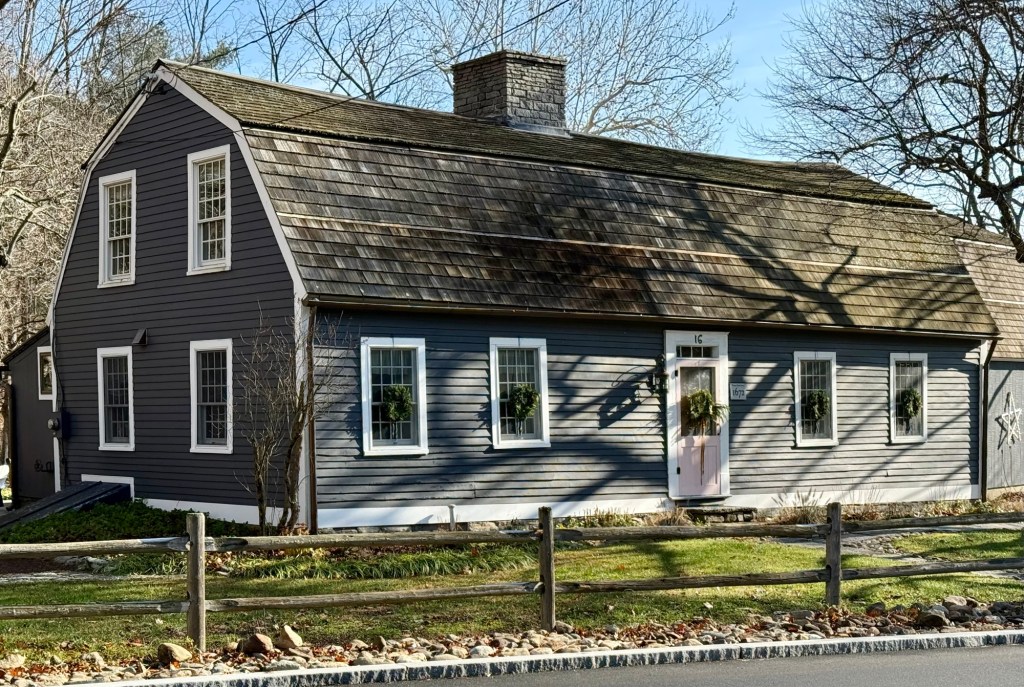
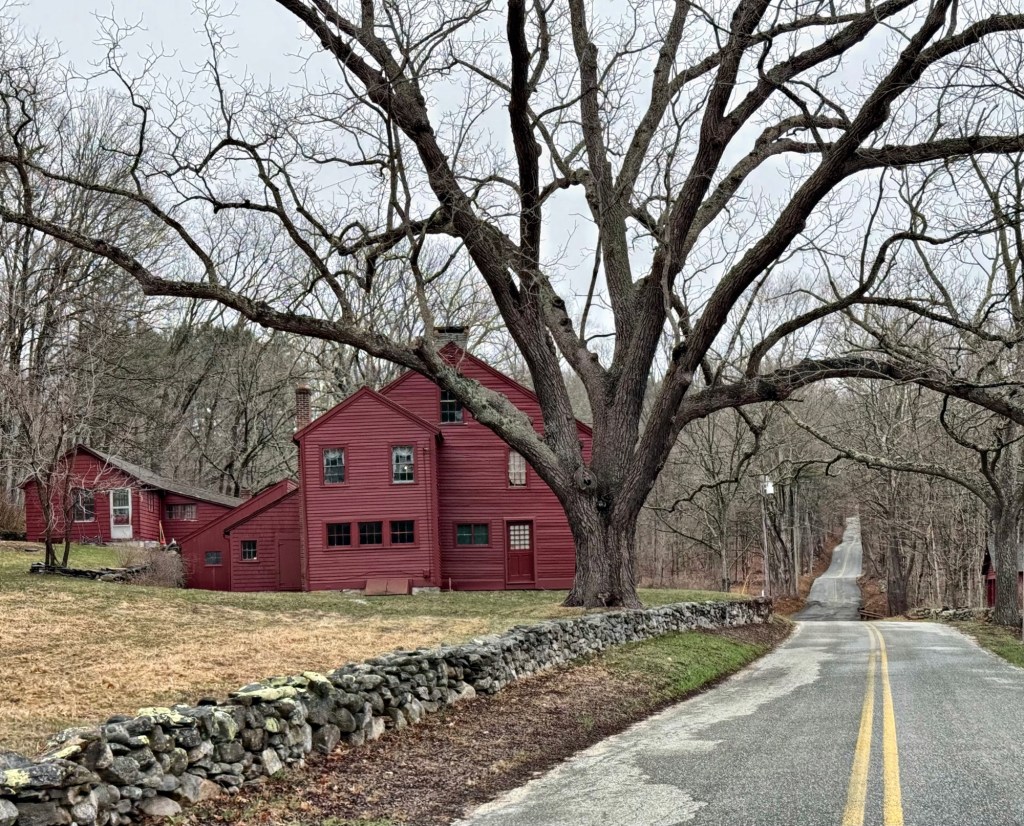
Dunk Homestead // c.1672

The oldest building in Chester, Connecticut, is believed to be this First Period residence on North Main Street, which was originally built sometime after 1672, when land here was deeded to Thomas Dunk (1648-1683). The property was inherited by various members of the Dunk family, including Deacon Jonathan Dunk (1711-1781), who added onto what was originally a one-room, gambrel-roofed house as their families and wealth grew. The old Dunk Homestead is one of the many great landmarks in Chester and has been lovingly preserved for over 350 years!

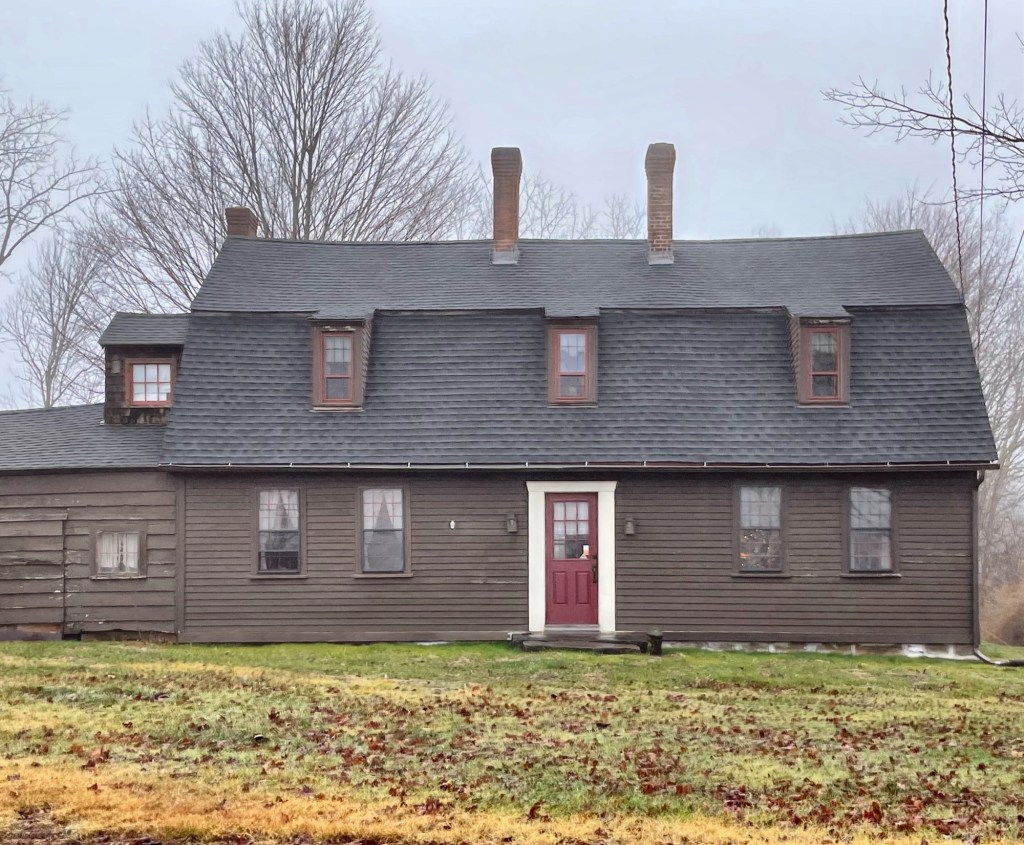
Smith-Curtiss House // c.1714

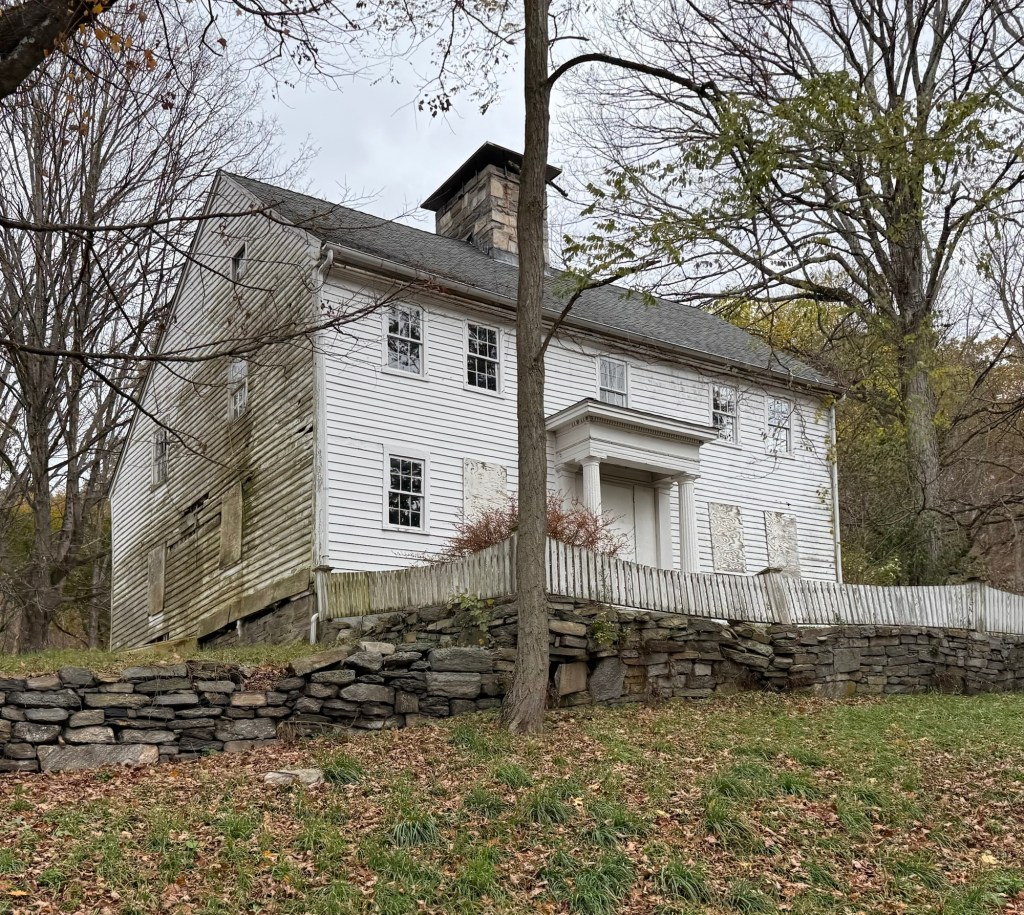
The Smith-Curtiss House, which is possibly the oldest extant building in Derby, Connecticut, has sat vacant and decaying for years and is owned by the State of Connecticut. Believed to have been built sometime between 1714 and 1740, this historic saltbox farmhouse at 411 Hawthorne Avenue is slowly decaying due to lack of maintenance and funding. Early ownership is difficult to determine, but by the 19th century, the property was owned by Ms. Alice E. Curtiss. The old estate was sold by Ms. Curtiss in 1913 to Frances Osborne Kellogg, a businesswoman, philanthropist and environmentalist, as part of her 350-acre dairy farm and land-conservation holdings. The Smith-Curtiss House was used as a residence for the herdsmen who ran the farm nearby. Before her death in 1956, Frances deeded the property to the state as a public park, and allowed her head herdsman life-occupancy of this house for the remainder of his life. The State of Connecticut assumed possession of this house in 1981. The building has suffered from deferred maintenance since this period, with the State attempting to lease the building to tenants. I hope that local and statewide preservation groups can mobilize to secure grants and funding to restore this important property.

Dr. Andrew Harris House // c.1820

This house is located across from the iconic Prudence Crandall House in Canterbury, Connecticut, and is another excellent example of a high-style Federal home in the town’s main village. Built in circa 1820, this residence was the home of Dr. Andrew Harris (1787-1840), one of two physicians in Canterbury in the early 19th century. After Dr. Harris’ death, the property was owned by Hiram and Nancy Waldo, who altered the house with the addition of a Victorian observatory at the rear, two-over-two sash windows, and an entry porch with paired door entrance.

David Nevins House // c.1746

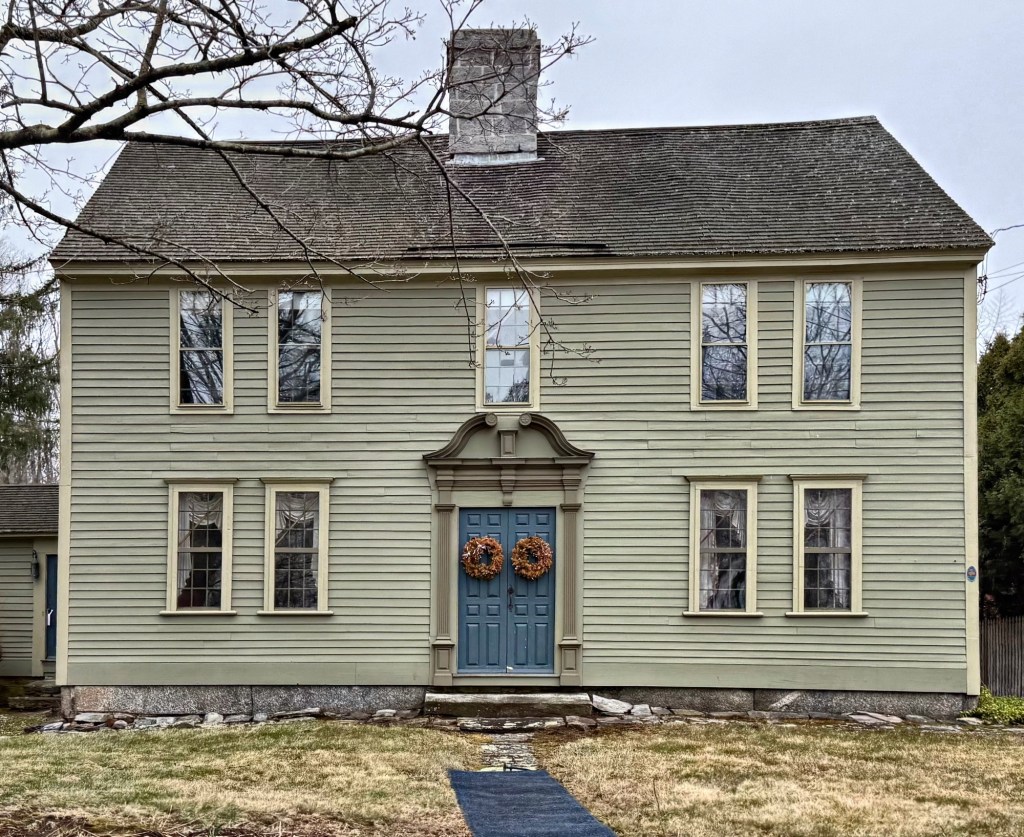
This house across from the Town Green in Canterbury, Connecticut, is believed to have been built by David Nevins, Sr. (1729-1758), a merchant who settled in Canterbury from Nova Scotia, Canada. Nevins tragically died in 1758 when overseeing the reconstruction of a bridge spanning the nearby Quinebaug River. It is said that while standing on a cross-beam, giving directions to the workmen, David Nevins lost his balance and fell into the river and was swept away and drowned. The property remained in the Nevins Family until 1842, upon which, it served as a parsonage for the Congregational Church, just across the street. The clapboard exterior, small-pane sash, center-chimney plan, and five-bay facade of this house give it architectural significance as a representative example of 18th-century Connecticut architecture. The stately Georgian doorway with swan’s neck pediment was installed by a local house restorer based upon physical evidence uncovered during the house’s restoration (and removal of Victorian-era porch) and while may be conjectural, it enhances the already beautiful old home.

John Carter House // c.1765

One of the many stunning and well-preserved Colonial homes in Canterbury, Connecticut is this residence, the John Carter House on S. Canterbury Road. Records show that the house was built around 1765 for John Carter and his wife, Mary Smith. This house is a good example of the domestic architecture of 18th-century Connecticut and while there have been some changes over time, it continues to exhibit all the major hallmarks of the colonial type, such as a center-chimney plan, clapboard exterior, and five-bay facade. The house originally had a saltbox roof sloping to the rear, but was removed sometime in the 19th or 20th centuries, likely when the projecting Colonial Revival-era porch was added at the entrance. What a spectacular home!

Samuel Pellett House // c.1752

The Samuel Pellett House in Canterbury, Connecticut, dates to the mid-18th century and is an excellent example of a Colonial-era home in this part of the state. Research in the land records suggests that this house may date from the time of Samuel Pellett’s second marriage in 1752 to Hannah Underwood. The couple planted two sycamore trees in front of the house to signify husband and wife but one was lost in the 1938 hurricane while the other survives to this day. According to historians, Sarah Harris Fayerweather, the first Black student at Prudence Crandall’s school nearby, worked as a servant in this house, then owned by Jedediah Shepard. The Pellett House is an excellent example of a Colonial Georgian home in Connecticut, with clapboard siding, center chimney, five-bay facade and small pane sash windows. 

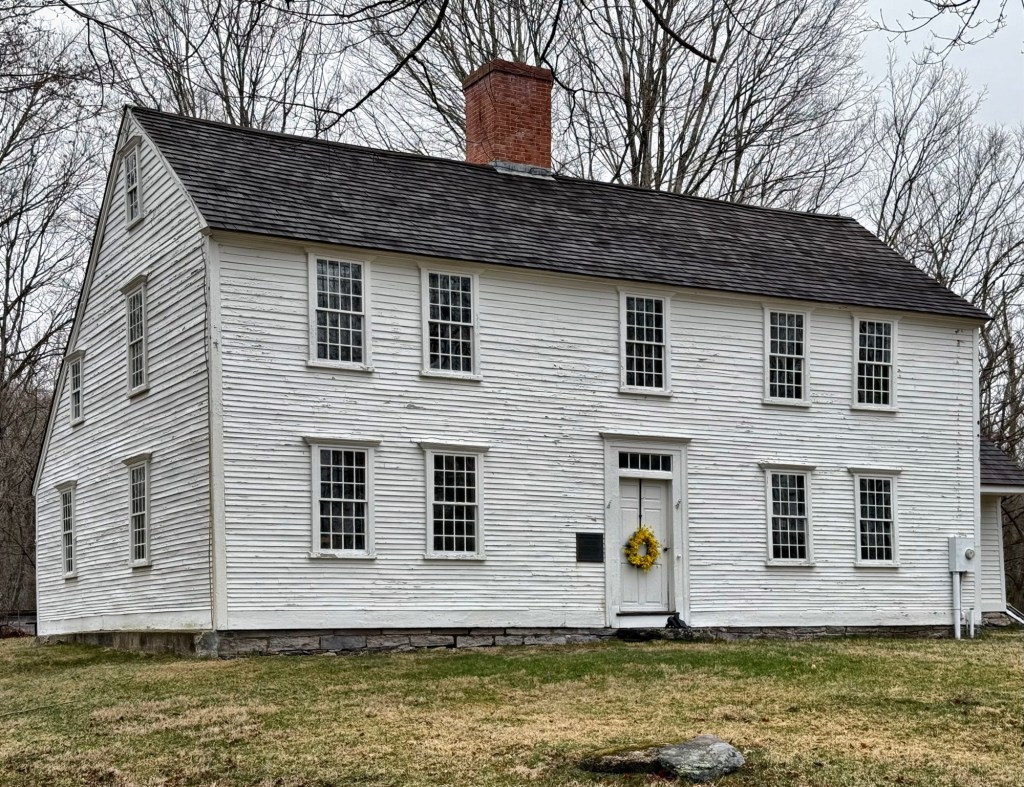
Edward Waldo House // c.1715

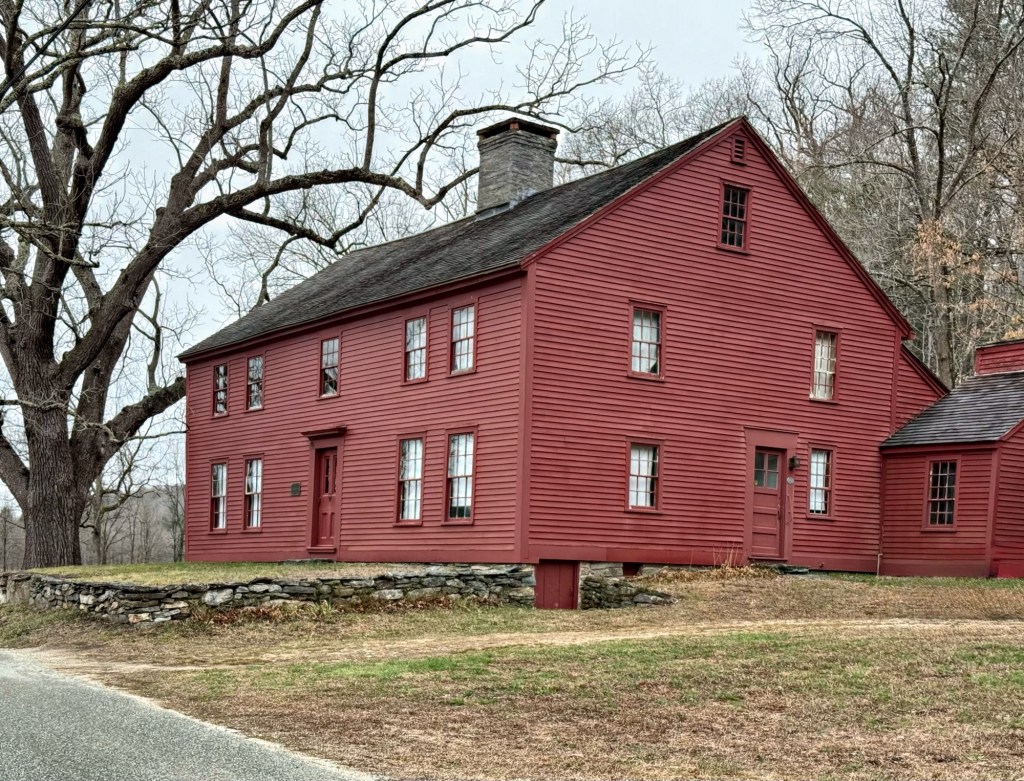
The Edward Waldo House in Scotland, Connecticut, is a vernacular Georgian house with saltbox roof and wings which from its erection about 1715 until 1971 was owned by members of the Waldo family. Edward Waldo (1684-1767) purchased land here along the Shetucket River in 1702 and by 1715, erected this house. The saltbox house which Edward Waldo built was one of the first houses in the town of Scotland and would remain in successive generations of the family for centuries. The house was the birthplace of Samuel Lovett Waldo (1783-1861), a portraitist who was a founder of the National Academy of Design as well as Daniel Waldo, chaplain of Congress, 1856-1858, and was one of seven Revolutionary War veterans who, having survived into the age of photography, were featured in the 1864 book The Last Men of the Revolution. The last Waldo owner, Miss Ruth Waldo died in1975. She insured the preservation of her family homestead by bequeathing the house, its contents, and about 15 acres of land to the Antiquarian & Landmarks Society of Connecticut Inc. and the surrounding acreage to the Connecticut Forest and Park Association, creating an enduring legacy for centuries to come. The house, set amongst a quiet country road, is evocative of early days in Scotland, Connecticut, and is one of the finest-preserved Colonial homes in this part of the state. 

Huntington Homestead // c.1715

The Huntington Homestead in Scotland, Connecticut, was the birthplace and boyhood home of Samuel Huntington (1731–1796), a Founding Father, a signer of the Declaration of Independence and a distinguished statesman during the Revolutionary War and early Republic. The remarkably well-preserved site includes an eighteenth century house on its original foundation surrounded by acres of farmland and is now protected as a museum. The house was built sometime between the transfer of land in 1715 from Deacon Joseph Huntington to his son Nathaniel, and Nathaniel’s marriage in 1723 to Mehetabel Thurston. As originally constructed, the house consisted of a two-story structure with an end chimney on the west end and one large room on each floor. By the time of Nathanielís death in 1767, the house had been doubled in size with the addition of two rooms west of the chimney, giving the house its current five-bay form. The Georgian style Colonial-era home features a symmetrical facade, twelve-over-twelve windows, and a saltbox roof and is one of the finest Colonial-era homes in this part of the state.

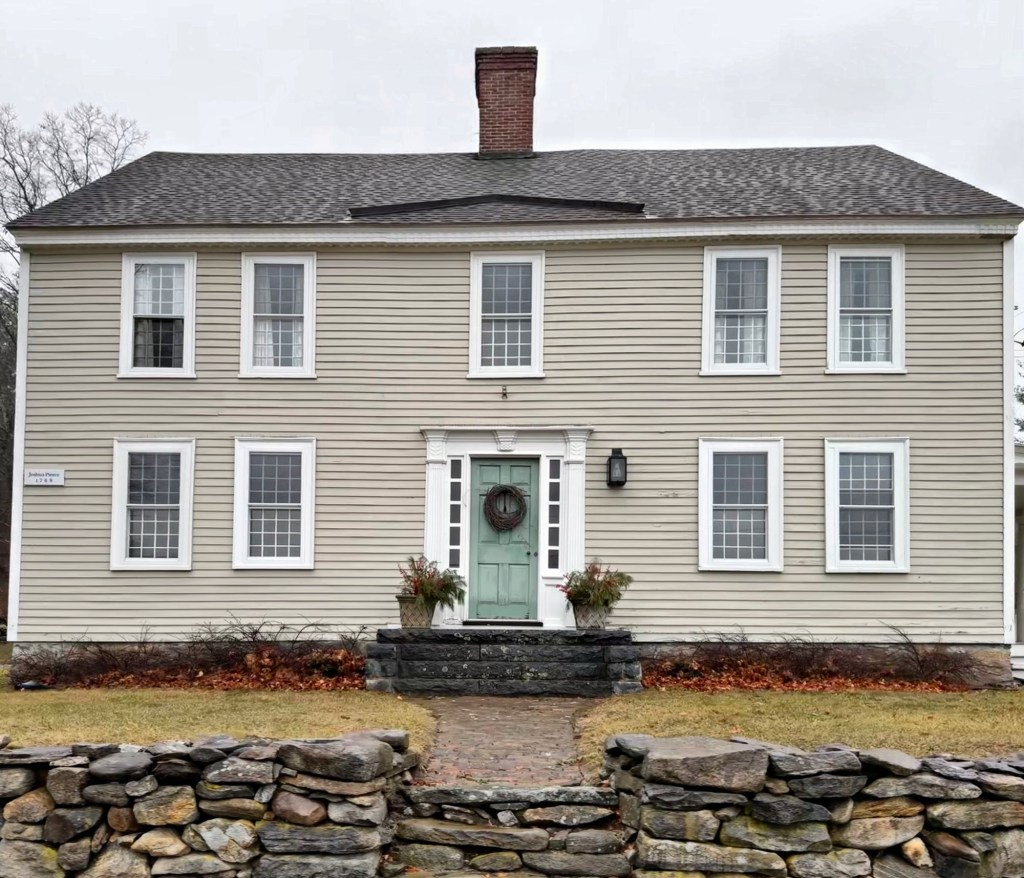
Pierce Homestead // c.1750

Built before the American Revolution, this large Georgian residence is one of the oldest extant houses in the charming town of Cornwall, Connecticut. Located on Popple Swamp Road just outside the central village, the Pierce Homestead dates to circa 1750 (the sign dates the house to 1768, but information from the town history mentions a house there earlier) and is a stellar example of a simple, two-story Georgian house with five-bay facade and 12-over-12 sash windows. This property was purchased by Joshua Pierce in 1748 and included over 300-acres of farmland, the farmhouse was likely built within a matter of years. The house was likely expanded and modernized by his son, Seth Pierce, who inherited the property in the 1790s. The farm remained in the Pierce Family for generations and was lovingly restored in the 20th century. It is a great example of a well-preserved 18th century farmhouse in Litchfield County, Connecticut.

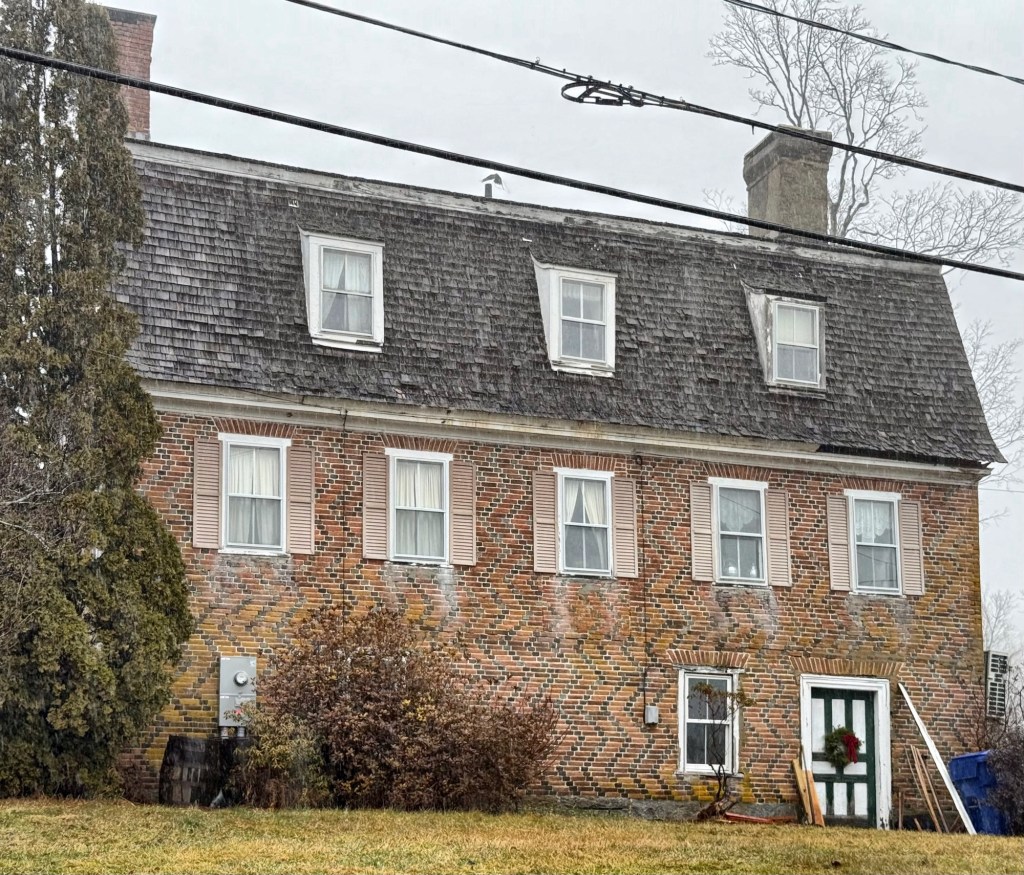
Wright Homestead // 1767

This large, brick gambrel-roofed Colonial home in West Goshen, Connecticut, was built over decades beginning before the American Revolution and has remained in the same family ever-since! In 1767, Captain Jabez Wright (1737-1813) married Martha Baldwin of Goshen, and began constructing this farmhouse of brick. When the war broke out, he fought in New York, he also served as captain of a company of Connecticut militia, turning out to repel the British forces at New Haven. He would largely complete the home by 1787, and ultimately died in 1813. After successive ownership of generations of the Wright family, the property was owned by Henry G. Wright (1831-1917), a farmer who represented Goshen in the state legislature and held many town positions. The first Methodist sermons in town were also held in the home. Henry Wright died at 86 years old on this property, after being attacked by a bull. When entertaining guests, he showed others a prized bull, and possibly fell into the pen, and was trampled and attacked. The Wright Homestead is unique for its brickwork with bonds and burned headers, resembling many Colonial-era homes in Virginia, but this house can be found on the back roads of Goshen, Connecticut!

Sumner-Carpenter House // 1806

I don’t think any state does the Federal style as well as Connecticut (Massachusetts is a close second)! This is the Sumner-Carpenter House, a high-style example of a Federal residence that is located on the backroads of the small town of Eastford, Connecticut. The house was built in 1806 for John Newman Sumner (1775-1831) who resided here until just before his death. The elaborate Federal period house was sold out of the family. After trading hands a half-dozen times, the property was purchased by David and Harriet Carpenter in 1881. The property remained in the Carpenter family for generations, and remained as such after Orlo Carpenter (1865-1938) was killed in the collapse of a barn during the hurricane of 1938. Architecturally, the house has all of the hallmarks of the Federal style, with the symmetrical main facade five bays wide, with a center entrance flanked by wide sidelights, and topped by a fanlight transom and corniced entablature. The window above the entrance is in the Palladian style, with a rounded center window flanked by narrower sashes. The house is very well preserved and was listed on the National Register of Historic Places for its architectural quality and preservation.

Abner Richmond House // c.1803

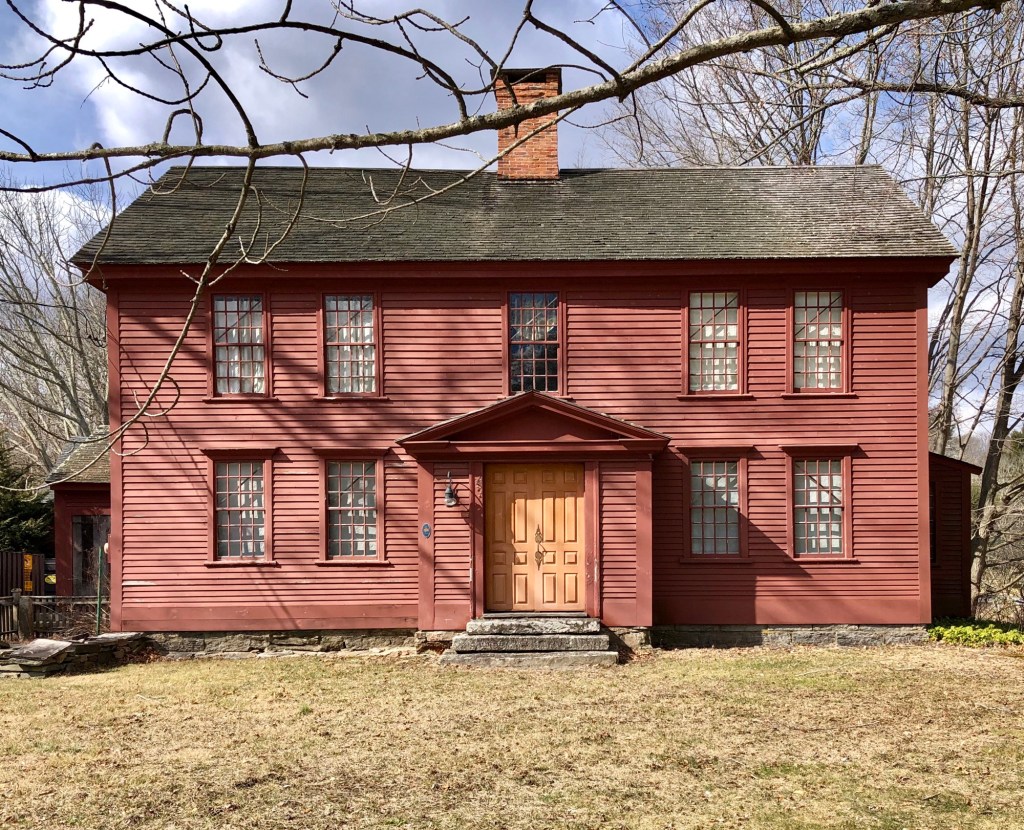
This high-style Federal house sits across from the former Westford Baptist Church in Ashford, Connecticut. The house was built around 1803 for Abner Richmond (1761-1834) and his wife Eunice, who purchased 92-acres of land here one year earlier. Abner descended from John Richmond (1594-1664), one of the original white settlers of Taunton, Massachusetts in 1637. About ten years after he built his farmhouse, the town of Ashford paid the Richmond’s money for hardship caused by laying out a road right in front of the homestead. This 1812 occurrence possibly allowed the couple to invest further into the property, where they converted some of the rooms into a tavern, which was later accessible by the new Boston and Hartford Turnpike. The turnpike began in East Hartford and made its way through Ashford before winding its way to Boston. The house was documented as having 19th century stenciling on the walls, which survived underneath wallpaper (go figure). The new owners have clearly given the Richmond House some love and care, down to the perfect paint color.

Mixer Tavern // 1710

Photo from real estate listing.

One of the most historic houses in Ashford, Connecticut was listed for sale! The house at 14 Westford Road dates to 1710, when John Mixer purchased the property which at the time totaled 100 acres, and applied for a license to operate a tavern. John Mixer was born in 1668 in Watertown, Massachusetts and married Abigail Fiske in 1695. Mixer worked as a tanner in Watertown before moving to Connecticut, becoming the first settler of Ashford in 1710. Mixer became Ashford’s first Town Clerk, Treasurer, Tavern Keeper, Select Man, and Deacon. Mixer and his family would eventually move to Suffield, Connecticut, but the old tavern remains in impeccable condition, largely due to its later owners and preservation as an inn and restoration in the 1920s.

Stebbins-Tremko House // 1773

Ashford, Connecticut is located in a part of Windham County at the northeast part of the state which is sometimes referred to as the Quiet Corner, due to its limited access to larger cities and more bucolic scenery. Formerly known as New Scituate, Ashford was settled in 1710 and incorporated as a town in October of 1714. One of the town’s early houses is this cape style dwelling, built around 1773 for Thomas Stebbins (1748-1826). By the 20th century, the small house was owned by George Tremko (1907-1981) who worked as the town’s postmaster for some years in the post office just nextdoor. After Tremko’s death, the town acquired the property through eminent domain, with the hopes of redeveloping the prominent site for a new library. Luckily, the local historical society advocated for its preservation, and grants were acquired, which helped to restore the 1770s house.