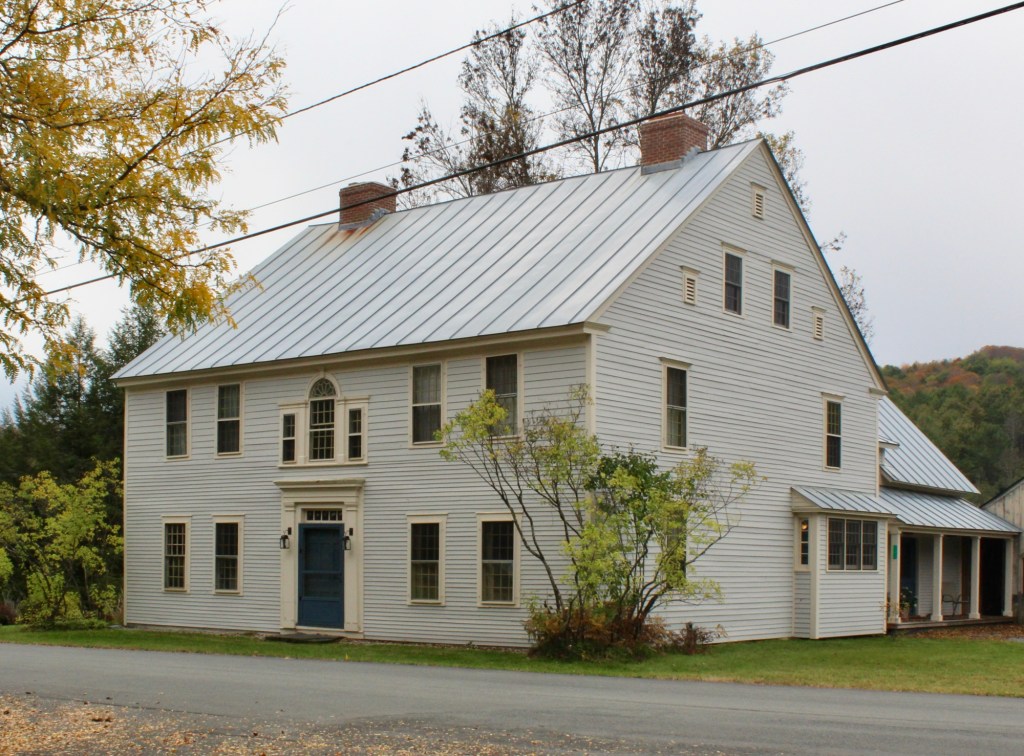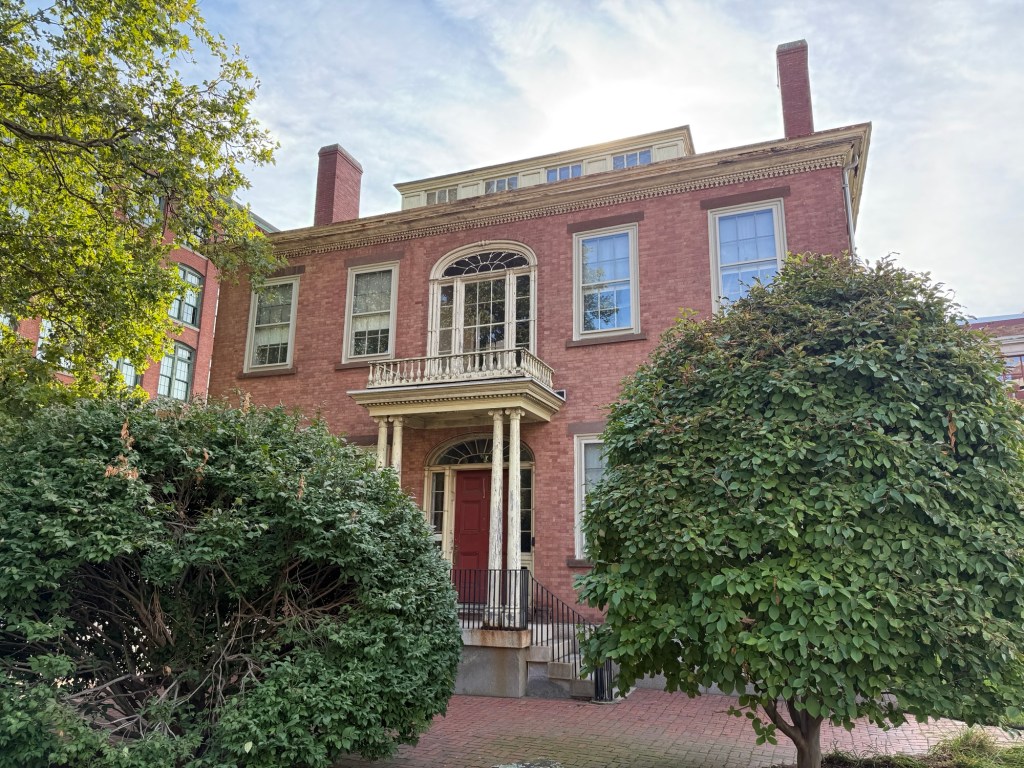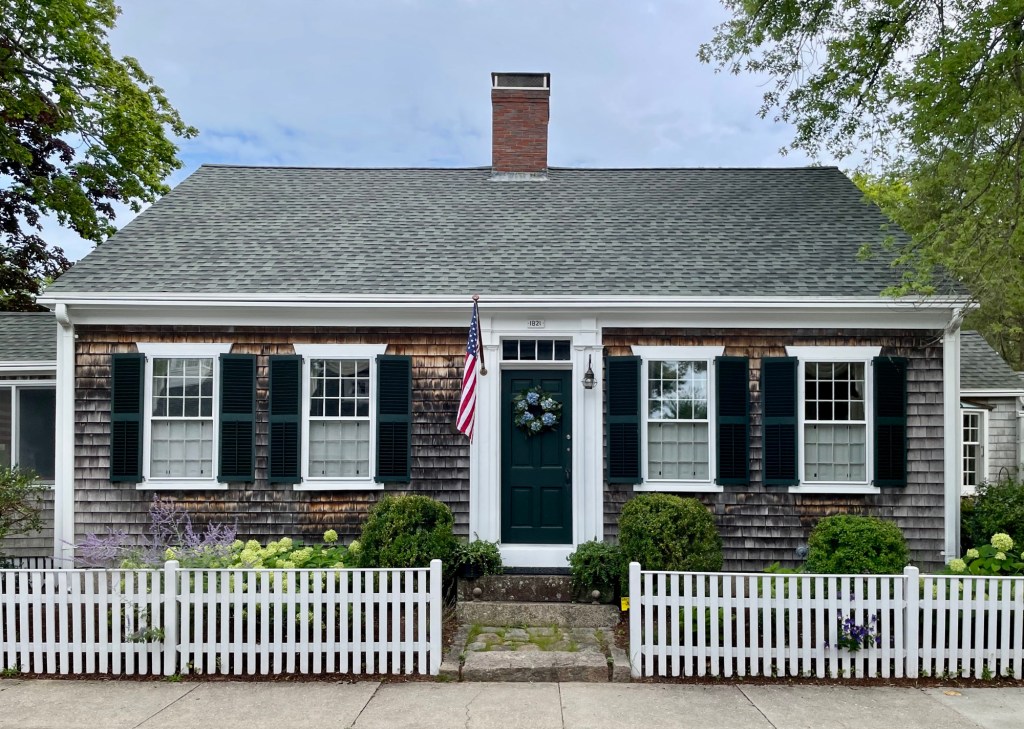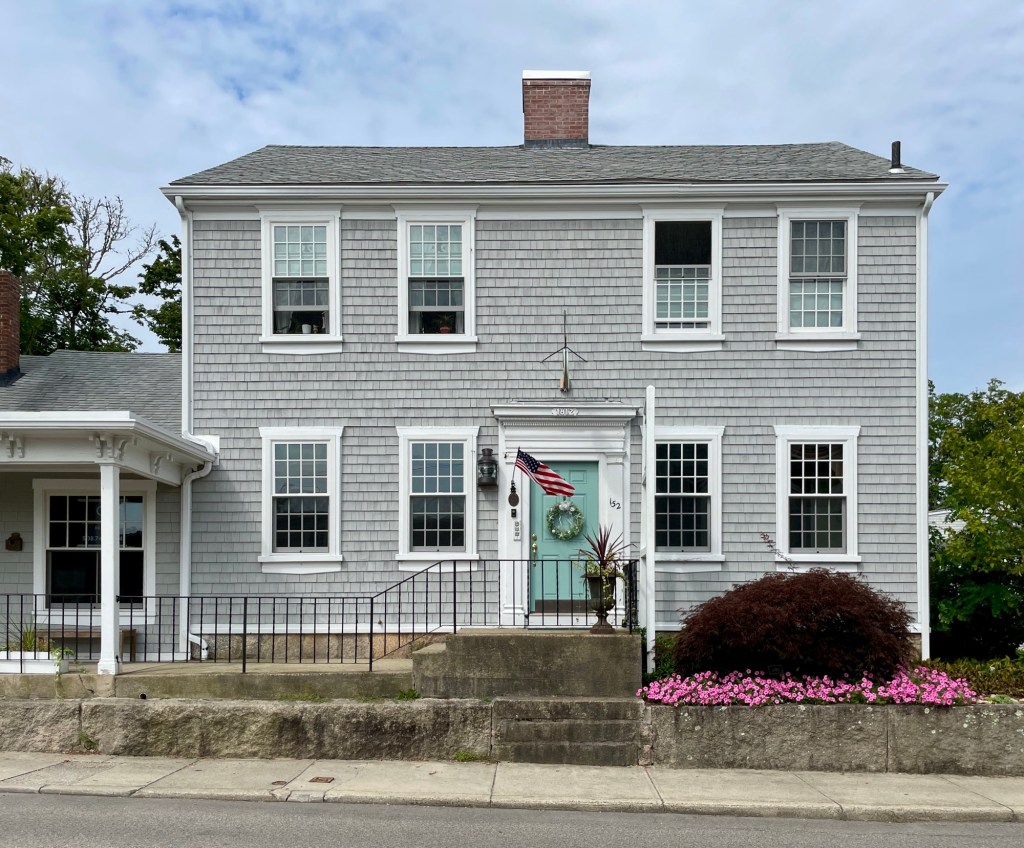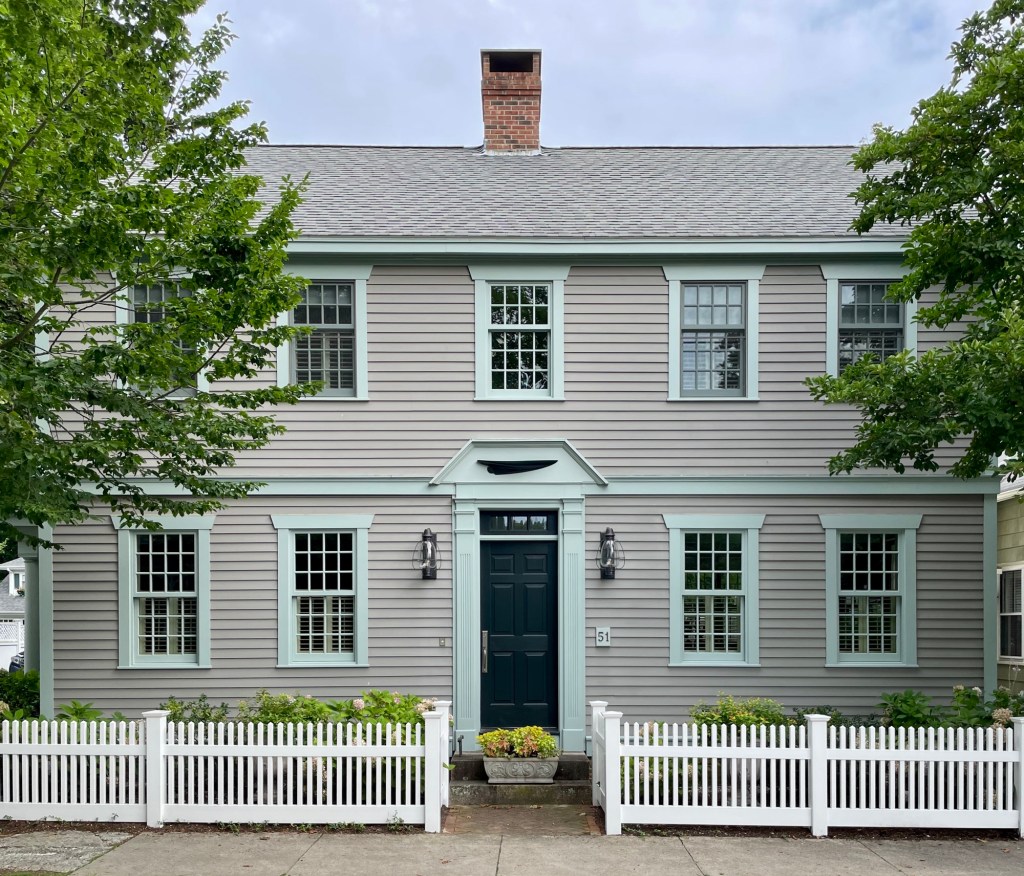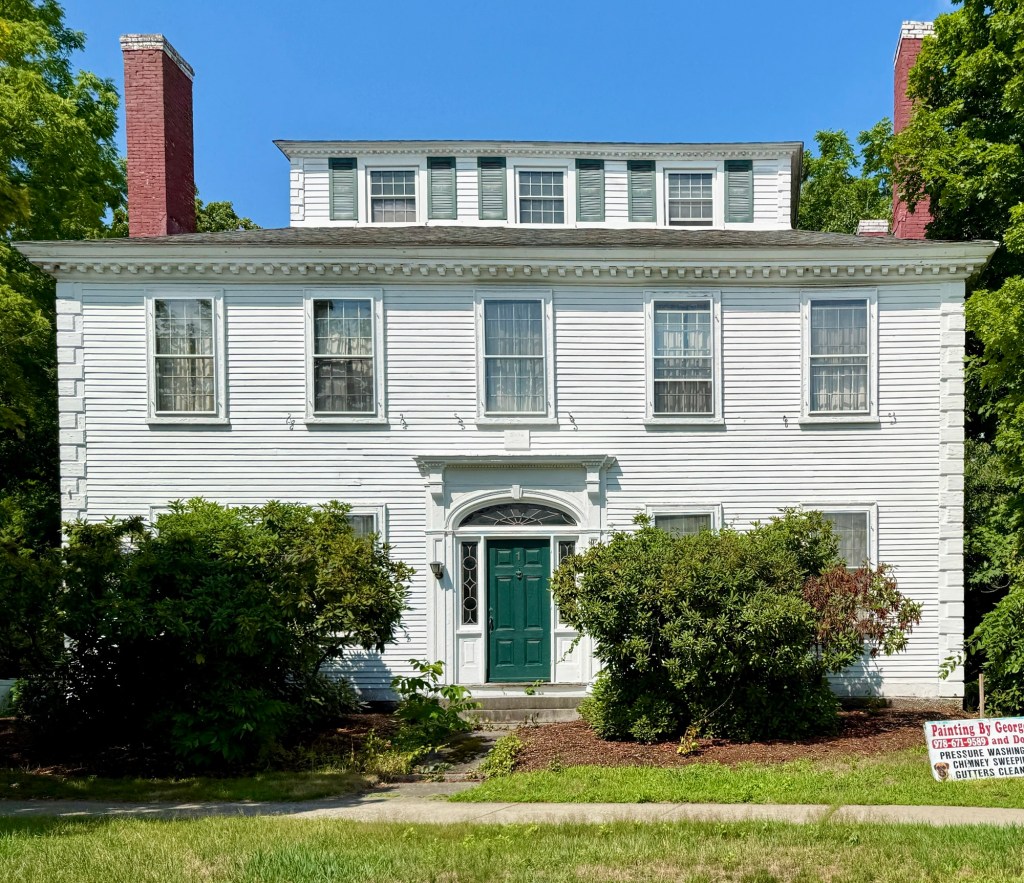
Deacon Edward Taylor House // 1786

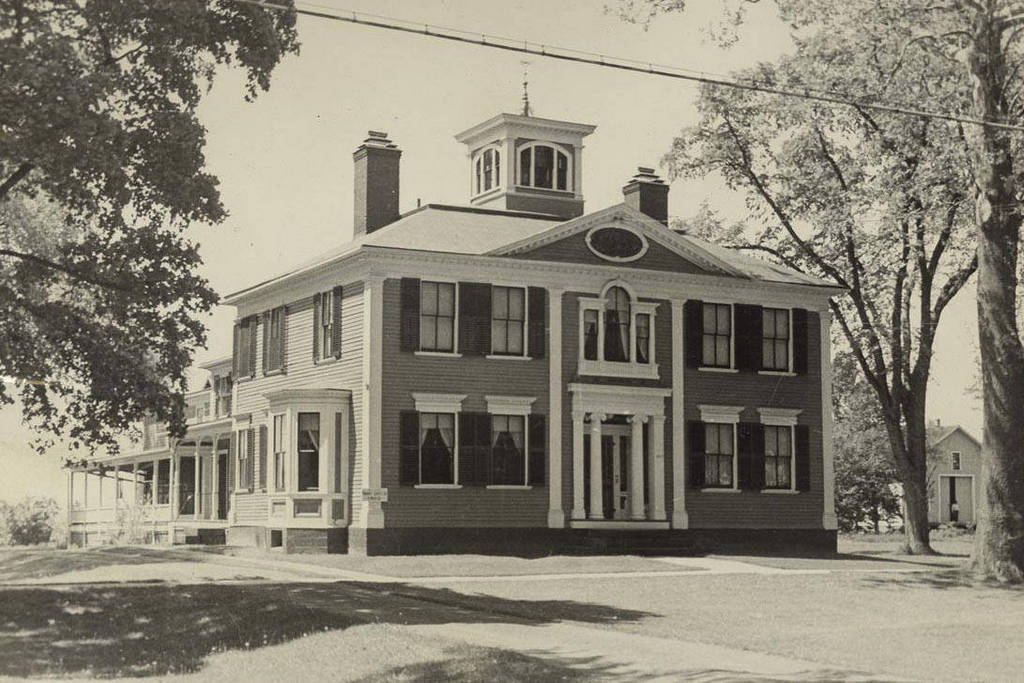
The oldest building on the iconic Thomas Street in Providence, Rhode Island, is the Deacon Edward Taylor House, a stunning early Federal residence built into the sloping site. The property was developed in 1786 for Edward Taylor, a chaise maker who had a shop on Main Street, also serving as a Deacon of the nearby church. Edward had bought out his brother’s half of the property and had this home built for his family. With its three-story symmetrical, five-bay facade, the house features a stately pedimented entry and flared lintels all atop a brownstone foundation. The property passed through many hands in the 19th and early 20th centuries until 1961, when it was purchased by the Providence Art Club as part of their multi-building campus.

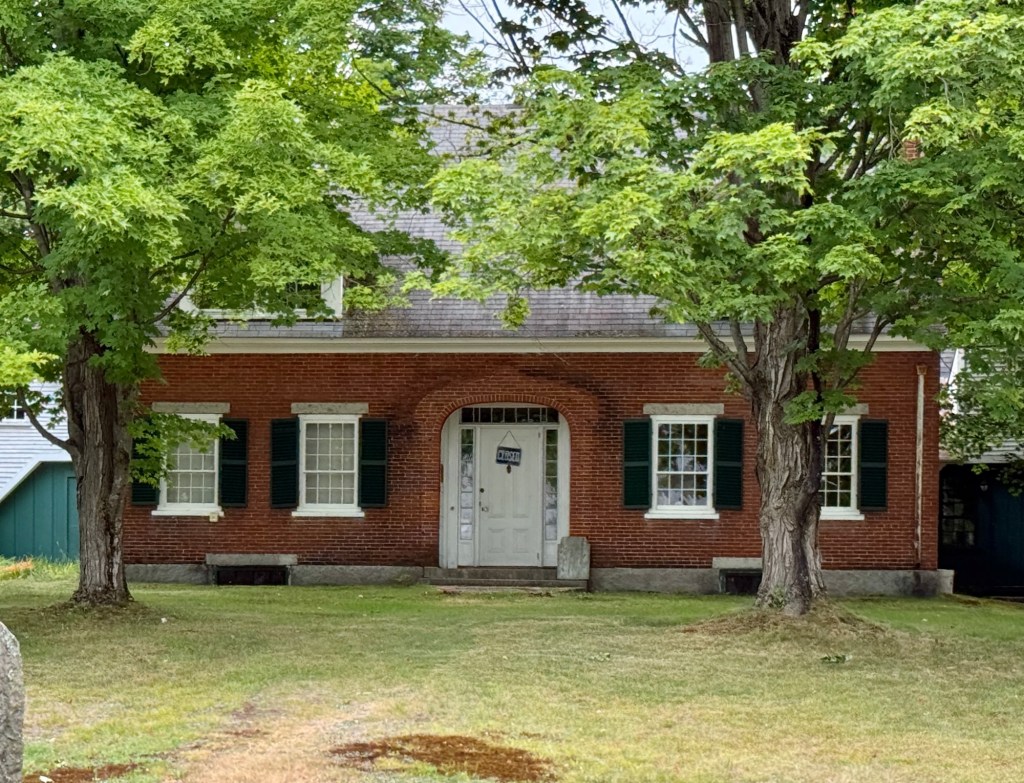
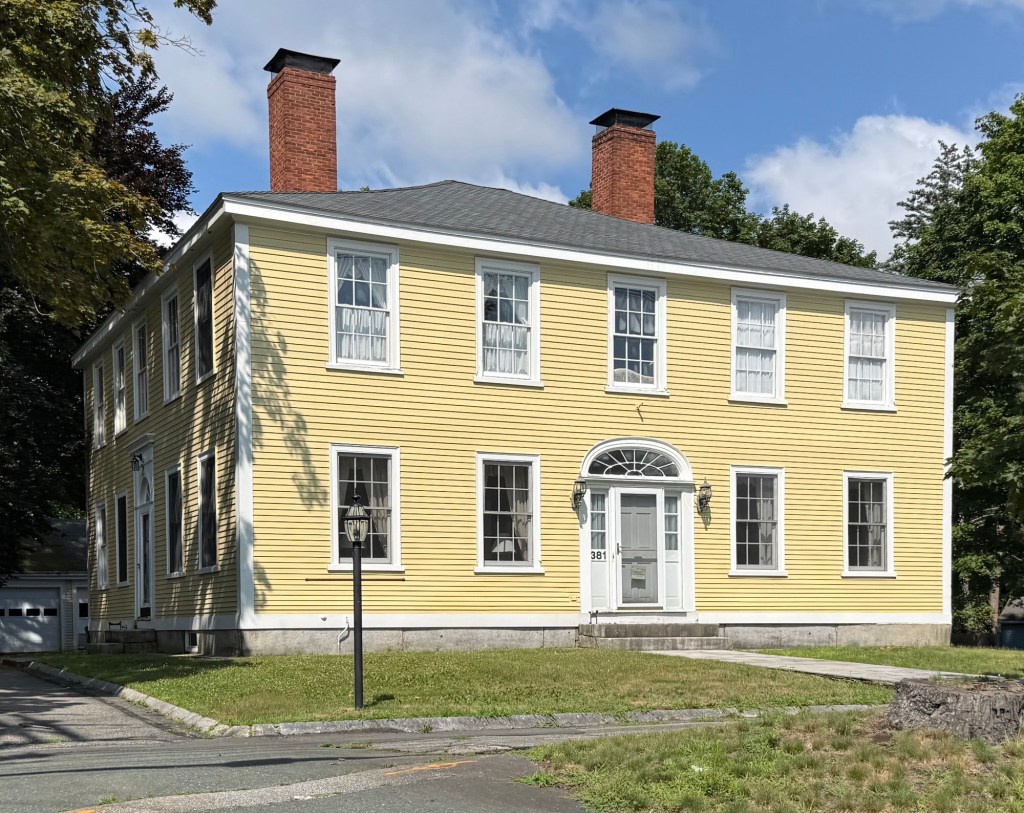
Aaron Fisher House // 1805

The Aaron Fisher House on North Main Street in Sharon, Massachusetts, has stood over 220 years as the town’s finest example of Federal style residential architecture. The residence was built for Aaron Fisher (1762-1809) who is said to have had the house built of brick that was brought over to the United States from England as ballast on a ship and later made its way to Sharon for use as walls of this stately house. While the brick is slight different color than many other local bricks, this may be another example of an urban legend. In the mid-19th century, the house was modernized with an entry porch and brackets at the cornice, and is said to have been painted yellow. Luckily for us, the porch and paint have since been removed and the 1805 house shines once again on the town’s Main Street.

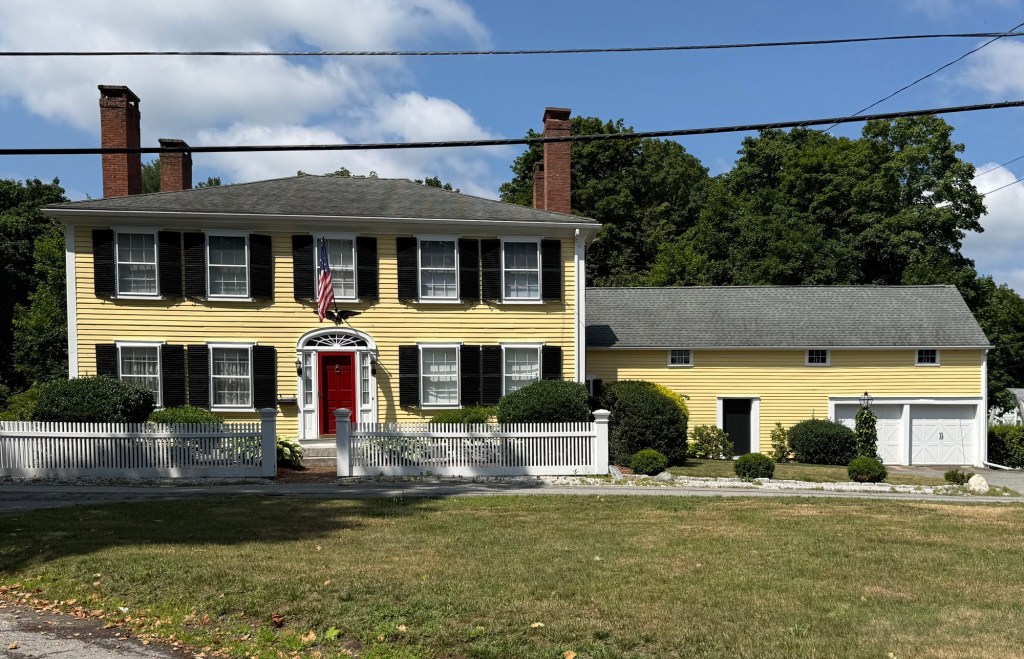
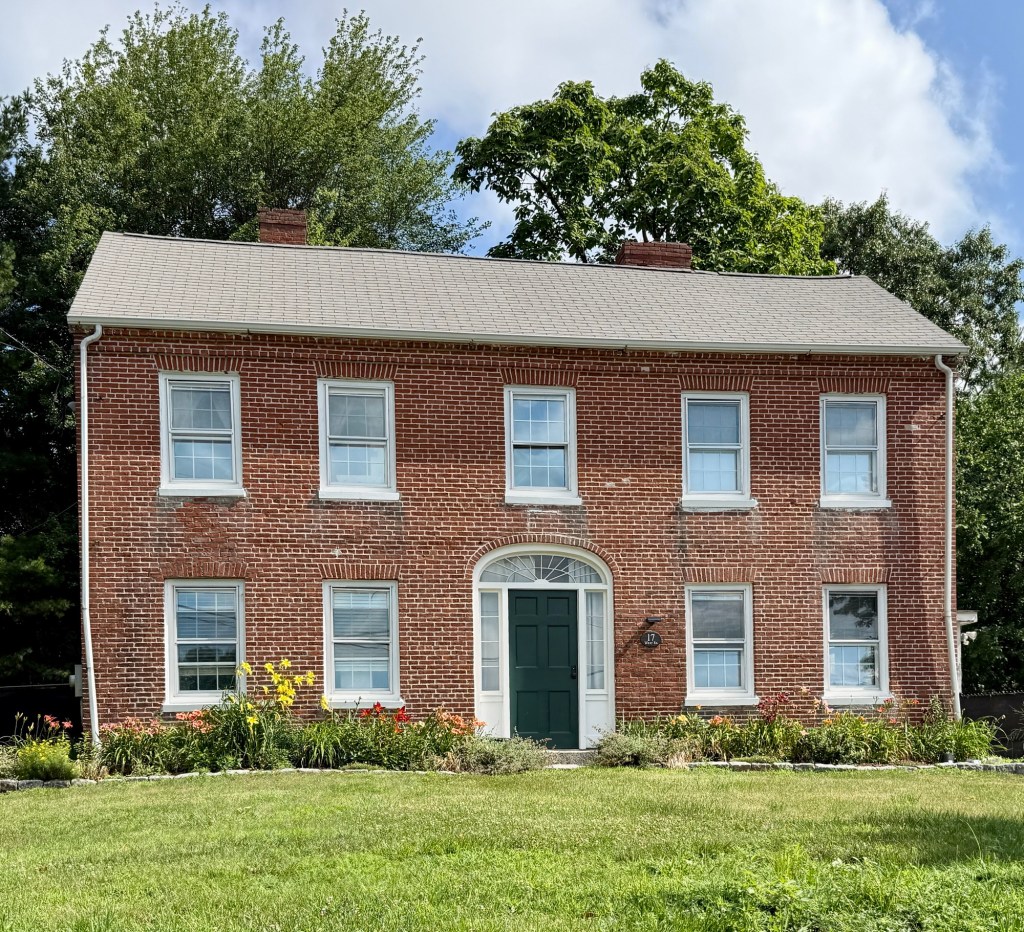
General Oliver Pond House – Wrentham State Hospital Superintendent’s House // c.1790

This Federal period house in Wrentham, Massachusetts, has had quite the history from the residence of a Revolutionary War veteran to the superintendent’s house for a school for the insane. This five-bay Federal style house was built for Oliver Pond (1737-1822) in about 1790. General Pond commanded one of the five militias in Wrentham that marched on Boston in 1775 to fight in the Revolution. Pond fought in at least two battles in Princeton and Trenton New Jersey under Washington. After the War, Oliver Pond got involved with politics and became General of the local militia granting him this important title. His heirs remained in the house into the second half of the 19th century. In the early 1900s, the property was purchased by the Commonwealth of Massachusetts as part of the new Wrentham State School, a facility to treat and educate children with disabilities. The Pond House was occupied by the superintendent of the school and is still owned by the State.

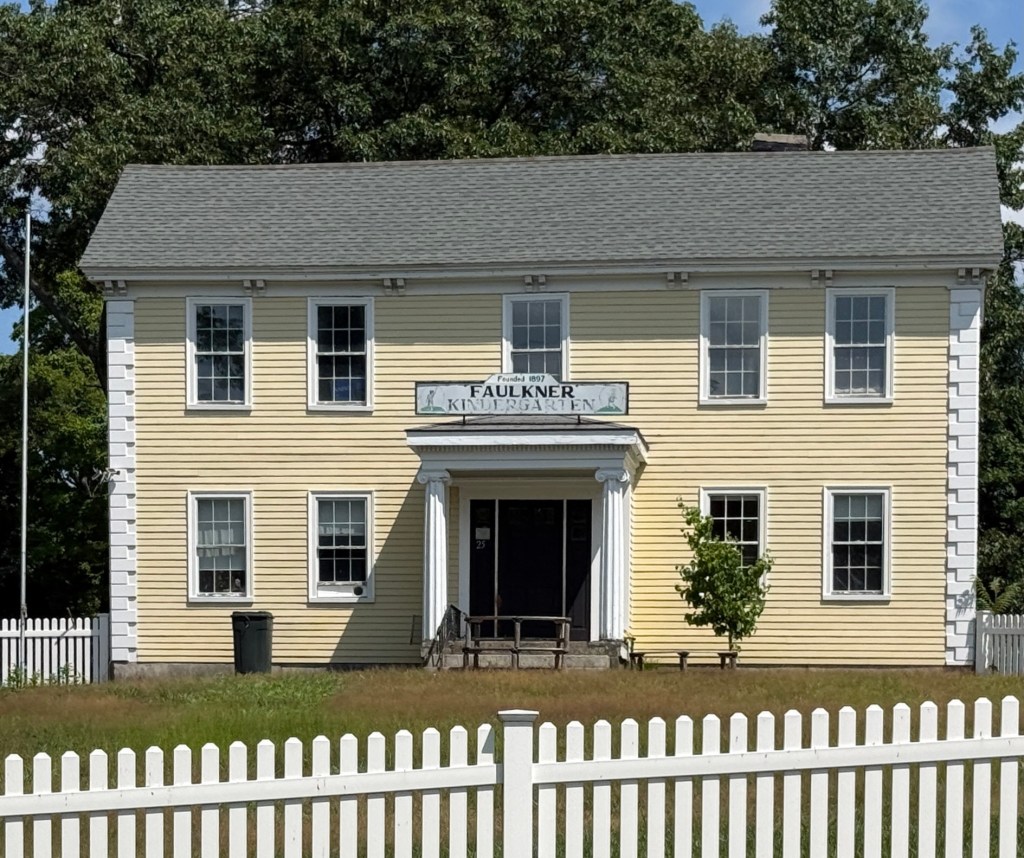
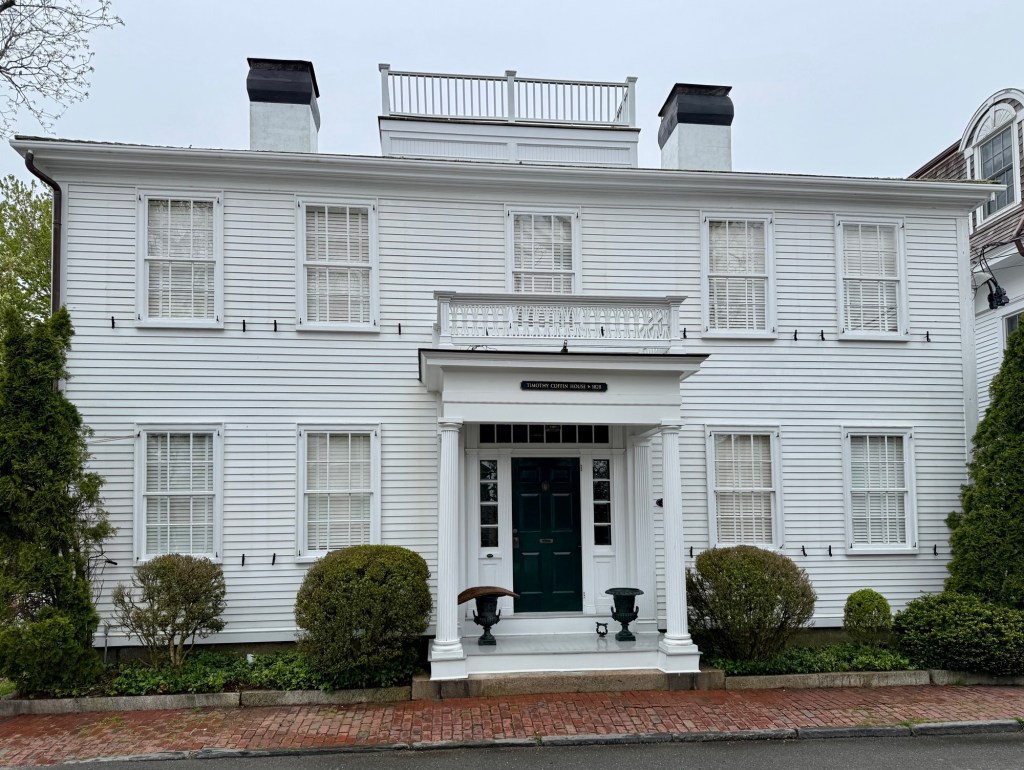
Burr-Eddy-Peck House // c.1786

This Federal style residence on Main Street in Warren, Rhode Island, features one of the town’s most spectacular entries, likely dates to the 1780s and exhibits later alterations. The house was originally owned by Rufus and Anna Burr, and was possibly built following their marriage in 1786. The late 18th century front entrance is one of Warren’s most elaborate examples with fluted Ionic pilasters supporting embellished frieze blocks, above which the pediment rests and contains a elli[tical fanlight transom. In the 19th century, the property was owned by James Maxwell Eddy (1811-1901), who, after the Civil War, elongated the southernmost bay on the facade, adding a bay window on the side which ties into the roofline with a half-hipped connector. In the 20th century, this was the home of illustrator Henry Jarvis Peck 1880-1967, whose work was re gularly published in Colliers, Harper’s Weekly, Ladies Home Journal, and other prominent magazines. The shingle siding was likely added in the first half of the 20th century.

Caleb Carr Tavern // c.1760

This house, located on Water Street in Warren, Rhode Island, is said to have been built in the 1760s, but its present appearance in the Federal style is credited to owner, Caleb Carr (1768-1853). In around 1790, Caleb fully renovated the property in the Federal style for his residence and as a tavern, with an elegant fanlighted door put on each facade—one for household use, the other for tavern customers. The property was inherited by his son, Captain Caleb Carr Jr., who continued as a tavern owner, but was also an important shipbuilder and operator of the ferry to Barrington, which docked at the end of the street. The Carr Tavern is today covered with later aluminum siding and has Victorian-era two-over-two windows but if restored, would shine as one of the best Federal style homes in town!

Rebecca Maxwell Phillips House // 1806

The Rebecca Maxwell Phillips House at 26 State Street in Warren, Rhode Island, is one of the state’s finest examples of the Federal style of architecture, though the building was funded through profits off of enslaved people. The house was funded by Warren resident, Squire James Maxwell for his daughter, Rebecca, and is traditionally said to have been a wedding present or possibly a gift to potential suitors to his daughter. The Maxwell family’s immense wealth was partially resulted from the illegal sale of enslaved Africans, including those illegally transported on his schooner, Abigail, which left Warren in September 1789. The captain of the vessel, Charles Collins, purchased 64 slaves on the coast of Africa, and sold them in the Americas by June of 1790. Of the 64 captives embarked on the ship, only 53 survived the voyage. This home was occupied by Rebecca Maxwell and her new husband, William Phillips. The three-story mansion exhibits a pedimented fanlight transom, corner quoins, and a shallow hipped roof. The property is located on an oversized lot which contains a massive Japanese Beech tree in the side yard, which is said to have been brought from Japan by Commodore Joel Abbot, who lived nearby, in 1853.

Charles Wheaton Jr. House // c.1815

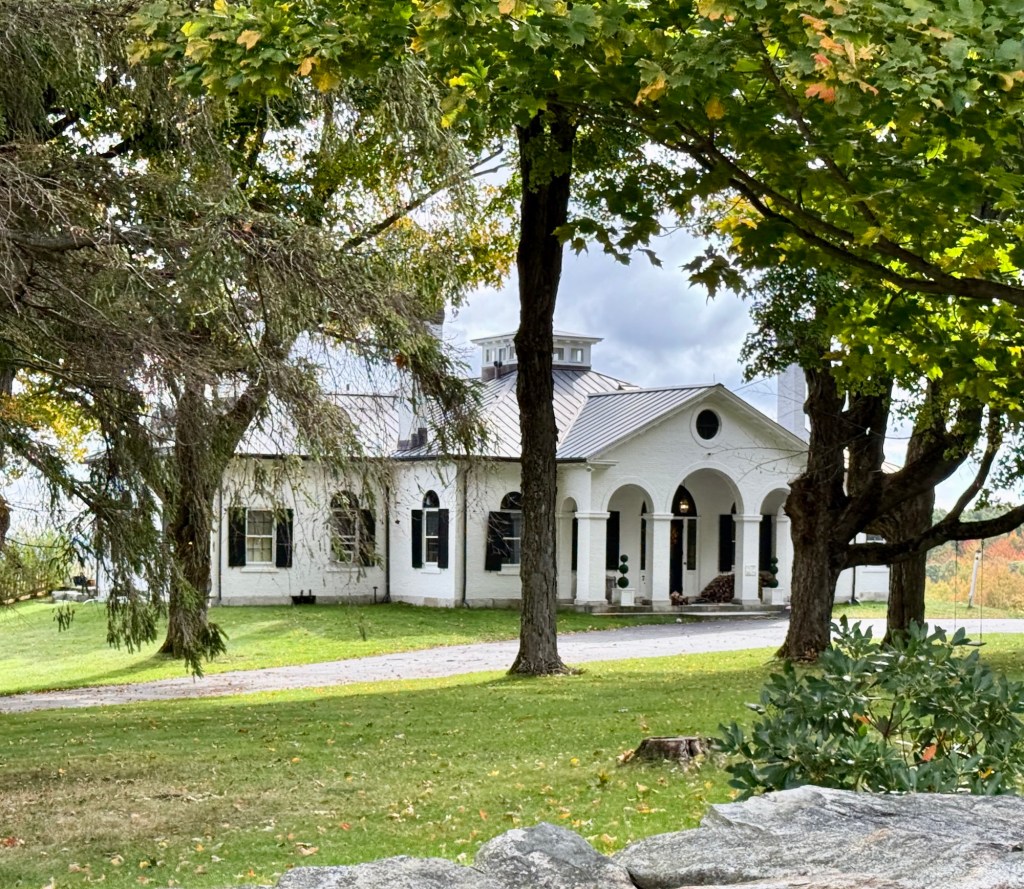
Charles Wheaton (1761-1863) enlisted in the his local militia at just 14 years old and served in Colonel Robert Elliott’s Regiment of Artillery to protect Narragansett Bay. After the war, Charles settled in Warren, Rhode Island, and married Abigail Miller. They would have at least nine children, with one of their children, Charles Wheaton, Jr., (1791-1863) marrying Abiah Goodwin Turner in 1815, the daughter of a wealthy sea captain. Around the time of their marriage, they built this house on Liberty Street in Warren in the Federal style with a three bay facade, monitor on hip roof, and portico at the entrance with Ionic columns. By the end of the 19th century, the house was enlarged and a bay window was added over the entry portico.

Salisbury-Johnson House // 1823

One of the great Federal style homes in the charming downtown of Warren, Rhode Island, the Salisbury-Johnson House at 43 Miller Street features many of the hallmarks of the prominent architectural style. The main body of the house was constructed by 1823 after Theophilus Salisbury (1781-1835) purchased the house lot at the corner of Union Street, possibly being moved from another site to the present location at this time. The two-story, five-bay façade is detailed by quoined corners and an exceptional center entrance with sidelights and large, elliptical blind fan carved from a single piece of wood. After later owners, the property was purchased by Rodolphus B. Johnson (1816-1884), a wealthy shipping agent who owned whaling ships and ran a wharf at the foot of Johnson Street nearby.

Maxwell-Barton House // 1803

Built in 1803 for Captain Level Maxwell (1754-1828), this five-bay, Federal style house built of brick, is located on Main Street in Warren, Rhode Island, and has ties to the community’s maritime past. The original owner, Level Maxwell, was a member of the wealthy Maxwell Family who built their wealth in shipbuilding and the triangle trade. Level Maxwell was a captain and invested in ships, including the schooner Abigail, which would become Warren’s first slave ship in 1789, two years after slave trading had been declared illegal for Rhode Island residents. The Abigail was designed with a middle deck less than five feet high, where the kidnapped Africans would be imprisoned, with sources stating that 64 African men, women and children were forced onto the ship and then imprisoned for two months on the journey across the Atlantic. Eleven enslaved people died on the journey and were likely thrown overboard into the open sea, with the surviving 53 people sold into slavery in the Caribbean, with the Abigail returning home with the profits. It is unclear if Level Maxwell lived in this house or built it for sale, but the property was owned in the mid-19th century by George A. Barton, a merchant. The property was owned in the late 20th century by Mary King, who restored the old house and operated her antique store from the residence. Architecturally, the home exhibits many features of the Hazard-Gempp House nearby on Liberty Street, and was likely constructed by the same builder.

Cotting-Russell Mansion // 1812

Walnut Street in Boston’s Beacon Hill is one of the finest short streets that showcases some of the best examples of 19th century residential architecture in Massachusetts. Built in 1812, the house at 8 Walnut Street, is an excellent example of a Federal style mansion updated after the Civil War with new window sashes and projecting oriel window. The recessed off-center entrance consists of a front door which is flanked by multi-pane sidelights and surmounted by an elliptical fan light. On either side, columns support the cornice-headed entablature which disrupts the painted stone beltcourse between the first and second floors. The mansion was built by Uriah Cotting (1766-1819) a prominent real estate developer. When this house was completed, Cotting the property to Nathaniel Pope Russell, an insurance man who rented the property. Dr. George Parkman rented this house at the time of his tragic death at the hands of a Harvard Medical School professor in 1849. Mrs. Parkman and their son, John E. Parkman resided here until after the trial, when they moved to a larger residence on Beacon Street.

Motley-Davis Mansion // 1811

This stately Federal style mansion at 10 Walnut Street in Beacon Hill, was built in 1811 for Ebenezer Francis as an investment property on land he had purchased from Uriah Cotting, one of the premier real estate developers of 19th century Boston. By 1823, Thomas Motley, the father of historian John Lothrop Motley, lived here, and hosted impromptu melodramas enacted by a young John Motley and two of his friends,
Wendell Phillips and Thomas Gold Appleton, both of whom lived close by on Beacon Street. After the Civil War, the property was owned by James Davis (1806-1881), a wealthy coppersmith who co-founded The Revere Copper Company with Joseph Warren Revere, grandson of Paul Revere. James Davis remodelled the Federal style house with Second Empire detailing including a brownstone-faced first story and quoins, with an oriel window at the second story, and a slate mansard above a bracketed cornice. During the 1920s, 10 Walnut Street’s Victorian facade was removed and a Federal Revival facade was constructed in its place, closer to original conditions. Today, the Motley-Davis Mansion rises four stories from a low granite basement to a flat roof enclosed by a low parapet. The off-center entrance is marked by columns supporting a cornice-headed entablature. This entablature interrupts the continuous stone belt course separating the first and second stories. What a beauty.

Mitchell-Pratt House // 1820

This architecturally unique and stunning Federal­ style house in Chester, Connecticut, was built in 1820 on the Middlesex Turnpike by Abram Mitchell for $10,000, double what he originally hoped to pay for the residence. The principal builder was Samuel Silliman, a locally well-known master carver, who clearly showcased his skill inside and out, much of which has been preserved by two centuries of owners. In 1845, the property was purchased by George Spencer, and presented as a wedding gift for his daughter, Julia, who married Dr. Ambrose Pratt (1814-1891). Dr. Pratt became well-known for his practice of hydropathology and temporarily used his house as a sanitarium known as the Chester Water Cure. The house was acquired by the local Roman Catholic Church and became the parish center until the residence was purchased and moved away from the busy street to its current location in 1966. In the 1980s, the house was purchased by famed artist, Sol Lewitt. The house has a large spider web window, still containing the original glass over the door and full-height pilasters dividing bays and inside, many stunning carved mantles and woodwork.

Jonathan Warner House // 1798

The Jonathan Warner House in Chester, Connecticut, is one of the finest Federal style houses in the state and has been meticulously preserved for over two centuries. The house was built in 1798 by Jonathan Warner (1756-1828), a wealthy farmer who invested in merchant shipping ventures and also operated the nearby Chester–Hadlyme ferry transporting people across the Connecticut River for a fee. When he built his house Jonathan Warner used local workmen and timber, importing glass and paint from New York, wallpaper from Hartford, and stone and hardware were brought from Connecticut and New York. The farmhouse remained in the Warner family until 1922 when it was purchased by Malcolm Brooks, who retained all of the receipts and correspondence on the house’s construction and maintenance. Architecturally, the house stands out for its proportions and detailing, specifically at the front door with fanlight and sidelights, which are framed by fluted pilasters, pediment and dentil molding. There is a Palladian-esque window above the entry which is framed by two free standing Ionic columns on brownstone pedestals. What is your favorite detail of this house?

Buck-L’Hommedieu House // c.1755

This beautiful Federal style side-hall house is located on Maple Street in Chester, Connecticut, and (at least a part of it) was built by 1755 by Isaac Buck, who deeded half of the property to his son, Justus, during his lifetime. In the early 1800s, the property was purchased by Joshua L’Hommedieu (1787-1880), a manufacturer, who had the property redeveloped or redesigned in the Federal style giving it the appearance we see today. The house has its gable end oriented to the street with an elliptical fan and dentil block detailing.

James Baldwin House // c.1785

James Baldwin (1742-1818) lived in present-day Chester, Connecticut, and upon the outbreak of the Revolution, joined the forces of Capt. Richard Douglass’ company as a private and fought for liberty. Upon the conclusion of the war, Baldwin returned to Chester and had this house built facing the village green. The transitional late-Georgian and Federal style house has a center chimney and very simple trim with an elliptical fanlight transom over the central door. The house has a wood shingle roof, typical of the early houses of the time. Pvt. Baldwin died in 1818 and his property was inherited by his daughter, Lydia Baldwin Sawyer and her husband, David Sawyer, and later in the 19th century by their eldest daughter, Lucina Morgan, and her husband, Jonathan. The home has been meticulously preserved by the later owners, important as one of the early surviving homes near the village green.