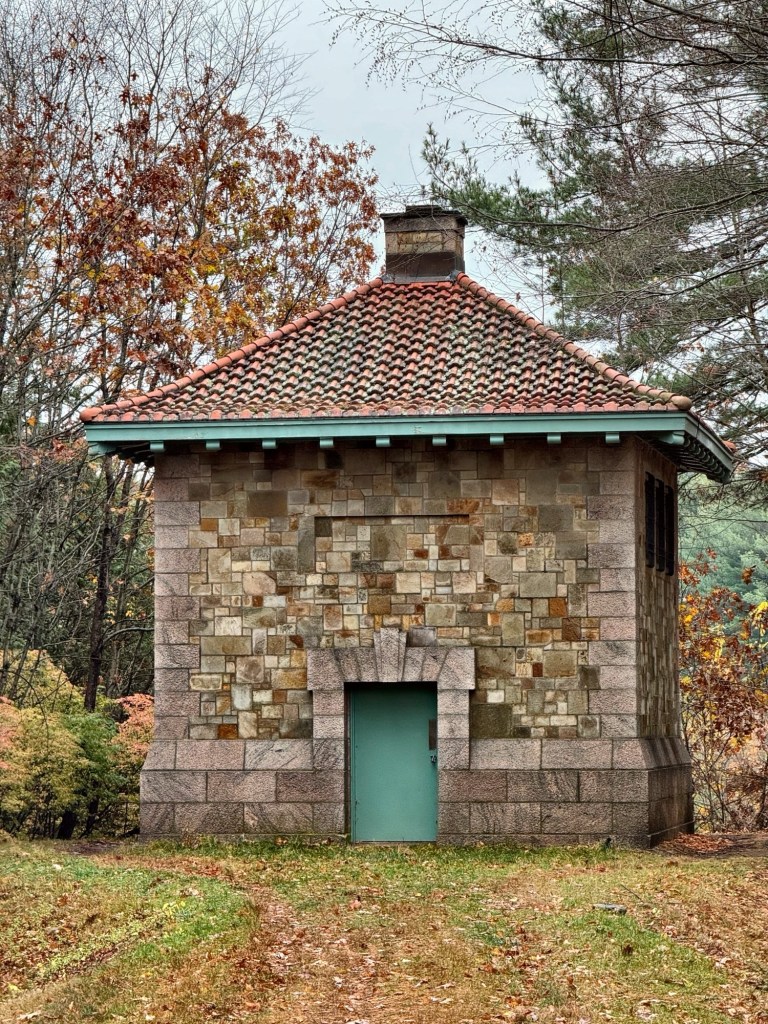
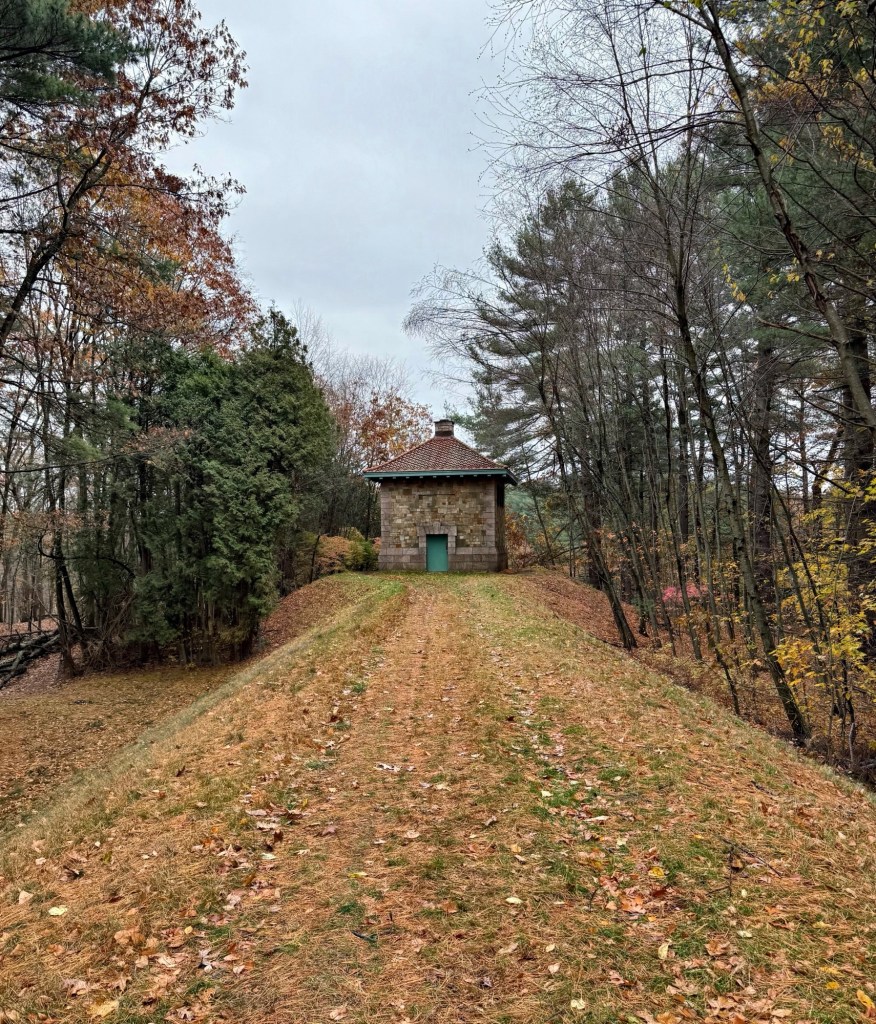
The Weston Aqueduct was designed to deliver water from the Sudbury Reservoir in Framingham to the Weston Reservoir in Weston, Massachusetts. Built between 1901 and 1903, the aqueduct was designed to provide water to the suburbs north of Boston. All of the buildings that shelter the aqueducts above-ground elements, including this structure in Wayland, were designed by the architectural firm of Shepley, Rutan and Coolidge, with landscaping along the route and at the reservoir designed by the Olmsted Brothers, landscape architects. This siphon house, known as the Happy Hollow Siphon House was built in 1903 and was an important part of the aqueduct system, as it transferred water through varied elevations using gravity and pressure to move the liquid without a pump. The aqueduct route is now a long, linear path and remains owned by the Massachusetts Water Resource Authority.
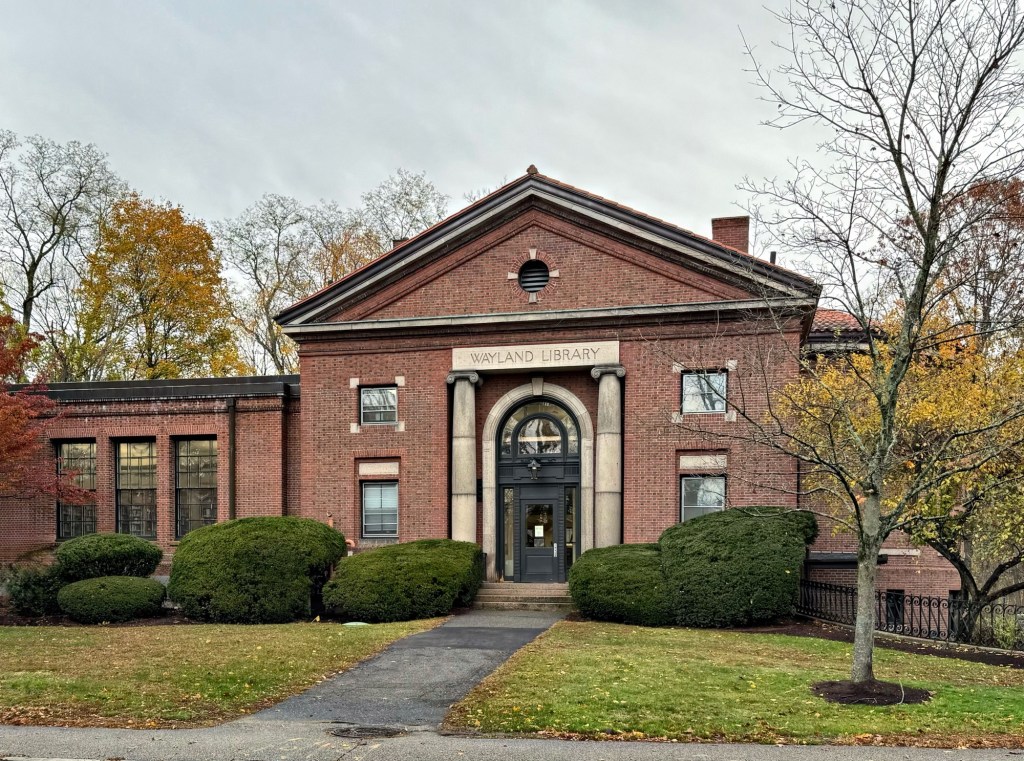
The Wayland Public Library is not only significant architecturally, but also historically as it was founded in 1848, with some claiming that it is the second free public library established in the United States. The first physical space for the Wayland Public Library was established in 1850 using a small room in the Town House. The Town House was outgrown and replaced in the 1870s by a large, Victorian Town Hall (razed in 1957) with designated space in the building for the expanded town library. As Wayland became an affluent Boston suburb in the late 19th century, wealthy resident, Warren Gould Roby (1834-1897), who lived just north of the town hall, donated land and $25,000 to the town for the purpose of constructing a library that would be as fireproof as possible. Designed by architect, Samuel Mead of the firm, Cabot, Everett & Mead, the handsome building is said to have been inspired by Mead’s travels to Italy where he gained an interest in Roman architecture and Renaissance art. The influence is seen on the exterior with the Romanesque Revival style and on the interior with an ornate frieze around the rotunda. The building was expanded in 1988 by Tappe Associates and remains one of the great early 20th century libraries in New England.
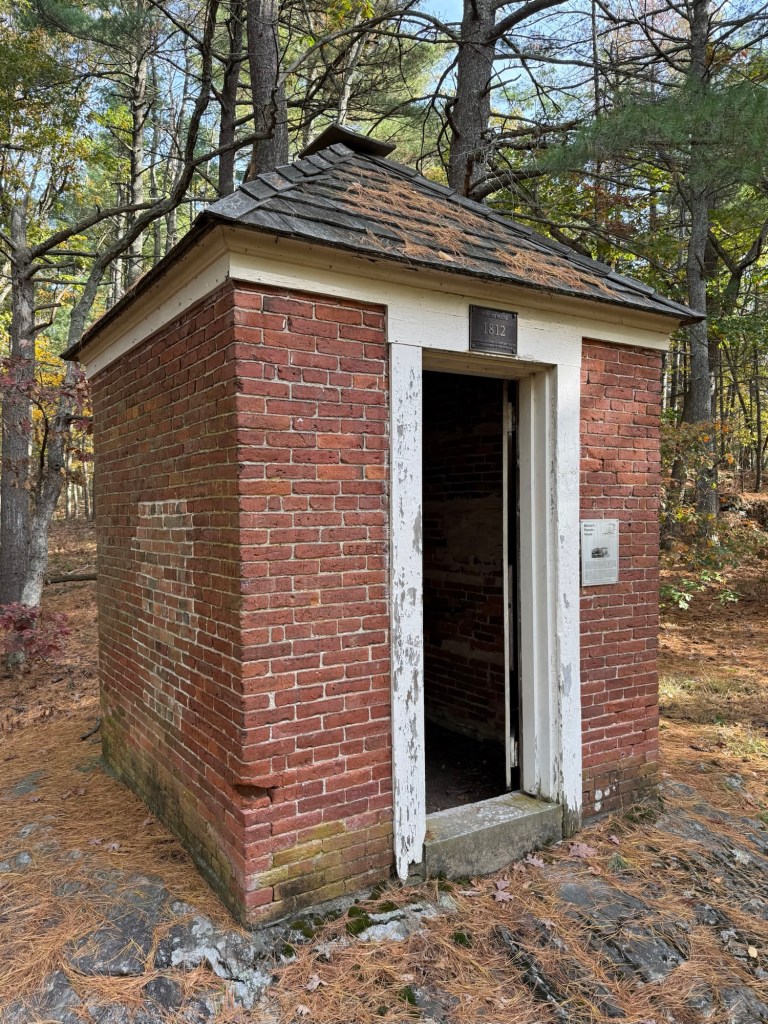
Hidden away in the woods behind the Bolton Town Hall, this small brick structure sits atop a rocky outcropping and showcases a piece of early history we often do not think about. Built in 1812 as a powder house, a storage facility far from homes and businesses to store the town’s supply of gunpowder, musketballs and cannonballs, the structure remains as the town’s oldest extant municipal building. Since the founding of the colonies, the procurement and storage of ammunition had been the responsibility of local governments. Before this structure was built in the forest, Bolton‘s gunpowder and ammunition had been kept under the meetinghouse pulpit, not the best place suitable for highly explosive storage. The structure is a well-preserved example of a typical early 19th-century powder house, built of brick manufactured in town, laid in common bond, measuring just over seven-feet square with a pyramidal wood shingle roof.
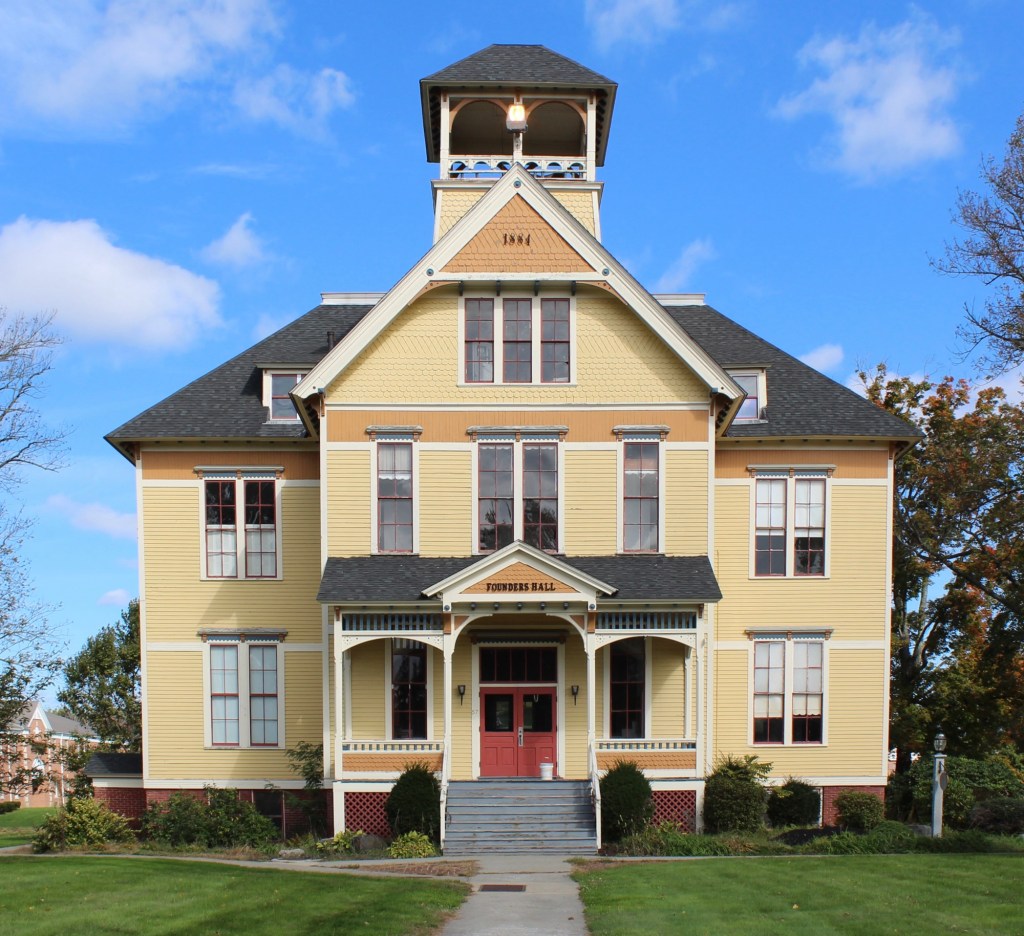
Completed in 1884, Founder’s Hall is the oldest building on the campus of Atlantic Union College, a now defunct college in Lancaster, Massachusetts. The handsome Queen Anne style building was constructed for the school, originally known as South Lancaster Academy by Stephen N. Haskell, an elder of the Seventh-day Adventist (SDA) church. The building was designed by Worcester-based architects Barker & Nourse, and is the oldest educational SDA facility standing. The institution changed names, first to Lancaster Junior College, and then to Atlantic Union College, before the institution closed in 2018. The building and nearby campus buildings were sold in 2021, but the future is uncertain at this time.
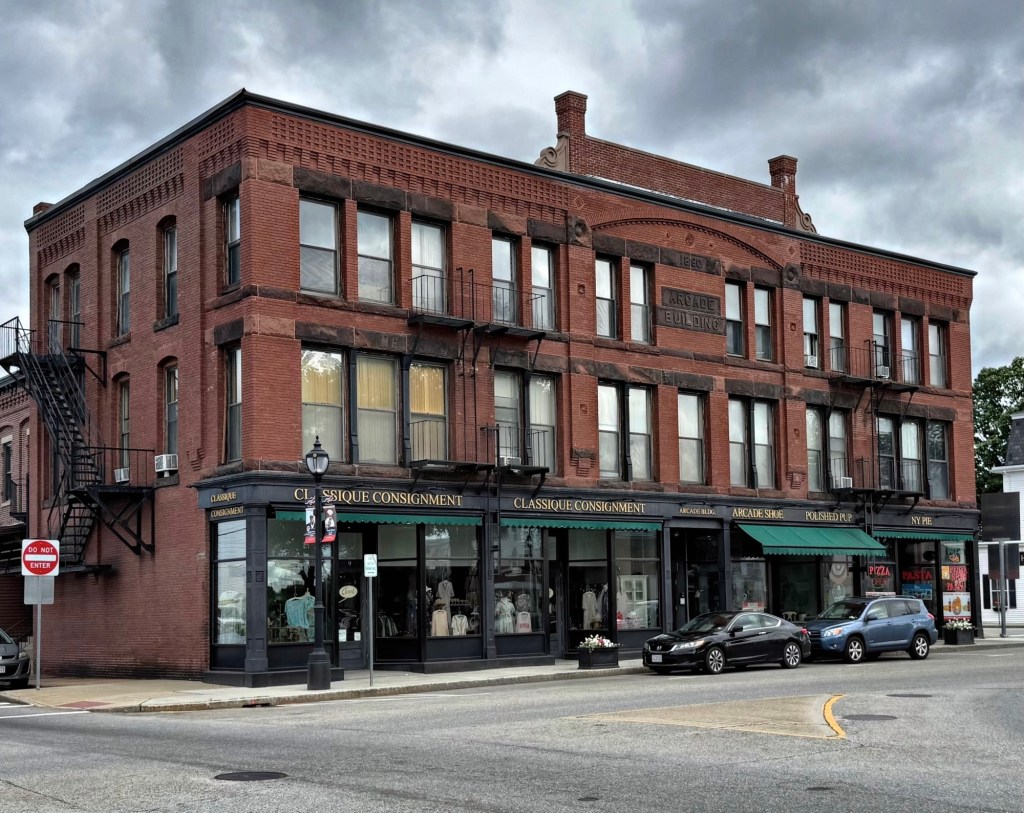
The Second Meeting House of Westborough, Massachusetts, was built on this important site in the center of the village in 1749. It was a plain, wooden building and was used for both church services and town meetings, since church and state were essentially inseparable at the time. When a new church was built in 1837, this building was purchased and converted to commercial use. The first floor of the building was raised, and another floor was added underneath. The steeple was also removed. The building then became known as “The Arcade Building,” a kind of mall with small shops opening onto the porch. By the end of the 19th century, the old wooden building was nearing 150 years old and owners decided to demolish the structure, and replace it with a more permanent and stately block. The New Arcade was built in 1890 and is more Romanesque in style. The handsome brick block has retail spaces on the ground floor with residences above, a great example of mixed-use.
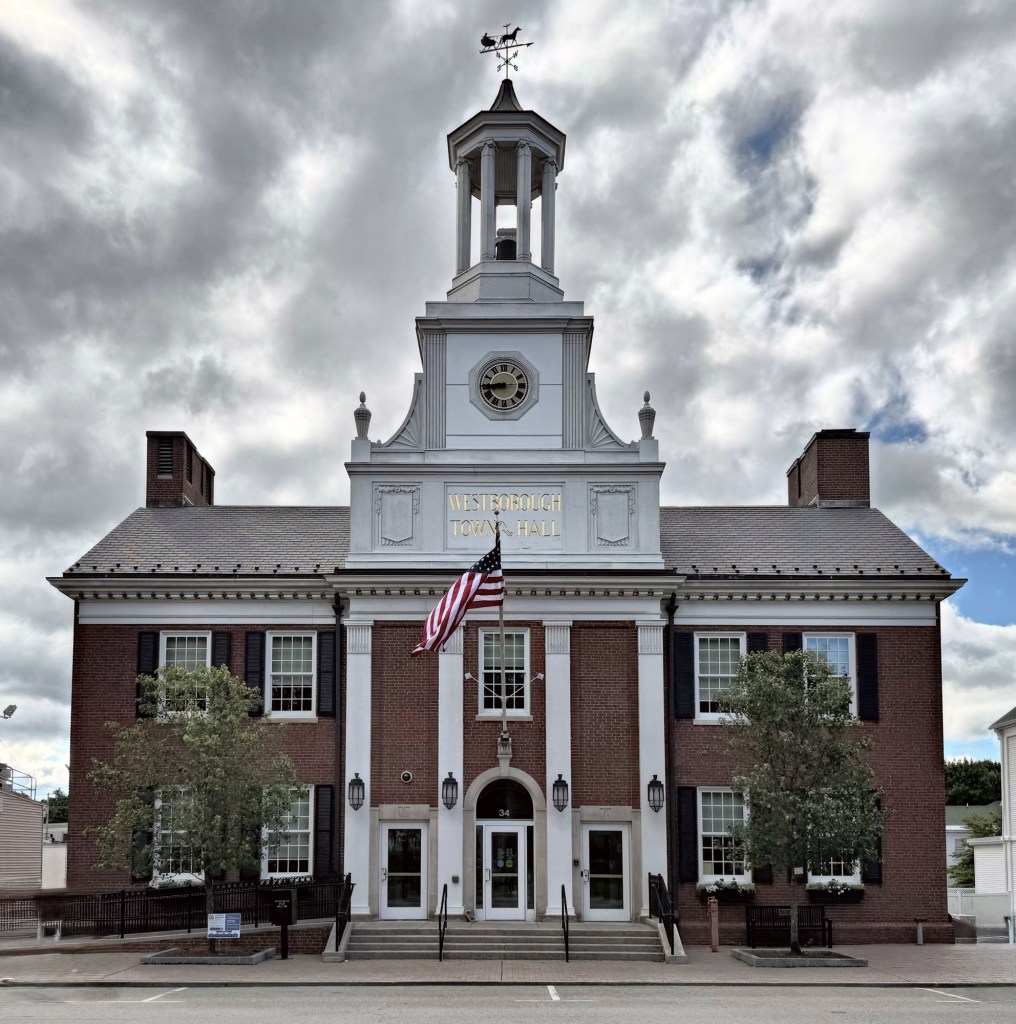
Welcome to Westborough (sometimes spelled Westboro), Massachusetts, a suburban town in Worcester County that has a lot of history! Westborough was first settled by colonists in 1675, when a few families had settled on land in the “west borough” of Marlborough, which was settled decades earlier. Before this, the land was occupied by the Nipmuc Indians, who hunted and fished near Cedar Swamp and Lake Hoccomocco. The town grew as an agricultural center with turnpikes crossing through connecting Boston to Worcester and other points. Later connections from rail and later the Mass Pike, had allowed for rapid growth and commercialization of the current population of over 22,000 residents. After WWI, the town’s outdated wood-frame meetinghouse was deemed inadequate for the growing population and higher demand for quality services. The meetinghouse was demolished and soon-after replaced with this handsome Town Hall in 1929. Designed by Boston architectural firm, Kilham, Hopkins & Greeley, who specialized in thoughtful infill developments and were among the best to design in the Colonial Revival style. The building was highlighted in architectural publications in 1930 with one stating, “An ultra-modernistic building on the elm shaded street of this Massachusetts town would have been an intrusion and would have been felt as such by the citizens, but the designers felt that it was entirely possible to combine the new ideas with the well-known red brick and white cupola of the native idiom, and the result is a modern building harmonizing perfectly within its environment.” I couldn’t agree more!
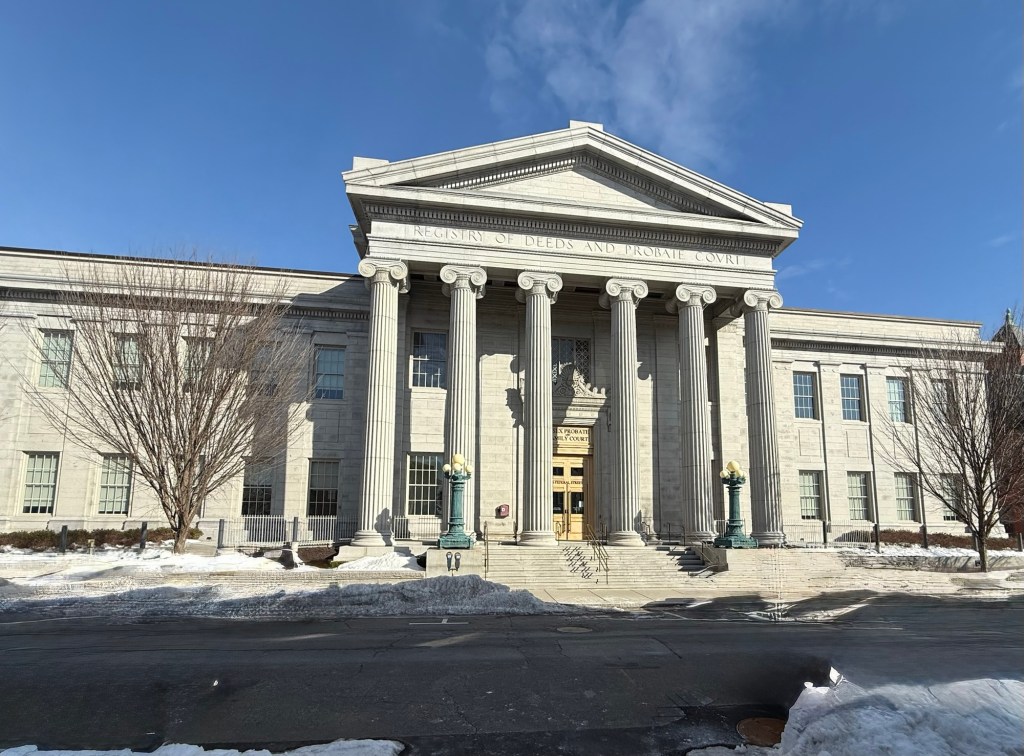
The Essex County Registry of Deeds and Probate Courthouse on Federal Street in Salem, Massachusetts, was built in 1909 from plans by Boston architect, Clarence Blackall. The Neo-Classical courthouse adds to the rich tapestry of Civic buildings there, showcasing the ever-evolving tastes in architecture as the buildings become more contemporary as you move westward down the street. The two-story granite and cast-stone faced brick masonry building is cross-shaped in plan, consisting of a three-bay wide gable-end entrance with Ionic porch of six fluted columns supporting a dentilled entablature and pediment. The central bay within the entry porch contains a large double-door entrance with elaborate architrave and a scrolling pediment incorporating Classical motifs and a Greek god bust. The building underwent a massive restoration in 2017, and was renamed the Thaddeus Buczko Building after retired First Justice Thaddeus M. Buczko.
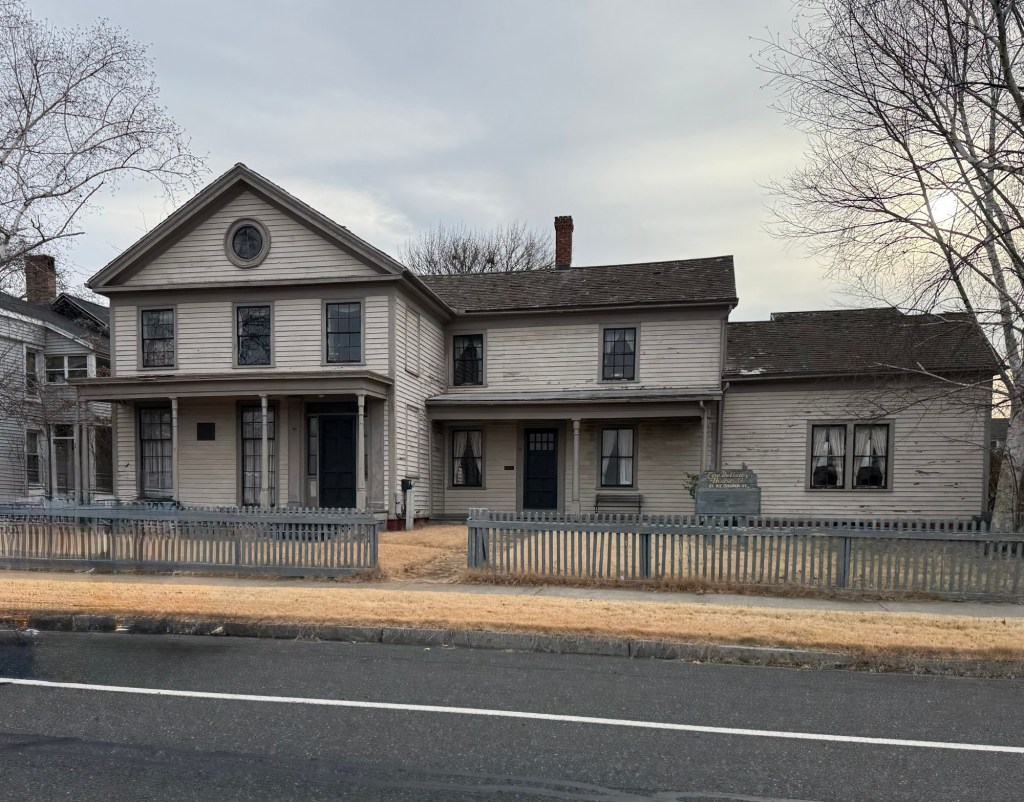
The Edward Bellamy House is the only National Historic Landmark in Chicopee, Massachusetts. Its landmark designation was in honor of journalist and Utopian writer Edward Bellamy (1850–1898), whose home it was for most of his life. The house is located on Church Street in Chicopee Falls, an industrial village in town, which developed around mills and the Chicopee River. Built in for Harmon Rowley, a town selectman and local merchant around 1840, the house would later be purchased in 1852 by Rufus King Bellamy, a Baptist minister, moved the family into this house after its construction. The house, where Edward Bellamy spent much of his childhood is a well-preserved example of a late-Greek Revival residence, and today serves as a museum with rented offices that explores Bellamy’s ideas on social reform, economic justice, and the future of society. From this house, Edward Bellamy wrote Looking Backward, a utopian novel that was instantly popular. Within a year it had sold 200,000 copies, and by the end of the 19th century had sold more copies than any other book published in America up to that time except for Uncle Tom’s Cabin by Harriet Beecher Stowe and Ben-Hur: A Tale of the Christ by Lew Wallace. His visionary work, which proposed a world free of poverty and class divisions, sparked a nationwide movement and influenced early American socialism. Edward Bellamy died of tuberculosis at his home, ten years after the publication of his most famous book. He was 48 years old. Today, the house stands as a reminder of Bellamy’s lasting legacy and his role in shaping conversations about social progress in the late 19th and early 20th centuries.
The General Israel Putnam Housein Danvers, Massachusetts, was built circa 1648 by Lieutenant Thomas Putnam on farmland that then consisted of 100 acres. In 1692, his youngest son, Joseph Putnam, lived here, inheriting the property over his half-brother, Thomas Putnam, Jr. (1652-1699), causing friction within the family. During the infamous witch trials and hysteria in Salem Village, Joseph Putnam was one of two people who took notes during the examinations of the first three to be accused of witchcraft in 1692 – Sarah Good, Sarah Osborne, and Tituba. From that point forward, he was one of the most outspoken opponents of the proceedings, which put him in direct conflict with most of the Putnam family, especially that of his half-brother Thomas. Fearing accusations against him by his half-brother, Joseph was said to have kept horses saddled at all times, ready to escape at a moment’s notice. He was never accused, though Thomas Putnam was responsible for the accusations of 43 people, and his daughter was responsible for 62. In 1718, Israel Putnam, the son of Joseph Putnam, and later Commander of the colonial troops at the Battle of Bunker Hill, was born in this house. It is the only extant structure with direct ties to Commander Putnam. During the Battle of Bunker Hill, Putnam is thought to have ordered William Prescott to tell his troops, “Don’t fire until you see the whites of their eyes.” This command has since become one of the American Revolution’s notable quotations. It was given to make the best use of the low ammunition stocks that the troops had. The Putnam House remained in the family into the 20th century, and due to highway and commercial expansion, the property now sits in the middle of a cloverleaf intersection of two highways. The house was given by the Putnam family to the Danvers Historical Society in 1991, but as of 2020, the Putnam family once again owns the property. The house is not holding up well and I could not locate plans for restoration or preservation of it online. This house deserves to be preserved.
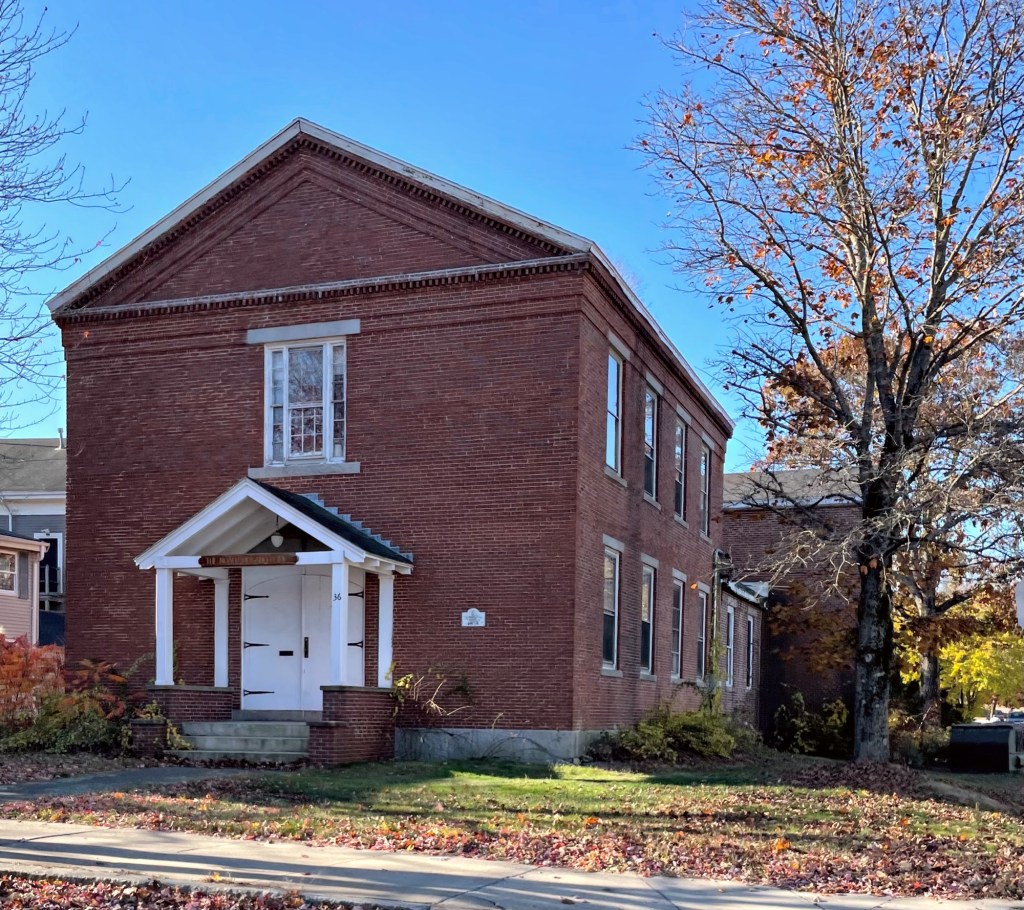
Constructed in 1854 for intermediate and high school classes at a time when one-room schoolhouses were still the rule in Georgetown, this well-preserved brick building is a reminder as to how far education and schooling has come. As nearby one-room schools consolidated and after the new Central School Building (now Georgetown Town Hall) was built in 1905, this Greek Revival school building was converted to town offices. The town was still fairly small, so the offices only occupied the ground floor, and the town rented the upper floor to the All Saints Episcopal Church, who purchased the building in 1917 and occupied it for nearly 50 years. They likely added the Craftsman style entry porch. The church was deconsecrated in 1966, and the building sold in 1970 to the Noack Organ Manufacturing Company, who added an assembly room at the rear.
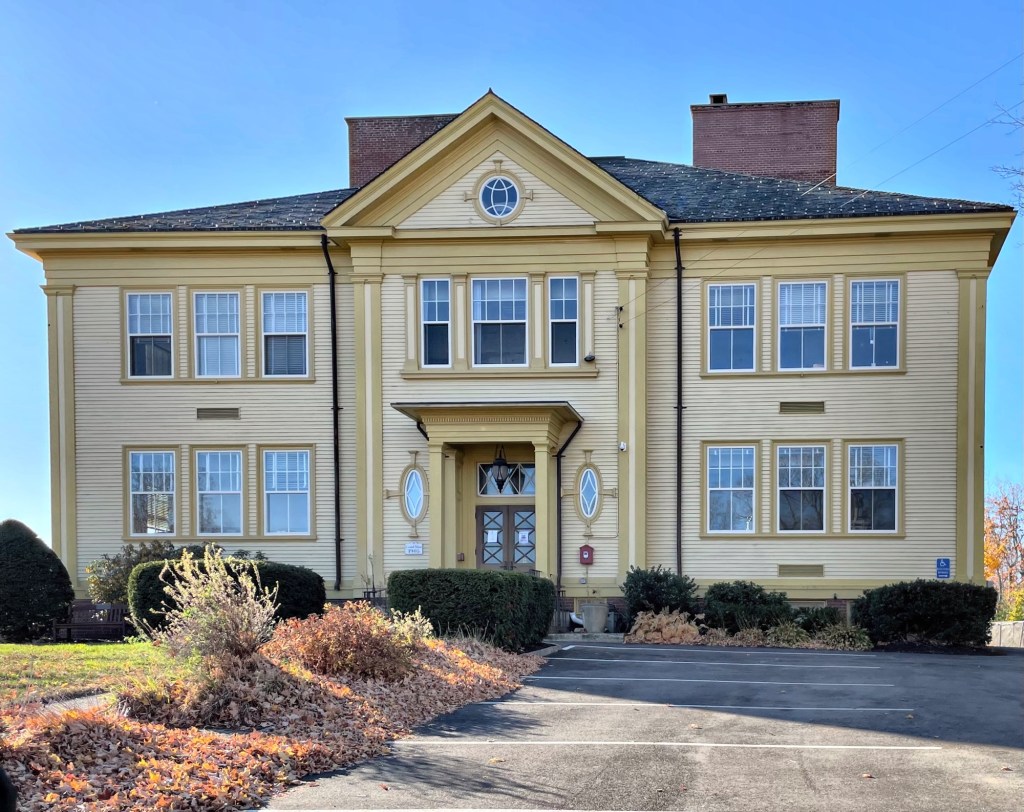
Welcome to Georgetown! The Georgetown Central School, now known as the Memorial Town Hall, stands near the historic commercial center of Georgetown, Massachusetts, a rural community in Essex County located about 28 miles north of Boston. The two story wood-frame building was built in 1905 to a design by the Boston architectural firm of Cooper and Bailey, and located at the site of an earlier one-room schoolhouse built in the 18th century. It was Georgetown’s first multi-room school building, and was built after the town’s first high school/town hall burned down in 1898. The Colonial Revival style school building was eventually outgrown and was no longer needed as an educational facility. It was converted to municipal offices in 1974, a use that has remained ever since. The town has taken pride in this building, restoring much of the exterior details and slate roof.
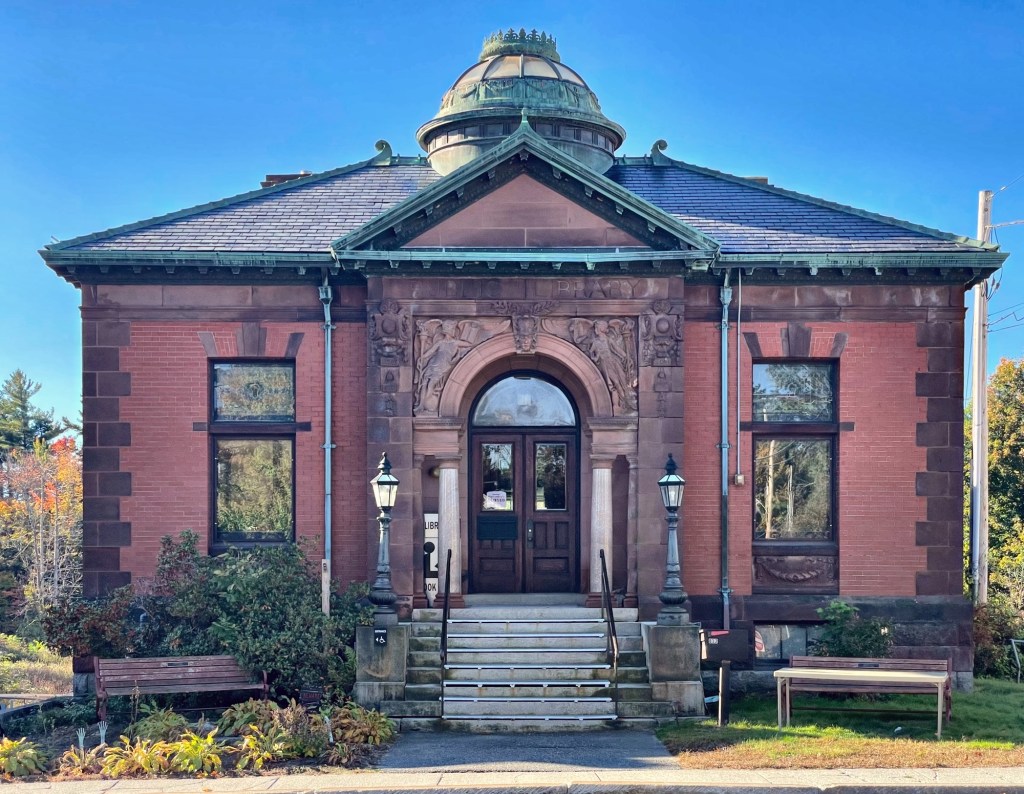
The Ashby Public Library in Ashby, Massachusetts, was built in 1902, completely funded by a donation from Edwin Chapman (1841-1915) who lived across the street from the new library. Mr. Chapman was raised in Ashby and became a wealthy Boston-area merchant in the meat trade by the late 19th century. Before this library was built, the town’s library collection was housed in the Wyman Tavern. The building was designed by architect Henry M. Francis in the Neoclassical style with Romanesque detail in brick and brownstone to make the building fireproof. The library was added onto in the rear in 2006 by The Galante Architecture Studio, which is recessed and mostly visible from the rear parking area. The addition is Modern in style to distinguish itself from the main library building.
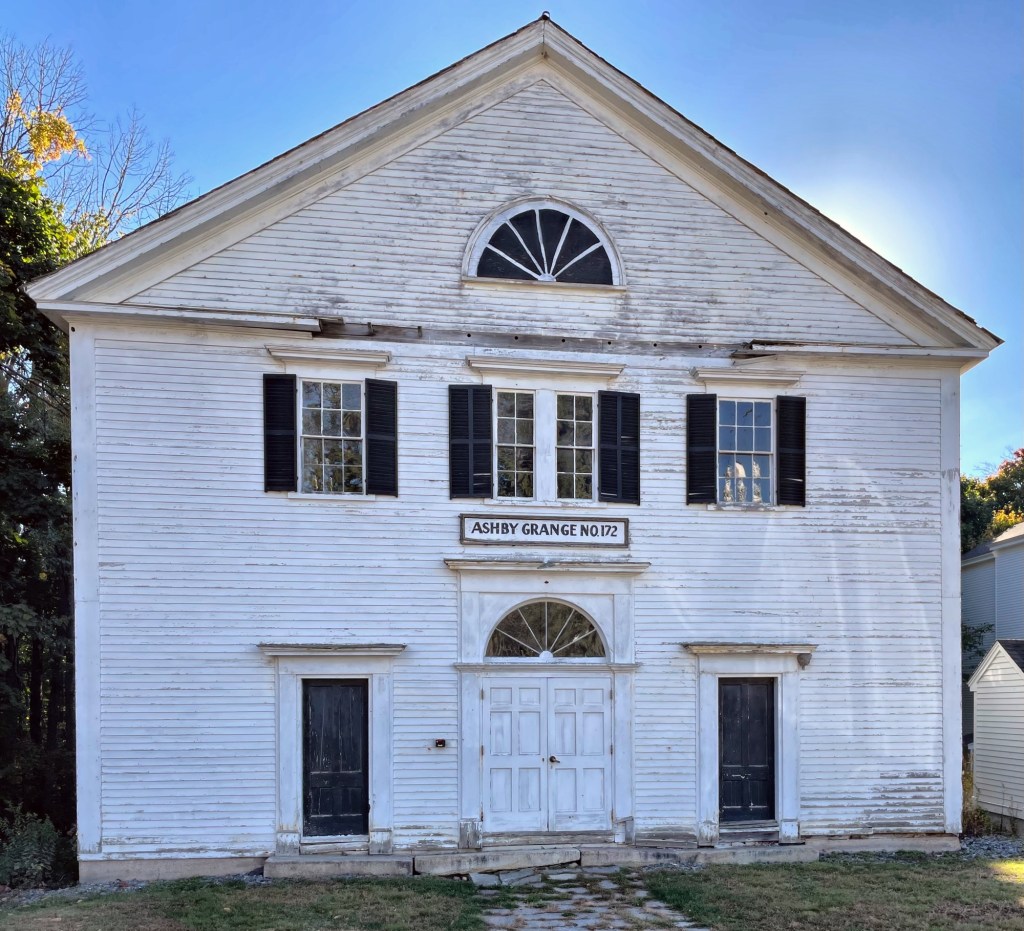
In 1819, less than a decade after the First Parish Church in Ashby, Massachusetts was built, a group of parishioners split to form their own congregation, erecting this Federal style building as its new house of worship a year later. The congregation grew and eventually would build a new church, the Ashby Congregational Church, in 1835. The building was soon after, sold to a group of citizens interested in starting an academy. In 1836 they opened Ashby Academy, which offered education beyond the eighth grade for those who could afford it. Ashby Academy closed in 1860 and the Town of Ashby purchased the building in 1864 for a high school and town offices, a use that remained until a new school was built in 1902. Since the 1970s, the building has been occupied as a local grange hall, and maintained by a local group, the Friends of the Ashby Grange Hall. The building is a significant, transitional Federal/Greek Revival style building in town with its pediment and elliptical windows.
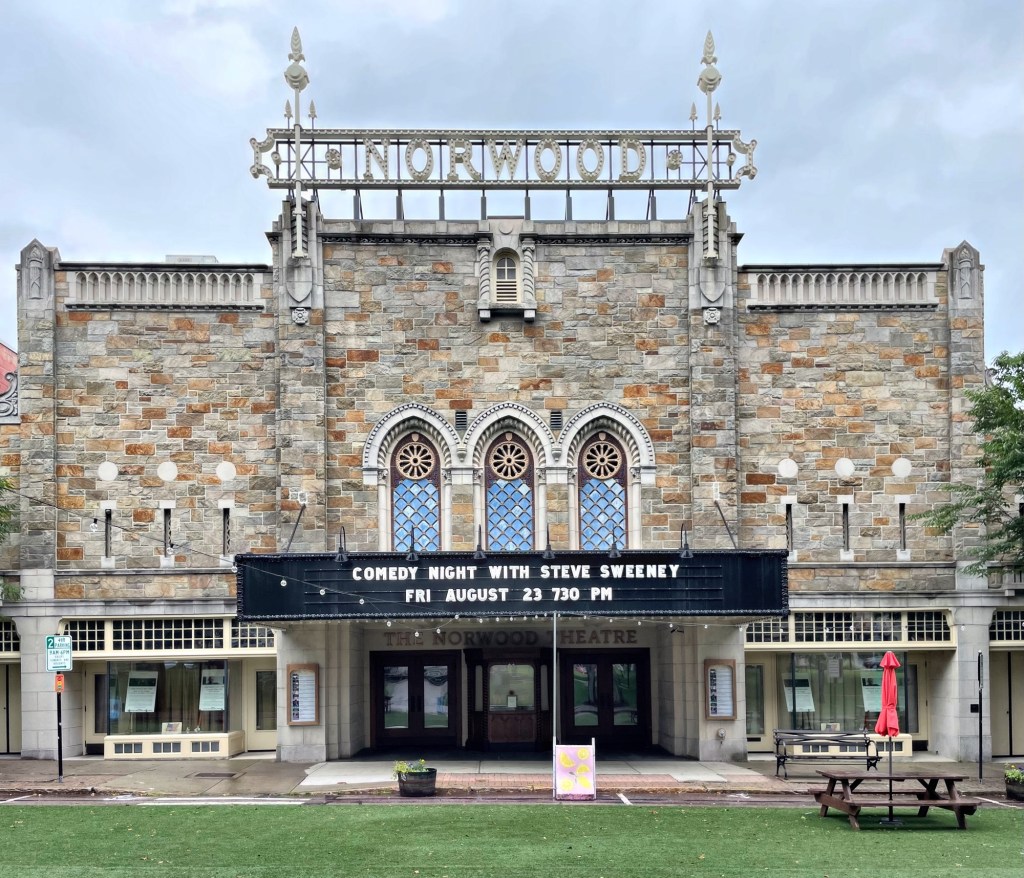
The Norwood Theatre was built in 1927 as a high-style showpiece for the re-invigorated downtown of Norwood, Massachusetts. Built at the same time as the Norwood Town Hall building, the building was constructed at a time of great development in the town, as local entrepreneur and philanthropist, George Willet and landscape architect Arthur A. Shurcliff, created a plan to evolve Norwood from a sleepy rural town to a commercial center. Architect William G. Upham is credited with designing the theatre and he enjoyed a prolific career which encompassed the design of masonic temples, commercial blocks, theatres, homes, and of course, the Norwood Town Hall. The Norwood Theatre was designed in a high-style Spanish Renaissance Revival style and was designed for motion pictures but also included a stage for possible vaudeville and theatrical productions. By the mid-20th century, a Modern sign covered much of the original facade, and lasted until the building came under its current ownership in 2010. A careful two-year restoration brought the theatre back to its former glory.