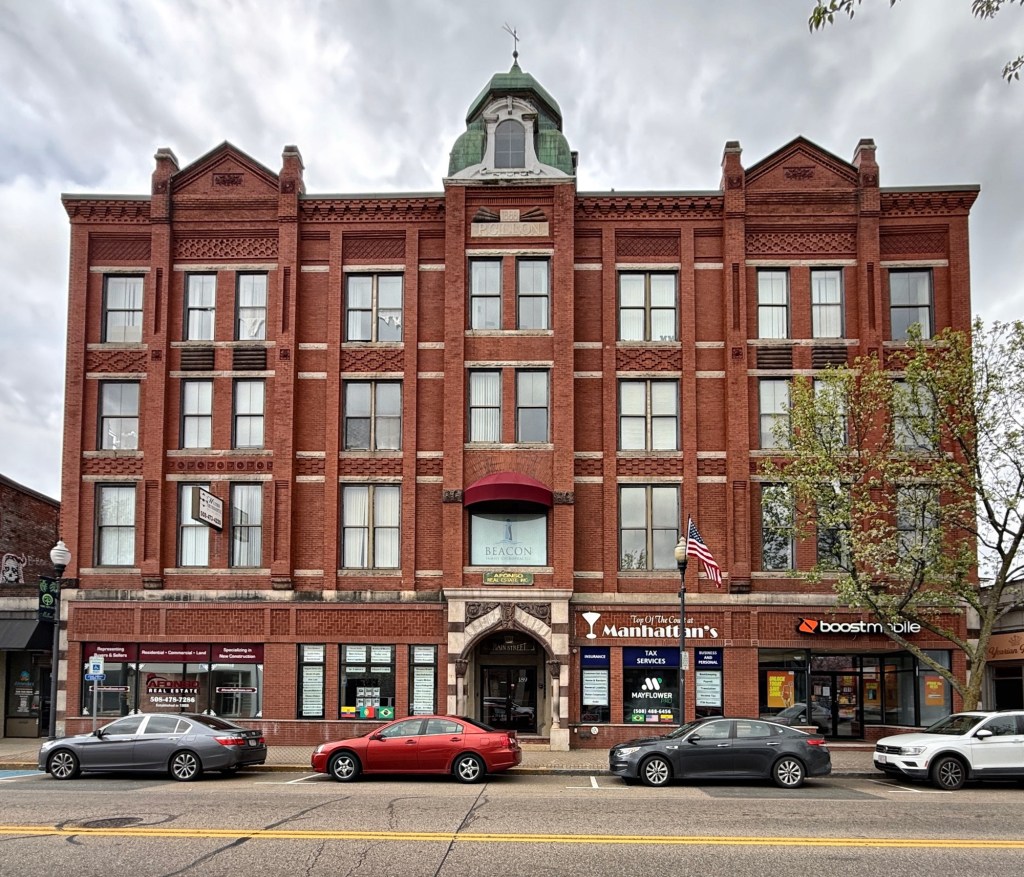
Gillon Block // 1888

Located on Main Street in Milford, Massachusetts, the stately Gillon Block is one of the town’s finest buildings and an excellent example of eclectic, late Victorian commercial architecture. The block was erected in 1888-9 for owner Patrick Gillon (1843-1899), who inherited his late-father’s distillery and bottling business in Milford, and designed by local architect Rinaldo V. Carey. The panel brick facade is divided into seven sections with a central projecting section topped by a tower capped by a copper onion dome. The four-story block included retail space at the ground floor with offices and meeting halls on the upper stories, rented to tenants and organizations.

Wheaton-Capper House and Store // c.1760

Built before the Revolutionary War, this charming building on Water Street in Warren, Rhode Island, dates to around 1760 and was The house was occupied by D. B. Wheaton as a residence and later by James Capper (1819-1891), an Irish immigrant who settled in Warren. James’ wife Ann, worked as a dressmaker and the couple sold goods out of the storefront in their residence. The retail storefront helps to tell the evolution of Water Street from a more industrial and residential street to a commercial corridor, similar to Main Street. The Wheaton-Capper House and Store legacy lives on with the building still occupied by a local business and residence.

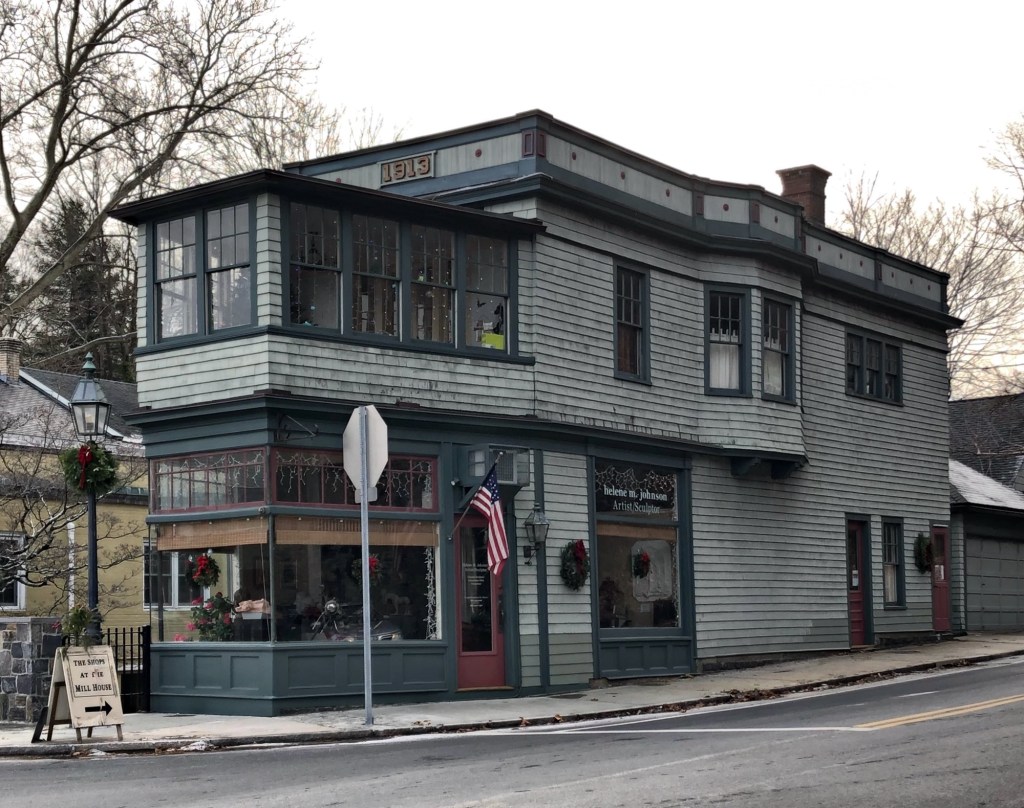
Chester Flatiron Building // 1913

At the junction of West Main and Main Streets in Chester Village, Connecticut, this unique flatiron commercial building stands overlooking the Pattaconk Brook that cuts through the center of town. In 1913, this two-story block was built with ground floor retail and a second floor residence for owner, Elmer Pierce, who ran his pharmacy downstairs. By 1920, the building was owned by Jacob Feinstein, who raised his family on the second floor and had his clothing business, “Feinsteins” in the store below. Later, the retail space was occupied by Child Design, a wooden toy store, and after that, a lighting fixture store. Historic main street buildings are often incubators for small and local businesses, keep the chain stores near the highways!

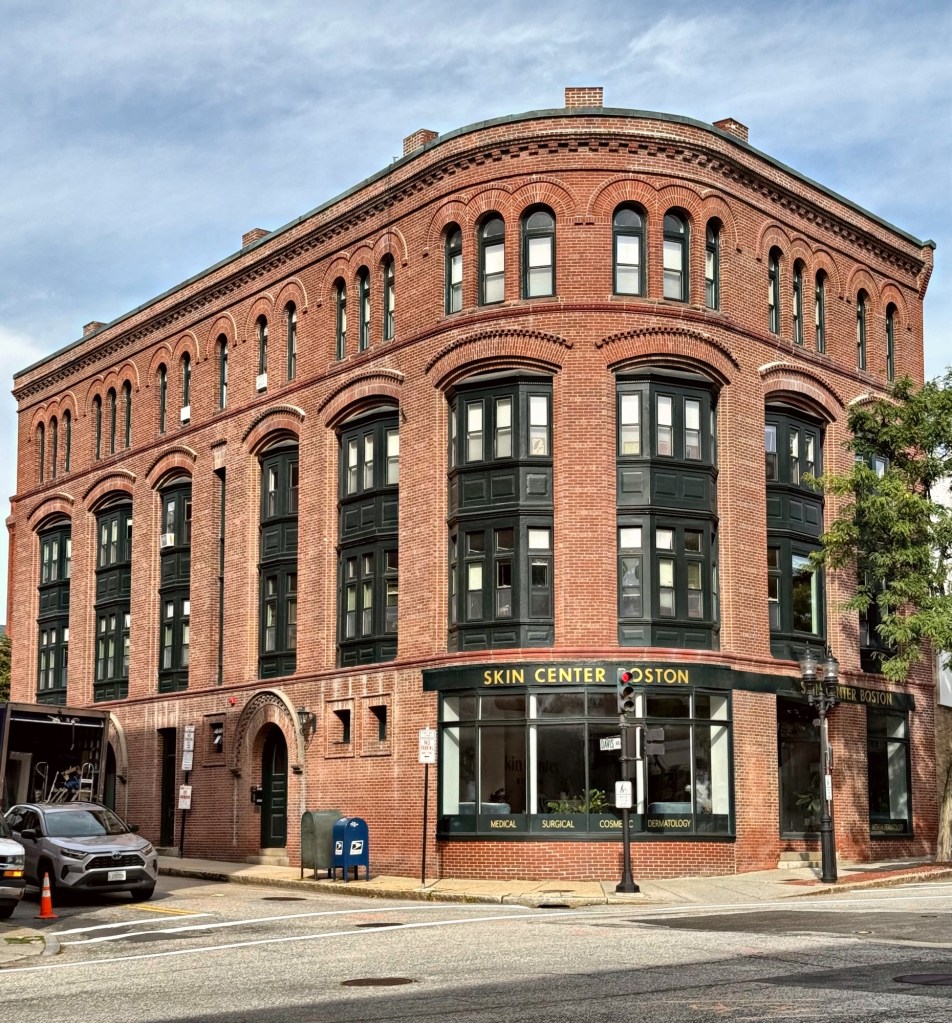
Seamans Block // 1888

One of the more impressive commercial blocks in Brookline is located at the corner of Washington Street and Davis Avenue in Brookline Village. The Seamans Block was developed by its namesake, James Manning Seamans (1834-1908), a wealthy grocer who operated a store from the building. The handsome masonry block was built from designs by the firm of Shepley, Rutan and Coolidge, a successor firm to H.H. Richardson. As partner of the firm, Charles H. Rutan lived just down Davis Avenue, it is likely that he was in charge of this design. The structure follows the Richardsonian Romanesque style, popularized by Richardson through the rounded corner and heavy arches, but is done entirely in brick rather than adding brownstone or terracotta detailing. The building has long been an excellent example of a historic “mixed-use” block with ground floor retain and apartments above, something that many new developments try and emulate today. 

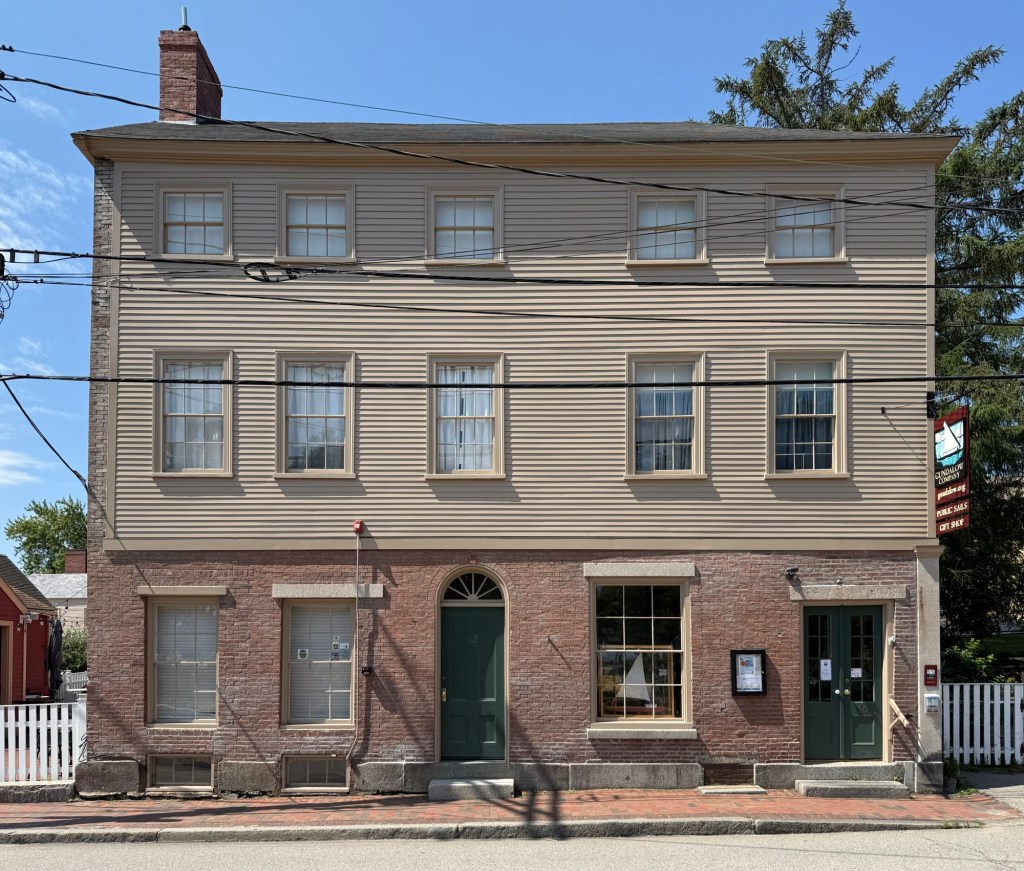
Jefferson House and Stores // c.1816

The Jefferson House and Stores on Marcy Street sits near the working port and harbor of Portsmouth, New Hampshire, as a historic Federal style mixed-use building. The structure dates to the early 19th century and consists of a brick first floor and clapboarded upper stories. Likely due to coastal flooding during storms, the brick ground floor with slightly raised granite foundation would provide some relief from floodwaters getting inside the building. The shortened windows at the third floor, fanlight over the main entrance, and form with shallow hipped roof, are all hallmarks of the Federal style. The building is today owned by Strawbery Banke and rented out to the Gundalow Company, a non-profit that seeks to, “protect the Piscataqua Region’s maritime heritage and environment through education and action.”

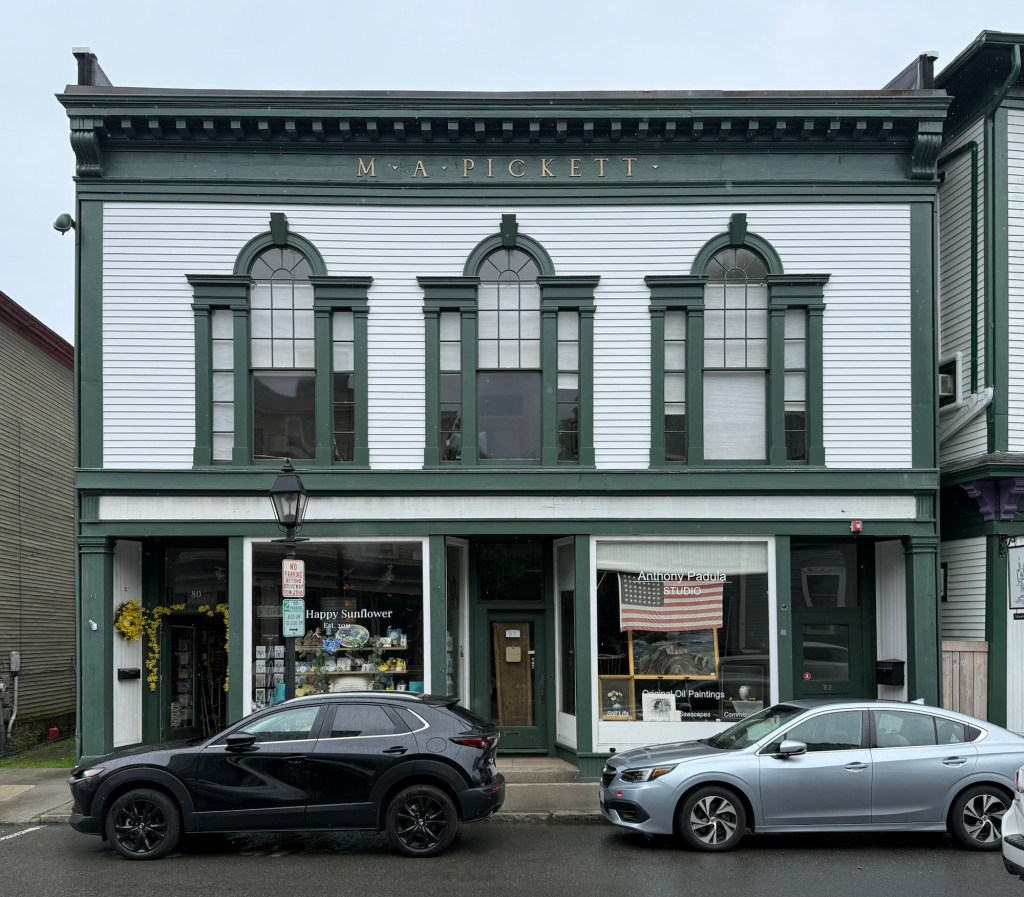
M. A. Pickett Building // 1902

The M. A. Pickett Building on Washington Street in Marblehead is a spectacular example of a commercial building of the early 20th century designed in the Colonial Revival style. The building was designed in 1902 by the firm of Peare & Quiner, who worked mostly in the North Shore of Massachusetts and funded by members of the M.A. Pickett Association, a fraternal organization founded in the late 19th century and named after Moses A. Pickett (1780-1853), who left his entire will to: “comfort the widow and the fatherless, the aged, the sick, and the unhappy”, also donating his home to the use and funding for its preservation. In 1866, a hand-drawn fire engine named after M. A. Pickett, was used by a group of volunteer firefighters, who later would create the club named after Mr. Pickett. The building originally held a barber shop and a creamery on the ground floor with a meeting hall and billiards room above for members of the Pickett Association. Today, the building is lovingly maintained, including the three stunning Palladian windows at the third floor.

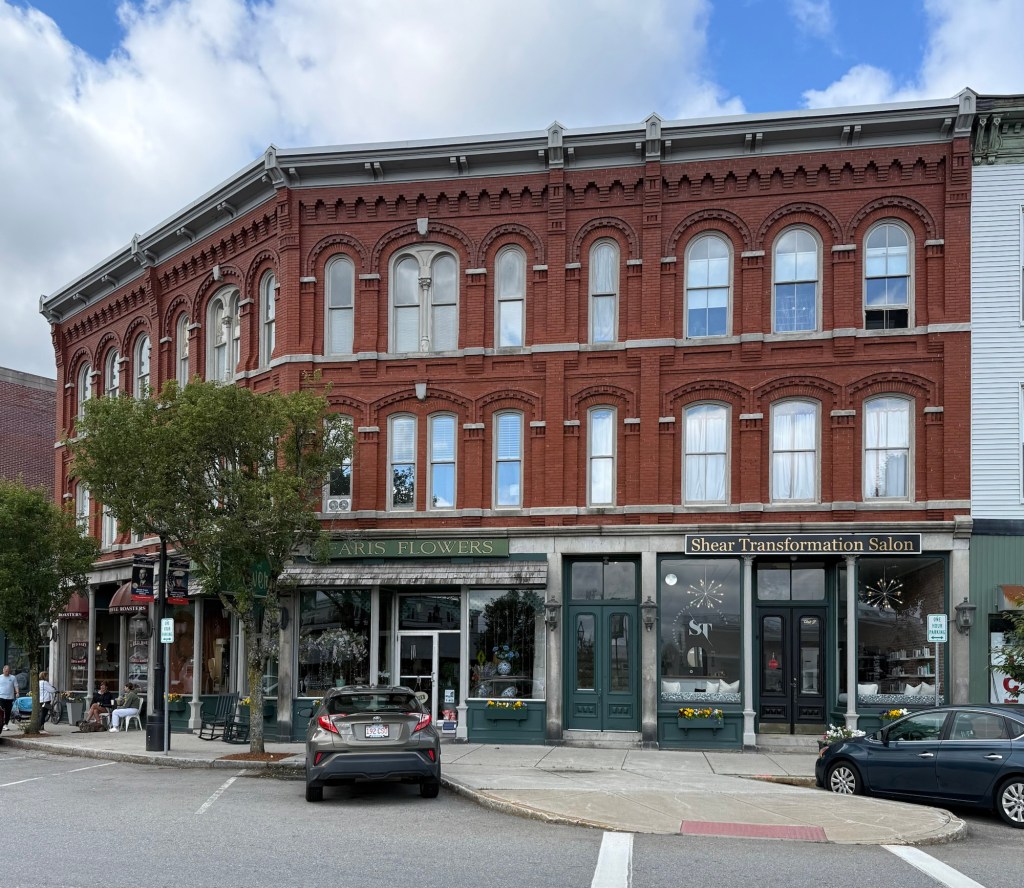
Henry Block // 1873

Mid-late 19th century commercial blocks provide human-scaled density, high quality design, and often contain intimate storefronts providing reasonable rent to local businesses. The Henry Block in Westborough, Massachusetts, is one great example of a historic commercial building that checks all of these boxes. The brick building was constructed in 1873 by its namesake, Samuel Gates Henry (1813-1877), a pharmacist and dentist who rented space in an earlier building on the site. When a fire destroyed the old structure, Samuel Henry had this block erected on the site and leased out spaces in the building to other businesses and tenants in the floors above. The block is Italianate/Italian Renaissance Revival in style with the typical round arched windows and bracketed cornice. The granite storefronts even retain some of the original cast-iron supports.

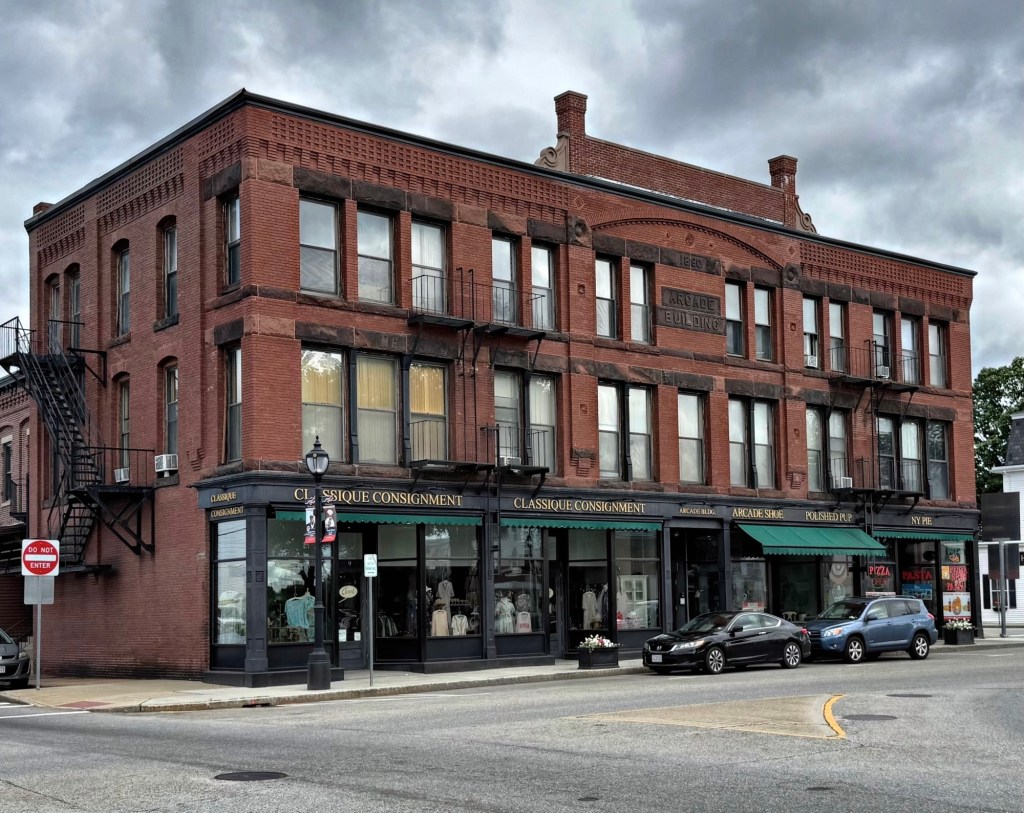
Westborough Arcade // 1890

 The Second Meeting House of Westborough, Massachusetts, was built on this important site in the center of the village in 1749. It was a plain, wooden building and was used for both church services and town meetings, since church and state were essentially inseparable at the time. When a new church was built in 1837, this building was purchased and converted to commercial use. The first floor of the building was raised, and another floor was added underneath. The steeple was also removed. The building then became known as “The Arcade Building,” a kind of mall with small shops opening onto the porch. By the end of the 19th century, the old wooden building was nearing 150 years old and owners decided to demolish the structure, and replace it with a more permanent and stately block. The New Arcade was built in 1890 and is more Romanesque in style. The handsome brick block has retail spaces on the ground floor with residences above, a great example of mixed-use.

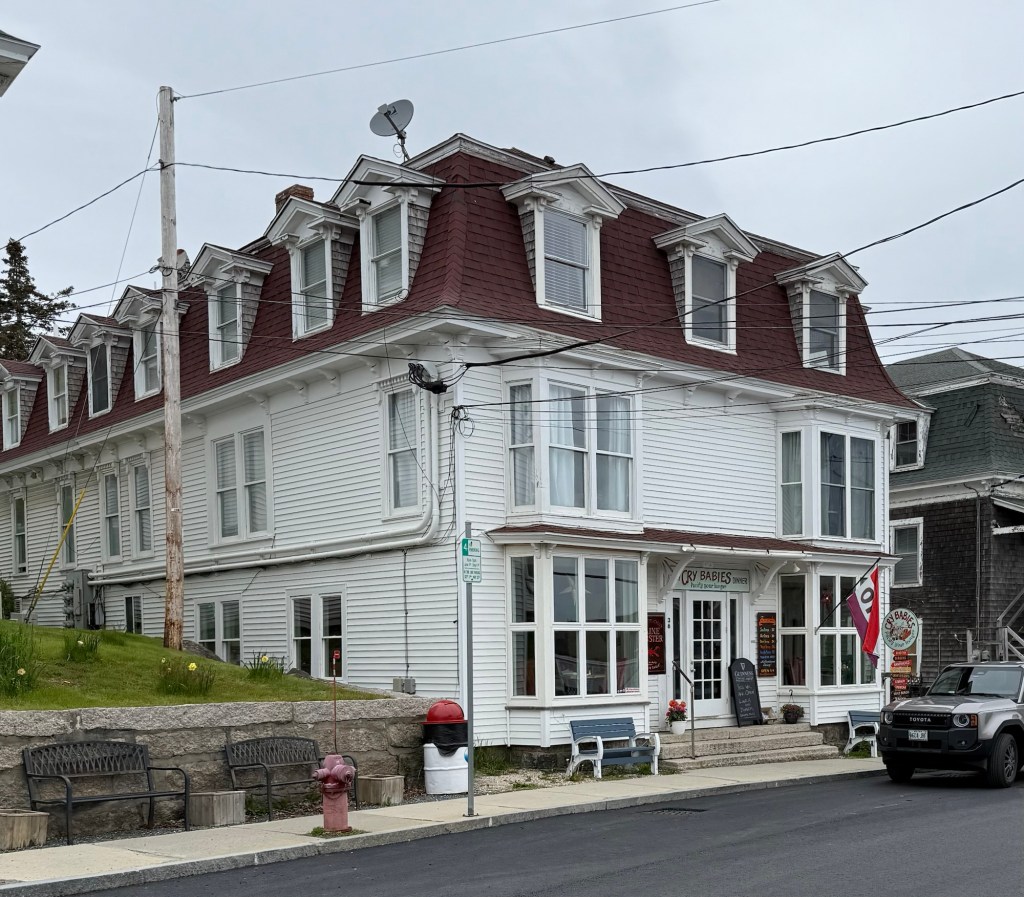
Central Hall // c.1885

Located next door to the former High School (now the Town Hall) of Stonington, this mansard-roofed commercial building on Main Street is a prototypical example of late 19th century mixed-use architecture seen all over Maine. This building was constructed in the 1880s and known as Central Hall. The building contained retail spaces at the ground floor and tenement housing in the upper floors for workers at local granite quarries. The building is well-preserved and an important contributing building to the working village of Stonington.

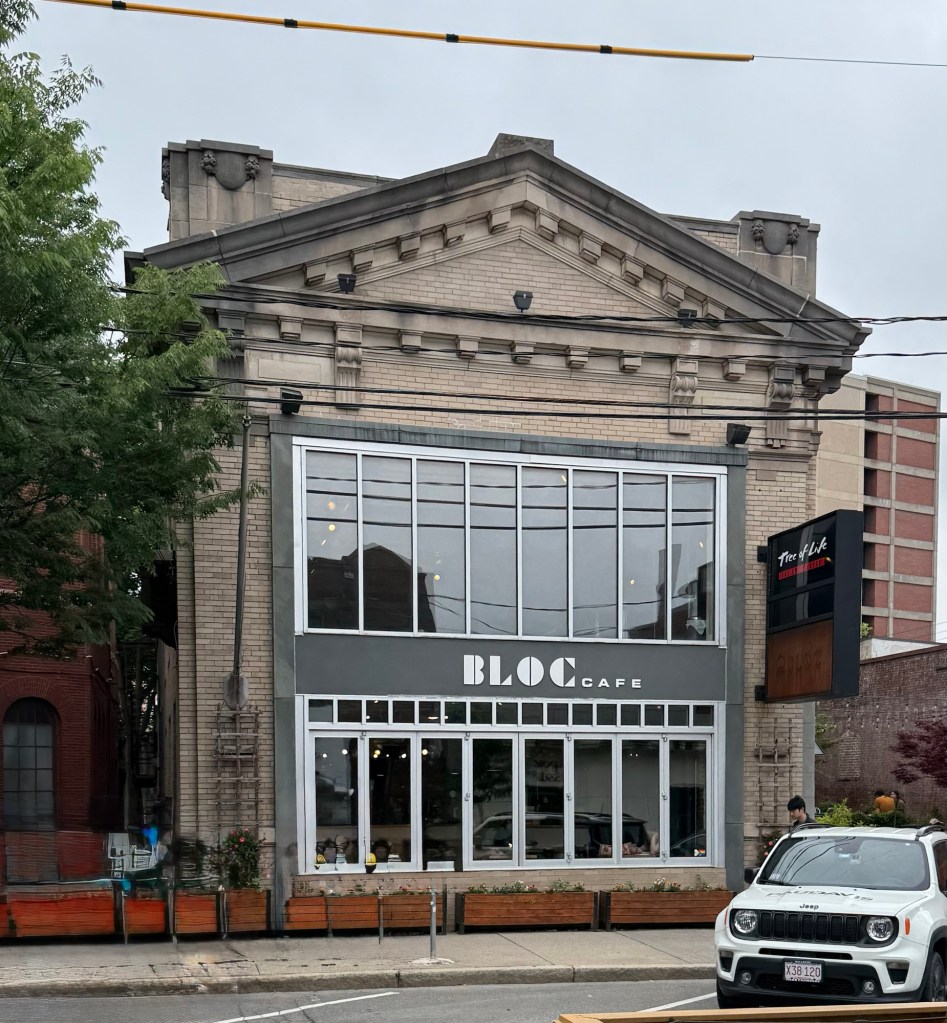
Somerville National Bank // 1908

This altered, yet significant building on Bow Street in Somerville’s Union Square commercial district, was built in 1908 as the Somerville National Bank. The Somerville National Bank was chartered in 1892 and was the city’s first and only local bank until the 1930s. After nearly two decades of renting space in another building, the bank hired the architectural firm of Gay & Proctor, to furnish plans for this handsome suburban bank building. Constructed of brick with stone trim, the building originally featured a large, arched window at the facade, which was replaced by a more contemporary opening. Classical Revival details remain, from the monumental gable pediment with dentils, to the parapet with classical moldings. The bank has been repurposed into mixed use space, with a cafe on the ground floor and yoga and wellness studio above.

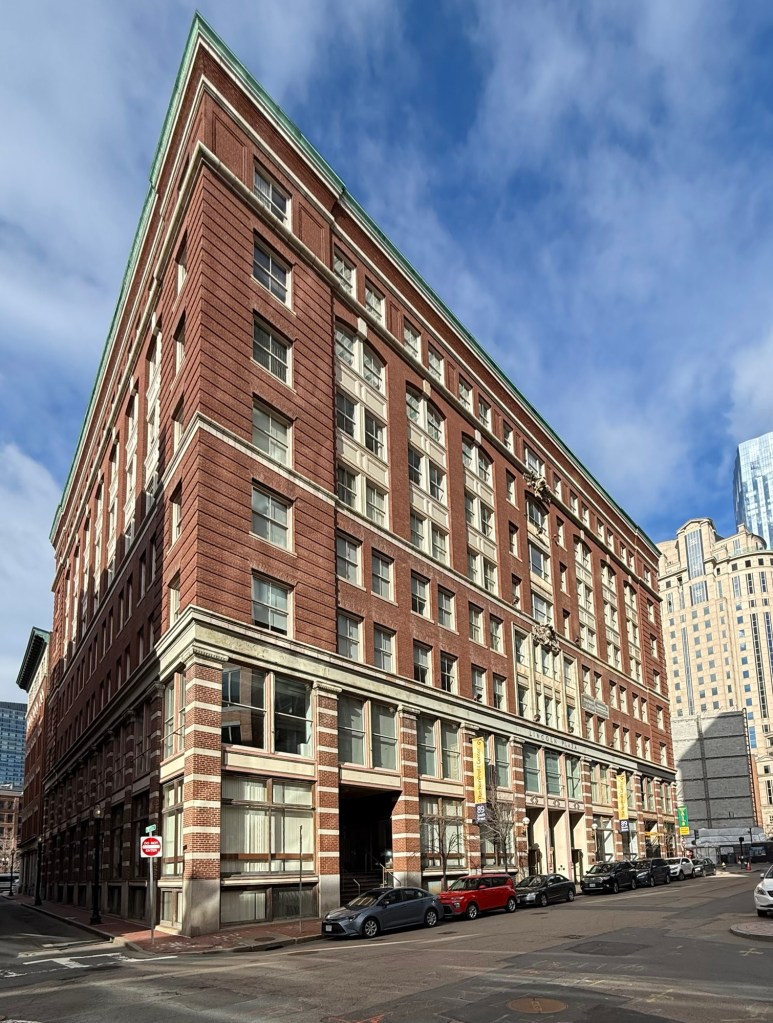
South Street Building // 1899

One of the larger mercantile buildings in the Leather District of Boston is this turn-of-the-century block, historically known as the South Street Building. Bounded by three streets, this eight-story building was constructed in 1899 from plans by Winslow, Wetherill & Bigelow and is a great example of a Classical Revival style commercial block with Beaux Arts motifs to further decorate the facades. In 1901, as expected, the city directories list many leather and soft goods-related occupants in the building, including: The American Calfskin Leather Company, John F. Moore Co., leather dealer, and Charles D. French, leather remnants dealer. The building was renovated in 1990 and rebranded as Lincoln Plaza, becoming a major space for non-profit offices.

Lincoln Building // 1894

Designed by a prominent architect, Willard T. Sears, the Lincoln Building at Lincoln and Essex streets, is a handsome example of a late 19th century mercantile structure consisting of stores, office & loft space, serving as an important visual anchor the almost uninterrupted neighborhood of the Leather District of Boston. The building is the second of its name, with the first Lincoln Building succumbing to the Lincoln Street Fire of 1893, which started as a small fire in a restroom of a toy wholesaler, eventually spreading to a storage room full of fireworks, which exploded, eventually killing at least five, and forced many others to jump from buildings to seek safety. The replacement building is Renaissance Revival in style with a stone base and classically decorated facades. The recessed entrances set within arches and the series of columned bays at the ground floor are truly special. The building was long-occupied by leather dealers and companies, but was converted to residential use in 2006 with condos on the upper floors and retail spaces on the street.

Custom House Block // 1853

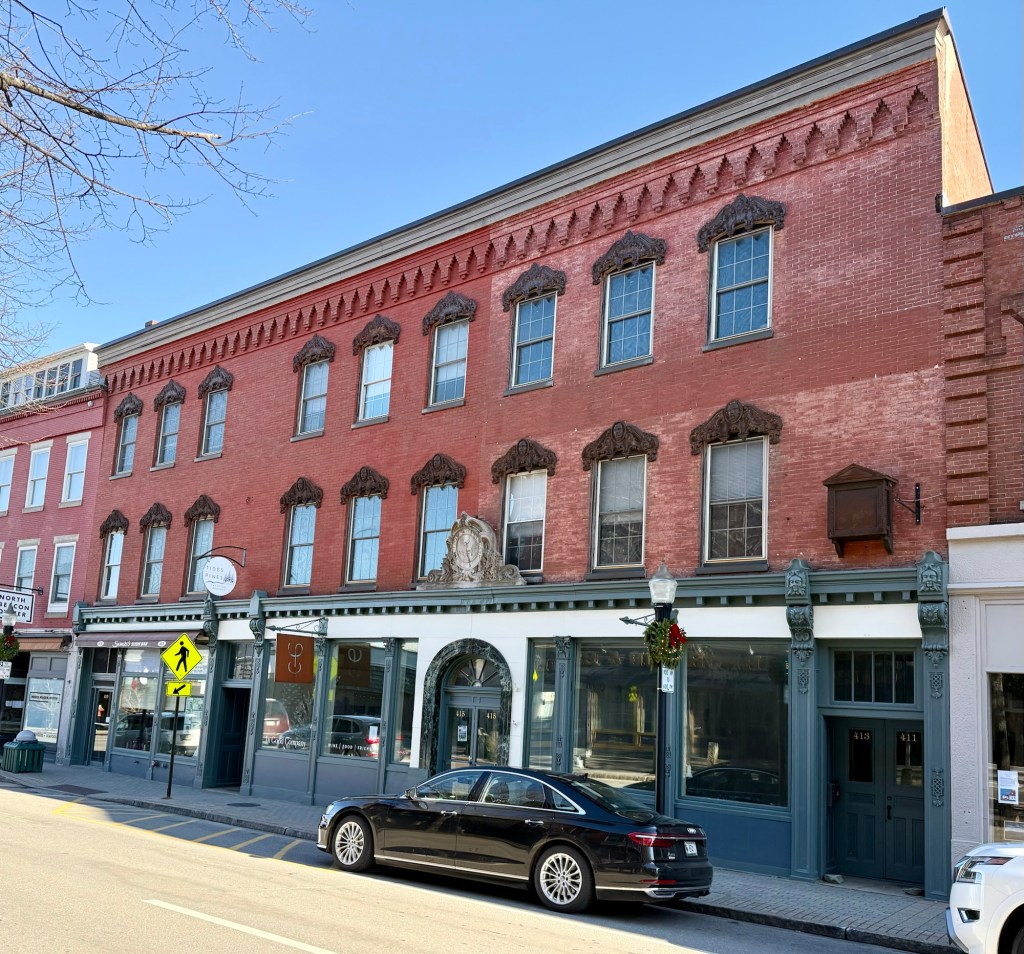
This stately commercial block is found on Main Street in Rockland, Maine. The block originally housed the local custom house (before a larger, purpose-built custom house was erected nearby in 1873) with other retail and commercial spaces at the ground floor with offices and meeting space above. The block is a great example of the Italianate style with an intricate brick corbeled cornice and cast iron and marble storefronts. The commercial space occupied by the First National Bank also exhibits a stone medallion with deer set within a wreath over the entrance. The detail that stood out to me most was the cast iron lintels over the windows, with the second floor lintels including a man’s face! The building is well preserved and is today occupied by local businesses.

Bray’s Hall // 1893

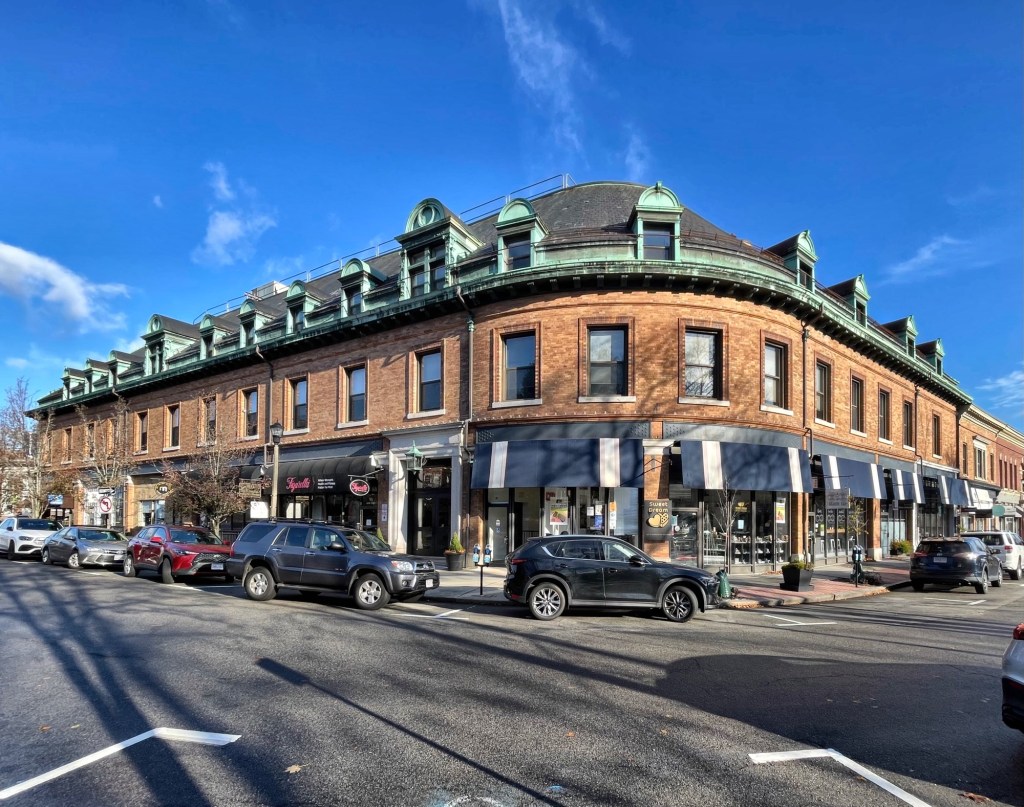
As Newton Centre’s new railroad station and following development boom transformed the once sleepy village into the main commercial center for the city, landowners capitalized on the opportunity by developing commercial blocks to serve the community and line their own pockets. Mellen Newton Bray (1856-1946) became a major landholder in Newton Centre and would develop the areas directly surrounding the new train station there. On a curving site, he built Bray’s Hall, this three-story commercial block renting out spaces to local banks and stores with a large assembly hall and bowling alley in the building as well. Initially, Bray planned for an eight-story structure, having contracted a solid foundation that could support such a structure, pending the success of the initial construction. That is mixed use before it was “cool”. The building was designed by the firm of Kendall & Stevens, likely led by Henry H. Kendall, who resided in Newton Centre. Kendall would also design the apartment block across the street for Mr. Bray. The building is constructed of light Tuscan bricks and is notable for the bracketed cornice and dormers all in copper. The building was restored in the 1970s by owner David Zussman, and rebranded as Piccadilly Square, following his recent trip to London being impressed with by the atmosphere of Piccadilly Circus.