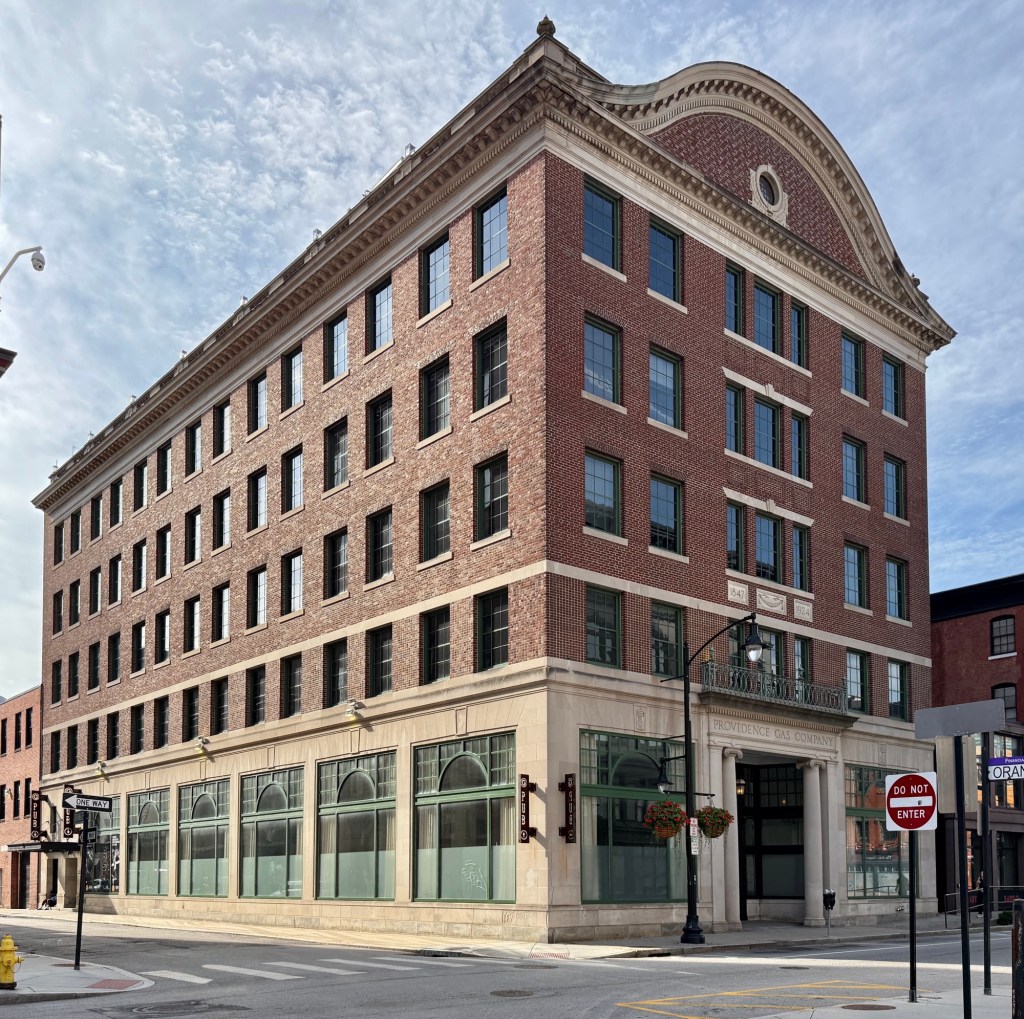
One of the unsung architectural landmarks in Downtown Providence, Rhode Island, can be found on Weybosset Street. The Providence Gas Company Building at 100 Weybosset Street was built in 1924 as the headquarters and offices for the Providence Gas Company, which provided services to a rapidly growing New England city. The architects, Clarke & Howe, used local precedence in their design, modeling the building as a commercial version of the 1774 Joseph Brown House on South Main Street, with its iconic ogee gable at the roof. Beyond its own ogee gable, the Gas Company building retains its columned entry and symmetrical facades. The building was converted into housing with a pub and rooftop restaurant.
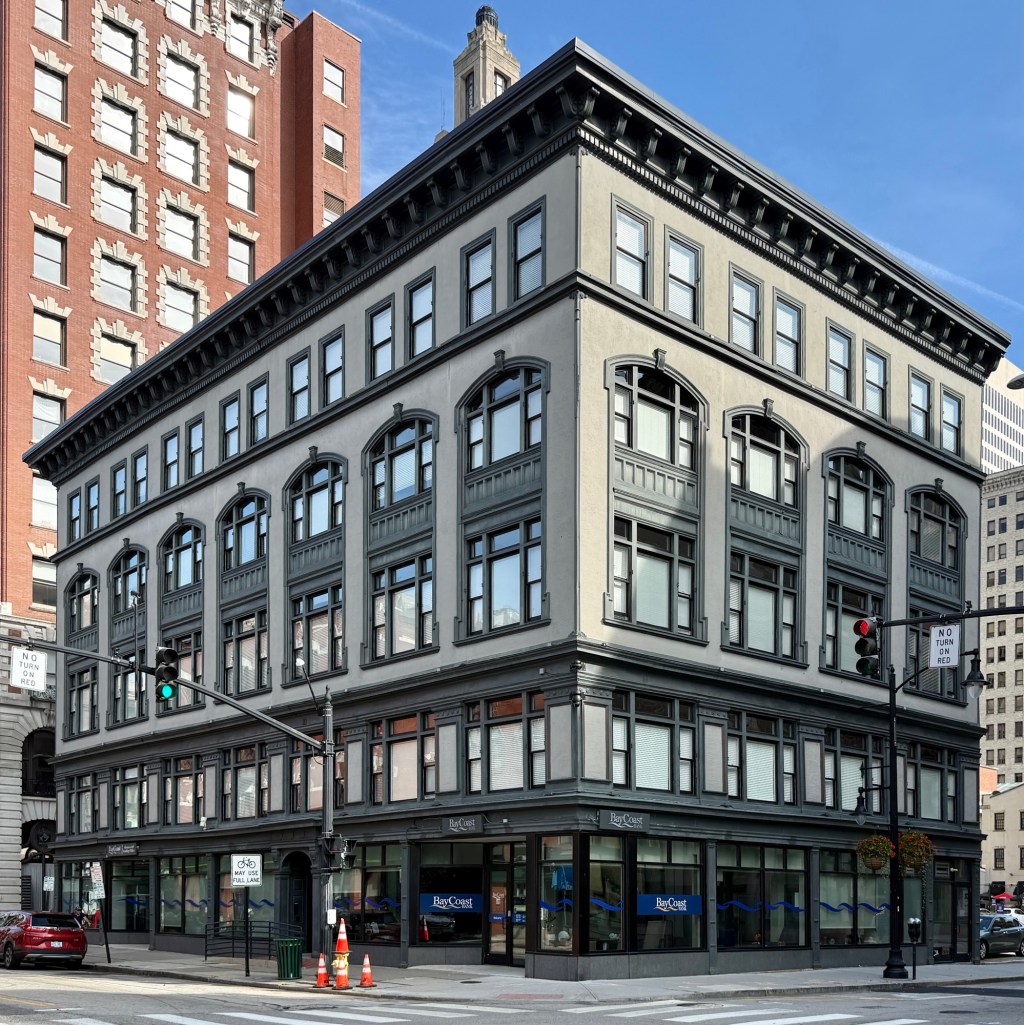
Originally built in 1859 as a four-story building, this commercial block on Dorrance Street in Downtown Providence was updated in the early 20th century in its present appearance. The Case-Mead Building is brick construction and was designed in the Italianate style, notable for its round arched windows. When built, the present third and fourth stories were a double-height Infantry Hall for Rhode Island’s First Light Infantry Regiment, and hosted dances and lectures until they moved to a larger building on South Main Street in the 1870s. The building was renovated in 1906 in the Renaissance Revival style, with a full floor created from the former two-story meeting hall and the primary facades clad with stucco and new trim added. The building recently housed offices, but was renovated in 2017 into housing, creating 44 apartments with funding from State Historic Tax Credits, Rebuild Rhode Island Tax Credits, and private funding.
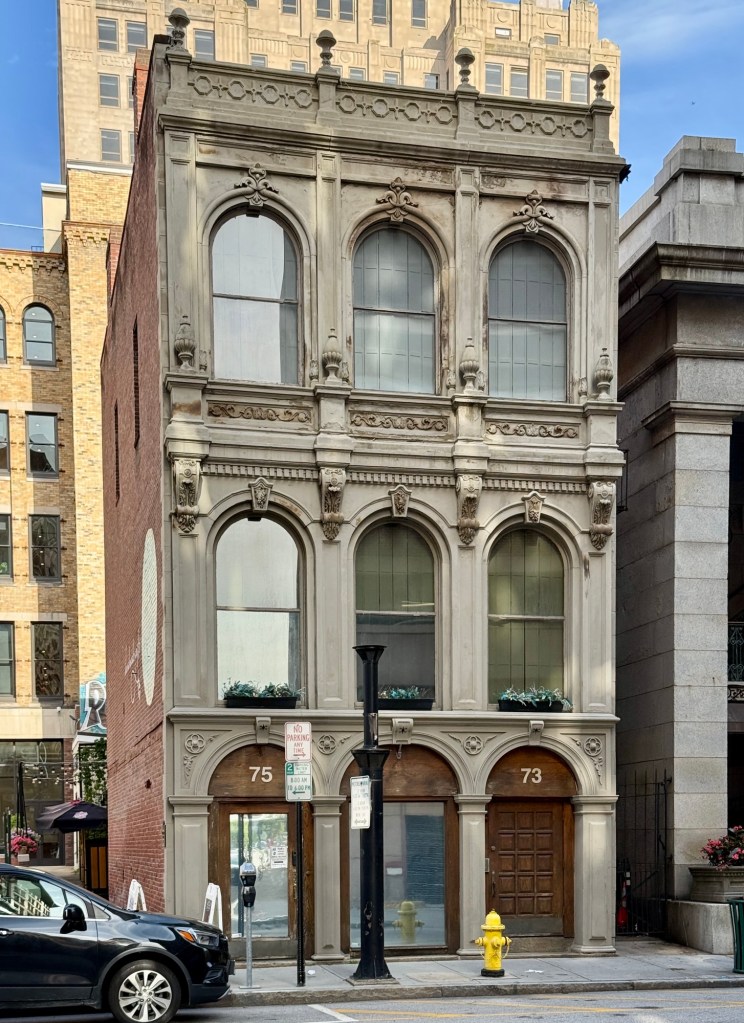
Constructed in 1866, this small three-story brick building with stone facade has miraculously survived over 150 years of the ebbs and flows of Downtown Providence development. The Atlantic Bank Building is located on Weybosset Street adjacent to the Westminster Arcade, and is among the area’s most ornate and well-preserved facades. The structure was constructed to house the Atlantic Bank, which incorporated in 1853. The bank did well financially and eventually moved to a new building in 1906 before financial shortfalls and shady dealings led to its closure in 1913. In the early 20th century, the Atlantic Bank Building was home to offices, a photography studio, and the Ashman House Coffee Shop. A restoration in 1978 helped preserve the building’s rounded windows, elaborate corbels, and finials over the second floor and at the cornice.
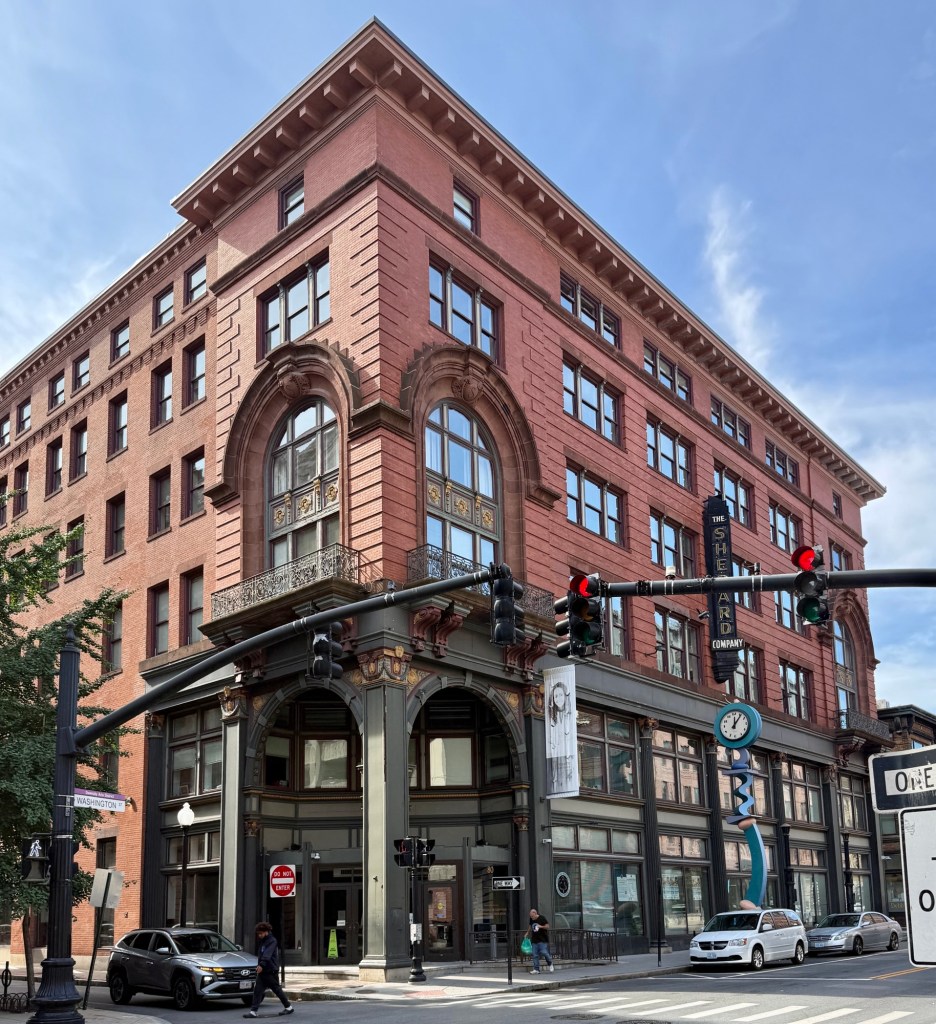
At the corner of Westminster and Union Streets in Downtown Providence stands the Shepard Company Building, a hulking reminder of the late 19th and early 20th century dominance of the department store and the American downtown as a retail destination. The company opened in 1880 in a modest 6,400-square-foot storefront, and saw immediate success, eventually occupying an entire city block. The company grew piecemeal into neighboring buildings between 1880-1903 when the entire 300,000+ square foot block was completed from plans by Martin & Hall, architects. Architecturally, the building tells its own history in layers: it started as a modest three-story Italianate structure, and later additions brought two-story arched entrances angled into the corners at Westminster and Union, and Washington and Union, that once lured shoppers inside to terrazzo floors with a sea of merchandise. Outside, a freestanding cast-iron clock became a beloved meeting point, with generations of Rhode Islanders arranging to gather “at the clock”. A massive fire in March 1923, caused over one million dollars’ worth of damage, but the structure was restored under Hall’s supervision. Shepard’s closed in 1974 and remained vacant for almost 20 years. After advocacy from preservationists, the building was bought by the State of Rhode Island and was rehabilitated by David Presbrey, the building is now the location of the Providence Campus of the University of Rhode Island, the Rhode Island Department of Education, and other state offices and education-related facilities.
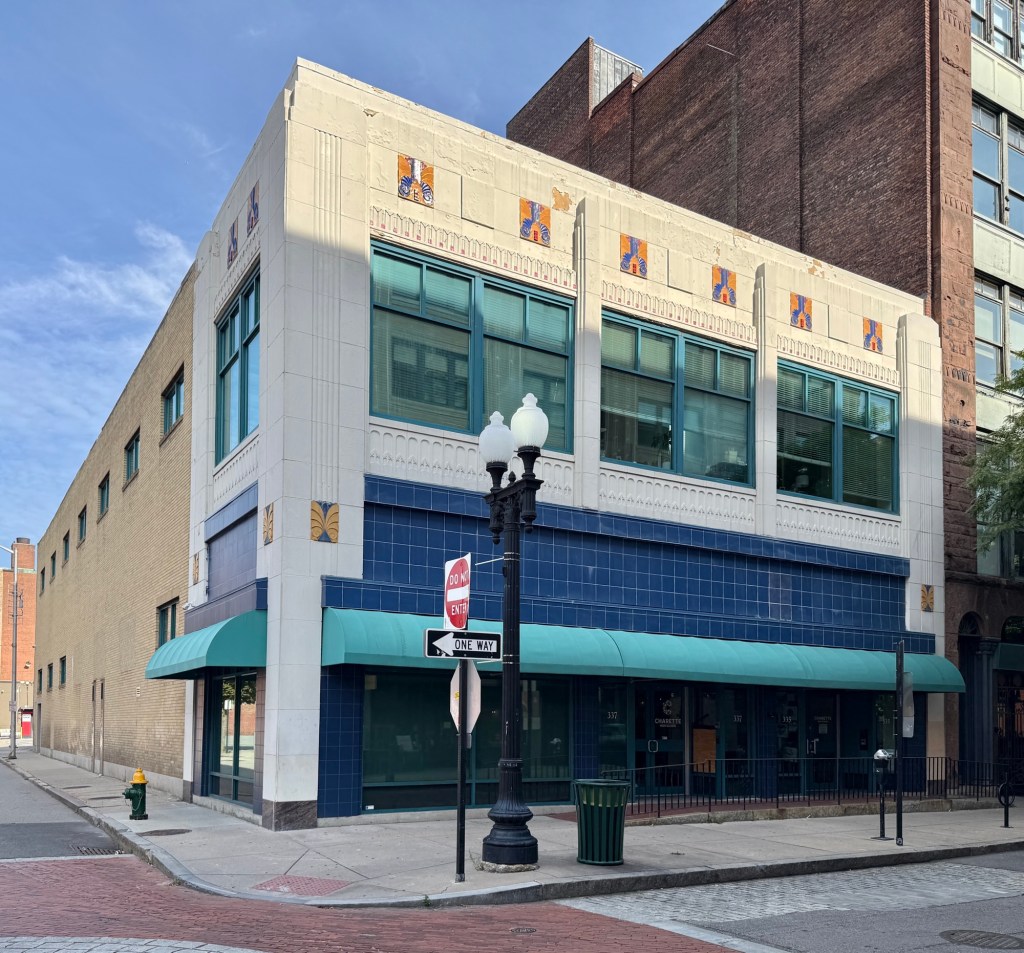
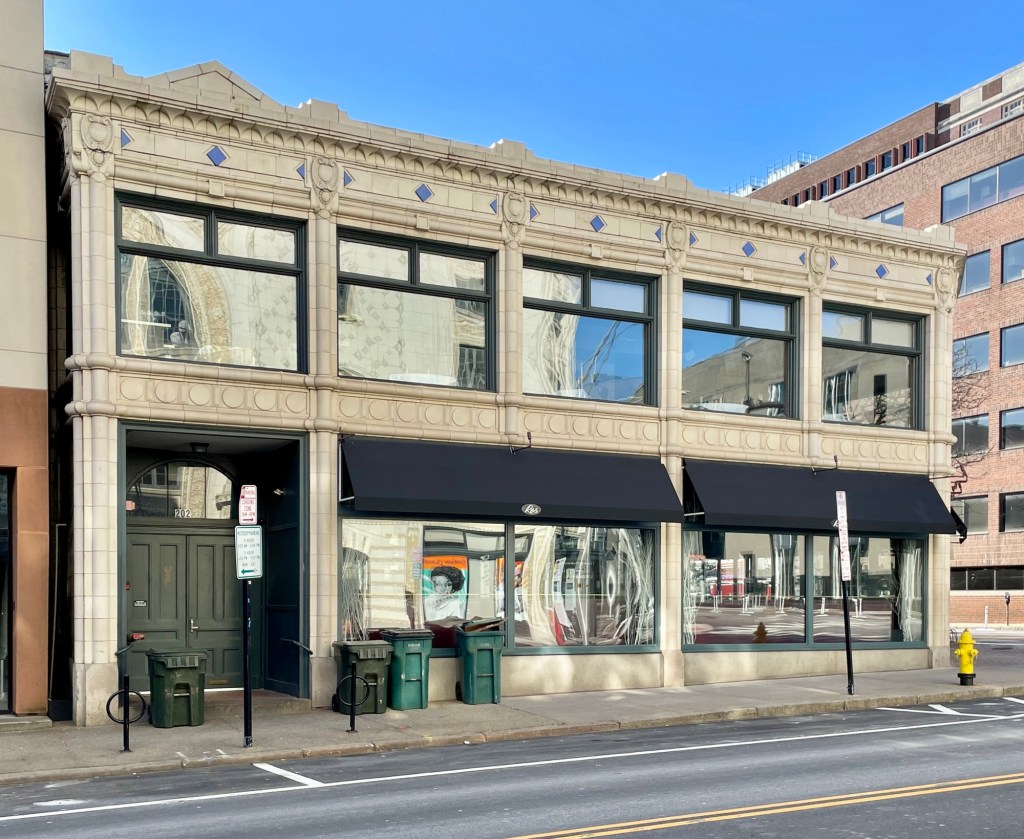
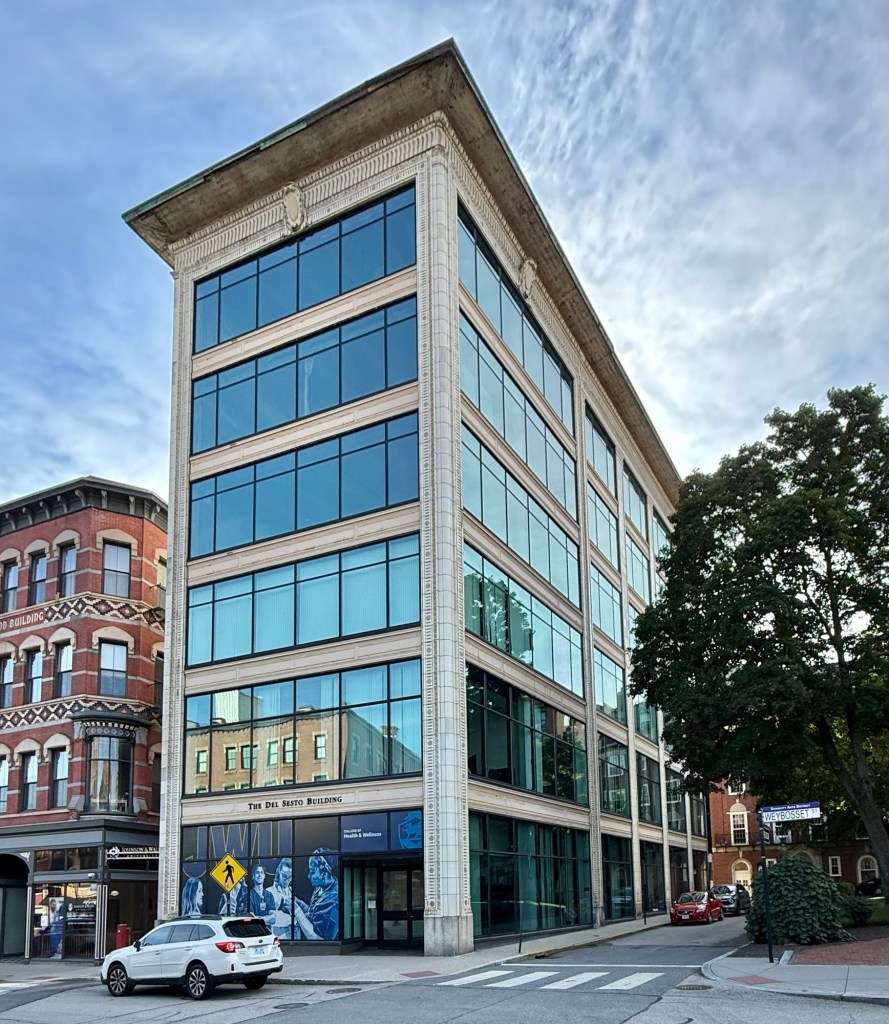
This two-story commercial building at the corner of Washington and Empire streets in Downtown Providence, Rhode Island, is one of the finest structures executed in terracotta in the state. The building was erected in 1915 for the Packard Motor Company as a car showroom, with large plate glass windows to display the newest vehicles inside. Records differ on the architect, with many stating that Albert Kahn, a Detroit-based architect who designed many factories for the company, furnished the designs. He apparently did submit a design, but the company ultimately went with Rhode Island architect, John Hutchins Cady, to design the showroom. The terracotta ornamentation is similar to what is found on nearby theaters and commercial buildings downtown, making the area a sort of a museum for terracotta facades. The building has been occupied by restaurants for much of the 20th and 21st centuries.
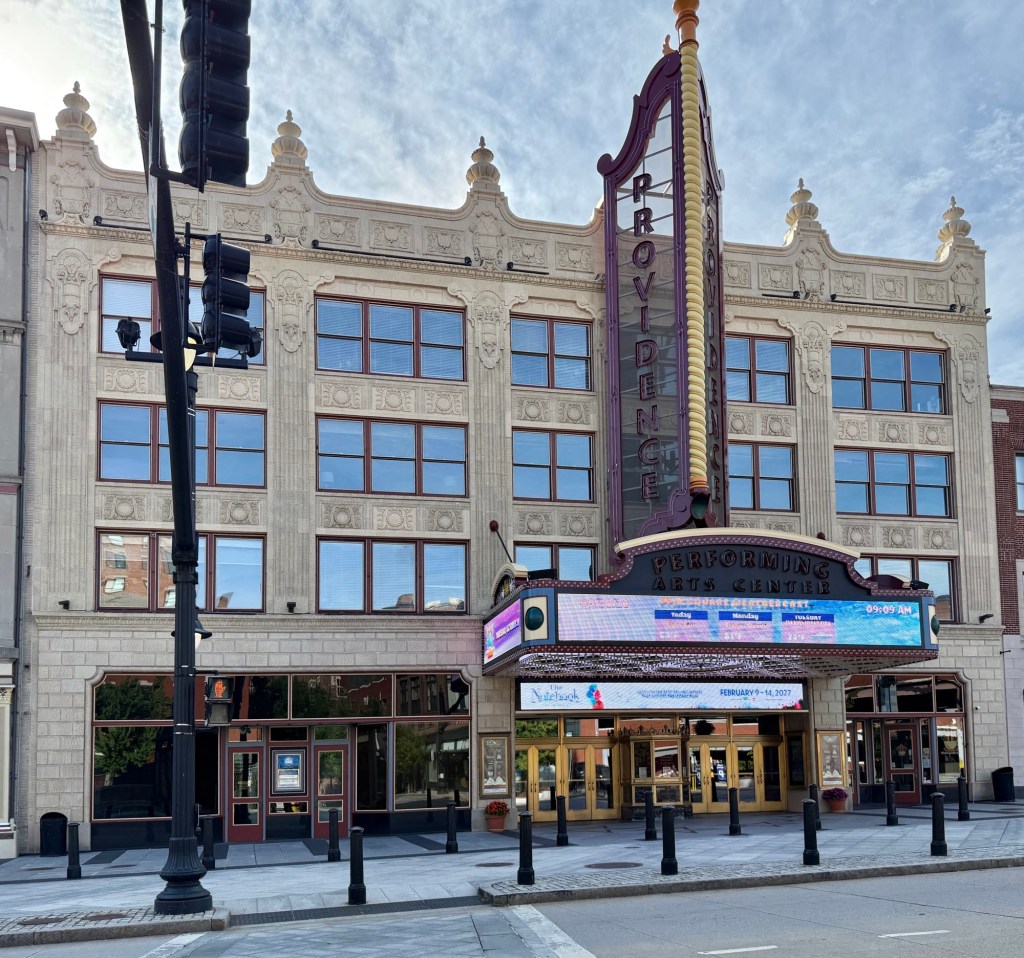
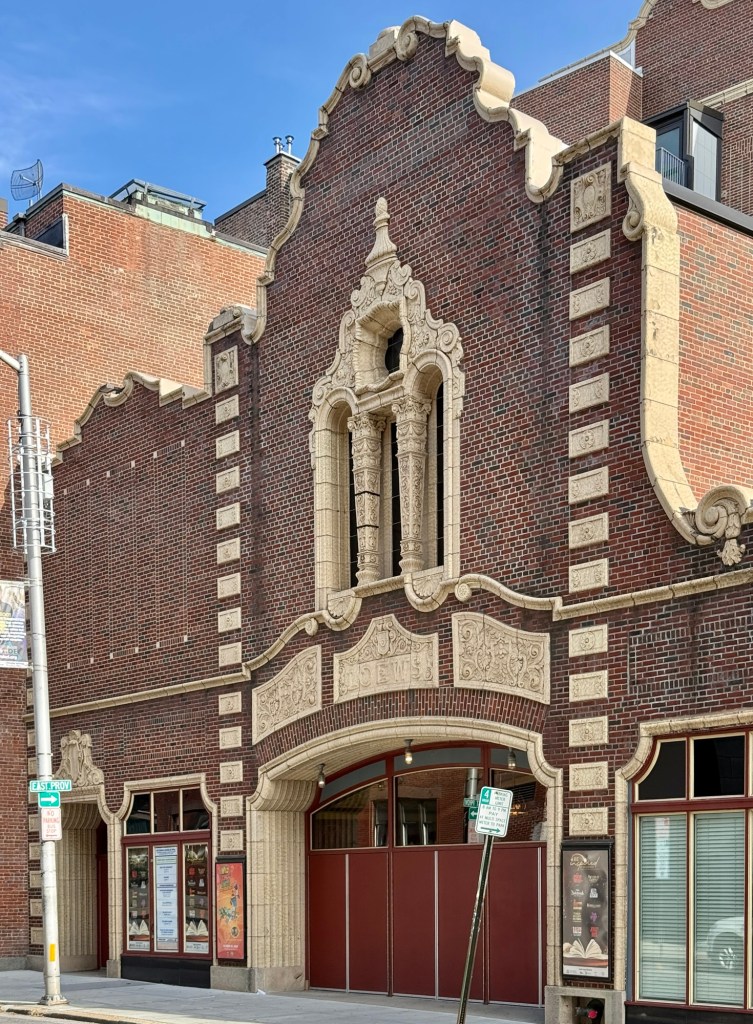
The old Loew’s State Theatre, now the Providence Performing Arts Center in Downtown Providence, opened on October 6, 1928, as one of the grand movie palaces built by the Loews chain during Hollywood’s golden age. Designed by the Chicago firm Rapp & Rapp, the country’s leading theater architects at the time, the building blends Baroque and Rococo influences earning it the nickname “The Jewel of Weybosset Street.” The primary facade is a four-story, terra-cotta sheathed, steel-frame structure with with fluted pilasters, molded panels, finials at the parapet, and a large modified prismatic marquee. On the Richmond Street elevation, a one-story brick structure with terra-cotta trim and secondary entrance/exit provides additional flair to what would otherwise be a more stripped-down feature. After WWII, when theaters began to see declining revenue, the building cycled through names like the Palace Concert Theatre and Ocean State Theatre before a group of local preservationists and civic leaders saved it from possible demolition in the late 70s. The building was listed on the National Register of Historic Places in 1977 and the theater reopened as the Providence Performing Arts Center in 1982. The roughly 3,100-seat venue has since been carefully restored to its original splendor and today ranks among the largest and best-preserved movie-palace-era theaters in New England, hosting national Broadway tours, concerts, and comedy shows.
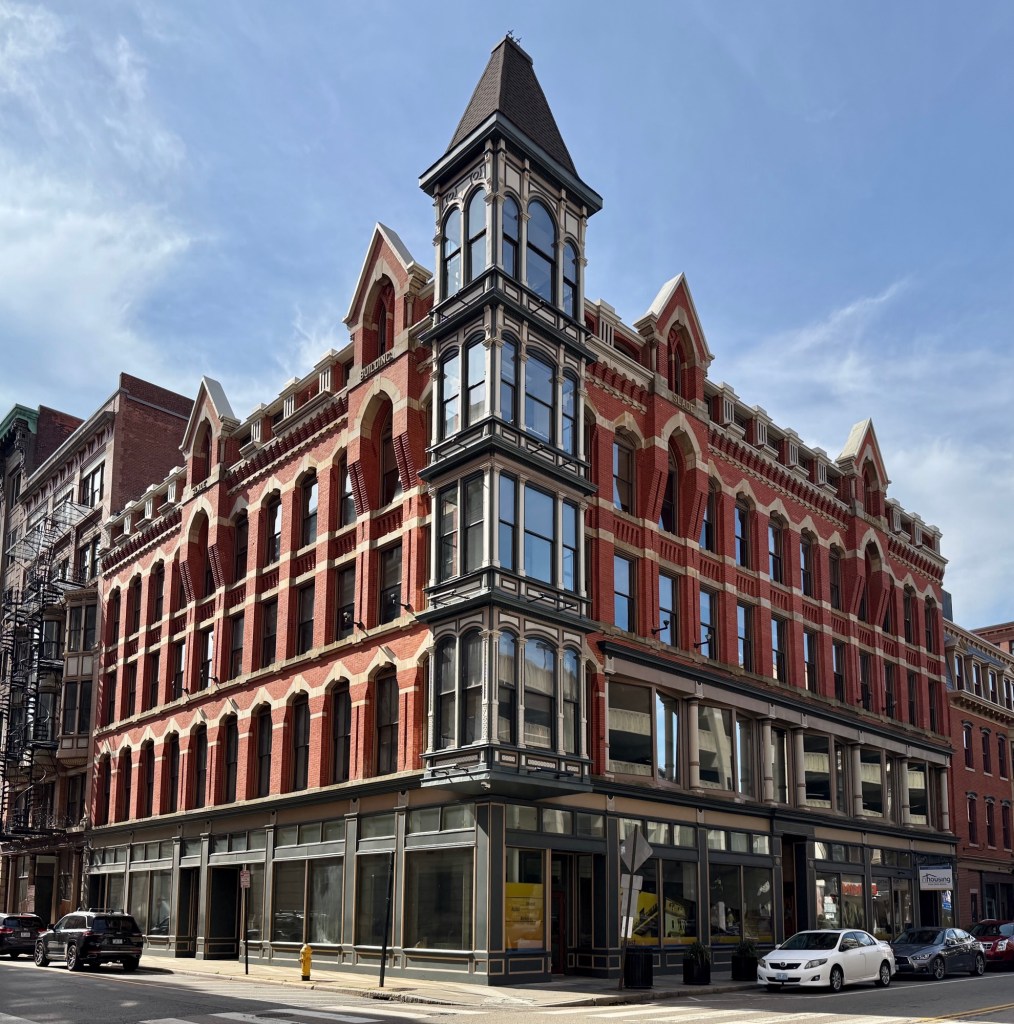
The Slade Building on Washington Street in Downtown Providence represents the architectural flourish and blending of architectural styles that typified commercial blocks in major New England cities in the late 19th century. The commercial block was named and built for owner, George H. Slade, who was involved in real estate development along with his role as part-owner of Westcott, Slade and Balcom, a paint manufacturing company. The building was designed by Rhode Island architect, Clifton A. Hall (1826-1913) who primarily worked locally. After George’s death, the property remained in the family, and in 1895, the corner tower, also designed by Hall, was added as a way to modernize and bring in new tenants. The block has been rehabilitated and is one of the finest and best-preserved examples of a late 19th century commercial building in Downtown Providence.
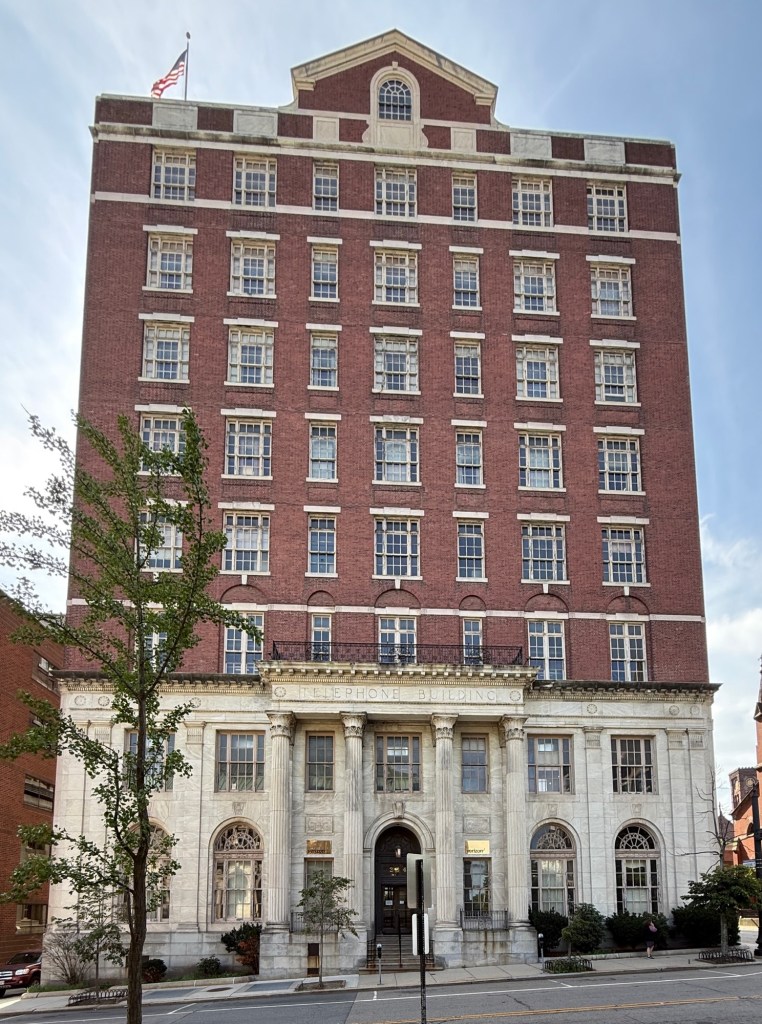
Despite the expansion of its Union Street building ten years earlier, by WWI, the growth of the Providence Telephone Company had made its original building inadequate. In 1916, the company began construction on its new Telephone Building at the corner of Washington and Greene streets. The 8-story, Colonial Revival style structure was designed by the Providence architectural firm of Clarke & Howe. The building is steel-frame and largely clad with red brick besides the arcaded first two stories in marble. At the roofline, a center gable projects above the cornice, likely in the 1950s renovation when the elevator headhouse was built on the roof. The building was again expanded in 1971 by a utilitarian addition that does not relate to its original design beyond the use of brick. The building is now home to the regional office of Verizon New England.
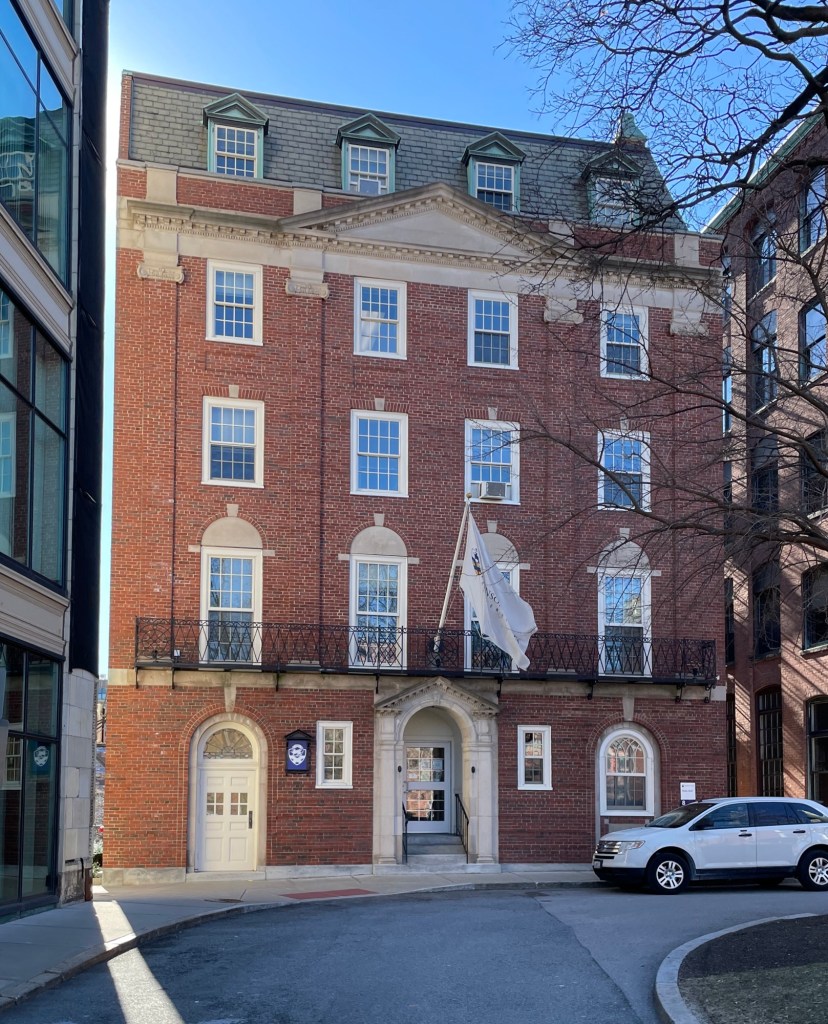
Tucked away behind Abbott Park, a small green in Downtown Providence, the Plantations Club has stood for 100 years as one of the city’s finest examples of Colonial Revival architecture and was long a vital women’s club organization. This Georgian Revival brick building was designed by the firm of Andrews, Jones, Briscoe & Whitmore, of Boston for the Providence Plantation Club, a women’s social organization founded in 1916. The club was a success, starting with about 150 members and it reached more than 1,300 members, just one year after its inception. As the only female architect of the society, Frances E. Henley got involved in promoting the Club in terms of its visuals and interior design of the building, working closely with the architects. Ms. Henley was the first woman to study architecture at the Rhode Island School of Design and the first woman to independently practice architecture in Rhode Island. When the club no longer needed such a building, Johnson & Wales University acquired the building in 1962, and since then, it has been known as Wales Hall, housing a variety of offices and services.
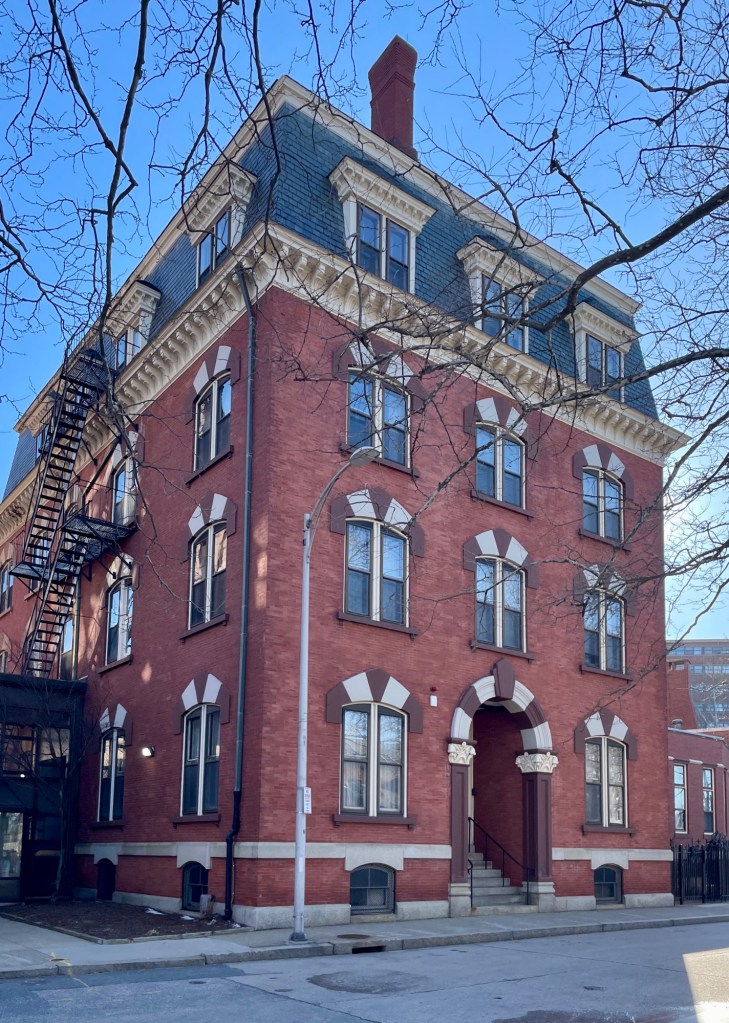
Built around the time of its neighbor, the Cathedral of Saints Peter & Paul in Downtown Providence, this handsome brick masonry building with mansard roof was constructed as the rectory for the larger cathedral next door. Like the corresponding cathedral, this rectory was likely the work of premier ecclesiastical architect, Patrick C. Keely, who designed the structure in the Victorian/Ruskinian Gothic style with polychromatic stone voussoirs, a brownstone Romanesque style arched entry with floral capitals, and a mansard roof with bracketed cornice. Since its construction around 1878, the building has been added onto and connected to the Cathedral, but still retains its architectural significance. The building is home to the Diocese of Providence offices, a library, and remains the rector’s residence.
Designed by a prominent architect, Willard T. Sears, the Lincoln Building at Lincoln and Essex streets, is a handsome example of a late 19th century mercantile structure consisting of stores, office & loft space, serving as an important visual anchor the almost uninterrupted neighborhood of the Leather District of Boston. The building is the second of its name, with the first Lincoln Building succumbing to the Lincoln Street Fire of 1893, which started as a small fire in a restroom of a toy wholesaler, eventually spreading to a storage room full of fireworks, which exploded, eventually killing at least five, and forced many others to jump from buildings to seek safety. The replacement building is Renaissance Revival in style with a stone base and classically decorated facades. The recessed entrances set within arches and the series of columned bays at the ground floor are truly special. The building was long-occupied by leather dealers and companies, but was converted to residential use in 2006 with condos on the upper floors and retail spaces on the street.
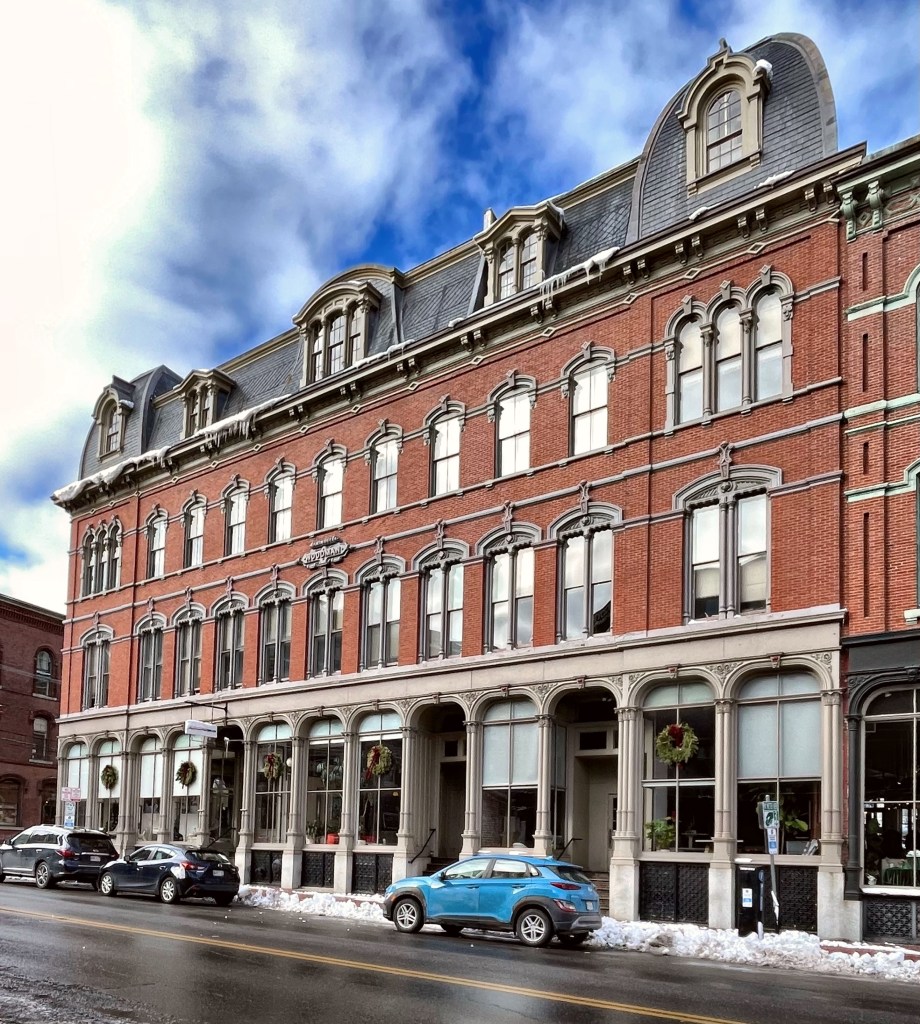
Located next-door to the Rackleff Block, this high-style Second Empire commercial block in Downtown Portland, Maine really turns heads. The Woodman Block (like its neighbor) was built in 1867 from plans by architect George M. Harding, who designed the building for George W. Woodman, a drygoods dealer. This stunning commercial block originally housed Woodman’s dry goods firm, Woodman, True, and Company. It later held a druggist and medicine company. The building retains much of its original architectural character minus the iron cresting which once capped the mansard roof. They don’t make them like they used to!
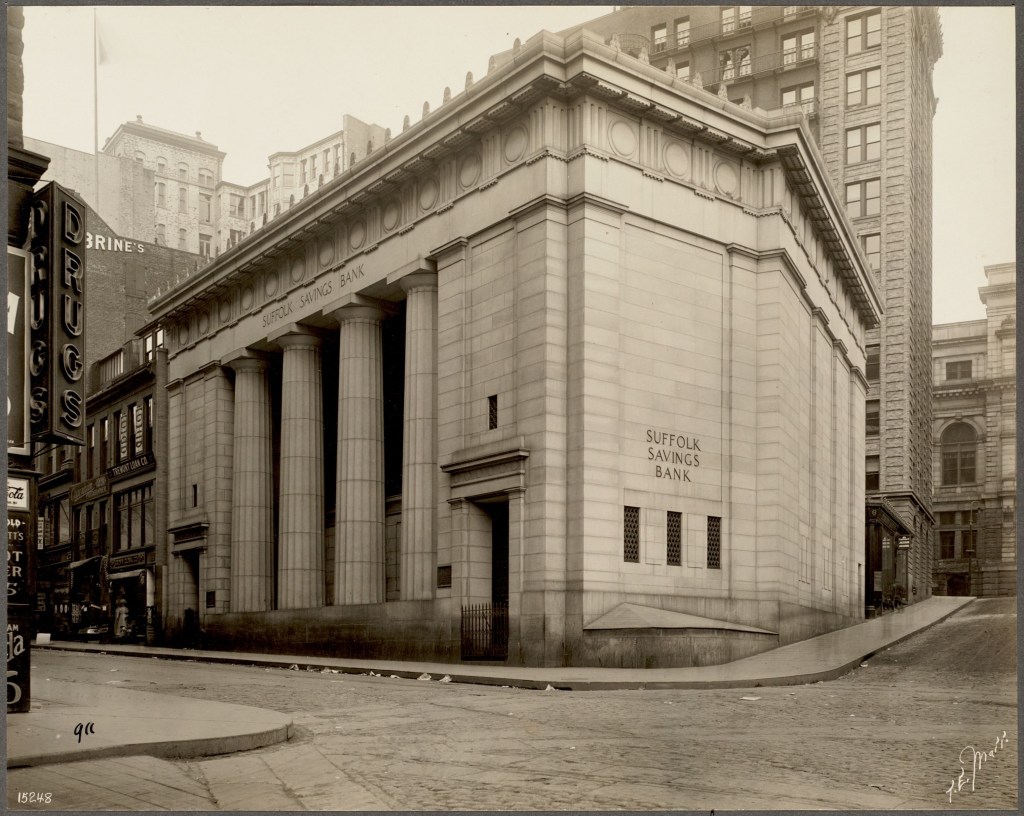
The Suffolk Savings Bank for Seamen and Others was incorporated in 1833 as a banking institution catered to seamen and merchants who received their earnings after a trip in cash, and wanted a secure place to store their funds. At the time, these men were among the richest in the city, and the bank did very well. It later became a national bank in 1865 and membership boomed. The bank grew and grew until the early 20th century, and it needed a new banking house that showcased their stability, but also provide a visual embodiment of the security their institution provides. The bank’s board hired world-renowned architect Cass Gilbert to design a new building, which would be located on one of the busiest corners in Downtown Boston at the corner of Tremont Street and Pemberton Square. The Classical Revival building was constructed of Hallowell Granite and featured four monumental columns recessed into the Tremont Street facade. Minimal windows allowed for security, while a domed skylight covered in a cap provided light into the rounded banking room below. Inside, the walls and floors were of marble with a tile coffered ceiling. The building lasted until 1965 when Urban Renewal brought the wrecking ball. The bank was demolished by 1967 for the present Center Plaza building in Government Center.