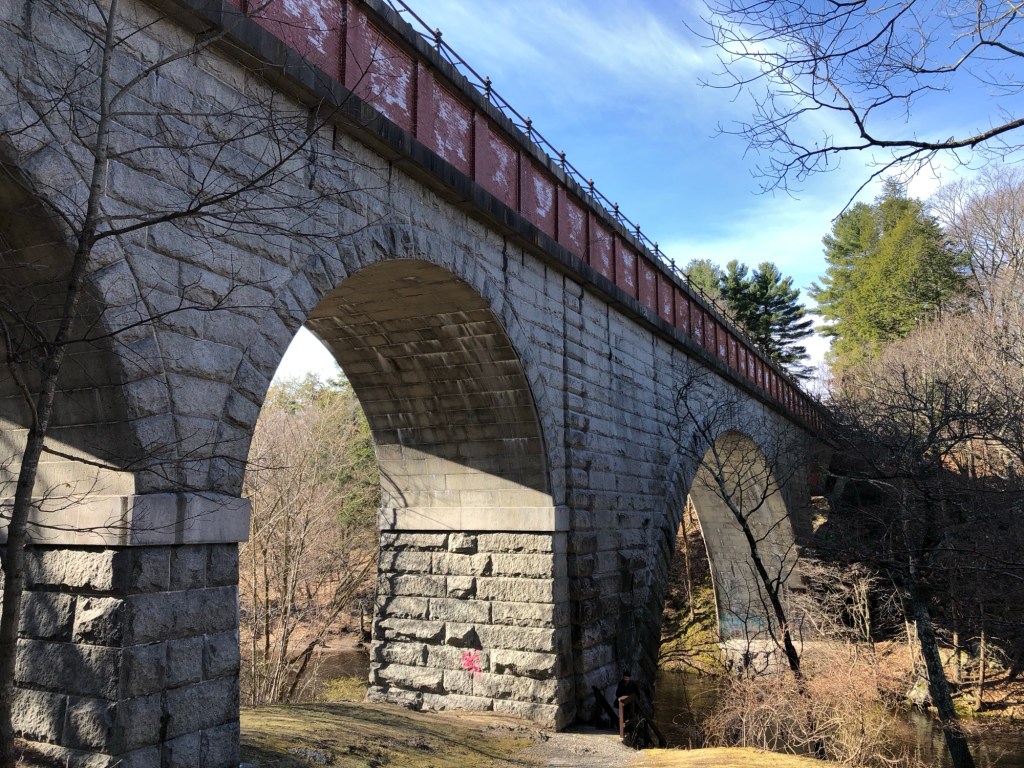
Echo Bridge // 1876

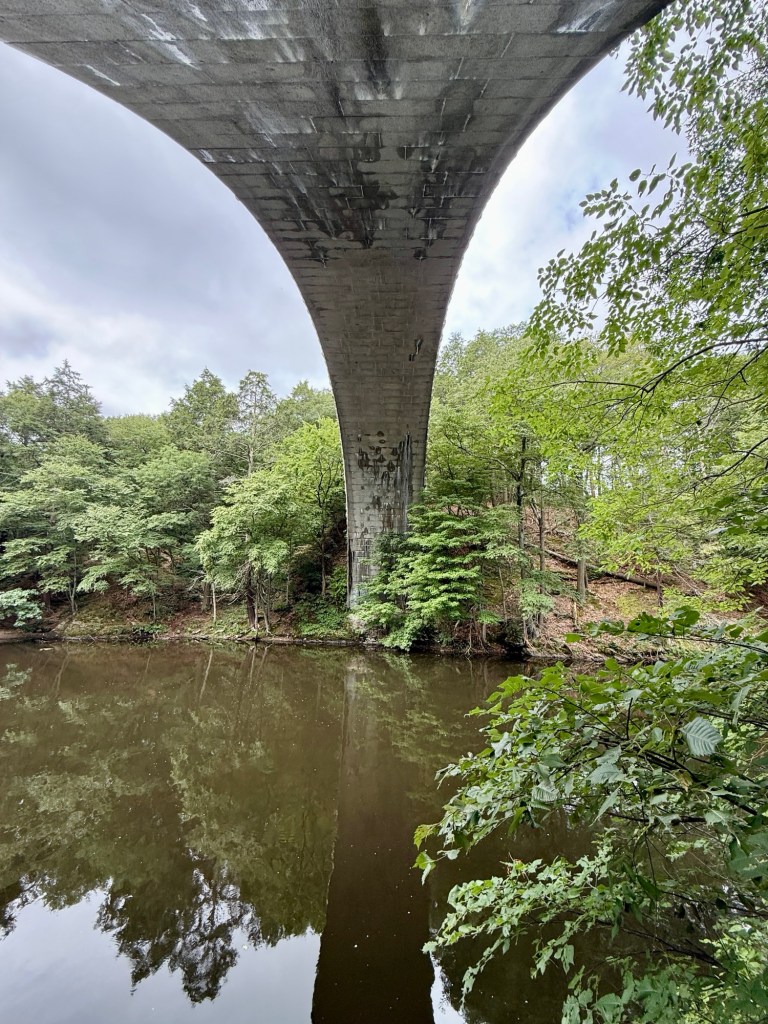
Rapid population growth in the Boston area strained the already overburdened water supply capacity in the second half of the nineteenth century, and engineers and city officials struggled to find solutions. In 1872, the Boston City Engineer proposed a plan to draw water from the Sudbury River in Framingham nearly 19 miles to the Chestnut Hill reservoir to be distributed to homes and businesses all over Boston. The aqueduct was initially designed to carry 80 million gallons of water per day but the route faced one big issue, how to allow the water to travel over the Charles River. The solution was what became Echo Bridge, a 475-foot-long bridge that carries the brick-lined aqueduct over seven powerful granite arches, which is the longest crossing of the Charles River. When completed in 1877, the seventh and largest arch, which spans the Charles River, is said to be the second longest span in the United States when completed. Originally named the Charles River Bridge, the structure was later known as Echo Bridge because of its unusual acoustical properties when standing underneath the largest arch. Today the Sudbury aqueduct system is not in full use and serves only as a standby, in case of a breakdown in the water supply presently being received from the Quabbin Reservoir located in the center of the state. In 1895, the Echo Bridge became the centerpiece of Hemlock Gorge, one of the first reservations in the newly created Boston Metropolitan Park System for its scenery and sheer beauty. Echo Bridge remains one of the most unique places to visit in the Boston area, and retains much of its original details, down to the BWW (Boston Water Works) insignia on the rails.
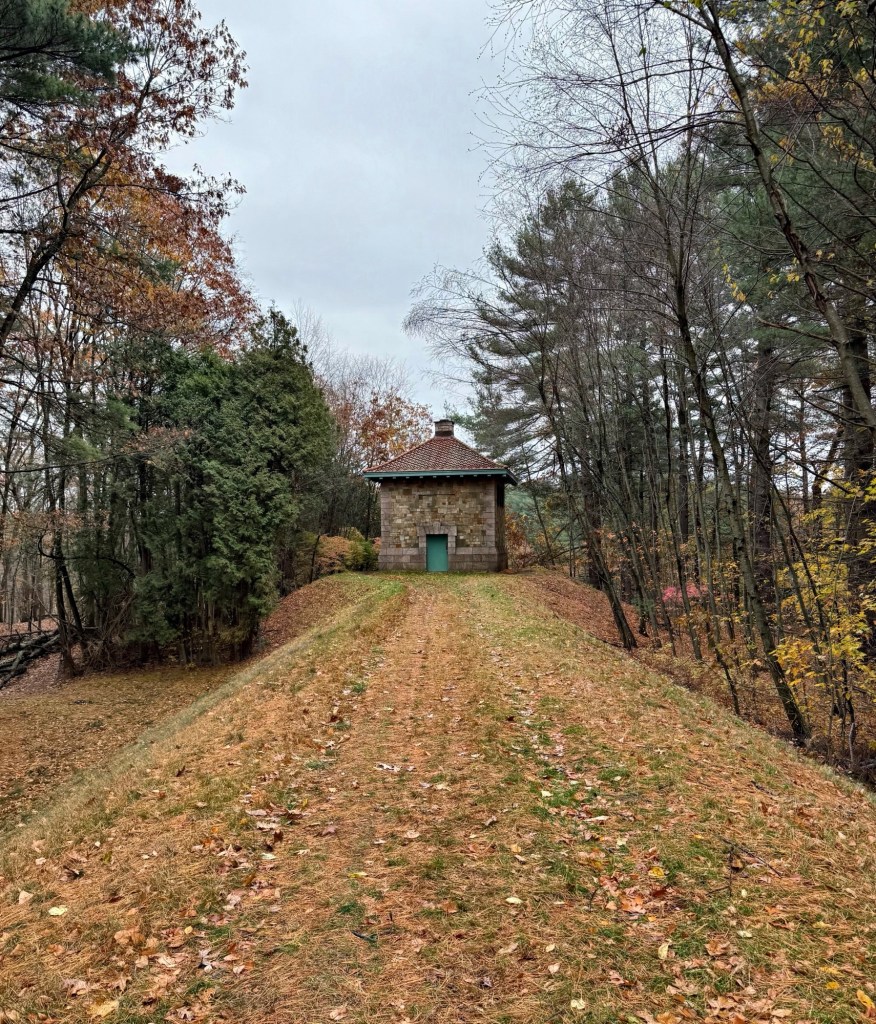
Happy Hollow Siphon House, Weston Aqueduct // 1903

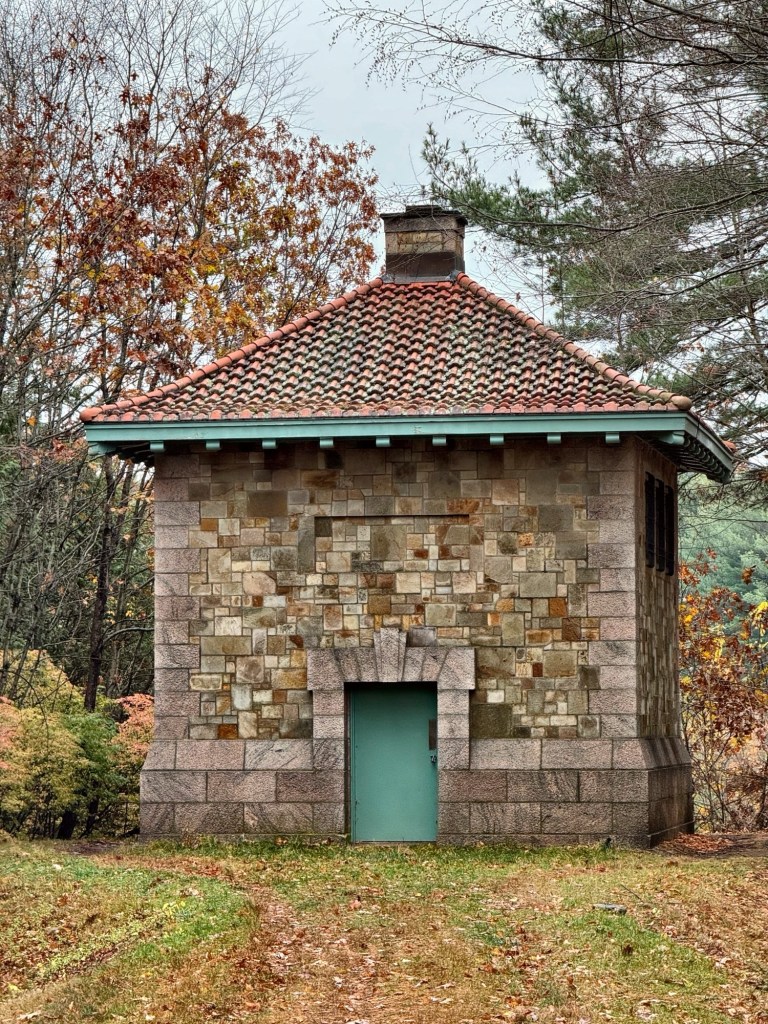
The Weston Aqueduct was designed to deliver water from the Sudbury Reservoir in Framingham to the Weston Reservoir in Weston, Massachusetts. Built between 1901 and 1903, the aqueduct was designed to provide water to the suburbs north of Boston. All of the buildings that shelter the aqueducts above-ground elements, including this structure in Wayland, were designed by the architectural firm of  Shepley, Rutan and Coolidge, with landscaping along the route and at the reservoir designed by the Olmsted Brothers, landscape architects. This siphon house, known as the Happy Hollow Siphon House was built in 1903 and was an important part of the aqueduct system, as it transferred water through varied elevations using gravity and pressure to move the liquid without a pump. The aqueduct route is now a long, linear path and remains owned by the Massachusetts Water Resource Authority.

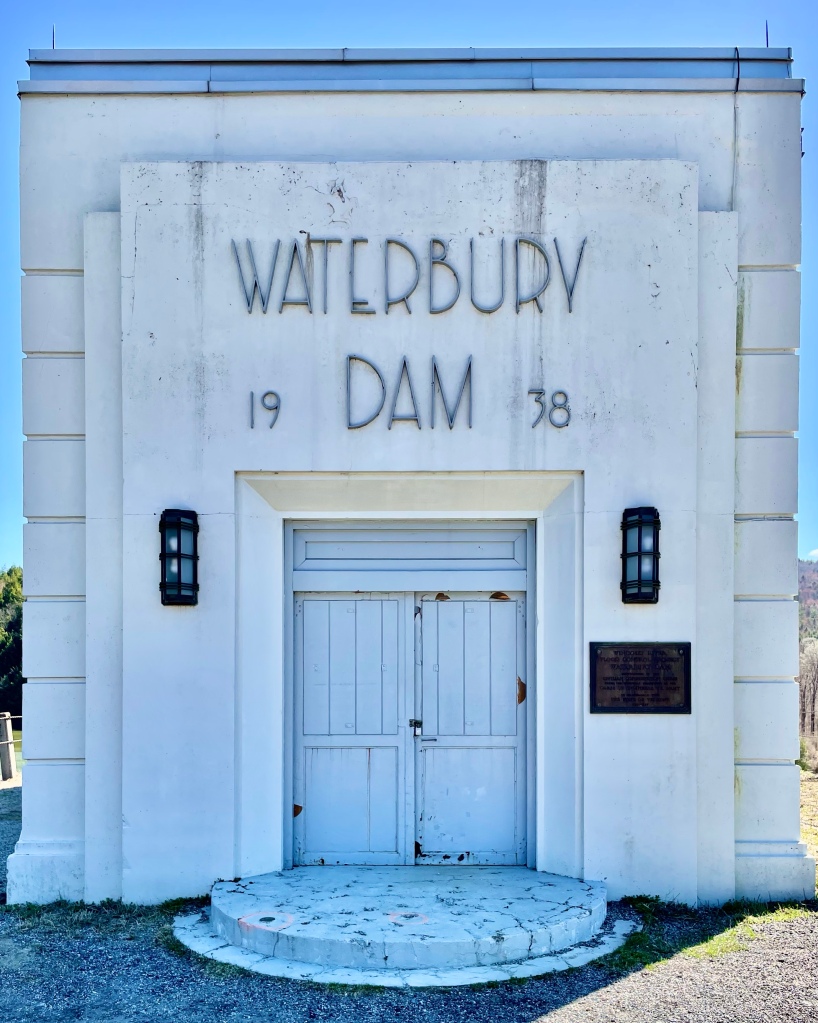
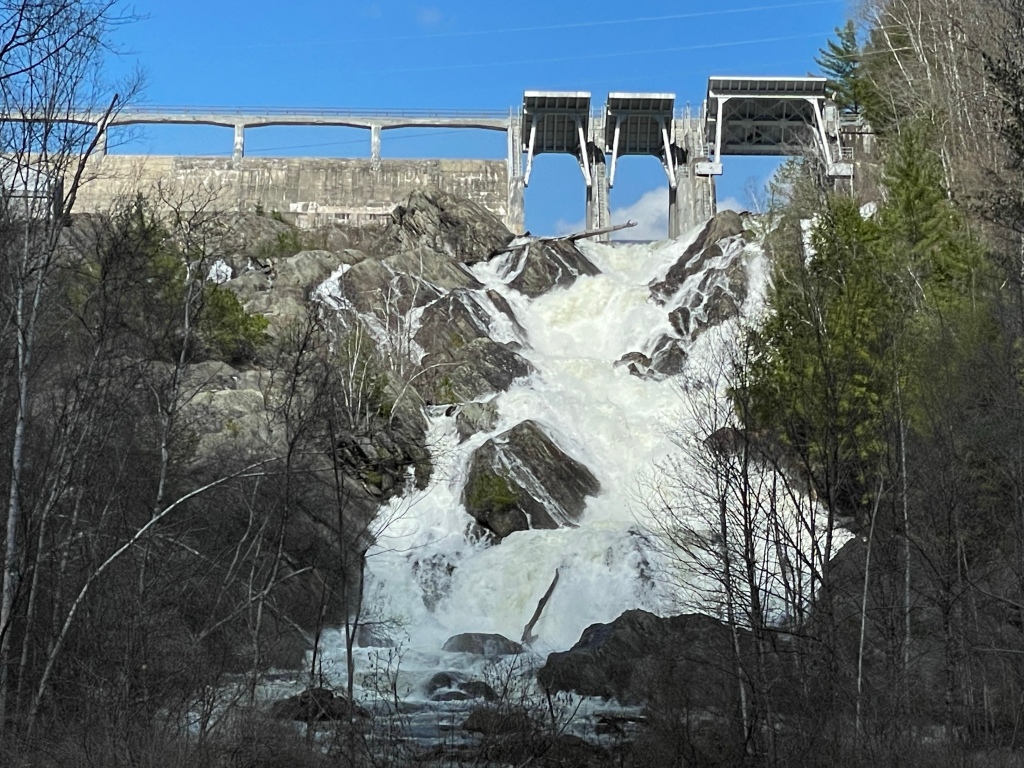
Waterbury Dam // 1938

In November of 1927, a disastrous storm hit the State of Vermont. Severe flooding in the Winooski River Basin area resulted in the loss 55 lives and damages totaling over $22 Million. A Corps of Engineers study was initiated soon thereafter to investigate “the improvement of the Winooski River for the purposes of navigation in combination with the development of waterpower… and the control of floods.” The report presented a comprehensive plan for flood control and power development, consisting of: the construction of seven reservoirs; the installation of seven new hydropower plants, and the enlargement or improvement of 12 existing plants. Construction of the Waterbury Dam and Reservoir began in 1935 and was completed in 1938. The dam and reservoir were designed and built by the Corps of Engineers using contract services and Civilian Conservation Corps (CCC) labor, all thanks to the New Deal legislation enacted by President Franklin D. Roosevelt. The gatehouse at the top of the dam’s embankment is a rare example of Art Deco architecture in the state of Vermont and was completed in 1938 as the last piece of the project. The building and dam remain today as part of the Little River State Park and are a great example of Engineering History and a look into human intervention in the natural landscape.

Hoosac Tunnel // 1877

It is impossible to overstate the significance of the railroad in the 19th century to the industrial growth and economy of New England and American cities. In order to connect Boston and its ports to the Hudson Valley in New York, a western rail line was constructed in the southern part of Massachusetts but was not an ideal route. In response, businessmen and politicians began to envision a more direct rail line across Massachusetts, but with one problem: trains hate climbing mountains! Instead of going around Hoosac Mountain, a massive detour, engineers thought they could tunnel through it, and that’s what they did, creating the Hoosac Tunnel. The tunnel through Hoosac Mountain is just under 5 miles long. Its active construction period consumed roughly a quarter-century and cost at least $17 million in 1870s dollars – an enormous sum. The cost was paid in dollars and the lives of nearly 200 miners (many of whom suffered terrible deaths as you can imagine). The first train passed through the tunnel in 1875, with the eastern portal wall constructed in 1877 (seen here). By 1895, roughly 60% of Boston’s exports traveled through the tunnel. Since then, some small collapses and deferred maintenance have left their mark on the tunnel, though it is still in operation today!