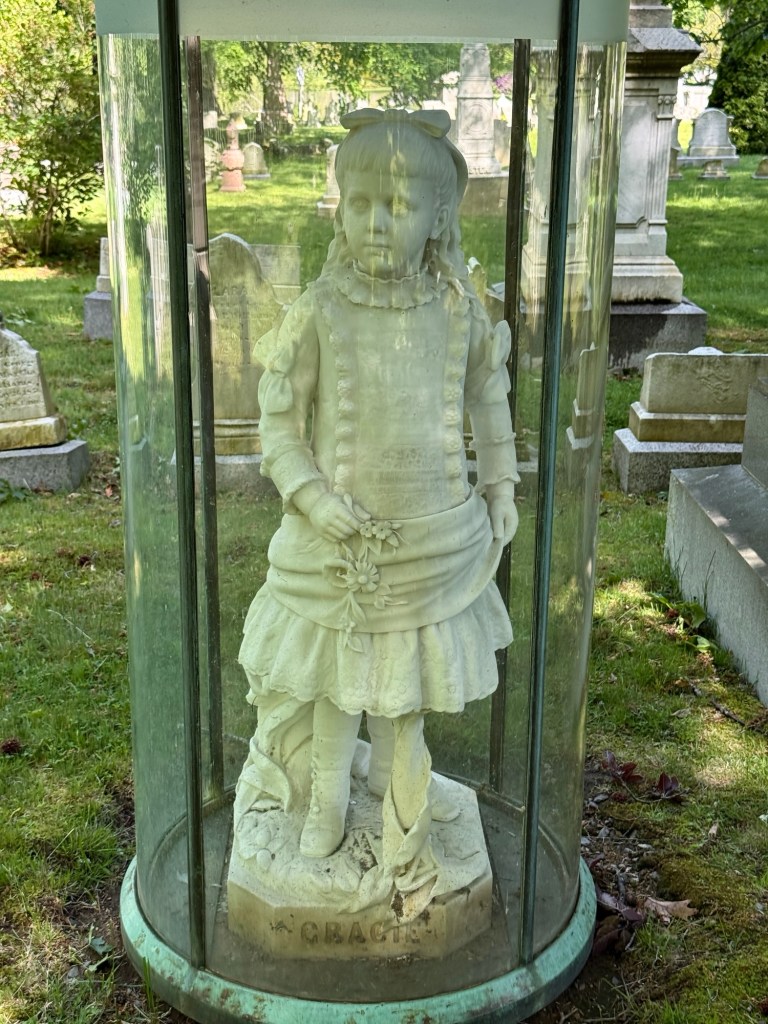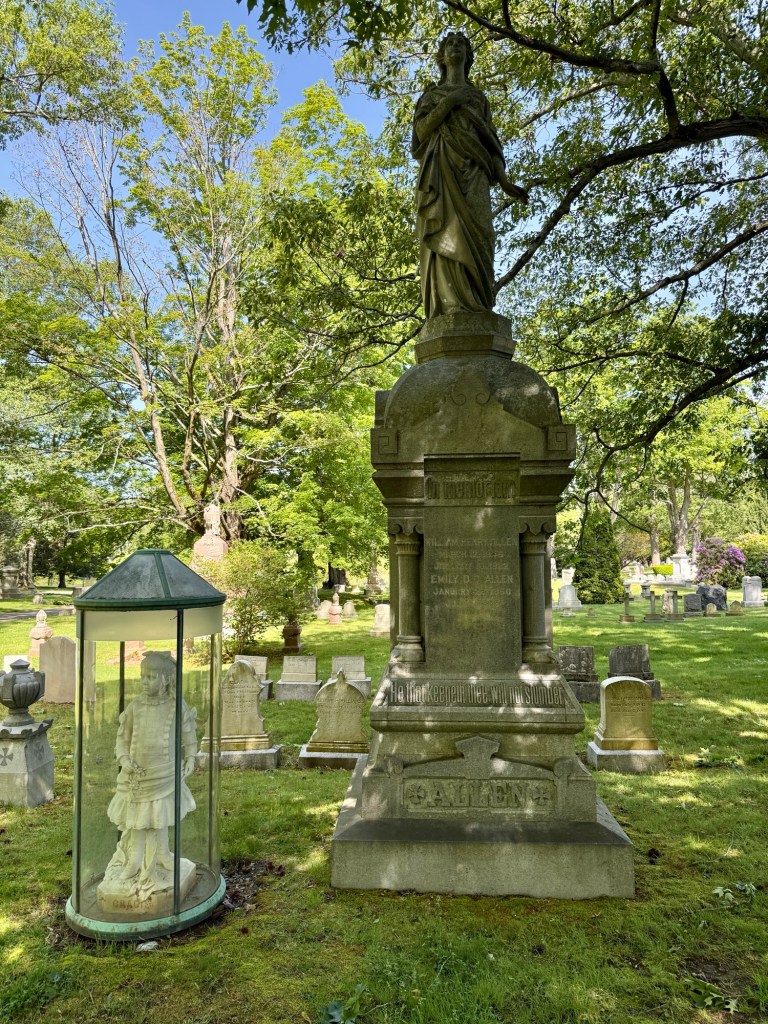
Forest Hills Cemetery – Grace Sherwood Allen Memorial, “Girl in the Glass” // 1880

Similar to the story of Louis Mieusset, the “boy in the boat” at Forest Hills Cemetery, the memorial of Grace Sherwood Allen stands as a testament to parent’s ever-lasting love of their children. “Gracie” Allen (1876-1880) was born in Boston, the only daughter of William H. and Emily Jones Allen. She died several months prior to her fifth birthday from whooping cough and was later immortalized by sculptor Sydney H. Morse, who depicted the young girl in a buttoned dress, boots and bow-tied hair. In her hand are drooping flowers, the petals of which have begun to fall, showing her life fading. The life-size white marble sculpture is covered in a bronze and glass vitrine, to protect the fragile stone from acid rain, which would stain and weather the delicate monument.

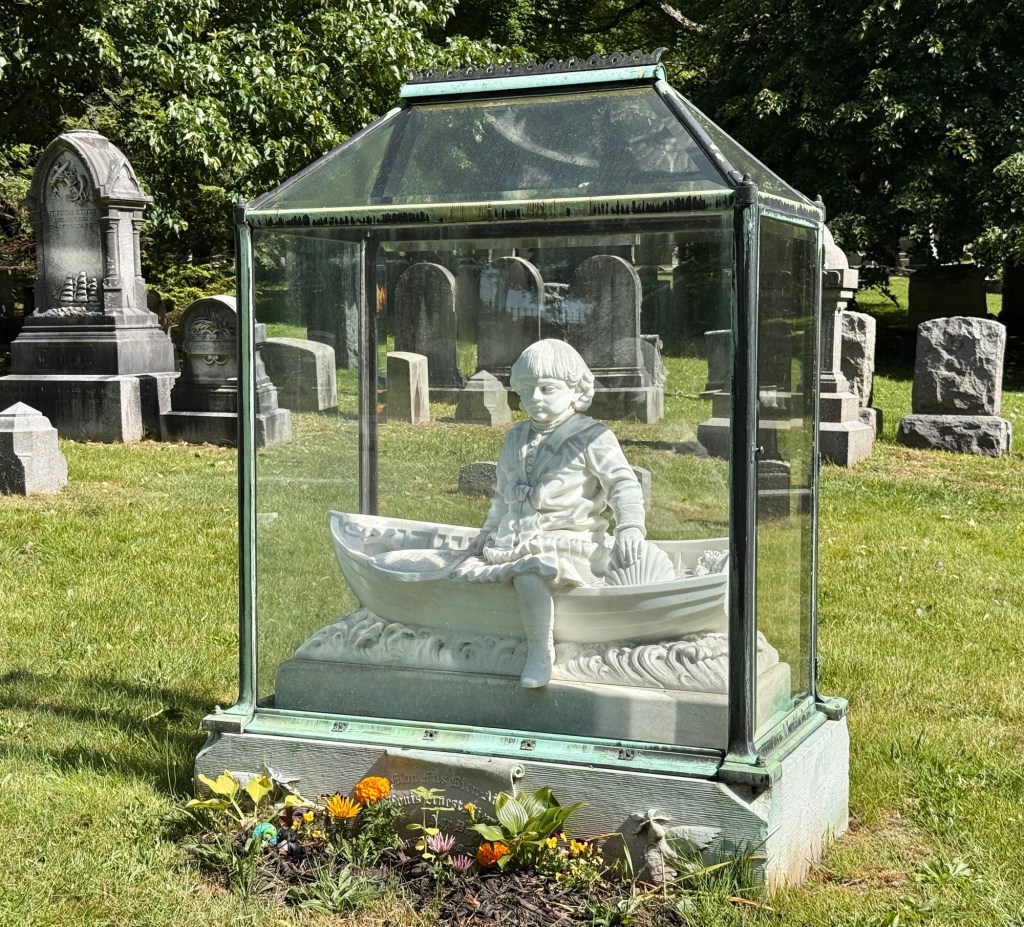
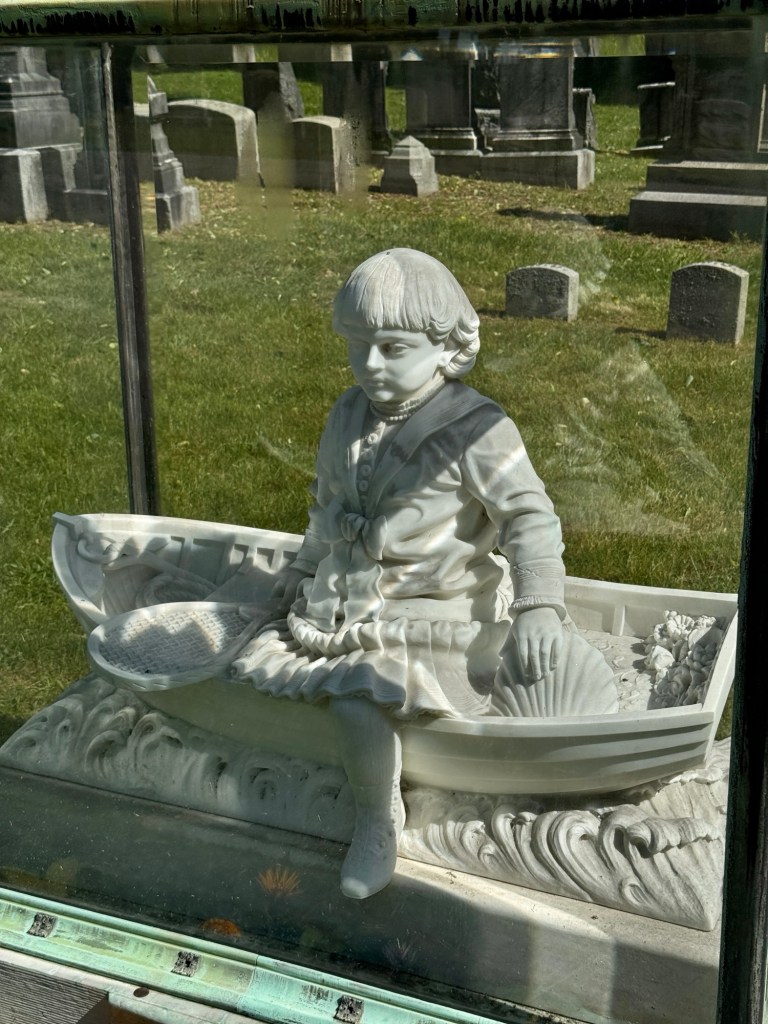
Forest Hills Cemetery – Louis Mieusset Memorial, “Boy in the Boat” // 1886

Louis Ernest Mieusset (1881-1886), just shy of his fifth birthday, died of Scarlet Fever and nephritis. His mother, Madame Louise Mieusset, took every penny she had saved for her son’s education and put it towards a commission of a funerary sculpture, depicting her late son’s playful spirit. The memorial of four-year-old Louis Mieusset is marked by a brilliant white marble figure depicting the young boy in a boat with a tennis racket in one hand and a shell in another. Marble was popular during the mid-19th century but it was understood that marble was too soft to stand up well outdoors, so it was additionally enclosed in a bronze and glass vitrine to protect it from acid rain and staining. Carved into the base, it states, “MY ONLY AND DARLING CHILD…A MOTHER’S TRIBUTE OF AFFECTION”. Madame Mieusset worked as a hat-maker in Boston, and after the death of her son, she struggled financially to support herself between frequent visits to mourn her son, even decades after his death. Louise planned to be buried next to her son, but died penniless in 1936. As she did not leave funds for burial in Forest Hills Cemetery, her body was buried in a pauper’s lot, until (legend says) Boston Mayor James Curley paid her burial expenses, funding the relocation of her body, allowing for her eternal rest with her late son Louis.

A similar monument, known as the “Girl in the Glass” is also found at Forest Hills.

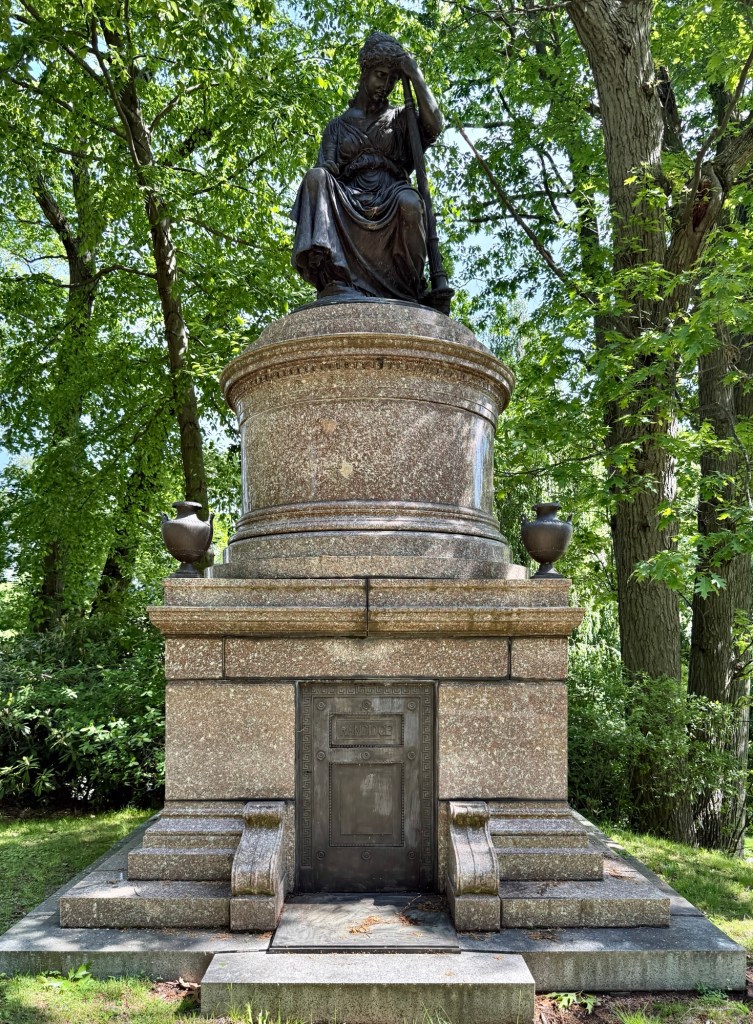
Forest Hills Cemetery – Randidge Monument, “Grief” // c.1891

Rural cemeteries are known for their beautiful grounds and winding pathways lined by sculptural monuments to the dead, and Forest Hills Cemetery in Boston is one of the best examples to stroll around and see some of the finest memorials in the country. Titled “Grief”, the Randidge Monument is located on Fir Avenue in Forest Hills Cemetery is the memorial to George and Caroline Randidge of Boston. George Randidge (1820-1890) was a merchant and tailor who died in 1890 and his widow, Caroline, appears to have funded the design and fabrication of this iconic monument. Executed in 1891 by sculptor Adolph Robert Kraus, a bronze seated figure of Grief in classical robes leans in sorrow on an inverted torch, atop the enormous granite base designed by the architectural firm of Fehmer and Page. In 1895, less than four years after the loss of her husband, Caroline Randidge joined George here and her grief was no longer.

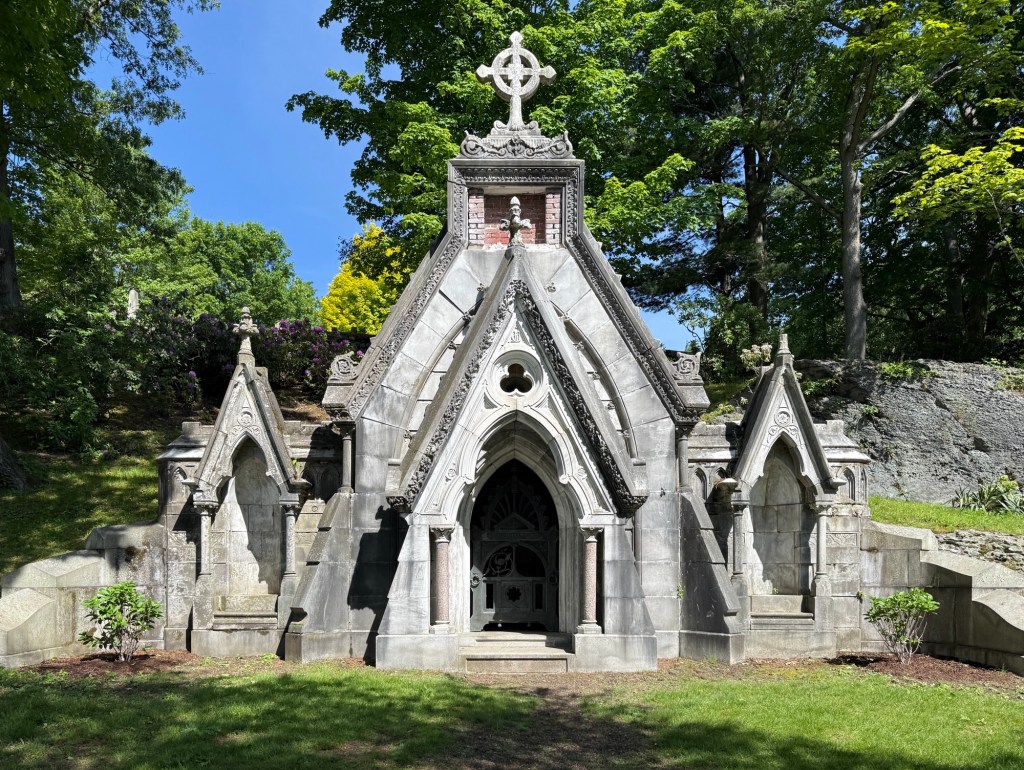
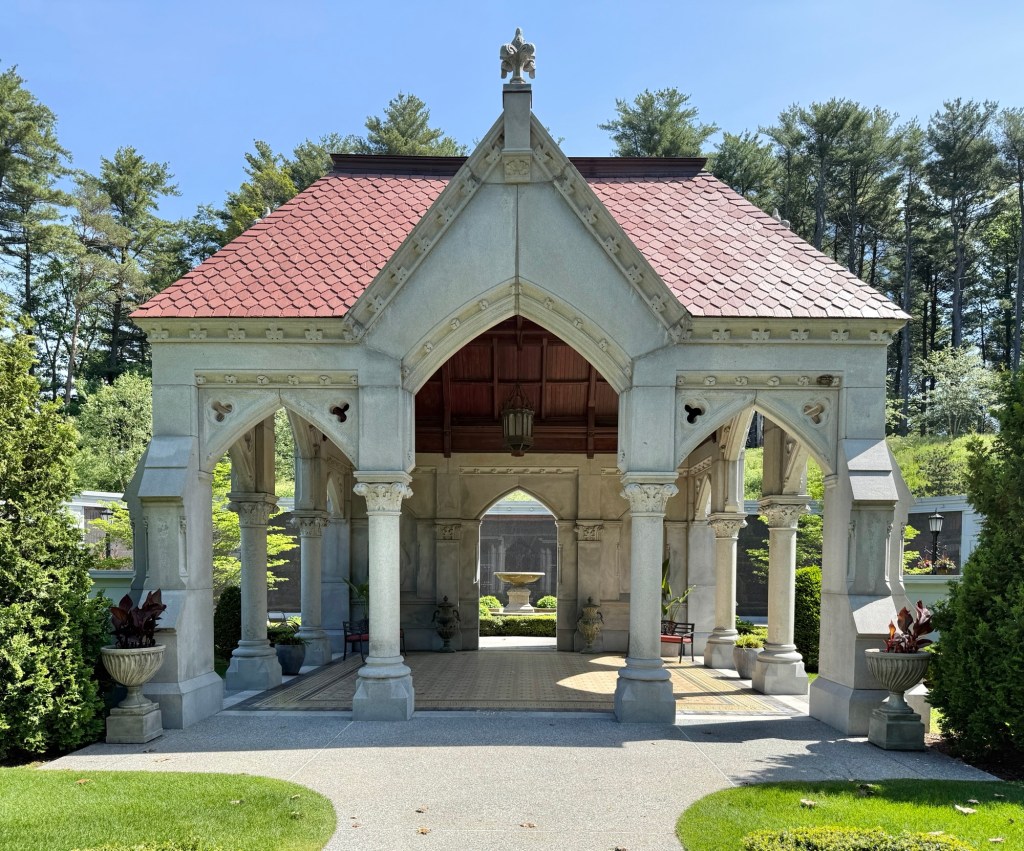
Forest Hills Cemetery – Receiving Tomb // 1871

The Gothic Revival receiving tomb at Forest Hills Cemetery in Boston is located not far from the iconic entrance gate and chapel/offices. The structure was built in 1871 and designed by architects, Carl Fehmer and William R. Emerson in the Gothic style, a prevalent aesthetic that the overseers encouraged for the various 19th century buildings constructed on the grounds. Historically, the Gothic Revival structure served as the entrance to underground holding tombs for the temporary storage of bodies awaiting burial or relocation, typically stored when the ground was too frozen for burial. The structure features a granite structure with oak ceiling and painted tile flooring. A massive project began in 2016 to excavate and build a new Garden Mausoleum, built into the landscape with the restored Receiving Tomb serving as the focal point. The tomb portico was adapted as a gateway to an open-air courtyard flanked by walls set into the slope which contain internment chambers for burials, with a restored fountain in front and woman archer statue atop.

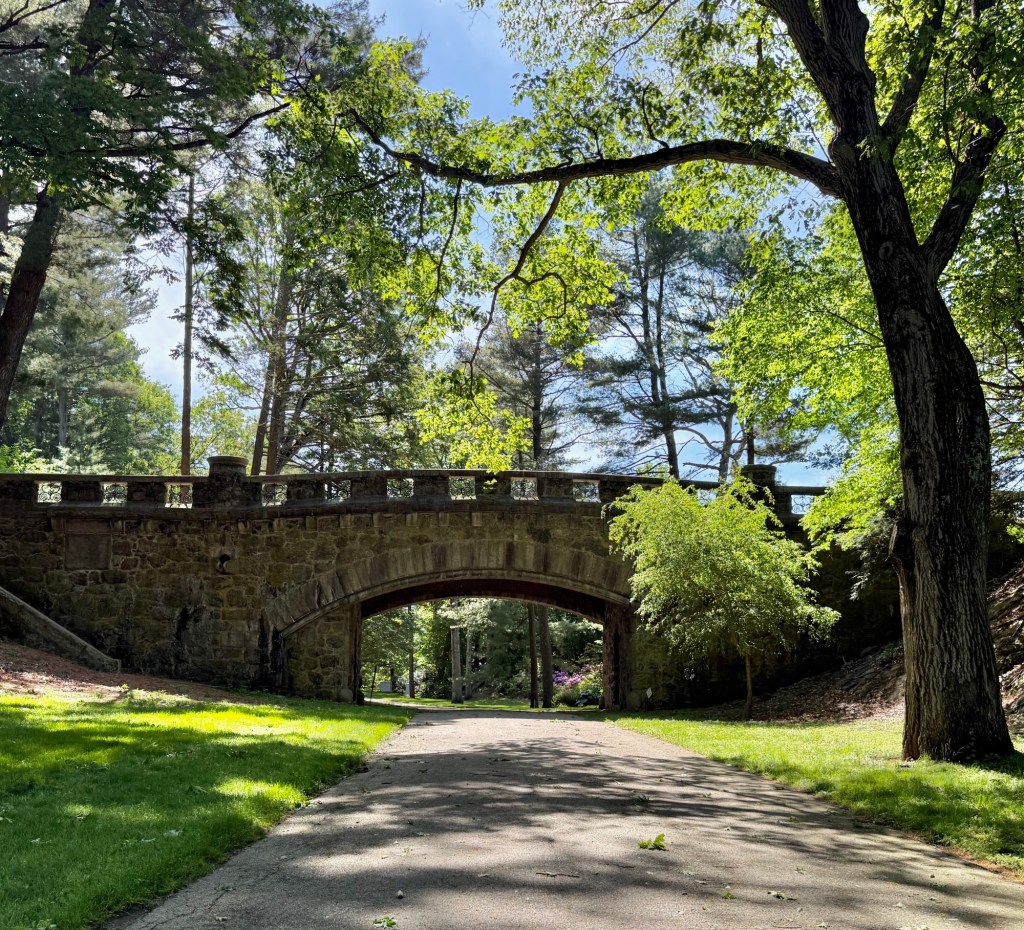
Forest Hills Cemetery – Stone Bridge // 1891

Forest Hills Cemetery in Boston was established in 1848 in the rural cemetery tradition, which followed Mount Auburn Cemetery, established in 1831 in nearby Cambridge and Watertown. The site was a municipal cemetery in Roxbury until it was annexed into Boston in 1868, becoming a private, non-denominational burial place for the who’s who of the area. The cemetery was envisioned by Henry A. S. Dearborn, who was the mayor of Roxbury in 1847 and first president of the Massachusetts Horticulture Society, who had also been instrumental in creating Mount Auburn. Since its creation in 1848, Forest Hills has grown from its original 72 acres to a total of approximately 250 acres today and is known for the rich topography and vegetation, dotted by thousands of beautiful monuments to the deceased and some iconic architectural landmarks tucked away in its winding paths. Forest Hills Cemetery was located on this site due to its varied natural features, which included hills, valleys and lakes, which together were preserved to enhance the experience of those visiting nearly 200 years later. The site’s topography consists of a series of geological drumlins of Roxbury puddingstone, an important material that was used in building projects all over the region (and for some of the buildings and monuments in Forest Hills). It is the burial place of a remarkable cross-section of people that reflect almost every aspect of American life — from statesmen to soldiers to industrialists to abolitionists to artists to poets. Forest Hills Cemetery is a somewhat hidden gem and is one of the best places in the area to walk and explore. 

The stone bridge in Forest Hills spans over Greenwood Avenue, linking Consecration Hill to Milton Hill, was designed by William Gibbons Preston and built in 1891-1892. It is 180’ long and 23’ wide and was constructed of random laid Roxbury puddingstone with granite trim and is capped by a stone balustrade inlaid with decorative cast iron. The bridge shows that even a traditionally functional structure in the cemetery was designed with intent and was a vessel to enhance the experience of those visiting. Stay tuned for more sites in this iconic landscape!

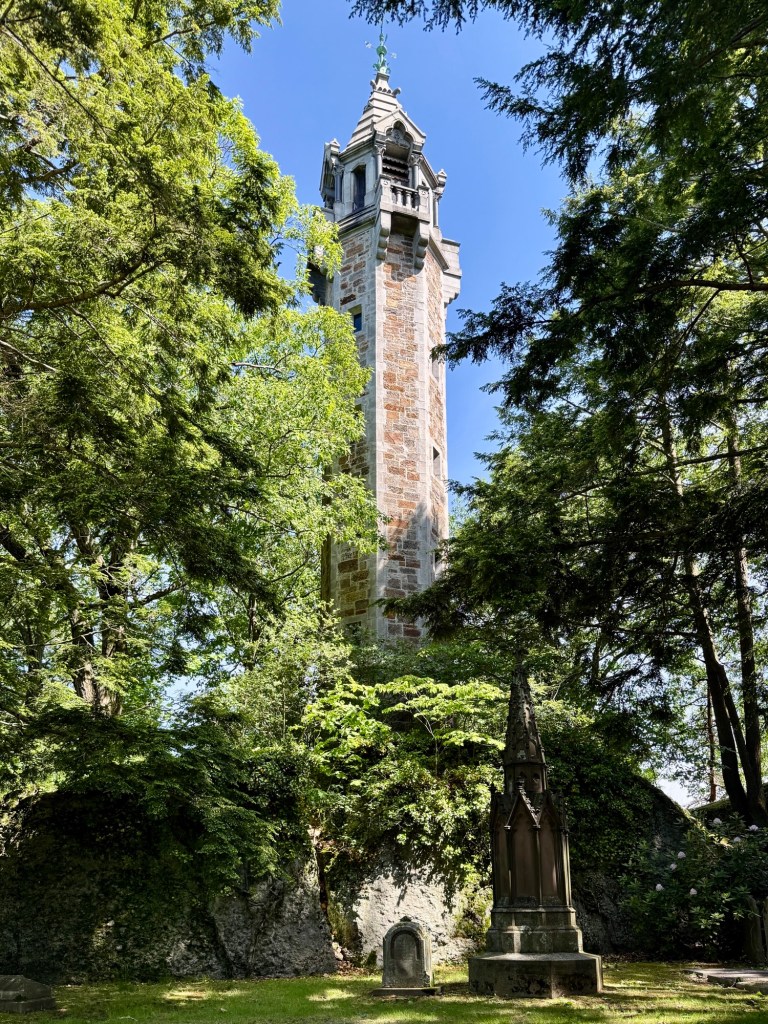
Forest Hills Cemetery – Bell Tower // 1876

Built atop Snowflake Hill just inside the entrance of the Forest Hills Cemetery in Boston, the cemetery’s bell tower stands as an architectural landmark in the iconic historic landscape. Completed in 1876, the octagonal, Victorian Gothic Revival style tower stands 100 feet tall and is built atop an outcropping of Roxbury puddingstone. The structure is also built of local Roxbury puddingstone blocks and trimmed with granite. The roof is clad with granite tiles and topped with an ornate copper weathervane. Originally, a swinging bell was rung in the tower, but it was replaced by an electronic carillon. The architect is not known for the handsome structure, but the contractors were the Concord and Roxbury Granite Railway Company, and the builders were Jacobs & Kelly of Boston.

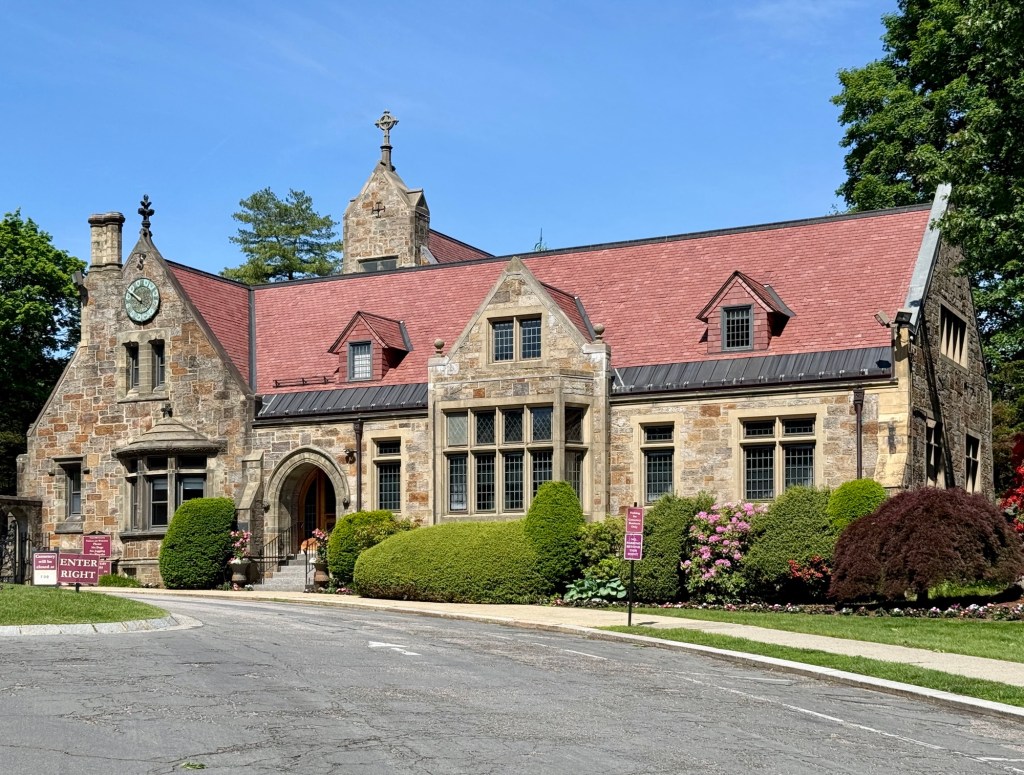
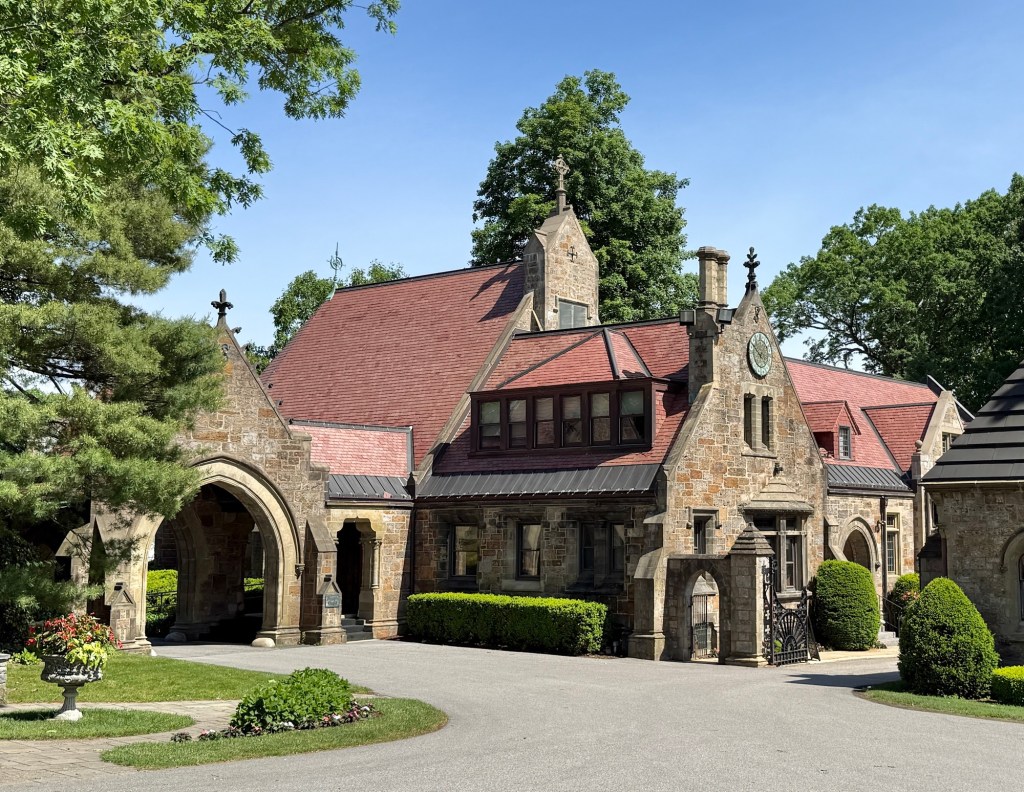
Forest Hills Cemetery – Forsyth Chapel and Office // 1884 & 1921

Adjacent to the Entrance Gate at Forest Hills Cemetery, the Forsyth Chapel and Cemetery Office building stands at the ceremonial entrance to the iconic landscape and architecturally compliments the adjacent structure and surrounding grounds. The Forsyth Chapel was designed by the firm of Van Brunt and Howe and completed in 1884 as a space for mourners and for celebration of lives well-lived. The chapel was expanded in 1921-22 when the Boston firm of Andrews, Jacques & Rantoul, was commissioned to expand the building perpendicular to the gateway, and expand the offices in the building, to serve the greater administrative needs of the busy cemetery and burial planning. The Neo-Gothic addition continues the architectural aesthetic of the cemetery, while being clearly of its time, a well-intentioned and designed addition.

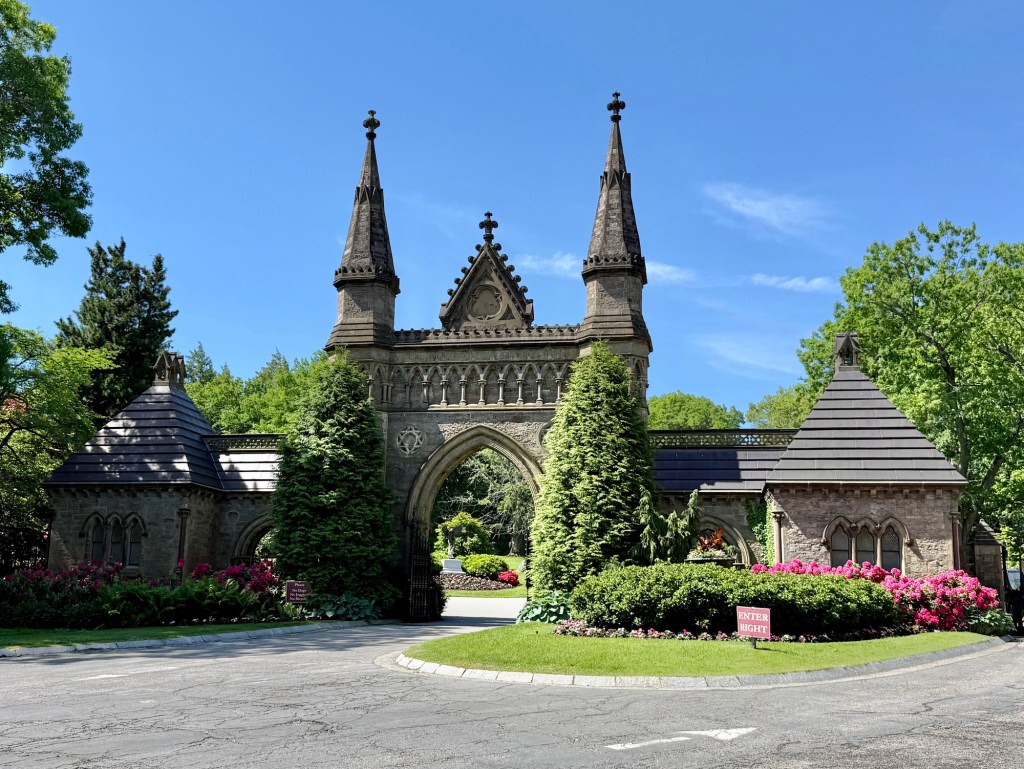
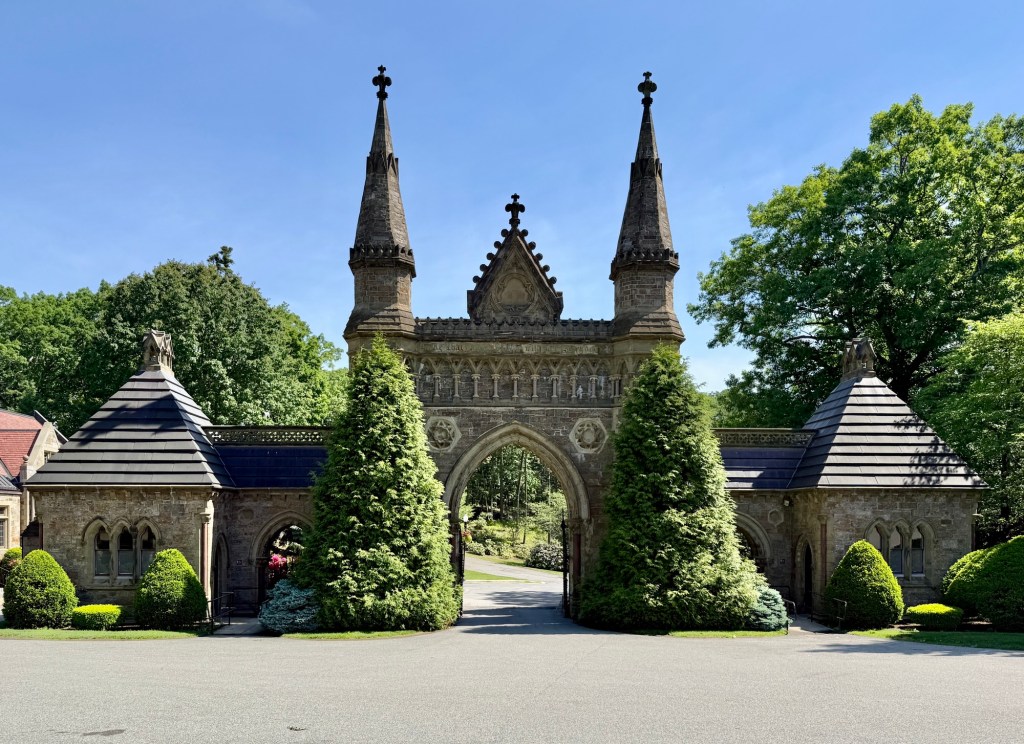
Forest Hills Cemetery – Entrance Gate // 1865

Forest Hills Cemetery in Boston was established in 1848 in the rural cemetery tradition, which followed Mount Auburn Cemetery, established in 1831 in nearby Cambridge and Watertown. The site was a municipal cemetery in Roxbury until it was annexed into Boston in 1868, becoming a private, non-denominational burial place for the who’s who of the area. The cemetery was envisioned by Henry A. S. Dearborn, who was the mayor of Roxbury in 1847 and first president of the Massachusetts Horticulture Society, who had also been instrumental in creating Mount Auburn. Since its creation in 1848, Forest Hills has grown from its original 72 acres to a total of approximately 250 acres today and is known for the rich topography and vegetation, dotted by thousands of beautiful monuments to the deceased and some iconic architectural landmarks tucked away in its winding paths. Forest Hills Cemetery was located on this site due to its varied natural features, which included hills, valleys and lakes, which together were preserved to enhance the experience of those visiting nearly 200 years later. The site’s topography consists of a series of geological drumlins of Roxbury puddingstone, an important material that was used in building projects all over the region (and for some of the buildings and monuments in Forest Hills).

Visitors to the Forest Hills Cemetery are greeted by its iconic Gothic Revival main gate, a sculptural and ceremonial entranceway constructed from Roxbury puddingstone and sandstone. The structure replaced an original 1840s Egyptian Revival, wooden gateway designed by Henry Dearborn, following inspiration from Mount Auburn’s entrance gate. Designed by architect Charles W. Panter of Brookline and was completed in 1865, the present stone entrance gate features three portals with arched openings and ornate iron gates surmounted by decorative scrolled ironwork. The central gateway is framed by two conical spires and a central stone pediment, all topped with stone crosses. Beneath the pediment is the biblical inscription, “He that keepeth thee will not slumber.” The Entrance Gate remains the cemetery’s most iconic landmark.

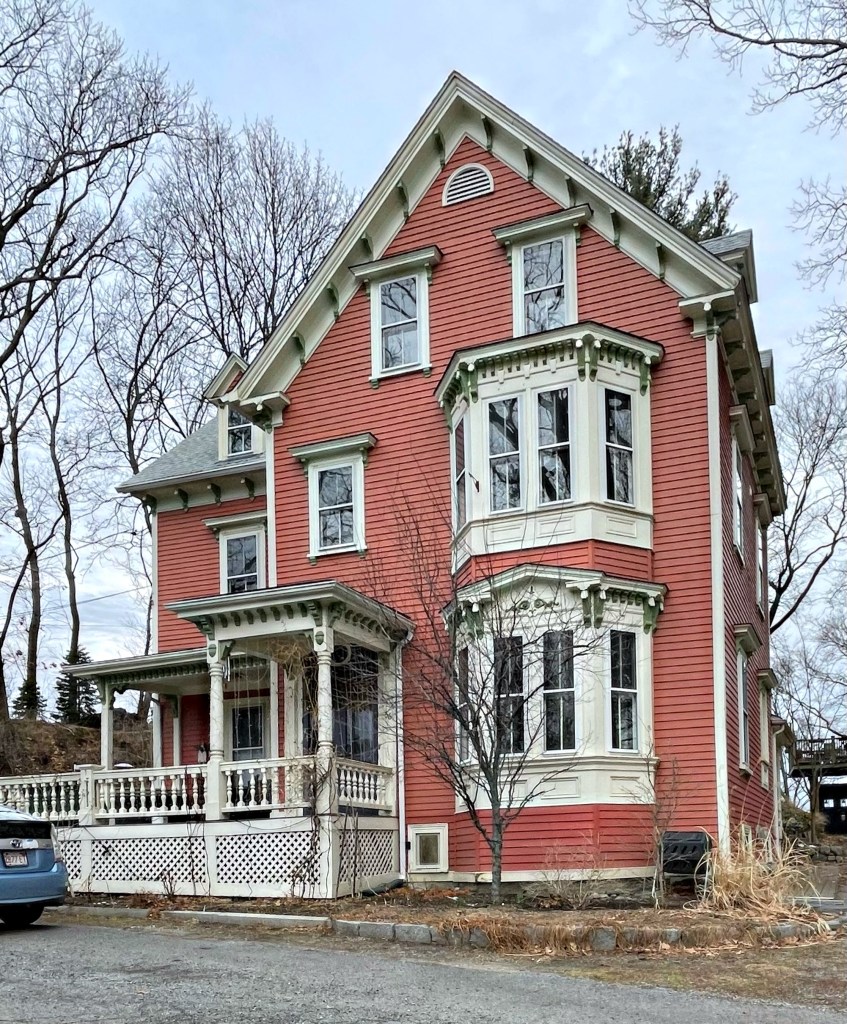
Edward Moulton House // c.1870

This stunning Italianate style home in the Forest Hills area of Jamaica Plain, Boston, sits directly adjacent to Forest Hills Cemetery, one of the finest examples of a rural cemetery in America. This house dates to the mid-19th century and maps show it was built on land owned by Isaac Cary, who built homes on this hill. By the 1880s, the property seems to have been acquired by the cemetery, or they gave financial assistance to Edward Everett Moulton, who worked as an Assistant Clerk at the cemetery. Edward lived in this house seemingly until his death in 1927. Since then, the home stands as one of the best-preserved in the area and is a testament to stewards of these significant old homes.

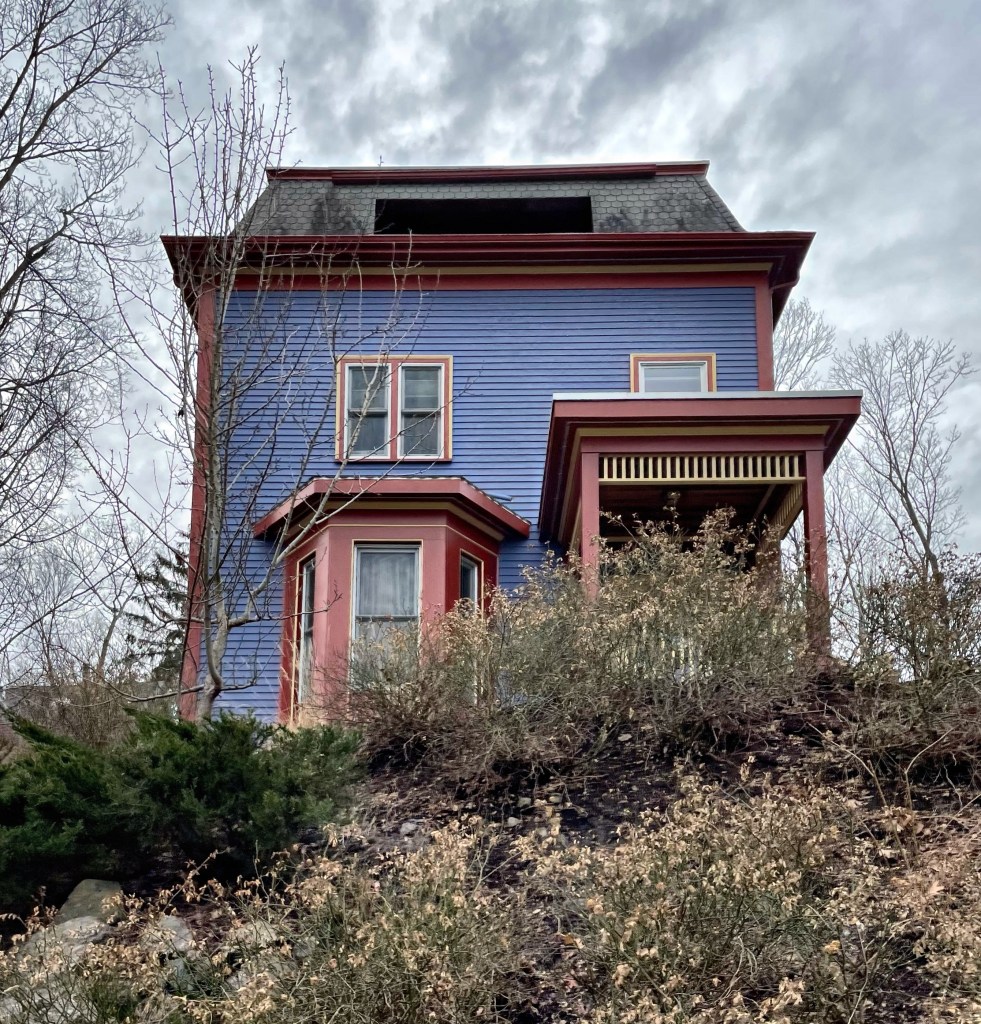
Isaac Cary House // c.1870

Isaac Harris Cary (1803-1881) was born in Charlestown, MA to an established, old New England family. He eventually settled in West Roxbury, an area that is now known as Jamaica Plain, where he operated a tannery along a branch of Stony Brook, a tributary of the Charles River. Isaac built this home and a couple income-producing rental properties on a hill adjacent to the newly established Forest Hills Cemetery. The Second Empire style home today features bright colors and a modern recessed window set into the mansard roof, likely providing views to Boston’s skyline.