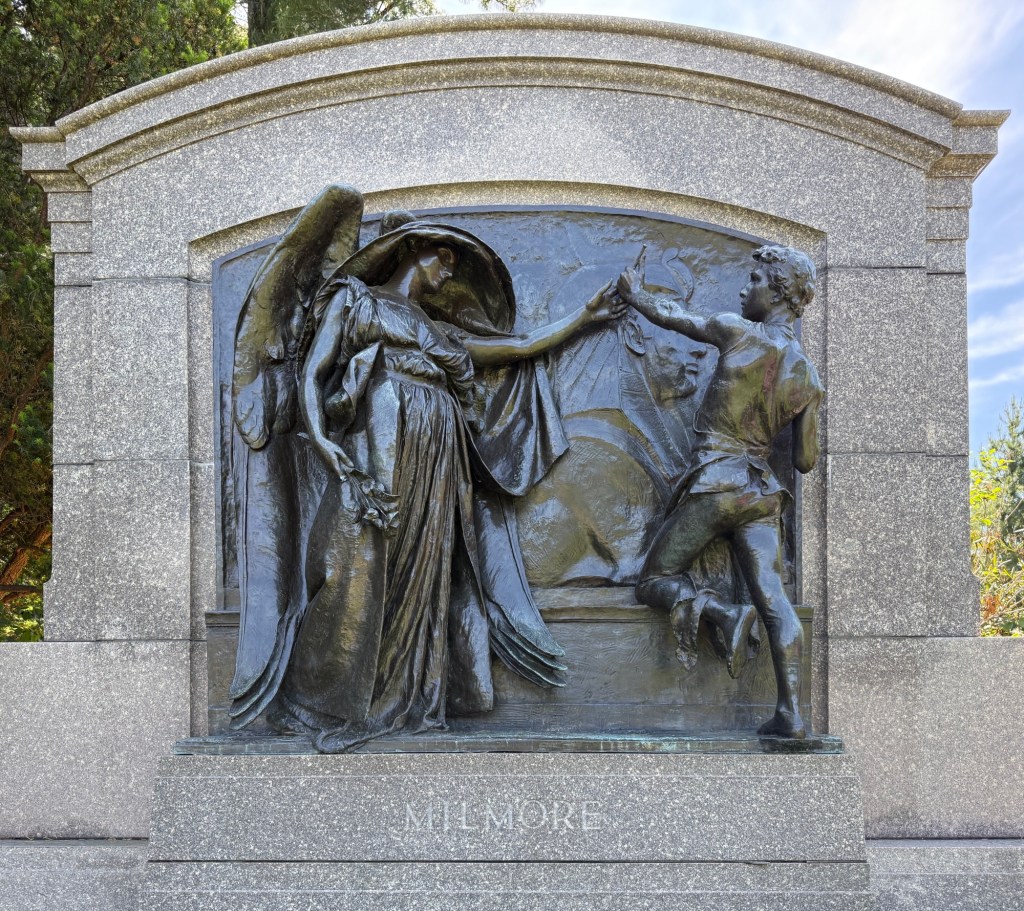
Milmore Memorial, ‘Death and the Sculptor’ // 1889

The haunting yet beautiful monument, “Death and the Sculptor” in Forest Hills Cemetery is quite possibly my favorite piece of sculptural art and a gentle reminder to not take life for granted. Commissioned in 1889 and dedicated in 1893, the bronze monument was designed by Daniel Chester French, a sculptor best known for his 1920 monumental statue of Abraham Lincoln at the Lincoln Memorial, to memorialize sculptor, Martin Milmore and his brother Joseph, a stone-cutter. Rather than portraying death as frightening or violent, French depicts a serene winged figure gently staying the hand of a young sculptor at work, suggesting a peaceful transition from earthly labor to eternal rest. The sculpture’s quiet grace, emotional depth, and masterful craftsmanship have made it a landmark of American memorial art, inviting visitors to reflect on mortality, creativity, and the enduring power of beauty in the face of loss. To tie the work to its subjects, the young sculptor is carving a Sphynx, modeled after the 1873 sculpture the brothers worked on together that is located at Mount Auburn Cemetery in Cambridge. A marble version of the work can also be found at the Metropolitan Museum of Art in New York, carved in 1917 by the Piccirilli Brothers.
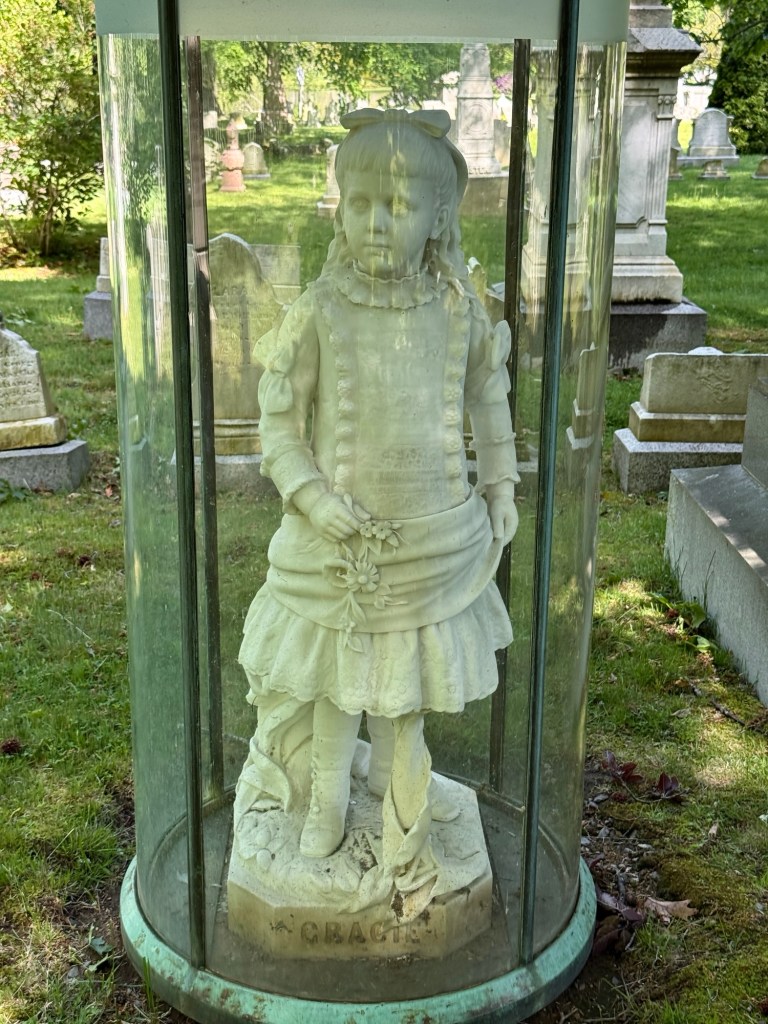
Forest Hills Cemetery – Grace Sherwood Allen Memorial, “Girl in the Glass” // 1880

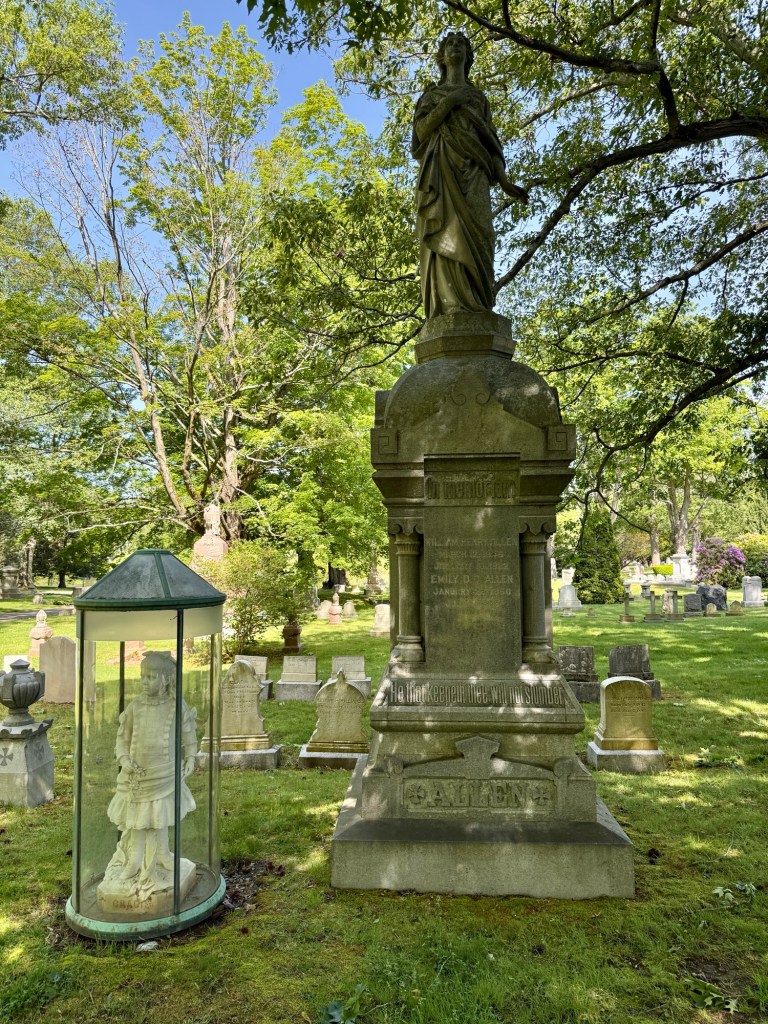
Similar to the story of Louis Mieusset, the “boy in the boat” at Forest Hills Cemetery, the memorial of Grace Sherwood Allen stands as a testament to parent’s ever-lasting love of their children. “Gracie” Allen (1876-1880) was born in Boston, the only daughter of William H. and Emily Jones Allen. She died several months prior to her fifth birthday from whooping cough and was later immortalized by sculptor Sydney H. Morse, who depicted the young girl in a buttoned dress, boots and bow-tied hair. In her hand are drooping flowers, the petals of which have begun to fall, showing her life fading. The life-size white marble sculpture is covered in a bronze and glass vitrine, to protect the fragile stone from acid rain, which would stain and weather the delicate monument.

Forest Hills Cemetery – Louis Mieusset Memorial, “Boy in the Boat” // 1886

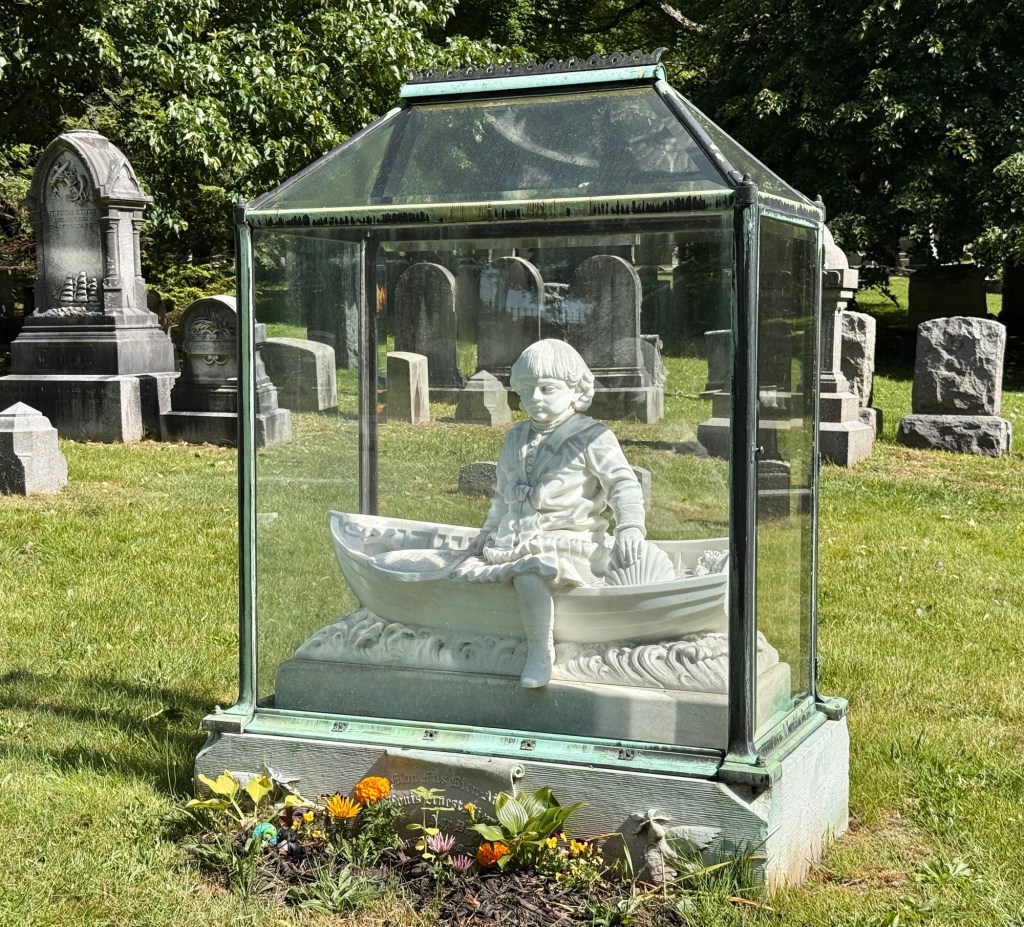
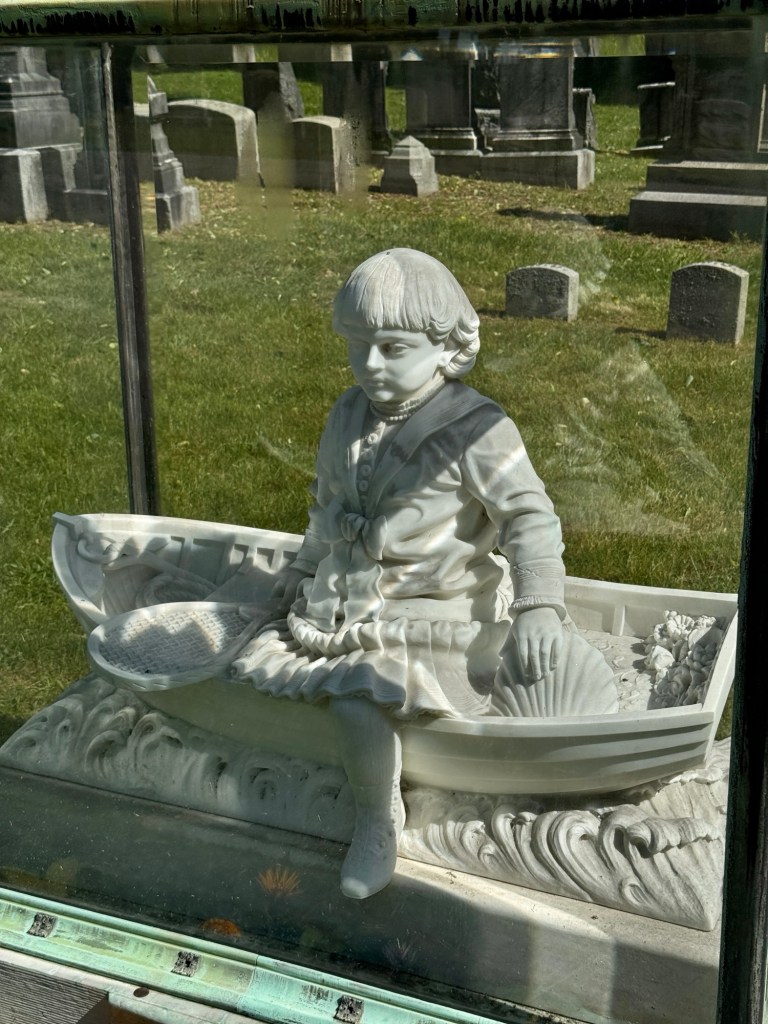
Louis Ernest Mieusset (1881-1886), just shy of his fifth birthday, died of Scarlet Fever and nephritis. His mother, Madame Louise Mieusset, took every penny she had saved for her son’s education and put it towards a commission of a funerary sculpture, depicting her late son’s playful spirit. The memorial of four-year-old Louis Mieusset is marked by a brilliant white marble figure depicting the young boy in a boat with a tennis racket in one hand and a shell in another. Marble was popular during the mid-19th century but it was understood that marble was too soft to stand up well outdoors, so it was additionally enclosed in a bronze and glass vitrine to protect it from acid rain and staining. Carved into the base, it states, “MY ONLY AND DARLING CHILD…A MOTHER’S TRIBUTE OF AFFECTION”. Madame Mieusset worked as a hat-maker in Boston, and after the death of her son, she struggled financially to support herself between frequent visits to mourn her son, even decades after his death. Louise planned to be buried next to her son, but died penniless in 1936. As she did not leave funds for burial in Forest Hills Cemetery, her body was buried in a pauper’s lot, until (legend says) Boston Mayor James Curley paid her burial expenses, funding the relocation of her body, allowing for her eternal rest with her late son Louis.

A similar monument, known as the “Girl in the Glass” is also found at Forest Hills.

Forest Hills Cemetery – Receiving Tomb // 1871

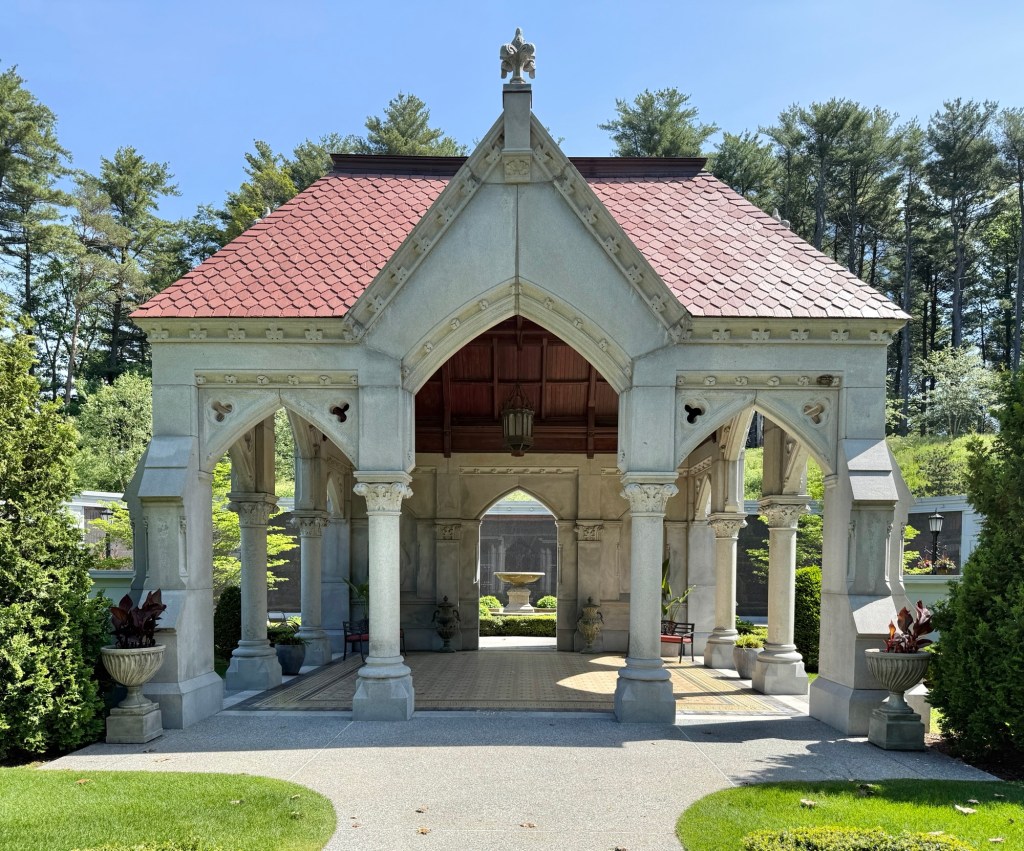
The Gothic Revival receiving tomb at Forest Hills Cemetery in Boston is located not far from the iconic entrance gate and chapel/offices. The structure was built in 1871 and designed by architects, Carl Fehmer and William R. Emerson in the Gothic style, a prevalent aesthetic that the overseers encouraged for the various 19th century buildings constructed on the grounds. Historically, the Gothic Revival structure served as the entrance to underground holding tombs for the temporary storage of bodies awaiting burial or relocation, typically stored when the ground was too frozen for burial. The structure features a granite structure with oak ceiling and painted tile flooring. A massive project began in 2016 to excavate and build a new Garden Mausoleum, built into the landscape with the restored Receiving Tomb serving as the focal point. The tomb portico was adapted as a gateway to an open-air courtyard flanked by walls set into the slope which contain internment chambers for burials, with a restored fountain in front and woman archer statue atop.

Forest Hills Cemetery – Stone Bridge // 1891

Forest Hills Cemetery in Boston was established in 1848 in the rural cemetery tradition, which followed Mount Auburn Cemetery, established in 1831 in nearby Cambridge and Watertown. The site was a municipal cemetery in Roxbury until it was annexed into Boston in 1868, becoming a private, non-denominational burial place for the who’s who of the area. The cemetery was envisioned by Henry A. S. Dearborn, who was the mayor of Roxbury in 1847 and first president of the Massachusetts Horticulture Society, who had also been instrumental in creating Mount Auburn. Since its creation in 1848, Forest Hills has grown from its original 72 acres to a total of approximately 250 acres today and is known for the rich topography and vegetation, dotted by thousands of beautiful monuments to the deceased and some iconic architectural landmarks tucked away in its winding paths. Forest Hills Cemetery was located on this site due to its varied natural features, which included hills, valleys and lakes, which together were preserved to enhance the experience of those visiting nearly 200 years later. The site’s topography consists of a series of geological drumlins of Roxbury puddingstone, an important material that was used in building projects all over the region (and for some of the buildings and monuments in Forest Hills). It is the burial place of a remarkable cross-section of people that reflect almost every aspect of American life — from statesmen to soldiers to industrialists to abolitionists to artists to poets. Forest Hills Cemetery is a somewhat hidden gem and is one of the best places in the area to walk and explore. 

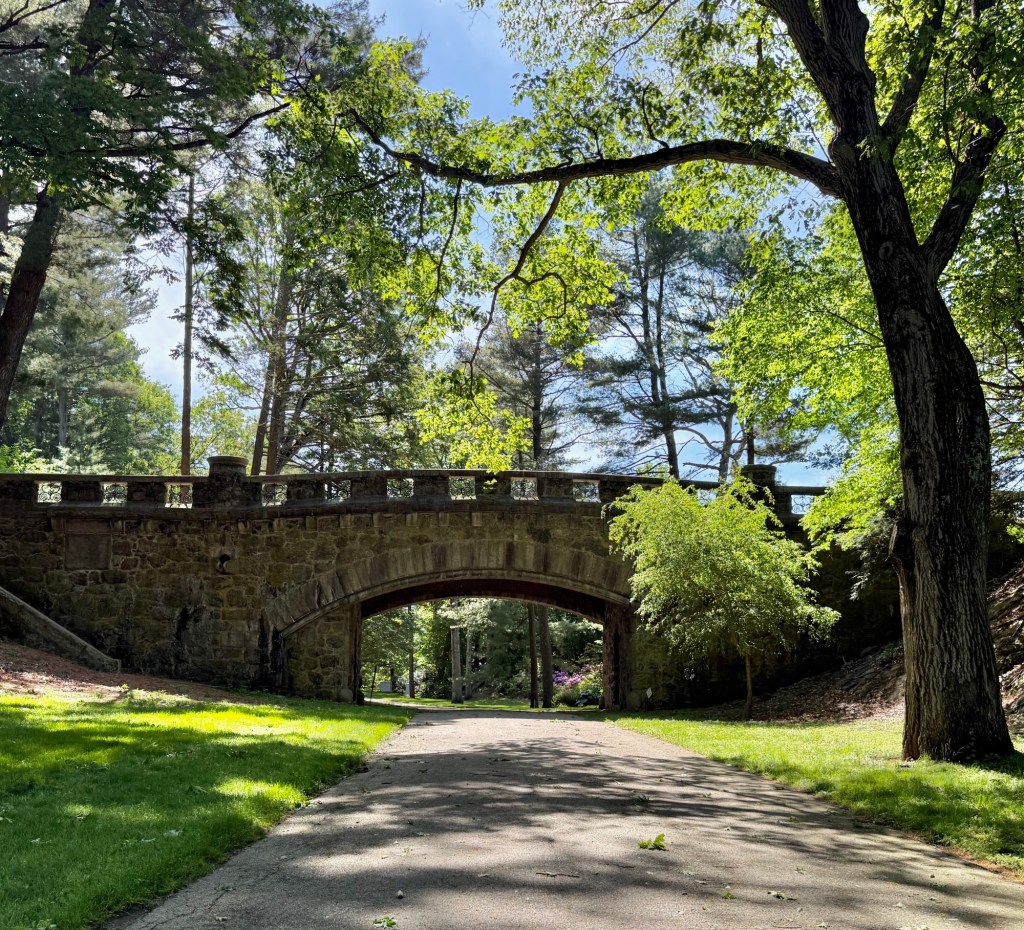
The stone bridge in Forest Hills spans over Greenwood Avenue, linking Consecration Hill to Milton Hill, was designed by William Gibbons Preston and built in 1891-1892. It is 180’ long and 23’ wide and was constructed of random laid Roxbury puddingstone with granite trim and is capped by a stone balustrade inlaid with decorative cast iron. The bridge shows that even a traditionally functional structure in the cemetery was designed with intent and was a vessel to enhance the experience of those visiting. Stay tuned for more sites in this iconic landscape!

Forest Hills Cemetery – Bell Tower // 1876

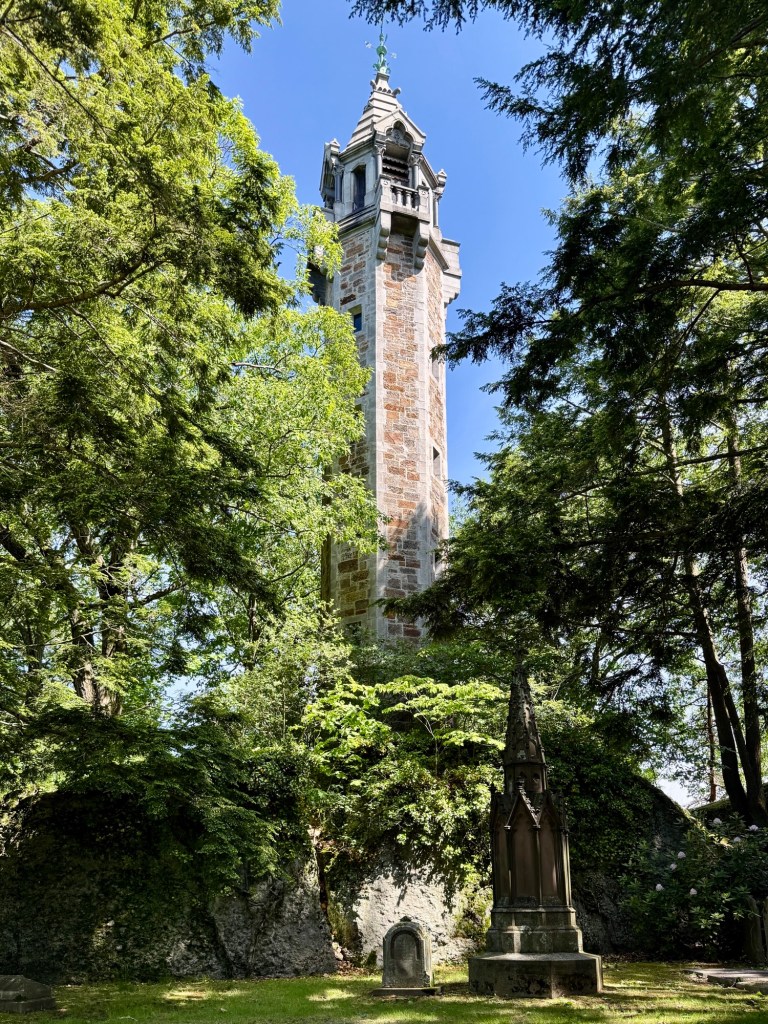
Built atop Snowflake Hill just inside the entrance of the Forest Hills Cemetery in Boston, the cemetery’s bell tower stands as an architectural landmark in the iconic historic landscape. Completed in 1876, the octagonal, Victorian Gothic Revival style tower stands 100 feet tall and is built atop an outcropping of Roxbury puddingstone. The structure is also built of local Roxbury puddingstone blocks and trimmed with granite. The roof is clad with granite tiles and topped with an ornate copper weathervane. Originally, a swinging bell was rung in the tower, but it was replaced by an electronic carillon. The architect is not known for the handsome structure, but the contractors were the Concord and Roxbury Granite Railway Company, and the builders were Jacobs & Kelly of Boston.

Chapin Mausoleum // 1914

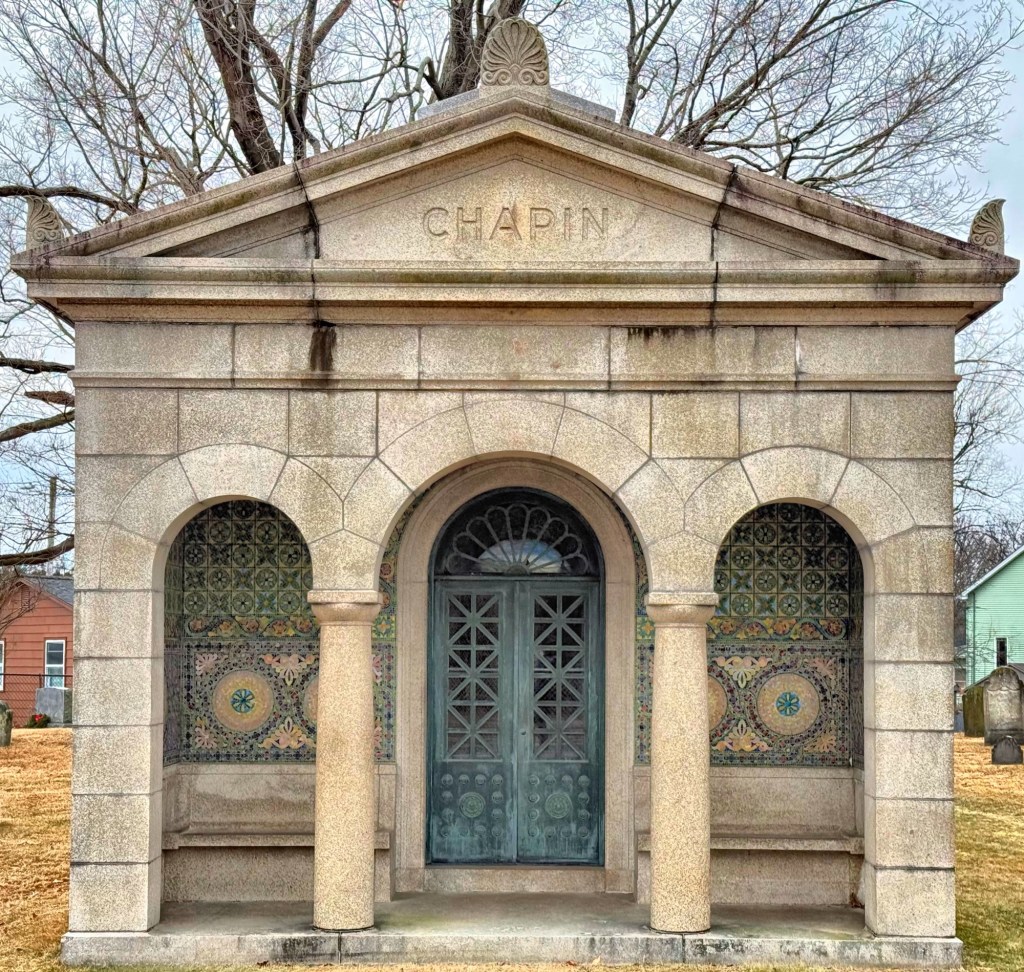
The Chapin Mausoleum was built as a memorial to Chester and Dorcas Chapin by their son, Chester W. Chapin Jr. Located in the Chicopee Street Cemetery in Chicopee, Massachusetts, the otherwise ordinary burial ground is adorned by this stately mausoleum, which was designed by none other than Louis Comfort Tiffany. Chester W. Chapin, the father of the mausoleum builder, was one of the Connecticut Valley’ s most important 19th century businessmen. After more humble beginnings operating a store, Chapin operated a business for coaches and steamboats, and later, he became president and director of the Western Railroad Corporation (1854 to 1867), and president of the Boston and Albany Railroad Company (1868 to 1878). He was elected as a Democrat to the US House of Representatives and served from 1875 to March 3, 1877. His son, Chester Williams Chapin (1842-1922), followed his father’s footsteps and serves as president of the New York & New Haven Steamship Company and one of the organizers of the Central New England Railroad. Chapin Jr. hired Louis Comfort Tiffany to design and decorate this mausoleum as a memorial to his parents, in the cemetery where hundreds of family members are buried in Chicopee. The mausoleum is constructed of “Tiffany granite”, from a granite quarry in Cohasset that Tiffany Studios purchased in 1914. The entrance to the mausoleum is through a Romanesque portico complete with round arches, stocky columns, and Favrile glass mosaics on the sides. Two marble benches flank a specially designed Tiffany bronze door. Inside, it is said that there are 12 catacombs of richly veined white marble under a Favrile glass mosaic ceiling.

Copp’s Hill Burying Ground // 1659

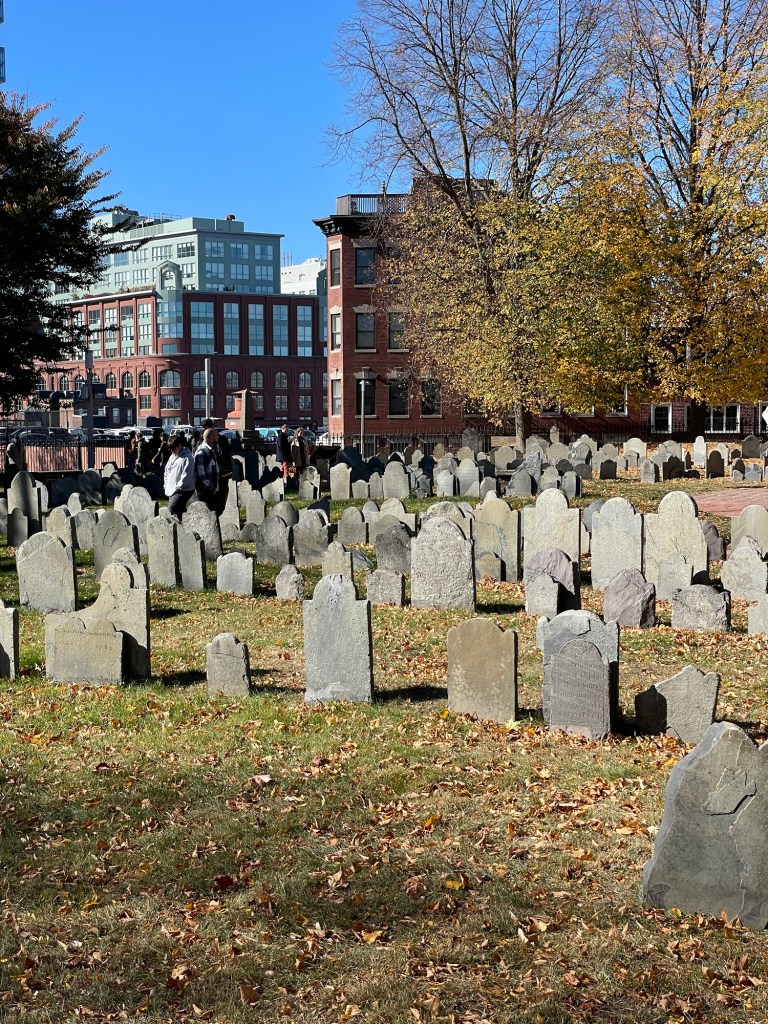
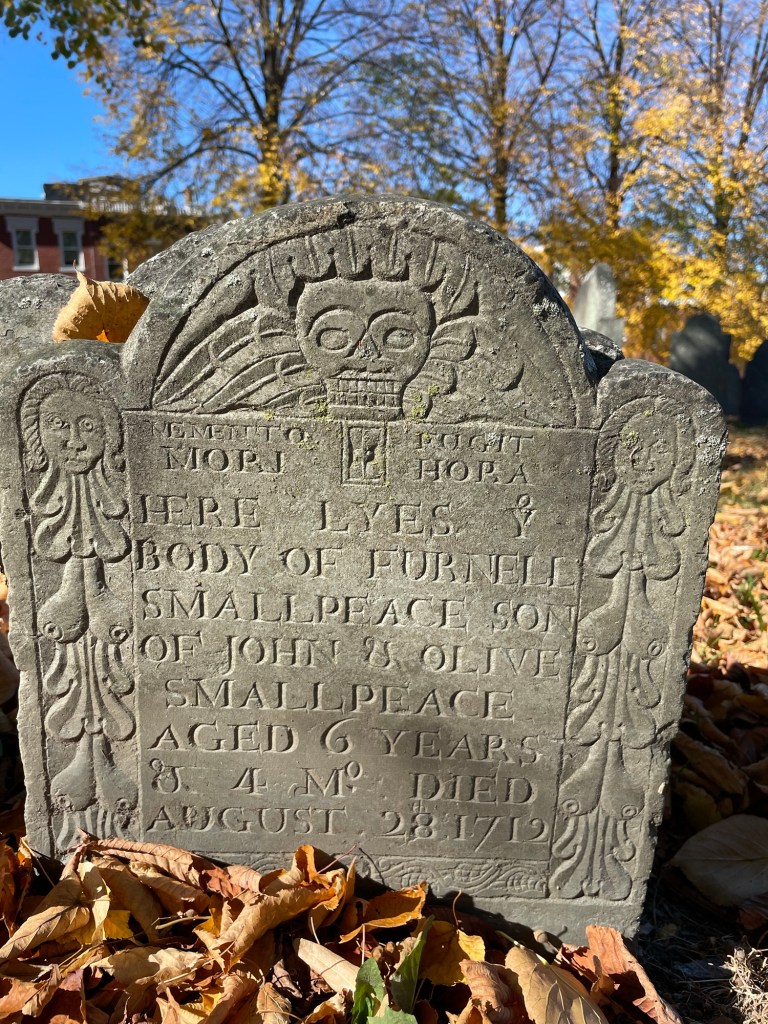
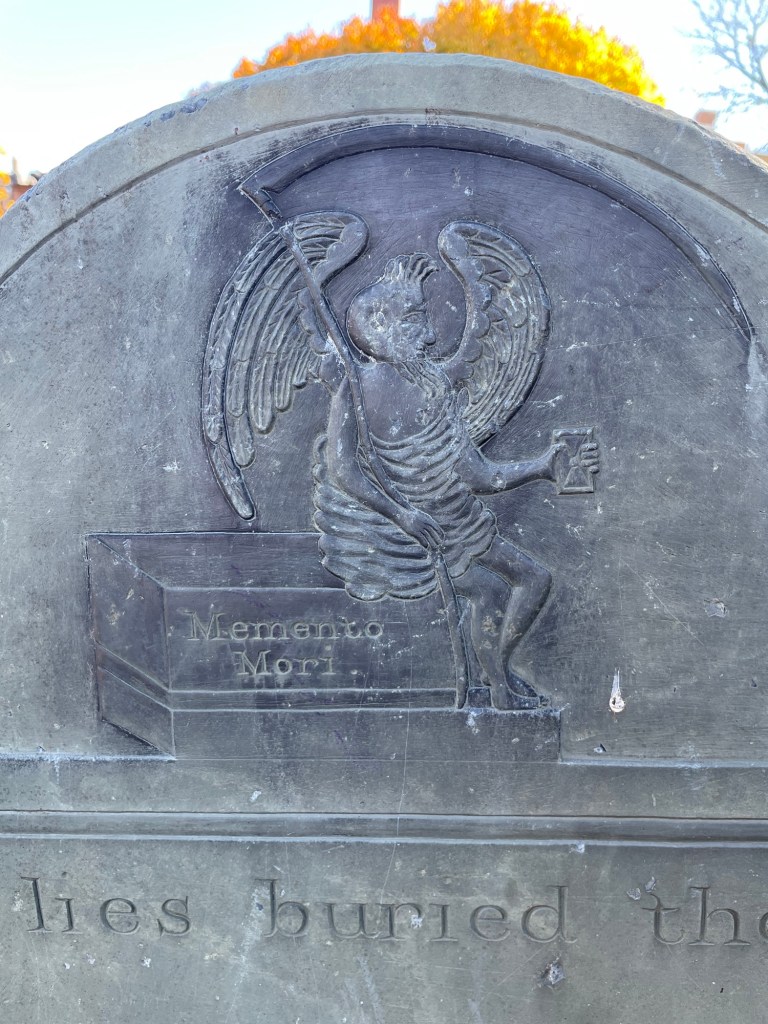
Happy Halloween! Welcome to Copp’s Hill Burying Ground, a historic cemetery nestled in Boston’s historic North End. Established in 1659, it served as a burial site for some of Boston’s earliest settlers and notable figures, including craftsmen, merchants, and members of the influential Mather family. Also burie here is abolitionist and leader in the free black community in Boston, Prince Hall. Originally called North Burying Ground, Copp’s Hill was the second place of interment on the Boston peninsula and was laid out in 1659. The area acquired its present name through its association with William Copp (1589-1670), a shoemaker and early settler who lived near today’s Prince Street; ironically, his stone is no longer standing.

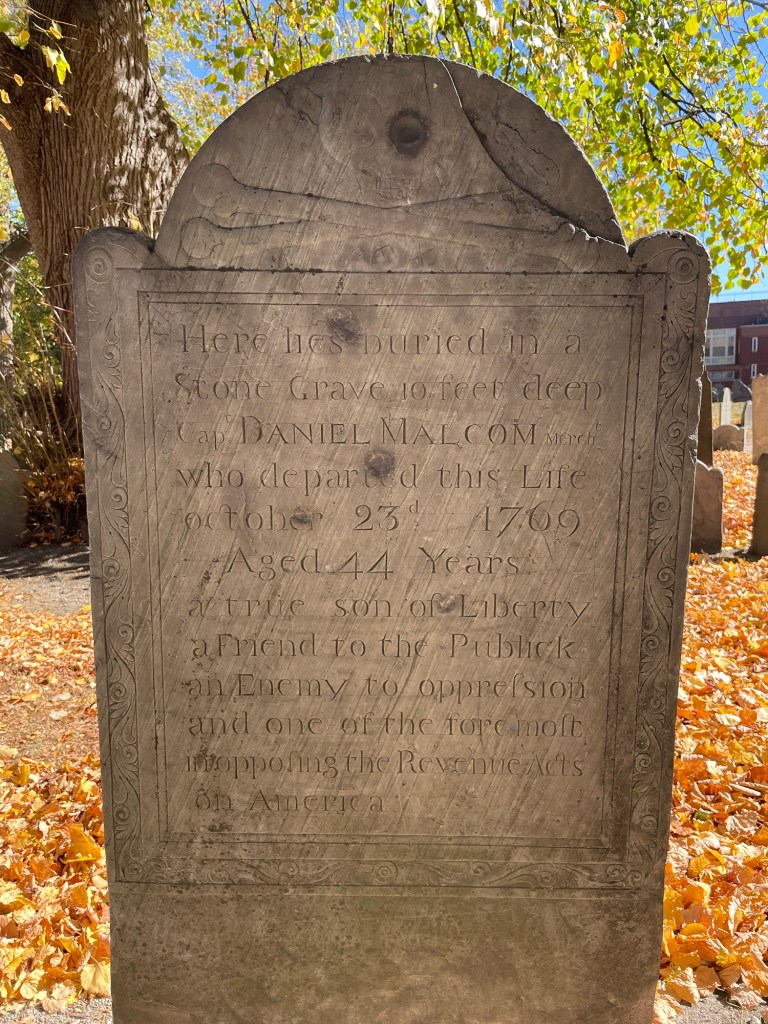
The cemetery is particularly known for its distinct slate gravestones, many adorned with intricate carvings that reflect the artistry of the era. Over the centuries, it has witnessed significant events, including the American Revolution, when it was used as a lookout point for British troops. During the Revolution, the burying ground’s prominent location overlooking the harbor gave it strategic military importance. At its southwest side the British established their North Battery and an earthworks from which they directed the shelling of Bunker Hill and ultimately the torching of Charlestown. Legend has it that British troops used gravestones for target practice. Many have interpreted the round scars on the gravestone of Captain Daniel Malcolm, an ardent son of liberty who spoke against Britain, as the result of musketballs shot at close range. The cemetery was used continually until the 1850s and is today, an evocative reminder of Boston’s early days, drawing visitors who seek to connect with the city’s storied history amidst its tranquil surroundings while the city stretches upwards around it. The cemetery is open and free to visit most of the year and is a great place to stroll and learn about Boston’s early history and see amazing stone carving!

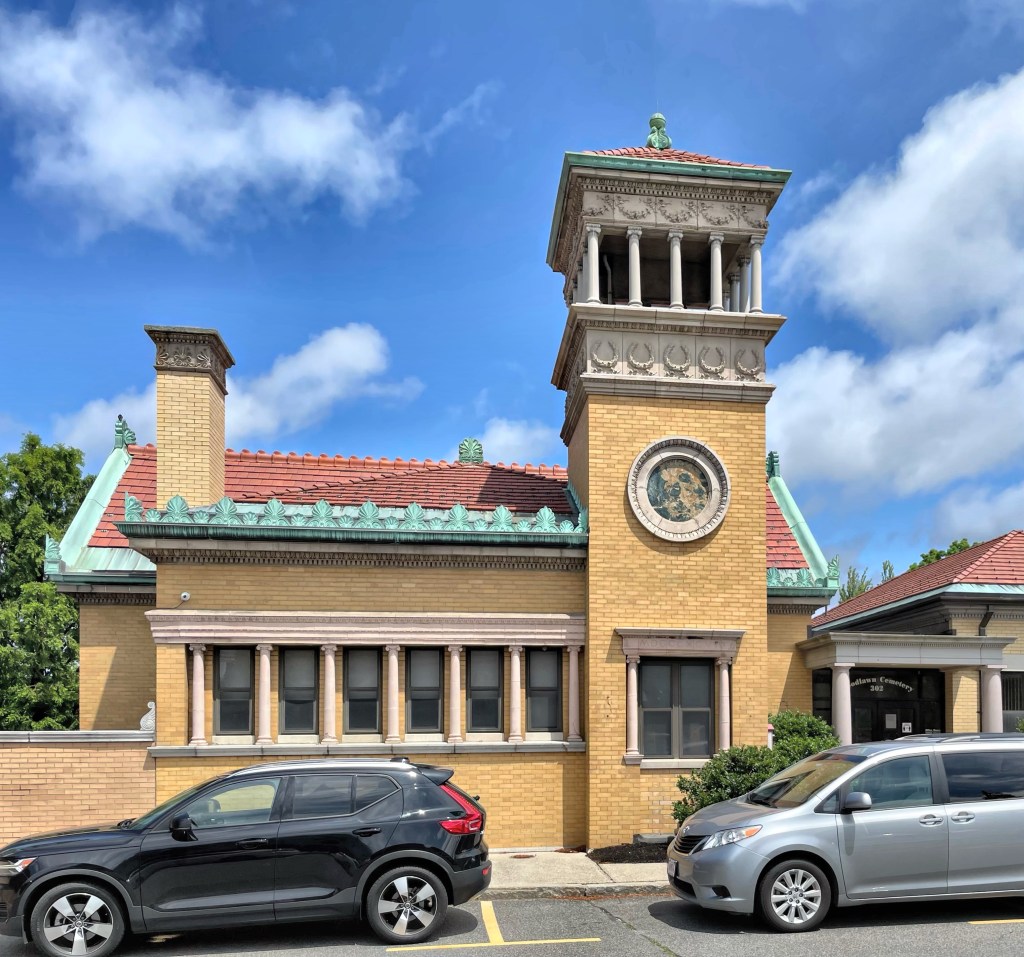
Woodlawn Cemetery Lodge // 1897

Woodlawn Cemetery in Everett, MA was established in 1850 as a rural, private cemetery in the tradition of Mount Auburn Cemetery in Cambridge. The story of Woodlawn Cemetery began in 1850 when a group of ten prominent Bostonians petitioned the Massachusetts General Court to organize a corporation “for the purpose of procuring, establishing and preparing a cemetery or burial place for the dead in Malden” (present-day Everett was established in 1870 from Malden). Adjacent to the Cemetery Gate and Tower (last post), the Woodlawn Cemetery Lodge replaced an 1850s lodge and office constructed of wood, in the Gothic-style, that was deemed unsatisfactory for later boards managing the cemetery. The group hired Boston architect William Hart Taylor to design the gate and lodge, the latter in the Classical Revival style. The buff brick building features terra-cotta trim and a red tile roof with dentil cornices and copper cresting along the ridges and eaves. The square entry tower has a columned belfry and incorporates additional Classically-inspired features including Ionic columns, moldings, swags, and wreaths, which looks like a Greek Temple plopped onto the top. Gorgeous!