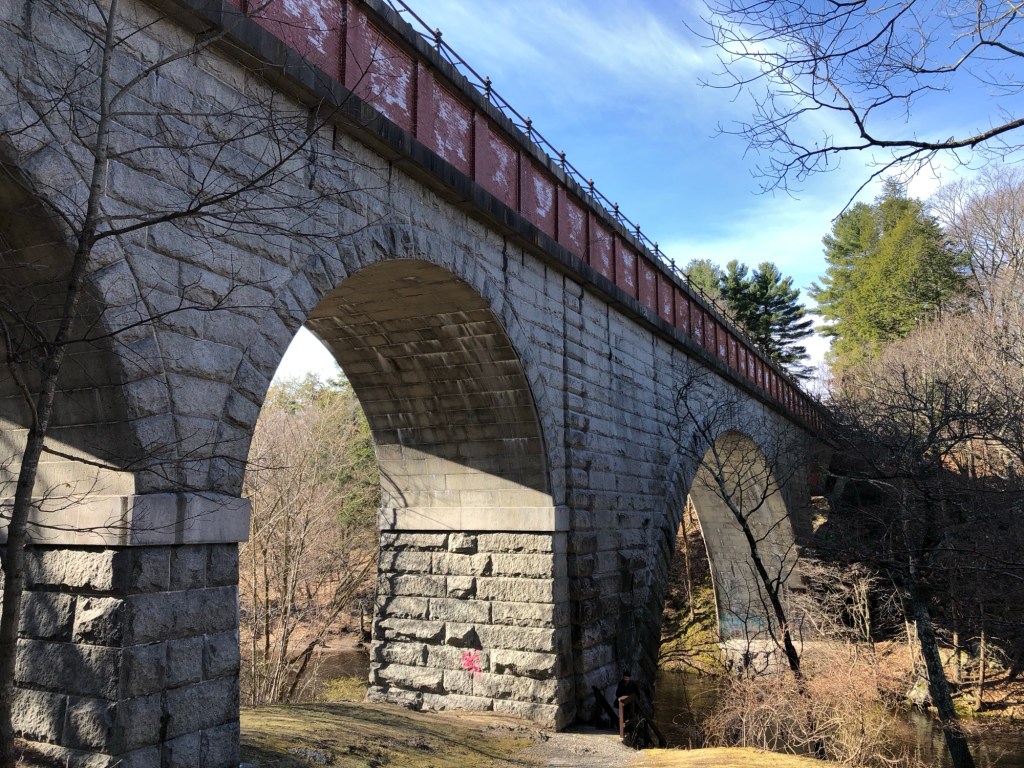
Echo Bridge // 1876

Rapid population growth in the Boston area strained the already overburdened water supply capacity in the second half of the nineteenth century, and engineers and city officials struggled to find solutions. In 1872, the Boston City Engineer proposed a plan to draw water from the Sudbury River in Framingham nearly 19 miles to the Chestnut Hill reservoir to be distributed to homes and businesses all over Boston. The aqueduct was initially designed to carry 80 million gallons of water per day but the route faced one big issue, how to allow the water to travel over the Charles River. The solution was what became Echo Bridge, a 475-foot-long bridge that carries the brick-lined aqueduct over seven powerful granite arches, which is the longest crossing of the Charles River. When completed in 1877, the seventh and largest arch, which spans the Charles River, is said to be the second longest span in the United States when completed. Originally named the Charles River Bridge, the structure was later known as Echo Bridge because of its unusual acoustical properties when standing underneath the largest arch. Today the Sudbury aqueduct system is not in full use and serves only as a standby, in case of a breakdown in the water supply presently being received from the Quabbin Reservoir located in the center of the state. In 1895, the Echo Bridge became the centerpiece of Hemlock Gorge, one of the first reservations in the newly created Boston Metropolitan Park System for its scenery and sheer beauty. Echo Bridge remains one of the most unique places to visit in the Boston area, and retains much of its original details, down to the BWW (Boston Water Works) insignia on the rails.
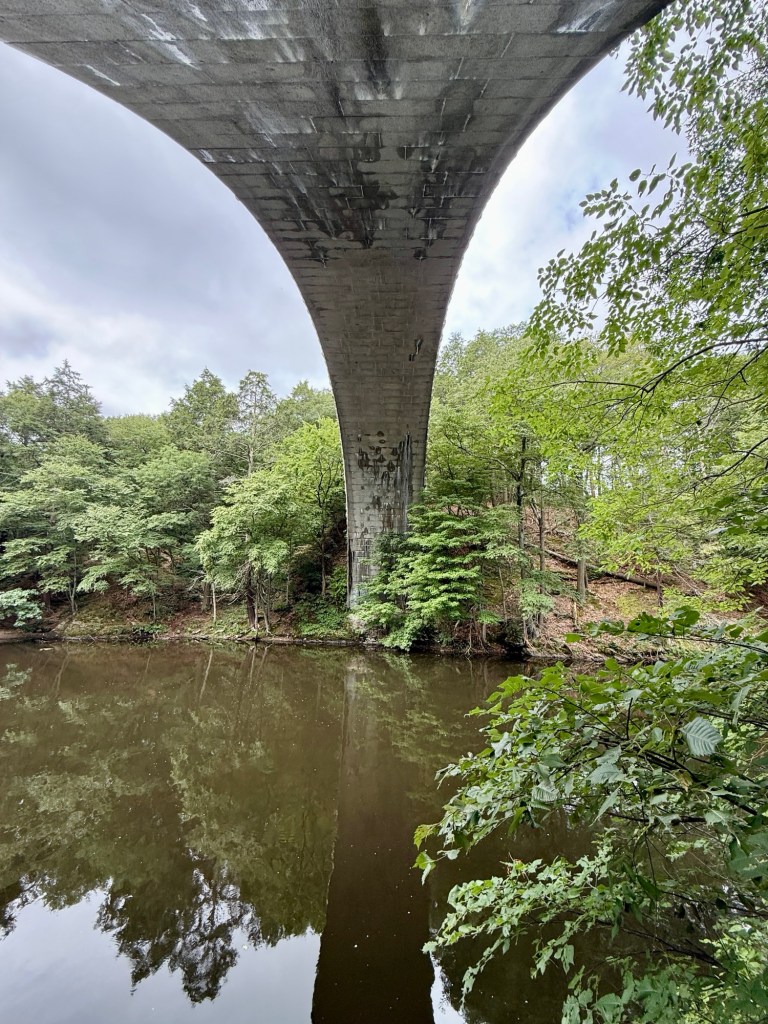
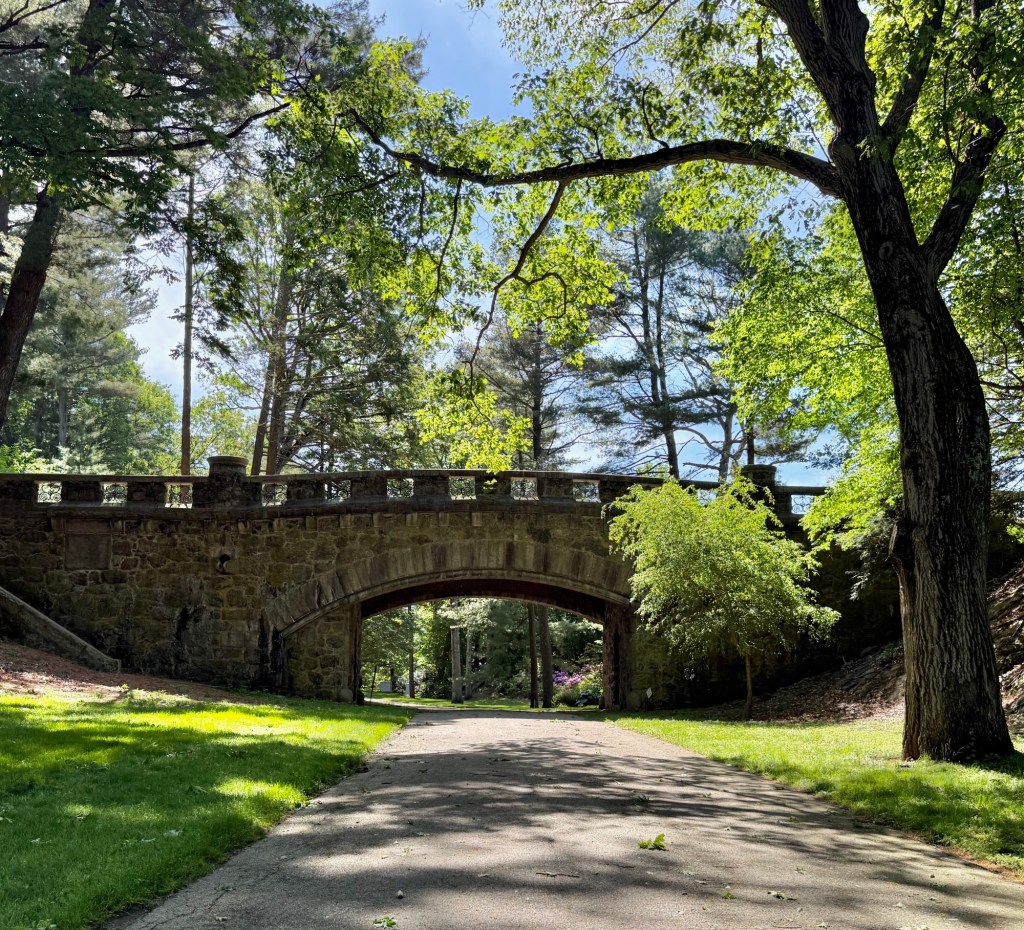
Forest Hills Cemetery – Stone Bridge // 1891

Forest Hills Cemetery in Boston was established in 1848 in the rural cemetery tradition, which followed Mount Auburn Cemetery, established in 1831 in nearby Cambridge and Watertown. The site was a municipal cemetery in Roxbury until it was annexed into Boston in 1868, becoming a private, non-denominational burial place for the who’s who of the area. The cemetery was envisioned by Henry A. S. Dearborn, who was the mayor of Roxbury in 1847 and first president of the Massachusetts Horticulture Society, who had also been instrumental in creating Mount Auburn. Since its creation in 1848, Forest Hills has grown from its original 72 acres to a total of approximately 250 acres today and is known for the rich topography and vegetation, dotted by thousands of beautiful monuments to the deceased and some iconic architectural landmarks tucked away in its winding paths. Forest Hills Cemetery was located on this site due to its varied natural features, which included hills, valleys and lakes, which together were preserved to enhance the experience of those visiting nearly 200 years later. The site’s topography consists of a series of geological drumlins of Roxbury puddingstone, an important material that was used in building projects all over the region (and for some of the buildings and monuments in Forest Hills). It is the burial place of a remarkable cross-section of people that reflect almost every aspect of American life — from statesmen to soldiers to industrialists to abolitionists to artists to poets. Forest Hills Cemetery is a somewhat hidden gem and is one of the best places in the area to walk and explore. 

The stone bridge in Forest Hills spans over Greenwood Avenue, linking Consecration Hill to Milton Hill, was designed by William Gibbons Preston and built in 1891-1892. It is 180’ long and 23’ wide and was constructed of random laid Roxbury puddingstone with granite trim and is capped by a stone balustrade inlaid with decorative cast iron. The bridge shows that even a traditionally functional structure in the cemetery was designed with intent and was a vessel to enhance the experience of those visiting. Stay tuned for more sites in this iconic landscape!

West Cornwall Covered Bridge // 1864

The West Cornwall Covered Bridge spans the the Housatonic River in the town of Cornwall, Connecticut and is one of three historic covered bridges in the state. Records indicate that a bridge was in this location as early as 1762, but many were destroyed by floods and storms over the years, and even in the past century, flooding as a result of the 1938 New England hurricane and the flood of 1955, threatened to wash the bridge away, but she survived. The 172-foot bridge has been depicted in paintings, photographs, and movies, including Valley of the Dolls a 1967 film. The charm of a historic New England covered bridge is so enchanting and has been a draw for tourists to stop by this amazing town for decades.