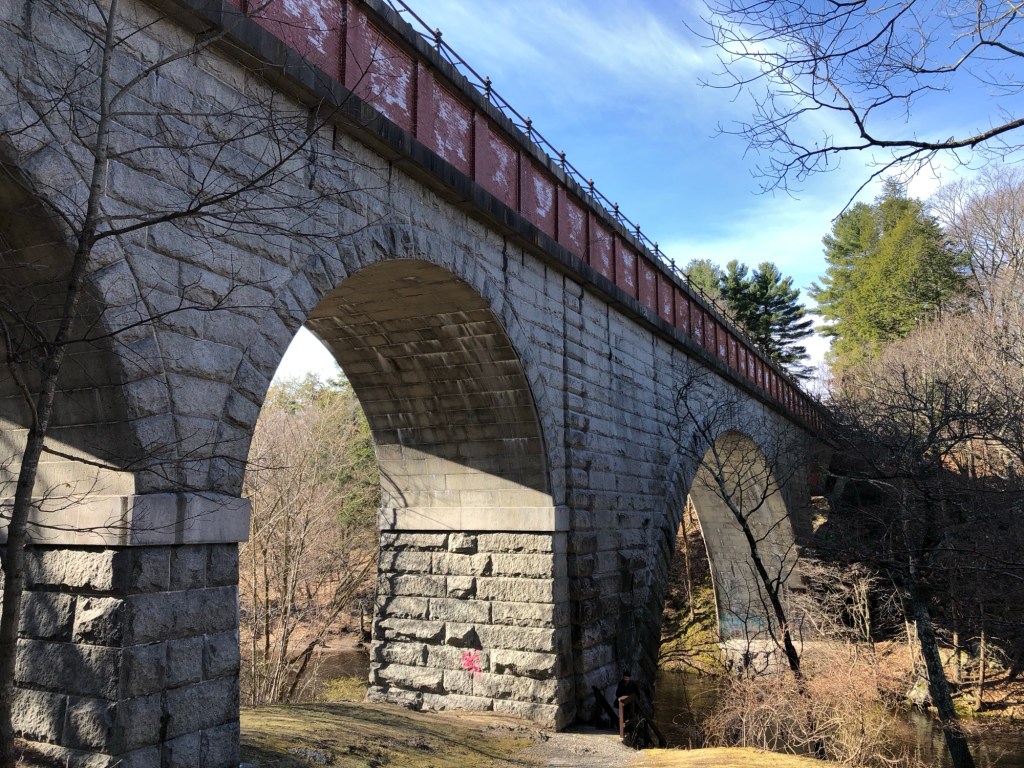
Echo Bridge // 1876

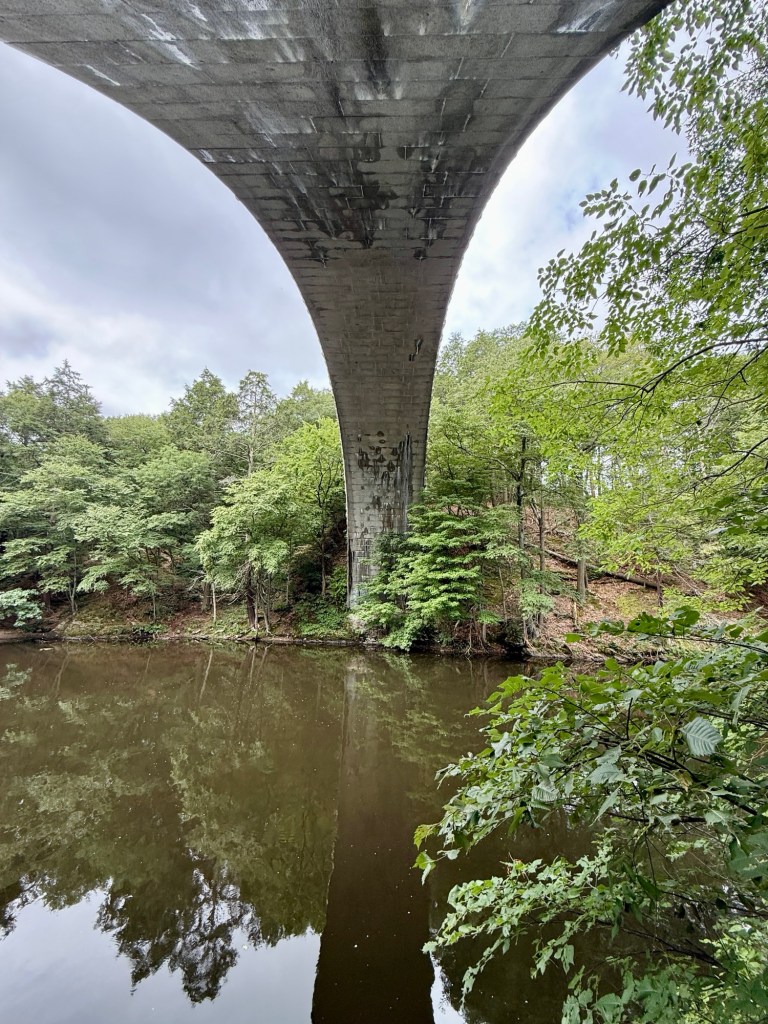
Rapid population growth in the Boston area strained the already overburdened water supply capacity in the second half of the nineteenth century, and engineers and city officials struggled to find solutions. In 1872, the Boston City Engineer proposed a plan to draw water from the Sudbury River in Framingham nearly 19 miles to the Chestnut Hill reservoir to be distributed to homes and businesses all over Boston. The aqueduct was initially designed to carry 80 million gallons of water per day but the route faced one big issue, how to allow the water to travel over the Charles River. The solution was what became Echo Bridge, a 475-foot-long bridge that carries the brick-lined aqueduct over seven powerful granite arches, which is the longest crossing of the Charles River. When completed in 1877, the seventh and largest arch, which spans the Charles River, is said to be the second longest span in the United States when completed. Originally named the Charles River Bridge, the structure was later known as Echo Bridge because of its unusual acoustical properties when standing underneath the largest arch. Today the Sudbury aqueduct system is not in full use and serves only as a standby, in case of a breakdown in the water supply presently being received from the Quabbin Reservoir located in the center of the state. In 1895, the Echo Bridge became the centerpiece of Hemlock Gorge, one of the first reservations in the newly created Boston Metropolitan Park System for its scenery and sheer beauty. Echo Bridge remains one of the most unique places to visit in the Boston area, and retains much of its original details, down to the BWW (Boston Water Works) insignia on the rails.
Sudbury Aqueduct Waste Weir Control House // 1878

The Sudbury Aqueduct was constructed between 1875 and 1878 and runs for 16 miles from Framingham, Massachusetts to the Chestnut Hill Reservoir in Boston, and was in use for almost 100 years. It was designed to carry water from the watershed of the Sudbury River to Boston and its surrounding communities, supplying the ever growing metro area with fresh drinking water. Along the route, meter and control houses were built along with the Echo Bridge, to guide the running water to Boston for distribution all over the city. City architect of Boston, George A. Clough designed many of the structures along the route including this waste weir structure in Newton Centre. The weir was known as “Clarks Waste Weir” as it was built on the edge of land owned by Charles P. Clark. The aqueduct was taken out of regular service in 1978 but remains an emergency backup. Much of the aqueduct’s route is open to the public as an unimproved walking trail.

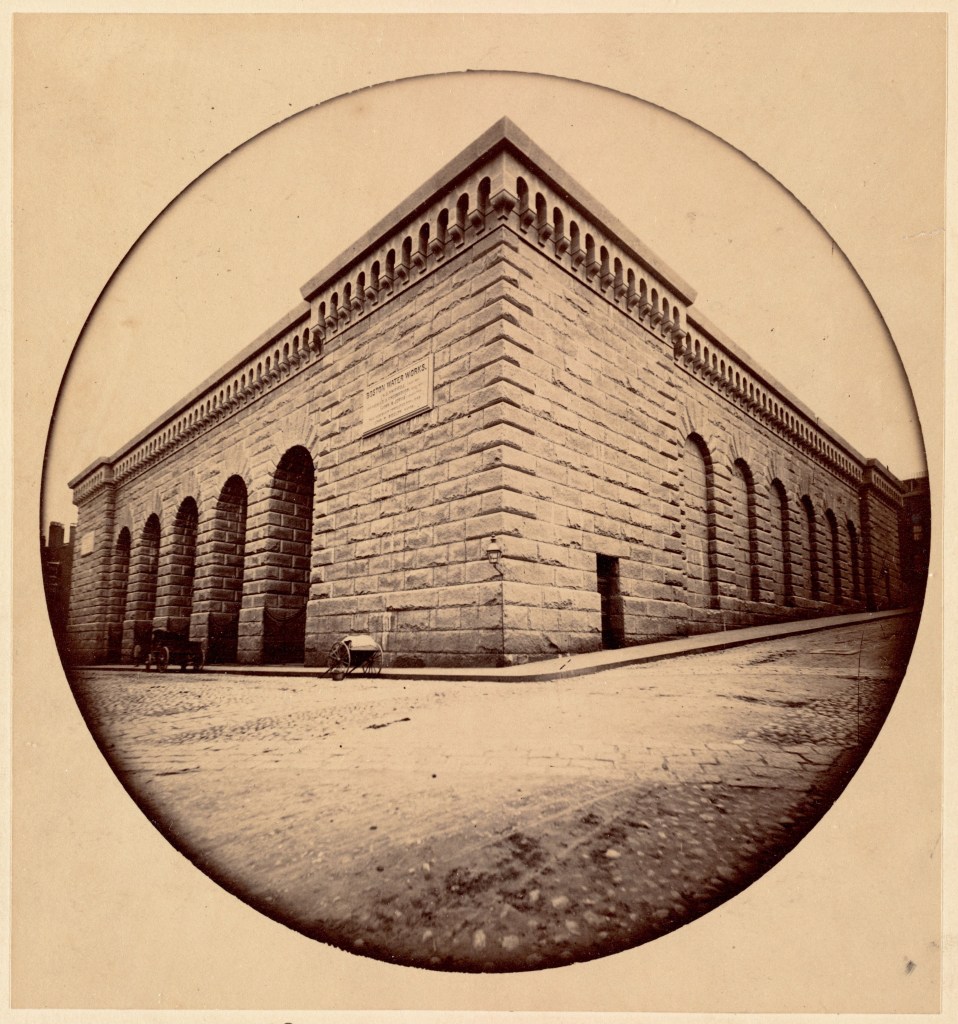
Beacon Hill Reservoir // 1849-1883

Did you know there was once a massive granite reservoir in Beacon Hill?

Long before the Wachusett and Quabbin Reservoirs that now supply water to Boston, the city’s original municipal water supply was Lake Cochituate, a reservoir in Metro-west. Due to Beacon Hill’s high elevation, the city selected the site behind the recently completed Massachusetts State House, to store and distribute water to the city. The site was too steep, so it had to be graded. Therefore, the top of Beacon Hill, where the beacon had long been standing, needed to be lowered to accommodate the reservoir. The soil was dug by hand and hauled by cart down to fill the old Mill Dam in the Bulfinch Triangle area. The reservoir, which opened in 1849, was unique in its approach. The design of the structure needed to minimize its footprint and reflect well on its surroundings in the prestigious location. In lieu of earthen bermed walls, as was the convention in most period distribution reservoirs, the design chose to create a watertight tank within a masonry structure. This made the structure the first elevated storage tank constructed in New England. Sheet lead was used to make the reservoir watertight (which likely led to a lot of health issues (hindsight is 20/20). By 1870, the poor water pressure made the Boston Waterworks build the Roxbury Standpipe, which relegated the Beacon Hill Reservoir to being an emergency water source for use only in case of fire or accident to the pumping-mains. In 1883, Boston Water Works sold the structure to the Commonwealth, who demolished it for the addition to the State House.