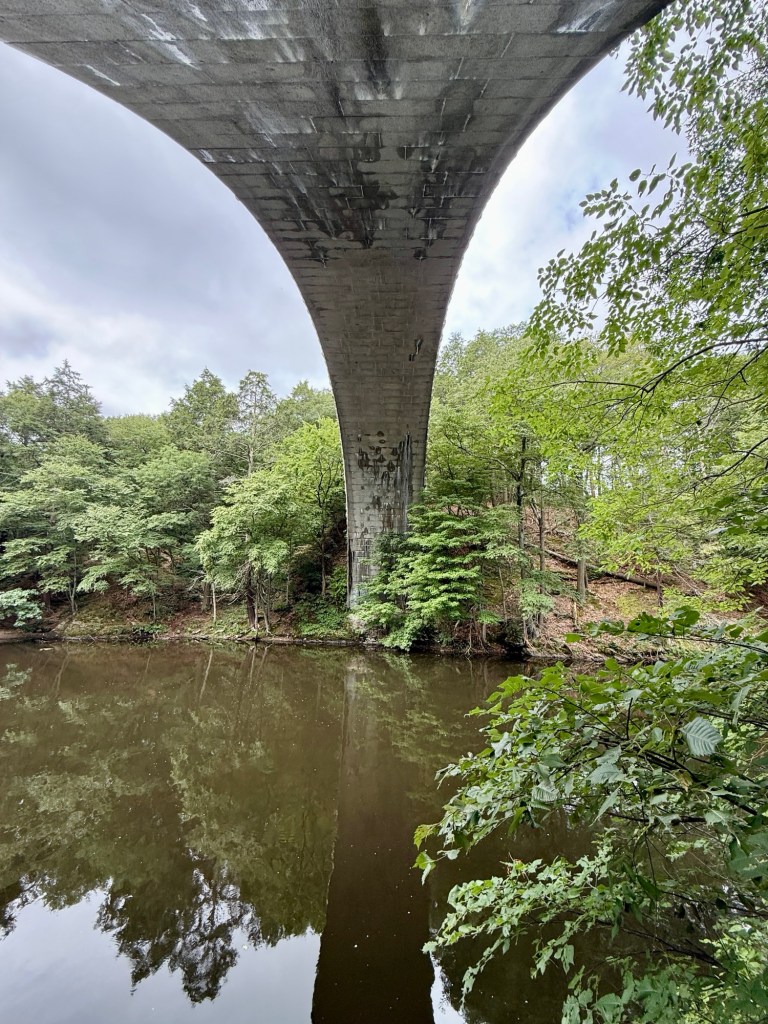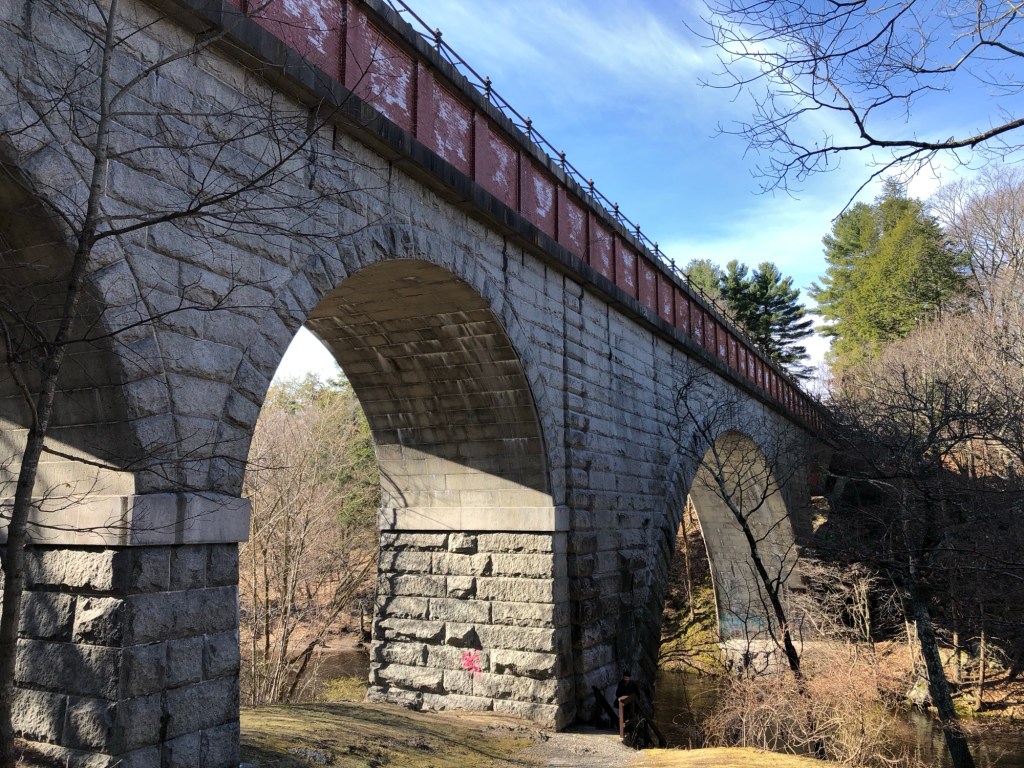
Rapid population growth in the Boston area strained the already overburdened water supply capacity in the second half of the nineteenth century, and engineers and city officials struggled to find solutions. In 1872, the Boston City Engineer proposed a plan to draw water from the Sudbury River in Framingham nearly 19 miles to the Chestnut Hill reservoir to be distributed to homes and businesses all over Boston. The aqueduct was initially designed to carry 80 million gallons of water per day but the route faced one big issue, how to allow the water to travel over the Charles River. The solution was what became Echo Bridge, a 475-foot-long bridge that carries the brick-lined aqueduct over seven powerful granite arches, which is the longest crossing of the Charles River. When completed in 1877, the seventh and largest arch, which spans the Charles River, is said to be the second longest span in the United States when completed. Originally named the Charles River Bridge, the structure was later known as Echo Bridge because of its unusual acoustical properties when standing underneath the largest arch. Today the Sudbury aqueduct system is not in full use and serves only as a standby, in case of a breakdown in the water supply presently being received from the Quabbin Reservoir located in the center of the state. In 1895, the Echo Bridge became the centerpiece of Hemlock Gorge, one of the first reservations in the newly created Boston Metropolitan Park System for its scenery and sheer beauty. Echo Bridge remains one of the most unique places to visit in the Boston area, and retains much of its original details, down to the BWW (Boston Water Works) insignia on the rails.