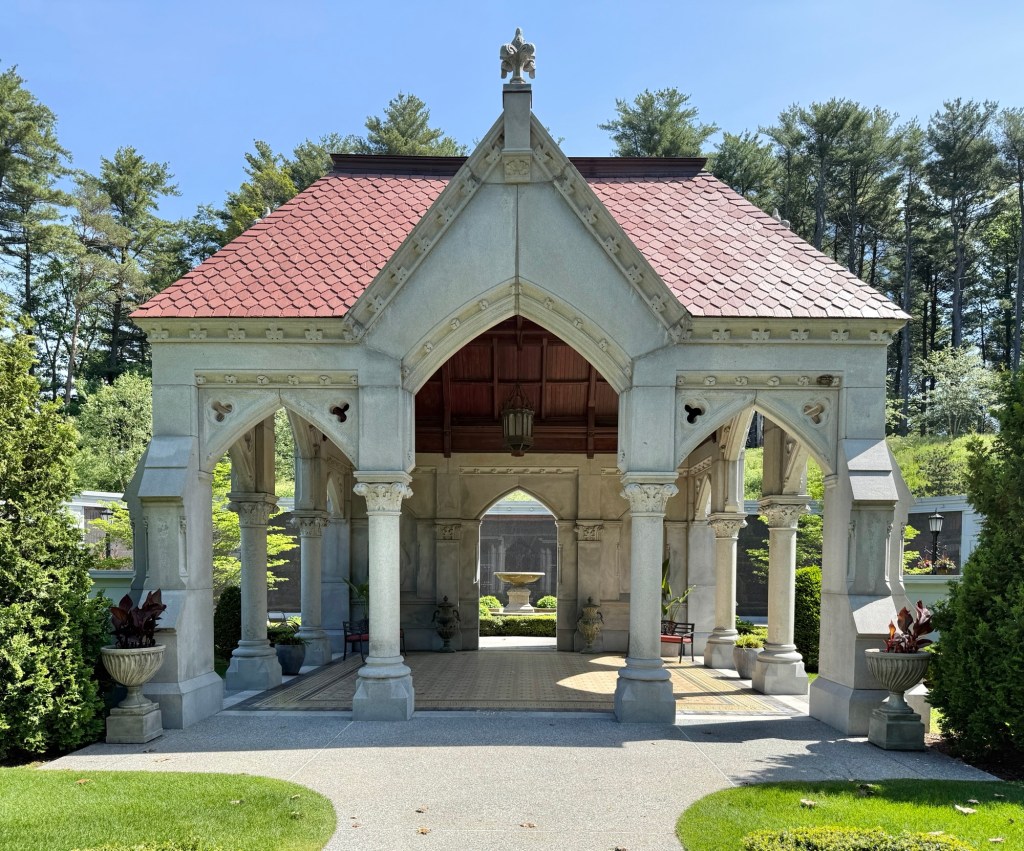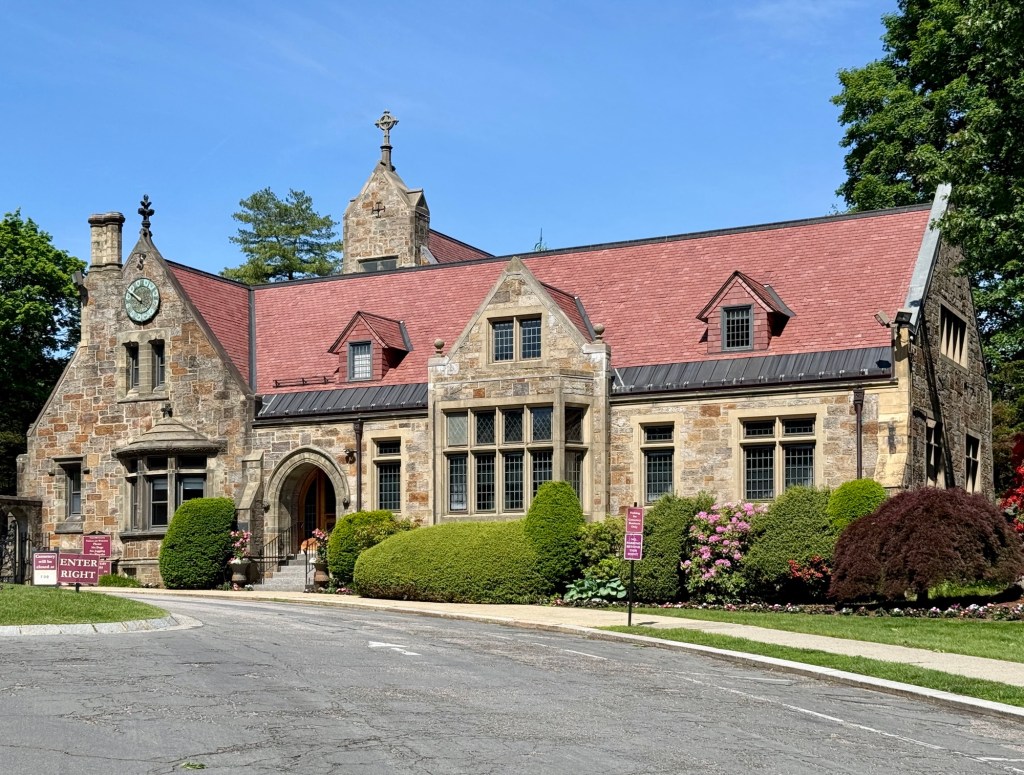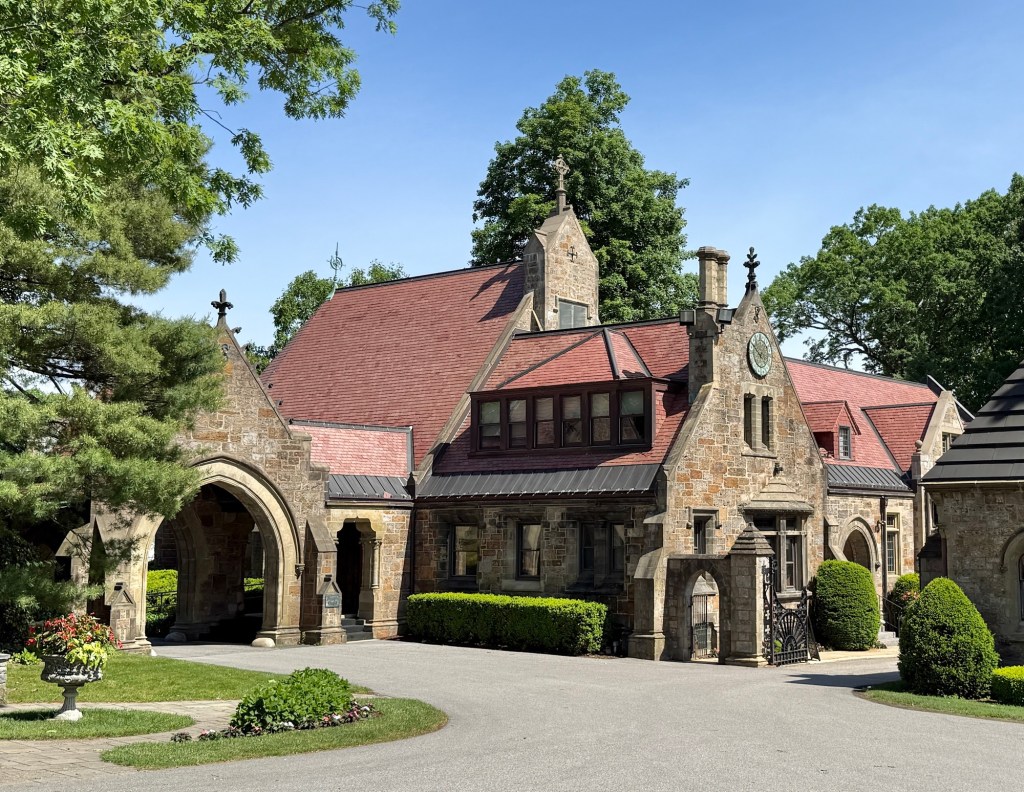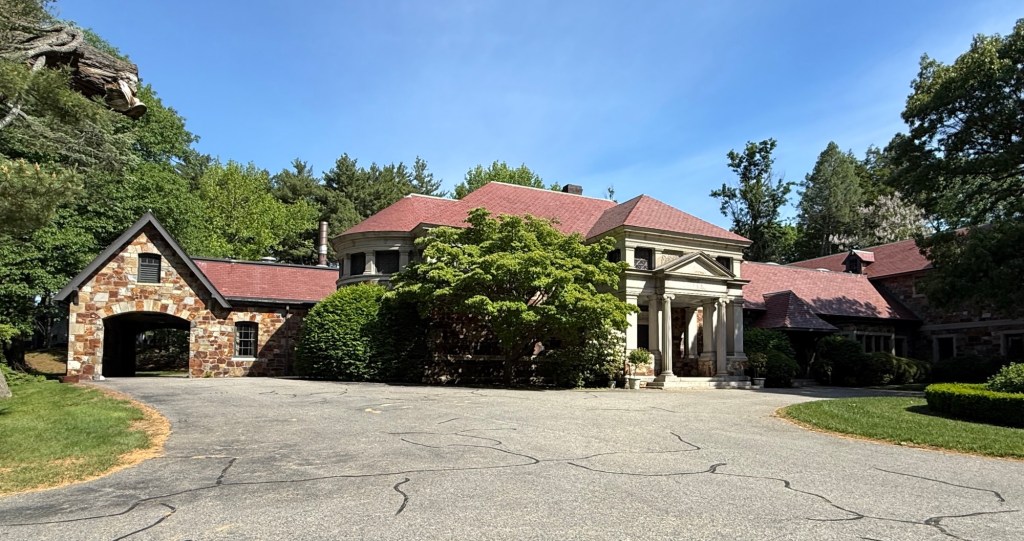
Separate from the main cemetery parcel, the Forest Hills Cemetery Crematory and Columbarium is architecturally significant and also historically significant as the the first crematory in New England. The cremation building was constructed in 1893 by the Massachusetts Cremation Society, an organization unaffiliated with the cemetery across the street. The original crematory building was designed by Ludvig Sandöe Ipsen, a Danish-American artist and designer who is best-known for his book illustrations. It is unclear why Ipsen, who had almost entirely given up architecture as a profession, was selected by the Massachusetts Cremation Society, but he showcased his design expertise for this handsome masonry building. The original crematory included a chapel, operating plant, guest area, and offices. Classical Revival in style, the building is constructed of granite with limestone trim and capped by a red slate roof. The first cremation in New England occurred here in 1894, when Lucy Stone, the important abolitionist and suffragist, passed away and was cremated here. The chapel inside the building was named after Lucy Stone. In 1905, the columbarium was added from plans by Ipsen, where cremated remains of the dead are stored and displayed in urns. In 1925, the property was sold to the Forest Hills Cemetery association and the building expanded to its current size.