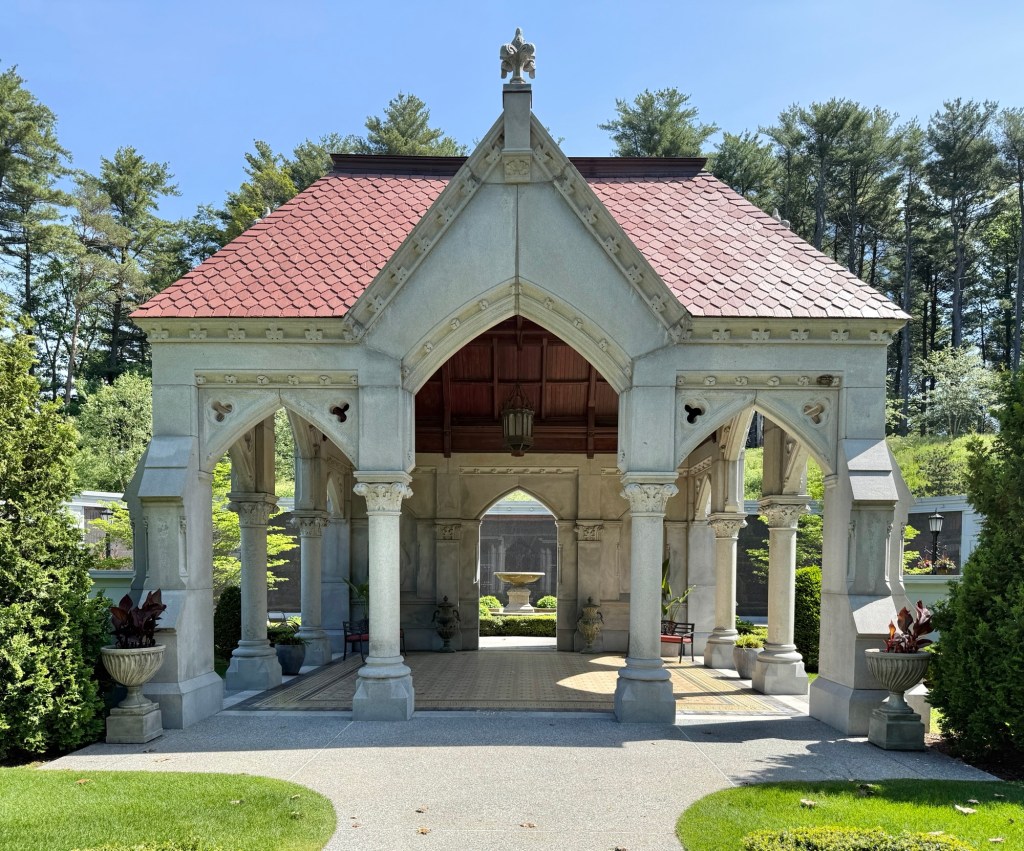
Forest Hills Cemetery – Receiving Tomb // 1871

The Gothic Revival receiving tomb at Forest Hills Cemetery in Boston is located not far from the iconic entrance gate and chapel/offices. The structure was built in 1871 and designed by architects, Carl Fehmer and William R. Emerson in the Gothic style, a prevalent aesthetic that the overseers encouraged for the various 19th century buildings constructed on the grounds. Historically, the Gothic Revival structure served as the entrance to underground holding tombs for the temporary storage of bodies awaiting burial or relocation, typically stored when the ground was too frozen for burial. The structure features a granite structure with oak ceiling and painted tile flooring. A massive project began in 2016 to excavate and build a new Garden Mausoleum, built into the landscape with the restored Receiving Tomb serving as the focal point. The tomb portico was adapted as a gateway to an open-air courtyard flanked by walls set into the slope which contain internment chambers for burials, with a restored fountain in front and woman archer statue atop.

Chester Public Tomb and Hearse House // 1850

Near the entrance to the Brookside Cemetery in the charming village of Chester, Vermont, these two very different looking buildings were constructed for one purpose, death. Before the proliferation of funeral homes and cremation, infrastructure for the dead was a necessary piece of the built environment for towns and cities all over the region. The wood-frame building seen here was built as a hearse house, which would shelter the horse-drawn hearse for the town. Prior to the advent to funeral homes, most wakes were held at the home of the deceased, after-which, the body would be transported by the horse-drawn hearse to the cemetery for burial. This was followed by a memorial service at the nearby church. If the ground was frozen or if the family did not yet have the funds to bury their family member, the body would be held in the public tomb until the burial. The Chester Public Tomb dates to 1850 and was built by local mason, Arvin Earle from stone  quarried near Gassetts, a hamlet in the north part of Chester that was shipped to Chester Depot by the newly completed railroad. While no longer in use, these two vernacular buildings hold a very important history of the town and have been lovingly preserved by local residents.