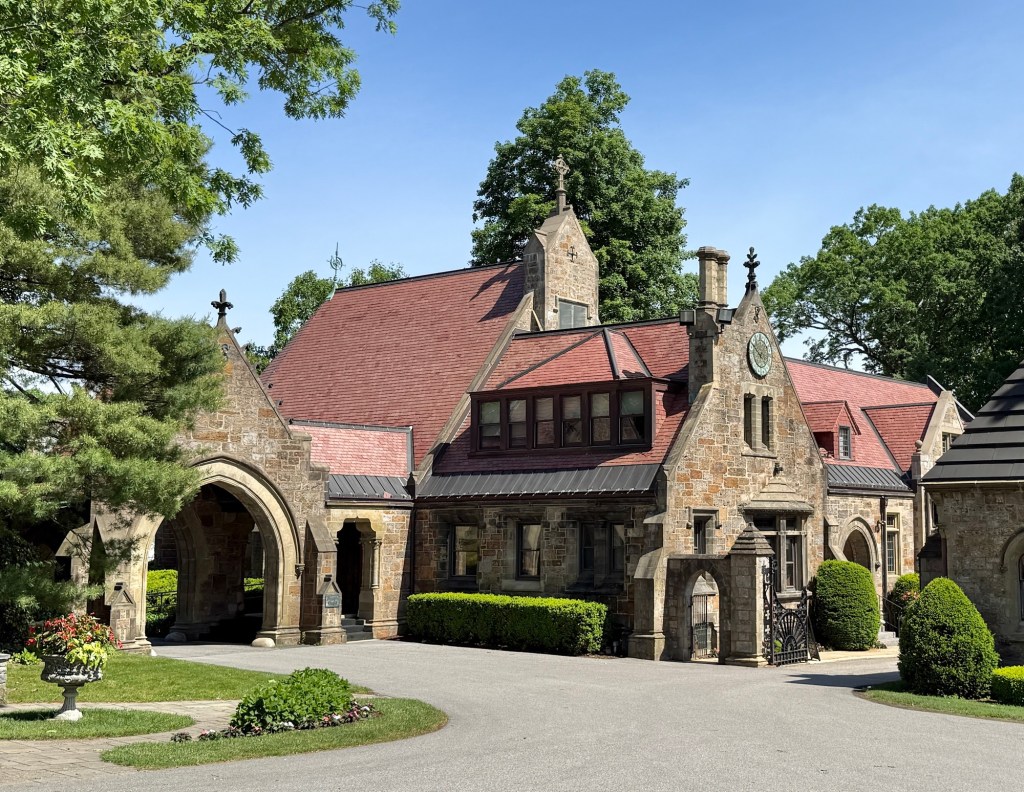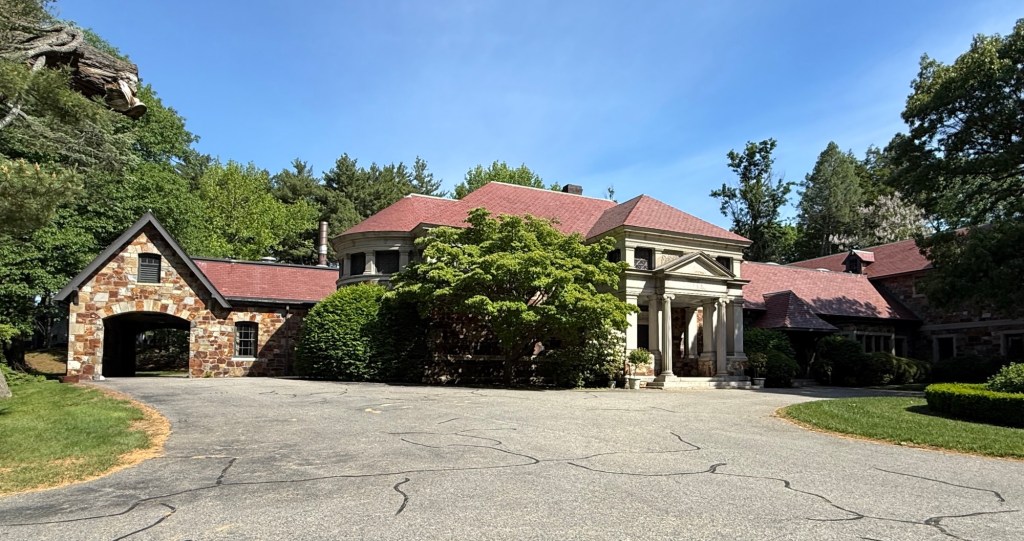
Forest Hills Cemetery – Crematorium & Columbarium // 1893

Separate from the main cemetery parcel, the Forest Hills Cemetery Crematory and Columbarium is architecturally significant and also historically significant as the the first crematory in New England. The cremation building was constructed in 1893 by the Massachusetts Cremation Society, an organization unaffiliated with the cemetery across the street. The original crematory building was designed by Ludvig Sandöe Ipsen, a Danish-American artist and designer who is best-known for his book illustrations. It is unclear why Ipsen, who had almost entirely given up architecture as a profession, was selected by the Massachusetts Cremation Society, but he showcased his design expertise for this handsome masonry building. The original crematory included a chapel, operating plant, guest area, and offices. Classical Revival in style, the building is constructed of granite with limestone trim and capped by a red slate roof. The first cremation in New England occurred here in 1894, when Lucy Stone, the important abolitionist and suffragist, passed away and was cremated here. The chapel inside the building was named after Lucy Stone. In 1905, the columbarium was added from plans by Ipsen, where cremated remains of the dead are stored and displayed in urns. In 1925, the property was sold to the Forest Hills Cemetery association and the building expanded to its current size.
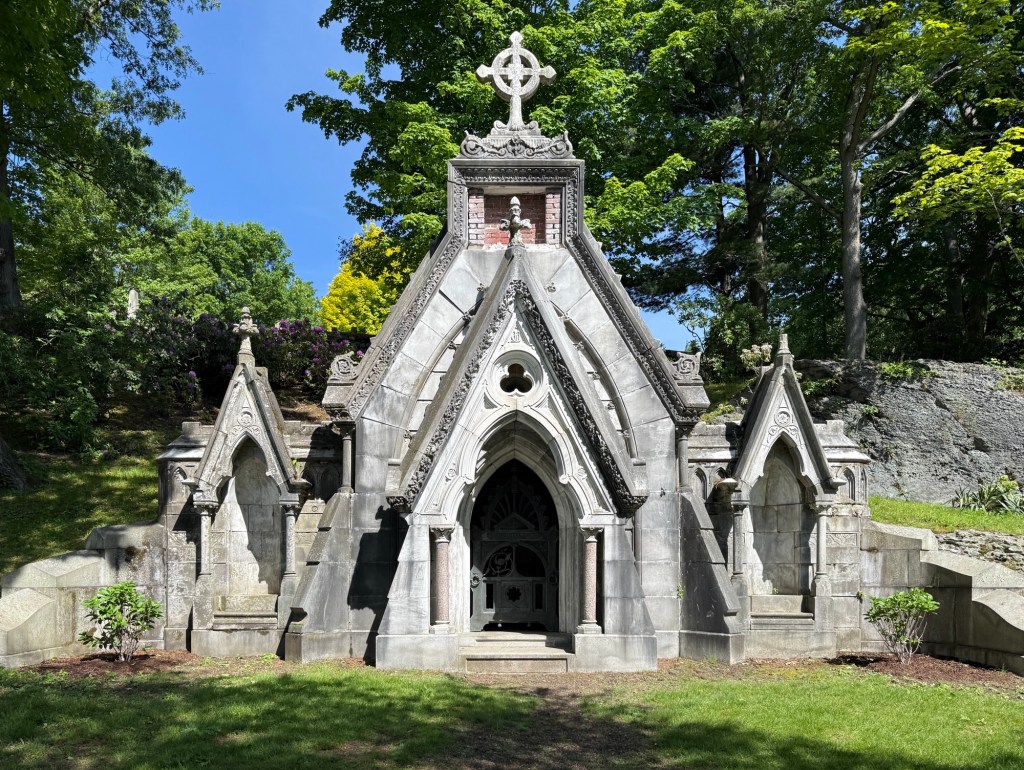
Forest Hills Cemetery – Chadwick Mausoleum // 1873

While many monuments in the Forest Hills Cemetery in Boston stand out for obvious reasons, there are many historic mausoleums dispersed throughout the cemetery, but none quite like the Chadwick Mausoleum. Mausoleums are above ground burial structures, where family can be interred together within the walls of the structure, that provides an interior space for family to mourn inside. Many mausoleums were designed by noted architects and are often outfitted with decorative bronze doors or stained-glass windows. The most visible and ornate at Forest Hills is the Chadwick Mausoleum, located at the west end of Lake Hibiscus. The structure was designed in the Gothic Revival style by William Gibbons Preston who designed the bridge over Greenwood Avenue. Nestled into the sloped hill in the rear, the stone mausoleum features a metal door bearing the name “Chadwick.” The structure was funded by Joseph Houghton Chadwick (1827-1902), following the death of his wife in 1872. Joseph was President of the Chadwick Lead Works in Downtown Boston and was a successful businessman, as a trustee of Boston University also serving as president and as a trustee of Forest Hills Cemetery where he was later interred. 

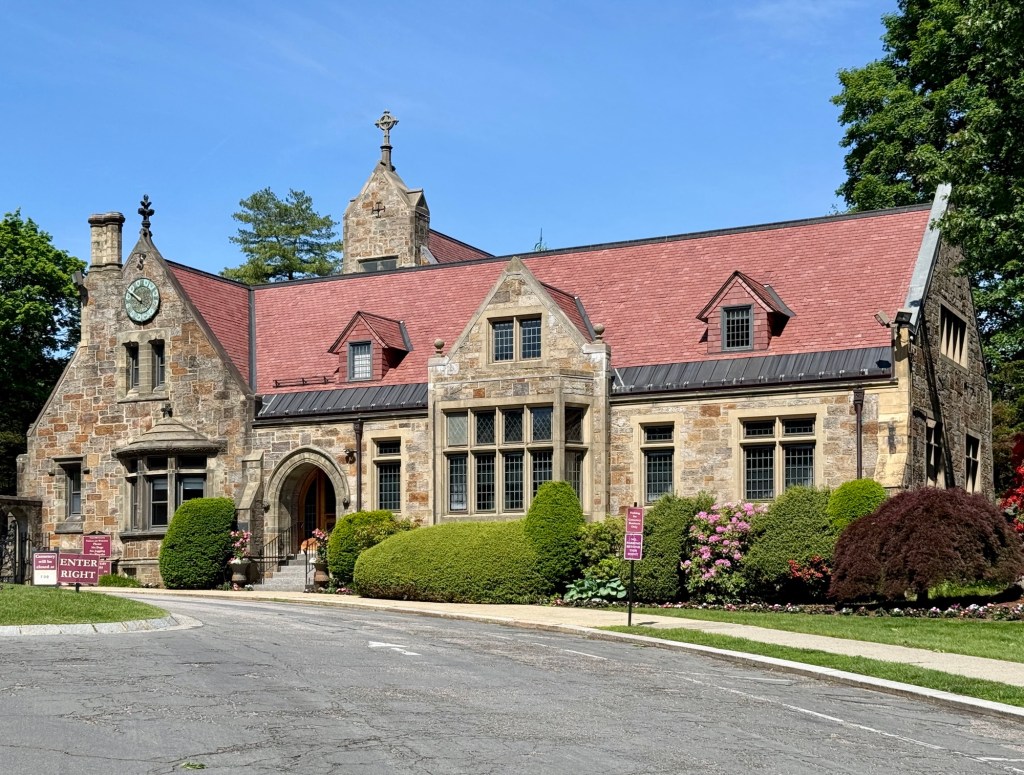
Forest Hills Cemetery – Forsyth Chapel and Office // 1884 & 1921

Adjacent to the Entrance Gate at Forest Hills Cemetery, the Forsyth Chapel and Cemetery Office building stands at the ceremonial entrance to the iconic landscape and architecturally compliments the adjacent structure and surrounding grounds. The Forsyth Chapel was designed by the firm of Van Brunt and Howe and completed in 1884 as a space for mourners and for celebration of lives well-lived. The chapel was expanded in 1921-22 when the Boston firm of Andrews, Jacques & Rantoul, was commissioned to expand the building perpendicular to the gateway, and expand the offices in the building, to serve the greater administrative needs of the busy cemetery and burial planning. The Neo-Gothic addition continues the architectural aesthetic of the cemetery, while being clearly of its time, a well-intentioned and designed addition.