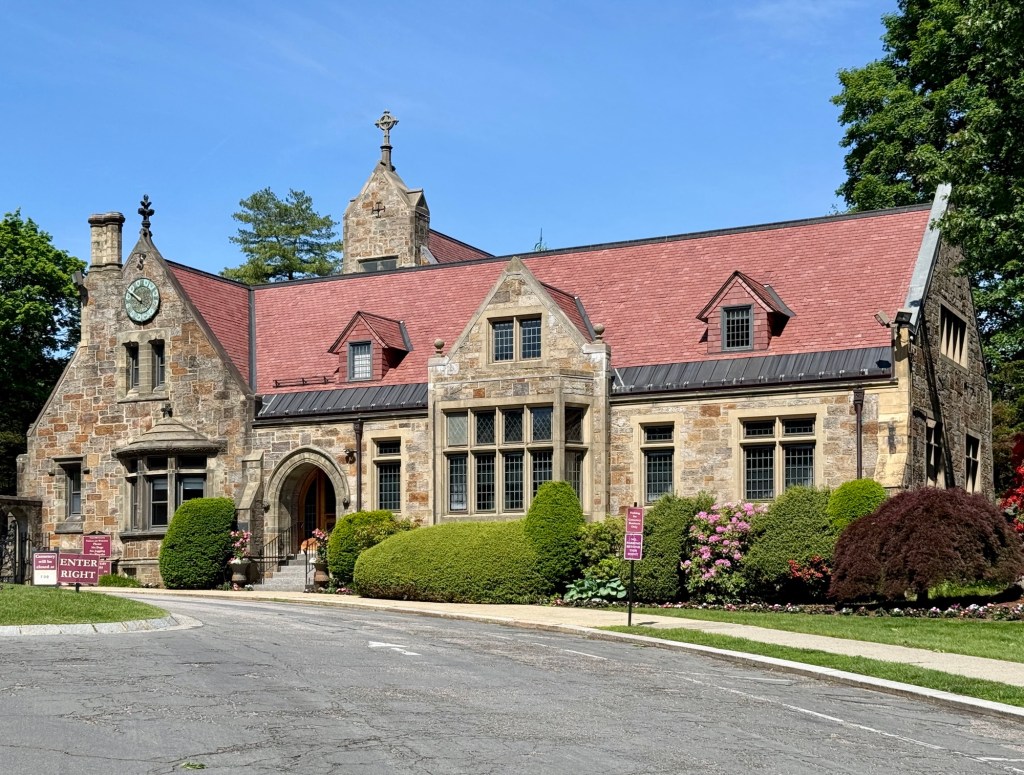
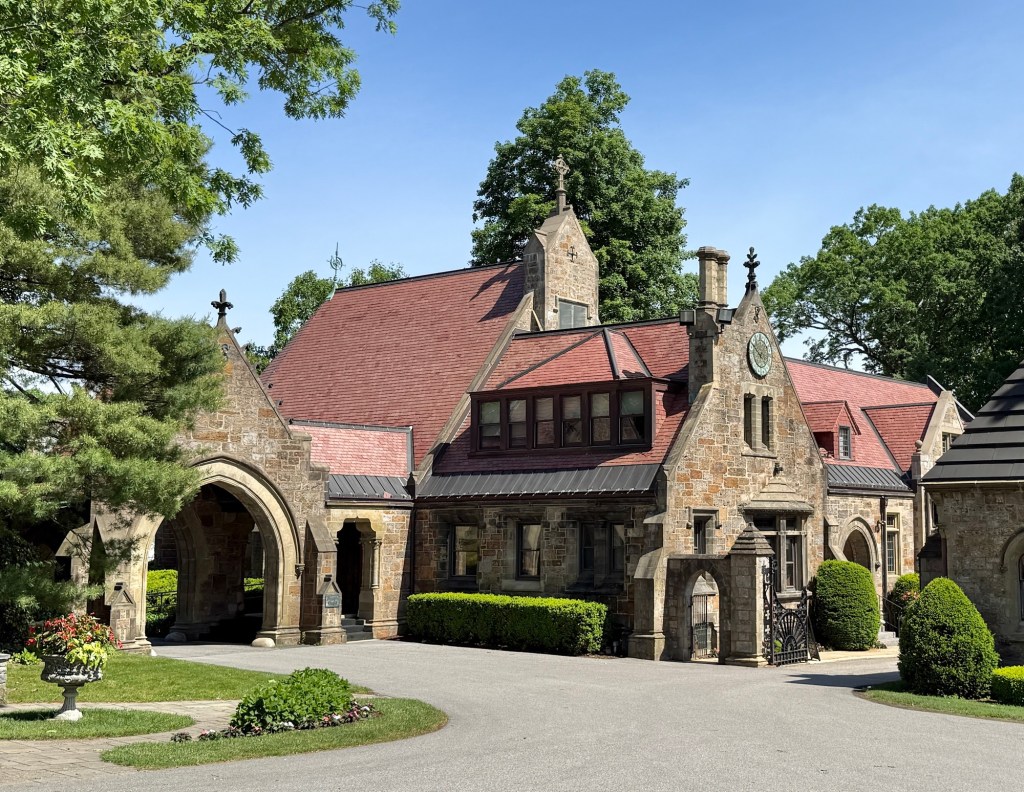
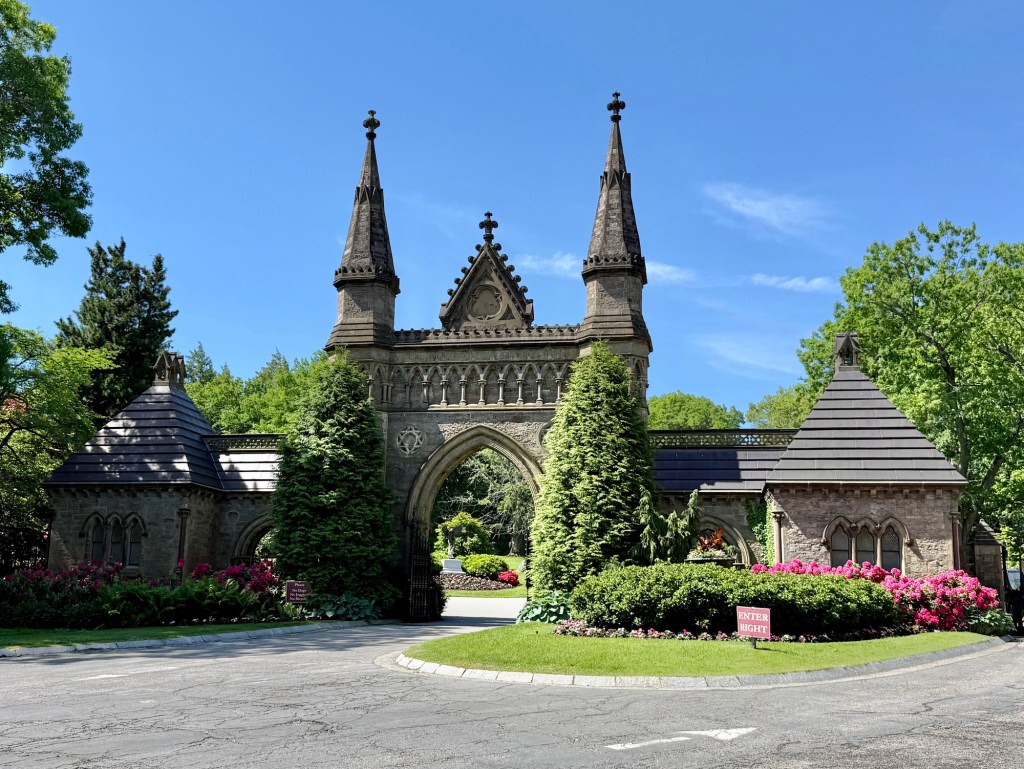
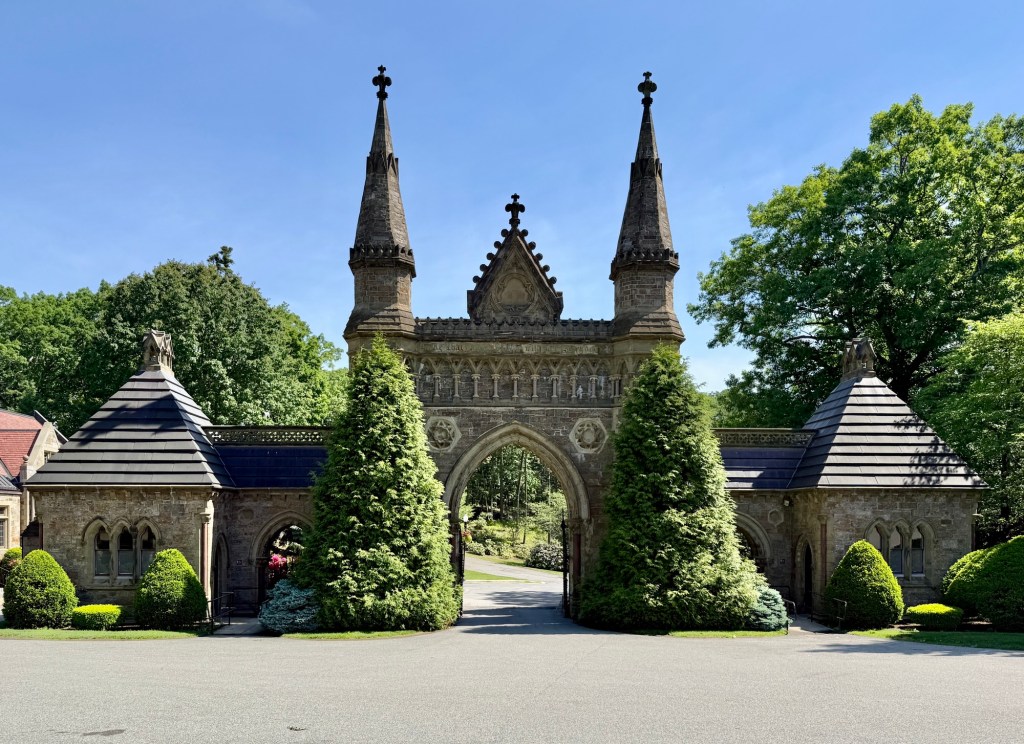
Adjacent to the Entrance Gate at Forest Hills Cemetery, the Forsyth Chapel and Cemetery Office building stands at the ceremonial entrance to the iconic landscape and architecturally compliments the adjacent structure and surrounding grounds. The Forsyth Chapel was designed by the firm of Van Brunt and Howe and completed in 1884 as a space for mourners and for celebration of lives well-lived. The chapel was expanded in 1921-22 when the Boston firm of Andrews, Jacques & Rantoul, was commissioned to expand the building perpendicular to the gateway, and expand the offices in the building, to serve the greater administrative needs of the busy cemetery and burial planning. The Neo-Gothic addition continues the architectural aesthetic of the cemetery, while being clearly of its time, a well-intentioned and designed addition.
Forest Hills Cemetery in Boston was established in 1848 in the rural cemetery tradition, which followed Mount Auburn Cemetery, established in 1831 in nearby Cambridge and Watertown. The site was a municipal cemetery in Roxbury until it was annexed into Boston in 1868, becoming a private, non-denominational burial place for the who’s who of the area. The cemetery was envisioned by Henry A. S. Dearborn, who was the mayor of Roxbury in 1847 and first president of the Massachusetts Horticulture Society, who had also been instrumental in creating Mount Auburn. Since its creation in 1848, Forest Hills has grown from its original 72 acres to a total of approximately 250 acres today and is known for the rich topography and vegetation, dotted by thousands of beautiful monuments to the deceased and some iconic architectural landmarks tucked away in its winding paths. Forest Hills Cemetery was located on this site due to its varied natural features, which included hills, valleys and lakes, which together were preserved to enhance the experience of those visiting nearly 200 years later. The site’s topography consists of a series of geological drumlins of Roxbury puddingstone, an important material that was used in building projects all over the region (and for some of the buildings and monuments in Forest Hills).
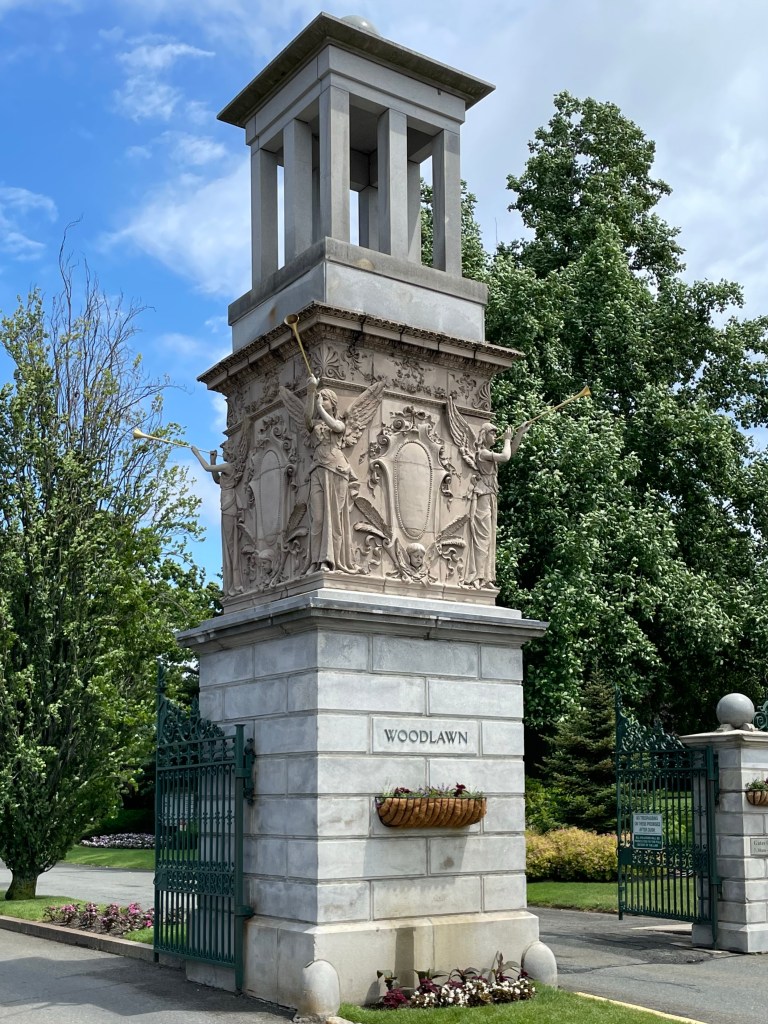
Woodlawn Cemetery in Everett, MA was established in 1850 as a rural, private cemetery in the tradition of Mount Auburn Cemetery in Cambridge. The story of Woodlawn Cemetery began in 1850 when a group of ten prominent Bostonians petitioned the Massachusetts General Court to organize a corporation “for the purpose of procuring, establishing and preparing a cemetery or burial place for the dead in Malden” (present-day Everett was established in 1870 from Malden). When you approach the main entrance of the cemetery, you are greeted by the entrance gate and tower. Completed in 1897 to replace an earlier wooden gate, the Entrance Gate consists of a central stone tower and two side entrances. The gate, tower, and adjacent lodge (next post) were designed by Boston architect William Hart Taylor, who was buried at the cemetery upon his death in 1928. The tower has decorative sculpted terra cotta which includes winged angels at the corners with outstretched arms that once hold trumpets. Below the medallion which is centered on each side, there is the bust of a winged child, supposedly a carved likeness of the architect’s young son who died at the age of six and is buried at Woodlawn.
Located just a short walk from the oldest extant Jewish synagogue in the United States, Touro Synagogue (last post), the Touro Jewish Cemetery and stately gate, showcase the significance and position Jewish residents held in Newport, going back to Colonial times. The earliest Jews in Newport arrived from Barbados, where a Jewish community had existed since the 1620s. They were of Spanish and Portuguese origin; their families had migrated from Amsterdam and London to Brazil and then to islands in the Caribbean. After the completion of the synagogue in 1763, the Jewish community in Newport realized the need to acquire land for a Jewish cemetery. Two of the original immigrants, Mordechai Campanal and Moses Pacheco purchased the lot at the corner of what is now Kay and Touro Streets for this purpose. In 1843, the cemetery funded the erection of a cemetery gate and fencing to surround the plot. They hired architect Isaiah Rogers to design the gate, which he took inspiration from his design at Boston’s Granary Burying Ground, completed just two years earlier. The Egyptian Revival gate is a very rare example of the style in the United States. On the granite gate, the torches turned to face downward are an acknowledgement of the ending of life’s flame.