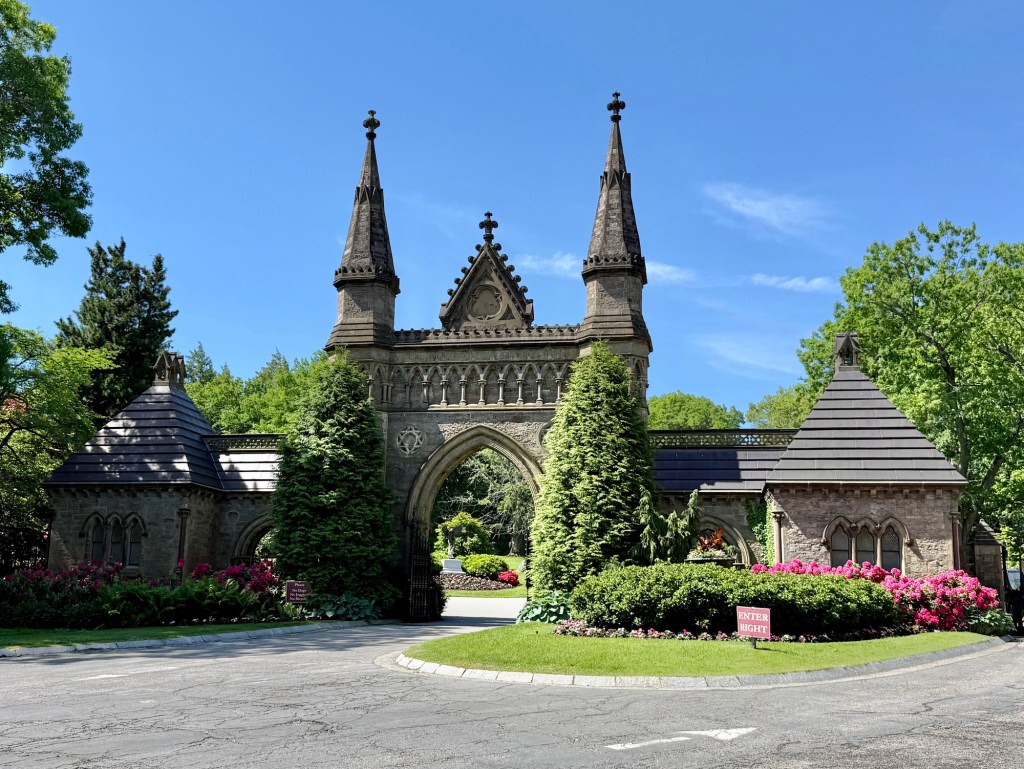
Forest Hills Cemetery in Boston was established in 1848 in the rural cemetery tradition, which followed Mount Auburn Cemetery, established in 1831 in nearby Cambridge and Watertown. The site was a municipal cemetery in Roxbury until it was annexed into Boston in 1868, becoming a private, non-denominational burial place for the who’s who of the area. The cemetery was envisioned by Henry A. S. Dearborn, who was the mayor of Roxbury in 1847 and first president of the Massachusetts Horticulture Society, who had also been instrumental in creating Mount Auburn. Since its creation in 1848, Forest Hills has grown from its original 72 acres to a total of approximately 250 acres today and is known for the rich topography and vegetation, dotted by thousands of beautiful monuments to the deceased and some iconic architectural landmarks tucked away in its winding paths. Forest Hills Cemetery was located on this site due to its varied natural features, which included hills, valleys and lakes, which together were preserved to enhance the experience of those visiting nearly 200 years later. The site’s topography consists of a series of geological drumlins of Roxbury puddingstone, an important material that was used in building projects all over the region (and for some of the buildings and monuments in Forest Hills).
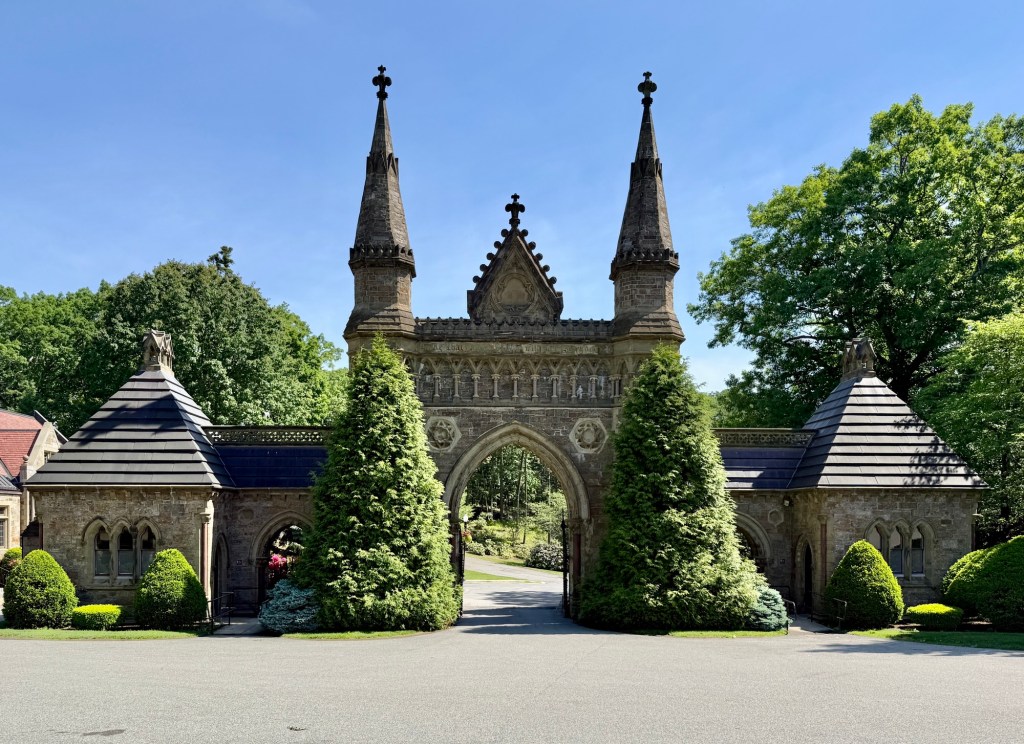
Visitors to the Forest Hills Cemetery are greeted by its iconic Gothic Revival main gate, a sculptural and ceremonial entranceway constructed from Roxbury puddingstone and sandstone. The structure replaced an original 1840s Egyptian Revival, wooden gateway designed by Henry Dearborn, following inspiration from Mount Auburn’s entrance gate. Designed by architect Charles W. Panter of Brookline and was completed in 1865, the present stone entrance gate features three portals with arched openings and ornate iron gates surmounted by decorative scrolled ironwork. The central gateway is framed by two conical spires and a central stone pediment, all topped with stone crosses. Beneath the pediment is the biblical inscription, “He that keepeth thee will not slumber.” The Entrance Gate remains the cemetery’s most iconic landmark.

