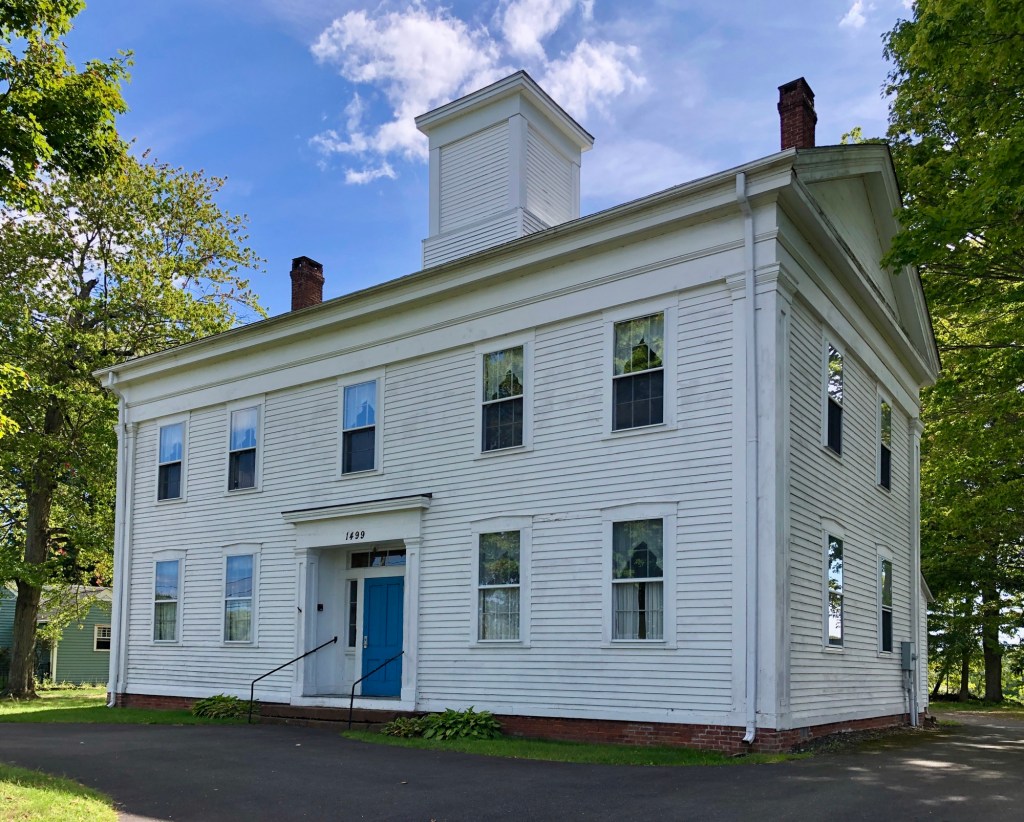
West Suffield Academy Hall // 1855

Built in 1855 as the West Suffield Village school, Academy Hall served as one of Suffield’s public school buildings until 1913, when consolidated schools were built in town. Like in many New England communities, the old, wood-frame school building was repurposed, and due to the large agricultural community in Suffield (it was a major grower and exporter of tobacco), the old Academy Hall was occupied by the local Grange club, a social organization that encouraged families to band together to promote the economic and political well-being of the community and agriculture. The handsome structure is owned by the non-profit West Suffield Village Improvement Association, and as of April 2026, the building is leased to the Suffield Historical Society, and is available for events. The structure features a Classical door surround, corner pilasters, entablature, and a large square cupola at the gable roof.

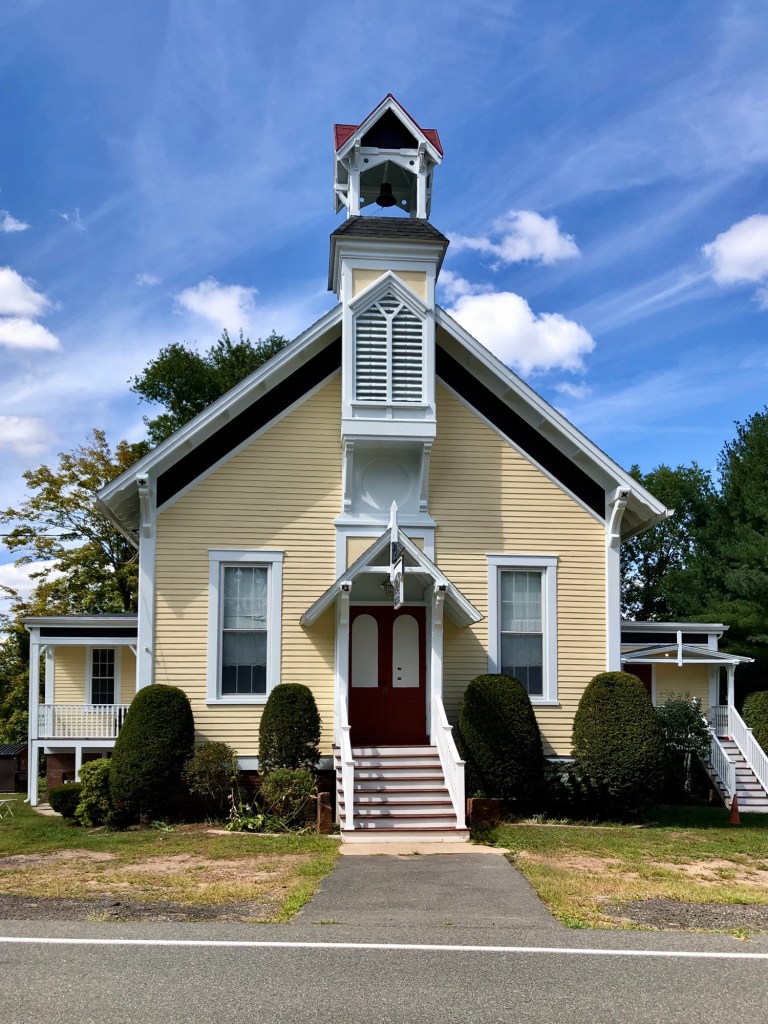
Mapleton Hall // 1883

Located on Mapleton Avenue in the historic farming community of Suffield, Connecticut, Mapleton Hall stands as a remarkable testament to the town’s agricultural heritage and success. Originally constructed in 1883 as Central Hall, the building served as a gathering place for farmers’ meetings, civic events, and later the local Grange, reflecting the importance of agriculture in Suffield’s development. As its popularity grew, rear wings were built in 1896, expanding the hall to accommodate larger crowds drawn by community events and meetings. Architecturally, Mapleton Hall is a distinctive example of late Victorian-era rural meeting hall, featuring elements of the Queen Anne Stick/Eastlake styles, along with decorative woodwork, a prominent bell tower, and trussed gable that have been carefully preserved through decades of restoration. The building was sold in 1999 to the Suffield Players, a local theater group, who have preserved the building, using it for their theatrical productions.

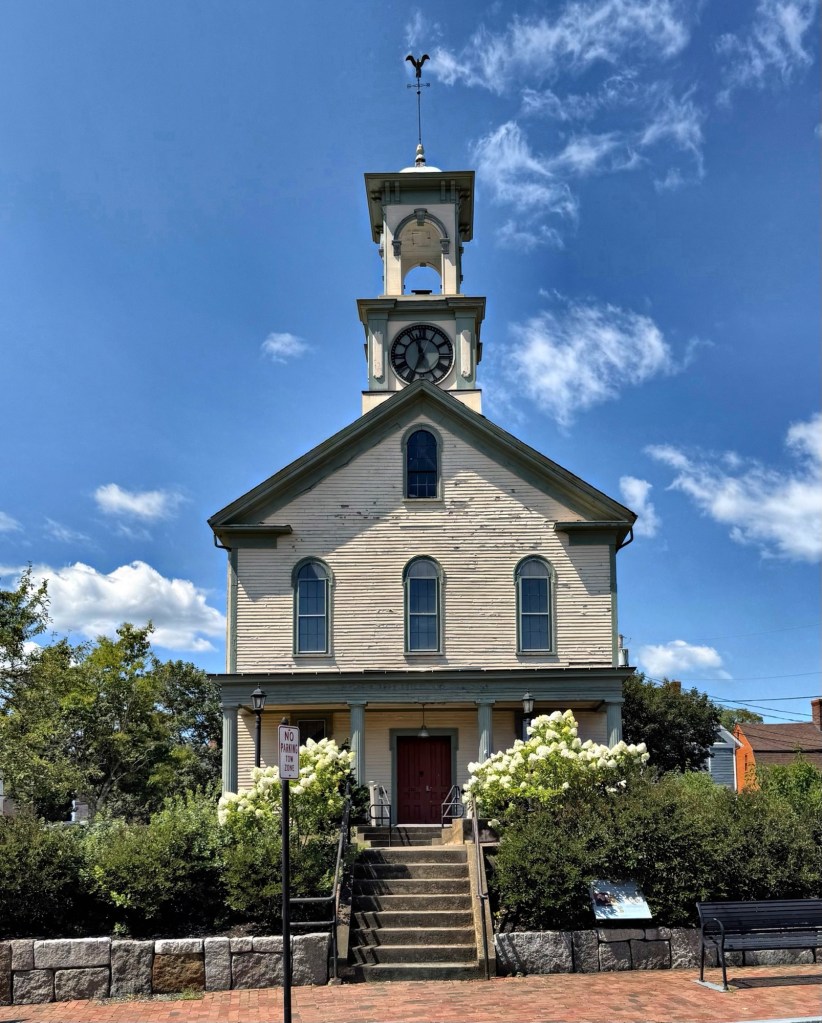
South Meeting House, Portsmouth // 1866

The South Meeting House was built in Portsmouth in 1866 and it is significant as a high-style Italianate building in the coastal town, and as the meeting place for the first African American church congregation in New Hampshire. The present building is the second building on this site. The initial structure was the Old South Meeting House, which was built for the South Church in 1731. The City demolished it in 1863 for the construction of the present building in 1866 as a Ward Hall for the Southern area of the community. The building’s upper level serves as a large public meeting space, and has seen use for political meetings, ward elections, and religious services The structure was the home of the People’s Baptist Church, the first African American church in New Hampshire, which organized in 1873, when the Freewill Baptists congregated on the second floor of this building. The church relocated in 1915 to 45 Pearl Street when the congregation raised money and bought their own building. In the late 19th century and early 20th century, the building continued to serve as a church, school, and community center until at least 1915. After World War II, it was boarded up due to economic circumstances and endured a period of neglect. In 1966, Strawbery Banke leased the building from the city for about fifteen years, during which it returned as a community resource and was renamed the South Meeting House. The city invested around $67,000 for repair work that also exposed further damage issues. In 1982, the city approved a proposal for the building to become a Children’s Museum. The community contributed to the required materials and labor that allowed the Museum to welcome the public from 1983-2008. Today, the city is still permitting restoration projects to preserve the historic building.

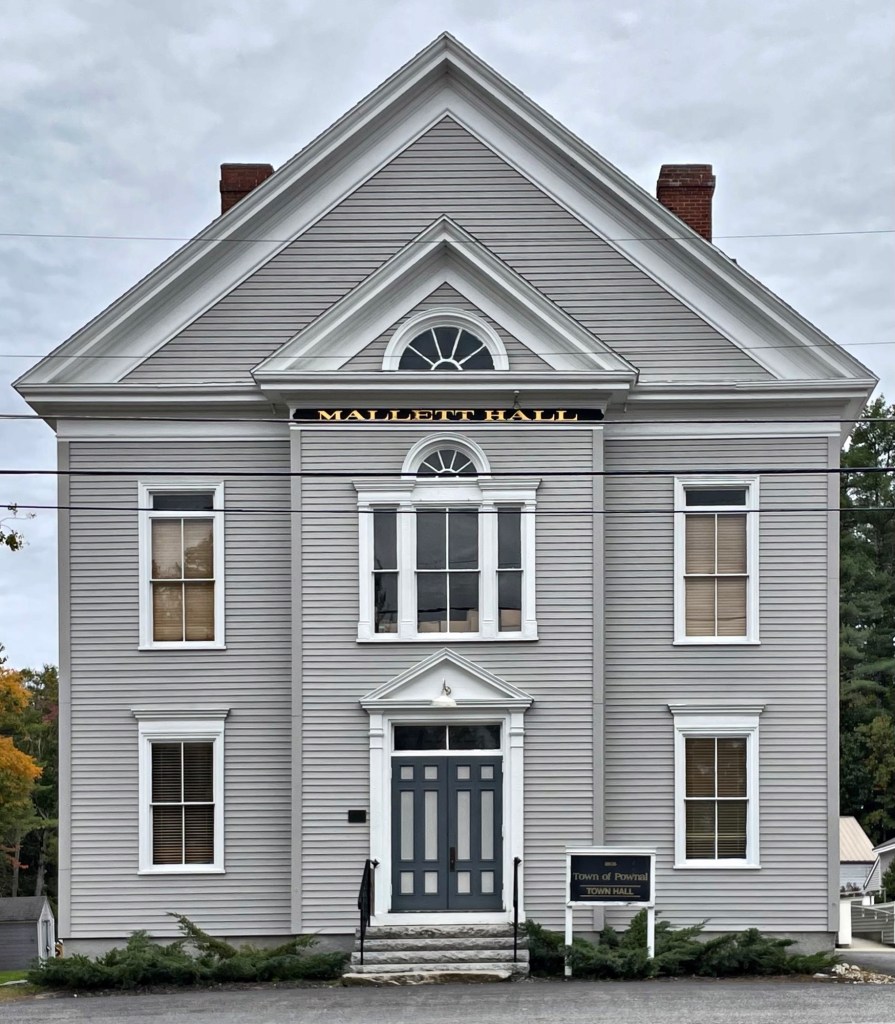
Mallett Hall // 1886

Built in 1886, Mallett Hall is one of the most interesting and significant buildings in the small town of Pownal, Maine. The town is located equidistant to the larger cities of Portland, Brunswick, and Lewiston, but retains a very rural charm. This hall was built following a town meeting on March 15, 1886, where an article was approved to appoint a committee charged with developing plans and estimates for a new town hall. The hall is named after Edmund Mallett, a businessman who partially funded its construction. The architect is not officially known, but estimates guess it was the work of Francis Fassett, a popular architect at the time in the area. In addition to housing town offices and functions, it has also served as a community center, hosting social events. The Colonial Revival style building takes strong cues from Greek Revival meeting houses in the area but exhibits a Palladian window and fanlight in the pediment.

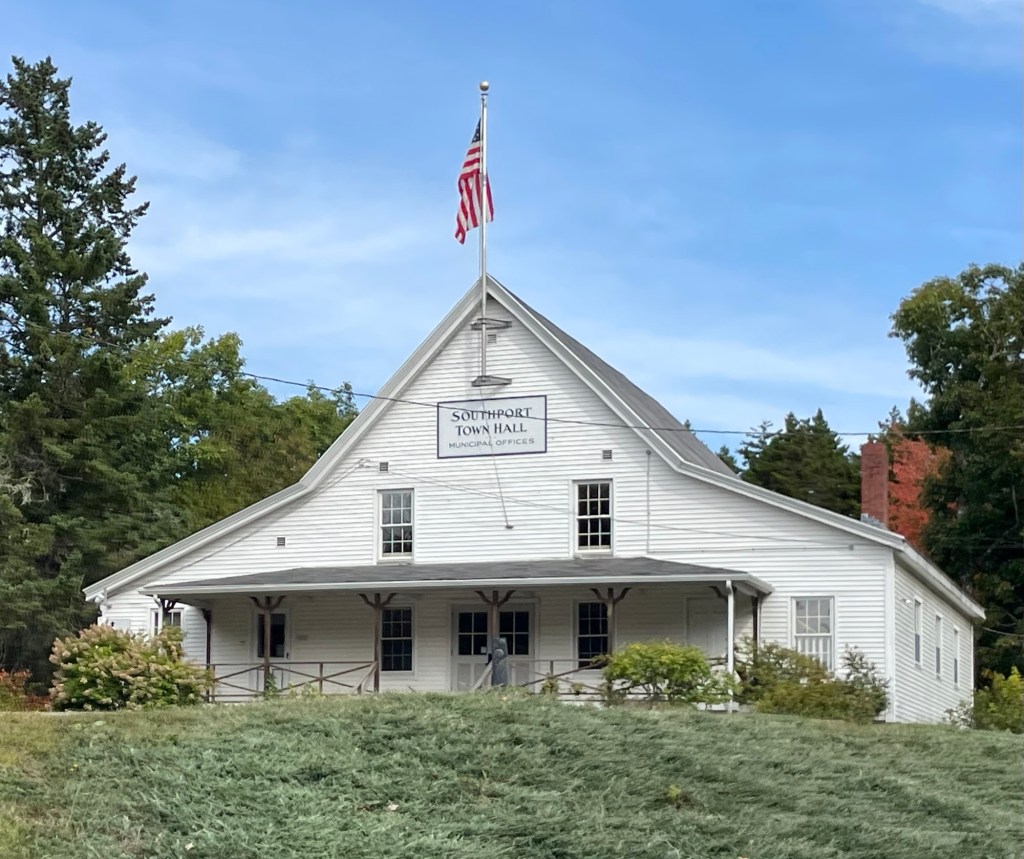
Southport Town Hall // 1866

While staying at the Spruce Point Inn in Boothbay Harbor, Maine, I took the chance to visit the nearby island-town of Southport! The town of Southport incorporated in 1842 when it separated from Boothbay and became known as Townsend, Maine. Just eight years later, in 1850, Townsend changed its name to Southport, after SouthportEngland. The town has a population of just over 600, which grows in the summer months as the island and nearby Squirrel Island (also a part of Southport) has many summer homes dotted along the coastline. The present-day Southport Town Hall was built in 1866 by the Ladies Sewing Circle of the Southport Methodist Episcopal Church as a meeting place for the women of town to meet and socialize, it also was rented to the town for town meetings. Eventually, the town purchased the building in 1900, where it has remained the town hall ever since.