Toy Theatre – Copley Theatre // 1914-1921

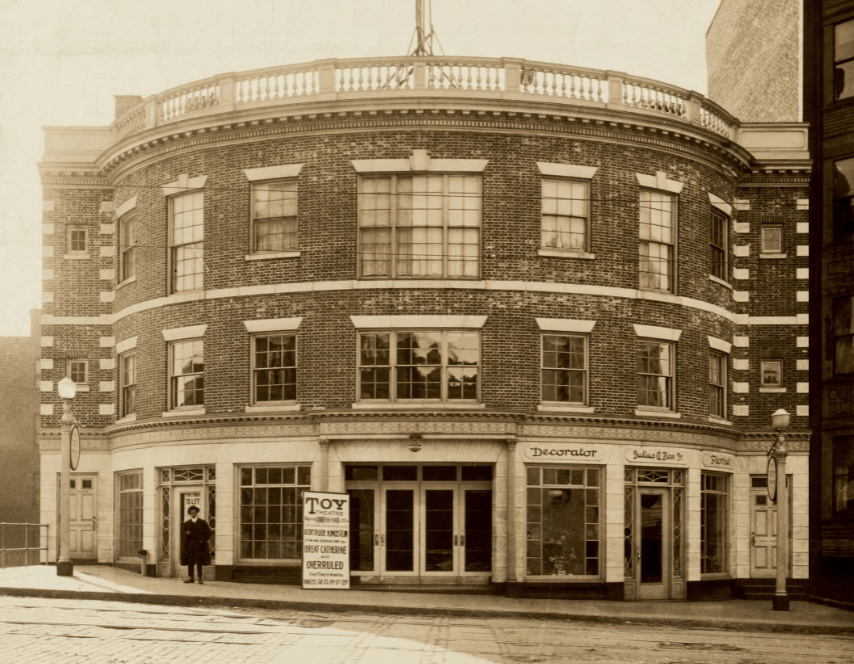
Photo courtesy of Boston Public Library collections.

When the Toy Theatre on Lime Street in Beacon Hill (last post) was formed in the early 20th century, the members of the small theatre group of well-connected artists and actors had their sights on something with permanence. By 1914, the group had funding and acquired land on Dartmouth street, a block away from Copley Square, and ground was broken to build a large new theatre. Designed by the architecture firm of Putnam & Cox, the fashionable Colonial Revival style building featured a large, rounded facade and was constructed of brick with a marble base and detailing. The theatre was designed with a retail space for supplemental income. Inside, decorations were refined and also included a staircase and railings donated by Isabella Stewart Gardner’s Fenway Court mansion, that were removed when she created the Tapestry Room in her home. The organization could not support running the building through shows, and the space was sold and rebranded as the Copley Theatre within a couple years. Continuing the bad luck, the City of Boston decided to extend Stuart Street by 1921, and this building was along the proposed route. The Toy Theatre was demolished in 1921, after just seven years.

Old Goshen Town Hall – Goshen Players // 1895

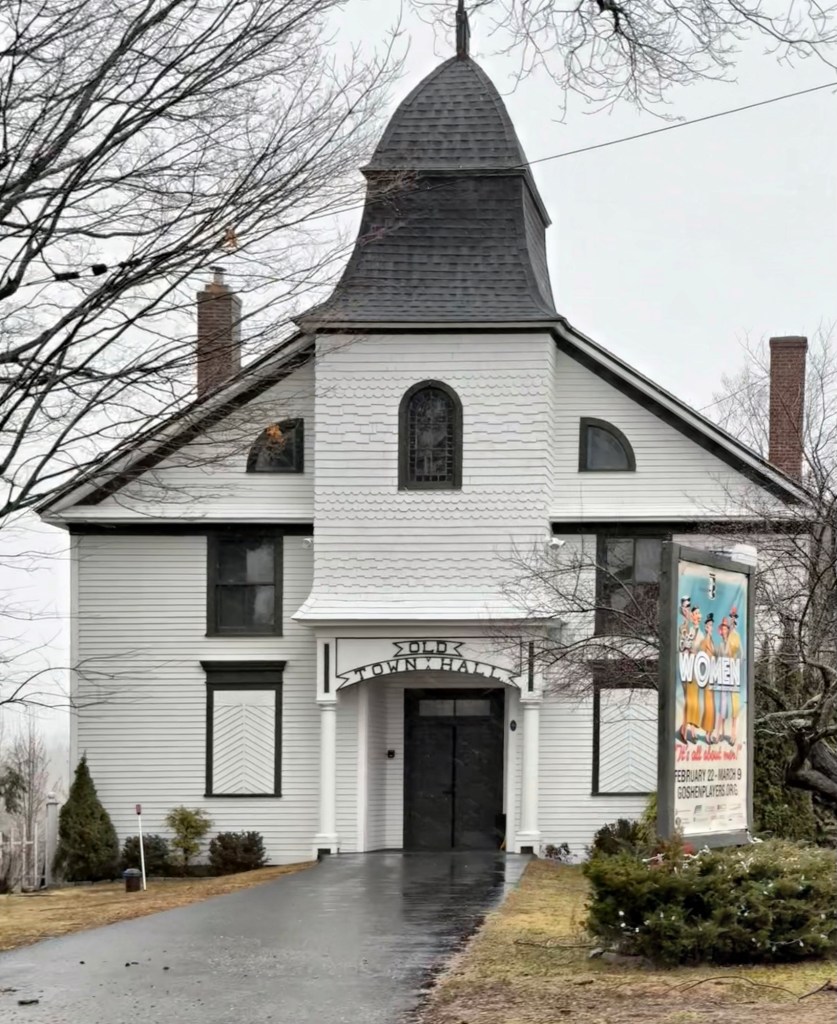
The first purpose-built official town building of Goshen, Connecticut, was this wood-frame structure at the main junction in the central village as the town’s first town hall. Built in 1895, the structure originally housed offices for the selectmen and town clerk, a fireproof vault for records, and a large audience-room with stage for town meetings and ceremonies. The building employs a more traditional form similar to the old Greek Revival meetinghouses built in New England in the first half of the 19th century, but with a shingled, Victorian entry tower with bell roof. When the Town of Goshen moved into its present town hall building, this structure became the home to the Goshen Players, a community theatre established in 1949, and is the second oldest continuously performing theatre group in the state.

Former West Acton Universalist Church // 1868

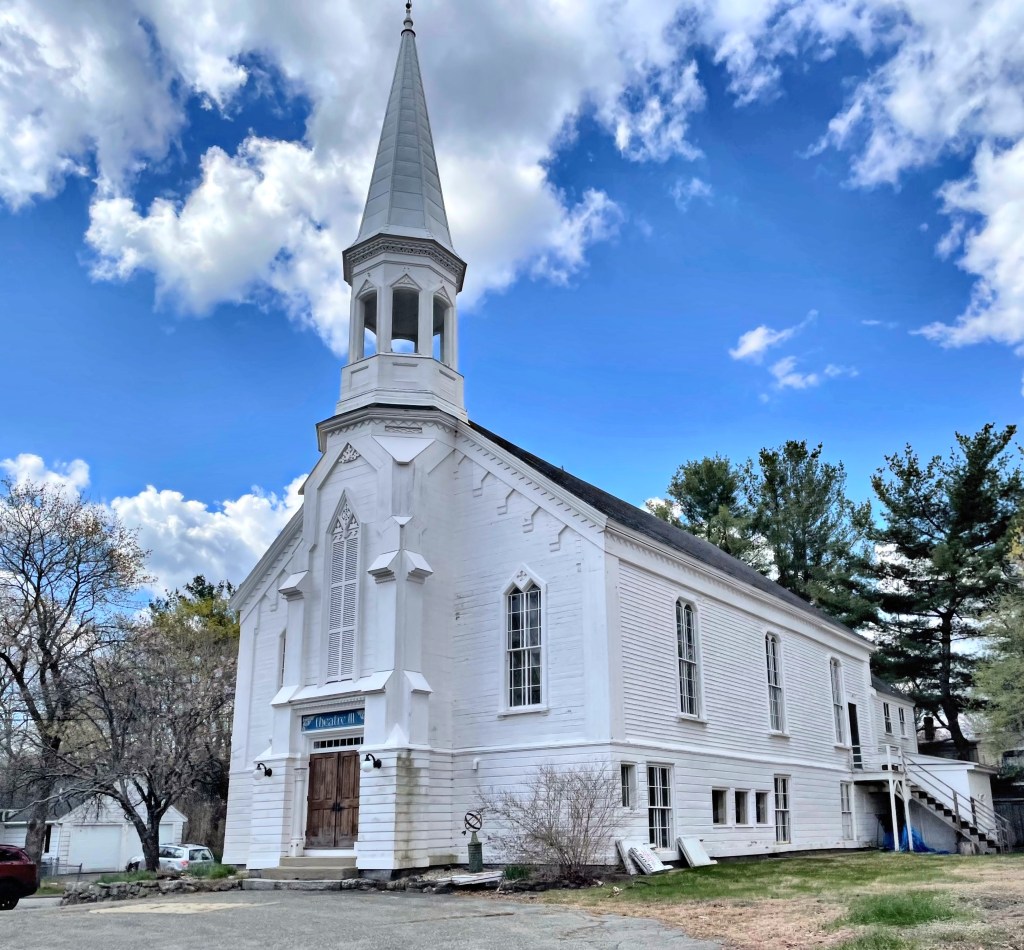
This beautiful church in Acton, Massachusetts was built in 1868 by the Universalists of West Acton who sought a house of worship closer to their homes, rather than taking horses to the other part of town every week. The building exemplifies the influence of both Gothic Revival and Italianate styles on rural churches of the time. Gothic elements include the double pointed lancet windows with quatrefoil ornament, buttresses, and pointed lancet panels on the tower and belfry. Italianate elements include the rusticated base and the corbel table at the eaves. Religious services ceased in 1925. At that time, the church building was bought by leading men in the village who gave the building to the West Acton Women’s Club, which began in 1890 by Lucy Mead (the wife of Oliver Mead, who built the Mansard home nearby). In the 1950’s, the church was used as a community center. It is now home to a local performing arts center, Theatre III Box Office.