Stonington Opera House // 1912

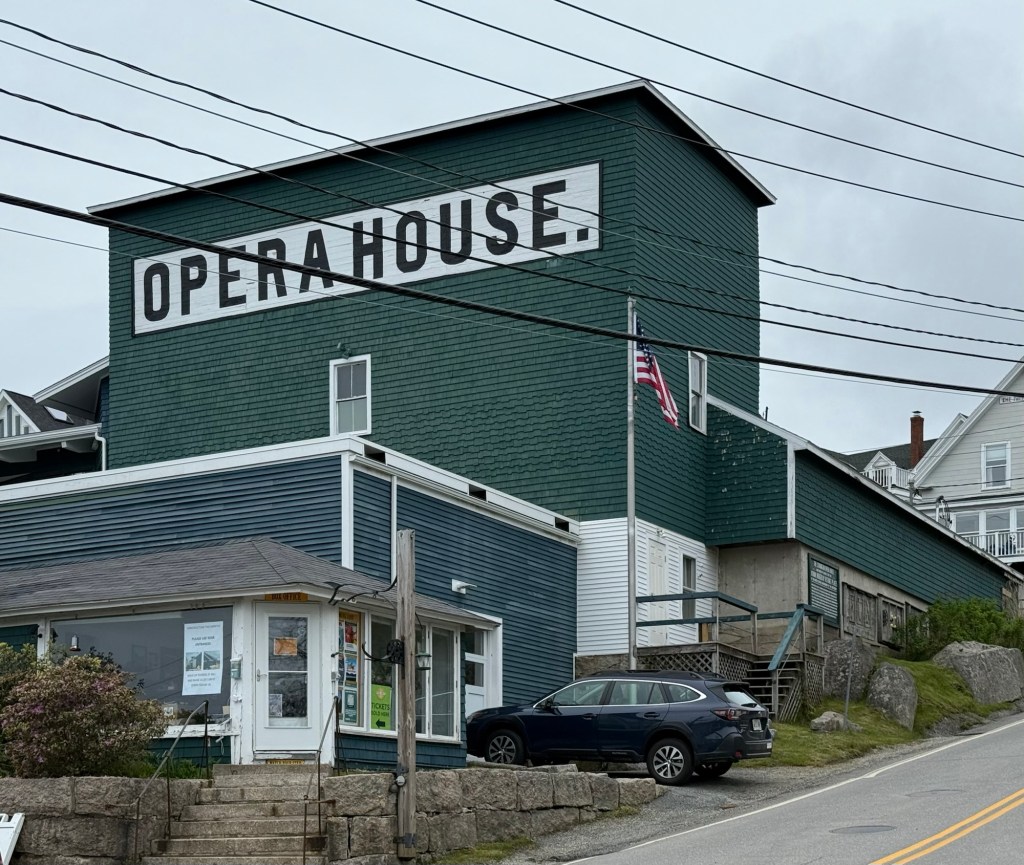
The Stonington Opera House in Stonington, Maine, is a historic early 20th century community center and theater in a vernacular style. The theater was built in 1912, on the site of an earlier hall built in 1886, that seated more than 1,000 people and hosted national touring shows that arrive via steamboat from Rockland. The original theater was destroyed by fire in 1910 and was soon-after rebuilt. It continued the practice of the earlier facility, hosting theatrical productions, lectures, and community events. Its floor was covered with removable folding chairs, so that the space could be used for dances and other social events. It was fitted for screening films around 1918, which came to dominate its uses in the mid-20th century. Unlike other early theaters, which were generally incorporated into municipal buildings, this one was specifically built as a profit-making venture, and was designed to accommodate elaborate theatrical productions, and is probably the oldest of this type in the state. After being vacated for much of the later half of the 20th century, the Stonington Opera House was restored and reopened by Opera House Arts, a local nonprofit, in 2000, and is once again used primarily for film screenings and theatrical productions.
Maine State Building // 1893

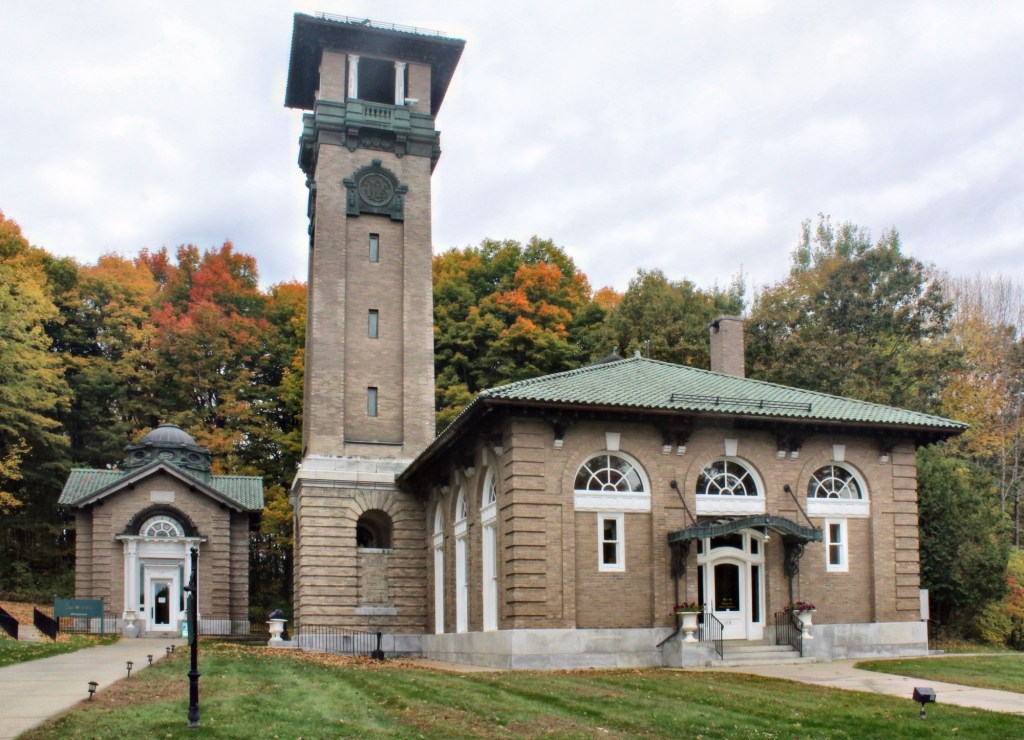
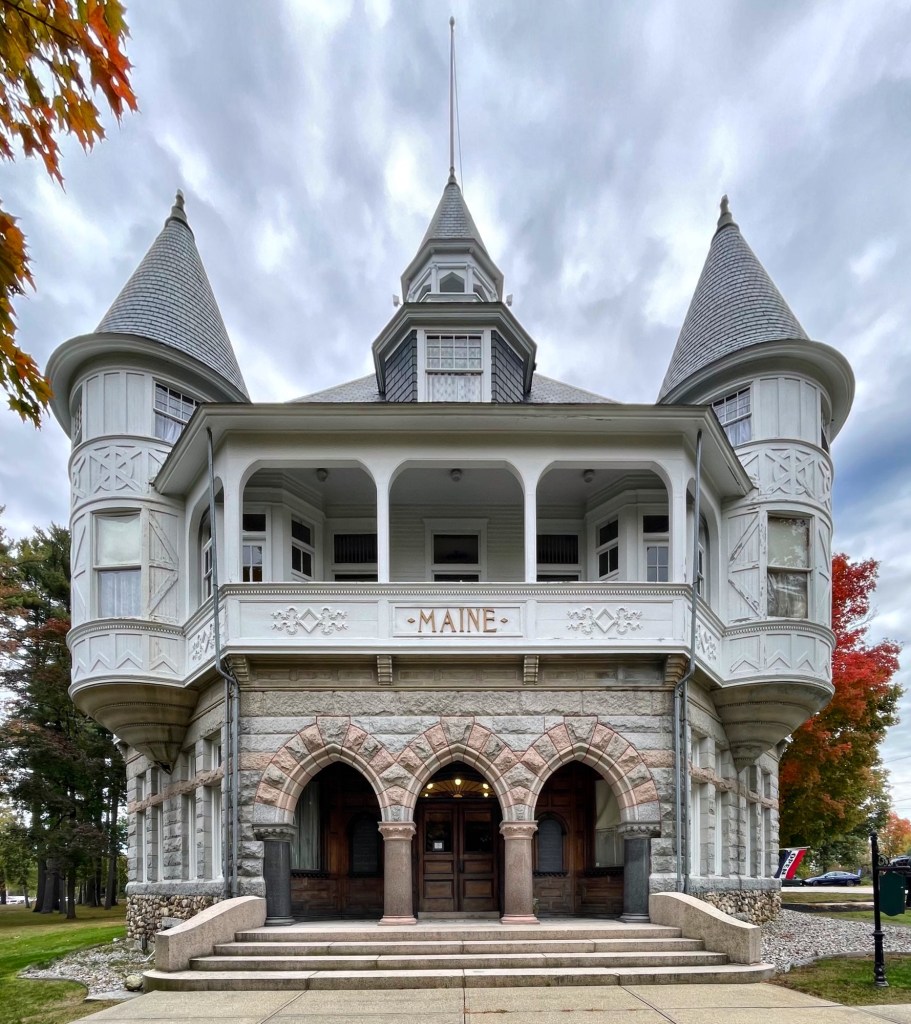
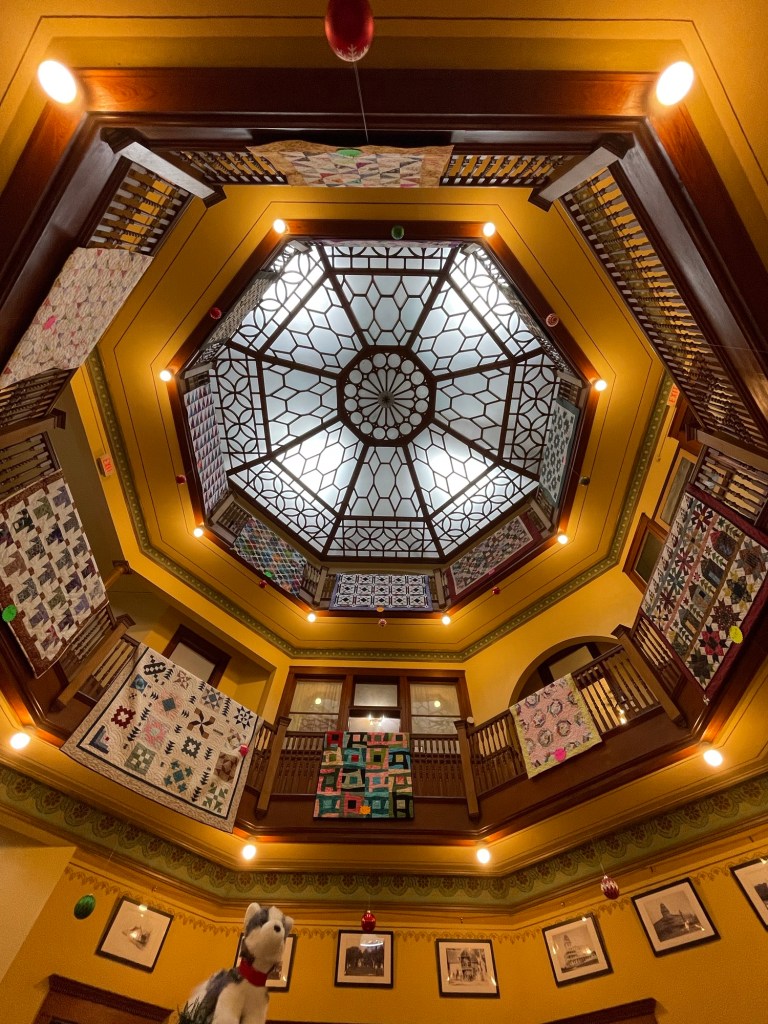
The Maine State Building is a one-of-a-kind landmark located in the Poland Springs Historic District of Poland, Maine, though it was not originally built in this location! The Victorian structure was built in 1893 at the Columbian Exposition in Chicago (aka the Chicago World’s Fair) as one of the State Buildings constructed by each U.S. state to highlight their history. Designed by Chicago architect Charles Sumner Frost, a Lewiston, Maine native and MIT graduate, the building was constructed of granite with a slate roof. After the close of the fair, the Ricker family of Poland Spring, purchased the building from the state. They had it dismantled, moved to Maine, and rebuilt on their resort, which brought even more visitors to their property. In Maine, it reopened in 1895 as a library and art gallery for their hotel guests. Along with the Norway Building in Norway, The Dutch House in Brookline (a personal favorite), the Palace of Fine Arts (now the Museum of Science and Industry) and World Congress Auxiliary Building (now the Art Institute of Chicago) in Chicago, the Maine State Building is one of the few remaining buildings from the 1893 World’s Fair, and the only State Building remaining. It has been lovingly preserved and operated by the Poland Spring Historical Society, who operate the building as a museum.

Poland Springs Bottling Plant & Spring House // 1907

The Poland Springs Bottling Plant and Spring House contribute to the rich history of what was once a major American spa resort. In as early as 1797, Jabez Ricker founded a hostelry at the springs on his property in Poland, Maine, and later claimed that drinking the water saved him from a serious illness, a claim that was expanded by other members of his family for generations. In 1876, Hiram Ricker, Jabez’s grandson, opened the Poland Spring House, a “watering place” or spa, acclaimed for its health-giving environment. While the grand hotel burned in 1975, the bottling plant and spring house designed and built in 1907, still remains on the grounds. In 1903 Hiram Ricker’s son, Edward P. Ricker, wrote to architect Harry C. Wilkinson, a native of Poland, Maine, to solicit a design for his proposed bottling plant and Spring House to allow visitors to drink the natural spring water. His idea of bottling the spring waters for transport and sale, which would eventually be the main catalyst for Poland Spring water today! The extravagant Italian Renaissance Revival style buildings sit side-by-side and are of a high-style despite the relatively utilitarian purpose of the facility. Both structures are very well-preserved and are operated as museums, to learn more about the history of the spring water and resort here.

Poland Springs Beach House // 1909

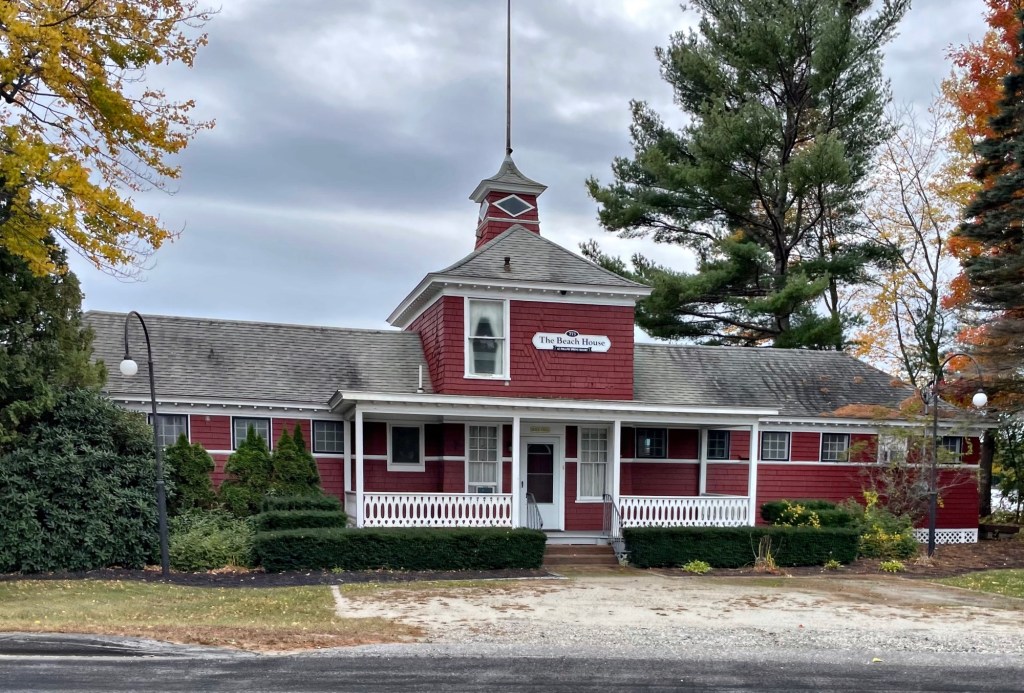
The Poland Springs Resort in Poland, Maine, brought thousands of visitors to the once sleepy community to take in the clean air and healing spring waters on the grounds, and eventually built recreational facilities to keep guests entertained for summers. An 18-hole golf course on the grounds was originally designed by Arthur Fenn in 1896 and redesigned by Donald Ross in 1915; and the Ricker family who owned and operated the resort, sought to take advantage of the nearby Middle Range Pond for guests. In 1909, this 1909 eclectic Queen Anne beach house was built on the northwest edge of Middle Range Pond. For twenty-four years, it was set over the water, supported on piers, but in 1932, it was moved to the east and was set on land. In 1982, the building was remodeled to a private home, now available for rent.

Riccar Inn // 1913

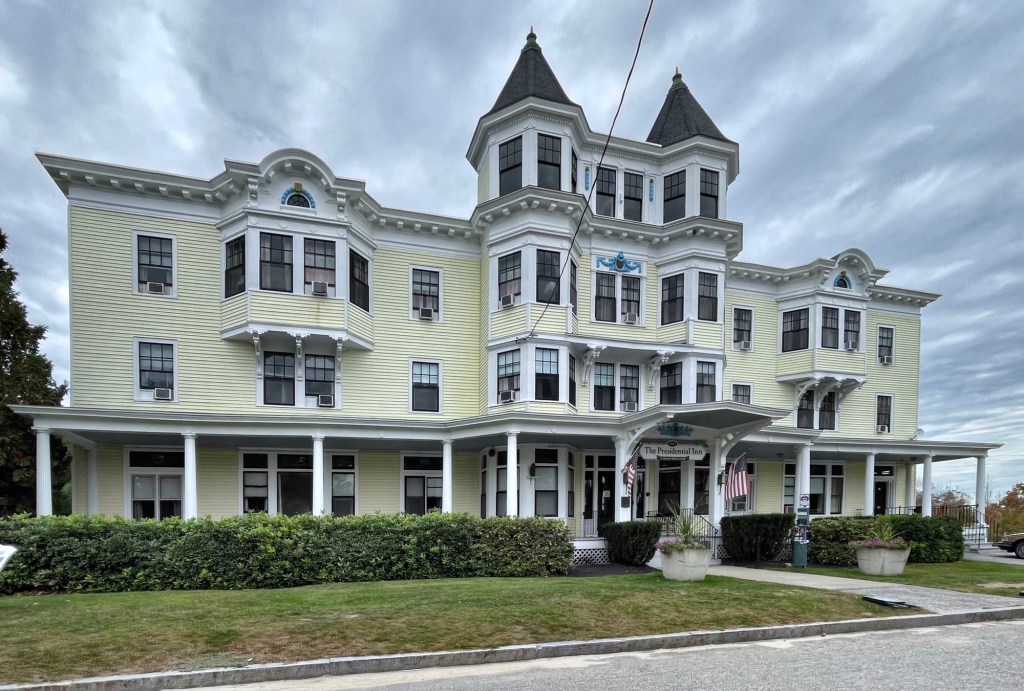
The Riccar Inn, now known as the Presidential Inn, was constructed in 1913 on the grounds of the former Poland Springs House. The structure was the last of the hotel buildings constructed by the Ricker family, who started the resort aimed at drawing in tourists to take in the area’s natural healing waters. The annex hotel building was named Riccar Inn, with the spelling “Riccar” from the historic surname used by members of the family before they emigrated to America. The Queen Anne/Colonial Revival style hotel building survived the 1975 fire that destroyed the main hotel, the Poland Springs House. Architecturally grand, this three-story irregular plan hotel has a flat roof and features a four-story projecting double bay in the front facade topped with two octagonal towers. While covered in vinyl siding, much of the original ornament still shines (and there is likely more underneath the siding to be uncovered at a future date). What a beautiful building.

First Parish Congregational Church of Pownal // 1811

Completed in 1811, the First Parish Congregational Church of Pownal, Maine, is an excellent and well-preserved example of a vernacular Federal-period church in a rural setting. Located across from Mallett Hall and built at the foot of Bradbury Mountain, the church was built by a crew headed by master-carpenter Uriel Whitney, a Revolutionary War veteran who moved to the area after the war. He was active in this church and is buried in the church cemetery. Little remains of the original Federal Style architecture, as its current Greek Revival Style (architects unknown) dates from remodeling apparently undertaken in 1838 and 1857.

Jacob Randall House // c.1796

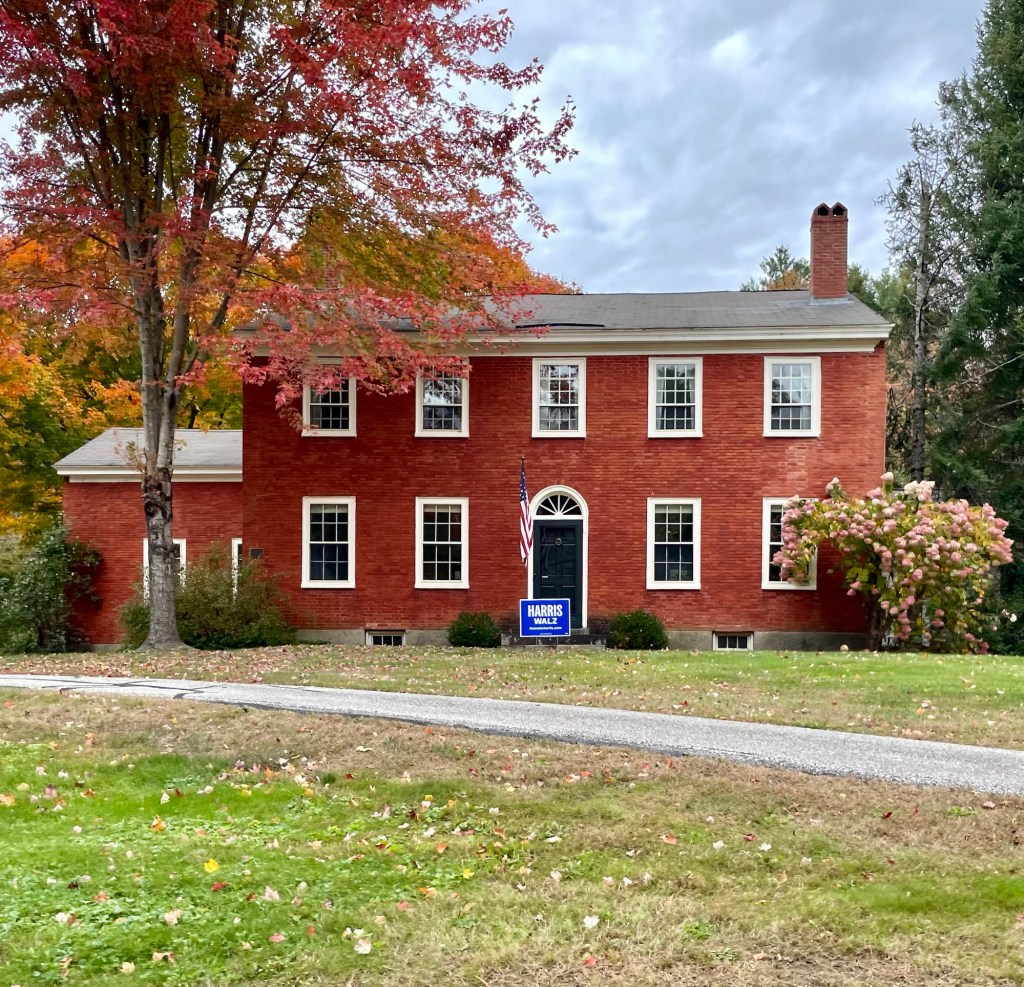
The Jacob Randall House on Lawrence Road in Pownal, Maine was built about 1796 and is a fine example of Federal period architecture executed in brick in the town. Built for Jacob Randall (1771-1829) a native of Weymouth, Massachusetts, who purchased over 100 acres of land in town, and had this house built sometime after. His property spanned the nearby Chandler River, upon which he established a sawmill and gristmill. When Pownal was incorporated in 1808, Randall was one of its first town selectmen, a seat he held nearly continuously until his death in 1836. The house is five bays wide, with its entrance in the central bay, recessed with a fanlight.

New Gloucester Masonic Lodge // 1902

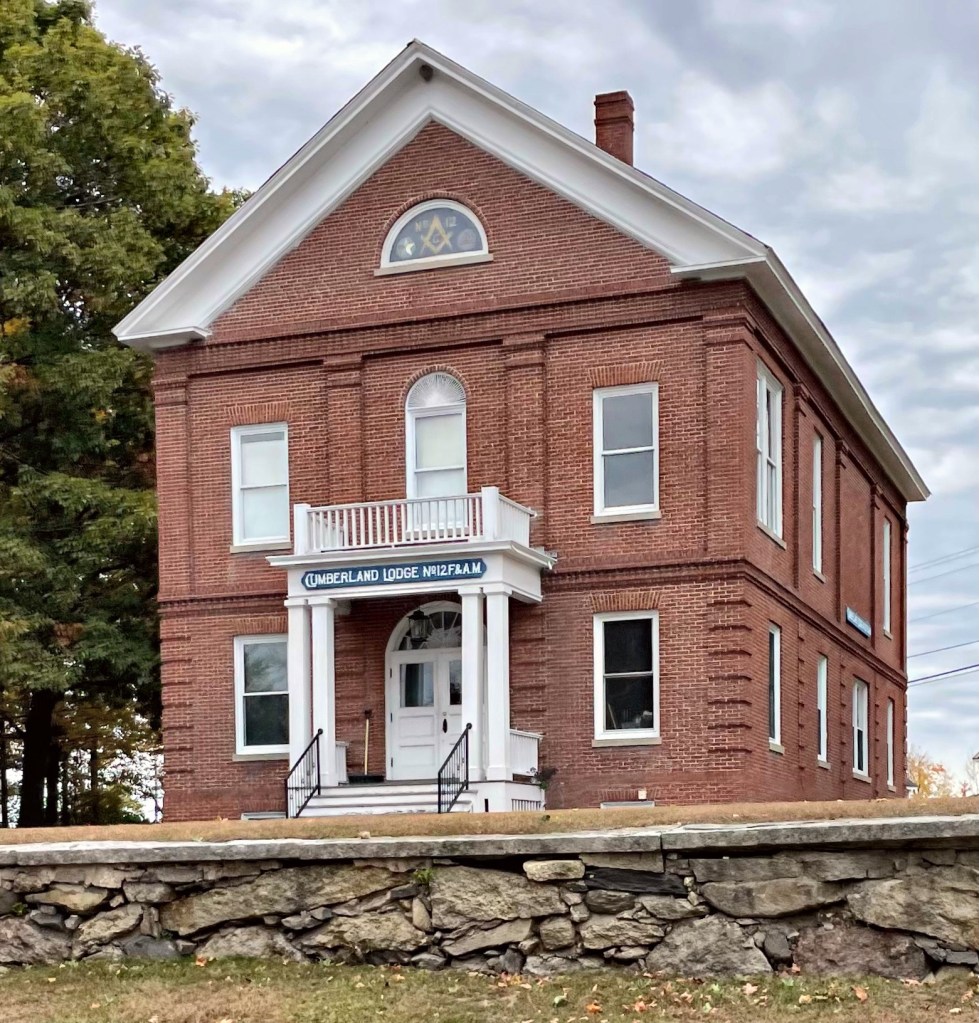
Built in 1902 and dedicated in June 1903, the Cumberland Lodge of Ancient, Free and Accepted Masons #12 is located at the corner of Route 100 and Bald Hill Road in New Gloucester, Maine. The building was constructed as a centennial celebration of the local Masonic Lodge chapter’s founding a century earlier. The impressive and detailed brick structure exhibits engaged brick pilasters and a stained glass lunette (half-round) window in the gable. The building is still occupied and owned by the local Masons who hold meetings in the hall.

New Gloucester Town Hall // 1886

New Gloucester, Maine was established in 1736 under a Massachusetts Bay Colony grant of a 6-square-mile tract of land in the Maine Territory to sixty inhabitants from the Gloucester fishing village on Cape Ann. The first white settlers here built cabins in the forests in the 1740s, which were largely abandoned from 1744–1751 due to the heightened native tribe attacks during King George’s War. As the Native Americans gradually withdrew to Canada, the settlers moved out into their own newly built homes and the town has grown ever-since. New Gloucester was incorporated on March 8, 1774, and was named New Gloucester after Gloucester, Massachusetts, the native home of a large share of the early settlers, as Maine was still a territory of Massachusetts until 1820. Previous to 1886, the First Baptist Church was used for a town meeting house, but in that year the new Town Hall, this building, was dedicated. The building is Queen Anne in style with varied siding, applied ornament in the gable, with a more Classical portico at the entrance.

Morrill House // c.1830

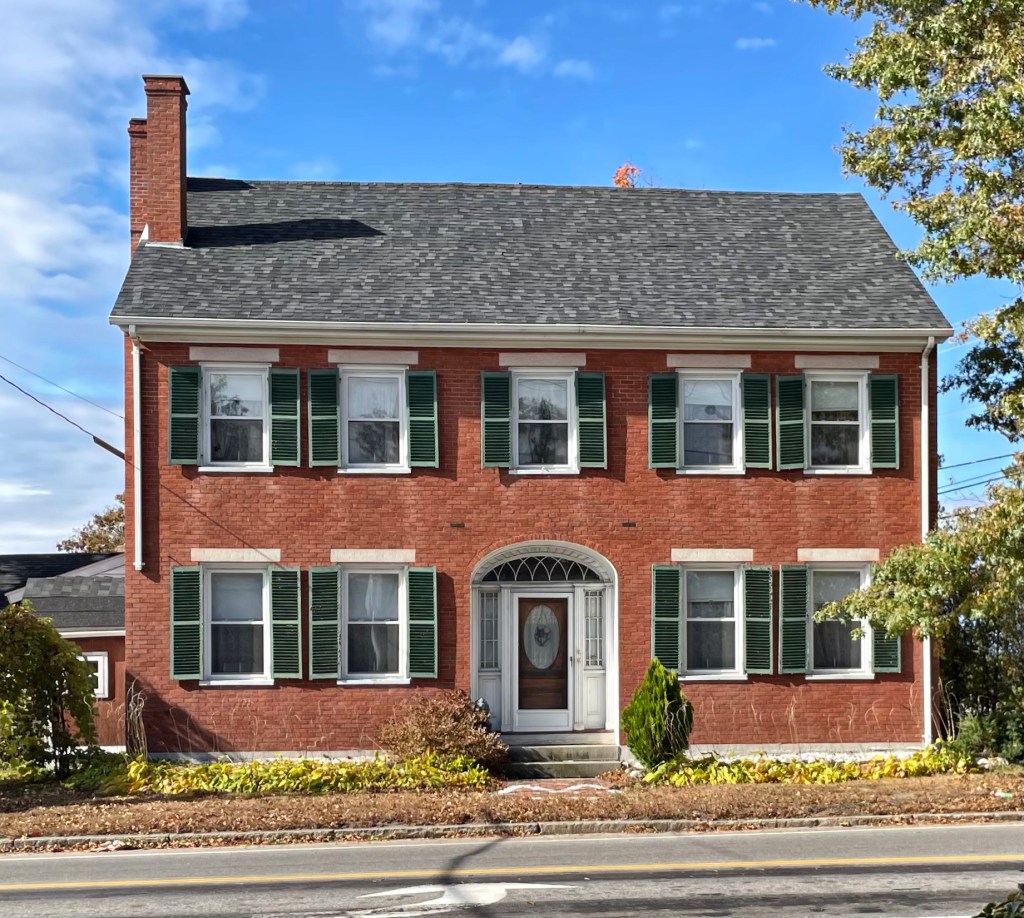
This stunning brick Federal style home sits in the center of Gray Village in Maine. The house dates to the early 19th century and was long-owned by members of the Morrill Family, seemingly first by William C. Morrill and remaining in the family for generations. The residence is a high-style example of the Federal style with recessed elliptical entrance with fanlight transom and sidelights with a Victorian-era front door. The house was likely built by a local mason or housewright who employed the designs of a Federal style plan book for the architectural detailing at the entry.

Dry Mills Schoolhouse // 1858

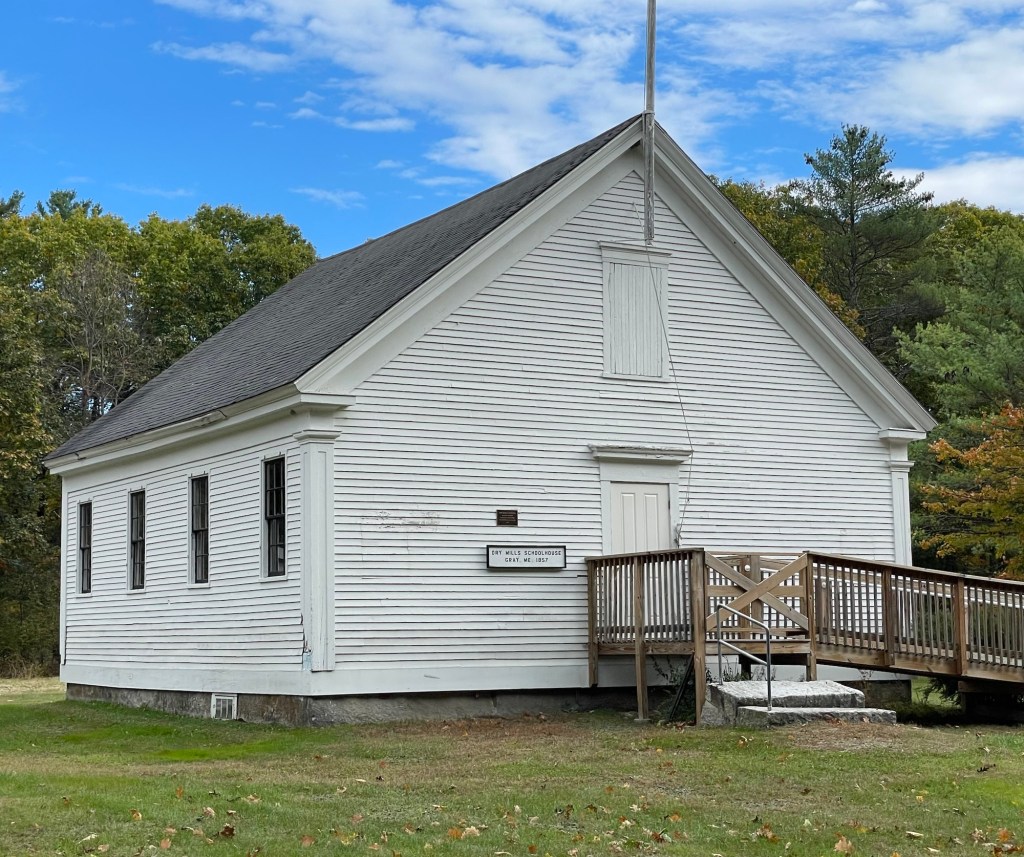
Before the use of automobiles for everyday use, the winding roads in towns all over New England were once lined by charming one-room schoolhouses, to educate children without forcing them to travel too long of distances (like many of our parents and grandparents who had to walk to school uphill both ways!) The Dry Mills School was built by 1858 and is the last one-room schoolhouse of twelve that were built in Gray, Maine. All of the others have  been sold by the town, converted into houses, and/or torn down.  The school was in operation from before the Civil War until it closed its doors to public education in 1958.  In the early 1990’s, at a cost of $12,000, the building and the original granite slab foundation were moved to their current location on the Maine Wildlife Park Road and has been restored to its original appearance thanks to local residents who advocated for the preservation of the building. The interior retains an original chalkboard, period wood stove and furnishings. Today, it is a living museum, attesting to the educational environment in the mid 1800’s and was listed in the National Register of Historic Places.

Stimson Memorial Hall // 1900

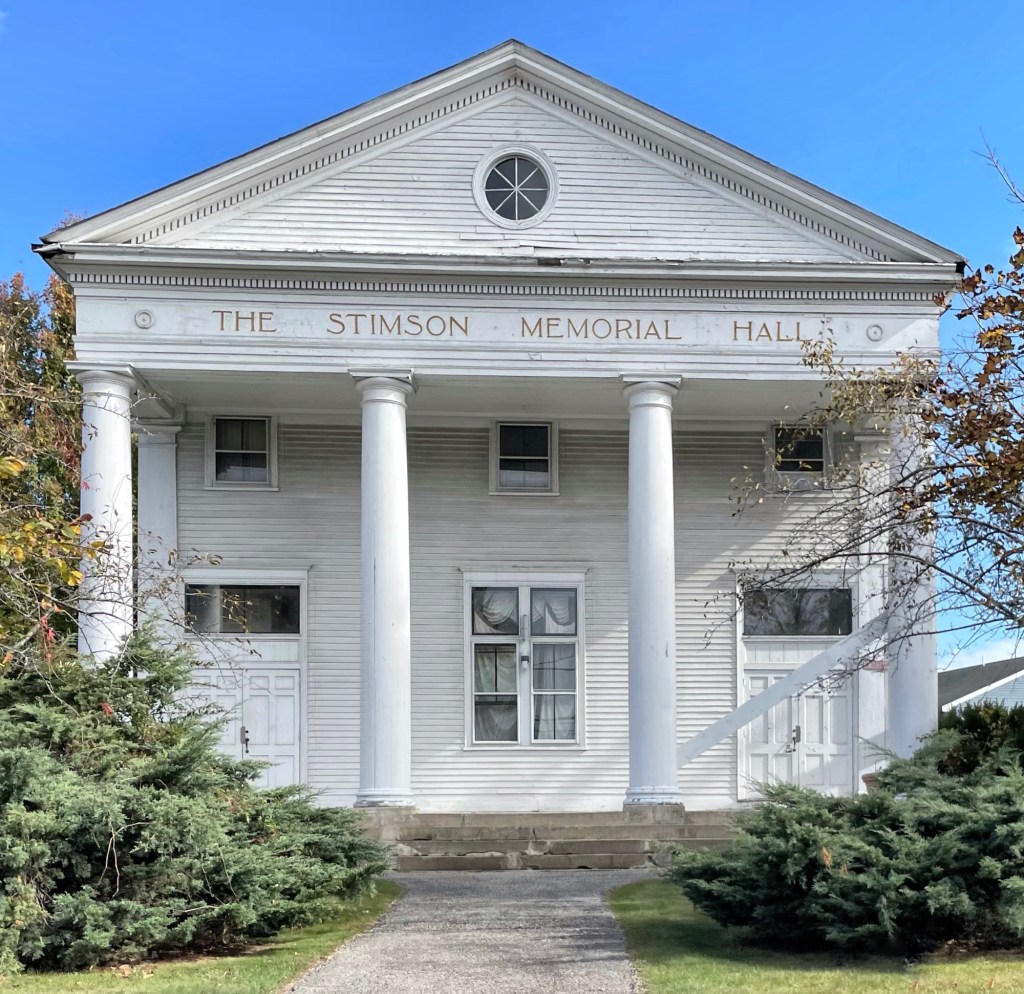
Stimson Memorial Hall is a historic, Neo-Classical building on Shaker Road in the center of Gray, Maine. Built in 1900, it served for many years as the town’s main public meeting space, and is a prominent landmark in the town center. The hall was built as a gift to the town, primarily through the efforts of Abbie Stimson Ingalls, who had moved to Cincinnati, Ohio with her husband, as a memorial to her late parents, Theophilus and Mary Stimson. The memorial hall was designed by Elzner and Anderson of Cincinnati, Ohio, and was built on land originally purchased by the local Universalist congregation. The upper level house the town library until the 1950s. The building was threatened in recent years, and as one of a handful of significant buildings remaining in the center of town, its preservation was important. It has some deferred maintenance but remains in good shape! Does anyone know what the building is/will be used for?

All Saints by-the-Sea Episcopal Church // 1905

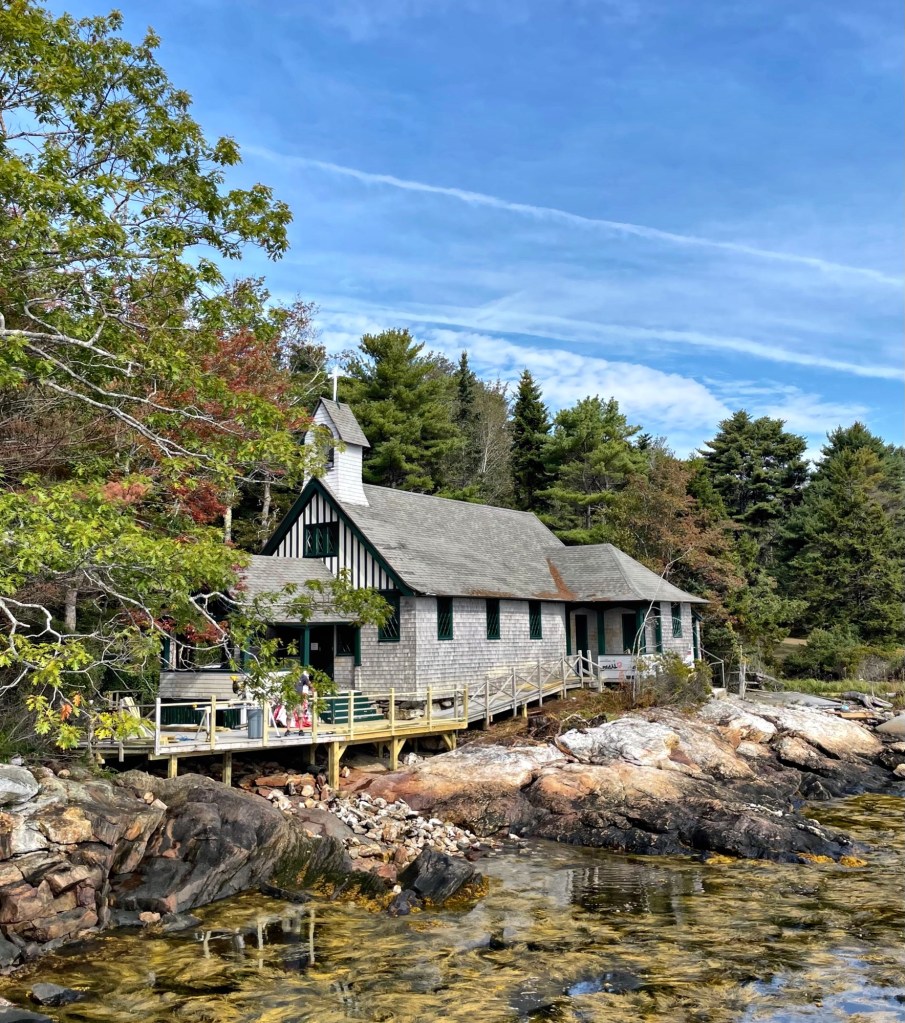
Possibly my favorite type of building in Maine are the historic Episcopal summer chapels that sprouted up along the coast in the late 19th and early 20th centuries. This is the All Saints by-the-Sea Episcopal Church of Southport, Maine, an island community with many summer residents. This church had its beginnings when Reverend John Thomas Magrath of Gardiner, Maine, would visit Southport in the summers and hold services for rusticators under the oak trees or in the cottage living room if the weather was poor. Eventually, a member of the congregation purchased a lot on the east side of Southport on the rugged coastline, and planning began for a chapel. In 1905, the chapel was designed by architect, Albert Hall in a rustic blending of the Shingle and Tudor styles. The building exhibits shingle siding with half-timbering, the original diamond-pane windows, and a large entry porch off the entrance.

Southport General Store and Barn // 1895

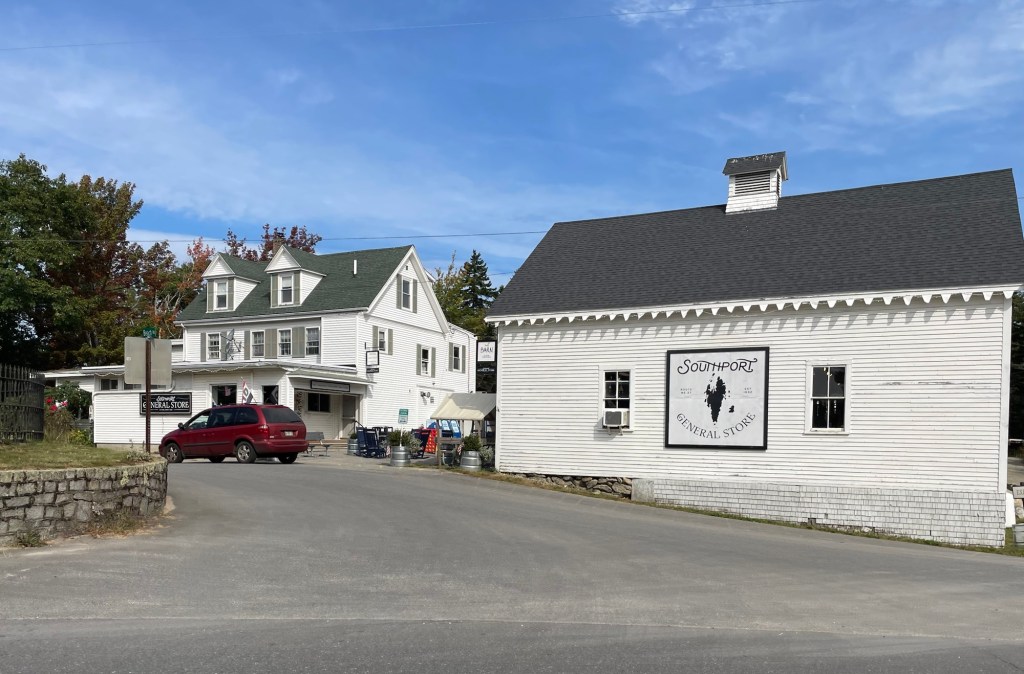
In 1882, Edward Everett Pinkham, known as Everett, opened a new store in one side of his house on Hendrick Hill in the island community of Southport, Maine. The store was known for years as E. E. Pinkham and Son. Everett soon built a proper store adjacent to his house. He served the Town of Southport in many capacities: Postmaster, Town Clerk (1887-1905) Treasurer (1883), and Selectman (1888-1893). Sadly, on May 21, 1895, the store and house burned along with all of the old town records inside. The community helped Everett rebuild the present general store before the busy summer season. Edward’s son “Charlie”, would take over the business and the building has served as the town’s social center ever since. Year-round and summer residents bump into eachother at the store, catch up, and share local news, like every general store should be! Sadly, in so many communities, the “general store” has been replaced by big box retailers or convenience stores, removing the sense of community or place, so these businesses are more important than ever!

Southport Town Hall // 1866

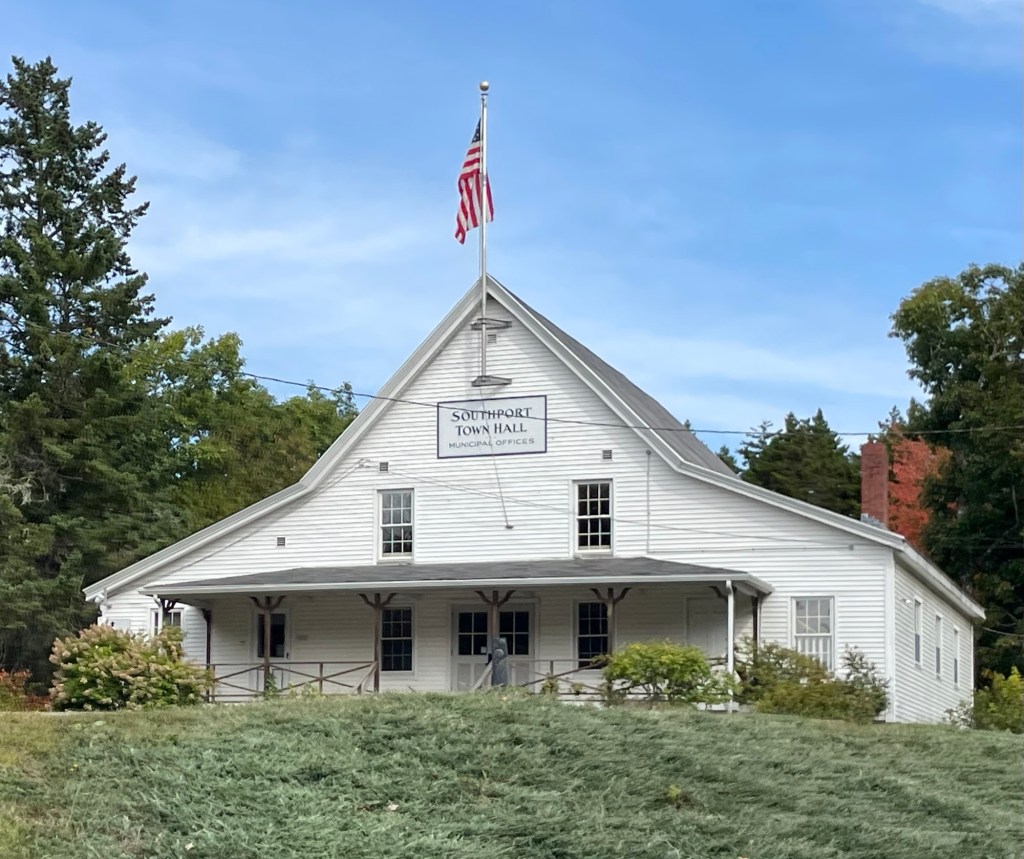
While staying at the Spruce Point Inn in Boothbay Harbor, Maine, I took the chance to visit the nearby island-town of Southport! The town of Southport incorporated in 1842 when it separated from Boothbay and became known as Townsend, Maine. Just eight years later, in 1850, Townsend changed its name to Southport, after SouthportEngland. The town has a population of just over 600, which grows in the summer months as the island and nearby Squirrel Island (also a part of Southport) has many summer homes dotted along the coastline. The present-day Southport Town Hall was built in 1866 by the Ladies Sewing Circle of the Southport Methodist Episcopal Church as a meeting place for the women of town to meet and socialize, it also was rented to the town for town meetings. Eventually, the town purchased the building in 1900, where it has remained the town hall ever since.