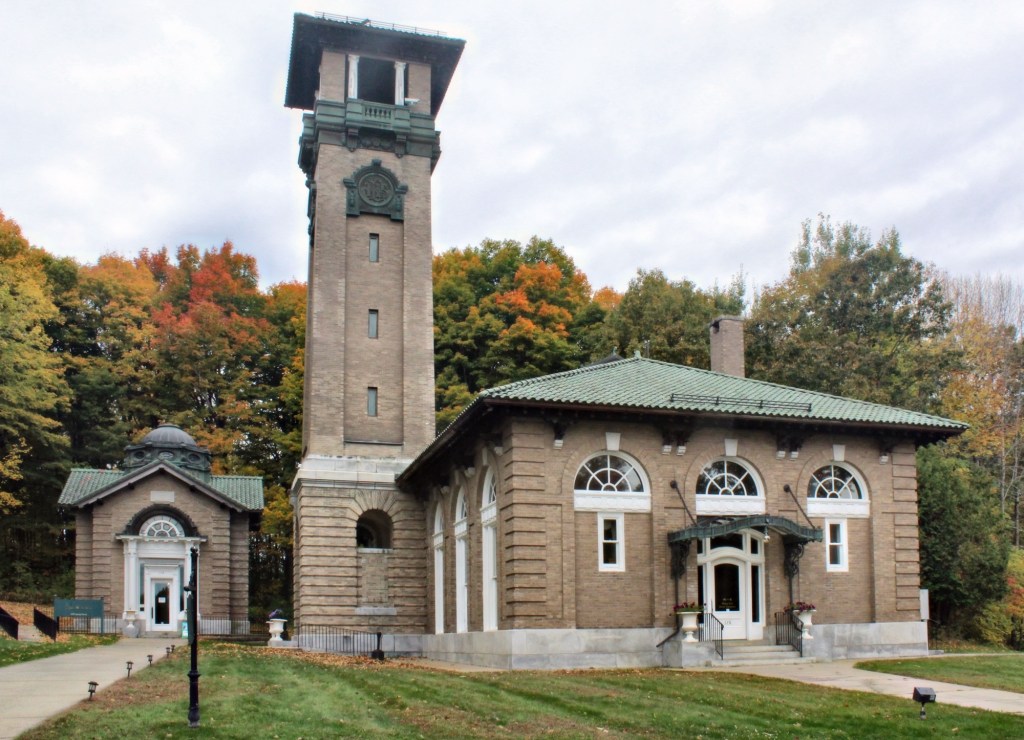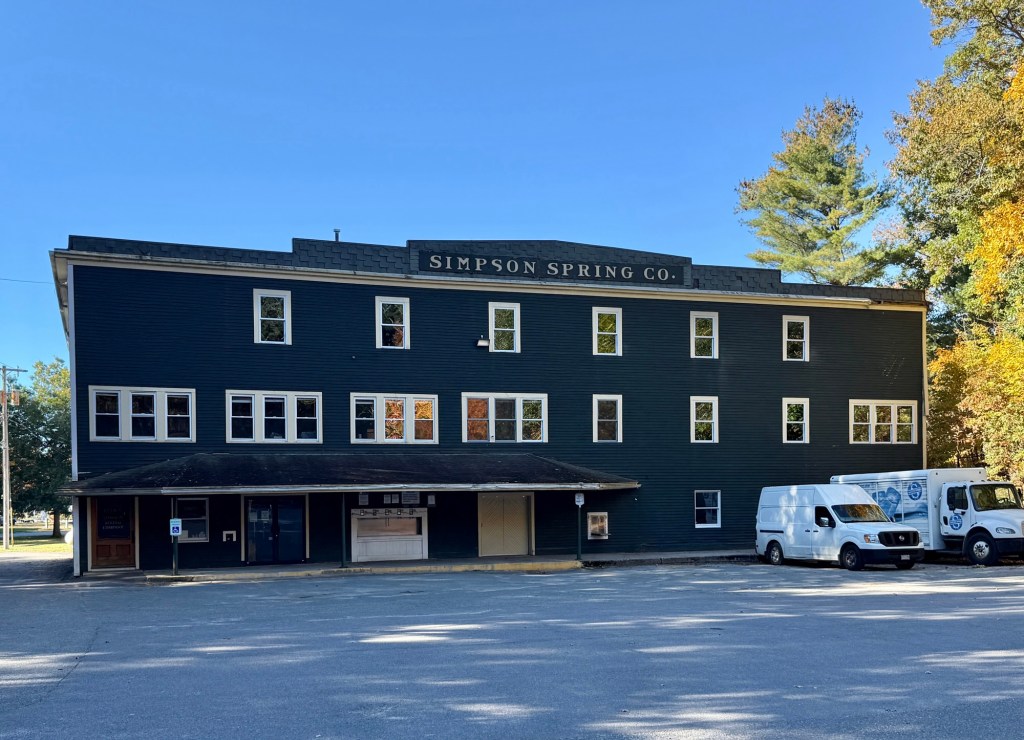
A natural spring in the area of present-day South Easton, Massachusetts, was well known to the early settlers there and it was probably used by Native people who had settled in the area around the Queset River prior to European settlement. In 1800, Samuel D. Simpson acquired the spring and operated a blacksmith shop nearby until the 1870s, when the family was approached by Frederick A. Howard who envisioned the bottling and sale of the fresh spring water. The Simpson Spring Company began to bottle the water in jugs and sell to nearby communities by 1878, later expanding to other markets. The company began to bottle carbonated water, and in the next twenty years, expanded to over fifty other products, including: tonics, Moxie, ginger ale, and a lime juice drink that was marketed to men aboard ships to provide them with Vitamin C when out at sea for long periods of time. The company built a warehouse, manufacturing building, garages for trucks for shipping, and this building, the offices of the company, which was completed by 1915. The historic, family-run company still draws all of its water from that same underground source, filtering it naturally without harsh chemicals. Visitors can step back in time to explore the vintage machinery, fill their own jugs with fresh spring water, and stock up on cases of small-batch sodas made with pure cane sugar in retro flavors like White Birch, Sarsaparilla, and, of course, the century-old Coffee Soda.