Gamewell Fire Alarm and Telegraph Company Factory // 1889

The Gamewell Fire Alarm and Telegraph Company traces its roots to the pioneering work of William Francis Channing and Moses Farmer of Boston, whose 1850s telegraph-based fire alarm system was the first practical fire alarm box system that consisted of telegraph-based boxes placed on street corners, which, when activated, sent a coded signal to a central fire station notifying them of a fire or emergency. The duo applied for a patent for their “Electromagnetic Fire Alarm Telegraph for Cities” which was later acquired by John Gamewell of South Carolina. Following the Civil War, Gamewell partnered with Kennard and Company and built a factory in Newton Highlands in 1873. The company would adopt the trademark of a fist gripping lightningbolts, and by 1886, the Gamewell system was operating in over 250 cities in the United States and Canada. As the company grew operations, the business moved to this site in the Upper Falls village in 1889, which was desirable for its close proximity to the railroad and markets all over the region. The first factory was the two-story wooden factory building completed in 1889, with later wings to its east (1904) and west (1912) as the company continued to expand into the 20th century. The Gamewell company remained here until the 1970’s when Gamewell became a division of Gulf and Western. Luckily, the former factory was restored by owners Alexandria Properties and architects, Kraus Associates, as Telegraph, which now offer retail and office space for small local businesses
Scribner Mill // 1880

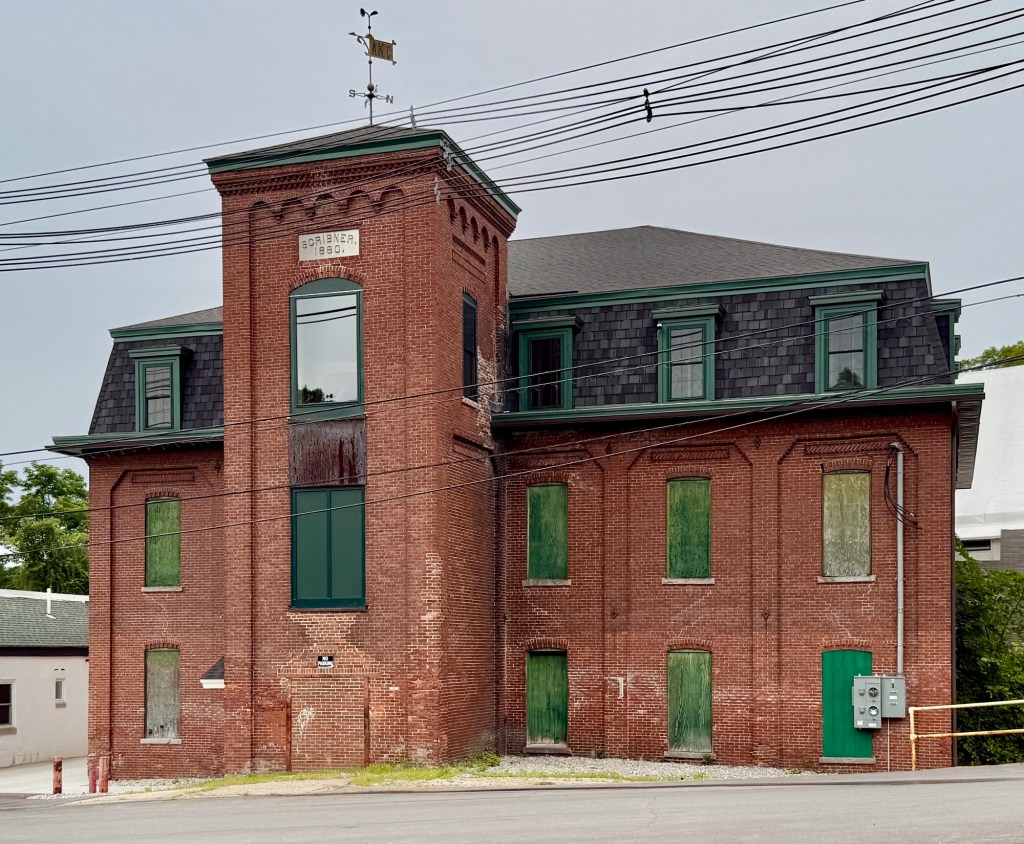
The Scribner Mill building in Ashland stands as an architecturally and historically significant industrial building that tells the story of the community as a manufacturing center of the lakes region of New Hampshire. Built in 1880 by owner Ambrose Scribner, the brick structure served as a hosiery factory and is a late example of a mill building in the Second Empire architecture style. Owners today have spruced up the building which had previously been left vacant, to rent as office and light manufacturing space by Minus33, a merino wool apparel brand, and the purchased helps to reclaiming the important textile heritage of New England. The building retains its iconic mansard roof, brick corbeled cornice and entry tower, though many window remain boarded up.

Talbot Mills // 1857

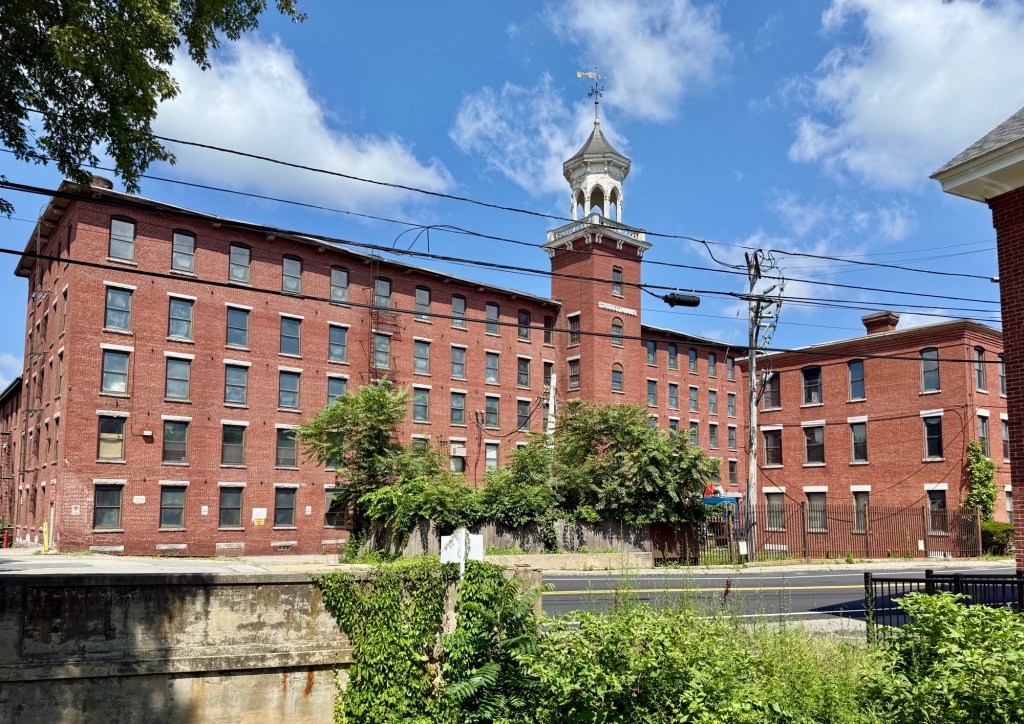
The Talbot Mills in North Billerica were built in 1857 by Charles and Thomas Talbot, who produced flannels, woolen goods, and later military and later, military drab. The brothers had connections in Lowell and eventually built a new manufacturing company in Billerica on the banks of the Concord River. Charles Talbot oversaw much of the day-to-day business, while Thomas Talbot began to pursue politics, serving first as state senator, lieutenant governor, and eventually Governor of Massachusetts in 1878. When built, the Talbot Mills were originally powered solely by water, but as the company’s manufacturing facilities doubled in 1880, a boiler-engine house was built. During the 1920s, at its peak, the mill employed 450 workers, many of whom lived in worker’s housing developed and rented by the corporation. During the 1960s, the company suspended operations and the building had been rented out to tenants ever since, now occupied by Pace Industries. The main (and earliest) building of the Talbot Mill complex was built in 1857 and rises five stories with a prominent entry tower with a balustrade, octagonal open arcaded belfry call capped by a weathervane. The wooden tower is a rare survivor and hopefully will remain another 150 years.

Putnam Nail Company Factory // 1860+

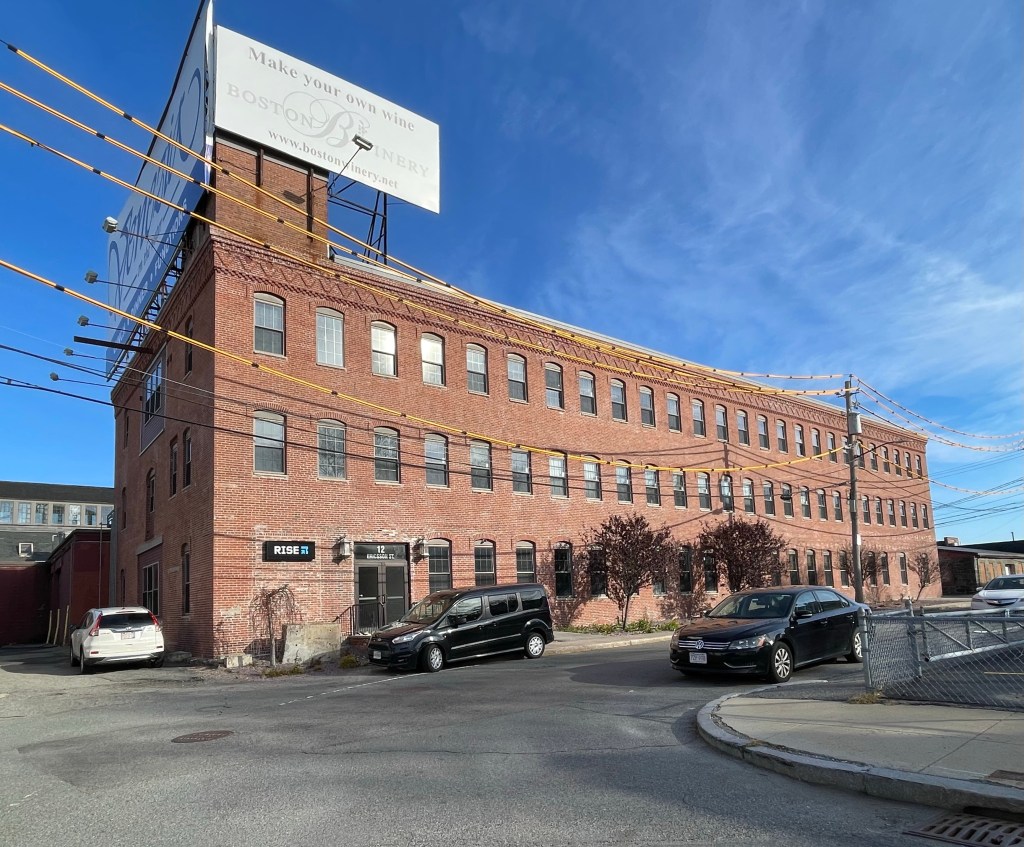
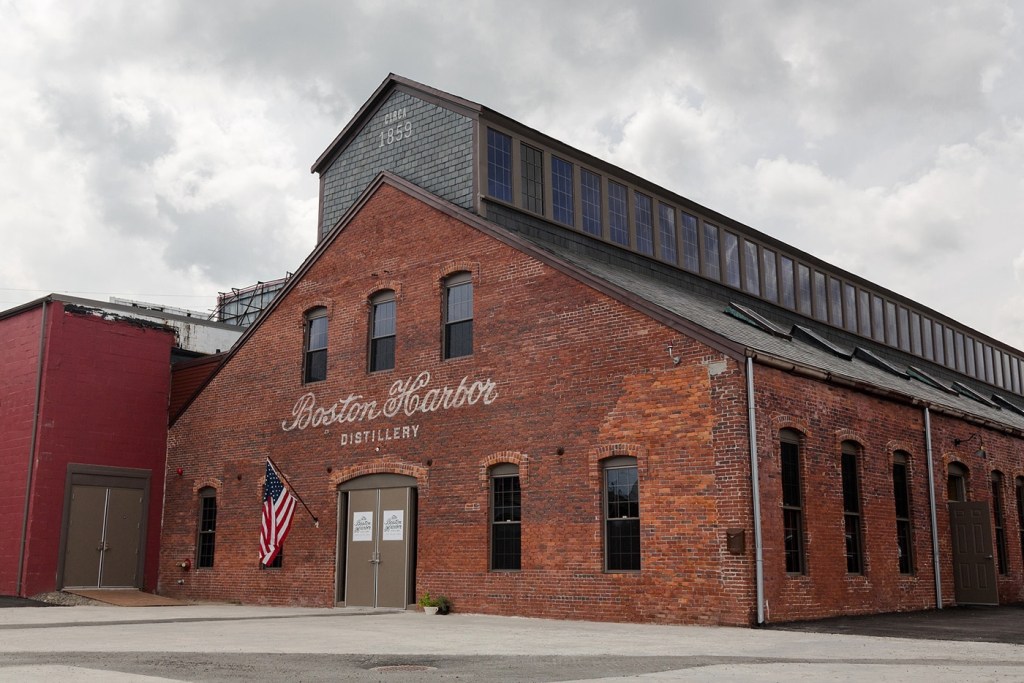
The Putnam Nail Company was founded in 1860 and located at the northern tip of the Port Norfolk neighborhood of Dorchester, Boston, Massachusetts. The company was founded by Silas Safford Putnam (1822-1895), who was the seventh of nine children by Israel Smith Putnam and Charlotte Safford of Hartford, NY. He moved to Boston and found work as Boston’s industrial growth took-off. He owned a curtain factory before patenting a process to manufacture wrought nails in the 1850s. After some time in Abington and Roxbury, he moved to Dorchester, purchasing large pieces of land and began building a manufacturing complex for his new Putnam Nail Company. The company made world-class horseshoe nails until it closed in the early 1900s. The property here was acquired by the George Lawley & Son Shipyard, who moved from their cramped City Point, South Boston shipyard to this newer yard. Already an established and respected New England manufacturer, the Lawley company had been building wooden ships in Massachusetts since 1866. The site was later the home to Seymour’s Ice Cream and was abandoned in the late 20th century. The large 1890s brick factory is now occupied by RISE, a development/construction management firm, with other buildings occupied by the Boston Winery and Boston Harbor Distillery.

Herreshoff Manufacturing Complex // 1853+

In 1859, 18 year old John Brown Herreshoff (1841-1915) of Bristol, accepted his first commission to design and build a yacht. The fact that he was blind, having completely lost his sight at 15, didn’t seem to slow him down. He became known as the “blind boat builder.” In his early years, John Herreshoff had acquired such a keen knowledge and “feel” of boats that his blindness was no obstacle. The handwork however, was done by his brother, Nathanael Greene Herreshoff, later known as “the Wizard of Bristol.” His skill in shipbuilding became well-known; so in 1863, John took on space in an old rifleworks, hired a crew of shipwrights and established what would become the Herreshoff Manufacturing Company. From 1864 to 1869, the boatworks built forty-three steam yachts, including Seven Brothers, the first steam-powered fishing boat in America. In 1876, Lightning, the first United States Navy torpedo boat, was completed. Construction of larger craft soon followed, including the 94-foot Stiletto, considered the fastest boat in the world, and was later purchased by the Navy, and was its first torpedo boat capable of launching self-propelled torpedoes. J.B. Herreshoff died in 1915 and the company continued under his brother Nathanael, until it was taken over by a syndicate of New York and Boston yachtsmen. Business stagnated after WWI and the business closed after WWII. Today, Burnside Street in Bristol showcases the lasting legacy of the Herreshoff Manufacturing Company and their impact. Also, the Herreshoff Marine Museum sits at the end of the street, continuing that legacy.