Talbot Mills // 1857

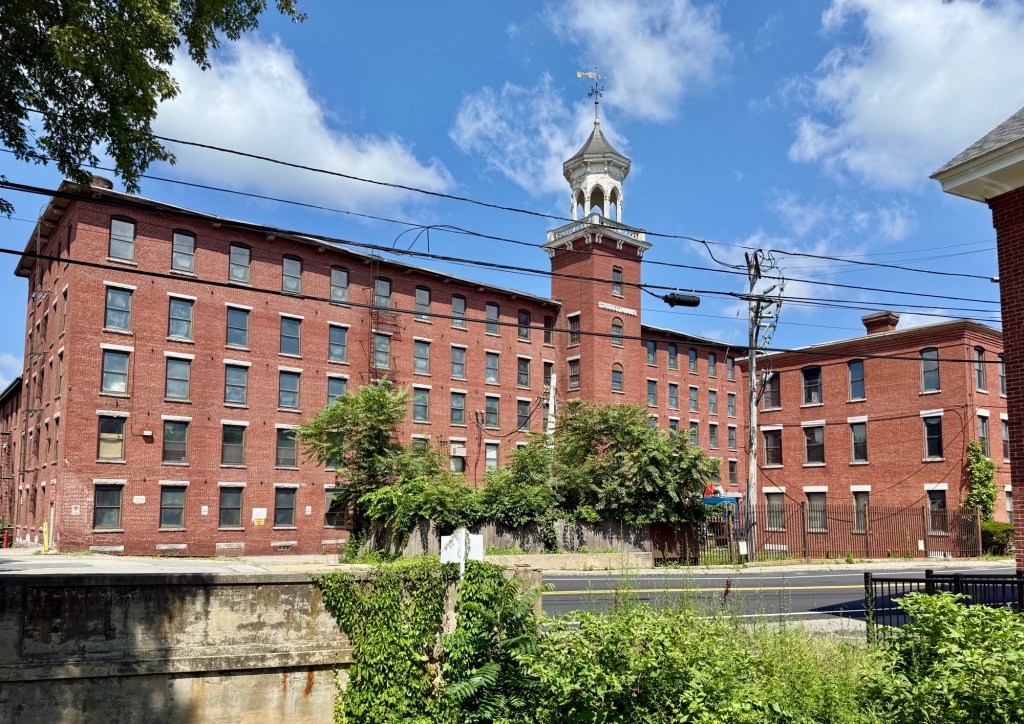
The Talbot Mills in North Billerica were built in 1857 by Charles and Thomas Talbot, who produced flannels, woolen goods, and later military and later, military drab. The brothers had connections in Lowell and eventually built a new manufacturing company in Billerica on the banks of the Concord River. Charles Talbot oversaw much of the day-to-day business, while Thomas Talbot began to pursue politics, serving first as state senator, lieutenant governor, and eventually Governor of Massachusetts in 1878. When built, the Talbot Mills were originally powered solely by water, but as the company’s manufacturing facilities doubled in 1880, a boiler-engine house was built. During the 1920s, at its peak, the mill employed 450 workers, many of whom lived in worker’s housing developed and rented by the corporation. During the 1960s, the company suspended operations and the building had been rented out to tenants ever since, now occupied by Pace Industries. The main (and earliest) building of the Talbot Mill complex was built in 1857 and rises five stories with a prominent entry tower with a balustrade, octagonal open arcaded belfry call capped by a weathervane. The wooden tower is a rare survivor and hopefully will remain another 150 years.
Faulkner Mill // 1880

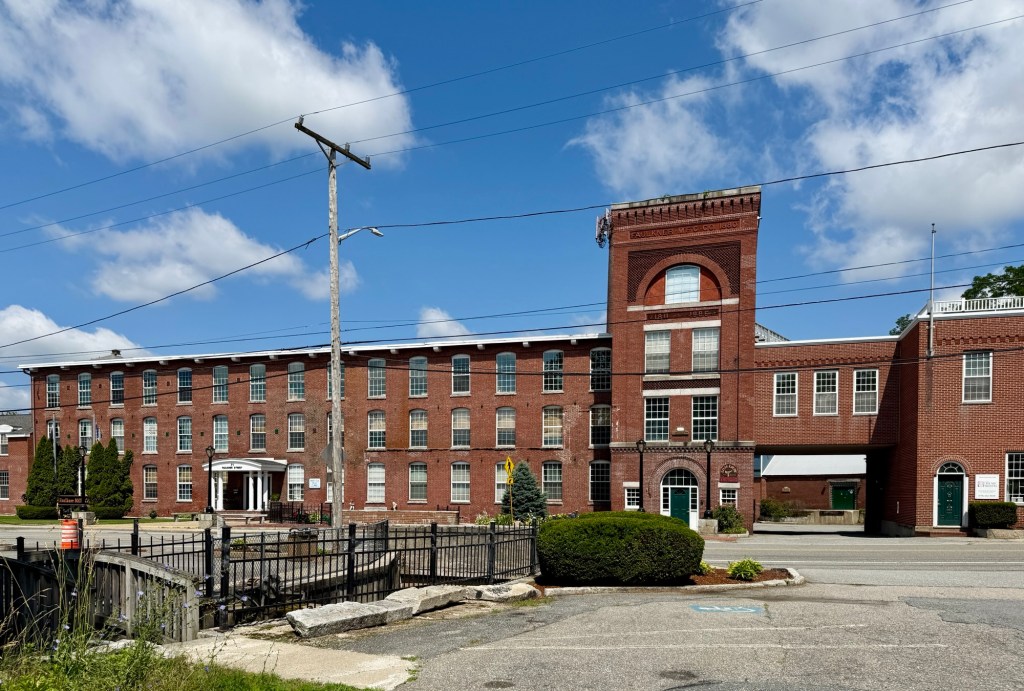
The manufacture of woolen goods was introduced in North Billerica by Francis Faulkner in 1811 on the bend of the Concord River. Francis Faulkner was the son of Colonel Francis Faulkner of Acton, one of the leading citizens of that town, who participated in the battles of Lexington and Concord and served throughout the Revolutionary War. When Francis Faulkner arrived in North Billerica, he began to manufacture woolen goods and expanded to coloring and dressing cloths. Mr. Faulkner would be joined by his sons, James and Luther, and was called the James R. Faulkner & Company. James Robbins Faulkner took over his father’s business, which expanded greatly after the Civil War. In 1880, the firm incorporated as the Faulkner Manufacturing Company, and they had the largest wing, this main block, added to the mill complex. The main building is an interpretation of the Romanesque Revival style and stands three stories tall and is notable for the four-story stair and water cistern tower with arched base. Sometime after 1914, the property was organized as the North Billerica Company and by 1935, a total of 135 employees were engaged in manufacturing wool blankets and cloth. Despite additions to the factory in the 1940s and again in the early 1960s, foreign competition forced the mill to close about 1987, leaving the buildings vacant with its future uncertain. Luckily, the Faulkner Mill is now home to a variety of small businesses and the Middlesex Canal Museum.

Lowney Chocolate Factory // 1903

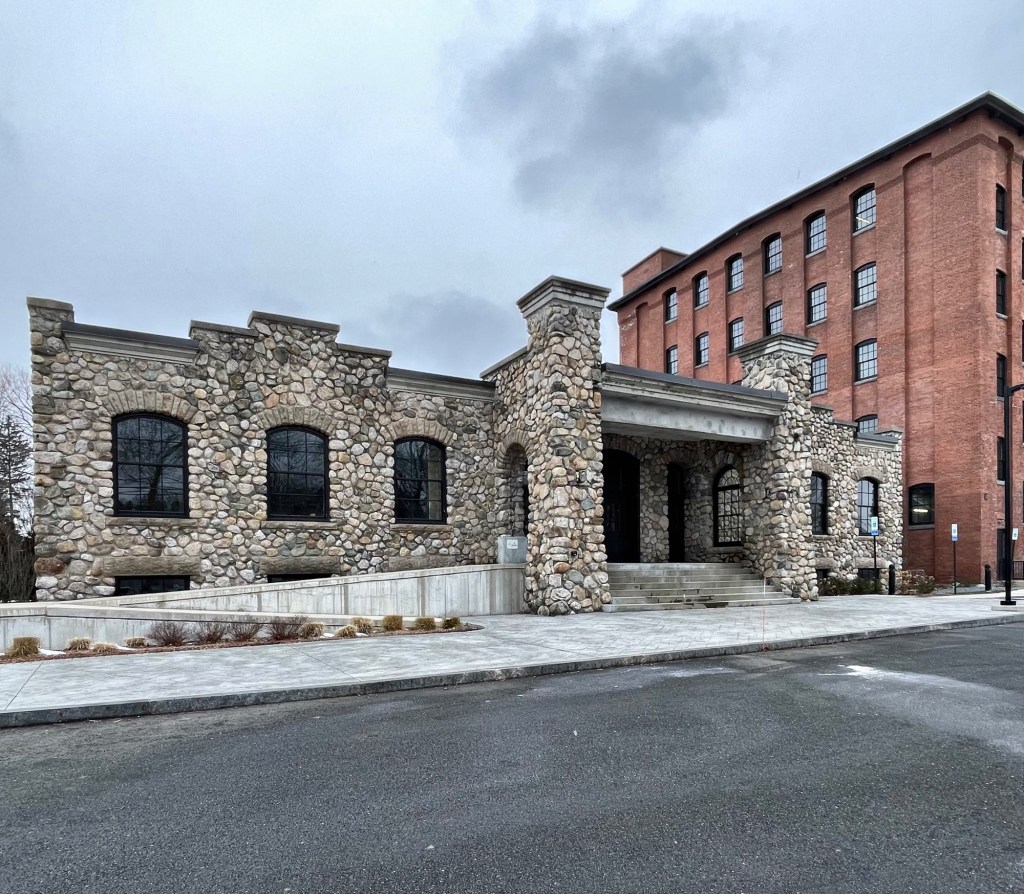
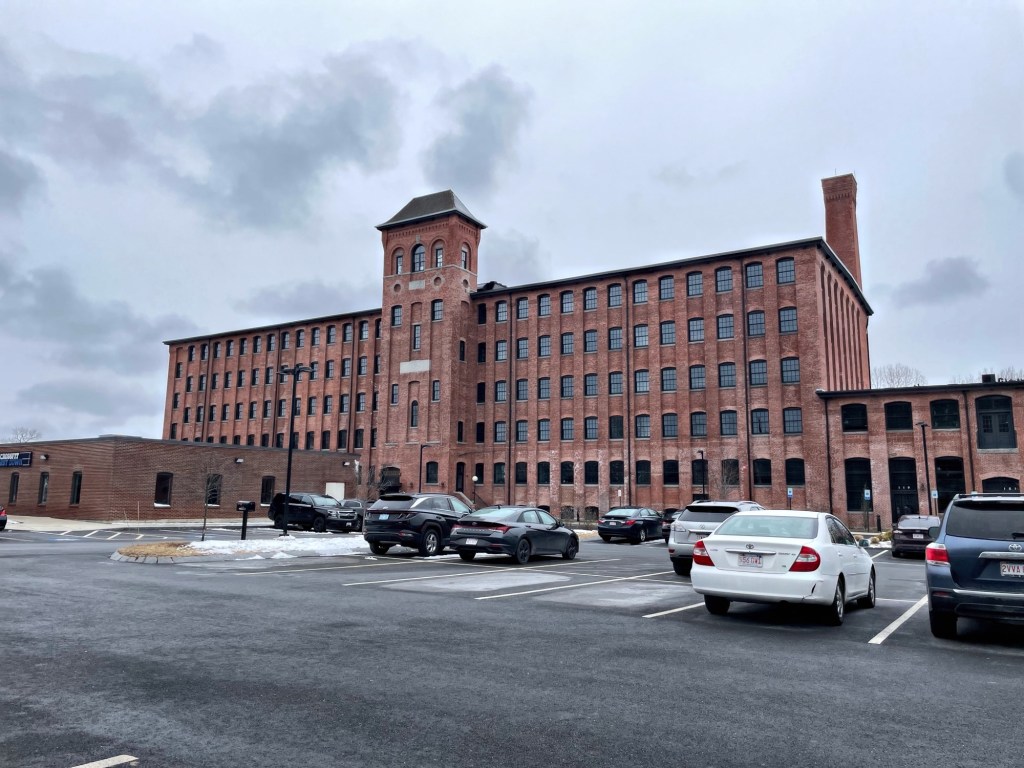
The Lowney Chocolate Factory is a historic industrial complex in Mansfield, Massachusetts and was established there after town officials took advantage of rail access provided by the Boston and Providence Railroad and enticed businesses to establish themselves in Mansfield. The Walter M. Lowney Company was a chocolate and candy business founded in Boston in the early 1880s by Walter M. Lowney, who started his business by manufacturing chocolate bonbons. The company built offices and factories in Boston, Montreal and here in Mansfield, where they would ship out boxed sweets to stores all over the country. The Mansfield factory was designed by the architectural and engineering firm of Dean & Main in 1903. The firm was
comprised of partners Francis W. Dean and Charles T. Main, who had offices in Boston and specialized in mill design and engineering from 1893 to 1907, originally designing Lowney’s Boston factory in the North End. A later fieldstone addition was added in 1910 and housed the company’s office and shipping facilities. After Walter Lowney died in 1921, the Walter M. Lowney Company continued to operate under the ownership of Lowney’s wife. In the 1930s the factory property was wholly purchased by the Rexall Drug Company, who renamed the Lowney company, United Chocolate Refiners. The Mansfield factory was later owned by Nabisco to make chocolate for oreo cookies for a number of years until it again changed hands. The factory had been largely empty since 2010 until it was recently converted to mixed-income housing (the best kind of redevelopment)! Who doesn’t love a happy ending?