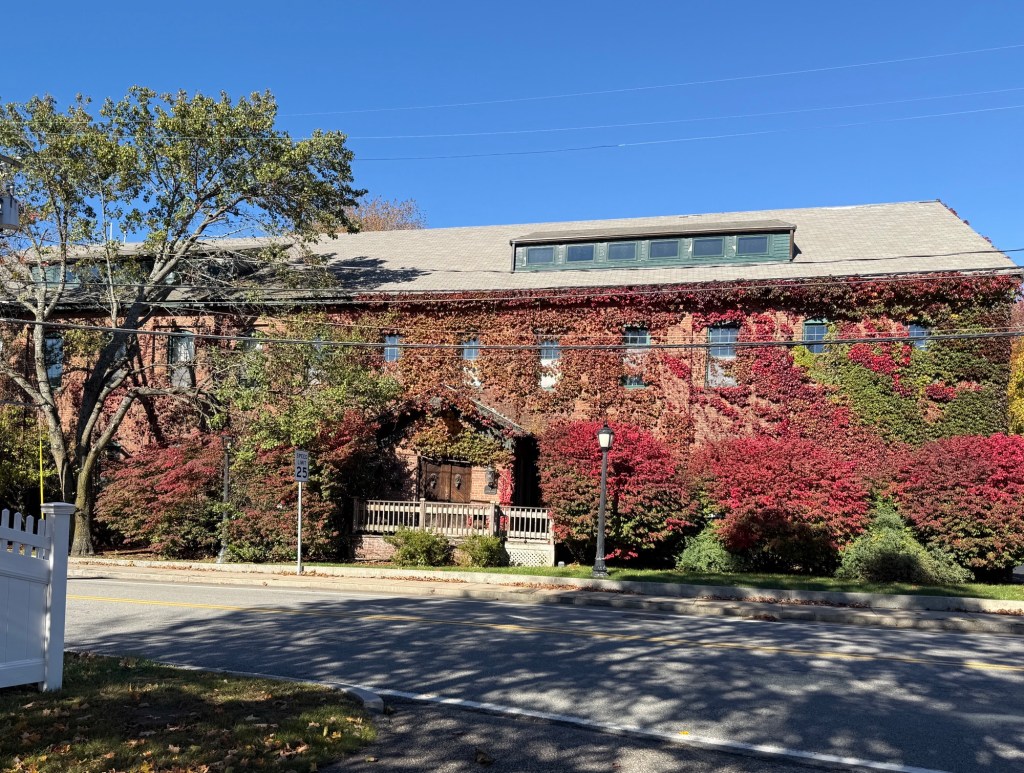
Morse Thread Mill // 1894

On Central Street, where Queset Brook dams into Morse Pond, the Morse Thread Mill in Easton, Massachusetts, is a stellar example of late 19th century industrial architecture executed in brick. This site was long-owned by members of the Morse family, beginning in the 1830s when Edward James Whiting Morse (1809-1865) erected a wooden thread mill, creating a small industrial village in South Easton. His heirs inherited the family business and oversaw steady growth until a fire in 1894 destroyed the old mill. They rebuilt in fire-proof brick that same year and remained in operation for a few years until 1900 when Alfred B. Morse, the grandson of Edward, sold the business to a larger manufacturing firm. This 1894 brick factory was later used by the Easton Machine Company, who manufactured machinery and the Morse Automobile from 1902-1914, the work of Alfred. After later industrial use, the building sold to a developer who converted the building to a residence and office in the 1990s, maintaining its unique charm and significance to the community.

Lapham Woolen Mill // 1879

I have gotten a lot of requests recently to feature an old New England mill town, and I wanted to highlight a lesser-known one, so here is Millbury, Massachusetts! This gorgeous mill building was constructed between 1879-1919, impacted by over forty years of growth and design. The Lapham Woolen Mill is the largest and most intact 19th century industrial building in Millbury and sits in the middle of Bramanville, an industrial village in the town, off Singletary Brook, a branch of the Blackstone River. The Lapham Woolen Mill was built on the location of the former Burbank paper mills, which were in operation in Bramanville between 1775-1836. The Lapham Woolen Mill was started in the mid-1870s by Mowry A. Lapham, who oversaw the company’s growth after the Civil War, manufacturing clothing and other woolen goods. After Mowry’s death, the company’s pollution into the brook got the best of them and they disbanded, selling it. The mill was then purchased by Josiah and Edward Mayo, and their business partner Thomas Curtis. The group renamed the existing business the Mayo Woolen Company. The complex was occupied by Steelcraft Inc., a manufacturer of medical supplies, until recently. The building’s future was threatened until 2020, when a proposal to restore the old mill, and add new housing on the site was proposed. Fingers and toes are crossed to see this gorgeous building restored!