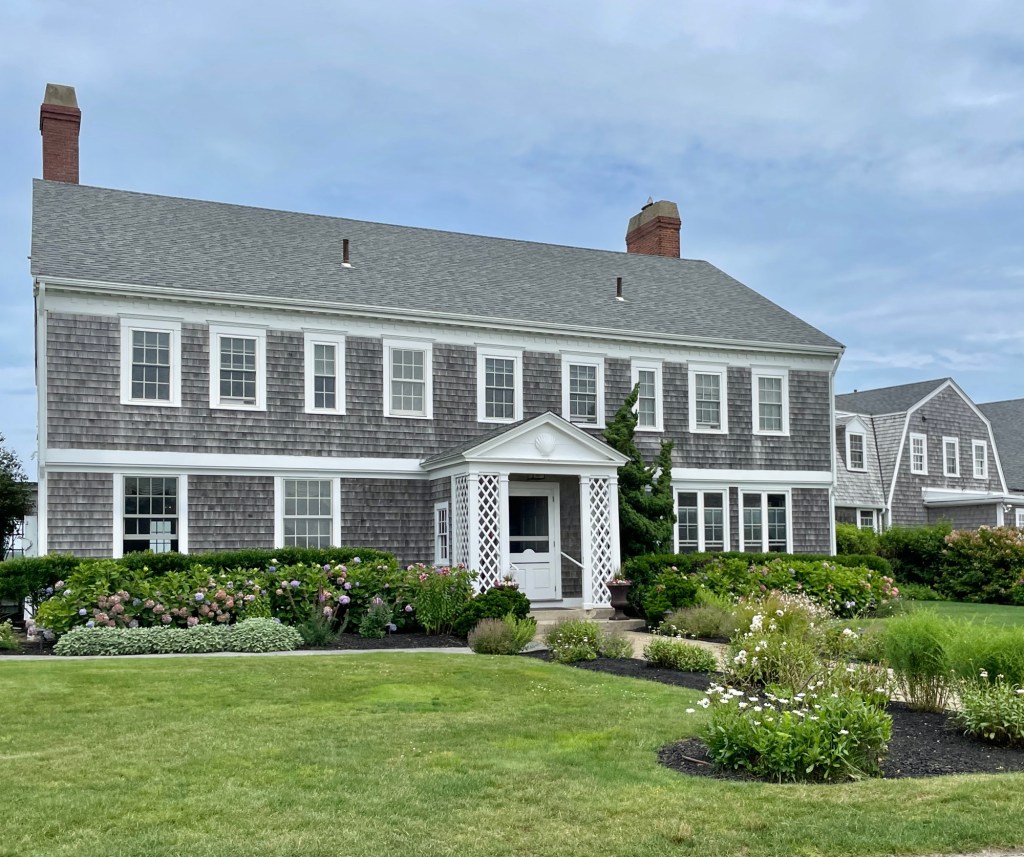
Across Sippican Harbor from the town village of Marion, Massachusetts, the Kittansett Club property provides some of the best views and recreation in town. The Kittansett Club was founded by a group of members of the Beverly Yacht Club in 1922, who at the time held some recreational uses on the tip of this peninsula, known as Butler’s Point. Kittansett was derived from two Native American words, “Kittan,” said to mean “sea,” and “Sett,” said to be a common word-ending for “near”, roughly translating to “near the sea”. The wealthy group of men who developed the peninsula with assistance from the Olmsted Brothers, landscape architects, totaling over 180 acres, a substantial portion was leased to the golf club while approximately 16 house lots were retained for those fronting the cost, to members of the club to help defer the expenses of developing the course. In 1925, the Kittansett Club undertook the construction of what became known as the “Winter House,” (the current clubhouse) which was a winterized building with heating and plumbing. The Colonial Revival building is sited so elegantly at the tip of Butler’s Point, looking out at Buzzards Bay. The buildings and grounds were heavily damaged by the Hurricane of 1938 and the property would soon after serve America’s defensive interests during World War II, when all of Butler’s Point was taken over by a Coast Artillery Unit. More than 100 G.l.s were billeted in Winter House. Today, the exclusive club is open to members and private events.