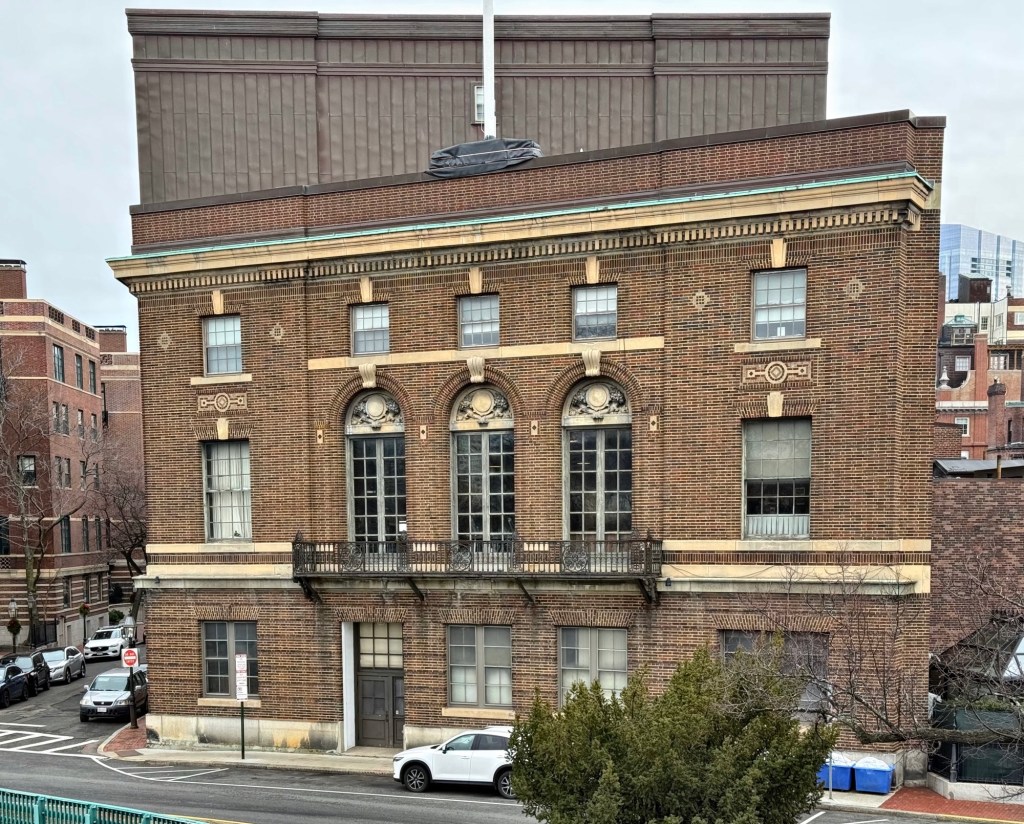
Union Boat Club Building // 1910

The three-story, masonry Union Boat Club facing Storrow Drive and the Charles River, was constructed in 1910 to replace a wood-frame boathouse the club had built in 1870. The western edge of Beacon Hill changed drastically when in 1910, the Charles River Dam regulated the water along the Charles River, removing its tidal nature. In the years before this, the Charles River Embankment was laid out as parkland along the riverfront, which in turn, made it so the original Union Boat Club site was no longer on the water’s edge. The original boathouse was moved to the Esplanade and this new clubhouse, with its high-fired brick exterior and cast stone trim, was designed in the Classical Revival style by the firm of Parker, Thomas & Rice on the original boat house site. The organization expanded its offerings, adding handball and squash to its members in the new, 1910 building. In 1928, a boxy rooftop addition was constructed adding two more squash courts which was later raised in height and covered in metal in 1996.
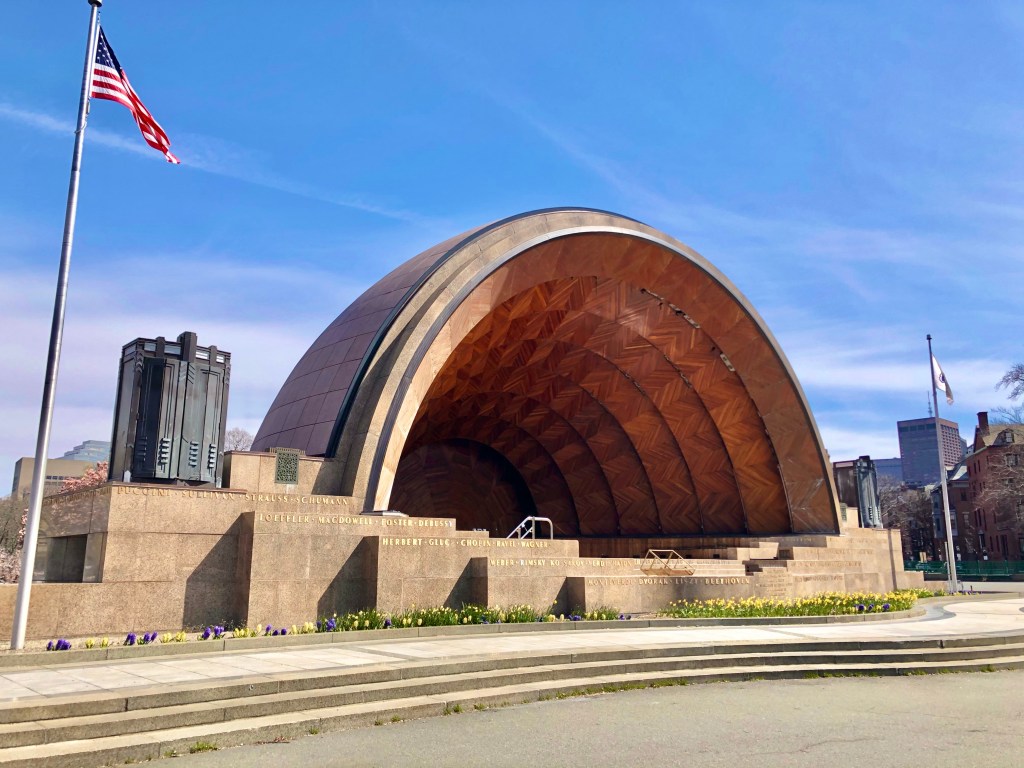
Hatch Memorial Shell // 1940

Located at the Charles River Esplanade in Boston, the Hatch Memorial Shell has long been an iconic landmark and meeting place for Bostonians and tourists alike. Built in 1940, this outdoor amphitheater structure replaced an earlier 1920s shell, envisioned by Arthur Fiedler, the first permanent conductor of the Boston Symphony Orchestra. Construction began on the first shell in 1928 and Arthur Fiedler conducted the first Boston Pops concert there on July 4, 1929, followed by a month of concerts during that first summer, a tradition that has continued to this day. A second temporary shell was constructed of metal in 1934, which was unsatisfactory for the famous orchestra. In 1940, the construction of the new music shell took place, donated by benefactor Maria Hatch, to build a memorial for her late brother, Edward, who it is named after to this day. The permanent shell was designed by Richard J. Shaw, a Boston architect known for designing churches. The Art Deco design, with intricate woodwork adorning the interior and a terrazzo tile roof, was dedicated on July 2, 1940, just in time for Independence Day celebrations.