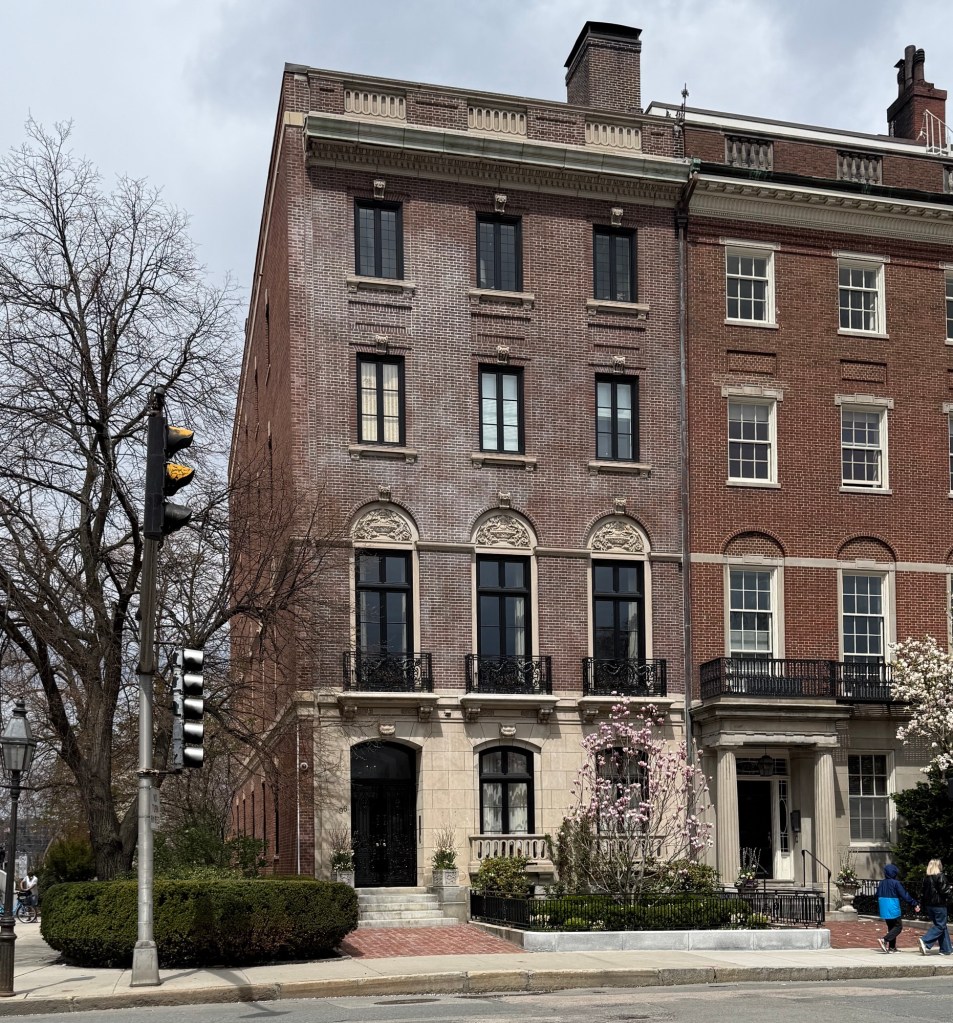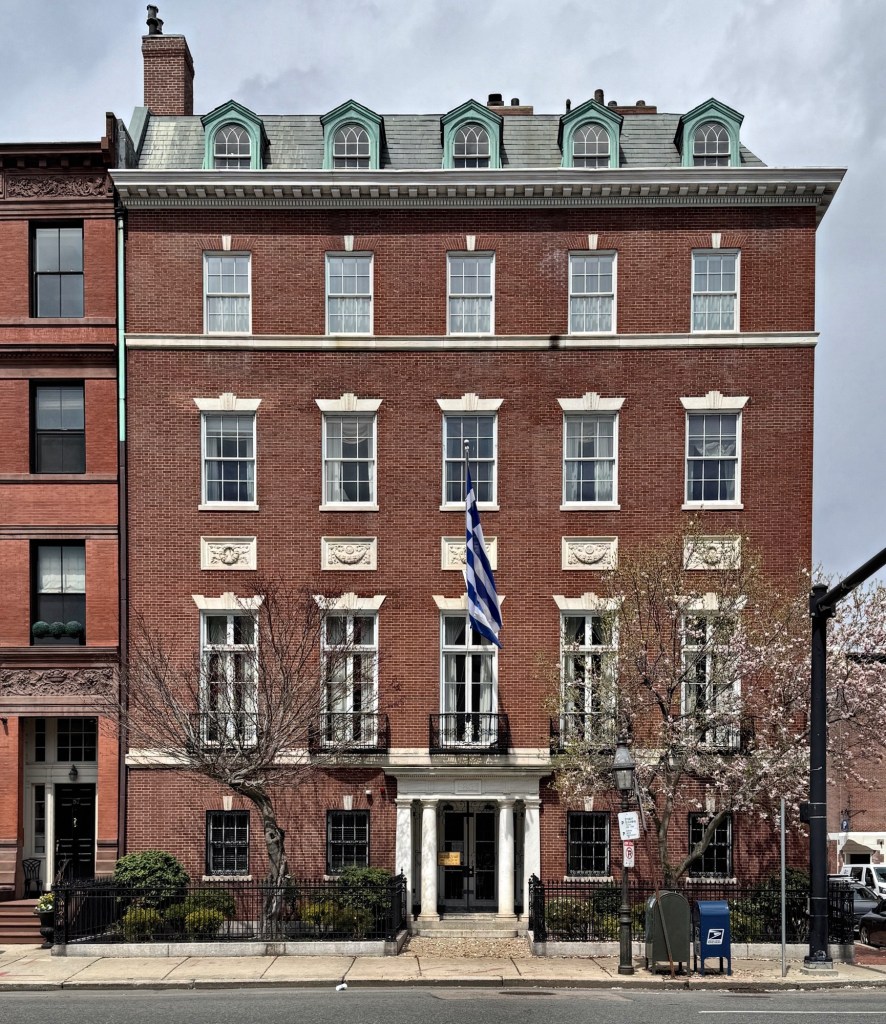
The David Sears Mansion (now the Greek Consulate) at 86 Beacon Street in Boston, is a large, architecturally significant example of a mansion built in Beacon Hill in the early 20th century for a member of a prominent local family. In 1910, Dr. Henry Francis Sears (1862-1942), who had inherited his father’s property on this site, that included two townhouses and a double-stable at the rear, demolished the two houses and built a new mansion on the double lot. The architectural firm of Wheelwright & Haven was hired to furnish plans, which resulted in the symmetrical, four-story mansion with fifth floor mansard punctuated by dormers. The brick structure is trimmed with marble, including at the entry portico, keystones and headers at the windows, and the ornamental panels between the second and third floors in alternating wreath and swag motifs. In the 1920 census, Henry F. Sears lived here with his wife Jean, their four children, his older brother David Sears, and nine domestic servants. After Dr. Sears’ death in 1942, the property was conveyed to the Charlotte Cushman Club of Boston, a boarding house for touring actresses needing respectable, inexpensive, safe lodgings as single women performers were unwelcome in many hotels. In the 1950s, the property became the Katherine Gibbs School, a satellite campus of the higher education institution founded by Katharine Gibbs with the goal to provide educational opportunities to women, eventually becoming Gibbs College. The most-recent chapter of the mansion’s history began in 1993 when the building became home to the Consulate General of Greece in Boston, with the consulate occupying the first two floors of the interior, with condominium units above.