David Sears Mansion – Greek Consulate // 1911

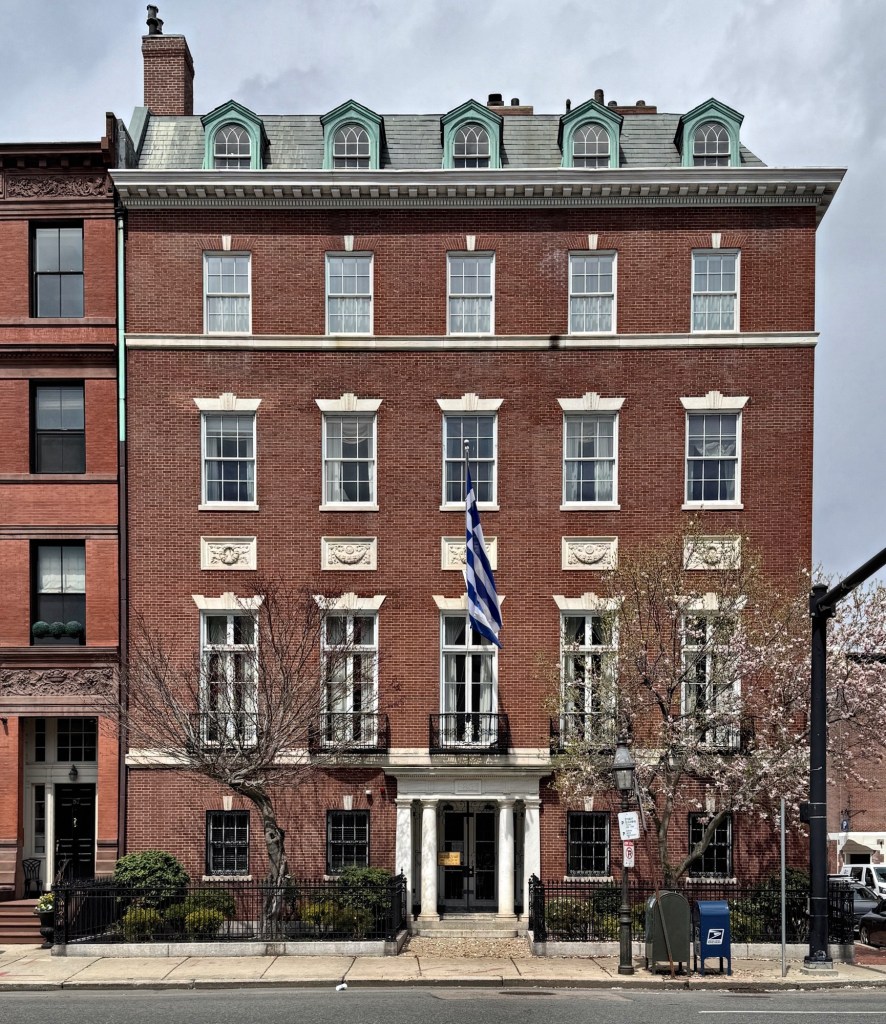
The David Sears Mansion (now the Greek Consulate) at 86 Beacon Street in Boston, is a large, architecturally significant example of a mansion built in Beacon Hill in the early 20th century for a member of a prominent local family. In 1910, Dr. Henry Francis Sears (1862-1942), who had inherited his father’s property on this site, that included two townhouses and a double-stable at the rear, demolished the two houses and built a new mansion on the double lot. The architectural firm of Wheelwright & Haven was hired to furnish plans, which resulted in the symmetrical, four-story mansion with fifth floor mansard punctuated by dormers. The brick structure is trimmed with marble, including at the entry portico, keystones and headers at the windows, and the ornamental panels between the second and third floors in alternating wreath and swag motifs. In the 1920 census, Henry F. Sears lived here with his wife Jean, their four children, his older brother David Sears, and nine domestic servants. After Dr. Sears’ death in 1942, the property was conveyed to the Charlotte Cushman Club of Boston, a boarding house for touring actresses needing respectable, inexpensive, safe lodgings as single women performers were unwelcome in many hotels. In the 1950s, the property became the Katherine Gibbs School, a satellite campus of the higher education institution founded by Katharine Gibbs with the goal to provide educational opportunities to women, eventually becoming Gibbs College. The most-recent chapter of the mansion’s history began in 1993 when the building became home to the Consulate General of Greece in Boston, with the consulate occupying the first two floors of the interior, with condominium units above.
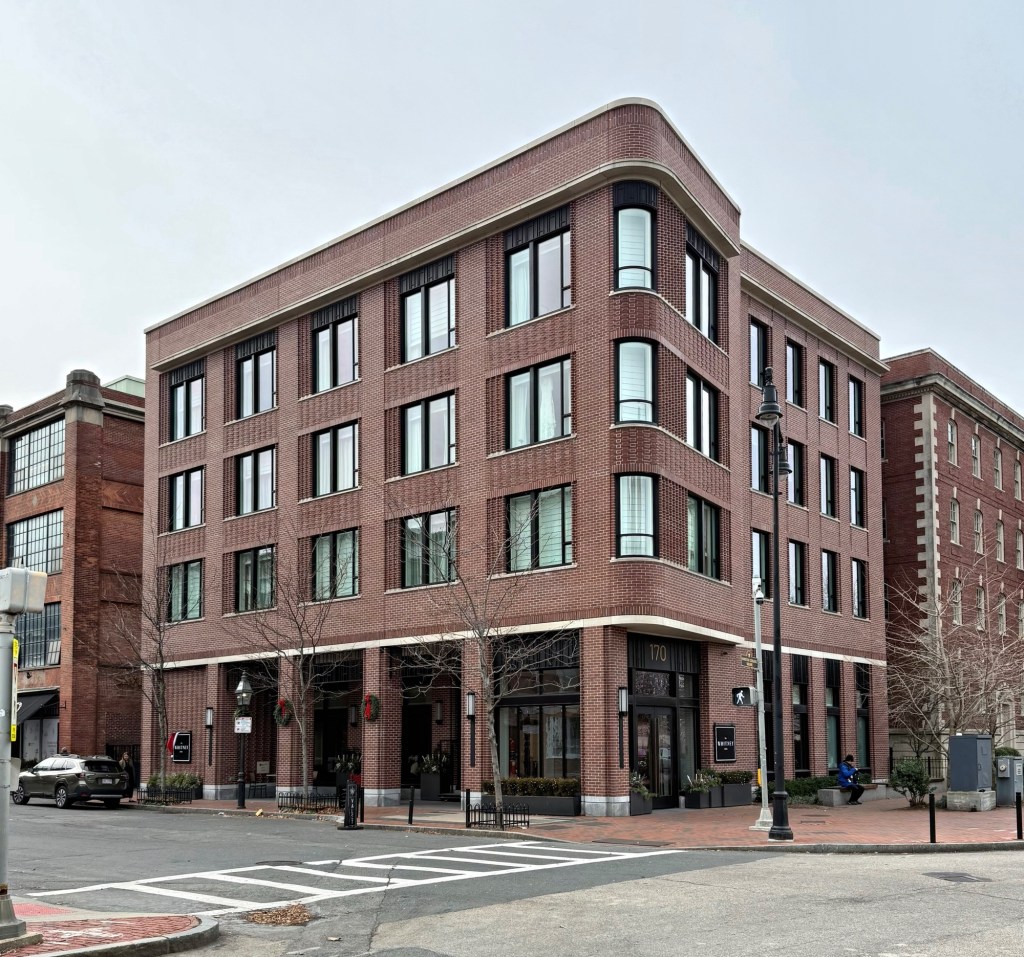
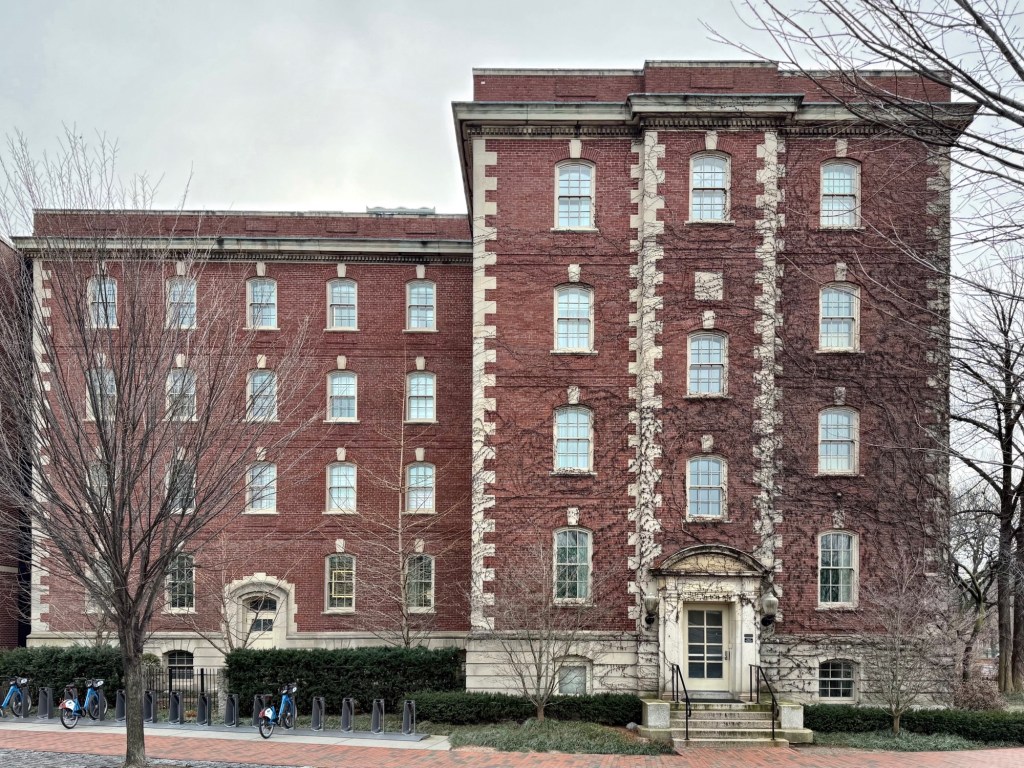
The Whitney Hotel // 2019

The Whitney Hotel on the iconic Charles Street in Beacon Hill, represents the best of contextual infill construction and good design. Completed in 2019, the hotel was built on an open lot adjacent to the 1909 Eye and Ear Infirmary Nurse’s Residence that sold in 2016. Developers hired Boston architectural design firm of Hacin to construct the new structure as an addition to the 1909 building. As the building is located within the Historic Beacon Hill District, a local commission closely reviewed plans to ensure the new building would blend old and new on the site, while being its own landmark on the prominent corner lot. The scale, massing, materials and rhythm of windows ties the 2019 contemporary wing with the 1909 building, while the brick layering styles, window types and unique rounded corner read clearly contemporary. The hotel is named after Henry Melville Whitney (1839-1923) a Boston politician and businessman who founded the West End Street Railway Company, which preceded the Metropolitan Transit Authority and today’s MBTA. The Whitney Hotel serves as an important visual anchor and entrance into Beacon Hill, enlivening the street and neighborhood through high-quality design.

Eye and Ear Infirmary Nurse’s Residence // 1909

The Massachusetts Charitable Eye and Ear Infirmary (now Massachusetts Eye and Ear) began in 1824 by doctors, Edward Reynolds and John Jeffries II as a free weekly clinic they operated out of a rented room in Boston’s Scollay Square. At the time, Boston was an immigration destination for laborers arriving from Europe, among whom occupational injuries were common, but affordable medical care was scarce. With an increasing population and increasing medical needs, the clinic expanded rapidly. In 1849, a new clinic was built on Charles Street, just south of the West Boston Bridge (now Longfellow Bridge) from plans by Edward C. Cabot. As demand grew in the late 19th and early 20th centuries, the hospital sought expansion and built a new facility farther north on Charles Street, closer to Massachusetts General Hospital. The 1849 building was deemed excess and demolished, soon to be replaced by the current building on the site, the Nurse’s Dormitory. Built in 1909, this handsome, four-story brick and stone structure was designed by the office of Page and Frothingham in the Colonial Revival style, which contributes to the architectural character of Beacon Hill. The building provided much-needed residential space for nurses and other staff people who worked at the new Eye and Ear Infirmary a few blocks away. The building was later converted into an inn, the John Jeffries House (after one of the founders of the infirmary) until 2016, when the site closed and was converted into a wing of the new Whitney Hotel by Hacin Architects!

Walker Building // 1891

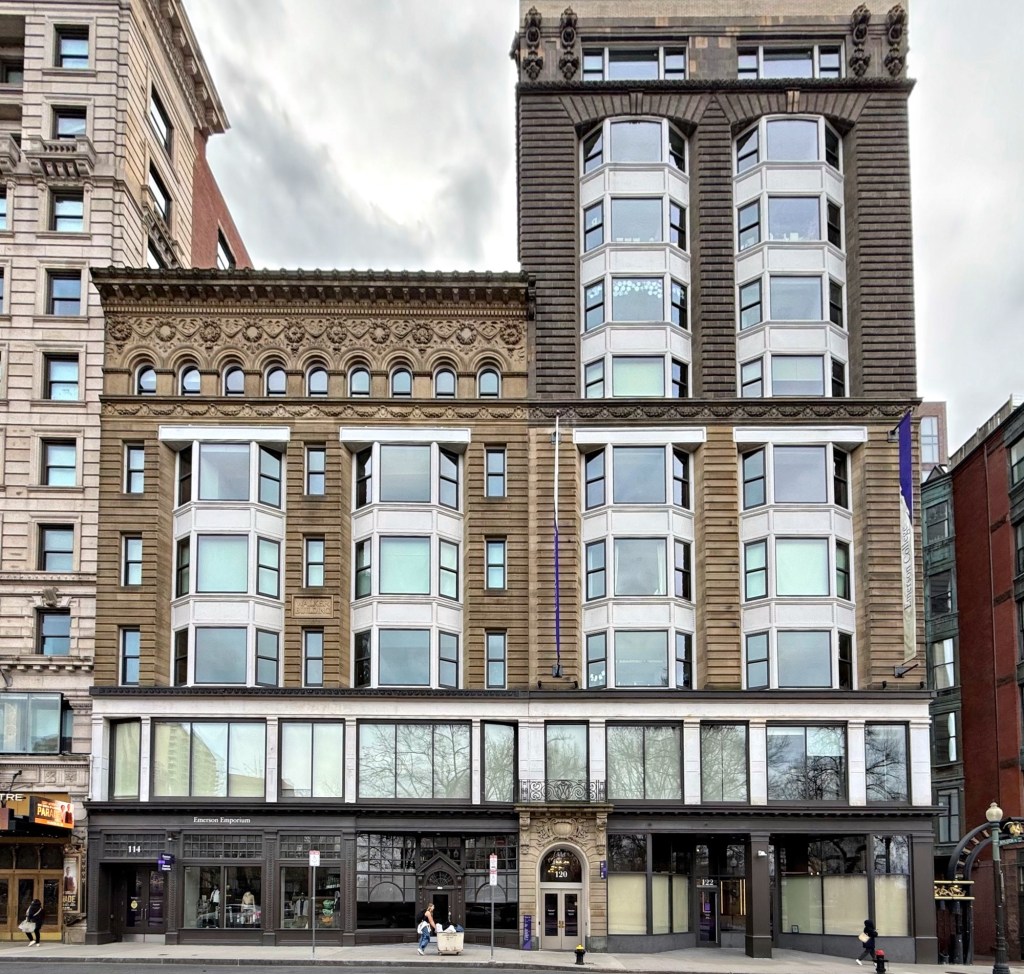
On Boylston Street overlooking the Boston Common, this historic building with two distinct parts is not photographed as much as some of its neighbors, but it is an important visual reminder of the period of growth and development in the city in the late 19th and early 20th centuries. This is the Walker Building, an early office building that was constructed beginning in 1891 in two phases by owner Joseph W. Walker. Mr. Walker hired the architectural firm of Winslow & Wetherell to design the building, which was finished in the Romanesque Revival style with a notable cornice with nine-bay arcade of arched windows and ornate wreath and swag motifs. A major tenant in the building was the Boston office of the S. S. White Dental Manufacturing Company, the largest dental manufacturing company in the world. Less than a decade after the six-story Walker Building opened, Joseph Walker purchased and razed the parcels nextdoor and again hired the same firm (at this time renamed Winslow & Bigelow), to expand the Walker Building, building a ten-story addition in a similar style. The second Walker building housed piano company showrooms and offices along with professional offices of numerous architects and professionals. The Walker Building is now owned by Emerson College, and is used as classrooms, computer labs, and study spots for students with the dining center and bookstore in the former retail spaces.

Faxon Block // 1886

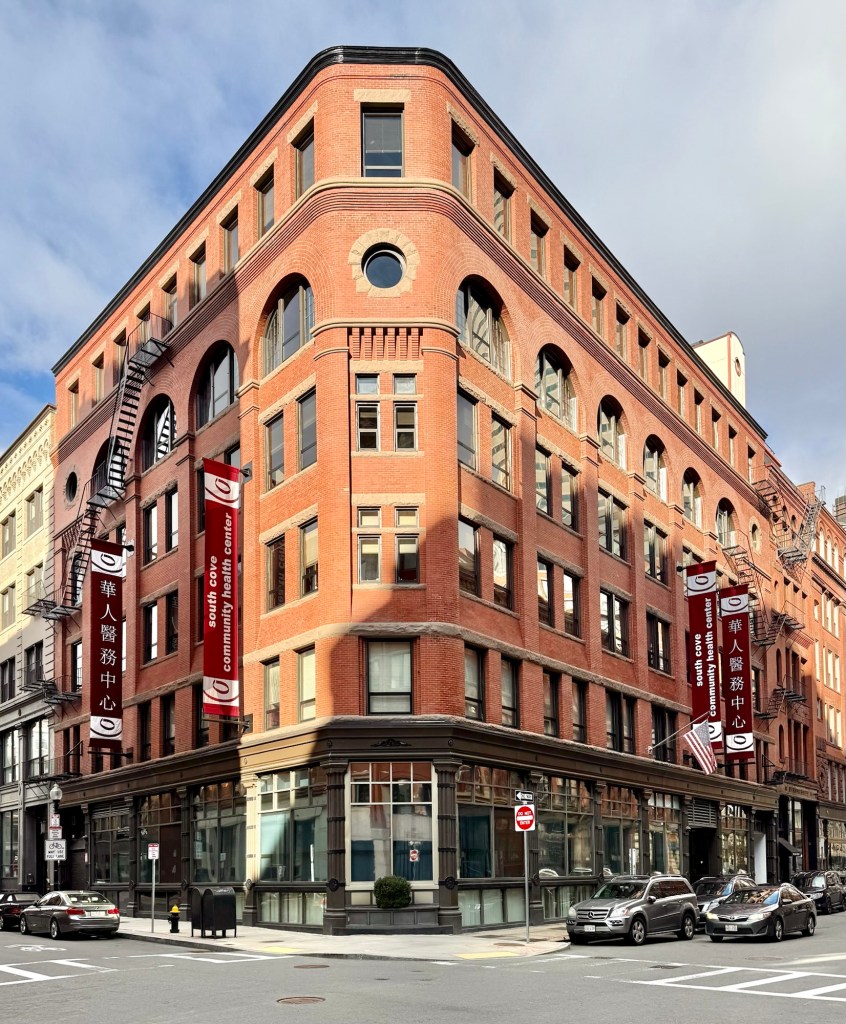
This impressive commercial block is prominently sited at the corner of Beach and South streets in Boston’s Leather District, a wonderful enclave of late 19th and early 20th century mercantile buildings, historically centered around the leather and shoe-making industries. Like many in this block, the building was developed by the Faxon Brothers, some of the major developers of this district and areas of Quincy. Also like many other buildings in the Leather District, the block was designed by 1886 in the Romanesque Revival style, constructed of brick and brownstone with a clipped corner and Syrian arches and an oculus window at the fifth floor. The building was designed by relatively unknown architect, John H. Besarick and today houses professional offices.

Broad Street Association Building // 1805

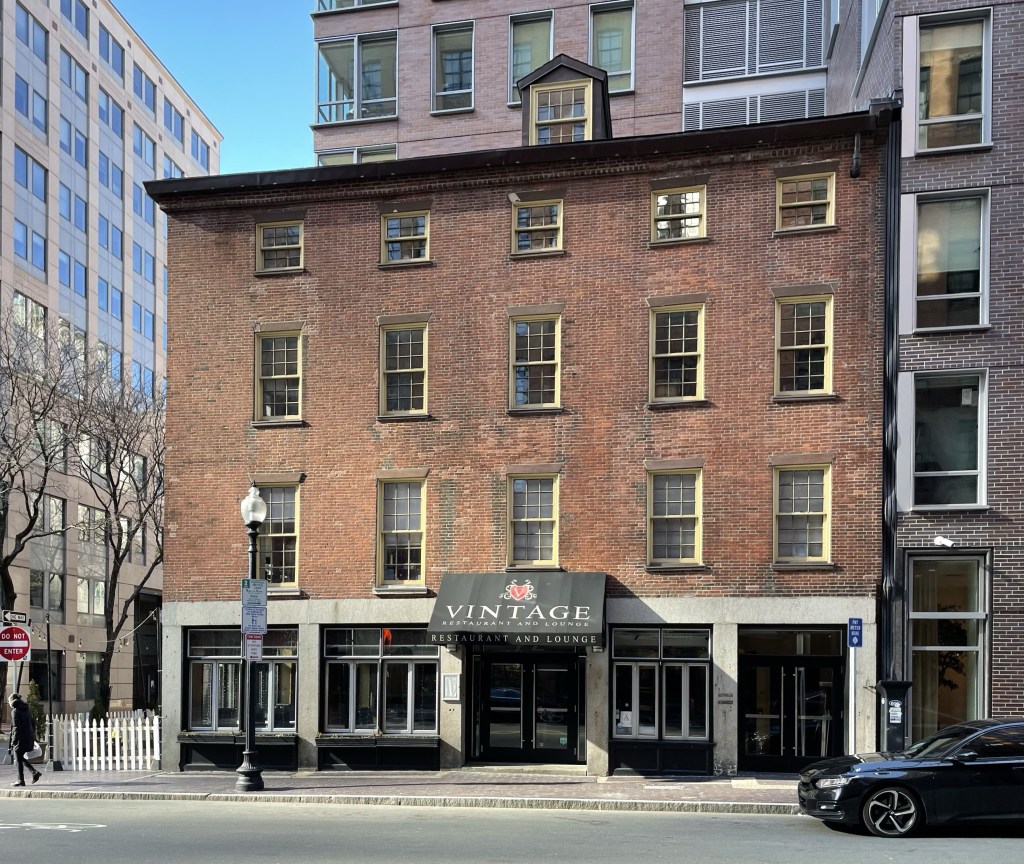
One of the few remaining Federal period buildings in Downtown Boston is this survivor located on Broad Street, one of the best streets in the city! The building was constructed for the Broad Street Association, which was made up of members: Uriah Cotting, Harrison Gray Otis, Francis Cabot Lowell and other prominent Boston entrepreneurs with the goal to upgrade Boston’s waterfront south of Long Wharf which comprised of an outdated system of individual wharves. The organization hired the esteemed Boston architect, Charles Bulfinch to furnish plans for the building, of which they paid him $100. While this modest example of the Federal style is not Bulfinch’s best work, is is notable as he was largely responsible for changing the architectural face of Boston, not only through own designs, but also through influence on other architects and builders of the time. This building was long owned by Francis Cabot Lowell and was rented out to commercial ventures, including some of the later decades of the 1800s when it was occupied by C. D. Brooks, a maker of pickles and preserves. The building was restored by CBT Architects in 2005 as part of a larger redevelopment of the block which includes a mid-rise apartment building, Folio.