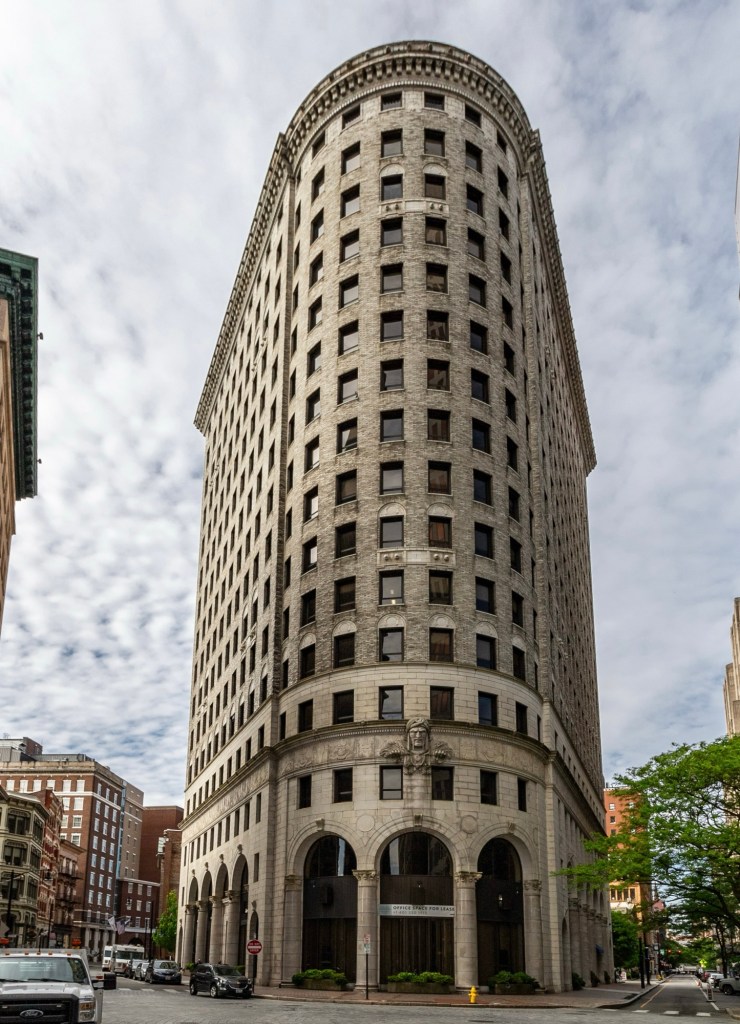
Turk’s Head Building // 1913

An iconic building in Downtown Providence, the aptly named Turk’s Head Building, stands at a prominent site at the intersection of Weybosset and Westminster streets. The flatiron building was built in 1913 by the Brown family as an investment property, replacing a series of small early 19th century commercial buildings on the site. One of the original buildings on the site was owned by shopkeeper, Jacob Whitman, who mounted a ship’s figurehead above his store depicting the head of an Ottoman warrior. His store was called, “At the sign of the Turk’s Head.” When the Brown family redeveloped the site, they worked with the New York architectural firm of Howells & Stokes, who designed the new skyscraper of white brick with stone trim and a massive Turk’s head at the center of the curved facade, reminiscent of the site’s history and original figurehead metaphorically on the new building’s “prow”. The building has served as an important visual landmark to those entering Downtown from the East Side/College Hill area.
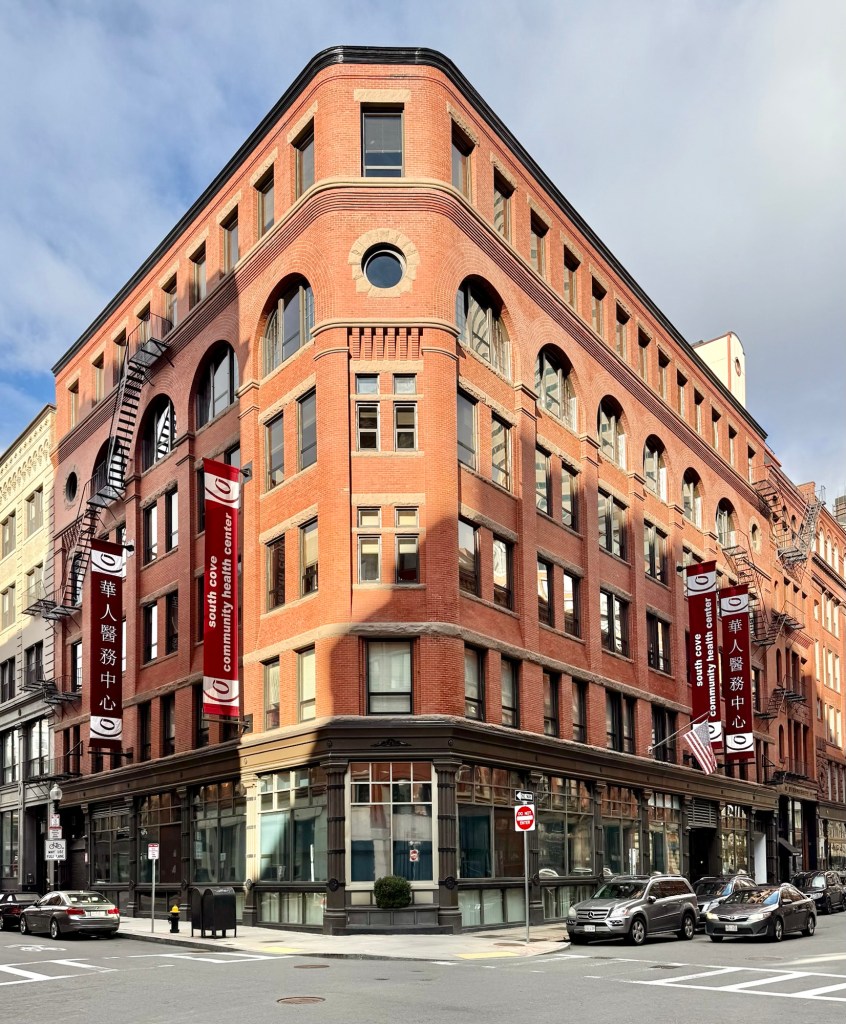
Faxon Block // 1886

This impressive commercial block is prominently sited at the corner of Beach and South streets in Boston’s Leather District, a wonderful enclave of late 19th and early 20th century mercantile buildings, historically centered around the leather and shoe-making industries. Like many in this block, the building was developed by the Faxon Brothers, some of the major developers of this district and areas of Quincy. Also like many other buildings in the Leather District, the block was designed by 1886 in the Romanesque Revival style, constructed of brick and brownstone with a clipped corner and Syrian arches and an oculus window at the fifth floor. The building was designed by relatively unknown architect, John H. Besarick and today houses professional offices.

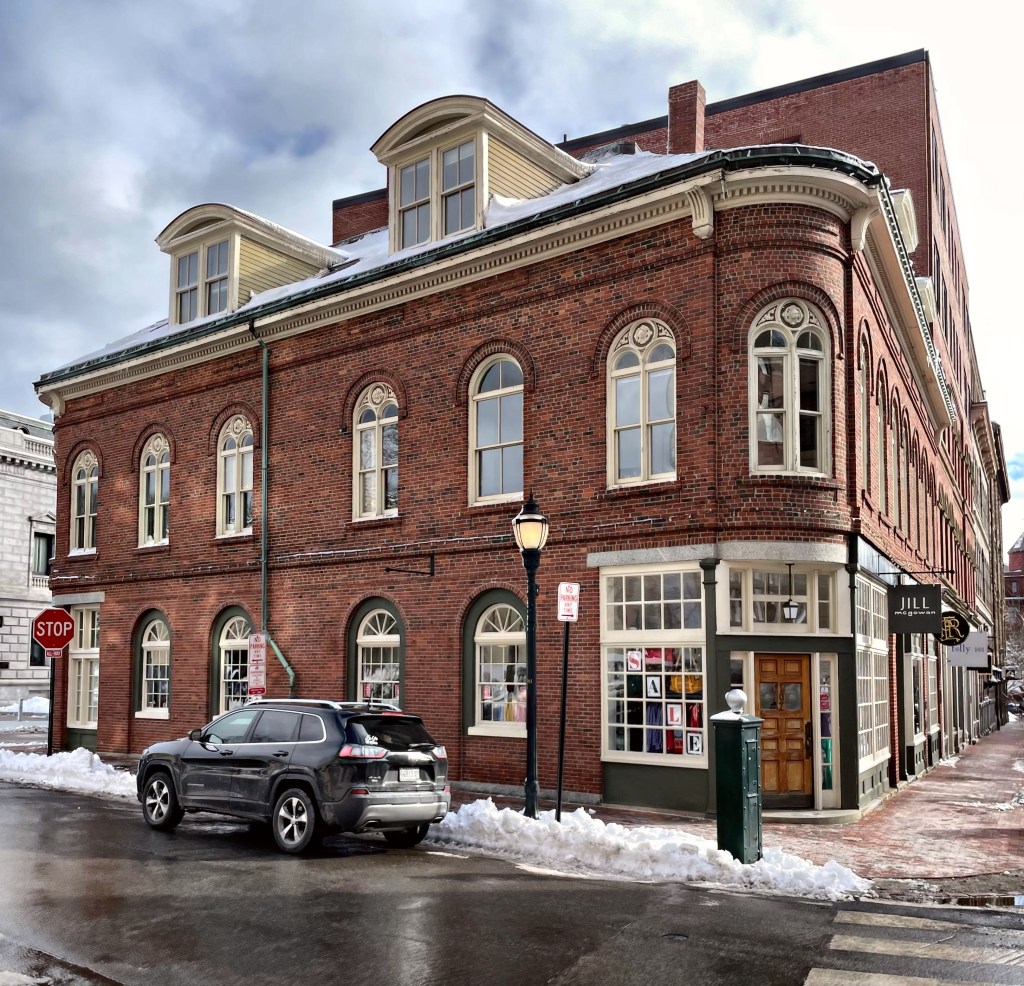
Printer’s Exchange Building // 1866

Why is commercial architecture from the second half of the 19th century so perfect? This structure in Downtown Portland is known as the Printer’s Exchange Building and was built in 1866, amongst the ashes of the buildings lost in the Great Fire of 1866. Charles Quincy Clapp is credited as the designer of the structure, which is Italianate in style with the paired round arched windows set into larger openings. The rounded corners are a really subtle but splendid touch in the design. The building got its name as it was home to the Eastern Argus and the Portland Daily Press, among other newspapers who rented the space from owner, Horatio Nelson Jose. I really like this one!