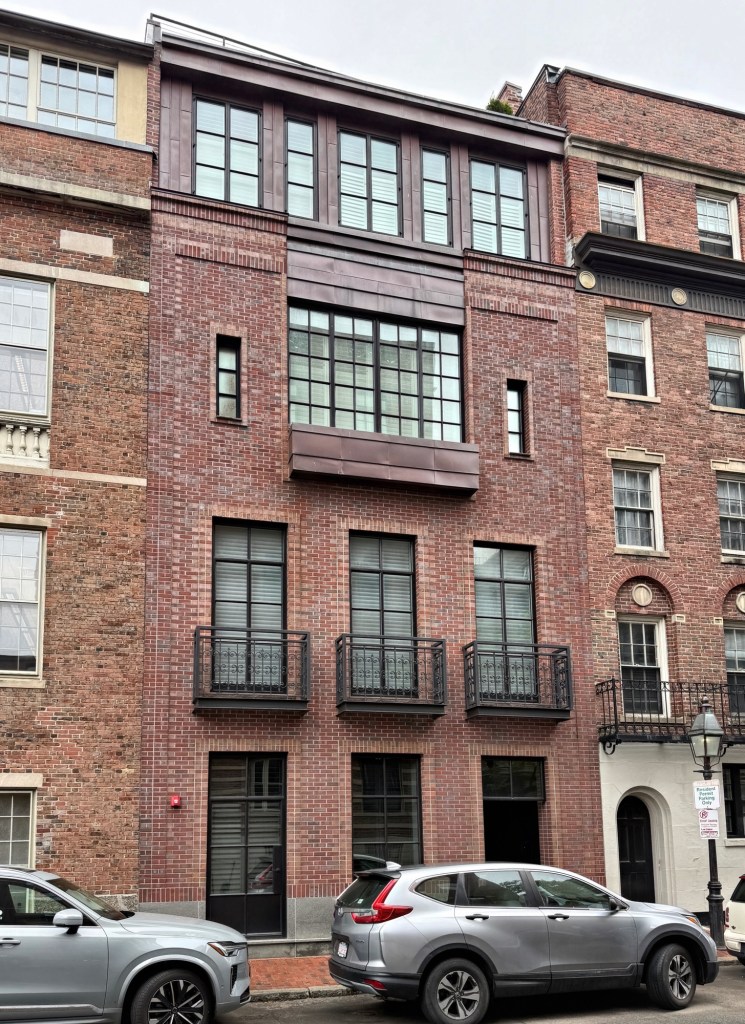
It is uncommon to see new construction in Boston’s historic Beacon Hill, but when it happens, hundreds of eyes closely scrutinize and analyze the design to belong in one of America’s most coveted neighborhoods. The rare opportunity for infill construction occurred on this site on Chestnut Street. An 1860s stable building that was later converted into a residence and art studio in the 1920s as Beacon Hill Flat gentrified as an artist enclave, was listed for sale in 2013. The townhouse featured leaded-glass windows and Tudor elements at the interior and on its rear facade and was purchased by a developer who, after inspection, noted structural deficiencies in the building. After inspections by the City and a request to the Beacon Hill Architectural Commission, it was approved for demolition, but the replacement design would be scrutinized. Hacin, architects, brought forward plans for a new townhouse, which employed similar materials, massing, and fenestration typical for this area of Beacon Hill, but with contemporary finishes that blends old with new in a way that the new structure does not stand out nor detract from the surrounding streetscape. Through hearings, details like the window types and color of the brick were analyzed to slightly deviate from the existing fabric of the neighborhood, distinguishing the new construction as contemporary. What do you think of this new townhouse on the Flat of Beacon Hill?