College Building, RISD // 1823 & 1936

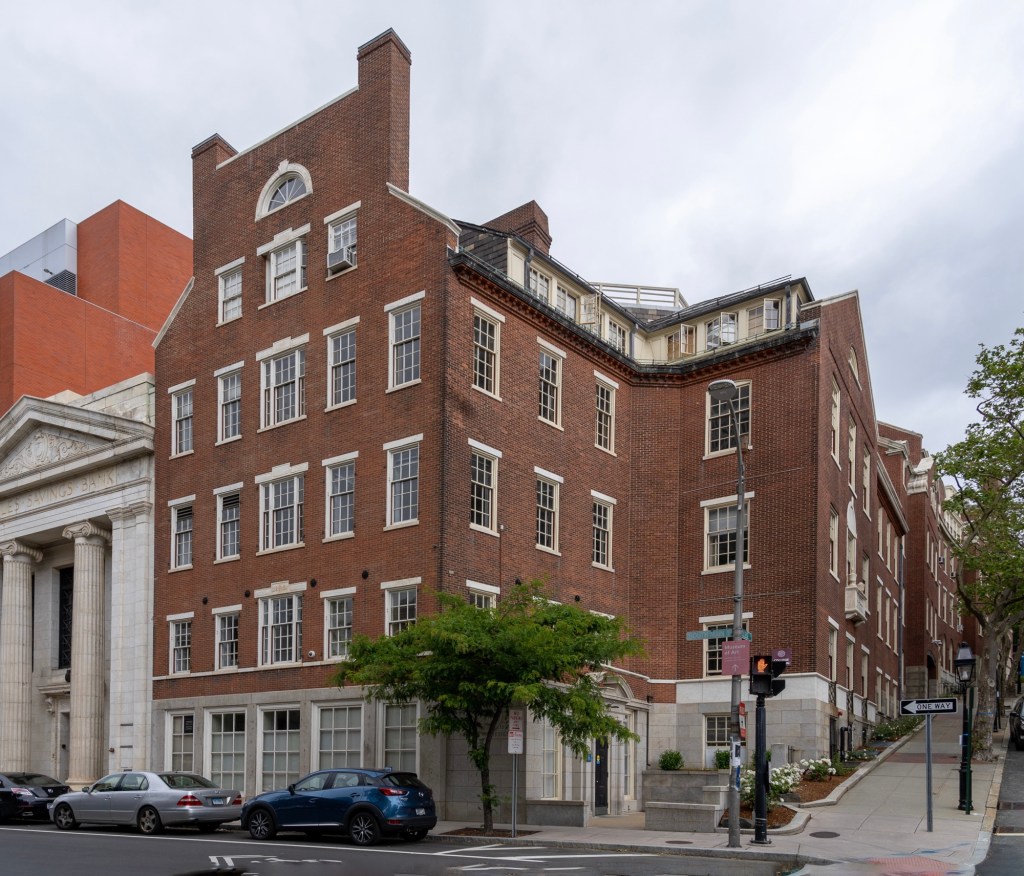
Spanning an entire city block on College Street between North Main and Benefit streets in Providence’s East Side, the College Building at the Rhode Island School of Design (RISD), is a valuable lesson in urban context and design. The building was constructed in 1936 from plans by the local architectural office of Jackson, Robertson & Adams, who had years prior, designed the Providence County Courthouse standing across the street. Designed in a plainer version of the Colonial/Georgian Revival style than the courthouse, the new College Building at RISD is broken up into multi-bay wings terracing up the slope of College Street, which breaks up the solid massing of the building in a pleasing way. Additionally, the designers incorporated the Federal period western wall of the 1823 Franklin House, an early 19th century hotel on the site. The result is possibly one of the first examples of a facadectomy in New England, if not the United States!

Benjamin Franklin College & Pauli Murray College, Yale University // 2017

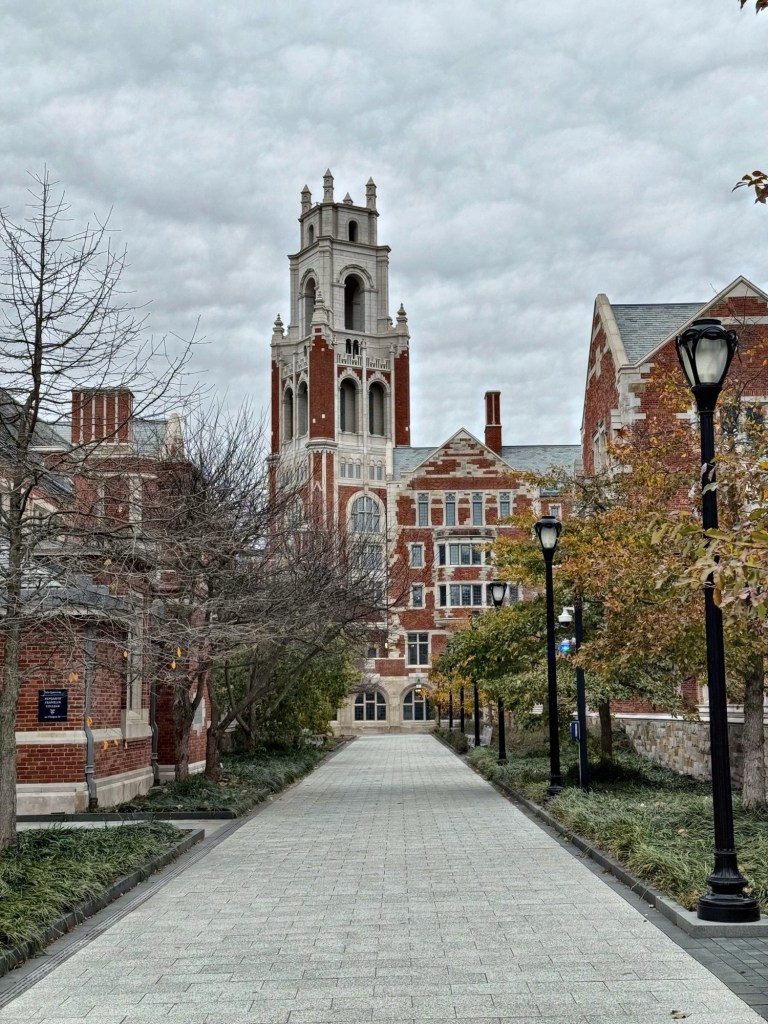
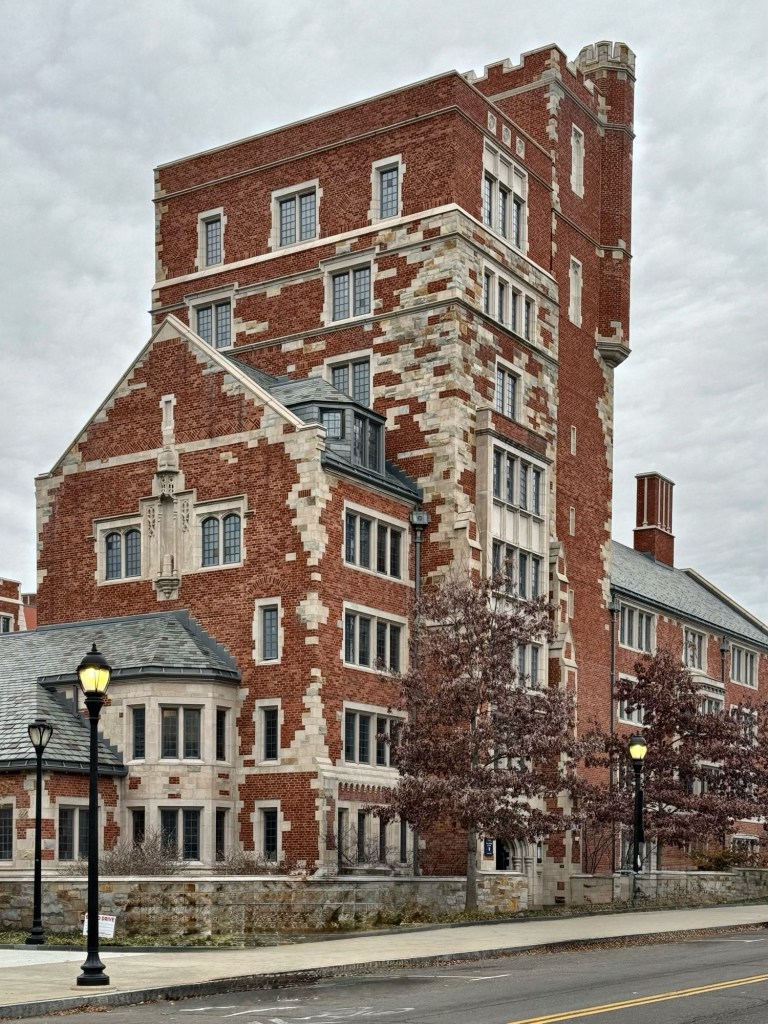
Opened in 2017, the two newest residential colleges at Yale University, Benjamin Franklin College and Pauli Murray College, became a case study in how contemporary buildings can honor traditional design while introducing 21st-century amenities. Designed by Robert A. M. Stern Architects (RAMSA), the two large dormitories reinforce Yale’s legacy of collegiate Gothic architecture while reading as new construction to the trained eye. The two buildings feature unique layouts to create enclosed courtyards and are stylistically designed as fraternal twins, similar in size and palette but each enjoying its own identity and organization. RAMSA architects were inspired by James Gamble Rogers’ 1930s Colleges at Yale, which (like at Harvard) were inspired by the college systems at Cambridge and Oxford in England which create enclosed quads or courtyards for students in self-contained housing. Like Rogers’ Neo-Gothic Yale buildings, the Franklin and Murray Colleges feature battlements, stained and leaded glass windows, iron gateways, towers, and hidden stone gargoyles. The two buildings are a tour de force of Traditional Architecture that blends new and old in all the best ways.

Wilson Chapel – Andover Newton Theological School // 2007

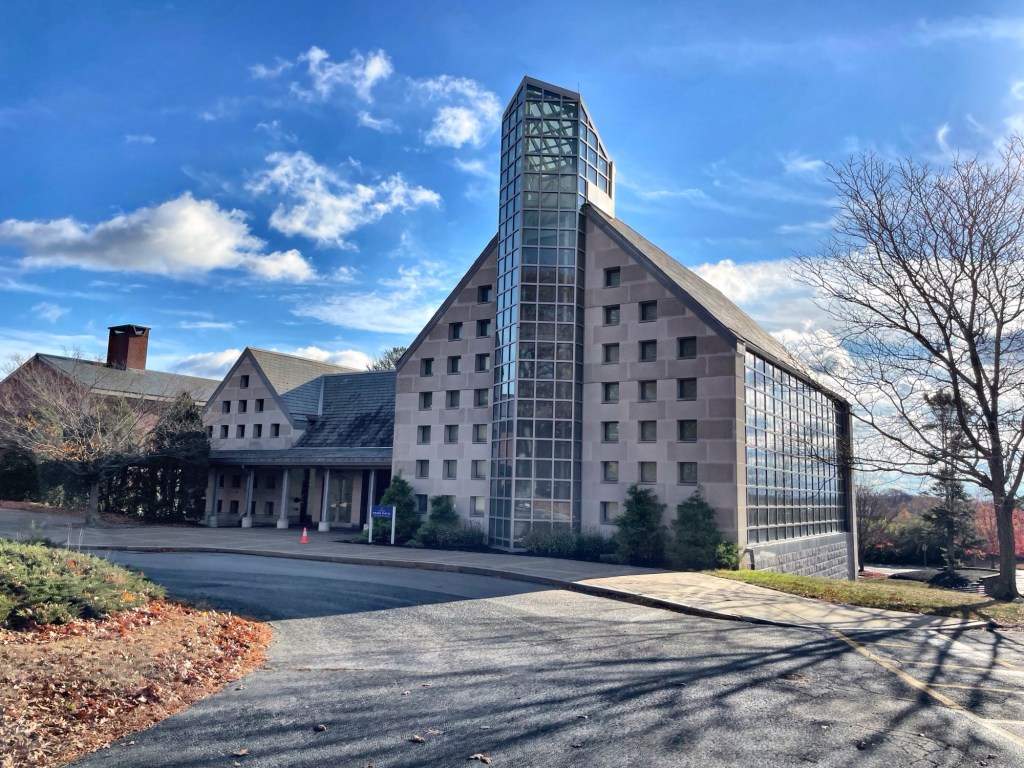
The last building constructed on the former Andover Newton Theological School in Newton, Massachusetts, was Wilson Chapel, located at the edge of the campus. The building is a modern interpretation of the traditional New England meetinghouse, and was completed in 2007 from plans by Context Architecture. The limestone building is punctuated by a grid of square punched windows and raised panels with the primary facade dominated by a glass tower, resembling the more traditional steeple. To me, the building does an excellent job at respecting the basic forms of a New England chapel, while utilizing contemporary materials and design elements to distinguish it as a 21st century structure.