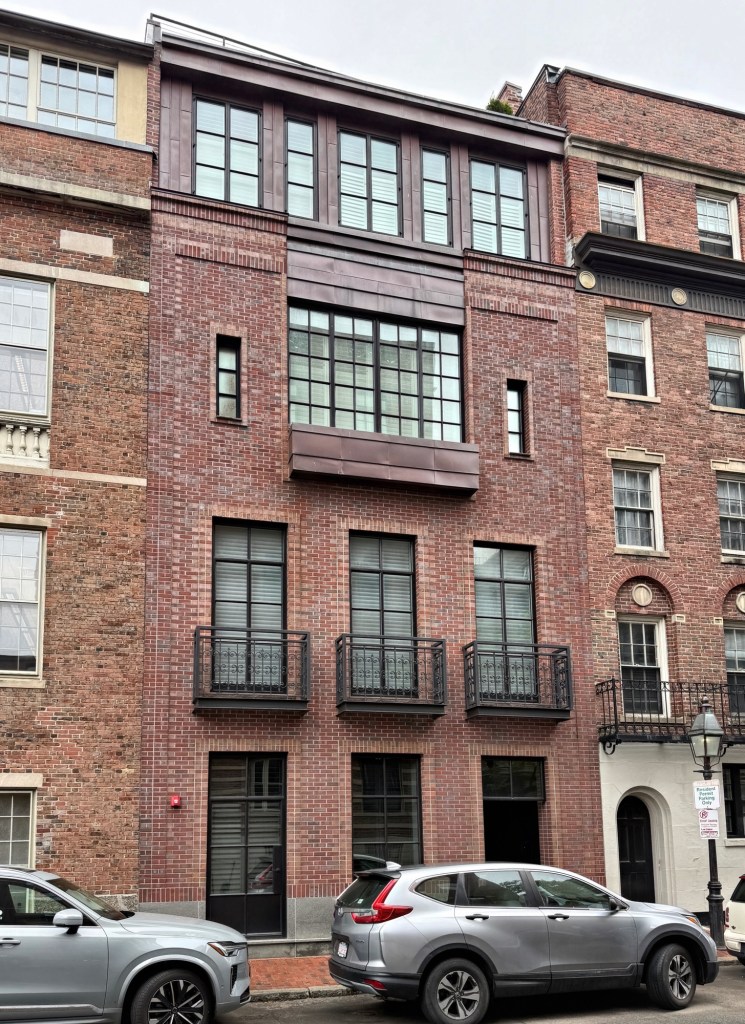
Chestnut Street Townhouse // 2016

It is uncommon to see new construction in Boston’s historic Beacon Hill, but when it happens, hundreds of eyes closely scrutinize and analyze the design to belong in one of America’s most coveted neighborhoods. The rare opportunity for infill construction occurred on this site on Chestnut Street. An 1860s stable building that was later converted into a residence and art studio in the 1920s as Beacon Hill Flat gentrified as an artist enclave, was listed for sale in 2013. The townhouse featured leaded-glass windows and Tudor elements at the interior and on its rear facade and was purchased by a developer who, after inspection, noted structural deficiencies in the building. After inspections by the City and a request to the Beacon Hill Architectural Commission, it was approved for demolition, but the replacement design would be scrutinized. Hacin, architects, brought forward plans for a new townhouse, which employed similar materials, massing, and fenestration typical for this area of Beacon Hill, but with contemporary finishes that blends old with new in a way that the new structure does not stand out nor detract from the surrounding streetscape. Through hearings, details like the window types and color of the brick were analyzed to slightly deviate from the existing fabric of the neighborhood, distinguishing the new construction as contemporary. What do you think of this new townhouse on the Flat of Beacon Hill?
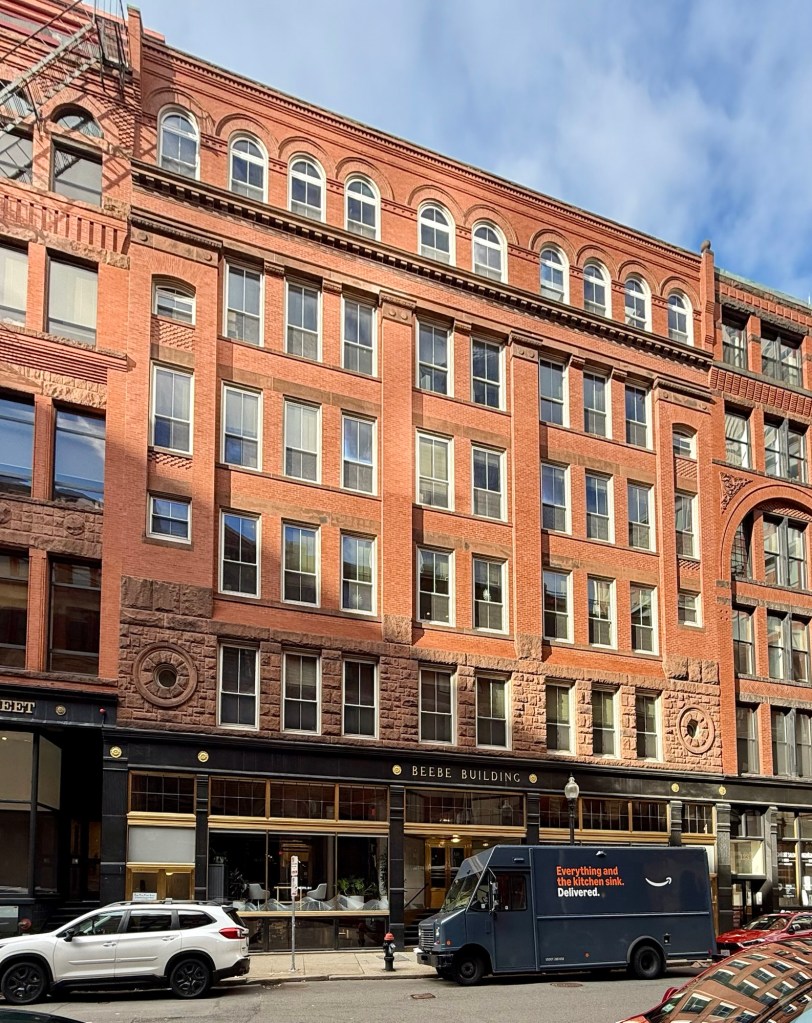
Beebe Building // 1886

Located at 127-133 South Street in the under-appreciated Leather District of Boston, the 1886 Beebe Building is an excellent vestige of the leathergoods trade and commercial architecture of the late 19th century. This building was constructed by J. Franklin Faxon (1832-1912), a business owner who engaged in real estate development and built a number of commercial blocks in this part of Boston. Rand & Taylor, architects, designed the building in an effective blending of Classical and Romanesque styles with rock faced brownstone ashlar above the storefronts, oculus windows, and segmental arched openings on the top floor. The Classical detailing of the two-story brick pilasters and modillion cornice add to its complexity. The building was originally occupied by the Thomas E. Proctor Leather Company and was later purchased by leather goods company Lucius Beebe & Sons and the storefront was renovated by Hutchins & French in 1930. The building has since been known as the Beebe Building and has been well-maintained by subsequent owners.  

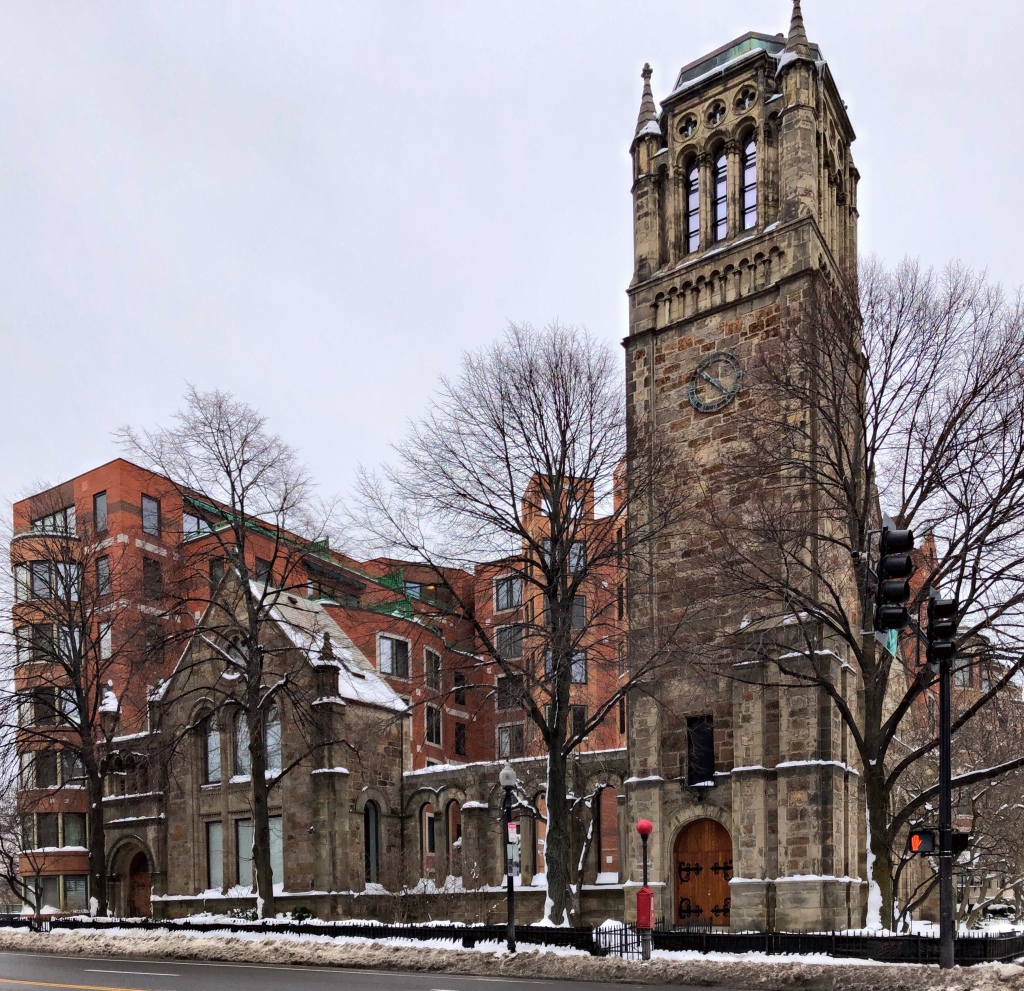
Mount Vernon Congregational Church // 1892 & 1984

The Mount Vernon Congregation Church was founded in 1842 and originally was located in Ashburton Place on Beacon Hill (which I featured previously). As its members moved to the Back Bay, the congregation decided to build a new church in the western portion of the neighborhood. They hired architect C. Howard Walker to design the new church building, with stained glass windows by John LaFarge and Louis Comfort Tiffany added as memorials to several members of the congregation over subsequent years. As originally designed, the church had a 45-foot high steeple on top of its 85-foot square tower, but over the years it became structurally unsound, and it was removed just before the Hurricane of 1938, which toppled many steeples all over the region. In 1970, the church merged with the Old South Church in the Back Bay. In 1977, developers proposed to remodel the church building into retail and office space. The proposal was approved by the Boston Redevelopment Authority in January of 1978. Before work could commence, a fire destroyed much of the church building leaving a shell of Roxbury Puddingstone walls and the tower, the developer pulled its funding and the building’s future was uncertain. One year later, architect Graham Gund purchased the building. Gund was familiar with adaptive reuse projects, like his restoration of the Middlesex County Courthouse in Cambridge for his own office in Cambridge in the 1970s. Gund redesigned the building into 43 condominium units called Church Court. What are your thoughts on the architecture?