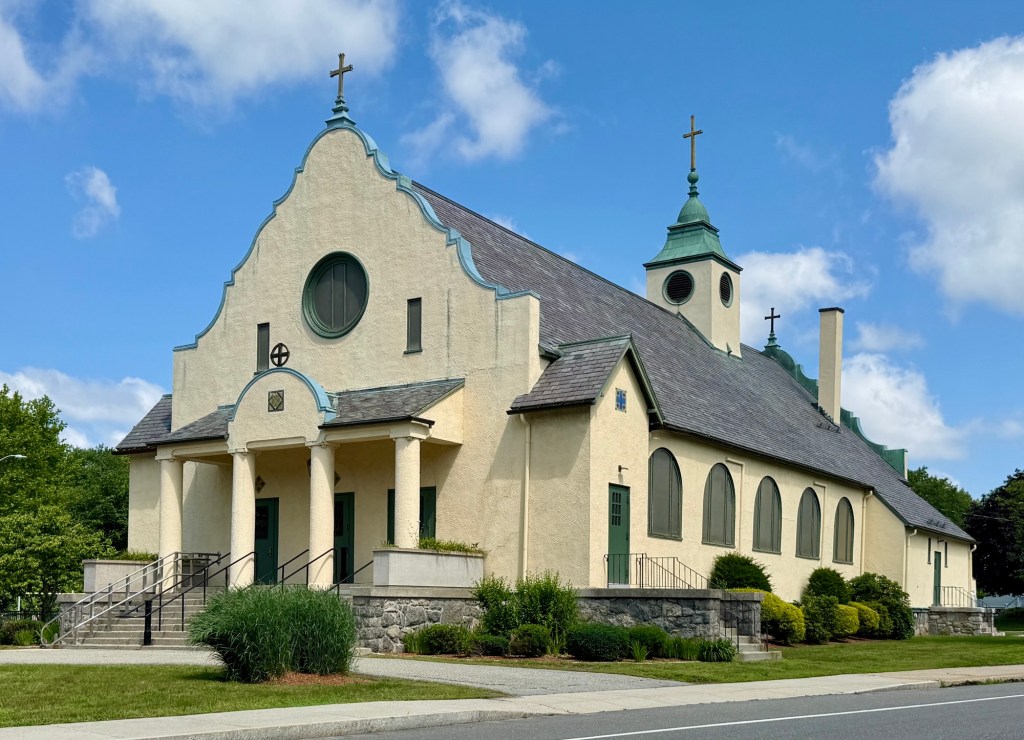
St. Andrew’s Catholic Church, North Billerica // 1919

Before Saint Andrew’s Parish in North Billerica, Massachusetts, was established, the industrial village was home to many Irish immigrants who arrived to the area to work at the Talbot and Faulkner mill complexes. The Irish brought with them, their culture and customs, including religious affiliation with the Catholic Church. The Irish families in North Billerica were about 5 miles from the closest Catholic church in Lowell to worship, so in 1868, a mission church was established in the village for area residents. By 1913, the parish consisted of the entire town of Billerica, had grown enough to be taken over by the Archdiocese of Boston. Soon after, a Rectory was built in the Colonial Revival style and just a few years after that, in 1919, plans were unveiled for a new Catholic church in Billerica. Plans by the firm of O’Connell & Shaw were drawn up and resulted in St. Andrew’s Catholic Church, a rare example of a Spanish/Mission Revival style church. The design is notable for its use of stucco walls, bell-shaped gabled parapet, inlaid tile panels, and squat, copper roofed belfry at the roof.
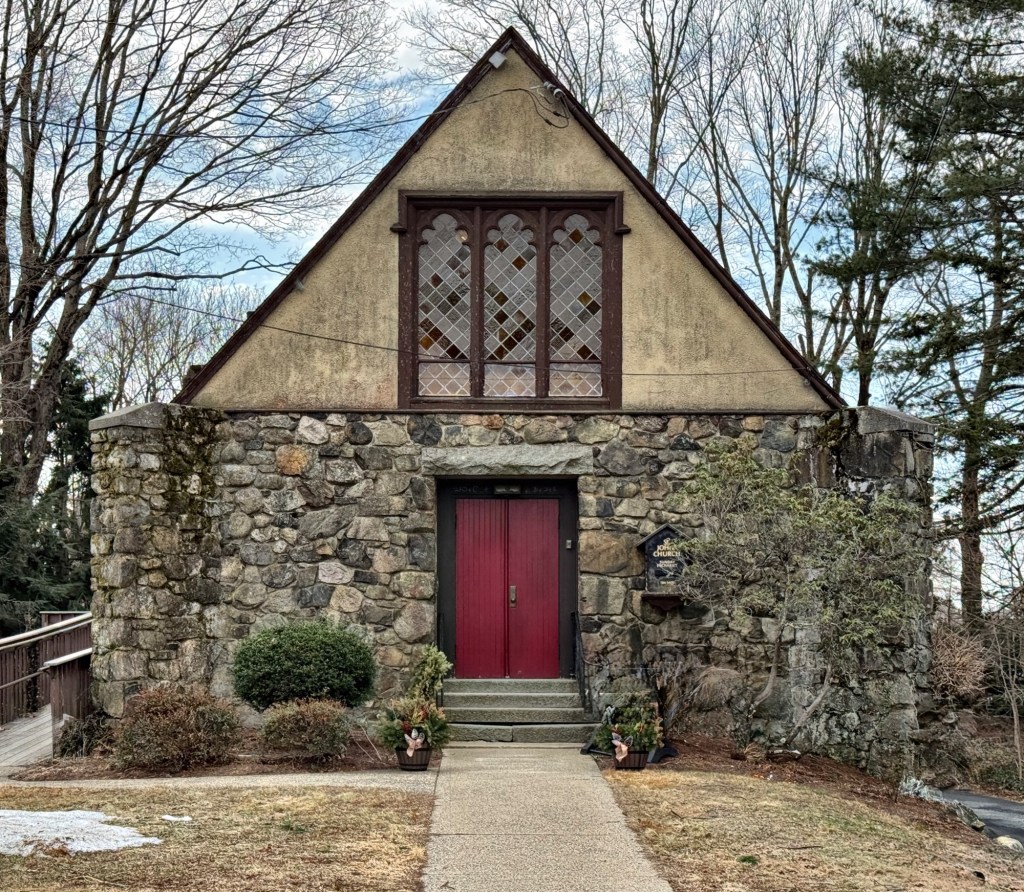
St. John’s Episcopal Church of Sharon // 1902

The small yet architecturally significant St. John’s Episcopal Church in Sharon, Massachusetts, was built in 1902 from plans by one of the premier ecclesiastical architects of the early 20th century. Episcopalians in Sharon began demanding their own house of worship in the late 19th century, and by the turn of the century, had funding to erect their own chapel. Boston-based architect, Ralph Adams Cram, of the firm Cram, Goodhue & Ferguson, designed the building, which fits within the scale of the residential neighborhood it is located within. St. John’s is an example of Neo-Gothic Revival architecture, a style which Cram became known for, with a fieldstone base, three feet thick, and stucco gabled facade above with tripartite windows with diamond-cut colored glass. The chapel was expanded at the rear, but maintains its rustic charm at the street.

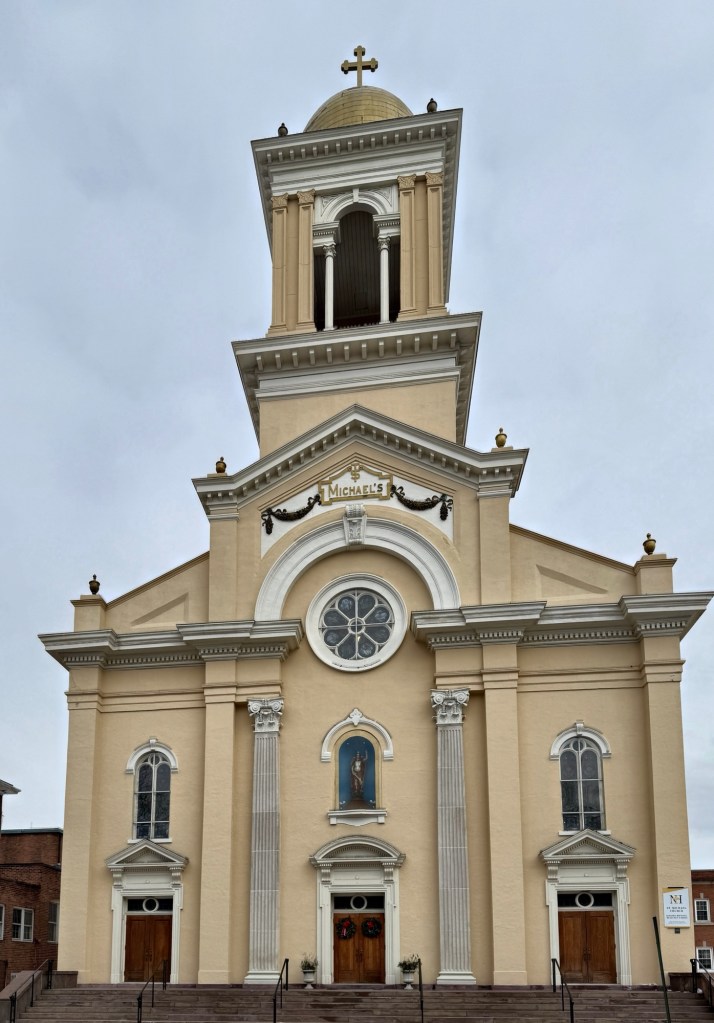
St. Michael’s Roman Catholic Church // 1904

St. Michael’s Roman Catholic Church in Wooster Square, New Haven, Connecticut, was established in 1889 to serve a burgeoning community of Italian immigrants and is said to be the oldest Italian Catholic church in the state. New Haven’s census of 1870 listed just ten Italian residents and by 1900, the census listed more than 5,000 Italian-born residents. Most of these Italian immigrants were drawn to New Haven for employment in the growing industrial and railroad industries and the proximity to New York, where many arriving immigrants passed through. New Haven’s Italian community centered around Wooster Square, where many today know all about the many Italian groceries and nationally known pizzerias. The Italian Community acquired a c.1855 church here by 1899 and following a fire, rebuilt the church in the current form. The New Haven-based architectural firm of Brown and Von Beren furnished plans for the Italian Renaissance Revival style renovations, which was completed in 1904 with bold central tower and stucco walls, retaining many original Italianate windows. The church has served as an important cultural and institutional landmark in New Haven for over 120 years and the congregation remains active.