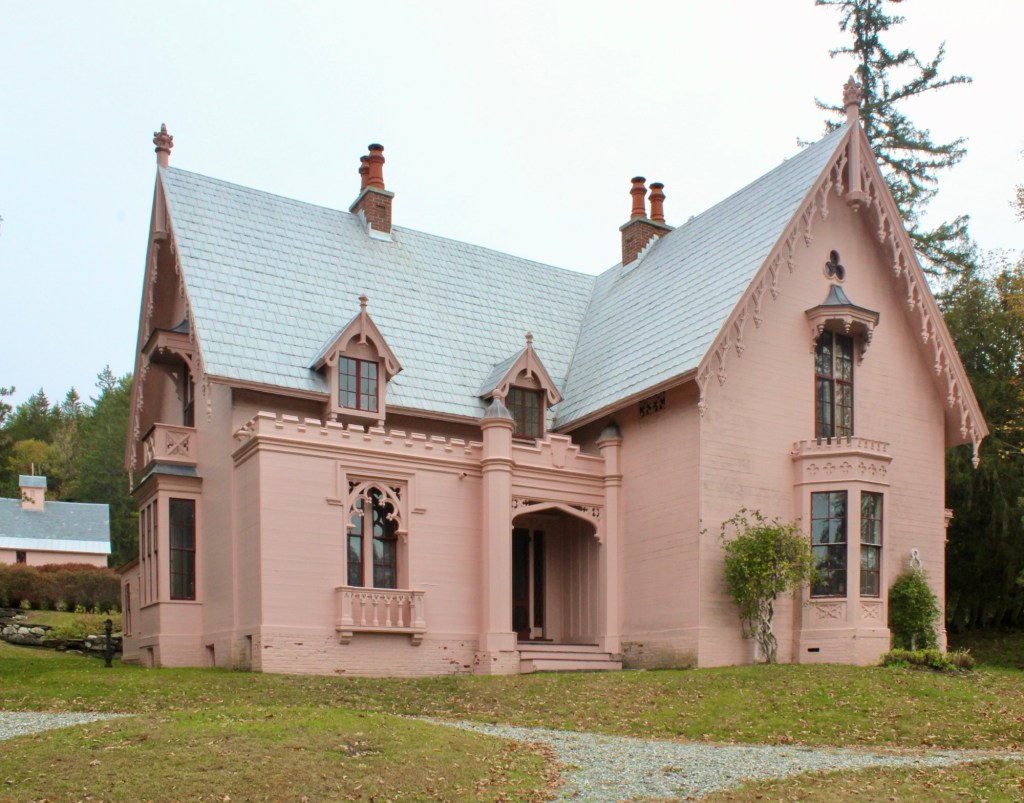
Located in the village of Strafford, Vermont, the Justin Smith Morrill Homestead is one of Vermont’s most charming architectural landmarks. Built between 1848 and 1851, the house is a rare and exuberant example of Gothic Revival design, with steeply pitched gables, pointed-arch windows, and intricate decorative trim that give it the look of a storybook cottage. Justin S. Morrill (1810-1898) was a self-taught architectural enthusiast who drew inspiration from the popular pattern books of the day, and he is said to have designed much of the house himself. Morrill also planned the surrounding gardens, studying the romantic landscape movement with its formal yet picturesque plantings. He selected only those plants that would survive the wintry Vermont climate and annually monitored their success again the harsh elements. Justin Morrill was a regular storekeeper in the village who retired early, who went on to serve in Congress for more than four decades and is best remembered as the author of the Morrill Land-Grant Acts. Signed into law in 1862, the first act helped establish public colleges across the country and opened higher education to ordinary Americans, primarily focusing on agricultural and mechanical studies. While Senator Morrill spent much of his time in the nation’s capital, his Strafford home served as his respite during the summer months. Today the homestead is a National Historic Landmark and Vermont state historic site, where visitors can walk through rooms filled with the family’s belongings and see how the ambitions of a small-town statesman shaped both a home and a nation.


One thought on “Justin Morrill Homestead // 1851”